131 Best Sights in Italy

Background Illustration for Sights

We've compiled the best of the best in Italy - browse our top choices for the top things to see or do during your stay.

Museo dell'Opera

Città Fodor's Choice

Part of the unfinished nave of what was to have been a new cathedral, the museum contains the Duomo's treasury and some of the original decoration from its facade and interior. The first room on the ground floor displays weather-beaten 13th-century sculptures by Giovanni Pisano (circa 1245–1318) that were brought inside for protection and replaced by copies, as was a tondo of the Madonna and Child (now attributed to Donatello) that once hung on the door to the south transept.

The masterpiece is unquestionably Duccio's Maestà, one side with 26 panels depicting episodes from the Passion, the other side with a Madonna and Child Enthroned. Painted between 1308 and 1311 as the altarpiece for the Duomo (where it remained until 1505), its realistic elements, such as the lively depiction of the Christ child and the treatment of interior space, proved an enormous influence on later painters. The work originally decorated the Duomo's high altar before being displaced by Duccio's Maestà. There is a fine view from the tower inside the museum.
Piazza del Duomo 8, Siena, 53100, Italy
0577-286300
Sight Details
€16 combined ticket includes Cripta, Battistero, roof terrace, and Museo dell'Opera

Something incorrect in this review?

Museo dell'Opera del Duomo

Duomo Fodor's Choice

A seven-year restoration, completed in 2015, gave Florence one of its most modern, up-to-date museums. The exhibition space was doubled, and the old facade of the cathedral, torn down in the 1580s, was re-created with a 1:1 relationship to the real thing. Both sets of Ghiberti's doors adorn the same room. Michelangelo's Pietà finally has the space it deserves, as does Donatello's Mary Magdalene.

Piazza del Duomo 9, Florence, 50122, Italy
055-2302885
Sight Details
Admission is via one of 3 combo tickets, each valid for 3 days: €30 Brunelleschi Pass (with Battistero, Campanile, Cupola of the Duomo, and Santa Reparata Basilica Cripta); €20 Giotto Pass (with Battistero, Campanile, and Cripta); €15 Ghiberti Pass (with Battistero and Cripta)
Closed 1st Tues. of month

Something incorrect in this review?

Museo di Capodimonte

Capodimonte Fodor's Choice

The grandiose, 18th-century, neoclassical, Bourbon royal palace houses fine and decorative art in 124 rooms. The main galleries on the first floor are devoted to the Farnese collection, as well as work from the 13th to the 18th century, including many pieces by Dutch masters, as well as an El Greco and 12 Titian paintings. On the second floor look for stunning paintings by Simone Martini (circa 1284–1344) and Caravaggio (1573–1610).

Recommended Fodor's Video

Museo Fellini

Fodor's Choice

The life and magical cinematic oeuvre of Rimini's favorite 20th-century son, the celebrated film director Federico Fellini, is explored in depth at this wonderfully atmospheric and suitably dreamlike museum, opened in 2021. Spread over three sites—Castel Sismondo, Palazzo del Fulgor, and Piazza Malatesta—and through multimedia, sculpture, iconic film props, costumes, playful installations, and archive material, the exhibits chart the maestro's formative and Italian cinema's golden years. Fellini's artistic friends and collaborators are center-stage, too: screens project clips of Giulietta Masina in La Strada (1956) and Marcello Mastroianni in La Dolce Vita (1960), the evocative music of Nino Rota scores enliven every corner, and there's a Fellini-esque sculpture of a reposing Anita Ekberg. Palazzo del Fulgor, and the cinema immortalized in Fellini's semi-autobiographical love letter to Rimini, Amarcord (1973), has a changing program of Fellini's filmography.

Museo Guttuso

Fodor's Choice

One of Bagheria's most impressive palaces, Villa Cattolica has been meticulously renovated and converted into a gallery devoted to the artist Renato Guttuso (1911–87), who was born in the town. Guttuso's fierce, expressionist style and vivid sense of color made him one of Sicily's most renowned modern artists, and the gallery traces his career from his earliest sketches in the 1920s and 1930s to his later bold canvases, including his last work, a huge collective portrait of his mistresses and muses. Guttuso started his career painting carretti (farmer's carts) in the traditional style and the first rooms feature a collection of painted carts. The gallery also hosts work by Guttuso's peers and contemporaries, and a separate building holds an exhibition of Italian film posters, including one for the film Kaos, designed by Guttuso. The artist's tomb lies in the villa's garden.

Museo Revoltella–Galleria d'Arte Moderna

Fodor's Choice

Housed in three magnificent buildings and partly remodeled by influential Italian architect Carlo Scarpa, the Revoltella provides a stimulating survey of 19th- and 20th-century art and decoration. Building on the bequeathment of the grand palazzo and art of Triestino collector-industrialist Pasquale Revoltella (1795–1869), the institution has continued to add important artworks from the Venice Biennale by the likes of Carrà, Mascherini, Morandi, de Chirico, Manzù, Fontana, and Burri. In contrast, a gorgeous cochlear staircase connects the three floors of the museum: its history and 1850–60 cityscapes are on the ground floor; 19th-century classical statuary, portraits, and historic scenes take up the first; while the third preserves opulent saloni.

Museo Salvatore Ferragamo

Santa Maria Novella Fodor's Choice

A shrine to footwear, the shoes in this dramatically displayed collection were designed by Salvatore Ferragamo (1898–1960) beginning in the early 20th century. Born in southern Italy, Ferragamo jump-started his career in Hollywood by creating shoes for the likes of Mary Pickford and Rudolph Valentino. He then returned to Florence and set up shop in the 13th-century Palazzo Spini Ferroni. The collection includes about 16,000 shoes, and those on display are frequently rotated. Special exhibitions are also mounted here and are well worth visiting—past shows have been devoted to Audrey Hepburn, Greta Garbo, and Marilyn Monroe.

Palazzo Barberini/Galleria Nazionale d'Arte Antica

Quirinale Fodor's Choice

One of Rome's most splendid 17th-century buildings is a Baroque landmark. The grand facade was designed by Carlo Maderno (aided by his nephew, Francesco Borromini), but when Maderno died, Borromini was passed over in favor of his great rival, Gian Lorenzo Bernini. The palazzo is now home to the Galleria Nazionale d'Arte Antica, with a collection that includes Raphael's La Fornarina, a luminous portrait of the artist's lover (a resident of Trastevere, she was reputedly a baker's daughter). Also noteworthy are Guido Reni's portrait of the doomed Beatrice Cenci (beheaded in Rome for patricide in 1599)—Nathaniel Hawthorne called it "the saddest picture ever painted" in his Rome-based novel, The Marble Faun—and Caravaggio's dramatic Judith Beheading Holofernes.

The showstopper here is the palace's Gran Salone, a vast ballroom with a ceiling painted in 1630 by the third (and too-often-neglected) master of the Roman Baroque Pietro da Cortona. It depicts the Glorification of Urban VIII's Reign and has the spectacular conceit of glorifying Urban VIII as the agent of Divine Providence, escorted by a "bomber squadron" (to quote art historian Sir Michael Levey) of huge Barberini bees, the heraldic symbol of the family.

Palazzo Butera

Fodor's Choice

Dating from the 18th century but closed for most of the last four decades, the Palazzo Butera has been transformed by its gallerista owners, Massimo and Francesca Valsecchi, into one of Sicily’s (and Italy’s) most imaginative museum collections. Its labyrinthine rooms now display a heady mixture of old and new art. The collection’s strength lies in its bold juxtapositions, with works by an international roster of experimental modern artists of the likes of Gilbert and George, and David Tremlett, exhibited alongside classical landscapes and graceful Sicilian furniture from the 19th century. Painted ceilings remain from the palace's Baroque beginnings, some of them artfully peeled back to reveal the wooden construction behind them. Diverse temporary exhibitions displayed on the ground floor add to the mix. There’s a lot to take in, but if you need a break from all the hectic creativity, head for the terrace, accessed from the second floor, which provides benches and a walk around one of the two courtyards as well as views over the harbor. You can get even better views from the viewing platform reached from the roof, while further up, steps lead to a lofty view of the harbor, Monte Pellegrino, and, inland, the whole of the Conca d’Oro plain in which the city sits.

Palazzo Collicola Arti Visive

Fodor's Choice

Spoleto’s compact but delightful modern art museum, housed in an 18th-century palace, features a fine collection of works from Italian contemporary artists, including renowned Spoleto sculptor Leoncillo and Umbria-based American sculptor Barbara Pepper. International artists such as Alexander Calder and Richard Serra are also represented, and an entire room is devoted to a large-scale wall drawing by Sol Lewitt. The Appartamento Nobile is a reproduction of an 18th-century nobleman’s house, and the Pictures Gallery has paintings from the 16th to 19th centuries.

Piazza Collicola 1, Spoleto, 06049, Italy
0743-46434
Sight Details
€9; included with Spoleto Card
Closed Tues. and Wed.

Something incorrect in this review?

Palazzo Ducale di Urbino

Fodor's Choice

The Palazzo Ducale holds a place of honor in the city. If the Renaissance was, ideally, a celebration of the nobility of man and his works, of the light and purity of the soul, then there's no place in Italy, the birthplace of the Renaissance, where these tenets are better illustrated. From the moment you enter the peaceful courtyard, you know you're in a place of grace and beauty, and the harmony of the building indeed reflects the high ideals of the time.

The palace houses the Galleria Nazionale delle Marche (National Museum of the Marches), with a superb collection of paintings, sculpture, and other objets d'art. Some pieces originally belonged to the Montefeltro family; others were brought here from churches and palaces throughout the region. Masterworks include Paolo Uccello's Profanation of the Host, Titian's Resurrection and Last Supper, and Piero della Francesca's Madonna of Senigallia. But the gallery's highlight is Piero's enigmatic work long known as The Flagellation of Christ. Much has been written about this painting, and although few experts agree on its meaning, most agree that this is one of the painter's masterpieces.

Piazza Rinascimento 13, Urbino, 61029, Italy
0722-350077-ticket office
Sight Details
€12
Closed Mon.

Something incorrect in this review?

Palazzo Grassi

San Marco Fodor's Choice

Built between 1748 and 1772 by Giorgio Massari for a Bolognese family, this palace is one of the last of the great noble residences on the Grand Canal. Once owned by auto magnate Gianni Agnelli, it was bought by French businessman François Pinault in 2005 to showcase his highly esteemed collection of modern and contemporary art (which has now grown so large that Pinault rented the Punta della Dogana, at the entryway to the Grand Canal, for his newest acquisitions). Pinault brought in Japanese architect Tadao Ando to remodel the Grassi's interior. Check online for a schedule of temporary art exhibitions.

Campo San Samuele 3231, Venice, 30124, Italy
041-2401308
Sight Details
€18, includes Punta della Dogana

Something incorrect in this review?

Palazzo Pitti

Palazzo Pitti Fodor's Choice

This is one of Florence's largest architectural set pieces. The original palazzo, built for the Pitti family around 1460, consisted of the main entrance and the sections extending as far as three windows on either side. In 1549, the property was sold to the Medici, and Bartolomeo Ammannati was called in to make substantial additions. Although he apparently operated on the principle that more is better, he succeeded only in producing proof that more is just that: more.

Today, the palace houses several museums. The Museo degli Argenti displays a vast collection of Medici treasures, including exquisite antique vases belonging to Lorenzo the Magnificent. The Galleria del Costume showcases fashions from the past 300 years. The Galleria d'Arte Moderna holds a collection of 19th- and 20th-century paintings, mostly Tuscan.

Most famous of the Pitti galleries is the Galleria Palatina, which contains a broad collection of paintings from the 15th to the 17th century. Its rooms remain much as the Lorena, the rulers who took over after the last Medici died in 1737, left them. Their floor-to-ceiling paintings are considered by some to be Italy's most egregious exercise in conspicuous consumption, aesthetic overkill, and trumpery. Still, the collection possesses high points, including a number of paintings by Titian and an unparalleled collection of paintings by Raphael.

Palazzo Reale

Duomo Fodor's Choice

Elaborately decorated with painted ceilings and grand staircases, this former royal palace close to the Duomo is almost worth a visit in itself; however, it also functions as one of Milan's major art galleries, with a focus on modern artists. Exhibitions have highlighted works by Picasso, Chagall, Warhol, Pollock, and Kandinsky. Check the website before you visit to see what's on; purchase tickets online in advance to save time in the queues, which are often long and chaotic.

Pinacoteca Agnelli

Lingotto Fodor's Choice

This gallery was opened by Gianni Agnelli (1921–2003), the head of Fiat and patriarch of one of Italy's most powerful families, just four months before his death. There are four magnificent scenes of Venice by Canaletto (1697–1768); two splendid views of Dresden by Canaletto's nephew, Bernardo Bellotto (1720–80); and several works by Manet, Renoir, Matisse, and Picasso. You can also visit La Pista 500, the former Fiat test track on the roof of the Lingotto building, to view rotating exhibits from contemporary artists.

Via Nizza 230, Turin, 10126, Italy
011-0925011
Sight Details
Pinacoteca and Pista 500 €12, Pinacoteca €10, Pista 500 €4
Closed Mon.

Something incorrect in this review?

Pinacoteca di Brera

Brera Fodor's Choice

The collection here is star-studded even by Italian standards. Highlights include the somber Cristo Morto (Dead Christ) by Mantegna, which dominates Room VI with its sparse palette of umber and its foreshortened perspective, Raphael's (1483–1520) Sposalizio della Vergine (Marriage of the Virgin), and La Vergine con il Bambino e Santi (Madonna with Child and Saints), by Piero della Francesca (1420–92), an altarpiece commissioned by Federico da Montefeltro (shown kneeling, in full armor, before the Virgin).

Punta della Dogana

Dorsoduro Fodor's Choice

Funded by the billionaire who owns a major share in Christie's Auction House, the François Pinault Foundation commissioned Japanese architect Tadao Ando to redesign this fabled customs house—sitting at the punta, or point of land, at the San Marco end of the Grand Canal—now home to a changing roster of works from Pinault's renowned collection of contemporary art. The streaming light, polished surfaces, and clean lines of Ando's design contrast beautifully with the massive columns, sturdy beams, and brick of the original Dogana. Even if you aren't into contemporary art, a visit is worthwhile just to see Ando's amazing architectural transformation. Be sure to walk down to the punta for a magnificent view of the Venetian basin. Check online for a schedule of temporary exhibitions.

Santa Maria della Scala

Città Fodor's Choice

For more than 1,000 years, this complex across from the Duomo was home to Siena's hospital, but it now serves as a museum containing, among other things, Sienese Renaissance treasures. Restored 15th-century frescoes in the Sala del Pellegrinaio (once the emergency room) tell the history of the hospital, which was created to give refuge to passing pilgrims and others in need and to distribute charity to the poor. Incorporated into the complex is the church of the Santissima Annunziata, with a celebrated Risen Christ by Vecchietta (also known as Lorenzo di Pietro, circa 1412–80). Down in the dark, Cappella di Santa Caterina della Notte is where St. Catherine went to pray at night.

The displays—including the bucchero (dark, reddish clay) ceramics, Roman coins, and tomb furnishings—are clearly marked and can serve as a good introduction to the history of regional excavations. Be sure to visit the subterranean archaeological museum to see della Quercia's original sculpted reliefs from the Fonte Gaia. Although the fountain has been faithfully copied for the Campo, there's something incomparably beautiful about the real thing.

Ca' Pesaro

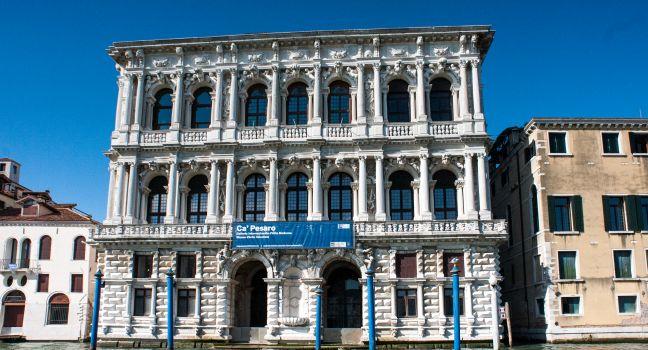
Ca' Pesaro, Santa Croce, Venice, Italy.
© Ross Brinkerhoff / Fodors Travel

Baldassare Longhena's grand Baroque palace, begun in 1676, is the beautifully restored home of two impressive collections. The Galleria Internazionale d'Arte Moderna has works by 19th- and 20th-century artists, such as Klimt, Kandinsky, Matisse, and Miró. It also has a collection of representative works from the Venice Biennale that amounts to a panorama of 20th-century art. The pride of the Museo Orientale is its collection of Japanese art—and especially armor and weapons—of the Edo period (1603–1868). It also has a small but striking collection of Chinese and Indonesian porcelains and musical instruments.

Santa Croce 2076, 30135, Italy
041-721127
Sight Details
€10, includes both museums (free with Museum Pass)
Closed Mon.

Something incorrect in this review?

Peggy Guggenheim Collection

Dorsoduro
Peggy Guggenheim Collection
© Halie Cousineau/ Fodors Travel

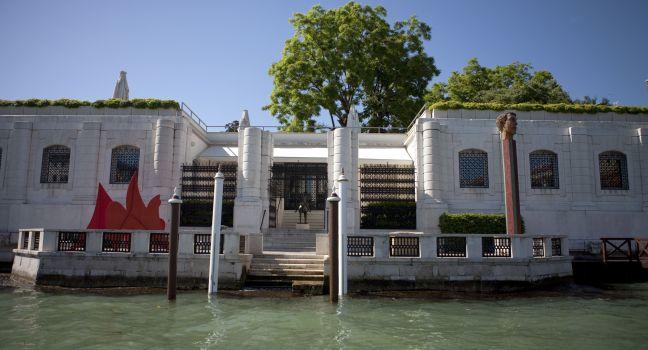
Housed in the incomplete but nevertheless charming Palazzo Venier dei Leoni, this choice selection of 20th-century painting and sculpture represents the taste and extraordinary style of the late heiress Peggy Guggenheim. Through wealth, social connections, and a sharp eye for artistic trends, Guggenheim (1898–1979) became an important art dealer and collector from the 1930s through the 1950s, and her personal collection here includes works by Picasso, Kandinsky, Pollock, Motherwell, and Ernst (her onetime husband). The museum serves beverages, snacks, and light meals in its refreshingly shady and artistically sophisticated garden.

Accademia Carrara

Bergamo is home to an art collection that's surprisingly rewarding given its size and remote location. Many of the Venetian masters are represented—Mantegna, Bellini, Carpaccio (circa 1460–1525/26), Tiepolo (1727–1804), Francesco Guardi (1712–93), and Canaletto (1697–1768), as well as Botticelli (1445–1510).

Piazza Carrara 82, Bergamo, 24121, Italy
035-234396-weekdays
Sight Details
€10

Something incorrect in this review?

Casa Buonarroti

Santa Croce

If you really enjoy walking in the footsteps of the great genius, you may want to complete the picture by visiting the Buonarroti family home. Michelangelo lived here from 1516 to 1525, and later gave it to his nephew, whose son, Michelangelo il Giovane (Michelangelo the Younger), turned it into a gallery dedicated to his great-uncle. The artist's descendants filled it with art treasures, some by Michelangelo himself. Two early marble works—the Madonna of the Stairs and Battle of the Centaurs—demonstrate his genius.

Via Ghibellina 70, Florence, 50122, Italy
055-241752
Sight Details
€8
Closed Tues.

Something incorrect in this review?

Centro per l'Arte Contemporanea Luigi Pecci

Prato's Center for Contemporary Art Luigi Pecci contains works of artists from around the world completed after 1965. The exhibitions constantly change, and often feature debut presentations.

Viale della Repubblica 277, Prato, 59100, Italy
0574-5317
Sight Details
€10
Closed Mon.–Wed.

Something incorrect in this review?

Collegiata di Sant'Andrea

The Collegiata di Sant'Andrea is a jewel of a museum, filled with terra-cotta sculptures from the della Robbia school, including one by Andrea della Robbia. There's also a magnificent 15th-century fresco pietà by Masolino (circa 1383–1440), as well as a small work by Fra Filippo Lippi (1406–69) and a wonderful tabernacle attributed to Francesco Botticini (circa 1446–97) and Antonio Rossellino (1427–79). On Sunday afternoon, entrance to the museum is free.

Just off Piazza Farinata degli Uberti, Empoli, 50053, Italy
0571-72220
Sight Details
€5
Closed Mon.

Something incorrect in this review?

Fondazione Luigi Rovati

Porta Venezia

This isn't your typical Etruscan history museum. A seven-year project led by the Luigi Rovati Foundation transformed two levels of a palazzo commissioned by the Prince of Piombino in 1871 into a stone-carved contemporary museum where ancient artifacts stand alongside those from the 20th century and beyond. Digital installations translate Etruscan into English and Italian on some of the objects, while an immersive moving floor map shows the civilization's major cities before its Roman conquest. A rotating display of contemporary exhibits along with permanent works on the main floor continues the play of ancient and modern, such as one where Andy Warhol's interpretation of an Etruscan scene was in the same room as archaeological finds. Giardino Padiglione, and its adjoining Andrea Aprea Bistrot, is an ideal spot for an afternoon aperitif or coffee.

Corso Venezia 52, Milan, 20121, Italy
02-38273001
Sight Details
€16
Closed Mon. and Tues.

Something incorrect in this review?

Galleria Civica d'Arte Moderna e Contemporanea (GAM)

Centro

In 1863 Turin was the first Italian city to begin a public collection devoted to contemporary art. Housed in a modern building on the edge of downtown, a permanent display of more than 600 paintings, sculptures, and installation pieces (from a collection of more than 45,000 works of art) provides an exceptional glimpse of how Italian contemporary art has evolved since the late 1800s. The Futurist, Pop, neo-Dada, and Arte Povera movements are particularly well represented, and the gallery has a fine video and art film collection.

Via Magenta 31, Turin, 10128, Italy
011-4429518
Sight Details
€11
Closed Mon.

Something incorrect in this review?

Galleria d'Arte Moderna

Piazza di Spagna

Located in a former monastery, this small museum displays a capsule collection of modern art, with an emphasis on Italian artists. The permanent collection is too large to be displayed at once, so exhibitions rotate, displaying paintings, drawings, prints, and sculptures by artists of the 19th and 20th centuries, including Giorgio de Chirico, Mario Mafai, Scipione, Gino Severini, and Giorgio Morandi.

Via Francesco Crispi, 24, Rome, 00187, Italy
06-0608
Sight Details
€9; €11.50 if there's a special exhibit
Closed Mon.

Something incorrect in this review?

Galleria Nazionale di Palazzo Spinola

Housed in the richly adorned Palazzo Spinola north of Piazza Soziglia, this beautiful museum contains masterpieces by Luca Giordano and Guido Reni. The Ecce Homo, by Antonello da Messina (1430–79), is a hauntingly beautiful painting, of historical interest because it was the Sicilian Antonello who first brought Flemish oil paints and techniques to Italy from his sojourns in the Low Countries. Or so some contend.

Piazza Pellicceria 1, Genoa, 16123, Italy
010-2477061
Sight Details
€12 with Palazzo Reale (except 1st Sun. of month when it's free entry)
Closed 2nd and 4th Sun. of month, Mon., and Tues. morning

Something incorrect in this review?

Galleria Regionale della Sicilia – Palazzo Abatellis

Housed in this late-15th-century Catalan Gothic palace with Renaissance elements is the Galleria Regionale, holding Palermo's foremost collection of medieval and Renaissance art. Among its treasures are the Annunciation (1474), a painting by Sicily's prominent Renaissance master Antonello da Messina (1430–79), and an arresting fresco spanning two floors (and visible from both the ground floor and a first-floor gallery) by an unknown 15th-century painter, titled The Triumph of Death, a macabre depiction of the plague years.

Via Alloro 4, Palermo, 90133, Italy
331-6581788-mobile
Sight Details
€9; free 1st Sun. of month
Closed Mon.

Something incorrect in this review?

Galleria Regionale di Palazzo Bellomo

Ortigia

Palazzo Bellomo looks unlike any other palace in Ortigia, a formidable 13th-century building, whose austere minimalist facade (with scarcely a window) could almost seem contemporary but dates from a time when Sicily was part of the Holy Roman Empire. Conflicts between Emperor Frederick II and the Pope were rife—the Pope was encouraging the mercantile cities Venice and Genoa to make war on Sicily, promising Siracusa as prize. That defense was paramount is not surprising. The Gothic upper floor was added, along with the courtyard—a perfect Shakespearean film set—in the 15th century. Highlight of the collection is an Annunciation by Antonello da Messina, painted for a church in Palazzolo Acreide, with the Hyblaean mountains visible through the windows behind the angel and the Madonna. Early Christian sculpture and a fine collection of altarpieces and icons are fascinating evidence of the enduring Byzantine and Gothic influence in Sicily. While the rest of Italy was swept by the Renaissance, Siracusa’s artists were still painting heavily stylized Byzantine or Gothic works.

Via Capodieci 14, Siracusa, 96100, Italy
0931-69511
Sight Details
Closed Tues.

Something incorrect in this review?