5 Best Sights in Rome, Italy

Background Illustration for Sights

We've compiled the best of the best in Rome - browse our top choices for the top things to see or do during your stay.

Trevi Fountain

Trevi Fodor's Choice
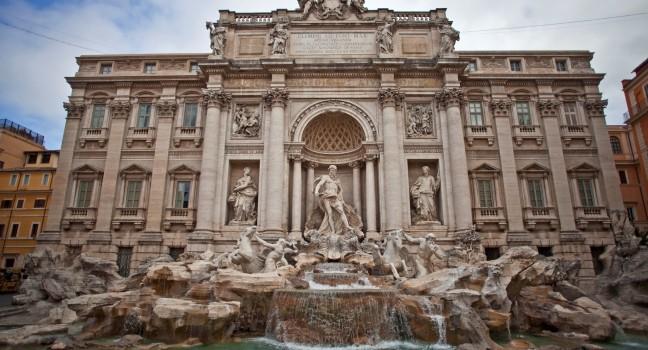
Trevi fountain
© Halie Cousineau/ Fodors Travel

Alive with rushing waters commanded by an imperious sculpture of Oceanus, the Fontana di Trevi has been all about theatrical effects from the start; it is an aquatic marvel in a city filled with them. The fountain's unique drama is largely due to its location: its vast basin is squeezed into the tight confluence of three little streets (the tre vie, which may give the fountain its name), with cascades emerging as if from the wall of Palazzo Poli.

The dream of a fountain emerging full force from a palace was first envisioned by Bernini and Pietro da Cortona from Pope Urban VIII's plan to rebuild an older fountain, which had earlier marked the end point of the Acqua Vergine, an aqueduct created in 18 BC by Agrippa. Three popes later, under Pope Clement XIII, Nicola Salvi finally broke ground with his winning design. Unfortunately, Salvi did not live to see his masterpiece of sculpted seashells, roaring sea beasts, and diva-like mermaids completed; he caught a cold and died while working in the culverts of the aqueduct 11 years before the fountain was finished in 1762.

Everyone knows the famous legend that if you throw a coin into the Trevi Fountain you will ensure a return trip to the Eternal City, but not everyone knows how to do it the right way. You must toss a coin with your right hand over your left shoulder, with your back to the fountain. One coin means you'll return to Rome; two, you'll return and fall in love; three, you'll return, find love, and marry. The fountain grosses some €1,500,000 a year, with every cent going to the Catholic charity Caritas, which is why Fendi was willing to fully fund the Trevi's recent restoration.

Tucked away in a little nearby alley is the Vicus Caprarius ( Vicolo del Puttarello, 25), a small museum where visitors can pay €8 for a guided tour that descends into a subterranean area that gives a glimpse at the water source that keeps the fountain running.

Fontana dell'Acqua Felice

Repubblica

When Pope Sixtus V (Felice Peretti) completed the restoration of the Acqua Felice aqueduct toward the end of the 16th century, Domenico Fontana was commissioned to design its monumental fountain. Sculptors Leonardo Sormani and Prospero da Brescia had the unhappy task of executing the central figure of Moses; the comparison with Michelangelo's magnificent Moses in the church of San Pietro in Vincoli was inevitable, and the giant sculpture was widely criticized. But the new fountain served to position the formerly rustic Quirinale neighborhood as a thriving urban center.

Piazza di San Bernardo, Rome, 00187, Italy

Something incorrect in this review?

Fontana della Barcaccia

Piazza di Spagna

At the foot of the Spanish Steps, this curious, leaky boat fountain is fed by Rome's only surviving ancient aqueduct, the Acqua Vergine. The sinking ship design is a clever solution to low water pressure and was created by Pietro Bernini, with the help of his son, the prolific sculptor Gian Lorenzo Bernini. The project was commissioned by Barberini Pope Urban VIII, and the bees and suns on the boat are symbols of the Barberini family. Looking for more symbolism, some insist that the Berninis intended the fountain to be a reminder that this part of town was often flooded by the Tiber; others claim that it represents the Ship of the Church; and still others think that it marks the presumed site of the emperor Domitian's water stadium in which sea battles were reenacted in the glory days of the Roman Empire.

Piazza di Spagna, Rome, 00187, Italy

Something incorrect in this review?

Recommended Fodor's Video

Fontana delle Api

Quirinale

The upper shell and inscription of this fountain, which is decorated with the famous heraldic bees of the Barberini family, are from a fountain that Bernini designed for Pope Urban VIII; the rest was lost when the fountain was moved to make way for a new street. The inscription caused considerable uproar when the fountain was first built in 1644. It said that the fountain had been erected in the 22nd year of the pontiff's reign, although, in fact, the 21st anniversary of Urban's election to the papacy was still some weeks away. The last numeral was hurriedly erased, but to no avail—Urban died eight days before the beginning of his 22nd year as pope. The superstitious Romans, who had regarded the inscription as a foolhardy tempting of fate, were vindicated.

Piazza Barberini, Rome, 00187, Italy

Something incorrect in this review?

Fontana delle Tartarughe

Jewish Ghetto

Designed by Giacomo della Porta in 1581 and sculpted by Taddeo Landini, this fountain, set in pretty Piazza Mattei, is one of Rome's most charming. Its focal point consists of four bronze boys, each grasping a dolphin spouting water into a marble shell. Bronze turtles just out of reach of the boys' hands drink from the upper basin. The turtles were added in the 17th century by Bernini.

Piazza Mattei, Rome, 00186, Italy

Something incorrect in this review?