
START

The 12 Ugliest Places in Italy

Ah, beautiful, romantic Italy. Everywhere you go is gorgeous—the stuff of Instagram pictures to make your friends back home writhe in envy. Right? Well, not always.

Italy has its fair share of aesthetically challenged places that aren’t worth even a millisecond on your itinerary. Seriously, they couldn’t pay people to take a postcard—if they even made them.

All joking aside, it is admittedly tricky to condemn a whole city or area as “ugly”—even the most unsightly Italian areas will usually have at least one historic church, some natural beauty, or a decent ancient quarter. In some cases, the places on this list—sourced from polls created by Italian nationals—were built after the devastating World Wars with little resources, or, conversely, have rich histories but have declined tragically due to government corruption and the resulting local apathy. Any way you slice it, there’s room for improvement in a country that has so many other incredible things to offer. You’ve done it before, Italy. You can do it again.

1 OF 13

Busto Arsizio—aka "Merdor"

At first glance, Busto Arsizio—a city roughly 25 miles north of Milan—isn’t so bad. After all, it’s reasonably tidy and modern, and there are some impressive churches, like the 17th-century Baroque Basilica di San Giovanni Battista. But keep wandering Busto Arsizio’s streets and you’ll notice that all the other buildings start to look the same: chunky and nondescript in dreary muted tones, invoking a sense of yawning tedium. Fitful locals have nicknamed Busto Arsizio “Merdor,” a portmanteau of J.R.R. Tolkien’s barren Mordor and merda (the Italian word for sh*t); it even appears as Terra di Merdor on Instagram places. Merdor’s—whoops, Busto Arsizio’s—worst sin is, perhaps, being bland, but in a country that offers the rolling vineyards of Tuscany and the majesty of the Amalfi Coast, bland is enough to make you want to get the hell out of dodge. Next!

2 OF 13

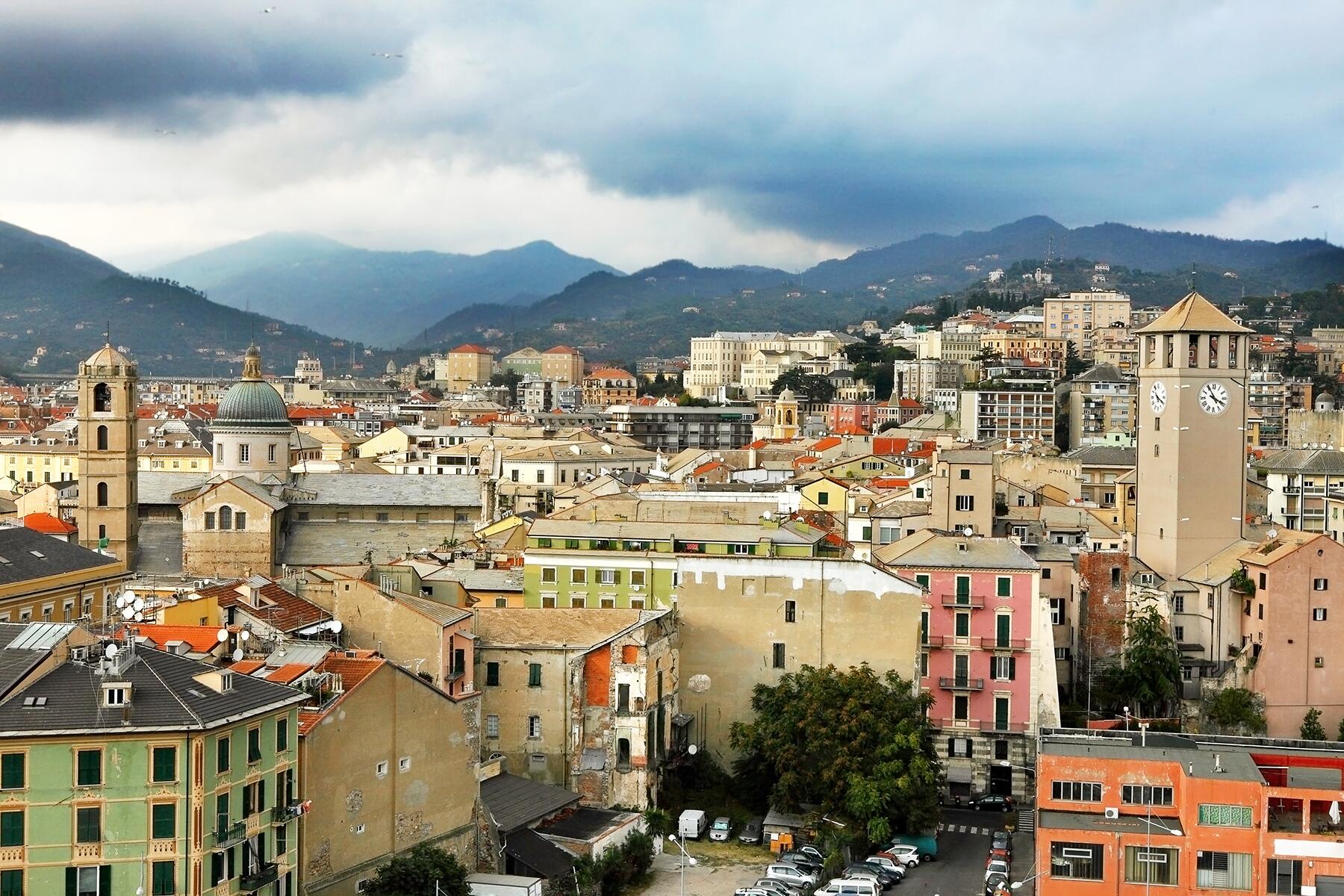
Savona

When you think of the Italian seaside, you think “paradise”, right? If so, maybe skip a trip to Savona—a Liguria region beach town that will make you rethink your image of the Italian riviera. A seaport town on Liguria’s Riviera di Ponente, Savona was among the places Christopher Columbus called “home,” and the ruins of his former dwelling is one of the various monuments that speak to the city’s historical importance. But modern Savona’s dingy streets, somber seaport, and stark, graffiti-streaked seaside pocked with outdated beach chairs and blocky post-war structures are a far cry from the lush shores and rainbow-hued mountainside architecture of, say, nearby Portofino; we bet you’ll like that Ligurian seaside town better.

3 OF 13

Latina

Latina, like many other cities established under the Fascist regime, was built in the “rationalist” style—an architectural ideal based on the “futuristic” principles that structure could create space without the “need” for decoration. Founded in 1932 on the Pontine marshes, Latina was one of Mussolini’s pet projects, and today it is widely regarded as the most, uh, “rational”; every plaster-and-iron inch of this Fascist dystopia is squat, oblong, and featureless. “This?” you cry. This was Benito’s Mussolini’s vision of the future? Speedwalk, don’t stroll, through the oppressive Piazza del Popolo. Shield your eyes from the jack-o’-lantern horror of Palazzo M!

4 OF 13

Colleferro

Another “newer” town in the metropolitan area of Rome, what is today known as Colleferro (est. 1935), grew up around the Segni-Paliano train station and the Bombrini Parodi Delfino explosives factory. Due to BPD’s role in developing fossil fuels and aeronautical technology, Colleferro was initially anointed to become Italy’s principal hub of technological innovation, earning it the nickname Città dello Spazio (Space City). BPD was acquired by the SNIA chemical factory in 1968—its empty shell hulks in the city outskirts—but there are still a number of other aerospace, steel, and chemical companies in Colleferro, such as Avio. The entire city has a bleak industrial feel, its residential areas the epitome of grim, post-war Italian suburbia.

5 OF 13

Catanzaro

The region of Calabria itself is home to many breathtaking natural sights, but, friends, its capital city of Catanzaro is not one of them. Though there are some architecturally important buildings in the city’s Medieval quarter, this once-iconic hub of the silk trade is now primarily an ill-kept center with a strong ‘Ndrangheta criminal presence. Its long stretch of beach lido and impressively large port are austere and neglected; its most important bridge -one of the tallest in Europe—is an unremarkable, one-arch stretch of cement. If you want to experience a truly breathtaking Calabrian seaside, head—gallop—to Tropea instead.

6 OF 13

Foggia

This thousand-year-old wheat-producing city in Apulia is still standing after a series of severe earthquakes and massive WW2 bombings. The Palazzo Dogana is a UNESCO site. There’s even an Academy of Fine Arts. Yet, for its notable qualities, Foggia remains reviled by Italians—both natives and tourists—as a bleary and sad city. Maybe it’s the characterless cinderblock “architecture” lining the treeless streets…

7 OF 13

Rosarno

Poor Rosarno’s homeliness isn’t completely its fault; it was razed by an earthquake in 1783 and the ensuing malaria epidemic decimated the population. What exists now of this humble town in the Calabria region was rebuilt hastily by whoever was still alive, or contemporary dwellers who’ve thrown together a ghostly proliferation of unfinished structures along its main artery, Via Provinciale, and all the other areas of the city. ‘Ndrangheta gang crime and tensions between locals and migrants up the sketch factor, to say nothing of the outlying hinterlands; desolate and bleak. Trust us: there have never been (and never will be) any idyllic oil paintings made of this Italian countryside.

8 OF 13

Librino (Catania)

Sure, Librino—a satellite city in the Southwestern part of Catania, Sicily—isn’t much different than other dilapidated, impoverished areas found outside major Italian cities. But its developers had good intentions; when ideating Librino in the 1960s, their original aspiration was to create a satellite city inspired by the Japanese urbanist Kenzō Tange. While that goal didn’t quite pan out, locals continue to strive to create a better Librino, and 2009 saw the inauguration of the “Porta della Bellezza”—an open-air modern art museum. It might be just an underpass painted blue and covered in terracotta bas-reliefs, but Librino’s heart is in the right place.

9 OF 13

Mestre/Marghera (Venice)

Magnificent Venice is a great place to visit, but boy, is it expensive, wet, and crowded. Locals often choose to reside in the more affordable boroughs connected by road or rail to the mainland, like the painfully undistinctive Mestre, with its lackluster artificial canals, or Marghera, a sterile eyesore of a port. And to think that there are majestic gondolas and gothic arches just across the lagoon.

10 OF 13

Ponte Mammolo (Rome)

There are some interesting villas and archaeological sites in the Ponte Mammolo area, but this sprawling quarter’s most (in)famous attraction is the Rebibbia Jail. One glance at the crumbling sidewalks, threatening graffiti, and dumpy ochre-colored buildings surrounding the Rebibbia Linea B metro station will have you wondering if you’ve accidentally wandered past the warden’s gates.

11 OF 13

Pilastro (San Donato-San Vitale, Bologna)

Pilastro—an outskirt of Bologna built in the 1960s to house the incoming waves of immigrants—has long been considered one of the city’s most run-down, least eye-friendly areas, despite numerous attempts at reforms. The site of a 1991 gang massacre, Pilastro has a distinctly Lego Village feel, with its slabs of blocky buildings, and its Piazza Lipparini is little more than a brown slab. The quarter’s most notable structure is perhaps a curve-shaped row of forbidding buildings nicknamed the Virgolone, giant comma, in Italian–more like a giant question mark.

12 OF 13

Zingonia (Bergamo)

In the late-1950s, Roman businessman Renzo Zingone had a dream: a residential and industrial city that was completely self-sufficient. Its name? Why, it would be named after himself, of course! Alas, Zingone’s dream was never to be: An economic recession plus planning and bureaucratic crises in the early ’70s caused him to relinquish his project to the COIMA group, and many of the planned structures were summarily abandoned in various stages of completion. Crime and decay flourished, and today, what remains of the Zingonia project is a massive concrete jungle of factories, warehouses, and plants. Even Corso Europa, Zingonia’s tree-lined boulevard, is sandwiched between, surprise, more factories, warehouses, and plants. Hey, at least there are warehouses.

13 OF 13

Bonus Hot Takes: Naples and Milan

Heavily-touristed Naples and Milan are undoubtedly two of the most important, historical cities in Italy—home to countless precious works of art and glorious examples of Italian architecture. Yet, they appear on “Italy’s Ugliest Cities” polls with alarming frequency. How can this be? Guess familiarity breeds contempt: locals and visitors alike dismiss metropolitan Milan as polluted, gray, and depressing, while Naples’s disreputable alleyways and garbage pile-ups are frequent targets for criticism. Turn over a coin and you’re bound to find the tarnish.