


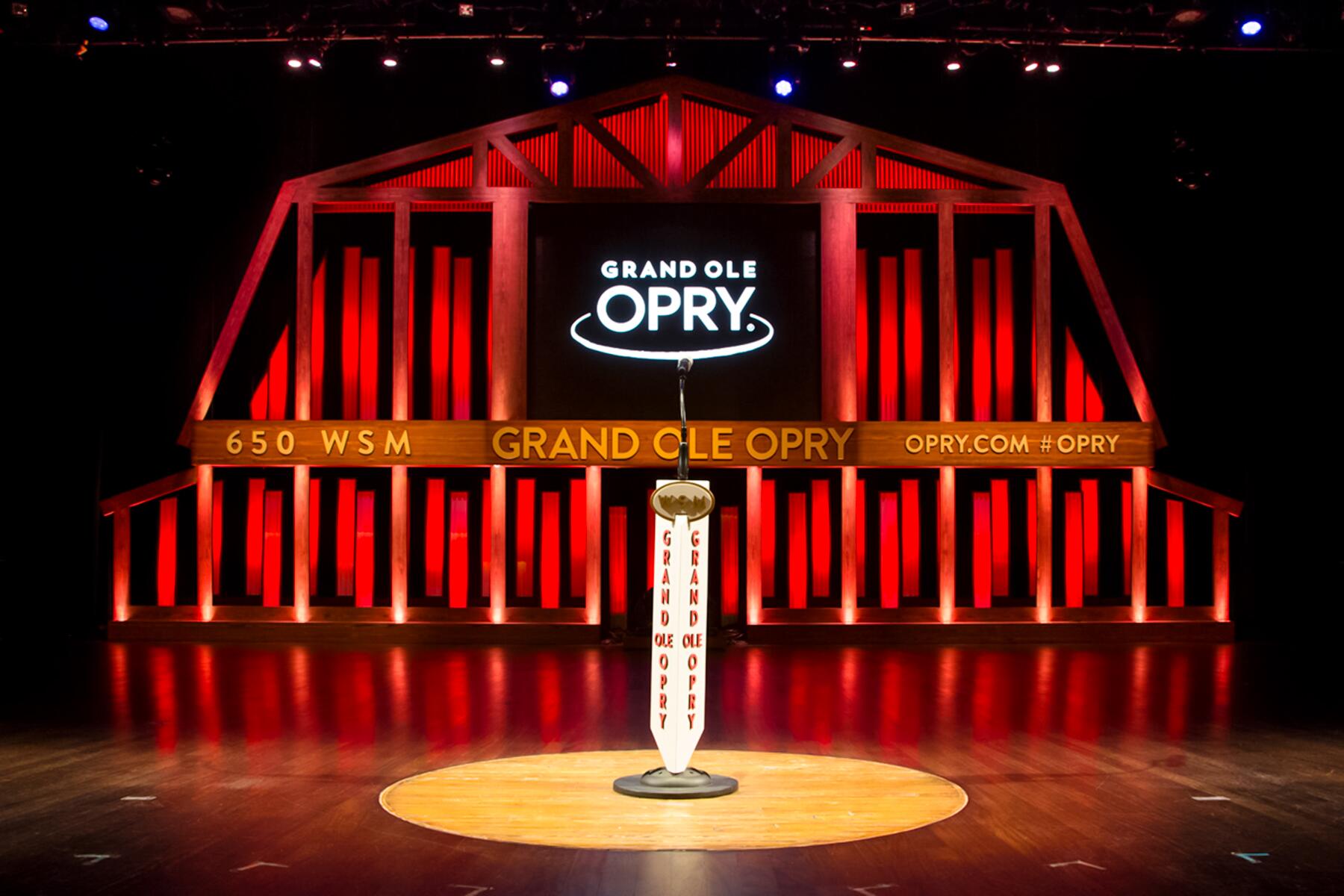

Backstage at the Grand Ole Opry, 100 years of tradition await.
I peek out from behind the thick, red curtains of Nashville’s Grand Ole Opry during my backstage tour, and I’m starstruck.
Not over a person, but over a six-foot circle of wood centerstage. This circle is probably the most famous entity in all of Nashville, cut from the stage of the former Opry home, the Ryman Auditorium, in 1974. It’s the sacred spot where every star who’s made it big has stood.
This is where Johnny Cash smashed out footlights in a flurry of intoxication and was temporarily banned from the Opry, and where Roy Acuff attempted to teach President Nixon to yo-yo just five months before he resigned from office. It’s where Dolly Parton debuted in 1959 at just 13 years old and where Elvis flopped his one and only Opry performance.
I let it wash over me: How many hopes and dreams must have walked across that stage?
That energy has been accumulating for more than 100 years now, since the Opry first opened in 1925. The world’s longest-running radio show has had a few physical homes, including the Ryman, but it’s always been the center of country music in Nashville. And now it’s celebrating its centennial birthday for a full year, through October 2026, with “Opry 100” shows that promise historic flashbacks, star-studded line-ups, and surprise guests.
Top Picks for You



Recommended Fodor’s Video
Down the hall, I brush elbows with country stars Dustin Lynch and Liam St. John as my guide whispers a lighthearted, “Don’t make it weird.” Instead, I try to focus my attention on the walls, where decades of history in pictures beam down. I’m shocked to see Sabrina Carpenter smiling at me. “What are you doing here?” I wonder. She’s a surprising choice for a country crowd, but our guide says she was well-received by fans. And she’s not the only non-country guest who’s performed here; big names like Jack Black, Kevin Bacon, and Paul McCartney have also graced the stage, proving you never know what you’re going to get on any given night.
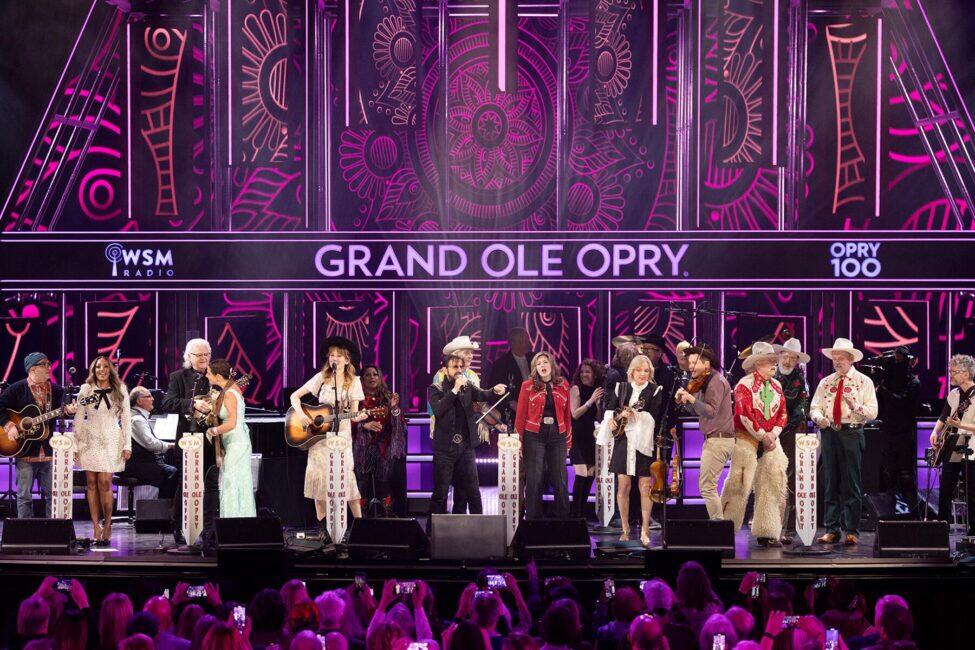
This is just what the Opry does. It surprises you. And while it’s hardly a secret that every one of the 200+ members invited into the Opry is called “family,” there are still plenty of family secrets to uncover.
When I see the artists’ family and friends gathering in the Family Room lounge, celebrating their performances and sipping lemonade, I am a lucky fly on the wall, transported to peak 70s Nashville through cozy fixtures (though I’m assured the old-school lockers have been upgraded since then, after a flood in 2010).
I peek into the 18 dressing rooms, all themed for a specific purpose. An “Into the Circle” room is kept for debuts, a “Stars and Stripes” room for service men and women, a “Women of Country” room dedicated to greats like Dolly Parton and Patsy Cline, and the “Cousin Minnie Room” with Minnie Pearl’s hat, with the price tag attached, of course. We pass an especially glitzy one, our guide points out, which is Dolly Parton’s favorite.
But I only double-take upon seeing that there’s a functioning Grand Ole Opry Post Office backstage. There’s a mailbox for every member of the family, so you can send fan mail to them, just as you might send a letter to the North Pole. Dolly Parton’s, 163, seems to be the fullest.
So yes, you can learn this all backstage. But it’s the performances that carry that secret Opry magic. When I take my seat post-tour, it’s just in time for Dom Flemons to step into the circle, center stage. Wearing suspenders, a plaid shirt, and a tilted pork pie hat, he could have stepped out of the past, a harmonica in his hands and a 1,000-watt smile on his face. With one deep breath, he begins — a breathless rollercoaster of a ride.
By the time he’s done, everyone in the audience is gasping for air. It’s a joyful, folksy country sound you don’t often hear live, so by the time he starts up plucking his banjo in traditional Carolina style, we’re all in. Several jaws drop, and we mouth, “Is this guy for real?” He’s, perhaps unexpectedly, stolen the show from a star-studded lineup, something that wouldn’t have been on my bingo card before coming to Nashville.
This is how I learn that country music isn’t a prerequisite for having an enjoyable night out at the Opry (which is news to me, a self-professed “not-so” country fan). I see now that the Opry’s appeal transcends genre and its gravitational pull is universal, never so apparent as when announcer Charlie Mattos shouts out birthdays to folks from their 20s to their 80s, and even one congrats to a couple who flew from the UK to get married that day.
The numbers speak for themselves. The Opry’s been broadcast for well over 5,000 consecutive Saturday nights and has reached an audience of more than 55 million. The Opry takes 15.8 million feet of audio, video, and lighting cable to run! But for me, a televised flashback of Garth Brooks that aired during the show said it best: “This is the pinnacle of what I do. Nothing has ever touched being a member of the Grand Ole Opry.”
When the evening is over, it’s clear that visiting the Grand Ole Opry is like taking a crash course to Nashville — an essential step to learning 100 years of history and music before (or after) you set foot on Broadway and see big country names splashed over the bars. I didn’t expect to heartily recommend it to every visitor of Nashville (even those who aren’t into country music), but here I am, shouting it from the rooftops. I stand by it. Even after 100 years, the Opry is still the defining experience of Nashville, the root of all its magic.