Get FREE email communications from Fodor's Travel, covering must-see travel destinations, expert
trip planning advice, and travel inspiration to fuel your passion.
We've compiled the best of the best in The Rhineland - browse our top choices for the top
things to see or do during your stay.
Sorry! We don't have any recommendations for The Rhineland right now.
Sights Filter
Monschau Altstadt
Share This
Tucked in the heart of Monschau, the Altstadt (Old Town) is a captivating maze of narrow cobblestone streets lined with well-preserved half-timbered houses. Dating back to the medieval period, the area invites leisurely strolls past quaint shops, cozy cafes, and historic buildings. The picturesque townscape, with its vibrant façades and charming architecture, offers a delightful step back in time and a glimpse into the region’s rich heritage.
Kölner Dom
Altstadt
Fodor's Choice
Share This
(c) Jchambers | Dreamstime.com
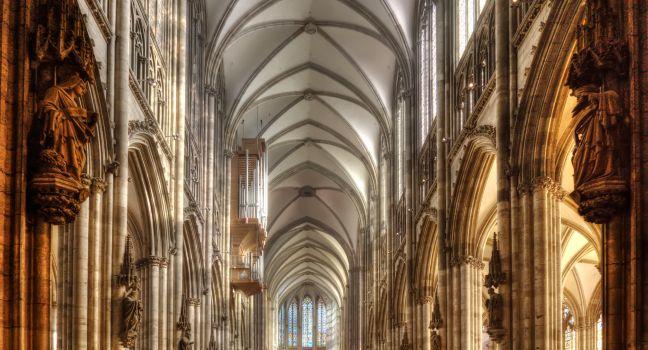
Cologne's landmark embodies one of the purest expressions of the Gothic spirit in Europe. The cathedral, meant to be a tangible expression of God's kingdom on Earth, was conceived with such immense dimensions that construction, begun in 1248, was not completed until 1880, after the original plan was rediscovered. At 515 feet high, the two west towers of the cathedral were briefly the tallest structures in the world when they were finished (before being eclipsed by the Washington Monument). The cathedral was built to house what are believed to be the relics of the Magi, the three kings who paid homage to the infant Jesus (the trade in holy mementos was big business in the Middle Ages—and not always scrupulous). The size of the building was not simply an example of self-aggrandizement on the part of the people of Cologne, however; it was a response to the vast numbers of pilgrims who arrived to see the relics. The ambulatory (the passage that curves around the back of the altar) is unusually large, allowing cathedral authorities to funnel large numbers of visitors up to the crossing (where the nave and transepts meet and where the relics were originally displayed), around the back of the altar, and out again.
Today the relics are kept just behind the altar, in the original, enormous gold-and-silver reliquary. The other great treasure of the cathedral, in the last chapel on the left as you face the altar, is the Gero Cross, a monumental oak crucifix dating from 971. The Altar of the City Patrons (1440), a triptych by Stephan Lochner, Cologne's most famous medieval painter, is to the right. Other highlights are the stained-glass windows, some dating from the 13th century and another, designed by Gerhard Richter with help from a computer program, from the 21st; the 15th-century altarpiece; and the early-14th-century high altar, with its glistening white figures and intricate choir screens. If you're up to it, climb to the top of the bell tower to get the complete vertical experience (at the time of writing, available by guided tour only at www.domforum.de) but be aware that viewing Cologne from the Dom itself removes the skyline's most interesting feature. The treasury includes the silver shrine of Archbishop Engelbert, who was stabbed to death in 1225.
Amphitheater
Fodor's Choice
Share This
The sheer size of Trier's oldest Roman structure (circa AD 100) is impressive; in its heyday it seated 20,000 spectators. You can climb down to the cellars beneath the arena—animals were kept in cells here before being unleashed to do battle with gladiators. Gladiatorial performances (1¼ hours) take place Friday through Sunday and holidays at 6 pm from April through October. Tickets can be booked in advance at Tourist Information.
Recommended Fodor's Video
Burg Rheinfels
Share This
(c) Maui01 | Dreamstime.com
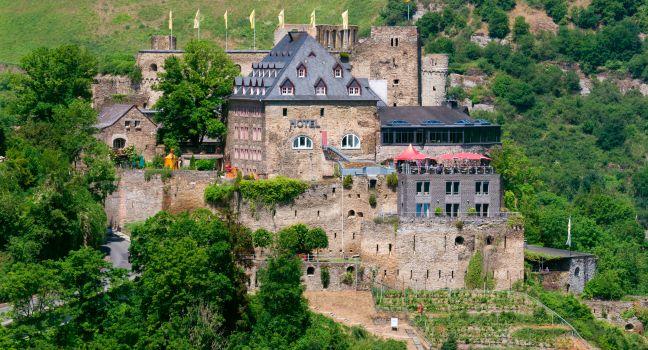
The castle ruins overlooking the town bear witness to the fact that St. Goar was once the best-fortified town in the Mittelrhein. From its beginnings in 1245, it was repeatedly enlarged by the counts of Katzenelnbogen, a powerful local dynasty, and their successors, the Landgraviate of Hesse. Rheinfels was finally demolished by the French in 1797. Take time for a walk through the impressive ruins and the museum, which has a detailed model of how the fortress looked in its heyday. It's a steep ascent by foot, but during the summer taxis regularly shuttle between St. Goar and St. Elisabeth Church and the castle.
Drachenfels
Share This
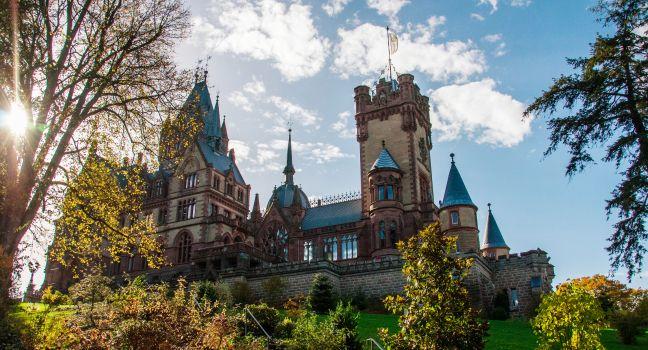
The town of Königswinter has one of the most visited castles on the Rhine, the Drachenfels. Its ruins crown one of the highest hills in the Siebengebirge, with a spectacular view of the Rhine. It's also part of Germany's oldest nature reserve, with more than 100 km (62 miles) of hiking trails. The castle was built in the 12th century by the archbishop of Cologne, and takes its name from a dragon said to have lived in a nearby cave. (The dragon was slain by Siegfried, hero of the epic Nibelungenlied.)
\n
The castle ruins can be reached via two different hikes, each of about 45 minutes. One route begins at the Drachenfelsbahn station, and passes the Nibelungenhalle reptile zoo along the way. The other route starts at Rhöndorf on the other side of the hill. The Siebengebirge Tourist Office can provide a map that includes these and other local hiking trails.
Schokoladenmuseum
Rheinufer
Share This
(c) Sjors737 | Dreamstime.com
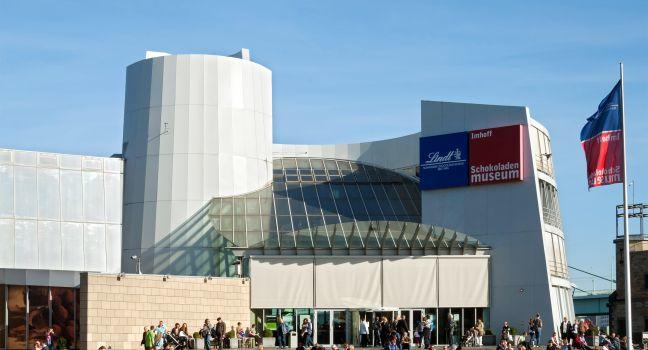
This riverside museum south of the cathedral is a real hit. It recounts 3,000 years of civilization's production and enjoyment of chocolate, from the Central American Maya to the colonizing and industrializing Europeans. It's also a real factory, with lava flows of chocolate and a conveyer belt jostling thousands of truffles. The museum shop, with a huge variety of chocolate items, does a brisk business, and the riverside panorama café serves some of the best cake in town.
Domgarten-Weinpfad
Share This
Winningen marks the start of several of the region's loveliest and most informative short walks: the educational Weinpfade (wine trails). There are five trails to choose from, with varying lengths from 4 to 9 km (2½ to 5½ miles), but the best introductory trail is the Domgarten-Weinpfad (Cathedral Garden Wine Trail). It starts and ends at the Weinhof (also a Tourist Information Office), leading up and through the vineyards that lie above the town. The beautiful, medium-difficulty, 4½-km (3-mile) circular route is lined with signs explaining the grape-growing and wine-making processes, as well as plenty of benches for enjoying the spectacular river views. The whole thing usually takes around two hours, excluding stops—and if you find you still have energy, there are four more trails to tackle.
Drachenfelsbahn
Share This
If hiking to Drachenfels isn't for you, you can also reach the castle ruins by taking the Drachenfelsbahn, a narrow-gauge train that makes trips to the summit every half hour from March through October, and hourly in January and February. Download a free audio tour (available in English) about the Drachenfelsbahn and the Drachenfels on the website.
Garten der Schmetterlinge Schloss Sayn
Share This
Butterflies from South America, Asia, and Africa flit back and forth over your head between the branches of banana trees and palms at this glass-enclosed garden north of Koblenz. The palace houses a small museum of decorative cast-iron objects, a restaurant, and a café, and its park can be explored. To reach the castle by public transport, take Bus No. 8 from Koblenz Hauptbahnhof to the last stop, "Schloss Sayn" (40 minutes).
Kaiserthermen
Share This
This enormous 4th-century bathing palace once housed cold- and hot-water baths and a sports field. Although only the masonry of the Calderium (hot baths) and the vast basements remain, they are enough to give a fair idea of the original splendor and size of the complex. Originally 98 feet high, the walls you see today are just 62 feet high.
Kö-Bogen II
Share This
The Kö-Bogen II office complex bills itself as having Europe's largest green façade, with eight kilometers of green hedges and approximately 30,000 plants in total.
Neanderthal Museum
Share This
Just outside Düsseldorf, the Düssel River forms a valley, called the Neanderthal, where the bones of a Stone Age relative of modern man were found. The impressive museum, built at the site of the discovery in the suburb of Mettmann, includes models of the original discovery, replicas of cave drawings, and life-size models of Neanderthal Man. A new highlight, the Höhlenblick tower, affords a view onto the spot where Neanderthal bones were found.
Roscheider Hof
Share This
For a look at 19th- and 20th-century rural life in the Mosel-Saar area, visit this hilltop Freilichtmuseum (open-air museum) near Konz-Saar, 10 km (6 miles) southwest of Trier. Numerous farmhouses and typical village buildings in the region were saved from the wrecking ball by being dismantled and brought to the Roscheider Hof, where they were rebuilt and refurnished as they appeared decades ago. Old schoolrooms, a barbershop and beauty salon, a tavern, a shoemaker's workshop, a pharmacy, a grocery, and a dentist's office have been set up in the rooms of the museum proper, along with period rooms and exhibitions on local trades and household work, such as the history of laundry. In addition to a large collection of tin figures, there's also a Biedermeier rose garden, a museum shop, and a restaurant with a beer garden on the grounds.
Sesselbahn Boppard
Share This
Take a ride on this 70-year-old chairlift and you'll be whisked a half-mile uphill to the Vierseenblick (Four-Lake View). It's called that because, at this particularly bendy point of the Rhine, the river appears to be a chain of four unconnected lakes. The journey takes approximately 20 minutes, but it's a rickety ride with your legs dangling, so it's not ideal for those scared of heights. Once at the top, as well as enjoying the views—including of Marksburg across the water—there are a number of hiking trails heading off into nature.
Subscribe to Newsletter
Sign up for Travel Tips & News
I want emails from Fodor's Travel with travel information and promotions. I can unsubscribe
any time using the unsubscribe link at the end of all emails.
Thank you for your interest!
Look out for our newsletters with travel tips and special offers.
Sign up for Travel Tips & News
By signing up for the
newsletter, I agree to the Privacy Policy. You must check the box to subscribe
Thank you for your interest!
Look out for our newsletters with travel tips and special offers.