132 Best Sights in The Rhineland, Germany

Background Illustration for Sights

We've compiled the best of the best in The Rhineland - browse our top choices for the top things to see or do during your stay.

Kölnisches Stadtmuseum
Altstadt
City Museum in Cologne, Rhineland, Germany.
(c) Moskwa | Dreamstime.com

The triumphs and tragedies of Cologne's rich past are packed into this museum relocated in March 2024 at the site of a former luxury shopping mall. Here you'll find an in-depth chronicle of Cologne's history—including information about the lives of ordinary people and the destruction incurred during World War II. For those who've always wanted to be privy to the inside stories surrounding local words such as Klüngel, Kölsch, and Karneval, the answers are waiting to be discovered within the museum's walls.
Marksburg Castle

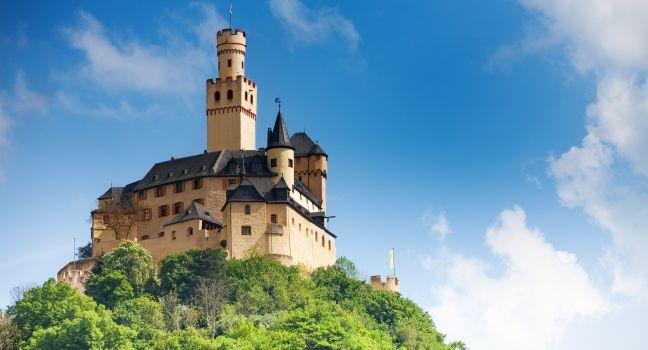
View Marksburg castle in Germany, Europe over blue sky on top of the high mountain.
(c) Serrnovik | Dreamstime.com
Rising high above the town, the dramatic 12th-century Marksburg Castle—part of a Unesco World Heritage Site—makes for some breathtaking vistas from above and below. Unlike other castles along the Rhine, which suffered in the various wars and battles, Marksburg is the only one to survive undamaged. A marvel of medieval architecture, the castle functioned mostly as a strategic base and not a family seat, but its enormous kitchen, Gothic dining hall, painted chapel, armory, and truly medieval torture chamber, with a gruesome collection of perversely imaginative instruments, are all fascinating remnants of life in the 14th and 15th centuries. There is a gift shop and a café offering drinks, light snacks, and meals at the castle.
Marksburg, Braubach, 56338, Germany
2627–536
Sight Details
€6
Mid-Mar.-Oct., daily 10–5; Nov.-mid-Mar., daily 11–4

Something incorrect in this review?

Museum Ludwig

Innenstadt
Germany, federal state of North Rhine-Westphalia; City Cologne: Museum Ludwig: Museum of Modern Art, which forms part of the Ludwig Museums and displays contemporary visual art. The modern museum building with its striking architecture is characteristic of
(c) Sjors737 | Dreamstime.com

This museum is dedicated to art from the beginning of the 20th century to the present day. Its American pop-art collection (including Andy Warhol, Jasper Johns, Robert Rauschenberg, Claes Oldenburg, and Roy Lichtenstein) rivals that of many American museums. It is also home to the third-largest Picasso collection in the world, something one might not expect to find in Cologne.

Heinrich-Böll-Pl., Cologne, 50667, Germany
0221-2212–6165
Sight Details
€12
Closed Mon.

Something incorrect in this review?

Recommended Fodor's Video

Poppelsdorfer Schloss

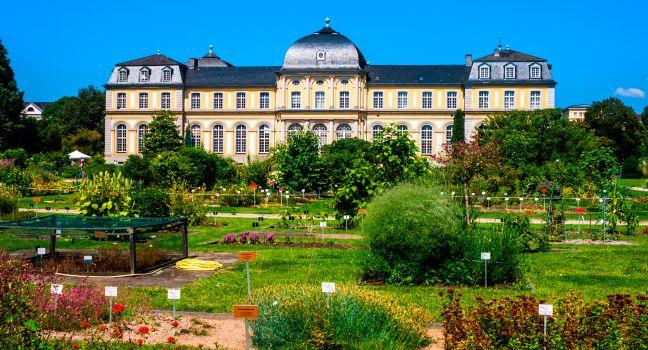
Poppelsdorf Palace and botanical garden in Bonn, Germany. Photo taken on: July 07th, 2013
(c) Mathes | Dreamstime.com

This former electors' palace, built in the baroque style between 1715 and 1753, now houses the university's mineralogical collection. Its botanical gardens are home to 12,000 species, among the largest variety in Germany.

Meckenheimer Allee 171, Bonn, 53115, Germany
0228-735–523-garden
Sight Details
Mineralogical collection €2.50; botanical garden free weekdays, €3 Sun.
Museum closed Mon., Tues., Thurs., and Sat. Garden closed Sat. (weekends in winter)

Something incorrect in this review?

Rathaus

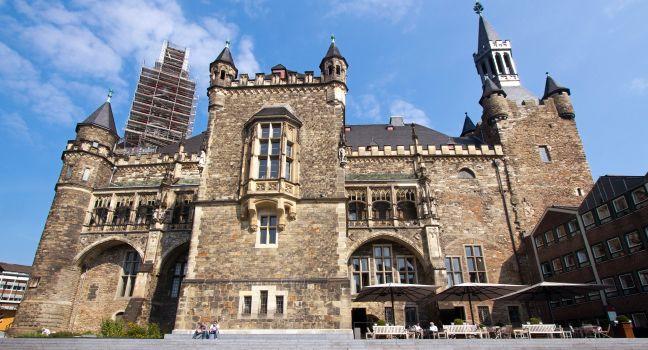
Aachen, Germany - August 28, 2013: The historical town hall (Rathaus) with people sitting in an outdoor cafe in Aachen, Germany on August 28, 2013.
(c) Jank1000 | Dreamstime.com

Aachen's town hall sits behind the Dom, across Katschhof Square. It was built in the early 14th century on the site of the Aula Regia, or \"great hall,\" of Charlemagne's palace. Its first major official function was the coronation banquet of Emperor Karl IV in 1349, held in the great Gothic hall you can still see today (though this was largely rebuilt after World War II). On the north wall of the building are statues of 50 emperors of the Holy Roman Empire. The greatest of them all, Charlemagne, stands in bronze atop the Karlsbrunnen in the center of the market square.

Marktpl., Aachen, 52062, Germany
0241-432–7310
Sight Details
€6

Something incorrect in this review?

Römerkastell Bodobrica

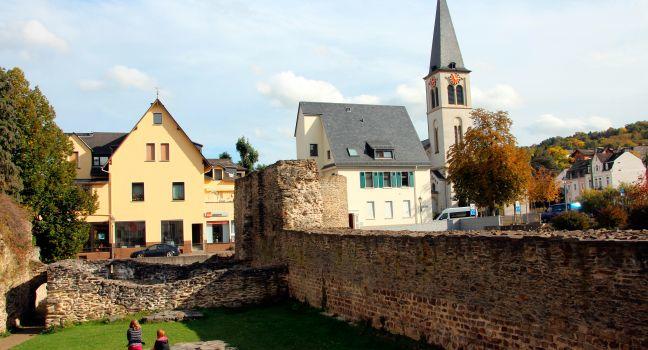
Roman ruins in small german town Boppard Image taken 10/13/12. Photo taken on: October 13th, 2012
(c) Mirceani | Dreamstime.com

A Roman garrison was established on this site in the 4th century, and would once have been enclosed by a 26-foot-high rectangular wall with 28 defense towers. Today, there are only ruins, set within an open-air archaeological park (sandwiched between Angertstrasse and Kirchgasse), but you can still see portions of the wall and towers.

Kirchgasse 5, Boppard, 56154, Germany

Something incorrect in this review?

Römisch-Germanisches Museum

Innenstadt
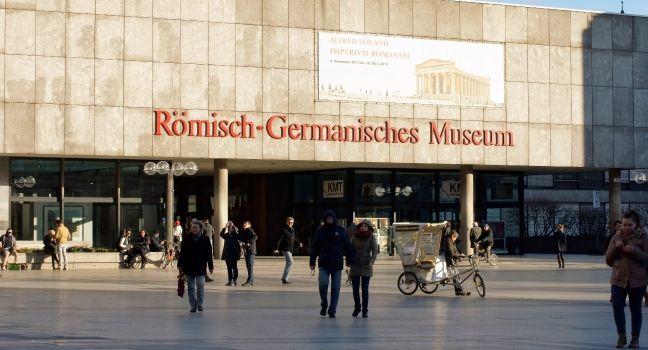
The Roman-Germanic Museum in Cologne. Photo taken on: February 02nd, 2014
(c) Ginton | Dreamstime.com

While this archeological museum is closed for renovations until 2026, a selection of important treasures from its collection of ancient Roman artifacts is on view in the Belgian House, near the Neumarkt Galerie shopping mall. Among them are tombstones and busts from the 1st century, ancient glass vessels decorated with the trademark “Cologne Squiggle,” and everyday objects from Roman life. Placards are in both German and English.

Schokoladenmuseum

Rheinufer
Germany, FEDERAL state of North Rhine-Westphalia; City Cologne: exterior of the Cologne Chocolate Museum. This museum is the first museum in the chain of making chocolate to consumers in a clear way to present historical exhibitions. The building is locate
(c) Sjors737 | Dreamstime.com

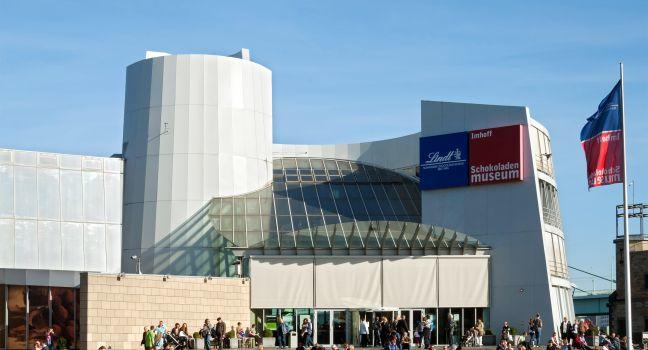
This riverside museum south of the cathedral is a real hit. It recounts 3,000 years of civilization's production and enjoyment of chocolate, from the Central American Maya to the colonizing and industrializing Europeans. It's also a real factory, with lava flows of chocolate and a conveyer belt jostling thousands of truffles. The museum shop, with a huge variety of chocolate items, does a brisk business, and the riverside panorama café serves some of the best cake in town.

Wernerkapelle

Wernerkapelle, a Gothic chapel ruin on the path to Castle Stahleck above the town of Bacharach, Germany Photo taken: August 10, 2012.
(c) [email protected] | Dreamstime.com

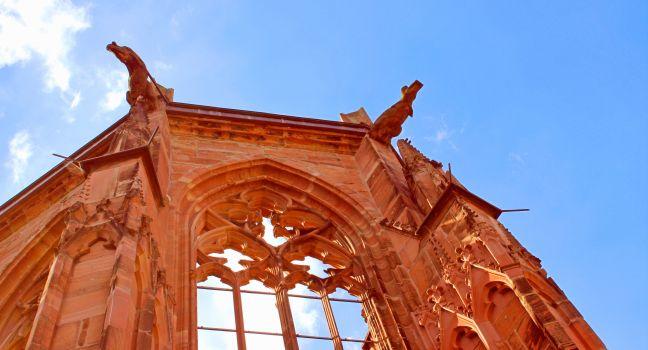
From the southern side of St. Peter's Church, a set of stone steps (signposted) leads to Bacharach's undoubted landmark, the Wernerkapelle. It's a bit of a climb, but well worth for a close-up look at these romantic sandstone ruins, famous for their filigree tracery, as well as for the sweeping views around. The Gothic chapel's roof succumbed to falling rocks in 1689, when the French blew up nearby Burg Stahleck; it's a 10-minute walk from here to the old castle, which lay dormant until 1925 when a youth hostel was built on the foundations.

Bacharach, 55422, Germany

Something incorrect in this review?

Alter Friedhof

This ornate, leafy cemetery is the resting place of many of the country's most celebrated sons and daughters. Look for the tomb of composer Robert Schumann (1810–56) and his wife, Clara, also a composer and accomplished pianist. A PDF plan of the most prominent burial sites can be found on the cemetery website. Guided tours (in German) are conducted on weekends.

Bornheimerstr., Bonn, 53119, Germany
Sight Details
Guided tours €5

Something incorrect in this review?

Altes Rathaus

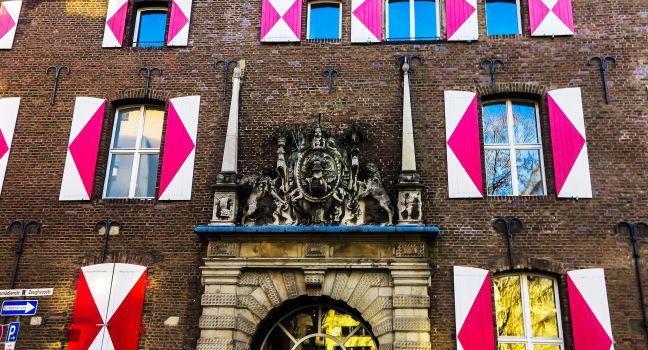
This 18th-century rococo town hall looks somewhat like a pink dollhouse. Its elegant steps and stair entry have seen a great many historic figures, including French president Charles de Gaulle and U.S. president John F. Kennedy. It's now the seat of the Lord Mayor of Bonn and can only be admired from the outside.

Bonn, 53111, Germany

Something incorrect in this review?

Altstadt

This party-hearty district has been dubbed a beer lover's paradise thanks to the number of breweries in the area serving the local Altbier. Narrow alleys thread their way to some 300 bars, clubs, restaurants, and brew houses. All crowd into the 1-square-km (½-square-mile) area between the Rhine and Heinrich-Heine-Allee. When the weather cooperates, the area really does seem like one big sidewalk café.

Düsseldorf, 40213, Germany

Something incorrect in this review?

Altstadt

Known as Schiffchen (Little Ship) because of the boatlike shape at its heart—formed by Grabenstrasse and Wagemannstrasse, located just behind the former duke's palace (and now seat of state parliament) Stadtschloss—Wiesbaden's pretty Old Town is packed with restaurants, cafés and shops. There aren't many standout sights within its margins, which are marked by Webergasse in the north, the Marktplatz in the east, Schwalbacher Strasse in the west, and Rheinstrasse in the south, but the interesting mix of architectural styles makes it a lovely area to stroll around.

Mauritiusplatz, Wiesbaden, 65183, Germany

Something incorrect in this review?

Apollinariskirche (Church of St. Apollinaris)

Standing high over the town on the Apollinarisberg Hill, the roots of this neogothic church run deep. The site first hosted an ancient Roman temple that was supplanted in medieval times by a 9th-century Frankish chapel dedicated to Saint Martin. In 1110 the Benedictines built an abbey on the site, which became the resting place for the relics of St. Apollinaris of Ravenna sometime in the 14th century. The 14th-century crypt was incorporated into the present neogothic church, built in 1839–42. The grounds of this richly frescoed church offer wonderful views of the Middle Rhine Valley.

Basilika St. Martin

First mentioned in AD 793, this soaring Catholic church was built on the site of an older Roman temple. It's been destroyed and rebuilt a number of times since then, which has resulted in an interesting mix of architectural styles; the 11th-century crypt and Gothic and baroque furnishings make it worth a visit. It's dedicated to the 4th-century Martin of Tours, and you'll find the former patron saint of France depicted in carvings and frescoes throughout the church.

Basilikastr. 2, Bingen, 55411, Germany

Something incorrect in this review?

Basilika St. Severus

Excavations in the 1960s revealed ancient Roman baths hidden beneath this twin-towered Romanesque church, the main feature of Boppard's market square. The large triumphal crucifix over the main altar and a lovely statue of a smiling Madonna date from the 13th century.

Bauernmuseum

Now part of the Zum Weissen Schanen (White Swann) hotel, this farmer's museum, lovingly restored by the inn's owner and open all day for free to the public, displays antique agricultural implements, examples of pottery from over the centuries, and an ancient kitchen. Close by on the premises is a well-preserved 800-year-old-mill that was once the property of the Counts of Katzenelnbogen.
Brunnenstrasse 4, Braubach, 56338, Germany
02627–9820
Sight Details
Daily 10–8

Something incorrect in this review?

Beethoven-Haus

Beethoven was born in Bonn in 1770 and, except for a short stay in Vienna, lived here until the age of 22. You'll find scores, paintings, violins, a grand piano (his last, in fact), and an ear trumpet or two. The museum shop carries everything from kitsch to elegant Beethoven memorabilia.

Bonng. 20, Bonn, 53111, Germany
0228-981–7525
Sight Details
€14
Closed Tues

Something incorrect in this review?

Bischöfliche Weingüter

Located right underneath Trier's streets, this labyrinth of cellars, full to brimming with historic Mosel wine barrels, dates back to 1380 AD and covers around three hectares. Descend for a 60-minute cellar tour, which includes a sparkling wine reception and gift bottle of wine. You can also opt for a wine tasting in the vinothek; pre-booking is required.

\n

\n

Drop down into a labyrinth of cellars beneath Trier's streets or visit the estate's elegant vinothek (wine store) to sample fine Rieslings, which were built on almost two millennia of priestly tradition. Tastings are available which showcase six wines and one sparkling wine.

Gervasiusstr.1, Trier, 54290, Germany
0651-145–760
Sight Details
Cellar tour from €25; tastings from €32
Closed Sun.

Something incorrect in this review?

Bonner Münster

The 900-year-old church is vintage late Romanesque, with a massive octagonal main tower and a soaring spire. It stands on a site where two Roman soldiers were executed in the 3rd century for being Christian. It saw the coronations of two Holy Roman Emperors (in 1314 and 1346) and was one of the Rhineland's most important ecclesiastical centers in the Middle Ages. The 17th-century bronze figure of St. Helen and the ornate rococo pulpit are highlights of the interior. Outside you'll find two giant stone heads: those of Cassius and Florentius, the martyred soldiers.

Münsterpl., Bonn, 53111, Germany
0228-985–880
Sight Details
Free

Something incorrect in this review?

Bundeskunsthalle

This is one of the Rhineland's most important venues for major temporary exhibitions about art, culture, and archaeology. Its modern design, by Viennese architect Gustave Peichl, is as interesting as anything on exhibit in the museum. It features three enormous blue cones situated on a lawnlike rooftop garden.

Helmut-Kohl-Allee 4, Bonn, 53113, Germany
0228-91710
Sight Details
From €13; reduced to €7 2 hrs before closing
Closed Mon.

Something incorrect in this review?

Bundesviertel

Walking through the pleasant area that was once the government district is like taking a trip back in time, to an era when Bonn was still the sleepy capital of West Germany. Bordered by Adenauerallee, Kaiser-Friedrich-Strasse, Franz-Josef-Strasse, and the Rhine, the quarter boasts sights such as the Bundeshaus, which includes the Plenarsaal (Plenary Hall). Designed to serve as the new Federal Parliament, the Bundeshaus was completed only seven years before the capital was relocated to Berlin in 1999. A few steps away, you'll find the historic Villa Hammerschmidt, the German equivalent of the White House. This stylish neoclassical mansion began serving as the federal president's permanent residence in 1950, and is still his home when he stays in Bonn. Equally impressive is the Palais Schaumburg, another fine example of the Rhein Riveria estates that once housed the Federal Chancellery (1949–76). It became the center of Cold War politics during the Adenauer administration.

Bonn, 53113, Germany

Something incorrect in this review?

Burg Klopp

Throughout its history, Bingen has repeatedly been destroyed by wars and fires, which means there are many ancient foundations but few visible architectural remains of the past. One very notable exception is this castle. Since Celtic times, the Kloppberg (Klopp Hill) in the heart of town has been the site of a succession of citadels, and since 1282 they've all been named Burg Klopp. Visit today and you'll find a terrace with good views of the Rhine, the Nahe, and the surrounding hills, and from April to October you can climb the tower for a more lofty view.

Burg Landshut

Take a walk up to the hilltop ruins of this 13th-century castle for splendid views along the Mosel. It was here that Trier's Archbishop Boemund II is said to have recovered from an illness by drinking the local wine. This legendary vineyard, still known as \"the Doctor,\" soars up from Hinterm Graben street near the town gate, Graacher Tor. You can sample these Grand Cru wines at the castle's excellent restaurant (though be prepared to pay for the privilege) or pick up a bottle in one of the many shops below. The restaurant is open Friday to Sunday only for both lunch and dinner.

Burg Landshut 1, Bernkastel-Kues, 54470, Germany
06531-500--5900-Restaurant
Sight Details
Restaurant closed Mon.--Thurs.

Something incorrect in this review?

Burg Metternich

On the opposite shore of the river, the romantic ruins of this medieval-era castle crown the Schlossberg (Castle Hill) vineyard. The Lords of Braunshorn are named as owners of Metternich as far back as 1268, but the core of the castle is probably even older than that. Enjoy a glass of wine or a hearty meal in the castle's terrace café, then take a stroll down to the village of Beilstein. It's known as \"Sleeping Beauty of the Mosel\"; once you ascend the Klostertreppe (monastery steps) to the baroque monastery church for views of the winding streets lined with half-timber houses, you'll understand why.

Burg Metternich, 56814, Germany
02673-93639
Sight Details
€3
Closed Nov.--Mar.

Something incorrect in this review?

Burg Sooneck

Perched on the edge of the Soon Forest, which is pronounced \"zone\" southeast of Bacharach, this small but beautiful castle was first mentioned in 1271—though it's likely older. It houses a beautiful collection of Empire, Biedermeier, and neo-Gothic furnishings, medieval weapons, and paintings from the Rhine Romantic era; ask for the English-language information pack on arrival. The river views from the ramparts are worth the entrance fee alone.

Sooneckstr. 1, Niederheimbach, 55413, Germany
06743-6064-Museum
Sight Details
€6
Closed Nov.--Apr.

Something incorrect in this review?

Calmont Klettersteig

From Ediger-Eller train station, head west into the hills instead of east into the village, and you'll find yourself on a hiking route among Europe's steepest vineyards. The path, which runs for 3½ km (2 miles) between Ediger-Eller and Bremm at an altitude of between 200 and 300 meters, comes with steel ropes for support (it's very steep in places) and provides stunning views up and down the Mosel. Look out for the romantic ruins of a 12th-century Augustinian convent; it's across the river just before the loop to Bremm. The path is reserved for those with a good level of fitness and in possession of sturdy footwear.

Carolus-Thermen Bad Aachen

If you're a steam-lover, try this high-tech spa with a venerable history. In Dürer's time there were regular crackdowns on the orgiastic goings-on at the baths. Today taking the waters is done with a bathing suit on, but be aware that the sauna area is a clothes-free zone.

Passstr. 79, Aachen, 52070, Germany
0241-182–740
Sight Details
From €16

Something incorrect in this review?

Centre Charlemagne

Despite its name, this museum, which opened in 2014, doesn't just pay homage to Charlemagne, the man who put Aachen on the map in the 8th century. It also reveals Aachen's much broader history, from Neolithic times to the present, including its Celto-Roman and baroque-era stints as a spa town, and its centuries as Holy Roman imperial coronation city. Multimedia stations help bring the past to life, and the interactive audio guide is highly recommended.

Cochemer Sesselbahn

Hop on this chairlift to the Pinner Kreuz for great vistas, which you can enjoy from the terrace of the café at the top. As the name suggests, these lifts are the open-air foot-dangling type, rather than the enclosed gondolas, so those with a fear a heights may prefer the steep walk instead.

Endertstr. 44, Cochem, 56812, Germany
02671-989–063
Sight Details
€5.90 one way; €7.90 round-trip
Closed mid-Nov.–mid-Mar.

Something incorrect in this review?