40 Best Sights in The Black Forest, Germany

Background Illustration for Sights

We've compiled the best of the best in The Black Forest - browse our top choices for the top things to see or do during your stay.

Europa-Park

Fodor's choice
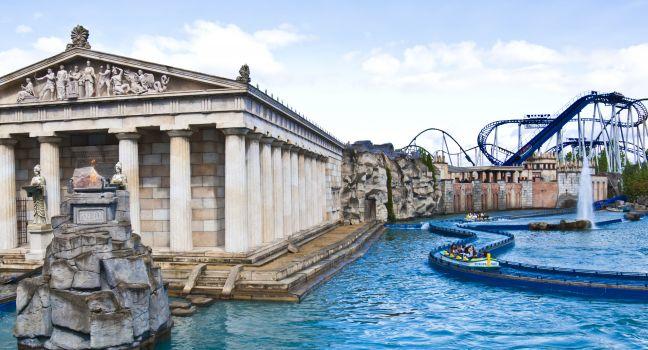
View over the Greek themed area of Europa Park. Poseidon is a high-speed water coaster with incredibly detailed theming, such as the Trojan Horse, and the station being located inside a recreated Acropolis temple. Europa-Park is the largest theme park in G
(c) Preisler | Dreamstime.com

Covering 160 acres, Europa-Park is the continent's largest and busiest amusement park and one of Germany's best-loved attractions. It has a quaint walk-through replica of European villages as well as roller coasters and rides, like the Eurosat CanCan Coaster, a virtual journey inside the Moulin Rouge, and the Silver Star, one of Europe's highest roller coasters. Try the Swiss Bob Run or the Poseidon Water Roller Coaster for even more thrills for the entire family.

Brauerei Museum

Fodor's choice

The Brauerei was once part of the monastery, and has brewed beer since the Middle Ages. The unusually soft water gives the beer a flavor that is widely acclaimed. There are guided tours of the brewery museum daily at noon and 2:30 (in German only, though English headsets are available), which include glasses of beer, as well as tours and tastings on selected Fridays and Saturdays; see the website for details. If there is one place in Germany to go out of your way for a beer, Alpirsbach is it.

Marktpl. 1, Alpirsbach, 72275, Germany
07444-67149
Sight Details
Tour from €9.70

Something incorrect in this review?

Breisach am Rhein

Fodor's choice

The largest of several towns comprising the Kaiserstuhl region, Breisach am Rhein is a typical German village, with a cathedral atop a hill and an impressive city hall. The exceptional thing here is the views from the square beside the cathedral, which show the Black Forest to the east and France to the west (just beyond the River Rhine). It's a sister city to the UNESCO-recognized Neuf-Breisach across the border and a beautiful stopover for many Rhine river cruises.

Recommended Fodor's Video

Münster Unserer Lieben Frau

Fodor's choice

The Münster Unserer Lieben Frau, Freiburg's most famous landmark, towers over the medieval streets. The cathedral took three centuries to build, from around 1200 to 1515. You can easily trace the progress of generations of builders through the changing architectural styles, from the fat columns and solid, rounded arches of the Romanesque period to the lofty Gothic windows and airy interior of the choir. The delicately perforated 380-foot spire, the finest in Europe, can be climbed. In addition to a magnificent view, you'll get a closer look at the 16 bells, including the 1258 \"Hosanna,\" one of Germany's oldest functioning bells. Guided one-hour tours are offered Mon.–Sat. at 2 pm, but are usually held in German; check the website for details.

Münsterpl. 1, Freiburg, 79098, Germany
0761-202–790
Sight Details
Free; €2 to visit choir; €5 to climb tower; €8 for one-hour tours

Something incorrect in this review?

Museum Frieder Burda

Fodor's choice

Built as an exhibition hall for the private collection of businessman Frieder Burda, this modern structure was designed by acclaimed New York architect Richard Meier. Continually rotating, the private collection focuses on classic modern and contemporary art. Highlights include a number of pieces by Gerhard Richter as well as works by Picasso, German expressionists, the New York School, and American abstract expressionists.

Neuf-Brisach

Fodor's choice
Three miles from Breisach on the French side of the Rhine, this extraordinary example of a fortified town is the last and greatest work by the 17th-century French military engineer Sébastian Vauban. Declared a UNESCO World Heritage Site in 2008, the huge octagonal fortification, which contains an entire city, was built at the orders of Louis XIV after the town of Breisach, the king's former stronghold on the Rhine, was returned to Austria. Deprived of his stake on this important riverside front, Louis enlisted the help of his head engineer, who decided to design an entire fortified town from scratch. Though damaged in 1870 and again during WWII, Neuf-Brisach remains almost unchanged. Regular buses from Breisach train station connect Breisach and Neuf-Brisach via Colmar, a 10–20-minute trip.
Breisach, 68600, Germany

Something incorrect in this review?

Rebland Vineyard Region

Fodor's choice
The soft slopes between the Rhine plains and the Black Forest on the outskirts of Baden-Baden enjoy a mild climate that's perfect for the vineyards growing Riesling here. A part of the Baden Wine Route, the Rebland area is home to a number of small, family-run vineyards that offer tours and tastings.

Schwarzwaldbahn

Fodor's choice

The Hornberg–Triberg–St. Georgen segment of the Schwarzwaldbahn is one of Germany's most scenic train rides. The 149-km (93-mile) Schwarzwaldbahn, built from 1866 to 1873, runs from Offenburg to Lake Constance via Triberg. It has no fewer than 39 tunnels, and at one point climbs almost 2,000 feet in just 11 km (6½ miles). It's part of the German Railway, and you can make inquiries at any station.

Triberg Waterfalls

Fodor's choice

At the head of the Gutach Valley, the Gutach River plunges more than 500 feet over seven huge granite cascades at Triberg's waterfall, Germany's highest. The pleasant 45-minute walk from the center of town is well signposted. A longer walk goes by a small pilgrimage church and the old Mesnerhäuschen, the sacristan's house. You can do much of the hike free of charge but to climb to the top, you'll need to pay a fee, which also gives you access to the Schwarzwaldmuseum, Triberg-Land (featuring interactive miniature train models), and Triberg Fantasy (an Instagram museum).

Hauptstr. 85, Triberg, 78098, Germany
0722-2724
Sight Details
€8 in summer, €6 in winter

Something incorrect in this review?

Augustinermuseum

A visit to Freiburg's cathedral is not really complete without also exploring the Augustinermuseum, in the former Augustinian cloister. Original sculpture from the cathedral is on display, as well as gold and silver reliquaries. The collection of stained-glass windows, dating from the Middle Ages to today, is one of the most important in Germany.

Augustinerpl., Freiburg, 79098, Germany
0761-201–2531
Sight Details
€8
Closed Mon.

Something incorrect in this review?

Badisches Landesmuseum

Housed in the Schloss Karlsruhe, this museum has a large number of Greek and Roman antiquities and trophies that Ludwig the Turk brought back from campaigns in Turkey in the 17th century. Most of the other exhibits are devoted to local history.

Schlossbezirk 10, Karlsruhe, 76131, Germany
0721-926–6514
Sight Details
From €8; free Fri. after 2 pm
Closed Mon.

Something incorrect in this review?

Casino Baden-Baden

Germany's oldest casino, this testament to 19th-century decadence was the brainchild of Parisian Jacques Bénazet, who persuaded the sleepy little Black Forest spa town to build gambling rooms to enliven its evenings after gambling was banned in France (just a few miles away). Opened in 1855, the sumptuous interior was modeled on Versailles, right down to the Pompadour Room, home to a \"practice\" roulette table, and the luminous Winter Garden, with white marble and antique Chinese vases. The richly decorated gaming rooms could make even an emperor feel at home—Kaiser Wilhelm I was a regular patron, as was his chancellor, Bismarck. Russian novelist Dostoyevsky related his experiences here in his novella, The Gambler, and Marlene Dietrich reputedly called it the most beautiful casino in the world. Passports are necessary as proof of identity. Guided tours (40 minutes) are available in English daily at 1 pm. To try your hand at either French or American roulette, blackjack, or Texas hold'em, you'll need to be over 21 and follow a strict dress code (elegant evening wear, including jackets for men; you can also borrow a jacket for a €10 charge).

Kaiserallee 1, Baden-Baden, 76530, Germany
07221-30240
Sight Details
Access to classic gaming area €5 per person (access to slot machines free); guided tour €10

Something incorrect in this review?

City History Museum

This small museum offers a 4,000-year journey through the history of a typical Rhine river town, from the early settlements through the Middle Ages up to a sobering exhibition describing the bombardment that destroyed nearly 90% of Breisach during WWII. The museum is housed in a 17th-century edifice built according to designs by Vauban, France's renowned military architect under Louis XIV.
Rheintorplatz 1, Breisach, 79206, Germany
7667–832–161
Sight Details
€2
Tues.–Fri. 2–5; weekends and holidays 11:30–5

Something incorrect in this review?

Deutsches Uhrenmuseum

In the center of Furtwangen, 16 km (10 miles) south of Triberg, drop in on the Uhrenmuseum, the largest such museum in Germany. It charts the development of Black Forest clocks and exhibits all types of timepieces—from cuckoo clocks, church clock mechanisms, kinetic wristwatches, and old decorative desktop clocks to punch clocks and digital blinking objects. The museum is closed for renovations until 2026.

Endingen

Officially founded in 1285, this small town in the center of the wine-growing Kaiserstuhl changed hands several times, most notably when it became a tributary to the Hapsburg Empire. This history is documented in the free Austria Museum in the Üsenberger Hof, also home to the town's tourist information center. Largely spared from the ravages of war, the town center still maintains timber-frame houses dating back to the 15th century that give it a quaint, traditional look complemented by a series of churches within the city walls.

Endingen, 79346, Germany
07642-689–990

Something incorrect in this review?

Fabergé Museum

The first museum dedicated to the work of Russian jeweler Carl Peter Fabergé holds up to 700 masterpieces from the private collection of Muscovite businessman A. Ivanov. Priceless pieces from the late 19th century include several of the 52 unique eggs gifted to members of Russian royalty, including the first of its kind, a modest egg made of white enamel inside of which a gold yolk, tiny chick, and diamond-emblazoned crown are nested. A Buddha made of nephrite—a green stone unique to Russia—with ruby eyes was originally a gift to the King of Siam. The collection also includes gold pieces from contemporary master goldsmiths. Multilingual staff are on hand to explain the collection in detail.

Sophienstr. 30, Baden-Baden, 76530, Germany
07221-970–890
Sight Details
€21 for Fabergé exhibition, €8 for gold exhibition, €25 for both exhibitions

Something incorrect in this review?

Gasthaus zum Löwen

You can visit the ancient Gasthaus zum Löwen, where Faust lived—allegedly in room No. 5—and died. Guests can stay overnight in the room, which has been decked out in period furniture with all modern conveniences removed (including the telephone) to enhance the effect. The inn is right on the central square of Staufen, a town with a visible inclination toward modern art in ancient settings.

Hauptstr. 47, Staufen, 79219, Germany
07633-908–9390

Something incorrect in this review?

Geldermann Privatsektkellerei

Few estates in this winemaking town can boast a tour as impressive as this venerable champagne house, which has produced the bubbly elixir for 177 years. Here you'll be treated to an in-depth hour-long tour of the 15th-century vaulted cellars and an introduction to the wine production, aging cellars, and history of the house. For a few extra euros, you can join a tasting of the various cuvées, nibbles included.
Am Schlossberg 1, Breisach, 79206, Germany
7667–8340
Sight Details
Tour €4; tour and tasting €13.
Mar.–Oct., Mon.–Sat. at 2

Something incorrect in this review?

Geldermann Sektkellerei

A wine cellar specializing in the sparkling white wine known as Sekt in German, this 600-year-old building with an arched eave basement was used as a bomb shelter during the war and adapted for the years-long in-bottle fermentation process. Tours are held every day (except Sunday) at 2 pm; arrive 30 minutes early to watch the video introduction in English.

Am Schlossberg 1, Breisach, 79206, Germany
07667-8340
Sight Details
Tours from €12

Something incorrect in this review?

Hauffs Märchenmuseum

Near the town hall and church in the upper part of town is the little Hauffs Märchenmuseum, devoted to the crafts and life around Baiersbronn and the fairy tale author William Hauff (1802–27). There’s no English-language signposting, but videos and a play area for kids offer a worthy stop, especially on a rainy day. Daily hours can be limited, so check with the tourist office.

Alte Reichenbacher Str. 1, Baiersbronn, 72270, Germany
07442-84140
Sight Details
€1.50
Closed Mon., Tues., and Fri., and mid-Nov.–mid-Dec.

Something incorrect in this review?

Hermann Hesse Museum

The museum recounts the life of the Nobel Prize–winning writer Hermann Hesse, author of Steppenwolf and Siddharta, who rebelled against his middle-class German upbringing to become a pacifist and the darling of the Beat Generation. The museum tells the story of his life in personal belongings, photographs, manuscripts, and other documents. The museum is closed for renovations until 2026.

Marktpl. 30, Calw, 75365, Germany
07051-7522
Sight Details
€5
Closed Mon.

Something incorrect in this review?

Hirsau

Three kilometers (2 miles) north of Calw, Hirsau has ruins of a 9th-century monastery, now the setting for a museum and the Klostersommer open-air concerts in July and August. Buy advance tickets for the concerts at the Calw tourist office.

Calw, 75365, Germany
07051-59015
Sight Details
Museum €2.50
Museum closed Mon. and Nov.–Mar.

Something incorrect in this review?

Junge Kunsthalle

This lovely museum shows rotating exhibitions geared toward young visitors, such as artworks from young artists, along with interactive exhibits where visitors can create their own projects. Junge Kunsthalle is also showing a selection of artworks from its sister museum, Kunsthalle Karlsruhe, until its expected reopening in 2028.

Kloster Maulbronn

The little town of Maulbronn, 45 km (28 miles) due east of Karlsruhe, is home to the best-preserved medieval monastery north of the Alps; its entire complex of 30 buildings is on UNESCO's World Heritage list. The name Maulbronn (Mule Fountain) derives from a legend. Monks seeking a suitably watered site for their monastery considered it a sign from God when one of their mules discovered and drank at a spring. The Kloster is also known for inventing the Maultasche, a kind of large ravioli. The monks thought that by coloring the meat filling green by adding parsley and wrapping it inside a pasta pocket, they could hide it from God on fasting days. Today the Maultasche is the cornerstone of Swabian cuisine. An audio guide in English is available.

Lichtentaler Allee

A well-groomed park bordering the slender Oos River, this green, tree-lined pedestrian boulevard is a perfect place to stroll, take in the atmosphere, and forget you're in a city. Lined with 19th-century villas, it's home to four museums and an extensive rose garden, the Gönneranlage, which contains more than 400 types of roses.

Baden-Baden, 76530, Germany

Something incorrect in this review?

Mount Merkur

The road to Gernsbach, a couple of miles east of Baden-Baden, skirts this 2,000-foot-high mountain peak, named after a monument to the god Mercury that dates from Roman times and still stands just below the mountain summit. You can take the Merkur Funicular Railway to the summit, but it's not a trip for the fainthearted—the incline (54 degrees) is one of Europe's steepest.

Merkuriusberg 2, Baden-Baden, 76530, Germany
07221-277–650
Sight Details
Funicular €7 round-trip

Something incorrect in this review?

Münsterplatz

The square around Freiburg's cathedral, which once served as a cemetery, holds a market Monday to Saturday. You can stock up on local specialties, from wood-oven-baked bread to hams, wines, vinegars, fruits, and Kirschwasser (cherry brandy). The south side, in front of the Renaissance Kaufhaus (Market House), is traditionally used by merchants. On the north side of the square are farmers with their produce. This is where you can sample some local sausages served with a white roll and heaps of onions.

Museum für Stadtgeschichte

The former home of painter, sculptor, and architect Johann Christian Wentzinger (1710–97) houses the City History Museum, which contains fascinating exhibits, including the poignant remains of a typewriter recovered from a bombed-out bank. The ceiling fresco in the stairway, painted by Wentzinger himself, is the museum's pride and joy.

Münsterpl. 30, Freiburg, 79098, Germany
0761-201–2515
Sight Details
€3
Closed Mon.

Something incorrect in this review?

Rathaus

Freiburg's famous Rathaus (Town Hall) is actually two 16th-century patrician houses joined together. Destroyed in the war, it was faithfully reconstructed in the 1950s. Among its attractive Renaissance features is an oriel, or bay window, clinging to a corner and bearing a bas-relief of the romantic medieval legend of the Maiden and the Unicorn.

Rathauspl. 2–4, Freiburg, 79098, Germany
0761-201–1111
Sight Details
Free

Something incorrect in this review?

Russian Church

The sandstone church is on the corner of Robert Koch Strasse and Lichtentaler Strasse. The Russian diaspora community in Baden-Baden consecrated it in 1882; it's identifiable by its gold onion dome.

Lichtentaler Str. 76, Baden-Baden, 76530, Germany
07221-373–2138
Sight Details
Free

Something incorrect in this review?