8 Best Sights in Schleswig-Holstein and the Baltic Coast, Germany

Background Illustration for Sights

We've compiled the best of the best in Schleswig-Holstein and the Baltic Coast - browse our top choices for the top things to see or do during your stay.

Alster Lakes

Altstadt Fodor's Choice
Inner Alster Lake is one of two artificial lakes in Hamburg.
(c) Mango2friendly | Dreamstime.com

The twin lakes of the Binnenalster (Inner Alster) and Aussenalster (Outer Alster) provide Hamburg with some of its most celebrated vistas. The two lakes meet at the Lombard and Kennedy bridges. The boat landing at Jungfernstieg, below the Alsterpavillon, is the starting point for lake and canal cruises. Small sailboats and rowboats, rented from yards on the shores of the Alster, are very much a part of the summer scene.

Every Hamburger dreams of living within sight of the Alster, but only the wealthiest can afford it. Those that can't still have plenty of opportunities to enjoy the waterfront, however, and the outer Alster is ringed by 7 km (4½ miles) of tree-lined public pathways.  Popular among joggers, these paths are also a lovely place for a stroll.
Chilehaus

Altstadt Fodor's Choice
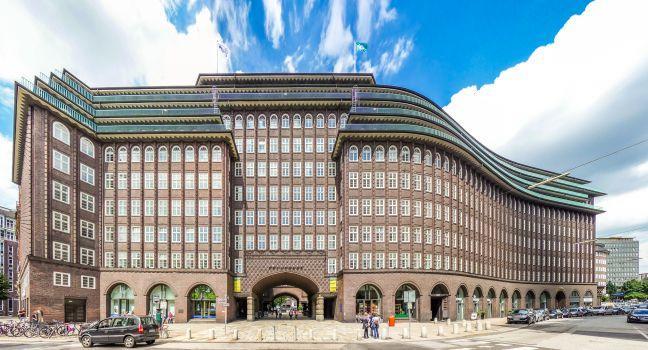
Wide angle view of famous Chilehaus (Chile House) in Hamburg, Germany.
(c) minnystock | Dreamstime.com

Almost 5 million bricks went into the construction of this marvelous building at the heart of the Kontorhausviertel, a collection of handsome office buildings that were built in the 1920–40s and now, together with the nearby Speicherstadt, form a UNESCO World Heritage site. Built in a brick expressionist style in 1924 for expat Brit Henry Brarens Sloman, who emigrated to Chile from Hamburg as a young man, made a considerable fortune trading saltpeter and returned to the city to make his mark, the Chilehaus stands 10 stories high and its impressive, jutting tip resembles the prow of a ship. Still housing business offices, it also counts a number of small cafés, shops, and a bar as residents, and is well worth a visit, particularly at night when illuminated.

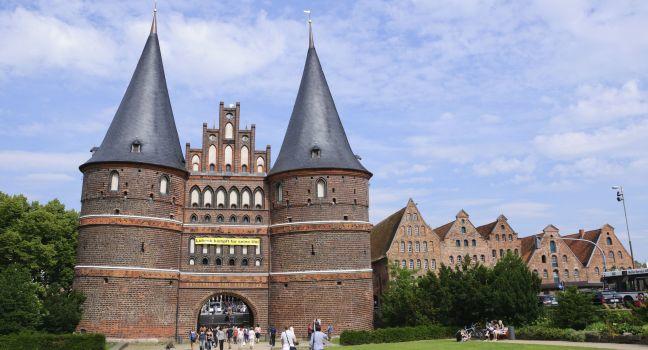
Holstentor

Fodor's Choice
Holsten Gate - Lübeck, Germany; Shutterstock ID 65094772; Project/Title: Fodors; Downloader: Melanie Marin
Scirocco340 / Shutterstock
Lübeck’s famous gate was part of the medieval fortifications of the city. It has two faces: one it shows the world and one it shows the city. The "field side," which faces away, appears as if it is made of two defensive towers connected by a middle gate. The "city side" looks like one smooth building and has more windows, arcades, and friezes. The inscription on the field side, added in 1871, reads, "Concordia domi foris pax," an abbreviated version of the statement, "Harmony within and peace outside are indeed the greatest good of all." It houses a museum with ship models, suits of armor, and other artifacts from Lübeck's heyday.

Recommended Fodor's Video

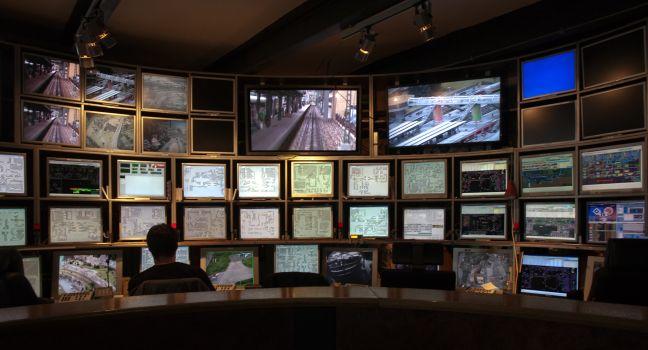
Miniatur Wunderland

Speicherstadt Fodor's Choice
Control operating console in Miniatur Wunderland in Hamburg, Germany.
(c) Mouse_sonya | Dreamstime.com

You don’t need to be a model-railroad enthusiast or a 10-year-old to be blown away by the sheer scale and attention to detail of the Miniatur Wunderland. The largest model railroad in the world features almost 17,000 square feet of little trains click-clacking their way through wonderfully faithful miniature replicas of Hamburg itself as well as foreign towns in Switzerland, Austria, the United States, Italy, Scandinavia, and South America; a new Monaco section was added in 2024. Planes land at a little airport; every 15 minutes, day turns into night, and hundreds of thousands of LED lights illuminate the trains, buildings, and streets. The latest attraction is Yullbee Wunderland, when visitors, who are shrunk down as a small model figure on a scale of 1:87 thanks to the latest VR technology, can experience Wunderland from the perspective of the miniature inhabitants. Unsurprisingly, it's one of Hamburg's most popular attractions, so it's best to book ahead. If you do have to wait, there are free drinks and ice cream for children, and videos to watch ease the pain. Hours are extended on some Tuesdays and weekends.

Altstadt

Fodor's Choice

Proof of Lübeck's former position as the golden queen of the Hanseatic League is found at every step in the Altstadt, which contains more 13th- to 15th-century buildings than all other large northern German cities combined. This fact has earned the Altstadt a place on UNESCO's register of the world's greatest cultural and natural treasures.

Deichstrasse

Altstadt Fodor's Choice

The oldest residential area in the Old Town of Hamburg now consists of lavishly restored houses from the 17th through the 19th century. Many of the original, 14th-century houses on Deichstrasse were destroyed in the Great Fire of 1842, which broke out in No. 38 and left approximately 20,000 people homeless; only a few of the early dwellings escaped its ravages. These days the narrow cobblestone street is flanked by a number of lovely little restaurants specializing in fish or German cuisine, which have taken residence inside its historic buildings.

Deichstrasse, Hamburg, 20355, Germany

Something incorrect in this review?

Historischer Weihnachtsmarkt

Altstadt Fodor's Choice

Hamburg's Historischer Weihnachtsmarkt enjoys a spectacular backdrop—the city's Gothic town hall. The market's stalls are filled with rows of candy apples, chocolates, and doughnuts. Woodcarvers from Tyrol, bakers from Aachen, and gingerbread makers from Nuremberg (Nürnberg) come to sell their wares. And in an appearance arranged by the circus company Roncalli, Santa Claus ho-ho-hos his way along a tightwire high above the market every evening at 4, 6, and 8. The Hamburg Christmas market runs from late November until December 23.

Lübecker Dom

Fodor's Choice

Construction of this, the city's oldest building, began in 1173. Its founder, Heinrich der Löwe himself, laid the foundation stone. The cathedral was initially built as a Romanesque brick building, which was completed in 1230, but starting in 1266 its reconstruction to a Gothic hall church began. The building, which was repeatedly altered, was severely damaged in an air raid in 1942. It was not until 1982 that the reconstruction was completed. The richly decorated church houses, among other things, a triumphal cross by the Lübeck artist Bernt Notke and the Renaissance pulpit, which is decorated with seven alabaster reliefs.