



Germany is enforcing border controls.
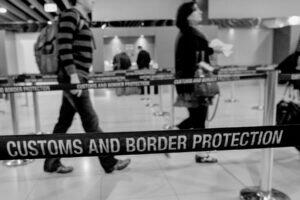
Apiece of news has rattled European countries: Germany has decided to enforce border controls at all its land borders. With the introduction of this temporary measure for the next six months, traveling in and out of the country might become a hassle for travelers—and also for those who live in its border towns and commute to other nations for work or other reasons.
Countries Affected
Germany shares borders with nine countries: the Netherlands, Denmark, Austria, Poland, Belgium, France, the Czech Republic, Luxembourg, and Switzerland. The country placed strict border controls in place last year with Poland, the Czech Republic, and Switzerland, while controls with Austria have existed since 2015 to counter illegal immigration. New measures with Denmark, Netherlands, Belgium, Luxembourg, and France will be introduced on September 16 for six months.
The federal minister of the interior, Nancy Faeser, said that these measures are being introduced to control national borders and protect against irregular immigration. “These border control measures include effective refusals of entry at the border–more than 30,000 people have been denied entry at the land borders with Poland, Austria, Switzerland, and the Czech Republic just since October 2023,” the statement explained.


Recommended Fodor’s Video
The anti-immigration political climate in the country may be driving this decision, along with the newfound support for the far-right. Additionally, the recent deadly knife attack allegedly by a Syrian immigrant has also angered the public and changed the sentiment.
What This Means for Travelers
Despite claims that the country will try to minimize the impact on commuters, it is likely that queuing at land borders will worsen due to the checks.
And it won’t just affect travelers. Truck drivers, Europeans traveling for work, and locals will face hold-ups while commuting by buses and rails. This will contribute to traffic issues and could possibly have an economic impact due to the goods exported through the country.
Germany’s railway operator Deutsche Bahn (DB) has long been plagued by delays, and tighter border controls might make things worse for passengers.
Larger Implications
It’s important to distinguish between the European Union (E.U.), the Schengen Area, and Europe as a continent. The European Union comprises of 27 countries in Europe. This alliance allows free trade and travel—it’s a borderless union, so people can work, live, study, and travel across countries without much paperwork. The E.U. created the Schengen Area in 1985, which allows passport-free travel within member countries. Non-European travelers who utilize a Schengen visa to visit can travel the Schengen Area without extra visas.
Germany is a part of Schengen, along with 24 other E.U. states (apart from Cyprus and Ireland). Four other non-E.U. countries–Switzerland, Iceland, Norway, and Liechtenstein–also offer free travel within the Schengen scheme. With the largest economy in Europe, Germany’s new border measures, even temporarily, are a big blow to the EU.
Neighboring countries are unhappy with this new measure. Poland called it unacceptable, while Austria has vowed not to take any asylum seekers rejected by Germany. Meanwhile, experts are worried that other countries with conservative views on migration may also follow suit. This may also test the unity of the union in the face of Euroscepticism.
E.U. policies allow bloc countries to impose temporary border controls for six months as a “last resort measure, in exceptional situations.” But there’s not much the E.U. can do apart from issue an opinion regarding the decision and its proportionality.