Get FREE email communications from Fodor's Travel, covering must-see travel destinations, expert
trip planning advice, and travel inspiration to fuel your passion.
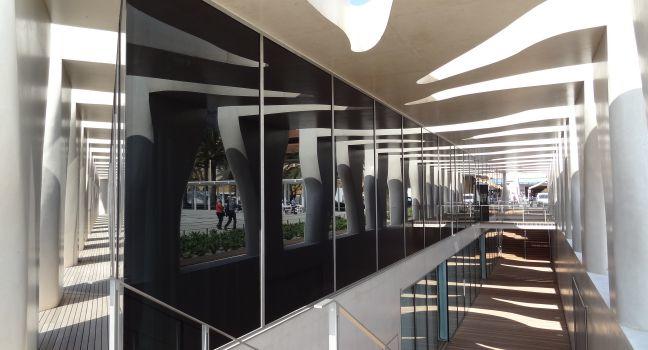
On the waterfront opposite the market, a squat medieval bastion crowned with four tiny watchtowers houses this extraordinary museum, France's memorial to the eponymous artist-poet-filmmaker (1889–1963). Cocteau spotted the fortress, built in 1636 to defend the port, as the perfect site for a group of his works. The museum has nearly 1,800 oeuvres graphiques, and about 990 are original Cocteaus, a donation from the late California businessman and Holocaust survivor Severin Wunderman's personal collection. This is a must-see.
Musée Matisse
Cimiez
Fodor's choice
Share This
Corentin / Shutterstock
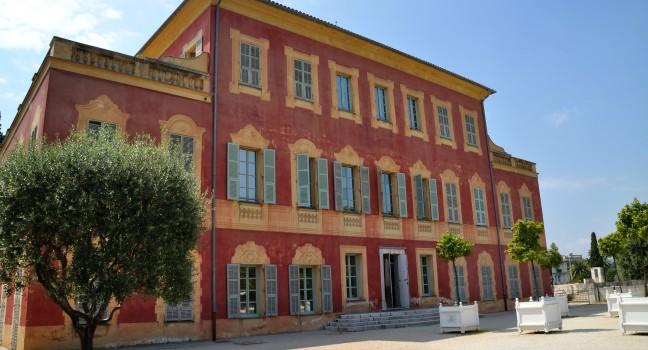
In the 1960s, the city of Nice bought this lovely, light-bathed, 17th-century villa, surrounded by the ruins of Roman civilization, and restored it to house a large collection of Henri Matisse's works. The Fauvist artist settled along Nice's waterfront in 1917, seeking a sun cure after a bout with pneumonia, and remained here until his death in 1954. During his years on the French Riviera, Matisse maintained intense friendships and artistic liaisons with Renoir, who lived in Cagnes, and with Picasso, who lived in Mougins and Antibes. He eventually moved up to the rarefied isolation of Cimiez and took an apartment in the Hôtel Regina (now an apartment building, just across from the museum), where he lived out the rest of his life. He walked often in the parklands around the Roman remains and was buried in an olive grove outside the Cimiez cemetery.
The museum's collection includes several pieces the artist donated to the city before his death; the rest were donated by his family. In every medium and context—paintings, gouache cutouts, engravings, and book illustrations—the collection represents the evolution of his art, from Cézanne-like still lifes to exuberant dancing paper dolls. Even the furniture and accessories speak of Matisse, from the Chinese vases to the bold-printed fabrics with which he surrounded himself. A series of telling black-and-white photographs captures the artist at work. You can't enter the museum with a backpack or travel bag, so have a €1 coin handy for a locker.
Femmes Artistes Musée Mougins
Fodor's choice
Share This
This museum, which replaced the Mougins Museum of Classic Art, has heralded a female-forward artistic focus. Around a hundred works created by nearly 90 female artists from around the world are on display. The four floors house paintings, sculptures, and photographs by major artists—Barbara Hepworth, Frida Kahlo, Berthe Morisot, Blanche Hoschedé-Monet, and Tracey Emin—who have shaped key artistic movements from Impressionism to 21st-century contemporary art.
Recommended Fodor's Video
Fondation Maeght
Fodor's choice
Share This
Many people come to St-Paul-de-Vence just to visit France’s most important private art foundation, founded in 1964 by art dealer Aimé Maeght. High above the medieval town, the small modern art museum attracts 200,000 visitors a year. It's an extraordinary marriage of the arc-and-plane architecture of Josep Sert; the looming sculptures of Miró, Moore, and Giacometti; the mural mosaics of Chagall; and the humbling hilltop setting, complete with pines, vines, and flowing planes of water.
On display is an intriguing and ever-varying parade of important works by modern masters, including Chagall's wise and funny late-life masterpiece La Vie (Life). Two newer extensions provide additional exhibition, performance, and conference space, as well as panoramic windows opening to the extensive grounds. The impressive vistas help to beguile even those who aren't into modern art. Café F, should you need time to reflect, is open year-round. Contact the tourist office for a private guided visit in English (€11 plus discounted admission rate of €14).
Musée Picasso
Fodor's choice
Share This
Rising high over the water, this museum is set in the stunning medieval Château Grimaldi. As rulers of Monaco, the Grimaldi family lived here until the revolution; this fine old castle, however, was little more than a monument until its curator offered use of its chambers to Picasso in 1946, when that extraordinary genius was enjoying a period of intense creative energy. The result was a bounty of exhilarating paintings, ceramics, and lithographs inspired by the sea and by Greek mythology—all very Mediterranean. The château, which became the museum in 1966, houses some 245 works by the artist (but not all are on display), as well as pieces by Miró, Calder, and Léger. The first floor displays more than 100 paintings by Russian-born artist Nicolas de Staël. Download the Picasso Antibes app before your visit.
Centre de la Photographie de Mougins
Share This
Set in a former presbytery in the heart of the village, this municipal photography museum looks "to support artistic creation through exhibitions, publications, and artist residencies." There's a bookshop on the main floor and two stories for temporary exhibitions.
Musée d'Art et d'Histoire de Provence
Share This
Just up from the Fragonard perfumery, the Musée d'Art et d'Histoire de Provence is open daily and has a large collection of faience from the region, including works from the famous pottery towns of Moustiers, Biot, and Vallauris.
Musée de l'Annonciade
Share This
The legacy of the artists who loved St-Tropez—including Signac, Matisse, Braque, Dufy, Vuillard, and Rouault—has been carefully preserved in this extraordinary museum, housed in a 14th-century chapel just inland from the southwest corner of the Vieux Port. Cutting-edge temporary exhibitions feature local talent and up-and-coming international artists, while works—from Impressionism to Expressionism—by established artists line the walls.
Musée des Beaux-Arts
New Town
Share This
Originally built for a member of Nice's Old Russian community, the Princess Kotschoubey, this Italianate mansion is a Belle Époque wedding cake, replete with one of the grandest staircases on the coast. After the richissime American James Thompson took over and the last glittering ball was held here, the villa was bought by the municipality as a museum in the 1920s. Unfortunately, many of the period features were sold, but in their place are paintings by Degas, Boudin, Monet, Sisley, Dufy, and Jules Chéret, whose posters of winking damselles distill all the joie of the Belle Époque. From the Hôtel Negresco area, the museum is about a 15-minute walk up a gentle hill; guided tours in English can be arranged.
Musée National Fernand Léger
Share This
Fernand Léger was a French painter, sculptor, and filmmaker thought of as a forerunner of the pop-art movement. He was known for his bold, colorful, and geometric style that blended Cubism with modern subject matter. On a visit to this museum, English-language audio guides can help you learn more about the man and his work. Alternatively, use a QR code to listen on your mobile phone with headphones.
Musée National Marc Chagall
Cimiez
Share This
Inaugurated in 1973, this museum has one of the finest permanent collections of Chagall's (1887–1985) late works. Superbly displayed, 17 vast canvases depict biblical themes, each in emphatic, joyous colors. Chamber music and classical concert series also take place here, though extra admission fees may apply. Bus stops outside.
Musée National Picasso
Share This
In the late 1940s, Picasso settled here in a simple stone house, "le château de Vallauris"—the former priory of the Abbaye de Lérins and one of the rare Renaissance buildings in the region—creating pottery art from the malleable local clay with a single-minded passion. But he returned to painting in 1952 to create one of his masterworks in the château's Romanesque chapel: the vast multipanel oil-on-wood composition called La Guerre et la Paix (War and Peace). Today the chapel is part of the Musée National Picasso, where several of Picasso's ceramic pieces are displayed.
Musée Renoir
Share This
After staying in various places up and down the coast, Auguste Renoir (1841–1919) settled into a house in Les Collettes, just east of the vieille ville, which is now the Musée Renoir. He passed the last 12 years of his life here, painting the landscape around him; working in bronze; and rolling his wheelchair through the luxuriant garden tiered with roses, citrus groves, and spectacular olive trees. Today, you can view this sweet and melancholic villa, preserved by Renoir's children, and admire 15 of his last paintings and 30 sculptures. Although up a steep hill, Les Collettes is just a 10-minute walk from Place du Général-du-Gaulle in central Cagnes-Ville. Alternatively, you can take the free No. 45 shuttle in July and August. Speaking of summer, there are guided tours in English (€3) Wednesday through Sunday.
Villa Musée Fragonard
Share This
This museum headlines the work of Grasse's own Jean-Honoré Fragonard (1732–1806), who was one of the great French "chocolate-box" artists—so called because they were known for their maudlin artwork of a type that was found on boxes of chocolate at the time. The lovely villa contains a collection of Fragonard's drawings, engravings, and paintings; also on display are works by his son, Alexandre-Evariste, and his grandson, Théophile.
Subscribe to Newsletter
Sign up for Travel Tips & News
I want emails from Fodor's Travel with travel information and promotions. I can unsubscribe
any time using the unsubscribe link at the end of all emails.
Thank you for your interest!
Look out for our newsletters with travel tips and special offers.
Sign up for Travel Tips & News
By signing up for the
newsletter, I agree to the Privacy Policy. You must check the box to subscribe
Thank you for your interest!
Look out for our newsletters with travel tips and special offers.