871 Best Sights in England

Background Illustration for Sights

We've compiled the best of the best in England - browse our top choices for the top things to see or do during your stay.

Shakespeare's Globe

South Bank Fodor's Choice
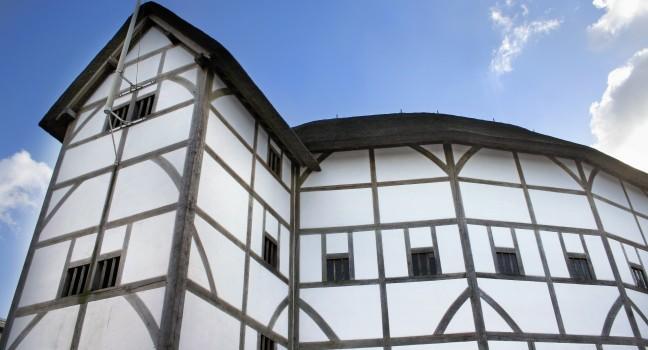
Shakespeare's Globe Theatre, London, England
Lance Bellers / Shutterstock

This spectacular theater is a replica of the open-roof, wood-and-thatch Globe Playhouse (built in 1599 and burned down in 1613), where most of Shakespeare's greatest works premiered. American actor and director Sam Wanamaker worked ceaselessly for several decades to raise funds for the theater's reconstruction 200 yards from its original site using authentic materials and techniques, a dream that was finally realized in 1997. "Groundlings" (patrons with £5 standing-only tickets) are not allowed to sit during the performance, but you get the best view of the stage and the most authentic viewing experience. Fortunately, you can reserve an actual seat on any one of the theater's three levels, but you will want to rent a cushion for £2 (or bring your own) to soften the backless wooden benches (cushions must be booked when you book your tickets). The show must go on, rain or shine, warm or chilly, so come prepared for anything. Umbrellas are banned, but you can bring a raincoat or buy a cheap Globe rain poncho, which doubles as a great souvenir. From October to April, and occasionally in the summer, the Sam Wanamaker Playhouse, a 350-seat re-creation of an indoor Jacobean theater lighted by candles, offers plays and concerts in a less-exposed though still atmospheric setting. Some Wanamaker benches are backless, and there are fixed standing positions in the theater's upper gallery.

The 50-minute "Shakespeare's Globe Experience" is offered hourly and combines a guided tour of the Globe with an interactive exploration of how theater crafts bring the plays to life as well as a history of the theater and a chance to try on costumes or learn stage sword-fighting (from £26). There are also special family-friendly tours and workshops as well as some "relaxed performances" that permit coming and going. Tours of the Wanamaker Playhouse are offered on an occasional basis and must be arranged directly with the theater; availability varies and is subject to change depending on performances and other events. From mid-February until October, you can also book a tour of the surrounding Bankside area, which emphasizes places Shakespeare would have frequented, including the archaeological remains of the nearby Rose Theatre, the oldest theater in Bankside. There are also themed tours such as famous crimes in the neighborhood (Shakespeare was called as a trial witness to three) and tours relating to current theater productions.
21 New Globe Walk, London, SE1 9DT, England
020-7401--9919-general info
Sight Details
Globe Theatre tour £26; Bankside tour £20; Wanamaker tour £13.50; Globe performances £5 (standing), from £25 (seated); Wanamaker performances £5 (standing), from £25 (seated)
No Globe performances mid-Oct.–mid-Apr.

Something incorrect in this review?

Sir John Soane's Museum

Bloomsbury Fodor's Choice
Sir John Soane's Museum, London, England
Acroterion [CC BY-SA 3.0], via Wikimedia Commons

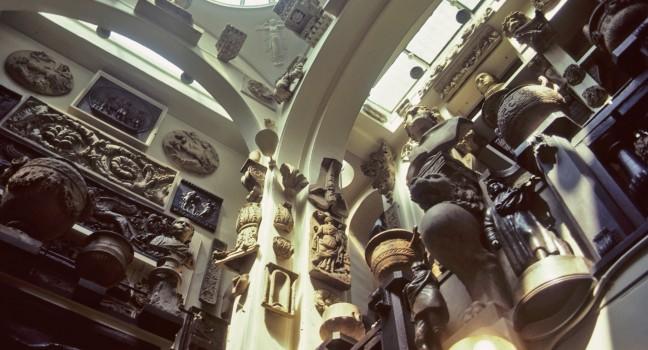
Sir John (1753–1837), architect of the Bank of England, bequeathed his eccentric house to the nation on one condition: that nothing be changed. It's a house full of surprises. In the Picture Room, two of Hogarth's famous Rake's Progress paintings swing away to reveal secret gallery recesses where you can find works by Canaletto and Turner. Everywhere, mirrors play tricks with light and space, and split-level floors worthy of a fairground funhouse disorient you. Entry to the house is free (with a suggested donation). There's a free 30-minute tour of Soane's lovingly restored private apartments every day at 2 pm and a free 20-minute tour of his drawing room occurs on Thursday and Saturday at 2:30 pm. A comprehensive 75-minute Highlights Tour that encompasses both the treasures of the museum and the private quarters runs every day at 2 pm; it costs £18 and must be booked online in advance.

13 Lincoln's Inn Fields, London, WC2A 3BP, England
020-7405–2107
Sight Details
Free; Highlights tour £18
Closed Mon. and Tues.

Something incorrect in this review?

Somerset House

Covent Garden Fodor's Choice
Somerset House, London, England
© Ross Brinkerhoff / Fodors Travel

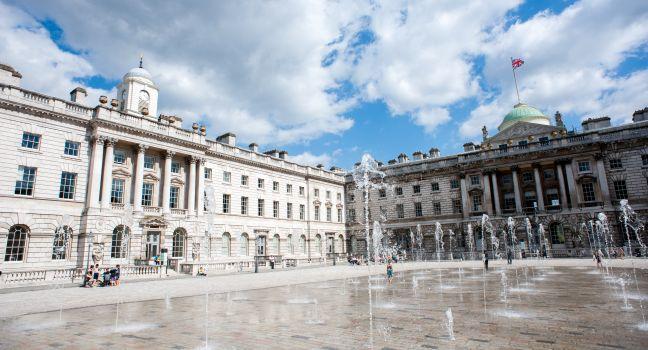
This majestic former Renaissance-era royal palace—rebuilt by Sir William Chambers (1723-96) during the reign of George III to house offices of the Navy Board—has been transformed from fusty government offices into one of the capital's most buzzing centers of arts and culture, often hosting several fabulous exhibitions at once. The cobblestone Italianate Fountain Court, where Admiral Nelson used to walk, makes a fitting setting for 50-odd playful fountains and is transformed into a festive ice rink in winter; the grand space is also the venue for outdoor concerts and film screenings in the summer. The Courtauld Gallery and its world-class impressionist and post-impressionist art collection occupy most of the north building, facing the Strand.

Across the courtyard are the barrel-vaulted Embankment Galleries, with a lively program of fashion, design, architecture, and photography exhibitions. The East Wing has another small exhibition space, and events are also held in the atmospheric cellars below the Fountain Court. The WatchHouse café is a great spot for a low-emission plant-based meal or snack, while the high-profile Spring restaurant is all wildflowers, zero waste, and biodynamic vegetables. In summer, eating and drinking spill out onto the large terrace overlooking the Thames.

Recommended Fodor's Video

St. James's Park

St. James's Fodor's Choice
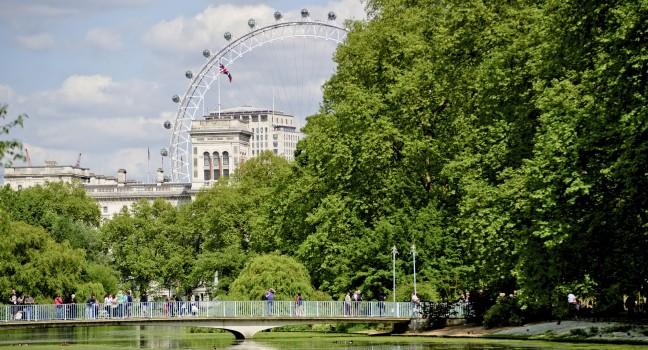
St. James's Park, London, England
© Zach Nelson / Fodors Travel

There is a story that, many years ago, a royal once inquired of a courtier how much it would cost to close St. James's Park to the public. "Only your crown, ma'am," came the reply. Bordered by three palaces—Buckingham, St. James's, and the governmental complex of the Palace of Westminster—this is one of London's loveliest green spaces. It's also the oldest; the former marshland was acquired by Henry VIII in 1532 as a nursery for his deer. Later, James I drained the land and installed an aviary, which gave Birdcage Walk its name, and a zoo (complete with crocodiles, camels, and an elephant). When Charles II returned from exile in France, where he had been hugely impressed by the splendor of the gardens at the Palace of Versailles, he transformed the park into formal gardens, with avenues, fruit orchards, and a canal. Lawns were grazed by goats, sheep, and deer, and, in the 18th century, the park became a different kind of hunting ground, for wealthy lotharios looking to pick up nighttime escorts. A century later, John Nash redesigned the landscape in a more naturalistic, romantic style, and if you gaze down the lake toward Buckingham Palace, you could easily believe yourself to be on a country estate.

A large population of waterfowl—including pelicans, geese, ducks, and swans (which belong to the King)—breed on and around Duck Island at the east end of the lake. From March to October, the deck chairs (charge levied) come out, crammed with office workers at midday, eating lunch while being serenaded by music from the bandstands. One of the best times to stroll the leafy walkways is after dark, with Westminster Abbey and the Houses of Parliament rising above the floodlit lake.

St. Paul's Cathedral

City of London Fodor's Choice
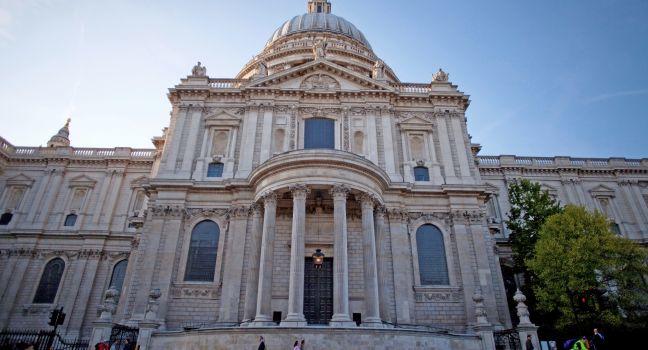
St. Paul's Cathedral, London, England
© Halie Cousineau/ Fodors Travel

For centuries, this iconic building has represented London's spirit of survival and renewal, and it remains breathtaking, inside and out. Sir Christopher Wren started planning the current cathedral in 1666, immediately after the previous medieval building, founded in 1087, was destroyed in the Great Fire—hence the word resurgam ("I shall rise again") inscribed on the pediment of the south door. St. Paul's again became a symbol of the city's resilience during the Blitz, when local volunteers risked death to put out a blaze on the dome (despite these efforts, much of the cathedral's east end and its high altar were destroyed). It has often been the scene of great state occasions, such as Winston Churchill's funeral and the wedding of King Charles III and Princess Diana.

Construction started in 1675 and took 35 years to finish. It was actually Wren's third design: the first was rejected for being too modern; the second for being too modern and too Italian, that is, Catholic (you can see the 20-foot "Great Model" of this design in the crypt). Despite mollifying the Anglican clergy with the promise of a traditional English spire, Wren installed a neoclassical triple-layered dome, the second-largest cathedral dome in the world after St. Peter's in Rome.

The interior is a superb example of the English baroque. Climb 257 steps up the Geometric Staircase, a perfectly engineered stone spiral, to the Whispering Gallery, so named because a whisper against one wall can be heard on the wall 112 feet opposite. Another 119 steps up is the Stone Gallery, which encircles the exterior of the dome and provides panoramic views over London. If you have a head for heights, tackle another 152 steps to the small Golden Gallery, an observation platform at the dome's highest point. At 278 feet above the cathedral floor, it offers even more spectacular vistas. Back on the ground, in the south choir aisle, you'll find the grave of John Donne, the poet who was dean of St. Paul's from 1621 until his death in 1631. His marble effigy is the oldest memorial in the cathedral and one of the few to survive the Great Fire. The intricate lively figures on the choir stall nearby are the work of master carver Grinling Gibbons, who also embellished the Wren-designed great organ. Behind the high altar is the American Memorial Chapel, dedicated to the 28,000 American GIs stationed in the United Kingdom during World War II. Among the notables buried in the crypt are the Duke of Wellington, Admiral Lord Nelson, Sir Joshua Reynolds, Henry Moore, and Wren himself. The Latin epitaph above his tomb fittingly reads, "Reader, if you seek his monument, look around you."

Free, introductory, 20-minute talks are offered regularly throughout the day. Free, 60-minute, guided tours take place Monday through Saturday at 11, 1, and 2; reserve a place at the welcome desk when you arrive. Save £2.50 per admission ticket and get fast-track entry by booking online.

St. Paul's Churchyard, London, EC4M 8AD, England
020-7246–8350
Sight Details
£23, £20.50 advance online ticket
Closed Sun. except for services

Something incorrect in this review?

Syon House and Park

Brentford Fodor's Choice
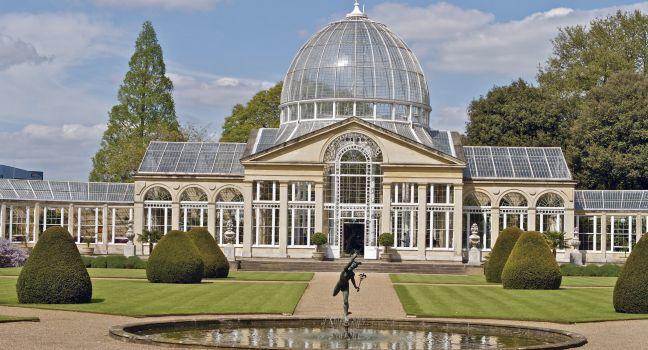
Syon House and Park, London, England
paula french / Shutterstock

The residence of the duke and duchess of Northumberland, this is one of England's most lavish stately homes. Set in a 200-acre park landscaped by the great gardener "Capability" Brown (1716–83), the core of the house is Tudor—it was one of the last stopping places for Henry VIII's fifth wife, Catherine Howard, and the extremely short-lived monarch Lady Jane Grey before they were sent to the Tower. It was remodeled in the Georgian style in 1762 by famed decorator Robert Adam. He had just returned from studying the sights of classical antiquity in Italy and created two rooms sumptuous enough to wow any Grand Tourist: the entryway is an amazing study in black and white, pairing neoclassical marbles with antique bronzes, and the Ante Room contains 12 enormous verd-antique columns surmounted by statues of gold—and this was just a waiting room for the duke's servants and retainers. The Red Drawing Room is covered with crimson Spitalfields silk, and the Long Gallery is one of Adam's noblest creations.

Syon Park, London, TW8 8JF, England
020-8560–0882
Sight Details
£14, £9 gardens and conservatory only
Closed Nov.–mid-Mar. and Mon., Tues., Fri., and Sat.

Something incorrect in this review?

Tate Britain

Westminster Fodor's Choice
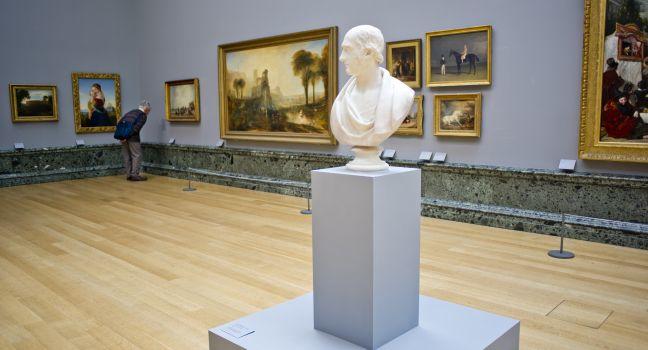
Gallery, Tate Britain, London, England
© Zach Nelson / Fodors Travel

First opened in 1897, and funded by the sugar magnate Sir Henry Tate, this stately neoclassical institution may not be as ambitious as its Bankside sibling, Tate Modern, but its bright galleries lure only a fraction of the Modern's overwhelming crowds and are a great place to explore British art from 1500 to the present. The museum includes a couple of galleries staging temporary exhibitions, and a permanent collection on the upper floors. And what a collection it is—with classic works by John Constable, Thomas Gainsborough, Francis Bacon, and an outstanding display from J. M. W. Turner in the Clore Gallery. Sumptuous Pre-Raphaelite pieces are a major draw, while more recent art historical periods are represented with works by artists such as Rachel Whiteread, L. S. Lowry, Vanessa Bell, Duncan Grant, Barbara Hepworth, and David Hockney. Tate Britain also sometimes hosts the Turner Prize exhibition, with its accompanying furor over the state of contemporary art. When taking place in London, as opposed to other cities around the U.K., you'll find it here from about October to January.

The café is a good spot for a reviving cup of tea and a cake. Look out for semiregular Late at Tate Friday evening events, when the gallery is open late for talks or performances; check the website for details.

Craving more art? Head down the river on the Uber Boat by Thames Clippers ( £10.90 one-way) to Tate Modern; it runs between the two museums every 20–40 minutes during museum open hours.

Tate Modern

South Bank Fodor's Choice
Tate Modern, South of the Thames, London, England.
© Ross Brinkerhoff / Fodors Travel

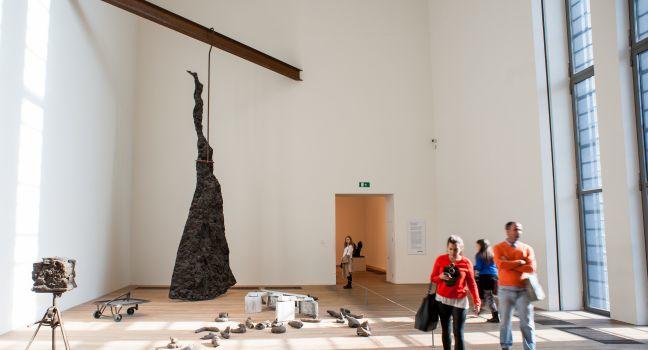
This spectacular renovation of a mid-20th-century power station is one of the most-visited museums of modern art in the world. Its great permanent collection, which starts in 1900 and ranges from modernist masters like Matisse to the most cutting-edge contemporary artists, is arranged in eight areas by theme (for example, "Media Networks," about artists' responses to mass media) rather than by chronology. Its blockbuster temporary exhibitions have showcased the work of individual artists like Gauguin, Rauschenberg, Cezanne, Picasso, Guston, and O'Keefe, among others. Other major temporary exhibitions have a conceptual focus, like works created in response to the American Black Power movement or by Soviet and Russian artists between the Revolution and the death of Stalin.

The vast Turbine Hall is a dramatic entrance point used to showcase big audacious installations that tend to generate a lot of publicity. Past highlights include Olafur Eliasson's massive glowing sun, Ai Weiwei's porcelain "sunflower seeds," and Carsten Holler's huge metal slides.

On the ground floor of a 10-story addition, you'll find The Tanks, galleries devoted to various types of new art, including film, performance, soundscapes, video, and interactive works, while at the top is a roof terrace offering spectacular views of the London skyline. In between are three exhibition floors offering more room for large-scale installations, for art from outside Europe and North America, and for digital and interactive projects. The Start Display (Level 2) provides an introduction to the collection, highlighting art from various countries, cultures, and periods, all linked by color.

Not to be missed in the original building are displays devoted to themes like how artists respond to mass media and the artist and society, featuring works by artists like Gerhard Richter, Antony Gormley, Jenny Holzer, the Guerrilla Girls, and video pioneer Nam June Paik. There's also a room-size installation by Yinka Shonibare (Level 2) and a Yayoi Kusama "mirror room."

Head to the restaurant on Level 9, the café on Level 1, or the Espresso Bar on Level 3 for stunning vistas of the Thames. The view of St. Paul's from the Espresso Bar's balcony is one of the best in London. Near the café you'll find the Drawing Bar, which lets you create work on one of several digital sketch pads and then project your result on the gallery wall.

You can join free 45-minute guided tours starting at noon, 1, and 2. If you plan to visit Tate Britain, take advantage of the Tate Boat, which takes visitors back and forth between the two Tates every 20 to 30 minutes.

The Tower of London

City of London Fodor's Choice
Tower of London - Part of the Historic Royal Palaces, housing the Crown Jewels.
Justin Black / Shutterstock

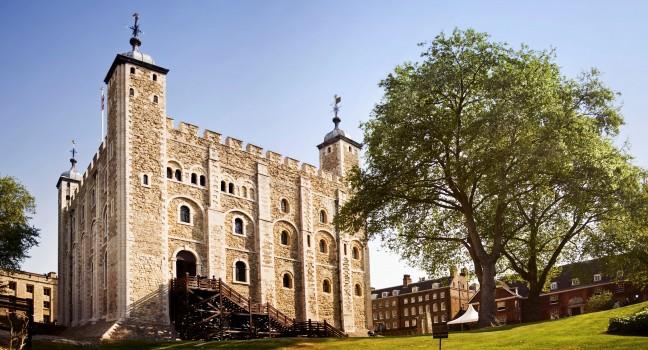
Nowhere else in London does history seem so vividly alive as in this minicity begun by the Normans more than 1,000 years ago. In its time, the Tower has been a fortress, a mint, a palace, an archive, and the Royal Menagerie (which formed the kernel of London Zoo). Most of all, however, it has been known as a place of imprisonment and death. Thousands of unfortunate souls, including numerous aristocrats and even a few sovereigns (some notorious traitors, some complete innocents), spent their last days here, several etching their final recorded thoughts onto their cell walls, and pints of royal blood have been spilled on its stones. Executions at the Tower were reserved for the nobility, with the most privileged beheaded in the privacy of Tower Green instead of before the mob at Tower Hill. In fact, only seven people received this dubious "honor," among them Anne Boleyn and Catherine Howard, two of Henry VIII's six wives.

The White Tower, the oldest building in the complex (which is actually made up of 20 towers, not just one) is also its most conspicuous. Begun by William the Conqueror in 1078 and whitewashed (hence the name) by Henry III (1207–72), it contains the Armouries, a splendid collection of arms and armor. Across the moat to the right is the riverside Traitors' Gate, to which the most famous prisoners were rowed to bring them to their impending doom.

Opposite is the Bloody Tower, where the "little princes in the Tower"---the uncrowned boy king Edward V and his brother---were consigned by their wicked uncle, who then took the crown for himself, thus becoming Richard III. The boys were never seen again, widely assumed to have been murdered in their tower prison. Also not-to-be-missed are the gorgeous Crown Jewels in the Jewel House. The original crown, orb, and scepter, symbols of monarchial power, were destroyed during the English Civil War; the ones you see here date back to after the Restoration in 1661. The most impressive gems were added only in the 20th century, when their countries of origin were part of the British Empire. Free 60-minute tours of the Tower depart every half hour or so (until midafternoon) from the main entrance. They are conducted by the Yeoman Warders, more popularly known as Beefeaters, who have guarded the Tower since Henry VII appointed them in 1485. Veterans of Britain's armed forces, they're easy to spot in their resplendent navy-and-red Tudor uniforms (scarlet-and-gold on special occasions). Keep an eye out for the ravens upon whose residency of the Tower, legend has it, the safety of the kingdom depends.

Avoid lines by buying a ticket in advance online, by phone, or from the automatic kiosks on Tower Hill. Tickets to the 700-year-old Ceremony of the Keys (the locking of the main gates, nightly between 9:30 and 10) cost £5 and should be booked online one or two months in advance; check the Tower website for details.

Victoria and Albert Museum

Kensington Fodor's Choice
Victoria & Albert Museum, Kensington, London, England.
© Ross Brinkerhoff / Fodors Travel

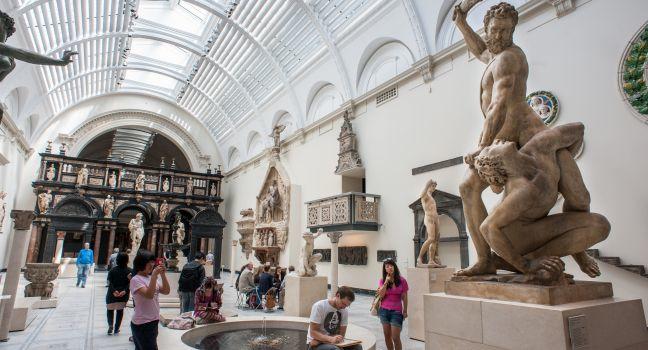
Known to all as the V&A, this huge museum with more than 2 million items on display in 145 galleries is devoted to the applied arts of all disciplines, all periods, and all nationalities. First opened as the South Kensington Museum in 1857, it was renamed in 1899 in honor of Queen Victoria's late husband and has since grown to become one of the country's best-loved cultural institutions, with high-profile temporary exhibitions alongside an impressive permanent collection. Many collections at the V&A are presented not by period but by category—textiles, sculpture, jewelry, and so on. It's a tricky building to navigate, so use the free map.

Nowhere is the benefit of the categorization more apparent than in the Fashion Gallery (Room 40), where formal 18th-century court dresses are displayed alongside the haute couture styles of contemporary designers. The museum has become known for high-profile temporary exhibitions devoted to fashion icons such as Chanel, Balenciaga, and Christian Dior, and to explorations of pop legends including David Bowie and Pink Floyd.

The British Galleries (Rooms 52–58 and 118–125) survey British art and design from 1500 to 1900 and are full of rare and beautiful artifacts, such as the Tudor Great Bed of Ware (immortalized in Shakespeare's Twelfth Night) and silks woven by Huguenot refugees in 18th-century Spitalfields. Among the series of actual rooms that have been painstakingly reconstructed piece by piece are the glamorous rococo Norfolk House Music Room and the serenely elegant Henrietta St. Drawing Room, originally designed in 1722.

The Asian Galleries (Rooms 44–47) are full of treasures, but among the most striking items on display is a remarkable collection of ornate samurai armor in the Japanese Gallery (Room 44). Works from China, Korea, and the Islamic Middle East have their own displays. Also of note is a gallery thematically grouped around Buddhist sculptures from different regions and periods. The Europe Gallery (Rooms 1–7) brings together more than 1,100 objects created between 1600 and 1815, while the Medieval and Renaissance galleries, which document European art and culture from 300 to 1600, have the largest collection of works from the period outside of Italy.

An entrance off Exhibition Road offers access through Britain's first porcelain-tiled public courtyard, which also serves as a venue for contemporary installations and a glass-fronted café. A photography center houses books, photo equipment, and more than 270,000 prints formerly held by the Royal Photographic Society, joining the more than 500,000 photos already in the museum's collection. A room in the center has been named the Elton John and David Furnish Gallery after the couple donated some 7,000 photographs by 20th-century masters, a selection of which are displayed in the center. A free 45-minute introductory tour of the museum's highlights twice daily helps you take it all in. There are also free lunchtime lectures on Thursday with deep dives into subjects like the Dog in Early British Photography. Whatever time you visit, the spectacular sculpture hall will be filled with artists, both amateur and professional, sketching the myriad artworks on display there. Don't be shy; bring a pad and join in.

The Wallace Collection

Marylebone Fodor's Choice
Gallery, Wallace Collection, Marylebone, London, England.
© Zach Nelson / Fodors Travel

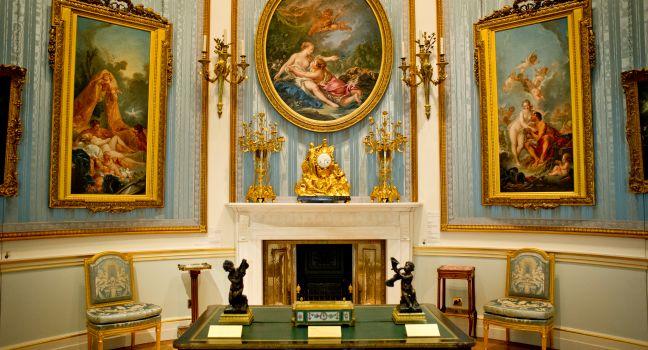
With its Great Gallery stunningly refurbished, there's even more reason to visit this exquisite gem of an art gallery—although housing one of the world's finest assemblies of Old Master paintings is reason enough. This glorious collection and the 18th-century mansion in which it's located were bequeathed to the nation by Lady Julie-Amélie-Charlotte Wallace, the widow of Sir Richard Wallace (1818–90). Wallace's father, the fourth marquess of Hertford, took a house in Paris after the French Revolution and set about snapping up paintings by what were then dangerously unpopular artists.

Frans Hals's The Laughing Cavalier is probably the most famous painting here, or perhaps Jean-Honoré Fragonard's The Swing. The full list of painters in the collection reads like a "who's who" of classical European art—from Rubens, Rembrandt, and van Dyck to Canaletto, Titian, and Velázquez. English works include paintings by Gainsborough and Turner. There are also fine collections of furniture, porcelain, Renaissance gold, and majolica (15th- and 16th-century Italian tin-glazed pottery). With craft activities, hands-on sessions, and the chance to try on a suit of armor in the "Arms and Armour" collection, there's plenty to keep kids occupied, too.

The conditions of the bequest mean that no part of the collection can leave the building; this is the only place in the world you'll ever be able to see these works.

Westminster Abbey

Westminster Fodor's Choice
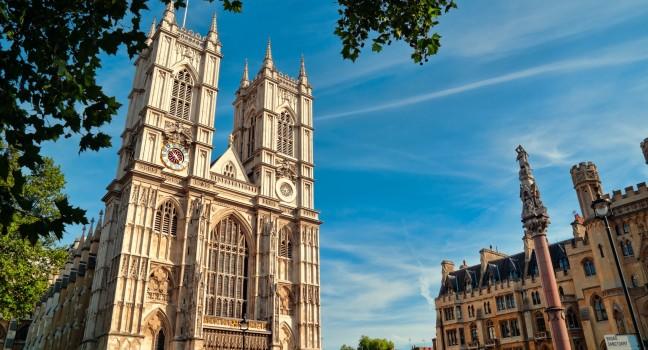
Westminster Abbey, London, UK.
r.nagy / Shutterstock

Steeped in hundreds of years of rich and occasionally bloody history, Westminster Abbey is one of England's iconic buildings. An abbey has stood here since the 10th century, although the current building mostly dates from the 1240s. It has hosted 38 coronations—beginning in 1066 with William the Conqueror—and no fewer than 16 royal weddings, the latest being that of Prince William and Kate Middleton in 2011. But be warned: there's only one way around the abbey, and it gets very crowded, so you’ll need to be alert to catch the highlights.

The Coronation Chair, which you'll find in St. George's Chapel by the east door, has been used for nearly every coronation since Edward II’s in 1308, right up to Queen Elizabeth II’s in 1953. Farther along, the exquisite confection of Henry VII's Lady Chapel is topped by a magnificent fan-vaulted ceiling. The tomb of Henry VII lies behind the altar. Elizabeth I is buried above her sister "Bloody" Mary I in the tomb in a chapel on the north side, while her archenemy, Mary Queen of Scots, rests in the tomb to the south. The Chapel of St. Edward the Confessor contains the shrine of the pre-Norman king, who reigned from 1042 to 1066. Because of its great age, you must join a verger-guided tour to be admitted to the chapel (£10; book at the admission desk). To the left, you'll find Poets' Corner. Geoffrey Chaucer was the first poet to be buried here, and other statues and memorials include those to William Shakespeare, D. H. Lawrence, T. S. Eliot, and Oscar Wilde.

The medieval Chapter House is adorned with 14th-century frescoes and a magnificent 13th-century tiled floor, one of the finest in the country. Near the entrance is Britain's oldest door, dating from the 1050s. If you walk toward the West Entrance, you'll see a plaque to Franklin D. Roosevelt—one of the abbey's very few tributes to a foreigner. The poppy-wreathed Grave of the Unknown Warrior commemorates soldiers who lost their lives in both world wars.

With a separate timed ticket (£5), you can visit the Queen's Diamond Jubilee Galleries located 52 feet above the abbey floor; it's worth it for the views onto the abbey's interior below alone, but it also gets you access to a remarkable collection of historical objects that tell the story of the building, including its construction and relationship to the monarchy. Don't miss the marriage license of the Prince and Princess of Wales, the bright white vellum it's written on in stark contrast to the aged documents elsewhere on display.

Exact hours for the various parts of the abbey are frustratingly long and complicated, and can change daily, so it's important to check before setting out, particularly if you're visiting early or late in the day, or off-season. The full schedule is posted online daily (or you can call). Certain areas of the abbey are completely inaccessible to wheelchair users; however, you will get free entry for yourself and one other.

Broad Sanctuary, London, SW1P 3PA, England
020-7222–5152
Sight Details
£29
Closed Sun. except for worship and the gift shop

Something incorrect in this review?

Whitechapel Gallery

Whitechapel Fodor's Choice
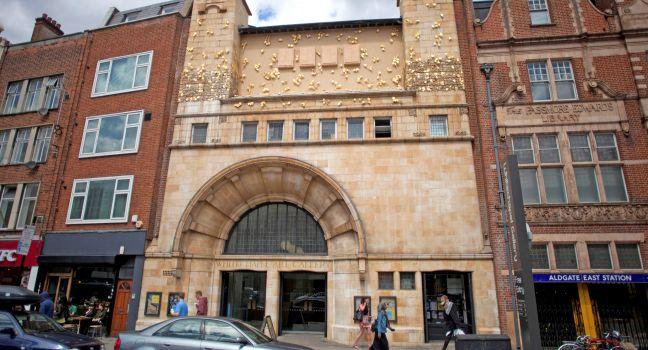
Whitechapel Art Gallery, London, England
© Halie Cousineau/ Fodors Travel

Founded in 1901, this internationally renowned gallery mounts exhibitions that rediscover overlooked masters and showcase tomorrow's legends. Painter and leading exponent of abstract expressionism Jackson Pollock was exhibited here in the 1950s as was pop artist Robert Rauschenberg in the 1960s; the 1970s saw a young David Hockney's first solo show. The exhibitions continue to be on the cutting edge of contemporary art. The gallery also hosts talks, film screenings, workshops, and other events; First Thursdays is a regular event designed to highlight monthly openings at more than 150 local galleries, with the Whitechapel offering curated tips about where to visit on the first Thursday of the month. Pick up a free East London art map (also available online) to help you plan your visit to the area. Townsend, the gallery's on-site restaurant, serves good-quality modern British food in a bright and pretty room.

Young V&A

Bethnal Green Fodor's Choice
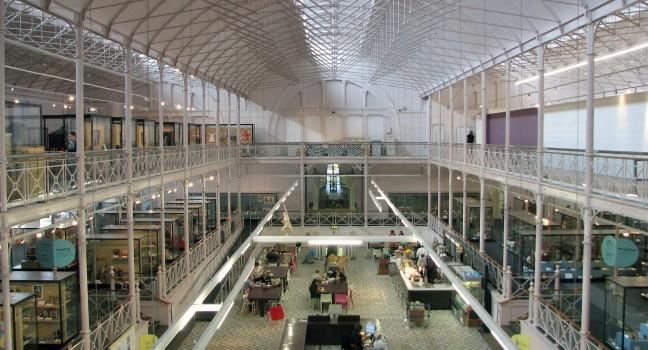
The Central Hall, V and A Museum of Childhood, London, England
Childhood Museum - London - September 2008 by Cristian Bortes

A treat for all but designed specifically for children under age 14, this East London outpost of the Victoria & Albert Museum houses one of the world's biggest toy collections. The iron, glass, and brown-brick building—an architectural joy in itself—was transported here from South Kensington in 1868 and reopened July 2023 following an extensive five-year renovation project. The collection of more than 2,000 objects is organized into three galleries: Play, Imagine, and Design, all offering plenty of interactive experiences, including an amphitheater-style stage, a free-play construction area, and a working design studio. Fun new acquisitions include a skateboard belonging to 13-year-old 2020 Olympic medalist Sky Brown. The shop is a good spot to pick up original toys.

ZSL London Zoo

Regent's Park Fodor's Choice
London Zoo, Regent's Park, London, England.
© Zach Nelson / Fodors Travel

With an emphasis on education, wildlife conservation, and the breeding of endangered species, London Zoo offers visitors the chance to see tigers, gorillas, meerkats, and more in something resembling a natural environment rather than a cage. Operated by the nonprofit Zoological Society of London, the zoo grew out of the monarch's animals collection, which moved here from the Tower of London in 1828. The zoo itself did not open to the public until 1847. Big attractions include Land of the Lions, a walk-through re-creation of an Indian forest where you can see the two resident Asiatic lions relaxing at close range; Gorilla Kingdom, which provides a similar re-created habitat (in this case an African rain forest) for its troop of six Western Lowland Gorillas (including a youngster born in 2024); and the Attenborough Komodo Dragon House, renamed to honor the renowned naturalist, who led the first film crew to capture Komodo dragons on camera.

The zoo also offers the chance to get up close and personal with 15 ring-tailed lemurs. The Giants of the Galapagos is a lagoon inhabited by the resident giant tortoises while Rainforest Life is an indoor tropical rainforest (complete with humidity) inhabited by the likes of armadillos, monkeys, and sloths. A special nighttime section offers glimpses of nocturnal creatures like slow lorises and bats. The Animal Adventure playground allows kids to observe coatis, as well as interact with llamas, donkeys, small pigs, sheep, and goats. An ever-popular attraction, especially at feeding time (noon in winter and 4:20 pm in other months), is Penguin Beach, an enclosure and pool that hosts a colony of Humboldt penguins.

If you're feeling flush, try to book tickets for VIP experiences (£54) that offer a 20-minute guided close encounter where you can feed and interact with meerkats (2:30 pm), monkeys (2 pm), giraffes (10 am, £115 for 90 minutes), tigers (9 am, £170) and even Komodo dragons (9 am, £110). Other zoo highlights include a Butterfly Paradise and the Tiger Territory, an enclosure for four beautiful endangered Sumatran tigers (including two cubs born at the zoo). There are also 90-minute early evening "relaxed tours" for the neurodiverse from June to August (they're also offered at 8:30 am before the usual opening hours in other months) to ensure a calmer experience. You can also experience the zoo after-hours by booking an overnight stay in one of the cozy cabins near (not in) the Asiatic lion enclosure. Check the website or the information board out front for free events, including creature close encounters and "ask the keeper" sessions. Booking in advance online for all tickets is required.

Outer Circle, London, NW1 4RY, England
0844-225–1826
Sight Details
From £27

Something incorrect in this review?

Abbot Hall

Fodor's Choice

The region's finest art gallery, and a thriving cultural and community hub, Abbot Hall occupies a Palladian-style Georgian mansion built in 1759. In the permanent collection are works by Victorian artist and critic John Ruskin, who lived near Coniston, and by 18th-century portrait painter George Romney, who worked in Kendal. The Great Picture, a grand 17th-century triptych of the life of Lady Ann Clifford, is attributed to Flemish painter Jan van Belcamp. The gallery also owns some excellent contemporary art, including work by Barbara Hepworth, Ben Nicholson, Winifred Nicholson, and L. S. Lowry, and the temporary exhibitions showcase the best of British art. There's also an excellent café. Abbot Hall is on the River Kent, next to the parish church. 

Off Highgate, Kendal, LA9 5AL, England
01539-637940
Sight Details
£12 (covers admission for a year); combined ticket with Blackwell and Windermere Jetty Museum £16
Closed Sun.--Tues.

Something incorrect in this review?

Albert Dock

Waterfront Fodor's Choice

To understand the city's prosperous maritime past, head for these 7 acres of restored waterfront warehouses built in 1846. Named after Queen Victoria's consort, Prince Albert, the dock provided storage for silk, tea, and tobacco from the Far East until it was closed in 1972. Today, the fine colonnaded brick buildings contain the Merseyside Maritime Museum, the International Slavery Museum, Tate Liverpool, and the Beatles Story. When weather allows, you can sit at an outdoor café overlooking the dock; there are also bars, restaurants, and even hotels on the site. For a bird's-eye view of the Albert Dock area, take the rotating Wheel of Liverpool—a 60-meter-tall version of the London Eye. Much of the waterfront pedestrian area is cobblestone, so wear comfortable shoes.

Aldeburgh Beach Lookout

Fodor's Choice

This tiny, disused lookout tower is in the middle of the main beachfront in Aldeburgh and has been converted into a bijou space for contemporary art and performances. Artists take up weekly residences here, welcoming the public each Saturday to observe what they've created during the week. This isn't just a space for local talent, however; some big names in the British arts world have taken part in recent years, including the poet Michael Horovitz and painter Eileen Cooper, the first female head of the Royal Academy. They also sometimes show art films projected on the side of the building—an arresting sight against a backdrop of dark seas lapping on the nighttime shore.

Allan Bank

Fodor's Choice

Rope swings on the grounds, picnics in atmospheric old rooms, free tea and coffee, and huge blackboards you can write on: Allan Bank is unlike most other historic houses cared for by the National Trust. On a hill above the lake near Grasmere village, this grand house was once home to poet William Wordsworth as well as to Canon Hardwicke Rawnsley, a founder of the National Trust. Damaged by fire in 2011, it has been partially restored but also left deliberately undecorated. It offers a much less formal experience than other stops on the Wordsworth trail. There are frequent activities for both children and adults: arts and crafts but also music and astronomy. Red squirrels can be seen on the 30-minute woodland walk through the beautiful grounds. It's best to call ahead for open days and times, as they change often.

Amberley Castle

Fodor's Choice

If you're indulging in an English tradition, why not do it at a castle? Amberley Castle, now a beautiful hotel, does one of the region's finest afternoon teas, with finger sandwiches, scones, and cakes, plus mini-quiches and sausage rolls. Be sure to make reservations.

Angel of the North

Fodor's Choice

South of Newcastle, near the junction of the A1 and A1(M) at Gateshead, stands this enormous rust-colored steel sculptureone of England's largest and most popular works of public art. Created by Antony Gormley in 1998, it's a sturdy, abstract human figure with airplane-like wings rather than arms. It stands 65 feet tall and has a horizontal wingspan of 175 feet. It's tricky to experience the sculpture fully from a car, so park in the free lot just behind the sculpture (on the A167) and take a stroll around its feet.

Anne Hathaway’s Cottage

Fodor's Choice

The most picturesque of the Shakespeare Birthplace Trust properties, this thatched cottage on the western outskirts of Stratford is the family home of the woman Shakespeare married in 1582. The "cottage," actually a substantial Tudor farmhouse with latticed windows, is astonishingly beautiful. Inside, it is surprisingly cozy and has lots of period furniture, including the love seat on which Shakespeare reputedly conducted his courtship and a rare carved Elizabethan bed. The cottage garden is planted in lush Edwardian style with herbs and flowers. Wildflowers are grown in the adjacent orchard (a nod to what was grown in the garden in the Hathaways’ time), and the neighboring arboretum has trees, shrubs, and roses mentioned in Shakespeare's works.

The best way to get here is on foot, especially in late spring when the apple trees are in blossom. The signed path runs from Evesham Place (an extension of Grove Road) opposite Chestnut Walk. Pick up a leaflet with a map from the tourist office; the walk takes 25–30 minutes.

Cottage La., Stratford-upon-Avon, CV37 9HH, England
01789-204016
Sight Details
£14.50; Shakespeare's Story ticket (includes entry to Shakespeare's New Place and Shakespeare's Birthplace) £26
Closed Nov.–Feb.

Something incorrect in this review?

Another Place

Crosby Beach Fodor's Choice

A hundred naked, life-size, cast-iron figures by sculptor Antony Gormley stand proudly on the 2 miles of foreshore at Crosby Beach, weathered by sand and sea. Unlike most other statues, you are permitted to interact with these and even clothe them if you wish. Check tide times before you go, and be aware that it's not safe to walk out to the farthest figures. The site is 6 miles north of downtown Liverpool; to get here, take the Merseyrail train to Blundellsands or Crosby from Liverpool Central or Moorfields Stations. A taxi will cost around £40 return.

Arundel Castle

Fodor's Choice

You've probably already seen Arundel Castle without knowing it, at least on screen; the castle's striking resemblance to Windsor means that it's frequently used as a stand-in for its more famous cousin in movies and television. Begun in the 11th century, this vast castle remains rich with the history of the Fitzalan and Howard families and holds paintings by van Dyck, Gainsborough, and Reynolds. During the 18th century and in the Victorian era it was reconstructed in the fashionable Gothic style—although the keep, rising from its conical mound, is as old as the original castle (climb its 130 steps for great views of the River Arun), and the barbican and the Barons' Hall date from the 13th century. Among the treasures here are the rosary beads and prayer book used by Mary, Queen of Scots, in preparing for her execution.

The formal garden, a triumph of order and beauty, is also worth a visit. Special events happen year-round, including a week of jousting, usually in late July. (Ticket prices rise slightly during event weeks.) Although the castle's ceremonial entrance is at the top of High Street, you enter at the bottom, close to the parking lot.

Ashmolean Museum

Fodor's Choice

What might be Britain's greatest museum outside London is also the oldest public museum in the United Kingdom. "The Ash," as locals call it, displays its rich and varied collections from the Neolithic to the present day over five stunning floors. Innovative and spacious galleries explore connections between priceless Greek, Roman, and Indian artifacts, as well as Egyptian and Chinese objects, all of which are among the best in the country. In the superb art collection, don't miss drawings by Raphael, the shell-encrusted mantle of Powhatan (father of Pocahontas), the lantern belonging to Guy Fawkes, and the Alfred Jewel, set in gold, which dates from the reign of King Alfred the Great (ruled 871–899).

Beaumont St., Oxford, OX1 2PH, England
01865-278000
Sight Details
Free (£5 suggested donation). Special exhibitions from £15

Something incorrect in this review?

Attingham Park

Fodor's Choice

Built in 1785 by George Steuart (architect of St. Chad's Church in Shrewsbury) for the first Lord Berwick, this elegant stone mansion has a three-story portico, with a pediment carried on four tall columns. The building overlooks a sweep of parkland worth exploring, part of which is home to around 300 deer. Inside the house are painted ceilings and delicate plasterwork, a fine picture gallery designed by John Nash (1752–1835), and 19th-century Neapolitan furniture. Many events take place here, and the café and shop are excellent. The mansion is 5 miles east of the center of Shrewsbury.

Avebury Stone Circles

Fodor's Choice

Surrounding part of Avebury village, the world's largest stone circles are one of England's most evocative prehistoric monuments—not as famous as Stonehenge, but all the more powerful for their lack of commercial exploitation. The stones at Avebury were erected between 2850 and 2200 BC, about the same time as the better-known monument. As with Stonehenge, the purpose of this stone circle has never been ascertained, although it most likely was used for similar ritual purposes. Unlike Stonehenge, however, there are no certain astronomical alignments at Avebury, at least none that have survived. The main site consists of a wide, circular ditch and bank, about 1,400 feet across and more than half a mile around. Entrances break the perimeter at roughly the four points of the compass, and inside stand the remains of three stone circles. The largest one originally had 98 stones, although only 27 remain. Many stones on the site were destroyed centuries ago, especially in the 14th century when they were buried for unclear reasons, possibly religious fanaticism. Others were later pillaged in the 18th century to build the thatched cottages you see flanking the fields. You can walk around the circles, a World Heritage site, at any time; early morning and early evening are recommended. As with Stonehenge, the summer solstice tends to draw the crowds.

Baddesley Clinton

Fodor's Choice

The eminent architectural historian Sir Nikolaus Pevsner described this as “the perfect late medieval manor house,” and it’s hard to argue with that assessment. The Tudor mansion, with its elegant Queen Anne brick bridge reaching over the moat, is like something out of a period drama. Set off a winding back-road, this grand manor dating from the 15th century retains its great fireplaces, 17th-century paneling, and three priest holes (secret chambers for Roman Catholic priests, who were hidden by sympathizers when Catholicism was banned in the 16th and 17th centuries). Admission to the house is by timed ticket, and a decent restaurant and gift shop are on-site. Upstairs rooms may be closed out of season. Baddesley Clinton is 2 miles east of Packwood House and 15 miles north of Stratford-upon-Avon.

Bamburgh Castle

Fodor's Choice

You'll see Bamburgh Castle long before you reach it: a solid, weather-beaten, cliff-top fortress that dominates the coastal view for miles around. A fortification of some kind has stood here since the 6th century, but the Norman castle was damaged during the 15th century, and the central tower is all that remains intact. Much of the structure—the home of the Armstrong family since 1894—was restored during the 18th and 19th centuries. The interior is mostly late Victorian (most impressively, the Great Hall), although a few rooms, such as the small but alarmingly well-stocked armory, have a more authentically medieval feel; look out for the devil-horned helmet. The breathtaking view across the sweeping sands of Bamburgh beach and the North Sea beyond is worth the steep climb up from the main road; bring a picnic if the weather's good (or order to-go sandwiches at the café). Bamburgh Castle Estate offers a number of self-catering accommodations nearby or in the area.

The Barber Institute of Fine Arts

Edgbaston Fodor's Choice

Part of the University of Birmingham, this museum has a small but astounding collection of European paintings, prints, drawings, and sculpture, including works by Botticelli, van Dyck, Gainsborough, Turner, Manet, Monet, Degas, van Gogh, and Magritte. The museum also has a lively program of temporary exhibitions and a weekly lunchtime concert at 1pm on Friday, as well as occasional evening concerts. Starting in 2023, part of the museum closed for a few months for refurbishment; much of it is open now, though some work will continue through 2025. The museum is 3 miles south of the city center; to get here, take a train from New Street Station to University Station, which is a 10-minute walk from the museum, or jump on Bus 61 or 63, operated by National Express West Midlands.

off Edgbaston Park Rd. near East Gate, Birmingham, B15 2TS, England
0121-414--7333
Sight Details
Free
Closed Mon.

Something incorrect in this review?