871 Best Sights in England

Background Illustration for Sights

We've compiled the best of the best in England - browse our top choices for the top things to see or do during your stay.

Alnwick Garden

Fodor's Choice

A marvelous flight of fancy, Alnwick Garden opened in stages starting in 2001 and remains one of the area's most beautiful, unusual, and kid-friendly attractions. Alongside traditional features like perfectly manicured lawns, shaded woodland walks, and a charming rose garden are more unusual elements like the enormous Grand Cascade water feature, a Poison Garden with everything from hemlock to cannabis, and a labyrinth of towering bamboo. The grounds are also home to the largest "Tai-haku" cherry orchard in the world, a great little shop, and a number of excellent dining and drinking options, including one of the area's most unique restaurants, the Treehouse. If you want to take a bit of the garden home with you, you can buy clippings of the unique varieties of roses in the shop. If you're driving here and want to use GPS, input the postal code (NE66 1FJ) to get directions to the parking lot/entrance.

Castle Howard

Fodor's Choice

Standing in the Howardian Hills to the west of Malton, Castle Howard is audaciously grand, with a distinctive roofline punctuated by a magnificent central dome. It served as Brideshead, the home of the fictional Flyte family in Brideshead Revisited, Evelyn Waugh's tale of aristocratic woe, in both its 1981 TV and 2008 film adaptations. More recently, it provided locations for Clyvedon, the residence of the Duke of Hastings in the Netflix show Bridgerton.

The house was the first commission for playwright-turned-architect Sir John Vanbrugh, who, assisted by Nicholas Hawksmoor, designed it for the third Earl of Carlisle, a member of the Howard family. The central structure was started in 1701 and took 25 years to complete, with a Palladian wing added subsequently. A spectacular central hallway with soaring columns supports a hand-painted ceiling that dwarfs all visitors, and there's no shortage of splendor elsewhere: vast family portraits, intricate marble fireplaces, immense tapestries, Victorian silver on polished tables, and a great many marble busts.

Outside, the neoclassical landscape of carefully arranged woods, lakes, gardens, and lawns led 18th-century bon vivant Horace Walpole to comment that a pheasant at Castle Howard lived better than a duke elsewhere. Hidden throughout the 1,000 acres are temples, statues, fountains, a grand mausoleum, and even a fanciful children's playground. There are also three cafés, two shops, and a garden center. House admission is by timed-entry only. Guided tours are available late March through October at 3:30 on Tuesday, Thursday, and weekends.

Durham Cathedral

Fodor's Choice

A Norman masterpiece in the heart of the city, Durham Cathedral is a vision of strength and fortitude, a far cry from the airy lightness of later Gothic cathedrals. Construction began about 1090, and the main body was finished around 1150. The round arches of the nave and the deep zigzag patterns carved into them typify the heavy, gaunt style of Norman, or Romanesque, building. The technology of Durham, however, was revolutionary; this was the first European cathedral to be given a stone (rather than a wooden) roof.

Note the enormous bronze Sanctuary Knocker, shaped like the head of a ferocious mythological beast, mounted on the massive northwestern door. By grasping the ring clenched in the animal's mouth, medieval felons could claim sanctuary; cathedral records show that 331 criminals sought this protection between 1464 and 1524. An unobtrusive tomb at the western end of the cathedral, in the Moorish-influenced Galilee Chapel, is the final resting place of the Venerable Bede, an 8th-century Northumbrian monk whose contemporary account of the English people made him the country's first reliable historian. In good weather, and if you're feeling up to it, you can climb the 325 steps to the tower, which has spectacular views of Durham.

The Durham Cathedral Museum allows visitors into parts of the complex that were previously closed to the public, including the Monks Dormitory and the Great Kitchen with its breathtaking octagonal roof. Treasures on display here include priceless Anglo-Saxon art, gold and garnet crosses, elaborate vestments, illuminated manuscripts, and the original coffin of St. Cuthbert from the 7th century. Together it represents one of the most significant single collections of Anglo-Saxon artifacts in the world.

For a more modern take on this ancient monument, check out the elaborate LEGO model of Durham Cathedral, situated between the Undercroft Restaurant and shop. It's made up of more than 300,000 bricks.

Guided tours of the cathedral (one hour) are usually available Monday through Saturday at 10:30 am, 11:30 am, and 1:30 pm, though times can change if there's a special service. A choral evensong service takes place Tuesday through Saturday at 5:30 pm and Sunday at 3:30 pm.

Recommended Fodor's Video

Hadrian's Wall

Fodor's Choice

Dedicated to the Roman god Terminus, the massive span of Hadrian's Wall once marked the northern frontier of the Roman Empire. Today, remnants of the wall wander across pastures and hills, stretching 73 miles from Wallsend in the east to Bowness-on-Solway in the west. The wall is a UNESCO World Heritage site, and excavating, interpreting, repairing, and generally managing it remains a Northumbrian growth industry.

At Emperor Hadrian's command, three legions of soldiers began building the wall in AD 122 and finished it in four years. It was constructed by soldiers and masons after repeated invasions by Pictish tribes from what is now Scotland. During the Roman era it was the most heavily fortified border in the world, with walls 15 feet high and 9 feet thick; behind it lay the vallum, a ditch about 20 feet wide and 10 feet deep. Spaced at 5-mile intervals along the wall were massive forts (such as those at Housesteads and Chesters), which could house up to 1,000 soldiers. Every mile was marked by a thick-walled milecastle (a fort that housed about 30 soldiers), and between each milecastle were two turrets, each lodging four men who kept watch. For more than 250 years the Roman army used the wall to control travel and trade and to fortify Roman Britain from the invaders from the north.

During the Jacobite Rebellion of 1745, the English army dismantled much of the Roman wall and used the stones to pave what is now the B6318 highway. The most substantial stretches of the remaining wall are between Housesteads and Birdoswald (west of Greenhead). Running through the southern edge of Northumberland National Park and along the sheer escarpment of Whin Sill, this section is also an area of dramatic natural beauty. The ancient ruins, rugged cliffs, dramatic vistas, and spreading pastures make it a great area for hiking.

Specific sites along Hadrian's Wall—such as Segedunum, Corbridge, and Housesteads—can be found in the Newcastle, Hexham, and Greenhead sections.

Longleat House

Fodor's Choice

The family seat of the marquesses of Bath, Longleat House is one of southern England's most famous stately homes, and possibly the most ambitiously, even eccentrically, commercialized, as evidenced by the presence of a drive-through safari park (open since 1966) with giraffes, gorillas, monkeys, rhinos, lions, tigers, and more (there are also walk-through and boat versions). A two-hour, first-come, first-served Safari Bus tour of the park is provided twice daily (£9), as well. The house, considered one of the finest remaining examples of High Elizabethan style, was largely completed in 1580 for more than £8,000, an astronomical sum at the time. It contains outstanding tapestries, paintings, porcelain, furniture, and one of England's largest private collections of books (more than 40,000 volumes housed in seven libraries). Notable period features include Victorian kitchens, painted ceilings, and an Elizabethan great hall with massive wooden beams and a minstrels' gallery. House visits are by one-hour guided tour for a specific time slot and are included with a House and Gardens ticket. In addition to 900 acres of parkland designed by Capability Brown, plus formal and pleasure gardens, the property has a miniature steam railway, a koala family, Britain's largest (and fairly fiendish) hedge maze, and animatronic dinosaurs (summer only). All this makes it extremely popular, particularly in summer and during school vacations. Book your tickets online before you visit. You can stay at one of seven cottages on-site (from £500).

Off A362, Warminster, BA12 7NW, England
01985-844400
Sight Details
House and gardens £29.95; day ticket £42.95 (includes safari park, maze, and gardens)
Closed early Jan.–mid-Feb., Mon.–Thurs. in Mar. and early Nov., Tues. mid-Sept.–late Oct., and Mon.–Wed. in mid-Nov.

Something incorrect in this review?

Peak District National Park

Fodor's Choice

The United Kingdom's first-ever national park (inaugurated in 1951, paving the way for a further nine parks), the Peak District provides a wild green space for the estimated 20 million people who live within an hour’s journey of it, including the inhabitants of Manchester and Stoke-on-Trent, as well as for millions of visitors from outside the area. Located mostly in northern Derbyshire but including parts of Greater Manchester, Staffordshire, Cheshire, and Yorkshire, the national park is generally divided into the Dark Peak (gritstone moorlands) and the White Peak (limestone), but it has a remarkable diversity of landscapes that make it popular with hikers, cyclists, climbers, and cavers.

It's also much-loved for the spa towns, country houses, and heritage sites that are found within the park itself. Visitor centers with information on outdoor activities in the region can be found in Bakewell, Castleton, Derwent, and Edale. Public transport is patchy; it's best explored by car.

Stourhead

Fodor's Choice

Close to the village of Stourton lies one of Wiltshire's most breathtaking sights—Stourhead, a Palladian mansion whose gardens are the most celebrated example of the English 18th-century taste for "natural" landscaping. Both house and grounds have few parallels for beauty anywhere in Europe. Stourhead was built between 1721 and 1725 by wealthy banker Henry Hoare, popularly known as "Good Henry," with his descendants adding the portico and wings. (A fire gutted the building in 1902 shortly after restoration, but it was able to be largely reconstructed unaltered.) Henry's grandson added a wing for the elegant Regency library and a picture gallery to house his paintings and books. There are also significant collections of Chippendale furniture and Chinese and French porcelain collected by the early Hoares on their Grand Tours, comprising some 8,000 objects in total. Still, Stourhead's greatest masterpiece is its gardens, designed by Henry Hoare II and open to visitors since the 1740s. Influenced by the neoclassical dream landscapes of 17th-century painters Claude Lorrain and Nicolas Poussin, Henry "the Magnificent" used hills, water (notably the central lake), and a remarkable collection of trees and shrubs—interspersed with classically inspired temples, grottoes, follies, and bridges—to create the effect of a three-dimensional oil painting. Discover the changing vistas on a walk around the artificial lake (1½ miles; walk counterclockwise for the best views).

The best times to visit are early summer when the massive banks of rhododendrons are in full bloom or mid-October for autumn color, but the gardens are beautiful anytime. You can get a fine view of the surrounding area from King Alfred's Tower, a 1772 folly (a structure built for picturesque effect).

Stourton, BA12 6QF, England
01747-841152
Sight Details
£20; King Alfred's Tower £4.20; parking £4
House closed mid-Nov.–late Nov. and late Dec.–late Feb.; King Alfred's Tower closed Nov.–Feb.

Something incorrect in this review?

York Minster

Fodor's Choice

It’s hard to convey the enormous scale of this cruciform cathedral, which attracts almost as many visitors as London’s Westminster Abbey. The city’s focal point and the largest Gothic building north of the Alps is 525 feet long, 222 feet wide at its transepts, and 99 feet high in its nave. Inside, the effect created by its soaring pillars and vaulted ceilings is almost overpowering, and you need binoculars to see the details in the loftiest of its 128 dazzling stained-glass windows.

The East Window in the 14th-century nave is one of the world’s greatest examples of medieval glazing. In the north transept, the Five Sisters Windows consist of tall lancets of gray-tinged, 13th-century glass. The masterful Rose Window commemorates the 1486 marriage of Henry VII and Elizabeth of York, a union that marked the end of the Wars of the Roses and the start of the Tudor dynasty. Note, too, the enormous choir screen, which depicts stylized images of every king of England from William the Conqueror to Henry VI.

You can also explore the superb 13th-century Chapter House, the Treasury, and the Crypt. Don’t miss the Undercroft Museum, where you can see the remains of a Roman barracks, the Minster's Norman foundations, and the 10th-century Horn of Ulf carved from an elephant tusk and donated by a Viking nobleman.

Also, allow 45 minutes to climb 275 steps to the roof of the Central Tower (timed admission only), where you’re rewarded with both close-up glimpses of the cathedral's Gothic grotesques and panoramic views of the city. To experience the cathedral at its most atmospheric, however, attend one of the evensong services featuring an organ and choir.

Abbotsbury Swannery

Just outside Abbotsbury is one of the world's few remaining undisturbed brackish lagoons, a 25-acre wildlife haven and the only place in the world where you can walk through a colony of nesting mute swans. Originally tended by Benedictine monks as a source of meat in winter, the swans have remained for centuries, drawn by the lagoon's soft, moist eelgrass—a favorite food—and fresh water. Now some 600 swans build nests yearly in reeds provided by the swannery. Cygnets hatch between mid-May and late June. You can try hand-feeding the birds at noon and 4 pm daily. You can also try finding your way out of the county's largest willow maze (swan-shaped, naturally). A joint ticket is available with nearby Abbotsbury Tropical Gardens ( abbotsburygardens.co.uk).

Apsley House

Mayfair Fodor's Choice
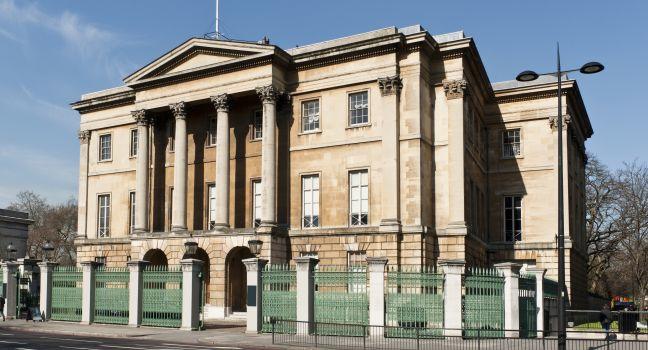
Apsley house, located on Hyde park Corner, London was the ancestral home of the dukes of Wellington.. It was also sometimes known by the address , Number one, London.
(c) Krustynutz | Dreamstime.com

Apsley House was built by Robert Adam in the 1770s and was bought by the Duke of Wellington two years after his famous victory over Napoléon at the Battle of Waterloo in 1815. Long known simply as No. 1, London, on account of its being the first mansion at the old tollgate from Knightsbridge village, the Duke's old regency abode continues to look quite grand. Victory over the French made Wellington the greatest soldier and statesman in the land. The so-called Iron Duke lived here from 1817 until his death in 1852, and, although the 7th Duke of Wellington gave the house to the nation, the family retained some residential rights.

As you'd expect, the mansion has many uniforms and weapons on display, but it also houses a celebrated art collection, the bulk of which was once owned by Joseph Bonaparte, onetime King of Spain and older brother of Napoléon. With works by Brueghel, van Dyck, and Rubens, as well as the Spanish masters Velázquez and Murillo (note the former's famous portrait of Pope Innocent X), the collection also includes a Goya portrait of the duke himself on horseback. An 11-foot-tall statue of a nude (fig-leafed) Napoléon looms over you as you approach the grand central staircase. The statue was taken from the Louvre and given as a gift to Wellington from the grateful British government in 1816.

149 Piccadilly, Hyde Park Corner, London, W1J 7NT, England
020-7499–5676
Sight Details
From £12.50
Closed weekdays Jan.–Mar. and Mon. and Tues. Apr.–Dec.

Something incorrect in this review?

British Museum

Bloomsbury Fodor's Choice
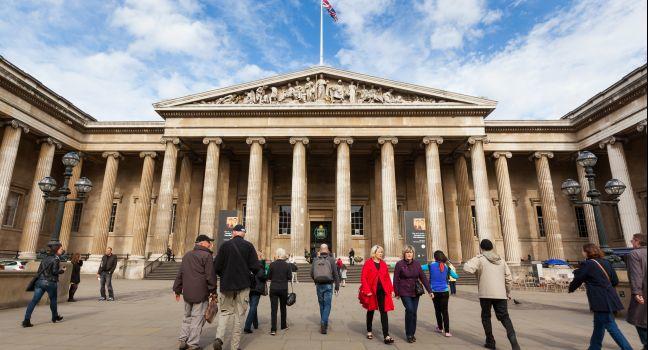
LONDON - SEPT 19 : People outside the British Museum in London on Sept 19, 2013. Taken during the acclaimed Pompeii exhibition which ran for 6 months, helping to attract a record number of visitors.; Shutterstock ID 156624569; Project/Title: Fodor's London
antb / Shutterstock

The sheer scale and importance of the British Museum's many treasures are impossible to overstate or exaggerate; it truly is one of the world's great repositories of human civilization. Established in 1753 and initially based on the library and "cabinet of curiosities" of the royal physician Sir Hans Sloane, the collection grew exponentially over the following decades, partly due to bequests and acquisitions, but also as a result of plundering by the burgeoning British Empire.

The neoclassical grandeur of the museum's Great Russell Street entrance befits what lies in wait inside. Here you'll find the Rosetta Stone, whose inscriptions were key to deciphering hieroglyphics (Room 4); the controversial but exquisite Elgin Marbles (aka the Parthenon Sculptures) that once stood on the Acropolis in Athens (Room 18); the remarkable 7th century BC masterpieces of Assyrian sculpted reliefs, the lion hunts (Room 10a); and stunning fragments and friezes from the Mausoleum of Halikarnassos (aka one of the Seven Wonders of the Ancient World; Room 21).

Other perennial favorites include the Egyptian mummies (Rooms 62--63); the colossal Statue of Ramesses II, dating to circa 1270 BC and weighing in at just over 7 tons (Room 4); and the splendid 8th-century Anglo-Saxon Sutton Hoo treasures, with magnificent helmets and jewelry aplenty (Room 41).

Leave time for exploring the glass-covered Great Court, the largest covered public square in Europe, designed by celebrated architect Norman Foster at the turn of the present millennium. Likewise, don't miss the revered circular Reading Room where Karl Marx wrote Das Kapital under the beautiful blue-and-gold papier-mâché dome. And keep an eye out for the museum's excellent temporary exhibitions, which have featured exhibits on Stonehenge and influential Japanese artist Hokusai.

If it all seems a little overwhelming or if you're pushed for time, try one of the excellent museum tours. Eye-opener Tours (free; 40 minutes) offer a choice of 15 individual galleries daily, while the 90-minute Highlights Tour covers all the major exhibits plus a few lesser-known ones, beginning at 11:30 am and 2 pm on Friday and weekends (£14; book online or at the ticket desk in the Great Court). Alternatively, if you have your own headphones, download the museum's app which offers gallery introductions and expert commentaries (£4.99).

Buckingham Palace

St. James's Fodor's Choice
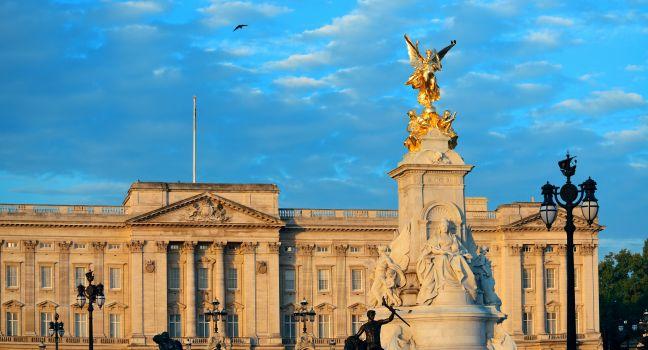
Buckingham Palace and statue in the morning in London.; Shutterstock ID 235683118; Project/Title: Fodor's London 2016; Downloader: Fodor's Travel
Songquan Deng / Shutterstock

Queen Elizabeth II's main residence until her death in 2022, Buckingham Palace has been home to every British monarch since Victoria in 1837. It's still to be seen if King Charles III will be in residence as often as his mother, and whether the palace will still maintain the same limited visiting hours. When the Queen reigned, the palace only opened its doors to the public in the summertime, with a handful of other dates throughout the year. It's possible King Charles will make the palace more available to the public, but no matter what, you'll still be able to tell if the monarch is home: if he's in residence, the Royal Standard flies above the palace; if not, it's the more famous red, white, and blue Union Jack.

The tour covers the palace's 19 State Rooms, with their fabulous gilt moldings and walls adorned with Old Master paintings. The Grand Hall, followed by the Grand Staircase and Guard Room, are visions in marble and gold leaf, filled with massive, twinkling chandeliers. Don't miss the theatrical Throne Room, with the original 1953 coronation throne, or the sword in the Ballroom, used by Queen Elizabeth II to bestow knighthoods and other honors with a touch on the recipient's shoulders. Royal portraits line the State Dining Room, and the Blue Drawing Room is dazzling in its splendor. The bow-shape Music Room features lapis lazuli columns between arched floor-to-ceiling windows, and the alabaster-and-gold plasterwork of the White Drawing Room is a dramatic statement of wealth and power.

Admission is by timed-entry ticket every 15 minutes throughout the day. It's also worth adding a guided tour of the sprawling gardens to your visit. Allow up to two hours to take it all in. Changing the Guard remains one of London's best free shows and culminates in front of the palace. Marching to live military bands, the old guard proceed up The Mall from St. James's Palace to Buckingham Palace. Shortly afterward, the new guard approach from Wellington Barracks. Then within the forecourt, the captains of the old and new guards symbolically transfer the keys to the palace. Get there early for the best view.

Burlington Arcade

Mayfair Fodor's Choice
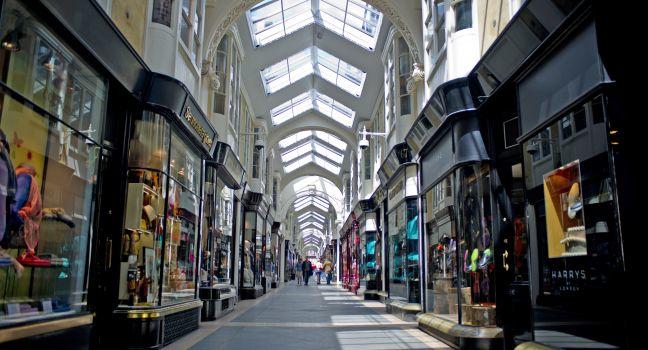
Burlington Arcade, London, England
© Zach Nelson / Fodors Travel

With ceilings and lights now restored to how they would have looked when it was built in 1819, Burlington Arcade is the finest of Mayfair's enchanting covered shopping alleys. Originally built for Lord Cavendish, it was meant to stop commoners from flinging garbage into his garden at next-door Burlington House. Top-hatted watchmen called beadles—the world's smallest private police force—still patrol, preserving decorum by preventing you from singing, running, or carrying an open umbrella. The arcade is also the main link between the Royal Academy of Arts and its extended galleries at 6 Burlington Gardens.

Carnaby Quarter

Soho Fodor's Choice
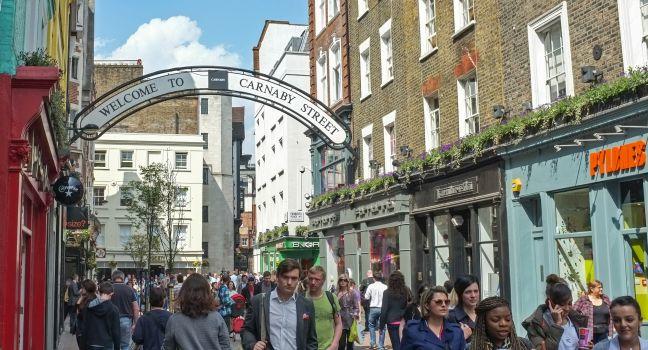
A busy and vibrant Carnaby Street in the west End of London. One of the most popular and trendiest shopping streets in London, made famous in the 1960s by the mods and the hippies.
(c) Cleaper | Dreamstime.com

Want to see the hip street style of today's London? Find it a block east of famed Carnaby Street—where the look of the '60s "Swinging London" was born—an adorable warren of Georgian cobblestone streets now lined with specialty boutiques, eateries, wine caves, and fashion-forward shops. A check of the ingredients reveals one part '60s London, one part futuristic fetishism, one part steampunk, and one part London streetwear swagger. The new London look best flourishes in shops like Raeburn, an ethical boutique crowded with young shoppers who dig their 1950s decommissioned Yugoslav military camouflage puffer coats, joggers, and hoodies. Or scoot around the corner to peruse Percival, Aubin, or END. clothing stores with more than 400 of the edgiest U.K. and global streetwear designers on show. 

Chiswick House

Chiswick Fodor's Choice
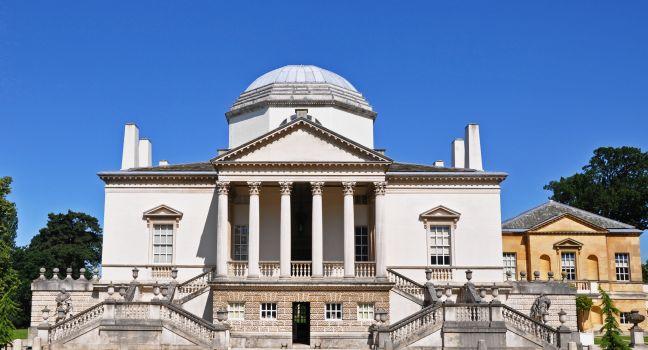
A view of Chiswick House in West London. The building and beautiful landscaped gardens were built in 1729 by the Earl of Burlington to showcase his art collection.
Mark6138 | Dreamstime.com

Completed in 1729 by the third earl of Burlington (also known for Burlington House—home of the Royal Academy—and Burlington Arcade on Piccadilly), this extraordinary Palladian mansion was envisaged as a kind of temple to the arts. Burlington was fascinated by the architecture he saw in Italy while on the Grand Tour as a young man and loosely modeled this building on the Villa Capra, "La Rotonda," near Vicenza and the Pantheon in Rome (note the colonnaded frontage and the domed roof, which is visible from the inside in the Upper Tribunal).

The sumptuous interiors were the work of William Kent (1685–1748), and it's easy to see how they made such a profound impact at the time; the astonishing Blue Velvet Room, with its gilded decoration and intricately painted ceiling, is an extraordinary achievement, as are the gilded domed apses that punctuate the Gallery (an homage to the Temple of Venus and Roma from the Forum Romanum in Rome). Such ideas were so radical in England at the time that wealthy patrons clamored to have Kent design everything from gardens to party frocks.

The rambling grounds are one of the hidden gems of West London. Italianate in style (of course), they are filled with classical temples, statues, and obelisks. Also on the grounds are a café and a children's play area.

Cutty Sark

Greenwich Fodor's Choice
Ship, Cutty Sark, London, England
© Halie Cousineau/ Fodors Travel

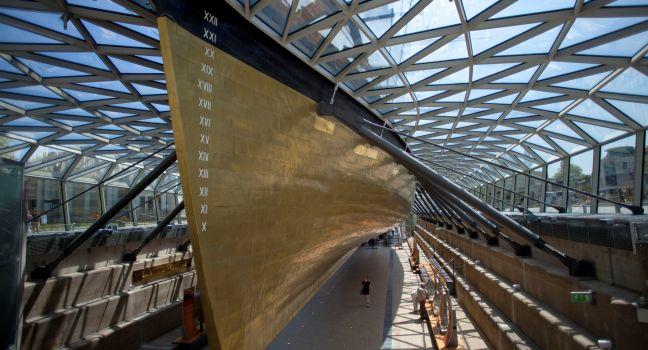
This sleek, romantic clipper was built in 1869, one among a vast fleet of tall-masted wooden ships that plied the oceanic highways of the 19th century, trading in exotic commodities—in this case, tea. Cutty Sark (named after a racy witch in a Robert Burns poem) was the fastest in the fleet, sailing the London–China route in 1871 in only 107 days. The clipper has been preserved in dry dock as a museum ship since the 1950s, but was severely damaged in a devastating fire in 2007.

Yet up from the ashes, as the song goes, grow the roses of success: after a major restoration project, the visitor facilities are now better than ever. Not only can you tour the ship in its entirety, but the glittering visitor center (which the ship now rests directly above) allows you to view the hull from below. There's plenty to see here, and the cramped quarters form a fantastic time capsule to walk around in—this boat was never too comfortable for the 28-strong crew (as you'll see). Don't miss the amusing collection of figureheads. The ship also hosts comedy, cabaret, and theater shows. More adventurous visitors can get an entirely different perspective on the ship via the rig-climbing experience.

Dennis Severs' House

Shoreditch Fodor's Choice
Table, Dennis Severs' House, London, England
© Ross Brinkerhoff / Fodors Travel

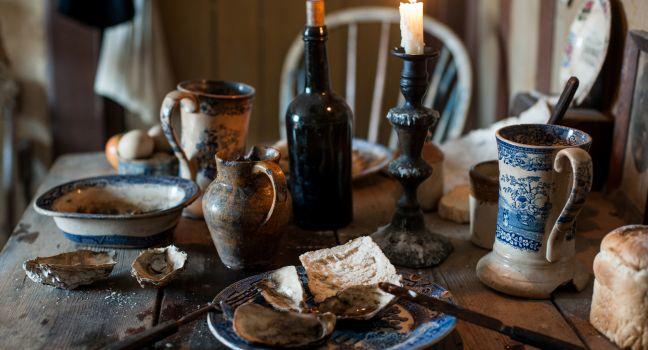
The remarkable interiors of this extraordinary time machine of a house are the creation of Dennis Severs (1948–99), a performer-designer-scholar from Escondido, California, who dedicated his life to restoring this Georgian terraced house. More than that, he created "still-life dramas" using sight, sound, and smell to evoke the world of a fictitious family of Huguenot silk weavers, the Jervises, who might have inhabited the house between 1728 and 1914. Each of the 10 rooms has a distinctive compelling atmosphere that encourages visitors to become lost in another time, deploying evocative design details like rose-laden Victorian wallpaper, Jacobean paneling, Georgian wingback chairs, baroque carved ornaments, rich "Catholic" wall colors downstairs, and more sedate "Protestant" shades upstairs.

The Silent Night candlelight tour, a stroll through the rooms with no talking allowed, is the most theatrical and memorable way to experience the house. The Denis Severs Tour draws upon recently discovered recordings and writings to re-create the tours that the artist himself gave when he first opened the house in 1980. Check the website for tour days and times.

Dulwich Picture Gallery

Dulwich Fodor's Choice
Gallery, Dulwich Picture Gallery, London, England
Inside Dulwich Picture Gallery by

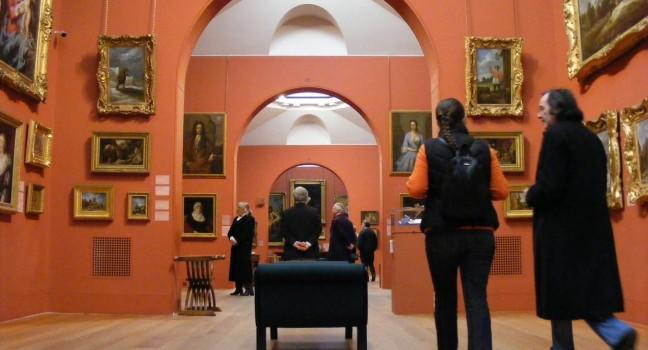
Designed by Sir John Soane, Dulwich (pronounced dull-ich) Picture Gallery was the world's first purpose-built art museum when it opened in 1811 (a recent ultramodern extension was designed by Rick Mather). The permanent collection of more than 600 paintings includes landmark works by old masters such as Rembrandt, van Dyck, Rubens, Canaletto, and Gainsborough. The museum also hosts three or so major temporary exhibitions each year devoted to more-contemporary artists like Helen Frankenthaler or themes like landscape artists of the Black Diaspora. Check the website for its schedule of family activities; there's a 3-acre garden with a lovely café here, too.

While you're in the area, take a short wander and you'll find a handful of charming clothing and crafts stores and the well-manicured Dulwich Park, which has lakeside walks and a fine display of rhododendrons in late May. Development in Dulwich Village is tightly controlled, so it feels a bit like a time capsule, with old-fashioned street signs and handsome 18th-century houses on the main street.

Eltham Palace

Eltham Fodor's Choice
Eltham Palace, London, England
(c) Thomasowen | Dreamstime.com

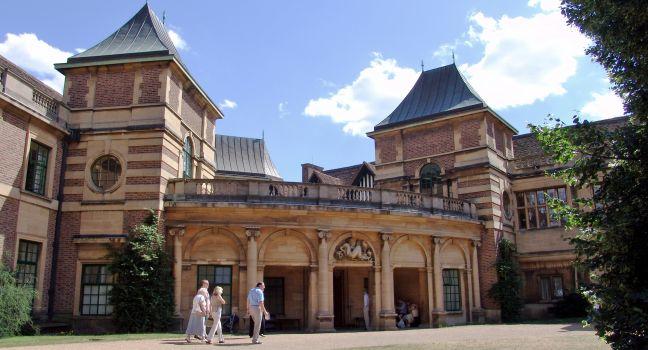
Once a favorite getaway for Henry VIII (who liked to spend Christmas here), Eltham Palace has been drastically remodeled twice in its lifetime: once during the 15th and 16th centuries, and again during the 1930s, when a grand mansion was annexed onto the Tudor great hall by the superwealthy Courtauld family. Today it's an extraordinary combination of late medieval grandeur and art deco masterpiece, laced with an eccentric whimsy—the Courtaulds even built an entire room to be the personal quarters of their beloved pet lemur. Be sure to get a glimpse of the Map Room, where the Courtaulds planned their round-the-world adventures, and the reconstruction of a lavish 1930s walk-in wardrobe, complete with genuine dresses from the time period. Outside you'll find a mix of medieval and modern in the 19 acres of surrounding gardens.

Hampstead Heath

Hampstead Fodor's Choice
A young couple relaxing on the grass in Hampstead Heath during the summer months in London.
Chris Seddon / Shutterstock

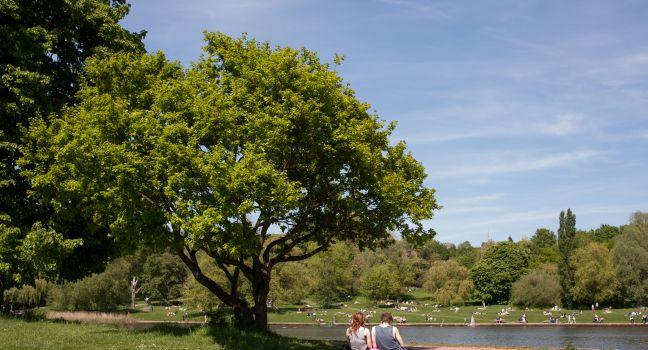
For generations, Londoners have headed to Hampstead Heath to escape the dirt and noise of the city, and this unique 791-acre expanse of rus in urbe ("country in the city") is home to a variety of wildlife and habitat: grassy meadows, woodland, scrub, wetlands, and some of Europe's most venerable oaks. Be aware that, aside from the Parliament Hill area to the south and Golders Hill Park in the northwest, it is more like countryside than a park, with signs and amenities in short supply. Pick up a map at Kenwood House or at the "Enquiries" window of the Staff Yard near the tennis courts off Highgate Road, where you can also find details about the history of the Heath and its flora and fauna. An excellent café near the Edwardian bandstand serves Italian food.

Coming onto the Heath from the Savernake Road entrance on the southern side, walk past the children's playground and paddling pool and head uphill to the top of Parliament Hill. At 321 feet above sea level, it's one of the highest points in London, providing a stunning panorama over the city. On clear days you can see all the way to the Surrey Hills beyond the city's southern limits. Keep heading north from Parliament Hill to find the more rural parts of the Heath.

If you keep heading east from the playground instead, turn right past the Athletics Track and you'll come to the Lido, an Olympic-size, outdoor, unheated swimming pool that gets packed on rare hot summer days. More swimming options are available at the Hampstead ponds, which have been refreshing Londoners for generations. You'll find the "Mens" and "Ladies" ponds to the northeast of Parliament Hill, with a “Mixed” pond closer to South End Green. A £2 donation is requested. Golders Hill Park, on the Heath Extension to the northwest, offers a good café, tennis courts, a duck pond, a croquet lawn, and a walled flower garden, plus a Butterfly House (May–September) and a small zoo with native species including muntjac deer, rare red squirrels, and a Scottish wildcat.

Hyde Park

Fodor's Choice
Women running in the morning. Hyde Park, London;
QQ7 / Shutterstock

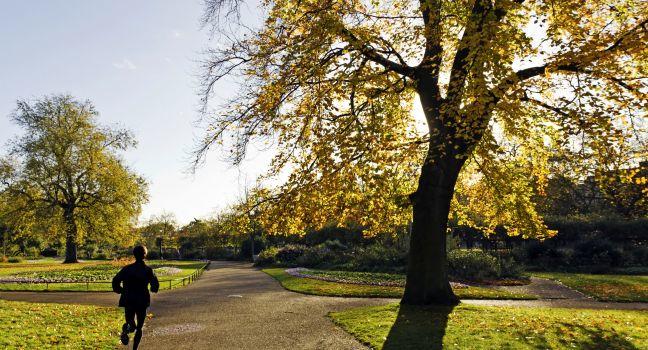
Along with the smaller St. James's and Green Parks to the east, the 350-acre Hyde Park once formed part of Henry VIII's hunting grounds. Along its south side runs Rotten Row—the name is a corruption of Route du Roi (Route of the King), as it became known after William III installed 300 oil lamps to make the busy road less attractive to highwaymen. Today it's a bridle path often used by the Household Cavalry, who are housed in the Hyde Park Barracks occupying two unattractive buildings, a high-rise and a low red block to the left. You can see the Guardsmen in full regalia leaving on horseback for guard duty at Buckingham Palace at about 10:30 am (or come at noon when they return). The metal breastplates worn by one of the divisions of the Cavalry were a distinctive feature of Queen Elizabeth II's funeral procession.

Hyde Park is wonderful for strolling, cycling, or just relaxing by the Serpentine, the long body of water near its southern border. On the south side, the Lido Café and Bar by the 1930s Serpentine Lido is a good spot to refuel, and close by is the Diana Memorial Fountain. On Sunday, you'll find the uniquely British tribute to free speech, Speakers' Corner, close to Marble Arch. Though not what it was in the days before people could use the Internet to vent their spleen, it still offers a unique assortment of passionate, if occasionally irrational, advocates literally getting up on soapboxes. Summer sees giant pop concerts with top artists, while during the Christmas season the park hosts a "Winter Wonderland" amusement park, Christmas market, and ice rink.

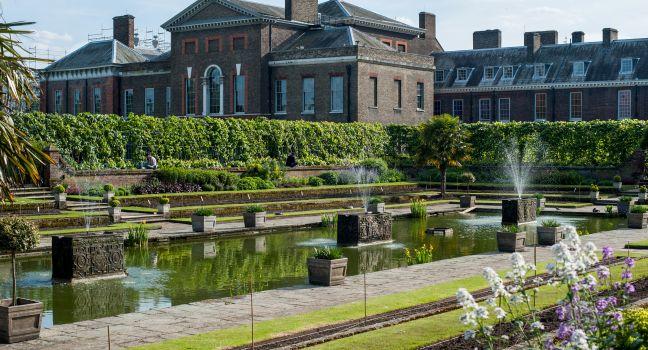
Kensington Gardens

Fodor's Choice
Kensington Gardens, London, England
© Ross Brinkerhoff / Fodors Travel

Laid out in 1689 by William III, who commissioned Sir Christopher Wren to build Kensington Palace, the gardens are a formal counterpart to neighboring Hyde Park. Just to the north of the palace itself is the Dutch-style Sunken Garden. Nearby, the 1912 bronze statue of Peter Pan commemorates the boy in J. M. Barrie's story who lived on an island in the Serpentine and never grew up. Kids will enjoy the charming Diana Memorial Playground, whose design was also inspired by Barrie's book. The Elfin Oak is a 900-year-old tree trunk that was carved with scores of tiny elves, fairies, and other fanciful creations in the 1920s. The Italian Gardens, an ornamental water garden commissioned by Prince Albert in 1860, is comprised of several ornamental ponds and fountains (there's also a nice café on-site), while the Round Pond attracts model-boat enthusiasts. Monthly 90-minute walking tours of the park are led by Royal Parks staff (£12).

Kew Palace and Queen Charlotte's Cottage

Kew Fodor's Choice
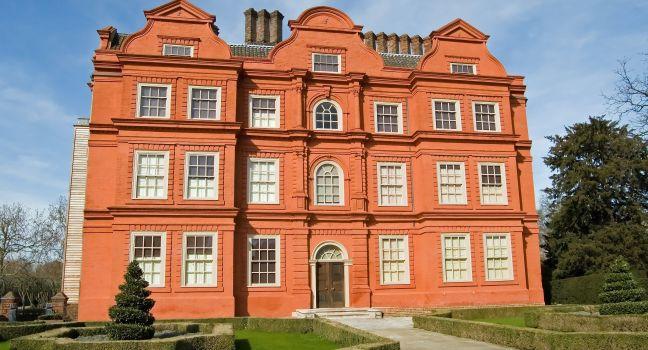
Kew Palace, in the grounds of Kew Gardens, London, England.
Mary Lane / Shutterstock

The elegant redbrick exterior of the smallest of Britain's royal palaces seems almost humble when compared with the grandeur of, say, Buckingham or Kensington Palace. Yet inside is a fascinating glimpse into life at the uppermost end of society from the 17th to 19th centuries. This is actually the third of several palaces that stood here; once known as Dutch House, it was one of the havens to which George III retired when insanity forced him to withdraw from public life. Queen Charlotte had an orné (a rustic-style cottage retreat) added in the late 18th century. In a marvelously regal flight of fancy, she kept kangaroos in the paddock outside. The main house and gardens are maintained in the 18th-century style. Entry to the palace itself is free, but it lies within the grounds of Kew Gardens, and you must buy a ticket to that to get here.

Kew Rd. at Lichfield Rd., London, TW9 3AB, England
020-3166–6000
Sight Details
Free with entry to Kew Gardens (£24)
Closed Oct.–Apr.

Something incorrect in this review?

Museum of the Home

Hoxton Fodor's Choice
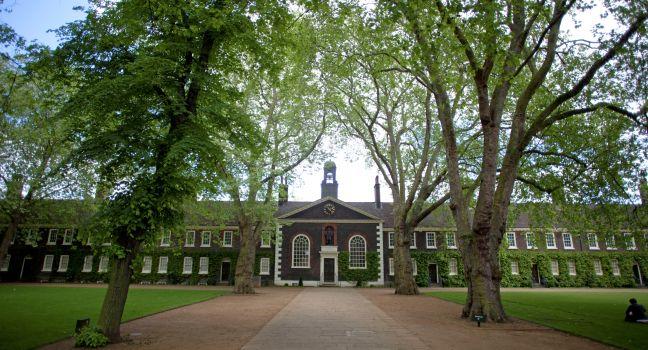
Geffrye Museum of the Home, London, England
© Halie Cousineau/ Fodors Travel

In contrast to the West End's grand aristocratic town houses, this charming museum is devoted to the life of the city's middle class over the years. Originally a row of almshouses built in 1714, it now contains a series of 11 rooms that re-create everyday domestic interiors from the Elizabethan period through the 1950s to the present day. The Home Galleries, located in the basement of the museum, puts it all in context with a wider history of the concept of home that includes plenty of interactive exhibits.

Outside, a series of gardens charts the evolution of the town garden over the past 400 years; next to them is a walled herb garden. In the museum's front garden, you'll find a statue of Sir Robert Geffrye, the English merchant who founded the almshouses; the museum used to bear his name, but in the wake of the Black Lives Matter movement and the acknowledgment of Geffrye's connections with the transatlantic slave trade, the museum has been renamed. After consultation, the museum decided against removing the statue and instead commissioned displays and artwork to recontextualize it. There's currently no on-site café, but visitors are encouraged to bring their own food to enjoy in the lunchroom.

The National Gallery

Westminster Fodor's Choice
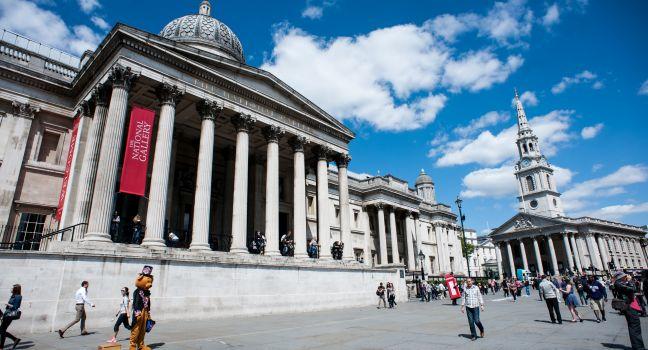
National Gallery, London, England
© Ross Brinkerhoff / Fodors Travel

Anyone with even a passing interest in art will want to put this near the top of their to-do list while visiting London, for it is truly one of the world's great art museums. More than 2,300 masterpieces are on show here, including works by Michelangelo, Leonardo, Turner, Monet, van Gogh, Picasso, and more. Enter through the grand portico overlooking the north side of Trafalgar Square to delve headlong into the highlights of the collection, although the Sainsbury Wing (the modern building immediately to the left), which focuses mainly on medieval art, is invariably less crowded.

You could easily spend all day discovering what The National Gallery has to offer, but among the best-known highlights are The Ambassadors by Hans Holbein (1497–1543), a portrait of two wealthy visitors from France, surrounded by objects laden with enough symbolism to fill a book—including, most beguilingly, a giant skull at the base, which only takes shape when viewed from an angle; The Arnolfini Portrait by Jan van Eyck (1390–1441), in which a solemn couple holds hands, the fish-eye mirror behind them mysteriously illuminating what can't be seen from the front view; The Virgin of the Rocks by Leonardo da Vinci (1452–1519), a magnificently sculpted altarpiece commissioned in 1480; and Rain, Steam, and Speed—The Great Western Railway by J. M. W. Turner (1775–1851), which seems, in its mad whirl of rain, steam, and mist, to embody the mystical dynamism of the steam age (spot the fleeing hare).

Special exhibitions, of which there are several every year, tend to be major events. Generally they're ticketed, so booking is advisable if it's a big name. The permanent collection, however, is always free. Guided tours of the collection and curator’s talks take place regularly, both in the gallery and online; check the website for details. Audio guides can be purchased (£5) to play on your own smartphone.

National Maritime Museum

Greenwich Fodor's Choice
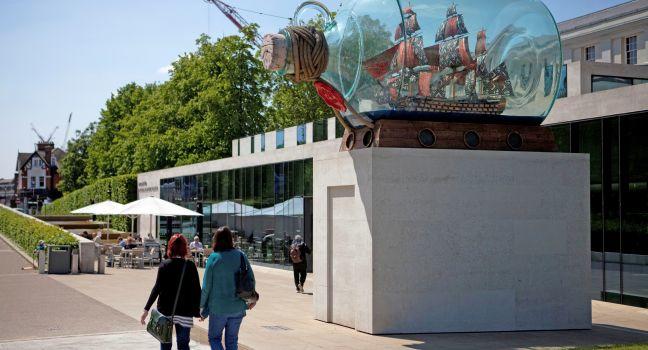
Nelson’s Ship in a Bottle, Sculpture, National Maritime Museum, London, England
© Halie Cousineau/ Fodors Travel

From the time of Henry VIII until the 1940s, Britain was the world's preeminent naval power, and the collections here trace half a millennia of that seafaring history. The story is as much about trade as it is warfare: in the Atlantic gallery, Slavery, Trade, Empire explores how trade in goods (and people) irrevocably changed the world, while in the Traders gallery, The East India Company and Asia focuses on how the epoch-defining company shaped trade with Asia for 250 years. One gallery, Polar Worlds, includes a sledge from one of Shackleton’s expeditions, while another is devoted to Admiral Lord Nelson, Britain's most famous naval commander; among the exhibits there is the uniform he was wearing, complete with bloodstains, when he died at the Battle of Trafalgar in 1805.

Temporary exhibitions here are usually fascinating—those in recent years have included personal accounts of the First World War at sea. Borrow a tablet computer from the front desk and take it to the giant map of the world in the courtyard at the center of the museum; here, a high-tech, interactive app opens up hidden stories and games as you walk between continents. The Ahoy! and All Hands galleries are filled with interactive fun for kids, where they can learn about polar exploration, pirates, and more.

National Portrait Gallery

Westminster Fodor's Choice
Gallery, National Portrait Gallery, London, England
© Ross Brinkerhoff / Fodors Travel

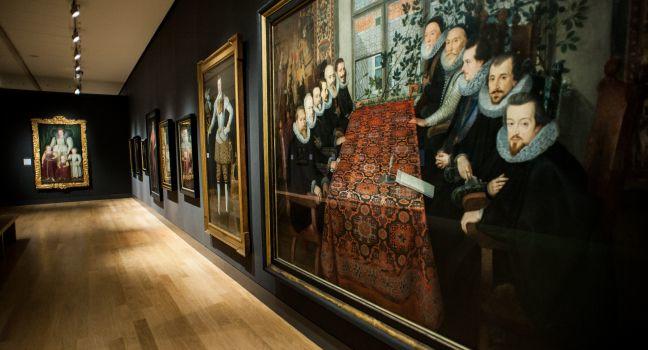
The National Portrait Gallery was founded in 1856 with a single aim: to gather together portraits of famous (and infamous) Britons throughout history. More than 150 years and 200,000 portraits later, it is an essential stop for all history and literature buffs, especially following a major renovation that has reconfigured the interior to allow for more light and modern gallery spaces, as well as an impressive public forecourt and cast bronze entrance gates by the artist Tracey Emin. If you visit with kids, swing by the new Learning Centre to take part in family activities. 

Galleries are arranged clearly and chronologically, from Tudor times to contemporary Britain—take the lift to the third floor and work your way down. Look out for treasures such as the enormous portrait of Elizabeth I—bejeweled and literally astride the world in a powerful display of imperial intent—plus portraits of Shakespeare and Sir Walter Raleigh. More of the photography collection is on display since the rehang, though expect these exhibits to change regularly. On the top floor, the Portrait Restaurant has one of the best views in London—a panoramic vista of Nelson's Column and the backdrop along Whitehall to the Houses of Parliament.

Natural History Museum

Kensington Fodor's Choice
Natural History Museum, Kensington, London, England.
Ross Brinkerhoff / Fodors Travel

Originally built to house the British Museum’s natural history collection and bolstered by samples provided by Britain’s great 19th-century explorers and scientists—notably Charles Darwin—this enormous Victorian cathedral of science is one of the world’s preeminent museums of natural history and earth sciences. As might be expected given its Darwin connection, the emphasis is on evolution and conservation. The terra-cotta facade is embellished with relief panels depicting living creatures to the left of the entrance and extinct ones to the right (although some species have subsequently changed categories). Most are represented inside the museum, which contains more than 70 million different specimens. Only a small percentage is on public display, but you could still spend a day here and not come close to seeing everything.

The skeleton of a giant blue whale dominates the vaulted, cathedral-like entrance hall. Similarly huge dino bones (technically rocks due to fossilization) can be found in the Dinosaur Gallery (Blue Zone) along with the only known fossil of Spicomellus, a type of armored dinosaur with spikes protruding from its ribs. You'll also come face-to-face with a virtual Jurassic sea dragon and a giant animatronic T. rex (¾ of its actual size) that's programmed to sense when human prey is near and "respond" in character. When he does, you can hear the shrieks of fear and delight all the way across the room.

An escalator takes you into a giant globe in the Earth Galleries, where there's a choice of levels to explore. Don't leave without checking out the earthquake simulation in the Volcanoes and Earthquakes Gallery. The Darwin Centre houses some 80 million items the museum itself doesn't have room to display, including "Archie," a 28-foot giant squid. If you want to see Archie and some of the other millions of animal specimens preserved in glass containers (including some acquired on Darwin's Beagle voyage), you'll need to book one of the behind-the-scenes Spirit Collection tours (£25). These 45-minute tours take place at various dates and times and can be booked on the same day (space is limited, so come early). Night owls might prefer one of the evening talks or spending an entire night in the museum at one of the "Dino Snores" events (extra charge applies).

The museum also has an outdoor ice-skating rink from October through January and a popular Christmas fair.

Portobello Road Market

Notting Hill Fodor's Choice
Portobello Road Market, Notting Hill and Bayswater, London, England.
© Halie Cousineau/ Fodors Travel

Looking for a 19th-century snuff spoon? Perhaps a Georgian salt cellar? What about a 1960s-era minidress? Then head to Portobello Road's famous Saturday market—and arrive at about 9 am to avoid the giant crowds. Stretching almost 2 miles from Notting Hill, the market is made up of four sections, each with a different emphasis: antiques, fresh produce, household goods, and a flea market. The antiques stalls are packed in between Chepstow Villas and Westbourne Grove, where you'll also find almost 100 antiques shops plus indoor markets, which are open on weekdays, when shopping is much less hectic. Where the road levels off, around Elgin Crescent, youth culture and a vibrant neighborhood life kicks in, with a variety of interesting small stores and food stalls interspersed with a fruit-and-vegetable market.

On Friday and Saturday, the section between Talbot Road and the Westway elevated highway becomes one of London's best flea markets, specializing in discounted new household goods, while north of the Westway, you'll find secondhand household goods and bric-a-brac. Scattered throughout, but especially under the Westway, are vendors selling a mishmash of designer, vintage, and secondhand clothing, together with jewelry, custom T-shirts, and assorted junk. There's a Trinidad-style Carnival centered on Portobello Road on the late August bank-holiday weekend, a tribute to the area's past as a center of the West Indian community.

Royal Academy of Arts

Mayfair Fodor's Choice
Royal Academy of Arts, London, England
© Zach Nelson / Fodors Travel

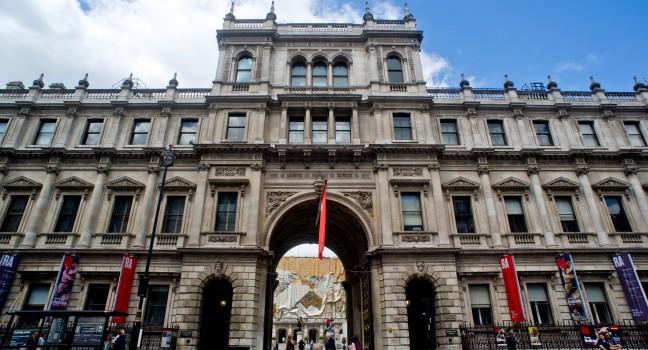
Burlington House was built in 1664, with later Palladian additions for the third earl of Burlington in 1720. The piazza in front dates from 1873, when the Renaissance-style buildings around the courtyard were designed by Banks and Barry to house a gaggle of noble scientific societies, including the Royal Society of Chemistry and the Royal Astronomical Society.

The house itself is home to the Royal Academy of Arts and an ambitious redevelopment for the academy's 250th anniversary in 2018 has meant that even more of its 46,000 treasures are now on display. The statue of the academy's first president, Sir Joshua Reynolds, palette in hand, stands prominently in the piazza. Free tours show off part of the collection and the excellent temporary exhibitions. Every June through August, the RA puts on its Summer Exhibition, a huge and eclectic collection of art by living Royal Academicians and many other contemporary artists.