
4 Best Sights in Richmond, London

Background Illustration for Sights

We've compiled the best of the best in Richmond - browse our top choices for the top things to see or do during your stay.

Syon House and Park

Brentford Fodor's choice
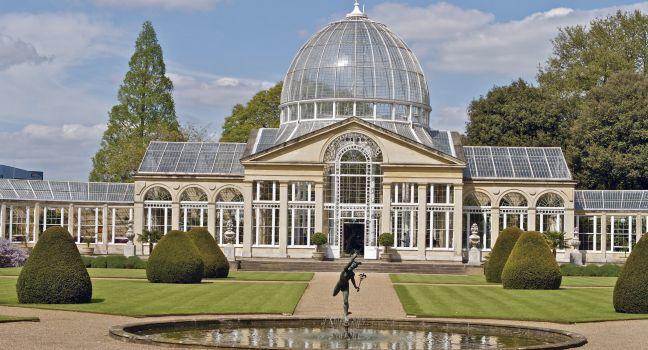
Syon House and Park, London, England
paula french / Shutterstock

The residence of the duke and duchess of Northumberland, this is one of England's most lavish stately homes. Set in a 200-acre park landscaped by the great gardener "Capability" Brown (1716–83), the core of the house is Tudor—it was one of the last stopping places for Henry VIII's fifth wife, Catherine Howard, and the extremely short-lived monarch Lady Jane Grey before they were sent to the Tower. It was remodeled in the Georgian style in 1762 by famed decorator Robert Adam. He had just returned from studying the sights of classical antiquity in Italy and created two rooms sumptuous enough to wow any Grand Tourist: the entryway is an amazing study in black and white, pairing neoclassical marbles with antique bronzes, and the Ante Room contains 12 enormous verd-antique columns surmounted by statues of gold—and this was just a waiting room for the duke's servants and retainers. The Red Drawing Room is covered with crimson Spitalfields silk, and the Long Gallery is one of Adam's noblest creations.

Syon Park, London, TW8 8JF, England
020-8560–0882
Sight Details
£14, £9 gardens and conservatory only
Closed Nov.–mid-Mar. and Mon., Tues., Fri., and Sat.

Something incorrect in this review?

Strawberry Hill House

Twickenham Fodor's choice

From the outside, this rococo mishmash of towers, crenellations, and white stucco is dazzling in its faux-medieval splendor. Its architect and owner, Sir Horace Walpole (1717–97), knew a thing or two about imaginative flights of fancy; the flamboyant son of the first British prime minister, Robert Walpole, he all but single-handedly invented the Gothic novel with The Castle of Otranto (1764).

Once you pass through Strawberry Hill's forbidding exterior, you'll experience an explosion of color and light, for Walpole boldly decided to take elements from the exteriors of Gothic cathedrals and move them inside. The detail is phenomenal, from the cavernous entrance hall with its vast Gothic trompe-l'oeil decorations, to the Great Parlour with its Renaissance stained glass, to the Gallery, where extraordinary fan vaulting is a replica of the vaults found in the Henry VII Chapel at Westminster Abbey. The gardens have been meticulously returned to their original 18th-century design, right down to a white marble loveseat sculpted into the shape of a shell. Opening days can vary, so call ahead to check times.

Ham House

Richmond

To the west of Richmond Park, overlooking the Thames and nearly opposite the memorably named Eel Pie Island, Ham House was built in 1610 and remodeled 60 years later. It's one of the most complete examples in Europe of a lavish 17th-century house, and as such you can get a clear sense of how the English aristocracy really lived during that period (in short: comfortably). The beautiful formal gardens, with their distinctive spherical and conical topiary, have become an influential source for other palaces and grand villas seeking to restore their gardens to how they were in their heyday. The original decorations in the Great Hall, Round Gallery, and Great Staircase have been replicated, and most of the furniture and fittings are on permanent loan from the Victoria & Albert Museum.

Note that from January to March, visits are by guided tour only, lasting around 30 minutes (no need to book). A tranquil and scenic way to reach the house is on foot, which takes about 30 minutes, along the eastern riverbank south from Richmond Bridge.

Recommended Fodor's Video

Marble Hill House

Twickenham

This handsome Palladian mansion is set on 66 acres of parkland on the northern bank of the Thames, almost opposite Ham House. It was built in the 1720s by George II for his mistress, the "exceedingly respectable and respected" Henrietta Howard. Later the house was occupied by Mrs. Fitzherbert, who was secretly (and illegally) married to the Prince Regent (later George IV) in 1785. The house was restored and opened to the public in 1903, looking very much like it did in Georgian times, with extravagant gilded rooms in which Mrs. Howard entertained the literary superstars of the age, including Alexander Pope and Jonathan Swift. A ferry service from Ham House operates during the summer; access on foot is a half-hour walk south along the west bank of the Thames from Richmond Bridge. Great for families, there is also a playground and woodland walks within the grounds.