
3 Best Sights in Richmond, London

Background Illustration for Sights

We've compiled the best of the best in Richmond - browse our top choices for the top things to see or do during your stay.

Syon House and Park

Brentford Fodor's choice
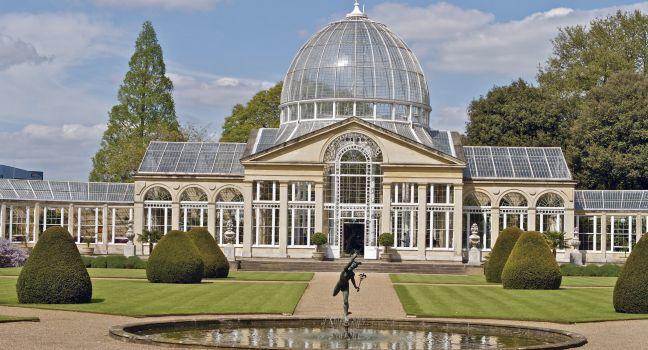
Syon House and Park, London, England
paula french / Shutterstock

The residence of the duke and duchess of Northumberland, this is one of England's most lavish stately homes. Set in a 200-acre park landscaped by the great gardener "Capability" Brown (1716–83), the core of the house is Tudor—it was one of the last stopping places for Henry VIII's fifth wife, Catherine Howard, and the extremely short-lived monarch Lady Jane Grey before they were sent to the Tower. It was remodeled in the Georgian style in 1762 by famed decorator Robert Adam. He had just returned from studying the sights of classical antiquity in Italy and created two rooms sumptuous enough to wow any Grand Tourist: the entryway is an amazing study in black and white, pairing neoclassical marbles with antique bronzes, and the Ante Room contains 12 enormous verd-antique columns surmounted by statues of gold—and this was just a waiting room for the duke's servants and retainers. The Red Drawing Room is covered with crimson Spitalfields silk, and the Long Gallery is one of Adam's noblest creations.

Syon Park, London, TW8 8JF, England
020-8560–0882
Sight Details
£14, £9 gardens and conservatory only
Closed Nov.–mid-Mar. and Mon., Tues., Fri., and Sat.

Something incorrect in this review?

Hampton Court Palace

Fodor's choice

The beloved seat of Henry VIII's court, sprawled elegantly beside the languid waters of the Thames, Hampton Court is steeped in more history than virtually any other royal building in England. The Tudor mansion, begun in 1515 by Cardinal Wolsey to curry favor with the young Henry, actually conceals a larger 17th-century baroque building, which was partly designed by Sir Christopher Wren. The earliest dwellings on this site belonged to a religious order founded in the 11th century and were expanded over the years by its many subsequent residents until George II moved the royal household closer to London in the early 18th century.

After entering through the magnificent Tudor courtyard, start with a look through the State Apartments, decorated in the Tudor style, and on to the wood-beamed magnificence of Henry's Great Hall, before taking in the strikingly azure ceiling of the Chapel Royal. Watch out for the ghost of Henry VIII's doomed fifth wife, Catherine Howard, who lost her head yet is said to scream her way along the Haunted Gallery. (Believe it or not, what is certainly true is that the corridor is prone to sudden drops in temperature—and no one quite knows why.) Latter-day masters of the palace, the joint rulers William and Mary (reigned 1689–1702), were responsible for the beautiful King's and Queen's Apartments and the elaborate baroque of the Georgian Rooms.

Well-handled reconstructions of Tudor life take place all year, from live appearances by "Henry VIII" to cook-historians preparing authentic feasts in the Tudor Kitchens. (Dishes on offer in the adjacent café include a few of these traditional recipes.) The highlight of the formal grounds is undoubtedly the famous maze (the oldest hedge maze in the world); its half mile of pathways among clipped hedgerows is still fiendish to negotiate. There's a trick, but we won't give it away here; it's much more fun just to go and lose yourself. Meanwhile, the Lower Orangery Garden shows off thousands of exotic species that William and Mary, avid plant collectors, gathered from around the globe.

Richmond Park

Richmond Fodor's choice

This enormous park was enclosed in 1637 for use as a royal hunting ground—like practically all other London parks. Unlike the others, however, Richmond Park still has wild red and fallow deer roaming its 2,500 acres (three times the size of New York's Central Park) of grassland and heath. Its ancient oaks are among the last remnants of the vast, wild forests that once encroached on London in medieval times. The Isabella Plantation (near the Ham Gate entrance) is an enchanting and colorful woodland garden, first laid out in 1831. There's a splendid protected view of St. Paul's Cathedral from King Henry VIII's Mound, the highest point in the park; find it, and you have a piece of magic in your sights. The park is also home to White Lodge, a 1727 hunting lodge that now houses the Royal Ballet School.

Recommended Fodor's Video