222 Best Sights in Cuba

Background Illustration for Sights

We've compiled the best of the best in Cuba - browse our top choices for the top things to see or do during your stay.

Basilica del Cobre

Fodor's Choice
El Cobre very famous church 13km from Santiago de Cuba, Cuba.
Master2 | Dreamstime.com

After a drive through the countryside west of Santiago you'll see the red-tile tower of La Basilica de Nuestra Señora de la Caridad del Cobre—dedicated to Cuba's patron saint in 1926—before the turn-off to the copper mining town of El Cobre in which it is located. The story of the Virgin dates from the early 1600s, when three men in a boat first saw her floating on water during a storm; tradition holds that the Virgin saved the men from certain drowning. Records show that the statue was most likely brought from Spain on order of the then-governor of Cuba, but don't play iconoclast with the millions of faithful who take seriously the Virgin's reputed miraculous powers. (Her image has also been blended with that of Ochún, the orisha, or goddess, of love in the Santería religion.) Each September, pilgrims journey here—sometimes crawling uphill on their knees—on the Virgin's feast day (September 8) to pay homage to the image housed in a glass case high above the main altar. Her shrine is filled with gifts from the faithful, including Ernest Hemingway's 1954 Nobel Prize, which he won largely for his novel The Old Man and the Sea. The Nobel medal was stolen in 1986 but recovered. It is no longer on display, except during special occasions. A staircase at the back of the cathedral leads to the chapel containing the Virgin's wooden image. In front of the cathedral you'll find a plaque commemorating Pope John Paul II's visit here during his 1998 trip to Cuba. A taxi is the quickest way to get out here. Plan to pay CUC$30. Most area tours feature the basilica as a stop, too.
Carretera Central, 90100, Cuba
2234–6118
Sight Details
CUC$1 suggested donation
Daily 6:30 am–6 pm

Something incorrect in this review?

Catedral de La Habana

La Habana Vieja Fodor's Choice

Cuba's Cervantes Prize–winning novelist, Alejo Carpentier, may have borrowed from St. Augustine when he described the city's cathedral as "music made into stone," but the words—like the bells in the structure they describe—ring true and clear. Work on the church was begun by the Jesuits in 1748, who weren't around to see it finished in 1777. (King Carlos III of Spain expelled the Jesuits from the New World in 1767). The facade is simultaneously intimate and imposing, and one of the two towers is visibly larger, creating an asymmetry that seems totally natural. The two bells in the taller, thicker tower are said to have been cast with gold and silver mixed into the bronze, giving them their sweet tone. In Our Man in Havana, Graham Greene describes the statue of Columbus that once stood in the square as looking "as though it had been formed through the centuries underwater, like a coral reef, by the action of insects." This is, in fact, exactly the case: coral, cut and hauled from the edge of the sea by slaves, was used to build many of Havana's churches. Look carefully and you'll see fossils of marine flora and fauna in the stone of the cathedral.

Plaza de la Catedral, Havana, 10100, Cuba
7861–7771
Sight Details
Free
Weekdays 10–4:30, Sat. 10–2, Sun. 9–12:30; Mass weekdays 6 pm, Sat. 3 pm, Sun. 10:30 am

Something incorrect in this review?

Cementerio Santa Ifigenia

Fodor's Choice

This well-kept cemetery is home to the majestic mausoleum of the great poet-patriot in the wars of independence, José Martí. The structure is true to Martí's wishes (expressed in one of his poems) that he be buried below the flag of Cuba and surrounded by roses. Marble steps lead to the tomb, above which is a domed tower. An honor guard keeps watch over Martí's tomb 24 hours a day and changes guard every 30 minutes in an eye-catching, goose-stepping ceremony. Fidel Castro also chose to be entombed here, his ashes encased inside a large rock adorned with a plaque that says simply FIDEL. Other highlights include a memorial to Cuban soldiers who have fallen in battle---many of the partisans who fought in Angola, in southern Africa, are buried here---and the tombs of Carlos Manuel de Céspedes and those who died in the Moncada Barracks attack. While admission is technically free, you may enter only in the accompaniment of a guide, for which you must pay. You'll also be charged a hefty photo fee, whether taking stills or videos. The changing-of-the-guard ceremony is impressive enough that most visitors pony up and pay the photo fee.

Av. Crombet, Reparto Santa Ifigenia, Santiago de Cuba, 90100, Cuba
2263--2723
Sight Details
Free (but only with guide); guide, CUC$1; photo permit, CUC$10
Daily dawn–dusk

Something incorrect in this review?

Recommended Fodor's Video

El Malecón

Fodor's Choice

Havana's famous Malecón, sheltered by a sea wall, runs west for 7 km (4 miles) from La Punta (where it's also known as Avenida Antonio Maceo) and the harbor's entrance to the Santa Dorotea de Luna de la Chorrera fortress, near the mouth of the Río Almendares. Although it was designed in 1857 by a Cuban engineer, it wasn't built until 1902, thanks, in part, to the American capital that flowed to the island after the Spanish-American War. Once an opulent promenade flanked by brightly painted houses, the Malecón today is dark and dilapidated, the houses crumbling, and the wide limestone walkway broken and eroded. Yet it still has its charms. As it faces north, it offers spectacular views of both sunrise and sunset—perhaps accounting for the belief that there's not a single habanero who hasn't professed love eternal here at one time or another. Crashing waves and the rainbows created from their spray and the sun adds to the Malecón's magic.

As you walk, look for rectangles carved into the stone. These were once (and are still used as) sea baths, which fill at high tide and allowed people to splash about, safe from both currents and sharks. Just west of the Hotel Nacional you'll come to Monumento alMaine, honoring the 260 American sailors killed in the 1898 explosion of that U.S. warship, which was visiting Havana in a display of American might. The event lead to what the United States calls the Spanish-American War (for Cubans this was the final stage of their War of Independence, which began in 1868) followed by a period of heavy U.S. involvement in Cuban affairs. A plaque dedicated by the Castro government here reads: "To the victims of the Maine, who were sacrificed by imperialist voracity in its eagerness to seize the island of Cuba."

Finca Vigía

Fodor's Choice

Even those convinced that they've outgrown their thirst for Hemingway will feel a flutter of youthful romanticism on a visit to Finca Vigía (Lookout Farm), the American Nobel Prize–winner's home from 1939 to 1961. The excellent guides will show you his weight charts—faithfully kept on the bathroom wall and never varying much from 242.5 pounds—a first edition of Kenneth Tynan's Bull Fever by the toilet; the lizard preserved in formaldehyde and honored for having "died well" in a battle with one of Hemingway's five-dozen cats; the pool where Ava Gardner swam naked; Hemingway's favorite chair (ask about what happened to people who dared sit in it); his sleek powerboat, El Pilar; and much, much more.

San Francisco de Paula, Cuba
7891–0809
Sight Details
CUC$5
Mon.–Sat. 10–4, Sun. 9–1

Something incorrect in this review?

Iglesia de Nuestra Señora de la Merced

Fodor's Choice

Originally erected in 1748, this church was reconstructed in 1848, repaired after a fire in 1906, and renovated yet again in 1998. The clock on its facade was the city's first public timepiece, made in Barcelona in 1773; its current machinery was imported from the United States in 1901. The church's interior has massive square columns and a vaulted ceiling decorated with faded art nouveau frescoes dating from 1915. The painted wooden altar was made in 1909 to replace one destroyed by the 1906 fire, but the paintings on the walls around it date from the 18th and 19th centuries. To the right of the altar is the Santo Sepulcro (Holy Sepulchre): a Christ figure in a glass casket that was made in 1762 using the silver from 23,000 Mexican coins donated by parishioners. It's carried out of the cathedral and back every Good Friday in a religious procession that was prohibited for nearly four decades. The crypts beneath the altar have been partially excavated and converted into a tiny museum of tombs, icons, and other antiquities; it's not for the claustrophobic. If the church is closed, enter through the convent next door.

Calle Independencia y Av. Ignacio Agramonte, Camagüey, 70100, Cuba
3229–2783
Sight Details
Free
Daily 8–11 and 4–5:30

Something incorrect in this review?

Jardín Botanico Orquideario Soroa

Fodor's Choice

Covering 35,000 square meters, this hillside botanical garden is a wild tangle of flowering vines, fragrant gingers, waist-high begonias and epiphyte-laden trees growing out of rocks. The centerpiece is a tidy greenhouse filled with blooming orchids. Back in the 1940s, a wealthy Havana lawyer and orchid fancier hired a Japanese gardener to design this glorious garden in his daughter's memory. Stone pathways bordered by plant-covered rocky outcroppings wind uphill to a lookout. The footing is a little precarious and the garden is quite wild, but beautiful. Birds abound, so be sure to bring along binoculars. The garden is also a study center for budding botanists and there is an expert guide on hand.

Carretera de Soroa, Km 7, Soroa, Cuba
4852–3871
Sight Details
Entrance fee CUC$3, additional CUC$1 to bring camera or CUC$2 to bring in a video camera
Daily 8:30--4:30

Something incorrect in this review?

Jardín Botánico Soledad

Fodor's Choice

East of town lie Cienfuegos's expansive botanical gardens covering 94 hectares (232 acres) and containing more than 2,000 plant species, most of which are not native to Cuba. Created at the turn of the last century by U.S. sugar farmer Edwin Atkins, the garden was administered by Harvard University until 1961, when it was taken over by the Cuban Academy of Science. It includes palms, bamboos, and other tropical trees as well as medicinal plants and a forest reserve that's home to many native animals. Signage could be better here; a guide can point out what you're seeing, although not all speak English.

Tips are greatly appreciated.

Cienfuegos, 55100, Cuba
4354–5115
Sight Details
CUC$2.50
Mon.–Thurs. 8:30–5, Fri.–Sun 8:30–4:30

Something incorrect in this review?

Loma de la Cruz

Fodor's Choice

If you're up to the ascent, exactly 456 steps lead up to the Loma de la Cruz, a hill named for the large white cross that has graced it since 1790.

Pace yourself—you'll find landings every 50 steps or so—and bring water. The climb up can get hot.

From here you have a lovely view of Holguín and the surrounding limestone hills. There are also artisan shops and a snack bar.

Holguín, 80100, Cuba

Something incorrect in this review?

Mausoleo y Museo Ernesto "Che" Guevara

Fodor's Choice

No matter what your politics, a visit to Santa Clara's most famous attraction is a must if you wish to understand modern Cuba's complex history. A massive bronze sculpture of iconic revolutionary Ernesto "Che" Guevara looms over a site containing his tomb and a museum dedicated to his life. Exhibits under the statue—the entrance is around the back—chronicle Che's eventful life, from his happy childhood in Argentina, to his life-changing 1950's journey through South America chronicled in his own journals and the 2004 film The Motorcycle Diaries, to his 1967 assassination in Bolivia. Exhibits here primarily concentrate on his involvement in the Cuban Revolution. The cave-like mausoleum next door holds the remains of Che and 16 others who fought and died with him in the mountains of Bolivia—they weren't discovered and identified by forensic anthropologists until 1997, and the remains didn't arrive in Cuba until 1998.

This is hallowed ground to the lines of Cubans who file through, and proper hushed decorum is required.

Photography is permitted outside the complex but not inside.

southwestern end of Calle Rafael Trista, Santa Clara, 50100, Cuba
4220–5878
Sight Details
Free
Tues.–Sun. 9:30–5:30

Something incorrect in this review?

Museo Ciencias Naturales

Fodor's Choice

Installed in a fantastical Moorish palace, dripping with carved stone griffins, this museum is even more fascinating for its outlandish architecture and quaint, old-fashioned displays than for its hodgepodge, natural history collection. Built by a wealthy doctor in 1909, this private residence was known as the Guasch Palace. After the Revolution, the doctor's son "gifted" the building to the state and it was officially renamed after a self-taught, 19th-century Cuban scientist named Tranquilino Sandalio de Noda. The exhibits include dusty dioramas of desiccated stuffed specimens, from antelope to zebra, plus an array of mounted animal heads on the walls. There's a room dedicated to butterfly and moth collections, and a shell collection is displayed in showcases held up by carved seahorses. The delightful surprise here is the interior garden where, amid Art Nouveau painted floor tiles, intricately carved wooden doors and tropical plants, a giant concrete model of a demonically grinning tyrannosaurus Rex reigns.

Pay the extra to bring in your camera; there are photo ops everywhere you look.

Across the street from the museum there are two side-by-side, brightly colored restaurants competing for lunch business.

Calle Marté Este 202, Pinar del Río, 20100, Cuba
4877--9483
Sight Details
CUC$1, CUC$2 for camera
Mon.--Sat. 9--5, Sun. 9--1

Something incorrect in this review?

Museo de la Lucha Contra Bandidos

Fodor's Choice

This mouthful of a name translates as the "Museum of the Fight Against Bandits." Those so-called bandits were fighters who waged guerrilla warfare—with a little help from their friends at the CIA—from the Sierra de Escambray for the first six years of Castro's Revolutionary government. The museum documents that struggle and their defeat. Doctrinaire exhibits aside, this is Trinidad's most famous landmark, and it adorns postcards, brochures, and T-shirts. The tall, yellow bell tower is all that remains of the original 18th-century Convento de San Francisco, a Franciscan monastery. You can climb the tower for a sweeping view of the city.

Calle Fernando Hernández (Cristo) y Calle Piro Guinart (Boca), Trinidad, 62600, Cuba
4199–4121
Sight Details
CUC$2
Tues.–Sun. 9–5

Something incorrect in this review?

Museo de la Revolución

Centro Habana Fodor's Choice

Batista's Palacio Presidencial, unsuccessfully attacked by students on March 13, 1957, was converted into the Museum of the Revolution after Castro's 1959 victory. The Russian tank outside was used by Cuban forces to repel the Bay of Pigs invasion. The marble staircase and the magnificent upstairs ceiling mural tell one story, while galleries with displays of items from colonial times to the present tell another; the contrast is effective. Photographs of tortured revolutionaries, maps tracing the progress of the war, the bloodstained uniforms of rebels who fell in the 1953 Santiago de Cuba Moncada Barracks attack, and photos of Fidel and Che complete a comprehensive tour of the Revolution's history.

Don't miss Cretin's Corner for a look at some familiar faces.

Calle Refugio 1, Havana, 10200, Cuba
7862–4098
Sight Details
CUC$8 for combined ticket to museum and Memorial Granma
Daily 9–5

Something incorrect in this review?

Museo del Ron Havana Club

La Habana Vieja Fodor's Choice

Housed in an elegant 18th-century mansion, this is one of Havana's best museums. A stop here provides a look at the history of Cuba's sugar industry, as well as the insides of a rum distillery—including a model central (sugar mill) with miniature steam engines—and the craftsmen (such as the coopers, or barrel makers) who were a part of it. Your ticket includes a guided tour, rum tastings, and the opportunity to take photos. The Havana Club shop is a good place to stock up on a few bottles, while the attached bar is great for an after-tour mojito.

Calle San Pedro 262, Havana, 10100, Cuba
7861–8051
Sight Details
CUC$7
Museum: Mon.–Thurs. 9--5:30, Fri.–Sun. 9--4.30; Havana Club Bar: Mon.--Sun. 9--9

Something incorrect in this review?

Museo Farmaceútico Triolet

Fodor's Choice

The city's main, not-to-be-missed sight is this perfectly preserved, 19th-century natural-medicine pharmacy. Established in 1882 by Ernesto Triolet and his son-in-law, Juan Fermín de Figueroa, this gorgeous emporium looks out onto the Parque de Libertad through large stained glass windows. The pharmacy closed its doors in 1964, and has been preserved exactly as it was on that day, down to the huge, ornate cash register; the log book with handwritten recipes for each prescription; the rolls of brown paper to wrap the glass bottles that were individually filled and labeled; and the ceiling-high, handsome wood-and-glass cases holding hundreds of decorative porcelain jars. Guided tours take you to the distillery behind the shop, where the pharmacists manufactured their world-famous trademark syrups and tonics. Medicine bottles, embossed with the pharmacy's name, were made in Philadelphia and shipped to Cuba. Don't miss the bronze crocodile used to compress and calibrate the corks that, before the screw-top, sealed vials. The tour continues upstairs in the lavish living quarters of the owners—natural medicine was obviously a profitable business. An art gallery on the mezzanine floor showcases stained glass works—including small glass bird mobiles for sale—made by a studio that occupies the top floor.

Calle Milanés (Ca. 83), esq. de Calle Santa Teresa (Ca. 290), Matanzas, 40100, Cuba
4524–3179
Sight Details
CUC$3
Mon.–Sat. 10–6, Sun. 8--noon

Something incorrect in this review?

Museo Nacional de Bellas Artes—Colección Arte Cubano

Centro Habana Fodor's Choice

Havana's fine-arts museum occupies two separate buildings, each of which deserves careful exploration. The original location on Calle Trocadero, finished in 1954, occupies the site of what was once a market. Designed by Alfonso Rodríguez Pichardo, the building, a compact prism with a large central courtyard, seems to breathe light. It now contains a varied and exciting Cuban collection. The third floor has 16th- to 19th-century colonial religious paintings, portraits, landscapes, and street scenes. Rooms 3 and 4 follow the 1927–38 beginning and consolidation of Cuban modern art. On the second floor, in rooms 5–8, are works by artists from the 1950s to 1990s. The power, color density, and intensity of Cuban painting is extraordinary, as is the rush through 500 years of history—from Armando Menocal's chained Columbus embarking for Spain in 1493 to Servando Cabrera Moreno's Guernica-like depiction of the 1961 Bay of Pigs invasion and beyond to more contemporary pieces. Paintings to look for include the sensual El Rapto de las Mulatas by Carlos Enríquez, Gitana Tropical (sometimes known as the "Cuban Mona Lisa") by Victor Manuel Garcia, Maternidad by Wifredo Lam, Recibido en Mal Estado by Zaida del Río, and Mundo Sonádo by Tonel (Antonio Eligio Fernandez).

Calle Trocadero, e/Av. de la Bélgica (Misiones/Egido/Monserrate) y Calle Agramonte (Zulueta), Havana, 10200, Cuba
7863–2657
Sight Details
CUC$5; CUC$8 for combined ticket with Colección Arte Universal
Tues.–Sat. 9–5, Sun. 10–2
Closed Mon.

Something incorrect in this review?

Museo Oscar María de Rojas

Fodor's Choice

This beautifully restored museum, housed in an elegant, colonnaded 1918 building, is worth a visit for its wide-ranging exhibits on everything from archeology to ethnology to numismatics to colonial weaponry. Perhaps most interesting is the re-creation of the original exhibition space, as it would have been presented 100 years ago, in a high-ceilinged hall with an upper, wooden gallery. Lots of natural light illuminates the quirky, Victorian-era potpourri of natural-history exhibits, from bugs, butterflies, polymitas (snails with multicolored shells), to preserved fleas in nuptial dress, viewed under a magnifying glass. Antique buttons and buckles, pen nibs, death masks, a Masonic lodge throne in the shape of a peacock—you never know what oddity you will come across. On the historical side, there are the usual photographs of Cárdenas heroes of the wars of independence and the Revolution and a gruesome reminder of the risks rebels took, in the form of the garotte used to strangle victims to death. The museum has a beautiful, bright inner courtyard displaying some lovely, early 19th-century furniture, as well as an ornate horse-drawn hearse.

Calle Calzada 4 y Calle 13, Cárdenas, 42110, Cuba
4552–4126
Sight Details
CUC$5
Mon.–Sat. 9–6, Sun. 9–1

Something incorrect in this review?

Palacio de Valle

Fodor's Choice

The most impressive of Punta Gorda's mansions is the Palacio de Valle, which was built in 1917 by the sugar baron Asisclo del Valle. It's a stunning, sumptuous structure full of ornate relief work, crystal chandeliers, hand-painted tiles, Italian-marble columns, French windows, and carved Cuban hardwoods. Though the mansion's design is eclectic, its foremost inspiration was the Alhambra—the Moorish palace in southern Spain. It now houses the city's best restaurant on the ground floor and a rooftop bar that's the perfect spot from which to watch the sun set.

Av. 0 y Calle 37, Cienfuegos, 55100, Cuba
4355–1003
Sight Details
CUC$1
Daily 10–10

Something incorrect in this review?

Parque Nacional Ciénaga de Zapata

Fodor's Choice

Bird-watchers from all over the world flock to this national park in hopes of feasting their eyes on some 190 bird species, including 21 endemic species. Even if you're not a passionate birder, you can still enjoy watching a mass of wading birds—flamingos, wood storks, sandhill cranes—feeding here. The park forms about half of a UNESCO Biosphere Reserve that also includes the Las Salinas Wildlife Sanctuary. The combined reserve covers 4,520 sq km (1,641 sq miles) encompassing mangroves, cactus, dry woods, savannahs, salt pans and forest, providing habitat for reptiles, mammals, and all those birds. It's a mecca for fly-fishermen and hikers, as well. Bird-watching platforms on the way out to Las Salinas offer a chance to see some of the endemic species, such as the eponymous Zapata Rail and Zapata Wren, along with the red, white, and blue tocororo—Cuba's national bird and the zunzuncito (Bee Hummingbird), the smallest bird in the world. The main access to the park is via Playa Larga at the head of the Bahía de los Cochinos. Check in at the park office in Playa Largo a day before you plan to visit the vast park, to plan which area you want to explore, pay your entrance fee (CUC$10), and make arrangements for hiring a guide (CUC$10).

Playa Larga, 43000, Cuba
4598--7249-park office
Sight Details
CUC$10 entry fee, CUC$10 guide fee
Park, daily sunrise--sunset; park office, daily 9--5

Something incorrect in this review?

Playa Pilar

Fodor's Choice
Cayo Guillermo’s nicest beach—and many visitors rank it as their favorite in Cuba—was named after Hemingway's old fishing boat. Stretching along the key's northwest end, the pink-sand beach is backed by dunes and is fairly isolated, although you should expect to see a lot of day visitors from hotels around both Cayos Guillermo and Coco. A couple of ranchónes—informal, thatch-roof eating places—serve lunch, and a few entrepreneurial types rent beach chairs for CUC$2. Amenities: food and drink; toilets. Best for: solitude; swimming; walking.
Cayo Guillermo, Cuba

Something incorrect in this review?

Playa Varadero

Fodor's Choice
Visitors know it as Varadero, but locals call this 20-km (12 ½-mile) stretch of white-sand Caribbean beach Playa Azul, for the intense azure skies mirrored in the blue water. This spectacular beach along the north shore of the Hicacos Peninsula, is on a narrow finger of land that juts out into the Florida Straits. It segues into shallow, warm Caribbean waters, ideal for swimming and paddling. You can walk for miles along the beach, past the variously color-coded cabanas and lounge chairs of the 50 or so hotels that have access to the beach. There are, however, a few rocky areas where the sand disappears, so don’t set off on a long beach walk without sandals or beach shoes. Although the hotel properties and lounges are for guests only, there is no rule against walking along the shore and taking a dip in the sea whenever you need to cool off. Most hotels supply kayaks or small boats, but divers and snorkelers will have to take excursions to other waters. Sunsets and sunrises are spectacular all along the beach. You can even have the beach to yourself when other hotel guests have departed for the dinner and evening shows. Amenities: food, drinks, lounge chairs and sun shades, toilets and showers, provided by hotels all along the beach, for guests only. Best for: swimming, sunning, walking, jogging, sunsets.
Avenida Playa, Varadero, Cuba

Something incorrect in this review?

Plaza de la Revolución

Vedado Fodor's Choice

This plaza in upper Vedado may seem grandiose and soulless, but it has several monuments with a lot of heart. Since the Revolutionary victory of 1959, it has been the official parade ground for events ranging from the annual May Day celebration to masses celebrated by Popes John Paul, Benedict, and Francis. A political, administrative, and cultural hub, the square is surrounded by army, police, Communist Party, and other ministries. In better days Castro's whereabouts, which were always a mystery, included visits to these government centers, though he was just as likely to be coaching the national baseball team, resting in one of his many secret Havana residences, or off fishing on the Península de Zapata. It's hard to miss the giant etching of Che Guevara on the Ministerio del Interior (Ministry of the Interior) at the plaza's northwestern edge. It bears the words "hasta la victoria siempre" ("always onward to victory"). On the square's western edge, across Avenida Carlos Manual de Céspedes, is the Teatro Nacional, Cuba's most important theater. Other highlights of the Plaza de la Revolución include the Museo Memorial José Martí at its center, the Museo Postal Cubano around the corner from the Ministerio de Comunicaciones (Communications Ministry), and along Plaza de la Revolución's northern edge is the Biblioteca Nacional José Martí, Cuba's largest library.

Avenida Carlos Manuel de Cespedes, Havana, Cuba

Something incorrect in this review?

Capitolio

Centro Habana
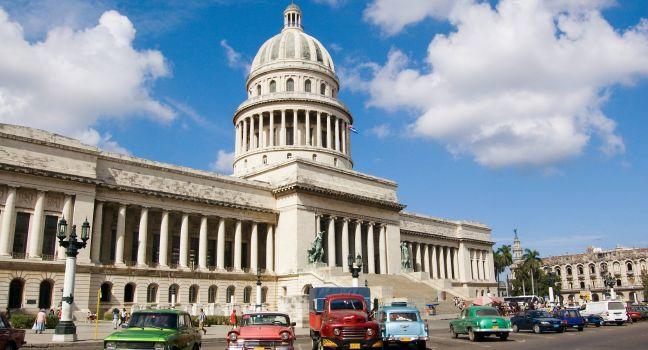
Home of Cuba's legislature - the Capitolio in Havana.
Basphoto | Dreamstime.com

Modeled after Washington, D.C.'s domed Capitol building, Havana's Capitolio was built in 1929 and is rich in iconography. The statue to the left of the entrance stairway represents Work (considered a masculine ethic); that on the right is of Virtue (a perceived feminine attribute). Some 30 bas-reliefs on the main door depict events in Cuba's history. The giant main hall is called the Salon de los Pasos Perdidos (Hall of the Lost Steps), allegedly for the fading reverberations of footsteps. It's dominated by the gigantic bronze statue of Minerva (once known as La República). Set into the floor at her feet is a diamond (presently a replica) from which all distances on the island are measured. The former Senate Chamber is at the end of the right-hand corridor; the one-time Chamber of Representatives is on the far left. The on-site restaurant, El Salón de los Escudos, serves a reasonable lunch; the Café Mirador offers lighter fare. The building seems to be undergoing perpetual renovation.

Paseo de Martí (Prado), Havana, 10200, Cuba
7860–3411
Sight Details
Free

Something incorrect in this review?

Castillo de los Tres Reyes del Morro

Habana del Este
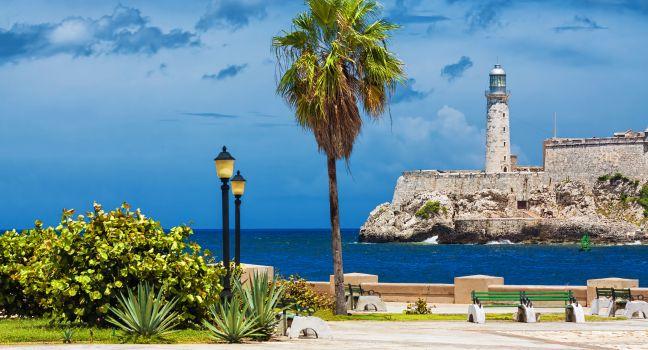
The castle of El Morro, a symbol of Havana, and a nearby romantic park on a day with a beautiful sky; Shutterstock ID 111410624; Project/Title: Fodor's Cuba; Downloader: Fodor's Travel
Kamira / Shutterstock

Begun in 1589, Havana's landmark fort is named for the Reyes Magos—the Magi or Three Kings of Bethlehem, who are the patrons of its chapel—and for the fact that it occupies a morro (promontory) at the harbor entrance. It and its sister fort across the way, La Punta, made Havana the safest port in the Americas at a time when both pirates and imperialists helped themselves to whatever could be had. Built into cliffs, El Morro was furnished with a battery of 12 cannons christened La Batería de los Doce Apóstoles (The Battery of the Twelve Apostles) facing the sea and another dozen, called Las Pastoras (The Shepherdesses), nearer the ramparts. The active lighthouse flashes its beam over Havana every 15 seconds. Inside the castle, across a moat and drawbridge, are stables, the chapel, dungeons, and a wine cellar. You'll also find the fortified vaults, which contain the Museo del Morro, with displays on the fortress itself; the Museo de la Navegación, with navigation and seafaring artifacts; and the Museo de Piratas, with exhibits and bits of folklore on pirates. The armory displays weapons from around the world.

Havana, 10900, Cuba
7861–9727
Sight Details
CUC$6 for the fort, CUC$2 extra for lighthouse
Daily 8–7, lighthouse 10–noon and 2–7

Something incorrect in this review?

Castillo del Morro

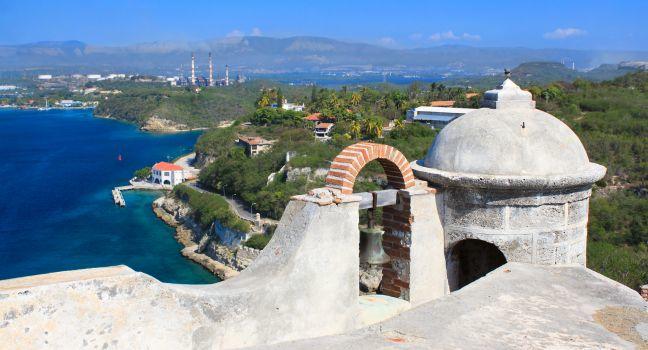
Castle San Pedro de la Roca del Morro near Santiago de Cuba, Cuba.
Master2 | Dreamstime.com

The Spanish fortress known as El Morro, south of Santiago, was constructed between 1638 and 1700 and was designed by Giovanni Antonelli, the Italian architect and engineer responsible for fortresses bearing the same name in both Havana and San Juan, Puerto Rico. Dominating a bluff at the entrance to the Bahía de Santiago de Cuba, El Morro was built to ward off pirates (and rebuilt after a 1662 attack by the English pirate Henry Morgan). Inside you'll find a museum with exhibits on, appropriately enough, pirates. Signage is in Spanish only, but English-speaking guides can lead you around. (Tip them, of course.) There are wonderful views from interior rooms, which have wooden floors and stone walls, as well as from various terraces. From the lowest terrace, the view of the fortress itself, formed from the sheer face of the bluff, is powerful. The way into the structure takes you down and then back up a 207-step staircase; a drawbridge over a moat leads to the entrance. You'll find little shade here; sunscreen and a brimmed hat are musts. Midday gets unbearably hot.

Visit early in the morning or late afternoon if your schedule permits.

An impressive flag-lowering, cannon-firing ceremony winds up the day, and that makes a good case for a late-afternoon visit.

Santiago de Cuba, 90100, Cuba
2269–1569
Sight Details
CUC$4
Daily 8–sunset

Something incorrect in this review?

Iglesia y Convento Menor de San Francisco de Asís

La Habana Vieja
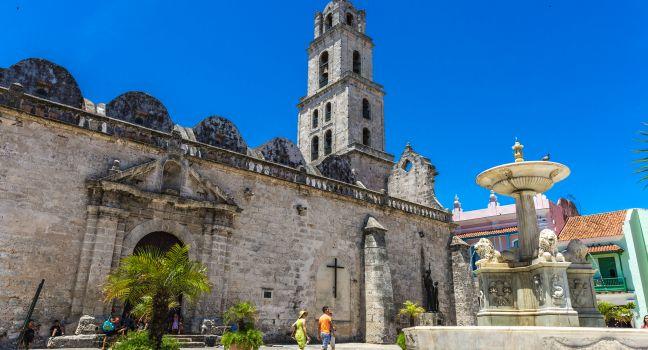
San Francisco Plaza in Havana, Cuba.
Filipefrazao84 | Dreamstime.com

The Latin inscription over the main door of this church and convent dedicated to St. Francis reads: "non est in toto sanctior orbe locus" ("there is no holier place on earth"). As it's now a museum and concert hall, it may no longer be earth's holiest place, but it certainly is one of the loveliest. Built in the 16th century, in 1730 it was restored in a baroque style, resulting in a richly adorned facade with fluted conch-like tympanums over the doors and windows. Just inside the door you'll see tombs beneath a glass floor panel. Churches were used as cemeteries until Bishop Espada founded what is now the Necrópolis Cristóbal Colón in 1868, a detail all Cubans seem to know and cherish. Note also the 19th-century grandfather clock made by Tiffany. The rooms to the right of the nave house archaeological finds and art exhibits. Precisely 117 steps lead to the top of the 141-meter (463-feet) tower, the tallest in Havana.

Plaza de San Francisco, Havana, 10100, Cuba
7861–3312
Sight Details
CUC$2 (includes entrance to museum inside)
Mon., Tues., Thurs., and Fri 9–4:30, Wed. and Sat. 9–6, Sun. 9–2

Something incorrect in this review?

Playa Esmeralda

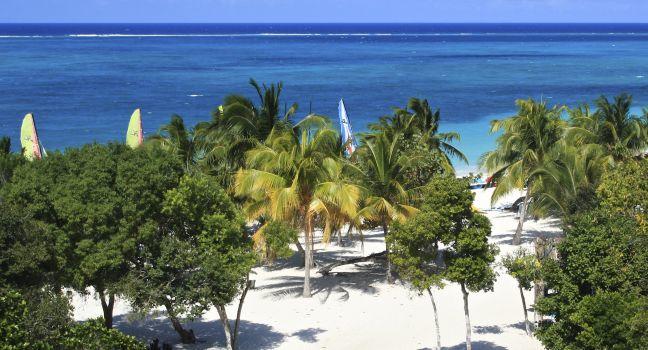
Panorama of Playa Esmeralda in Holguin, Cuba.
Irishka777 | Dreamstime.com

West of Playa Guardalavaca, heading back toward Holguín along the main road, is Playa Esmeralda, a beach that the Spanish chain Meliá has claimed as its own with two all-inclusive hotels: the Paradisus Río de Oro Resort & Spa and the Sol Río de Luna y Mares. (All beaches in Cuba are public, of course, so no one can technically do that.) Amenities: food and drink; water sports. Best for: sunrise; swimming; walking.

Guardalavaca, 82300, Cuba

Something incorrect in this review?

Plaza de la Catedral

La Habana Vieja
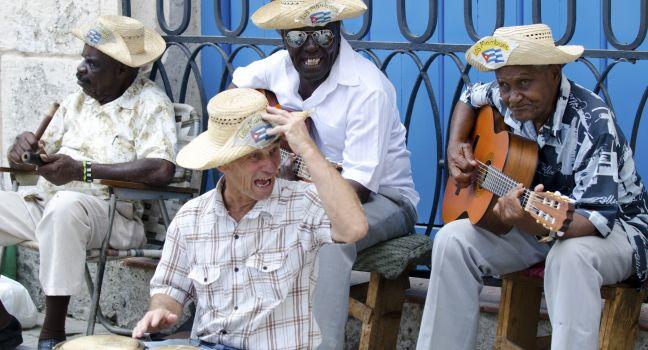
Cuban street musicians sitting in the cathedral square, performing for the tourists with traditional Cuban music.
Flory/iStockphoto

The square that surrounds and is named for the Catedral de la Habana is one of La Habana Vieja's most beautiful spots. In addition to the cathedral, you'll find several elegant mansions that once housed the city's aristocrats.

The Casa de los Marqueses de Aguas Claras (1751–75), in the square's northwestern corner, was built by Antonio Ponce de León, the first Marquis of Aguas Claras and a descendent of the discoverer of Florida, Juan de Ponce de León. Today the building contains the Restaurant Paris, a stylish eatery whose tables fill a verdant interior courtyard as well as the upper floors. On the square's western edge is the 19th-century Casa de Baños (Bath House), which was built on the spot where an aljibe (cistern) was constructed in 1587. It served as the main municipal water supply and as a public bathing house. The narrow cul-de-sac next to the Casa de Baños is the Callejón del Chorro (Alley of the Water Fountain), named for an aqueduct that ended here in Havana's early days.

Wander along the square's eastern edge for a look at the early 18th-century Casa de Lombillo, which today houses a number of changing art exhibitions.

San Ignacio and Empedrado, Havana, 10100, Cuba

Something incorrect in this review?

Plaza de la Revolución

The Antonio Maceo monument on Revolution Square, Santiago de Cuba, Cuba.
Master2 | Dreamstime.com

Just about every city on the island has a Revolution Square, a vast expanse of space and perhaps every community's most prominent marker of Cuban socialism. This one in the Reparto Sueño neighborhood was the site of Pope John Paul II's Mass celebrated here in Santiago. Towering above the plaza is the dramatic monument to Major General Antonio Maceo, one of the heroes of the wars of independence. It shows the general on his horse, going down in a battlefield portrayed by 23 steel machetes that rise from the ground around him.

Plaza de la Revolución, Santiago de Cuba, Cuba

Something incorrect in this review?

Acuario Nacional

Miramar

At the national aquarium, you can learn about many of Cuba's 900 species of fish. Dolphin shows are very popular, and there are also sea lion shows. At the time of writing, the aquarium was open, but undergoing refurbishment.

Calle 60 y Av. 1, Havana, Cuba
7203–6401
Sight Details
CUC$1 adults, CUC$7 kids
Tues.–Sun. 10–6; dolphin shows at 11, 3, and 5; sea lion shows are at noon and 4

Something incorrect in this review?