


Swizzle Inn
If the beauty of Crystal Caves doesn't leave you reeling, a rum swizzle certainly will. Bermuda's potent national drink was supposedly invented at the Swizzle Inn, about five minutes on foot from the caves.
Get FREE email communications from Fodor's Travel, covering must-see travel destinations, expert trip planning advice, and travel inspiration to fuel your passion.

We've compiled the best of the best in Bermuda - browse our top choices for the top things to see or do during your stay.
If the beauty of Crystal Caves doesn't leave you reeling, a rum swizzle certainly will. Bermuda's potent national drink was supposedly invented at the Swizzle Inn, about five minutes on foot from the caves.
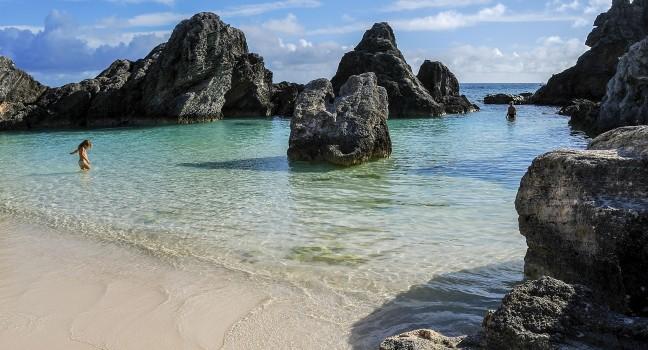
Be mindful—the undertow can be strong, especially on the main beach. For families with young children, Horseshoe Bay's western end, known as Horseshoe Baby Beach, is a safer option. Sheltered by a ring of rocks, this shallow cove stays calm, and in summer, little ones will find plenty of playmates. Amenities: lifeguards; parking (no fee); showers; toilets. Best for: partiers; swimming; walking.
History buffs may be more interested in climbing the high bluff to Portuguese Rock. Early settlers found this rock crudely carved with the date 1543, along with other markings that are believed to be the initials \"RP\" (for Rex Portugaline, King of Portugal) and a cross representing the Portuguese Order of Christ. The theory goes that after a Portuguese ship was wrecked on the island, its sailors marked the occasion before departing on a newly built ship. The rock was removed to prevent further damage by erosion, and a bronze cast of the original stands in its place. A plaster-of-paris version is also on display at the Bermuda Historical Society Museum in Hamilton.
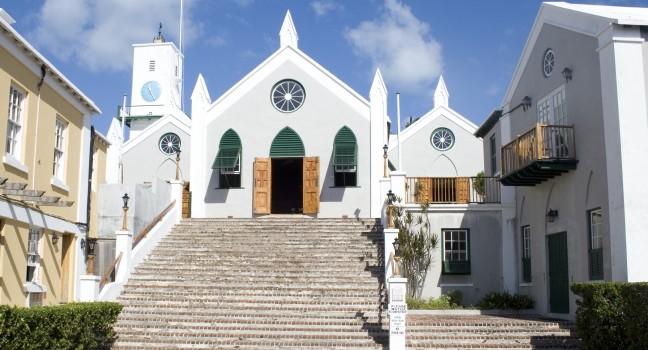
Because parts of this whitewashed stone church date back to 1620, it holds the distinction of being the oldest continuously operating Anglican church in the Western Hemisphere. Befitting its age, St. Peter's has many treasures. The red cedar altar, carved in 1615 under the supervision of Richard Moore (a shipwright and the colony's first governor) is the oldest piece of woodwork in Bermuda.
\nThe late-18th-century bishop's throne is believed to have been salvaged from a shipwreck, and the baptismal font, brought to the island by early settlers, is an estimated 900 years old. There's also a fine collection of Communion silver from the 1600s in the vestry. Nevertheless, it's the building itself that leaves the most lasting impression. With rough-hewn pillars, exposed cedar beams, and candlelit chandeliers, the church is stunning in its simplicity.
\nAfter viewing the interior, walk into the churchyard to see where prominent Bermudians, including Governor Sir Richard Sharples, who was assassinated in 1973, are buried. A separate graveyard for enslaved and free Blacks (to the west of the church, behind the wall) is a reminder of Bermuda's segregated past.
Inside this former barrel-making factory, you can find the Bermuda Craft Market—arguably the island's largest and best-priced crafts outlet. It showcases the wares of more than 60 craftspeople, including quilters, candlemakers, toymakers, and wood carvers. Also in the building is the Bermuda Arts Centre, a member-run art gallery that displays innovative high-end work in changing exhibits.
A half-dozen artists at the Bermuda Arts Centre also maintain studios on the premises, so leave some time to watch them at work.
The design team had some fun with these minilinks: the 18-hole course features replicas of famous greens from around the world, including Augusta National and St. Andrews, challenging even the most seasoned minigolfers. Surprisingly, Bermuda Fun Golf is one of the best places to watch the sunset with uninterrupted views. The Caddy Shack Bar & Grill serves cold drinks, snacks, and other nibbles.
The vibrant heart of the island's art scene, the Bermuda National Gallery houses Bermuda’s national art collection and presents innovative exhibitions and programming for everyone. This nonprofit art museum delivers world-class art and culture experiences in the heart of Hamilton. The Gallery’s exhibitions change throughout the year, so every visit promises something new to discover, with diverse exhibitions showcasing the best of both local and international art. BNG is located on the second floor of the City Hall & Arts Centre.
\nTours, talks, workshops and other upcoming events are listed on the Gallery’s website. BNG also produces free children’s activity booklets to accompany all exhibitions, which can be collected in the Gallery or downloaded online.
The 40,000-square-foot Ocean Discovery Centre at the BUEI showcases local contributions to oceanographic research and undersea discovery. Highlights include the world-class shell collection amassed by resident Jack Lightbourn (3 of the 1,000 species were identified by and named for Lightbourn himself) and a gallery honoring native-born archaeologist Teddy Tucker and featuring booty from Bermudian shipwrecks. The equipment that made such discoveries possible is displayed, including a replica of the bathysphere William Beebe and Otis Barton used in their record-smashing 1934 dive. (Forget the Bermuda Triangle: the real mystery is how they descended a half mile in a metal ball less than 5 feet in diameter!) A more modern \"submersible,\" Nautilus-X2, lets wannabe explorers take a simulated seven-minute trip to the ocean floor. Sign up to be a “Guest Member for the Day” for a free personalized tour and discounts on admission, the gift shop, and lunch at the on-site Harbourfront restaurant. Special events like lectures, glowworm cruises, and whale-watching trips are available for an added fee. Pedestrians may access the facility by following the sidewalk on the water side of Front Street. Motorists must drive out of town on Front Street, round the traffic circle, and exit at the lane signposted for the BUEI.
A pair of 100-foot towers make the Clocktower Mall impossible to miss, standing as a must-stop landmark in the Dockyard. In the 19th century, the building stored maritime supplies, and the second floor housed the Royal Navy's administrative offices. Look closely, and you’ll see one tower with a traditional clock and the other with a tide indicator. Today, the warehouse is home to a variety of distinctly Bermudian boutiques, including specialty shops and branches of Front Street favorites. The shops are especially popular on Sundays, when most stores outside the Dockyard are closed.
One of the best places to mingle with Onions—and pick up some edible onions—is the seasonal Farmers and Vendors Market (formerly Bermuda Farmers' Market). Held every Saturday from 8 am to 1 pm, November to June, it features up to 30 vendors selling Bermuda-grown, -caught, or -made products. Alongside organic produce and homemade baked goods, you'll find treats like handcrafted soaps and honey made from island wildflowers.
Running along the harbor, Hamilton's main thoroughfare bustles with small cars, scooters, bicycles, buses, and sometimes hordes of cruise-ship passengers. The prime attractions here are the high-class, low-rise shops that line the street, but be sure not to overlook small offshoots and alleyways like Old Cellar Lane and the Walker Arcade, where you'll stumble upon hidden-away boutiques. If visiting between May and August, on Wednesday evenings Front Street is closed to vehicular traffic to make way for the popular Harbour Nights, which features entertainment, food, and locally made products.
Designed in London and opened in 1846, this cast-iron lighthouse stands 117 feet tall and rises 362 feet above the sea, offering a 185-step climb to the top. The original light used a concentrated burner with four large circular wicks, but today, a 1,000-watt bulb beams its light, visible from 40 miles out at sea and 120 miles from the air at 10,000 feet. The climb can be challenging, especially for those who dislike heights or tight spaces, but there are eight landings along the way where you can pause and enjoy photographs and drawings of the lighthouse’s history. After reaching the top and taking in the breathtaking views, return to solid ground and visit the lighthouse gift shop for a memorable souvenir to commemorate your ascent.
Originally in Hamilton Parish but in historic Stewart Hall since 2005, this perfumery founded in 1928 allows you to learn about the process of making the scents. Although the location has changed, the techniques have not: the perfumery still manufactures and bottles all its island-inspired scents on-site using more than 3,000 essential oils extracted from frangipani, jasmine, oleander, and passionflower.
\nGuided tours are available at 11 am and 3 pm to explain the entire process, and there's a small museum that outlines the company's history. You can wander around the gardens and stock up on your favorite fragrances in the shop. A selection of Lili perfumes and colognes are also available at 59 Front Street in Hamilton and at the Lili Bermuda boutique housed inside the entrance of the National Museum of Bermuda in the Dockyard.
The theme of the island's first purpose-built state-of-the-art museum (2008), like that of its former incarnation (the Masterworks Foundation), is \"Bermuda Through the Eyes of Artists,\" and the soaring main gallery is devoted to island-inspired works by internationally renowned figures such as Georgia O'Keeffe, Andrew Wyeth, and Winslow Homer. Two other galleries display (and sell) paintings by native-born artists. The museum is on the grounds of the Bermuda Botanical Gardens.
Officially renamed in 2012 to mark the Diamond Jubilee celebration of Queen Elizabeth II, the manicured grounds of Queen Elizabeth Park (formerly Par-La-Ville Park) are a peaceful oasis amid the hustle and bustle of Hamilton's foot traffic. The public green space originally served as the private garden of postmaster William Bennett Perot (1791–1871), and the 1840s private residence–turned–post office stands to the right of the wrought iron park gates. Today, the winding paths, luxuriant blooms, plentiful benches, and a photogenic Bermuda moongate are popular with people-watchers. The site is also home to the Bermuda National Library and the Bermuda Historical Society Museum. The Bermuda National Gallery has created a sculpture garden in the park by installing several major outdoor works. Enjoy a refreshing cup of iced tea from NovelTea, which sells its inventive, freshly brewed teas from a small stall here with flavors including cherry blossom and crème brûlée, as well as a small selection of tea accessories and the company's packaged loose-leaf teas.
In 2015, a pedestrian footbridge was erected across Bailey's Bay, revitalizing the former Bermuda Railway tracks and connecting parts of the trail that had become inaccessible. Now this stretch of the trail from Coney Island to Flatts Inlet is about 3½ miles and provides some of the best views of the north shore. There is another access point just off Crawl Hill, and there is space for parking at either end.
Though its sheltered spot on Mangrove Bay once made it a pirate hideout, you’d never guess it from Somerset Village’s peaceful bucolic vibe today. The shady past has given way to shady trees, quiet streets, and colorful cottages. While there are just a few eateries and shops—mostly outposts of Hamilton favorites—it’s a lovely starting point for exploring Springfield and the Gilbert Nature Reserve ( 29 Somerset Rd.), a 5-acre woodland with trails that connect to some of the prettiest stretches of Bermuda’s Railway Trail.
Like something out of a novel, statuesque banyan trees line the crumbling road beyond the weathered gates of Southlands Estate, enticing visitors to follow the path through this sprawling 37-acre park with rambling gardens and crumbling limestone buildings. Ownership of the estate has changed hands many times since the 1700s, when it was maintained by the ministers of Warwick Parish's Christ Church. Open to the public as a park since 2013, it's an ideal place to explore Bermuda's natural beauty. The winding paths eventually lead you to quiet secluded Marley Beach along the south shore.
For a ringside seat to the show of sailboats and passenger ferries zigzagging around the many islands that dot Hamilton Harbour, grab a bench beneath the trees at the newly renovated Point Pleasant Park, a small waterside green space, which locals refer to as Albuoy's Point. Part of the renovation gives a nod to Bermuda's biggest mystery—the infamous triangle. The park's renovation created a walkway through the park in the distinctive shape, plus a great photo-op at the triangle's \"most northern point.\" Nearby is the Royal Bermuda Yacht Club, founded in 1844 and granted the use of the term royal by Prince Albert in 1845. Today, luminaries from the international sailing scene hobnob with local yacht owners and business executives at the club's 1930s headquarters. If you're around between April and November, you might even catch one of the many club-sponsored racing events.
On weekends, this small but popular beach attracts families with children. The shaded and grassy Astwood Park area offers great ocean views, making it a popular spot for picnics, birthday parties, and weddings. Though easily accessible via a main road, it feels secluded, and the benches scattered around provide a perfect spot for a romantic evening. If you’re bringing kids, be mindful of the steep climb down to the beach. Amenities: parking (no fee). Best for: solitude, swimming.
If you've got kids in tow—or are driving a scooter—you may want to skip the rum and stick to Bailey's—Bailey's Ice Cream, that is. The popular parlor, directly across from the Swizzle Inn, dishes up some two dozen flavors of homemade all-natural ice creams, plus low-fat frozen yogurts and fat-free sorbets.
This store accepts cash only.
Sent by Queen Elizabeth II with specimens from London’s Kew Gardens, this 22-acre park is home to Bermudian cedars, golden acacias, rare rubber trees, black ebony, and avocado trees. Winding trails and grassy meadows invite you to walk, hike, or spread out for a picnic. Bird-watchers can look for cardinals, rare bluebirds, white-eyed vireos, and lively kiskadees among the branches.
It's illegal to export shipwreck artifacts or a Bermuda-cedar carving or item of furniture that's more than 50 years old without a special permit from Bermuda Customs.
Erected as a governor's mansion around 1700, this building became a hotbed of activity during the American Civil War and is now a museum focusing on the island's history. From here, Confederate major Norman Walker coordinated the surreptitious flow of guns, ammunition, and war supplies from England, through Union blockades, and into American ports.
\nIt saw service as the Globe Hotel during the mid-19th century and became a National Trust property in 1951. A short video, Bermuda, Centre of the Atlantic, recounts the history of Bermuda, and a memorabilia-filled exhibit entitled \"Rogues & Runners: Bermuda and the American Civil War\" describes St. George's when it was a port for Confederate blockade runners. This is also the location of the Trustworthy Gift Shop. Check the website for opening days and times.
On the upper floor of City Hall & Arts Centre, in the West Wing, the Bermuda Society of Arts displays work by its members. Its frequently changing juried shows attract talented local painters, sculptors, and photographers. Art collectors will be pleased to learn that many pieces can also be purchased.


 Sign up for Travel Tips & News
 Thank you for your interest!