74 Best Sights in The Central Coast, Vietnam

Background Illustration for Sights

We've compiled the best of the best in The Central Coast - browse our top choices for the top things to see or do during your stay.

The Citadel

Fodor's Choice
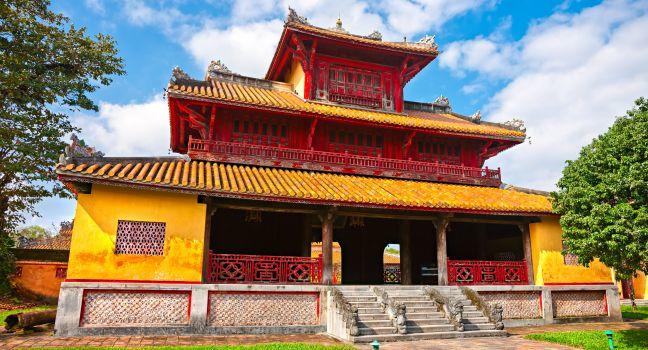
Entrance of Citadel, Hue, Vietnam. Unesco World Heritage Site.
Luciano Mortula / Shutterstock

If there is only one sight you visit in Hue, make sure this is it. Constructed in 1805 under the rule of Emperor Gia Long, this fortress is sheltered by an outer wall spanning 10 km (6 miles). The wall’s design was inspired by the work of Sébastien Le Prestre, a renowned French military engineer of the 17th century. Marking its entry are the Nine Holy Cannons and a flag that stands 170 feet high, the tallest in the country. Inside the sprawling complex are the Imperial City, Imperial Academy, and the Secret Institute paying tribute to the past. On the main gate of the Imperial City, bullet holes on the stone entrances leave traces of a battle during the American (Vietnam) War. Inside the Imperial City, something of an eyesore are the scaffoldings of sections still being restored from the severe damage caused during the 1947 and 1968 battles.
North Bank, Hue, Vietnam
Sight Details
Free

Something incorrect in this review?

An Bang Beach

Fodor's Choice

The locals' favorite beach, An Bang is one of the few remaining public beaches on the long Hoi An–Danang coastline. Locals flock here for sunrise swimming and sunset family picnics, leaving this lovely stretch of beach almost deserted during the day. The beach offers stunning views of the neighboring Marble Mountains, Danang Bay, and the Cham Islands. A good selection of often-hip restaurants borders the clean, sandy beach, offering free use of beach loungers and umbrellas if you buy food or drinks. Competition is fierce and staff can be pushy. Development has been slow but steady, with only a few homestays and holiday cottages, but new resorts at both ends of the beach are set to change this over the next few years. Amenities: food and drink; showers. Best for: swimming; sunsets; families; surfing; walking.

D. Hai Ba Trung, An Bang, Vietnam

Something incorrect in this review?

Cham Islands

Fodor's Choice

The Hoi An coast is flanked by eight small, coral-fringed islands featuring beautiful seascapes, deserted white sandy beaches, and some of the best microdiving sites in central Vietnam. Despite their beauty, the islands have never been developed for tourism, and it wasn’t until their 2009 designation as a World Biosphere Reserve by UNESCO that anyone took any interest. Those that did were dive companies, limiting visitors to just a couple of dives. From April to September, daily junk and speedboat services run the 18-km (11-mile) route between Cua Dai dock and Hon Lau Island, where you can arrange a homestay or camp on two of the main island beaches—though few visitors do, which makes it one of the most tranquil respites from the touristy beaches of Hoi An and also one of the most beautiful places to watch the sunset from your own private beach. Activities available include snorkeling, diving, swimming, camping, fishing, and trekking.

Local tour offices and hotels can arrange island tours. For camping, visit Cham Island Diving Center (Tran Hung Dao Street) or the Hoi An Diving Centre (Tran Hung Dao Street) in Hoi An.

Hoi An, Vietnam
Sight Details
90,000d per person

Something incorrect in this review?

Recommended Fodor's Video

Goddess of Mercy & Linh Ung Pagoda

Fodor's Choice

Vietnam’s largest Goddess of Mercy statue dominates Danang's coastal skyline in a similar way to Christ the Redeemer in Rio de Janeiro; on a clear day you can see her silhouette from coastal Hoi An, 40 km (25 miles) away. The 17-story, 67-meter (220 feet) "Lady Buddha" statue stands on Son Tra Peninsula in the grounds of Linh Ung Pagoda, one of the most significant destinations for Buddhists in the area. The views from here are stunning. Equally charming is the journey along the winding coastal road leading to the peak of Son Tra, nicknamed "Monkey Mountain" by U.S. troops stationed there during the war, due to the mischievous monkeys that hang out in the jungle cliffs. The best way to get here is to hire a car and driver (or a motorbike for more experienced riders). The whole trip should take no more than a couple of hours, but it's well worth making a day of it and incorporating a seafood lunch and swim in one of the secluded coves below, followed by a stop off at Bai Tien, a small fishing port town littered with crumbling French military remains including pillboxes, a lighthouse, and a small graveyard—the final resting point for many French soldiers defeated by the Vietnamese during their short-lived occupation of Danang during the first Indochine war.

Japanese Covered Bridge

Fodor's Choice

On the west end of Tran Phu, Hoi An's most celebrated icon was built in 1593 by Japanese merchants to connect the Japanese quarter with the Chinese neighborhood on the other side of the river. This unique symbol has been rebuilt several times since, but still retains the original ornate roofing, arched frame, and small temple housed inside. Legends surround the functions of the bridge, the most popular being that it was built to disable a disaster-causing dragon, with the small altar inside dedicated to the worship of Bac De Tran Vu, a northern god in charge of wind and rain. The pair of spirit dogs on the east side of the bridge are thought to be protective deities, placed on altar stones to exorcise bad omens. If you look closely you'll notice they are different sizes: a boy and a girl. Some say the monkeys here represent Japanese emperors. What is not widely known is that the monkeys are copies carved by the carpenters of Kim Bong Village; the original pair were swept away during a flood and washed up beyond repair 20 years later.

West end of Tran Phu St., Hoi An, Vietnam
Sight Details
Included in the 120,000d Old Town ticket

Something incorrect in this review?

Laguna Lang Co Golf Club

Fodor's Choice

Rolling rice fields, natural streams, a beautiful beachfront, and impressive rock formations are just some of the features at the Sir Nick Faldo Signature golf course at Laguna Lang Co. The layout threads between trees, over rice paddies and streams, through rock features and alongside the pounding surf. Located 35 km (22 miles) north of Danang or 55 km (34 miles) south of Hue, the course is an easy commute for those not staying in the area, though for those in search of a golfing vacation, the Angsana and Banyan Tree resorts share the same beach cove.

Nongolfers might want to use Angsana and Banyan Tree resorts' spa, restaurants, kids' club, pools, and beach.

Mine Action Visitor Center

Fodor's Choice

Around 15 million tons of U.S. munition were dropped over Vietnam between 1965 and 1975 and at least 10% of those failed to detonate. Since 1975, this unexploded ordnance have been the cause of more than 100,000 injuries and fatalities, a large percentage of these victims were children. With the U.S. focus on defending the demilitarized zone (DMZ) that separated the two countries, Quang Tri Province was the most heavily bombed—more than 72 million square meters of land have been mapped as hazardous. The Mine Action Visitor Center in Dong Ha is a joint venture between the international NGO–operated Project RENEW and the Department of Foreign Affairs, providing visitors with constantly updated information on the devastation caused, as well as heart-warming stories of recovery and survival. Unlike many of military sites along the DMZ, the center provides expert English speaking guides, which makes it an absolute must on any DMZ itinerary, especially if you have chosen to go without a guide.

My Son Sanctuary

Fodor's Choice

About 70 km (43 miles) southwest of Danang, or 45 km (28 miles) due west of Hoi An, are the My Son Cham ruins: former temples and towers dedicated to kings and deities, particularly Shiva, who was considered the founder of the Kingdom of Champa. Construction first began in the 4th century under the order of the Cham king Bhadresvara and continued until the 13th century. With more than 70 brick structures, of which some 20 remain in recognizable form today, My Son was the most important religious and architectural center of the Kingdom of Champa and was declared a UNESCO World Heritage Site in 1999. Although extensively damaged during World War II and the Vietnam War, extensive conservation work has ensured that the My Son complex still displays vestiges of its former glory. An interesting small museum and performance stage that hosts ad hoc Aspara dance and music performances is located at the entrance.

The best tours incorporate a visit to the Danang Museum of Cham Sculpture. From Hoi An it's possible to take a boat tour to the ruins.

Old House of Tan Ky

Fodor's Choice

One of the oldest and best-preserved private houses in Hoi An, this structure has remained largely unchanged since it was built in 1741. Seven generations of the Tan Ky family have lived here. The house incorporates Chinese, Japanese, and Vietnamese styles. Chinese poetry is engraved in mother-of-pearl on the walls, each character formed in the shape of birds in various stages of flight. Look up into the eaves and you will see symbols of dragons, fruit, crossed sabers, and silk intricately carved into the wooden framework. The back door was constructed to open onto the river so that waterborne goods could be easily transported into the house; look out for the marks etched in to the wall recording the height of the annual flood waters.

101 Nguyen Thai Hoc, Hoi An, Vietnam
Sight Details
Included in 120,000d Old Town ticket

Something incorrect in this review?

Paradise Cave

Fodor's Choice

The must-see Paradise Cave is one of the most beautiful park caves you can visit on a day trip. Tours and transport can be arranged from the Tourism Center in the village. Or you can head out under your own steam. It's a long trek from the ticket booth to the cave entrance, but an electric golf cart is available to whisk you to the stairs (all 500 of them) or the ramp that leads up to the cave entrance. The mouth of Paradise Cave is small, hidden behind the cliffs and trees. From there, more stairs will lead you down into the cave's magnificent chambers, linked by a wooden walkway that winds around majestic rock formations deep into the belly of the cave. To get to Paradise Cave, follow the road through town past the Phong Nha ticket office. Continue on that road for 16 km (10 miles) until you reach the intersection; take a right at the huge billboard.

Precious Heritage Museum and Fine Art Gallery

Fodor's Choice

This museum offers a wonderful look into the cultural identity of Vietnam’s ethnic minority communities. Each placard gives facts about the region, population, and traditions of several minority groups in English, French, and Vietnamese. The museum’s curator, Réhahn, is a professional French photographer who has been snapping portraits of these amazing individuals and collecting their stories and artifacts since 2013. The coffee shop inside sells K’ho coffee, harvested by the K’ho people in the central highlands.

Sun World Ba Na Hills and Golden Bridge

Fodor's Choice

A former French hill station left abandoned until after the war, Ba Na is a local favorite, nicknamed "Da Lat in Danang." Accessible via the world's longest nonstop single-track cable car (5,801 meters or 3.6 miles), traversing above jungle and waterfalls, Ba Na presents remarkable panoramic views of the East Sea. At the top is a kitsch, fairground-theme park with a roller coaster, bumper cars, and a very entertaining wax museum—all popular with kids. Also nestled 1,400 meters (4,600 feet) above sea level is the Golden Bridge, an iconic architectural wonder that has made headlines since it opened in 2018. The bridge, which appears to be held by two giant concrete hands, spans nearly 150 meters (500 feet) and leads to the La Jardin D’Amour Gardens, another must-visit spot. When you’re done taking in the beauty from the top, take the smaller cable car down to the second, more spiritual level where you can either take a funicular or hike up the mountain to visit the temples and pagodas that line the route. If you have the energy, climb the 17-story tower inside the giant Buddha statue—the largest in the country at 67 by 35 meters (the equivalent of a 30-story building). The site to save until last is tucked away behind the Shakamuni Buddha statue: the Debay Wine Cellar, which was tunneled into the mountain in the 1920s by the former French residents. Inside is a large fully stocked bar and the chance to do a little wine tasting.

Tomb of Khai Dinh

Fodor's Choice

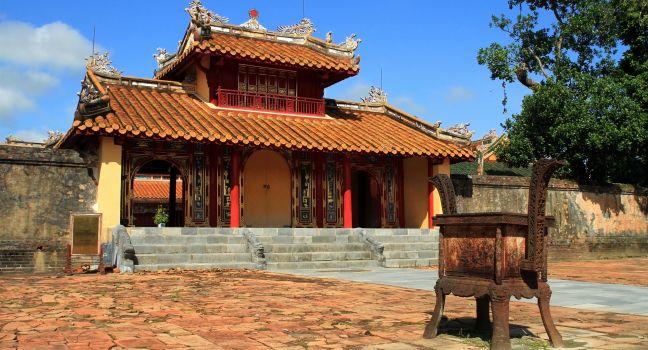
An unbelievable concoction of glitzy Vietnamese and French colonial elements, the Tomb of Khai Dinh, completed in 1931, is a contender for Hue's most impressive mausoleum. Khai Dinh became emperor in 1916 at the age of 31 and died in 1925. The entrance is guarded by four rows of impressive stone royal officers, imperial soldiers, horses and elephants. A climb up a steep flights of steps, flanked by dragons, takes you to a surprisingly colorful tomb heavily decorated with tile mosaics. Scenes from the four seasons welcome you into the central compartment of the building. It's best to visit this tomb by car, since it's not directly on the river.

Climb to the top for some incredible views of the countryside and the Annamite Range.

Hue, Vietnam
Sight Details
150,000d

Something incorrect in this review?

Tomb of Tu Duc

Fodor's Choice

The Tomb of Tu Duc, one of Hue's most visited tombs, has its own lake and pine forest, and is easily accessed by bike. Built in 1864–67 by thousands of laborers, the tomb was once the summer palace of Tu Duc, emperor from 1848 to 1883. Despite having more than 100 wives and concubines, he had no children. Tu Duc sometimes escaped here to relax and write poetry accompanied by his wives and royal officers. Further along is Hoa Khiem Temple where Tu Duc and the Empress Le Thien Anh were worshipped. Behind is an old theater, now home to a vast wardrobe of imperial dress and some interesting props for photo opportunities. One of Tu Duc's favorite spots was the Xung Khiem Pavilion on the pond filled with lotus blossoms and koi fish. If your schedule allows, stop by the Vong Canh Hill top to enjoy the stunning view of Huong River and the mountains at sunset.

Hue, Vietnam
No phone
Sight Details
150,000d

Something incorrect in this review?

My Khe Beach

DA NANG, VIETNAM - JULY 30: beach "MyKhe" one of the six most beautiful beaches of the planet (the U.S. economy by Forbes magazine who voted in 2005) on July 30, 2013 in Da Nang, Vietnam
John Bill / Shutterstock

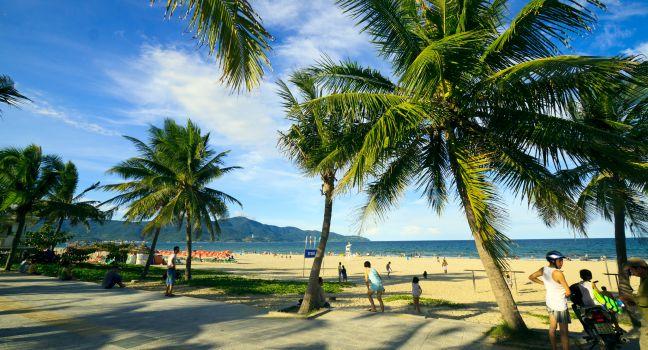
Part of the 30 km (18½ miles) of Danang's coastline is the city's most popular beach, My Khe Beach. After the arrival of American soldiers in 1965, it became popular with GIs who came here over their holidays. Sandwiched between Monkey Mountain and the nearby Marble Mountains, My Khe Beach is home to several international resorts. It has fine white sand and warm water, and is surprisingly clean and isolated on weekdays. Beachfront vendors sell coastal specialties like shrimp, crab, and fish. There are palapa umbrellas and restrooms, and it's one of the few beaches with lifeguards on duty year-round. Rip currents and waves mean this is not a swimmer-friendly beach. Amenities: food and drink; toilets; lifeguards; water sports. Best for: surfing; walking; sunbathing.

Vietnam

Something incorrect in this review?

Tombs of the Emperors

Ming Mang tomb with blue sky at Hue
siripong panasonthi / Shutterstock

South of Hue along the Perfume River, these scattered tombs—the ego-boosting mausoleums erected by emperors in the early 1800s and early 1900s—can easily be explored in a day, although it's likely you'll experience tomb-overload by your second site—visually and historically they are a lot to absorb. The most impressive one is the Tomb of Khai Dinh due to its ornate architecture reflecting Buddhist imagery. Between 1920 and 1931, the tomb was built with money from a 30% land tax increase forced on the people of central Vietnam. To construct the final mosaics surrounding the tomb, fine china and ceramics were broken into pieces. Take note of the dragon eyes made from Champagne bottles, and the flower petals made from ceramic spoons. The most respected emperor was Thieu Tri, remembered for his compassion for the people, evidenced by his unadorned 1848 tomb. If you plan to see the Tomb of Tu Duc, Thieu Tri's son, allow plenty of time to explore the grounds, which once housed 50 buildings in a sprawling lakefront compound. The Tomb of Gia Long is 20 km (12½ miles) outside the city, which means you're likely to have the place entirely to yourself.

Hue, Vietnam
Sight Details
From 50,000d per tomb; discounted packages are available for multiple tomb touring at Citadel or Tomb ticket offices

Something incorrect in this review?

Assembly Halls

As part of their cultural tradition, the Chinese built assembly halls as a place for future generations to gather after they migrated to new countries. Once a major Southeast Asian trading port, Hoi An is home to five such halls that date back to the 16th and 17th centuries; however, exact dates for the buildings are unclear from historic records as most have been subjected to newer 18th- and 19th-century improvements. Recognizable by their Chinese architecture, the assembly halls generally feature ornate gates, main halls, altar rooms, and statues and murals in honor of gods and goddesses. Four of Hoi An's assembly halls—Fujian, Hainan, Cantonese, Chinese—are located on Tran Phu Street near the river. The Chaozhou assembly hall is situated in the French Quarter, a short stroll east of Old Town on Nguyen Duy Hieu. Among them, the Fujian Hall, Phuc Kien, is considered the most prominent. Entrance to each assembly hall is one coupon from the five included in the Old Town ticket.

46 Tran Phu, Hoi An, Vietnam
Sight Details
Included in 120,000d Old Town ticket

Something incorrect in this review?

Bac My An Beach

Bac My An Ward

Bac My An is a small, gently sloping, white sandy stretch of beach located 7 km (4½ miles) east of Danang, just south of My Khe. Thanks to its pristine natural landscapes and clear water, Bac My An is a certified crowd-pleaser. Several luxury resorts have emerged on the beach over the years. Water sports like canoeing, windsurfing, or diving are often complimentary experiences at the resorts. Amenities: food and drink. Best for: walking; swimming; solitude; sunrise.

Danang, Vietnam

Something incorrect in this review?

Bach Ma National Park

With its temperate climate, rich biodiversity, and exquisite views, Bach Ma National Park is a must-see for wildlife lovers and those who want a break from Vietnam's heat. In 1932, the French built a hill station around the summit of Bach Ma with 139 villas, a post office, and a market, all 1,450 meters (4,757 feet) above sea level. Today it's the ultimate getaway for trekking in the jungle, swimming in pristine streams, showering under the 300-meter-high Do Quyen Waterfall, and admiring stunning sunsets or sunrises from Hai Vong Dai on Bach Ma's summit. The ultimate experience at Bach Ma is a private tour with Mr. Cam, the king of birds, who can call and talk to more than 100 types of birds.

Loc Tri Commune, Phu Loc District, Phu Loc, Vietnam
Sight Details
65,000d

Something incorrect in this review?

Camp Carroll

Camp Carroll was one of the nine U.S. artillery bases located along the DMZ. It was home to the 3rd Marine Regiment and the most powerful artillery used during the war. Many battles were fought here, but the biggest and bloodiest of all was the Easter Tet Offensive when the North Vietnamese stormed the camp and the firebase fell into enemy hands. The site was cleared shortly after the war and is now a pepper plantation. The only visible remains of Camp Carroll are a small concrete platform and a few overgrown trenches. The turn-off to Camp Carroll is 5 km (3 miles) west of Cam Lo, 24 km (15 miles) northeast of Dakrong Bridge, and 37 km (23 miles) east of the Khe Sanh bus station.

Hue, Vietnam

Something incorrect in this review?

Cao Dai Temple

Touted as the largest of its kind in central Vietnam, the colorful Cao Dai Temple lies 1 km (½ mile) west of the Song Han swing bridge, on the Bach Dang side of the Han river, and is a peaceful spot to escape the madness of the city. Built in 1920, the temple is still in use today and serves as a place of worship for followers of the Cao Dai religion. During the day, visitors are welcome to tour the gardens, temple, and a small building behind that holds a display of historic artifacts and statues of popular saints. The main temple is sparsely furnished and, beyond the impressive divine eye that towers from behind the altar, most visitors are left unimpressed. But venture up the staircase at the entrance and you'll be treated to a beautiful view of the city that spans all the way across to the East Sea.

63 Hai Phong, Danang, Vietnam
Sight Details
Prayers are held 4 times daily at 5:30 am, 11:30 am, 5:30 pm, and 11:30 pm

Something incorrect in this review?

Central Market

This is one of the most enjoyable fresh markets in Vietnam, covering a large area, snaking its way around the French-colonial food hall, Cho Hoi An, down to the river on Bach Dang, with feeder lanes sprouting off down mossy side alleys. The merchants are friendly and a large selection of merchandise is available, but barter hard to strike a good deal—expect to come in at the midway point and haggle upward to around a third off the starting price.

The stalls that surround the market are lined with fruit and flower sellers, while the small local shops opposite specialize in bamboo baskets and household wares; this is the best place to pick up the pretty blue-and-white dishware popular in Hoi An. The fish market down by the river is best avoided during the pungent hours of midday; the best time to visit for ambience and photos is just before sunrise as the conical-hatted traders descend upon fishing boats laden with colorful fish, squid, and giant prawns.

Made famous by Anthony Bourdain, Banh Mi Phuong has a small stall here serving quite possibly the best banh mi in Vietnam. To find it walk 50 meters around the outside of Cho (Market) Hoi An, to the left of the well.

Intersection of Nguyen Hue and Tran Phu, Hoi An, Vietnam

Something incorrect in this review?

Chaozhou Assembly Hall

Of all Hoi An’s Chinese architecture, this assembly hall founded by the Chaozhou Chinese community in 1776 exemplifies Chinese wood carving of this period at its finest. Intricate wood carvings spin a tale of time forgotten through the building's wooden frames, highlighted by ceramic reliefs depicting folk legends of the Trieu Chau settlers who would visit the house at night to pray to at the main altar (which portrays General Phuc Ba and Bon Dau Quan, the god of mastering waves). The two altars on either side depict the gods of wealth and luck.

157 Nguyen Duy Hieu St., Hoi An, Vietnam
No phone
Sight Details
Included in 120,000d Old Town ticket

Something incorrect in this review?

Chinese All-Community Assembly Hall

Built in 1741 as a meeting place for Cantonese, Chaozhou, Fujian, Hainan, and Hakka families living in Hoi An, this temple is dedicated to Thien Hau, the Goddess Protector of Seafarers. For budding photographers, this is a great hall to visit as red-lacquered, demonic deities and brightly colored murals sit beside the main temple in a haze of smoky incense coming from the hundreds of coils hanging from the ceiling.

64 D Tran Phu St., Hoi An, Vietnam
No phone
Sight Details
Included in 120,000d Old Town ticket

Something incorrect in this review?

Chuc Thanh Pagoda and Phuoc Lam Pagoda

Head north on Nguyen Truong To Street for approximately 1 km (½ mile) to the end, turn left, and follow the path until you reach Chuc Thanh Pagoda, the oldest and most revered pagoda in Hoi An. Founded in 1454 by Minh Hai, a Chinese Buddhist monk, the pagoda contains several ancient religious objects, including bells and gongs made of stone and wood. On the way back, stop at the Phuoc Lam Pagoda, built in the mid-17th century. Note the interesting Chinese architecture and the large collection of ceramics on its roof.

Hoi An, Vietnam
Sight Details
Free

Something incorrect in this review?

Con Thien Firebase

Can cu Con Tien was known as the Hill of Angels, or "Meat Grinder" to the United States Marine Corps stationed here during the fierce fighting and artillery strikes of 1967–68. Con Thien Firebase was the northwest anchor of the famed (and failed) McNamara Line, where over 500 million landmines and 20,000 listening devices were dropped along the south Vietnam border by the U.S., in an attempt to detect and prevent incursions by the North Vietnam army across the DMZ. Nothing much remains (it’s now a peaceful rubber plantation) except some big circular duck ponds to represent the thousands of troops from both sides who lost their lives here, but the hauntingly beautiful location and the expansive views from the top make it a worthwhile stop on a tour of the DMZ.

Vietnam

Something incorrect in this review?

Cot Co (Citadel Flag Tower)

This 170-foot structure, Vietnam's tallest flagpole, is one of the symbols of Hue. It was originally built in 1807 and served as the Imperial Palace's central observation post. Like much of Hue, it has a history of being destroyed. The Flag Tower was toppled during a typhoon in 1904 and rebuilt, then destroyed again in 1947, and rebuilt anew in 1948. When the North Vietnamese occupied the city during the Tet Offensive of 1968, the National Liberation Front flag flew from the Flag Tower. Visit the first tier of the flag tower for a great view of the main gate, Ngo Mon, in the North as well as Phu Van Lau (the Imperial Announcement Pavilion), the Perfume River, and Mount Ngu Binh in the South. The higher tiers are not open to the public.

In front of 23 Thang 8 St., Hue, Vietnam
Sight Details
Free

Something incorrect in this review?

Cua Dai Beach

Ten minutes from the Old Town is Hoi An's main public beach, where clear water and warm surf beckon tourists and locals alike. This 3-km (2-mile) stretch of white, powdery sand makes for a perfect place to bask under the sunshine. Though the area has been developed and resorts have been built along the shores, there are still a few quieter stretches.

The public beach area to the north has retained much of its sand and the beach is clean. It's the perfect spot to escape the sweltering humidity of Old Town during the hottest months. Walking beach vendors can be a problem, heckling people to buy fresh fruit and crafts, but most are easily rebuffed with a firm "no, thank you." Food shacks sell fresh fish, squid, and shellfish, and offer amenities. Bikes can be rented for about 20,000d per day; Jet Skis start at 1,200,000d for half an hour. Amenities: food and drink; parking (free); toilets; showers; water sports. Best for: surfing; swimming; walking. If Cua Dai Beach is crowded, walk or bike 3 km (2 miles) north to An Bang beach.

Cua Dai Beach, Hoi An, Vietnam

Something incorrect in this review?

Danang Beach

This 30-km (18½-mile) stretch starts at My Khe beach, which runs from the foot of the Hai Van Pass to the north, and ends at Non Nuoc beach near the Marble Mountains to the south. In the middle, south of the Furama Resort, lies Bac My An, the R&R resort spot for U.S. soldiers during the war. Five-star resorts now line the pristine and quiet sandy stretches south of My Khe, leaving only a handful of beaches accessible to the public.

There are a lot of water sports you can try, and some of the region's freshest seafood to devour at the small restaurants that line the beach road. It's best to come between April and August, when the water is placid. Waves can be very large at other times—in fact, this is the preferred spot in Central Vietnam for surfing competitions. Amenities: food and drink; toilets; parking. Best for: swimming; surfing; walking.

Danang, Vietnam

Something incorrect in this review?

Danang Bridges

For all the skyscrapers and modern architectural landmarks that now grace the city skyline, it's the bridges that have become the pride of Danang. As the sun sets, crowds gather along riverside Bach Dang Street to watch the spectacle as the four bridges are illuminated by thousands of LED lights that flow through the color spectrum. Farthest north is the colorful Thuan Phuoc Bridge that connects the district of Son Tra to the city, the largest suspension bridge in Vietnam. Next to that is the Han Song Bridge, which holds the title of Vietnam's first swing bridge; every morning between 1 am and 4 am the bridge is closed to traffic as it swings on its axis to allow large ships to pass along the Han River. At the heart is the most impressive of them all, the Dragon Bridge (Cau Rong) a national symbol of power, nobility, and good fortune, highlighting the city's growth. Every weekend at 9 pm the six-lane highway connecting the city to the beach resorts on the east side of Danang closes to traffic and huge crowds take their place to watch the dragon spout plumes of fire and water. Further south, the Tran Thi Ly Bridge, has a 145-meter-high central mast that holds a striking sail, which, when illuminated, can be seen from the beaches of Hoi An.

Bach Dang, Danang, Vietnam

Something incorrect in this review?