Get FREE email communications from Fodor's Travel, covering must-see travel destinations, expert
trip planning advice, and travel inspiration to fuel your passion.
We've compiled the best of the best in Singapore - browse our top choices for the top
things to see or do during your stay.
Sorry! We don't have any recommendations for Singapore right now.
Sights Filter
The Arts House
Civic District
Fodor's Choice
Share This
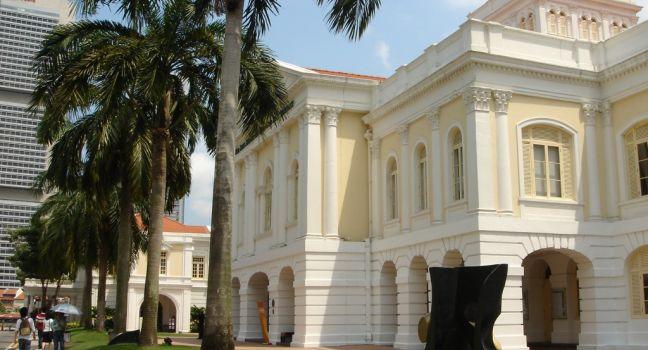
George Coleman designed the Parliament House in 1827 as a mansion for wealthy merchant John Maxwell. Maxwell never occupied it, and instead leased it to the government, which eventually bought it in 1841 for S$15,600. It is considered Singapore's oldest government building, housing the Supreme Court until 1939 followed by the Legislative Assembly in 1953 and then the Parliament in 1965. The building now contains The Arts House, a multidisciplinary venue offering film retrospectives, photo exhibitions, musicals, plays, and talks by experts. Note the bronze elephant statue on a plinth in front of the building; it was a gift from King Chulalongkorn of Siam during his state visit in 1871.
Asian Civilisations Museum
Civic District
Fodor's Choice
Share This
(c) Jacetan | Dreamstime.com
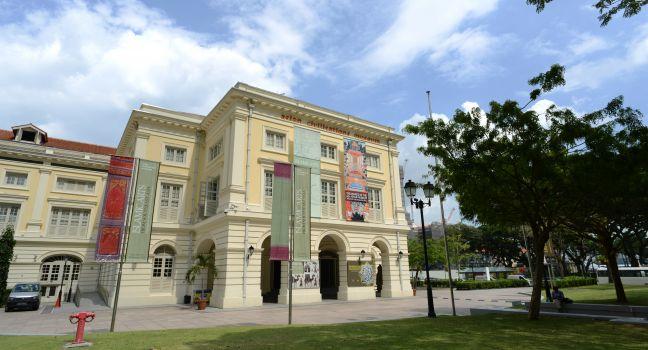
Constructed in the 1860s as a courthouse, the huge, white, Neoclassical Empress Place building is now home to the nation's first museum to look comprehensively at the all Asian regions, each of which has its own timeline and permanent displays. Spread over three levels, the 11 galleries have state-of-the-art interactive features, and there's also an educational center for kids.
Gardens by the Bay
Marina Bay
Fodor's Choice
Share This
Palo_ok / Shutterstock
The government-funded, large-scale gardens next to Marina Bay Sands opened with much well-deserved pomp in 2012. Highlights include a futuristic grove of "Supertrees"—giant vertical gardens—and two armadillo-shaped conservatories. The Flower Dome is home to plants from the Mediterranean and subtropical regions, while the Cloud Forest is veiled in mist and houses the world's largest indoor waterfall. The OCBC Skyway is a 420-foot (128-meter) walkway that connects several of the Supertrees and offers a great view from above. While hefty fees apply for the Skyway, the SuperTree Observatory, and conservatories, visitors can wander around the Gardens until 2 am free of charge.
Recommended Fodor's Video
MacRitchie Reservoir
Fodor's Choice
Share This
(c) Eugenephoen | Dreamstime.com
This 30-acre park is a lush green wilderness, crisscrossed by a 10-km (6.2-mile) walking trail that loops around the reservoir. The trail is mostly flat and shaded, with only the warbling of birds and chatter of the park's many monkeys to break the peaceful reverie. Pick up the trail from MacRitchie Reservoir Park in the south, near the trail's main car park, where you can grab a drink from the cafés and kiosks before heading off. From here, you can follow signs towards the TreeTop Walk, which lies at around midway mark in the north of the park. This 820-foot-long suspension bridge soars above the trees, with spectacular views across the wild rain forest to the city skyscrapers in the distance. After completing the TreeTop Walk, continue following the trail towards Jelutong Tower—another spot with scenic views that lies in the west of the park—before looping back to the MacRitchie Reservoir Park along the picturesque waterside boardwalk.
Pulau Ubin
Pulau Ubin
Fodor's Choice
Share This
Chris Howey / Shutterstock
Take a 10-minute ride on a bumboat (a small launch) from Changi Point Ferry Terminal to be transported back in time on this boomerang-shaped island. It's best explored by bicycle, which can be rented on the island. There are three trails that lead past old plantations, mangrove swamps, forests, the occasional wild boar, and abandoned granite quarries that look surprisingly picturesque. You should also consider a visit to the Chek Jawa Wetlands, one of Singapore’s richest ecosystems, to wander the 1-km (0.62-mile) boardwalk (Mangrove and Coastal Loops) and take in views from the 66-foot Jejawi Tower. There's also the Ketam Mountain Bike Park, a 10-km (6.2-mile) park around the Ketam Quarry. Before heading back, cool off with a fresh coconut drink or order a kampong-style meal from one of the small seafood restaurants near the jetty.
Science Centre Singapore
Jurong East
Fodor's Choice
Share This
By Sengkang, via Wikimedia Commons
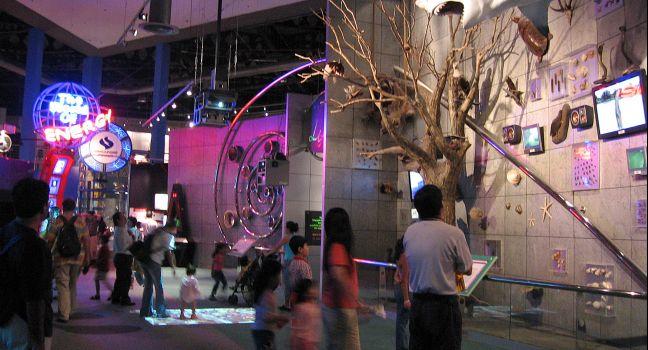
Aviation, nuclear science, robotics, astronomy, space technology, and Internet technology are entertainingly explored through audiovisual and interactive exhibits housed in the 14 galleries here. You can walk into a "human body" for a closer look at vital organs, test yourself via computer quiz games, or settle into the Omni Theatre, where movies and planetarium shows are screened. Other fascinating exhibitions include the Ecogarden, a living laboratory of flora and fauna in natural habitats, and "Climate Changed," which shows what life will be like if global warming continues—and what we can do to prevent it.
Singapore Botanic Gardens
Botanic Gardens
Fodor's Choice
Share This
Janelle Lugge / Shutterstock
The first site in Singapore to gain UNESCO Heritage status is also the first and only tropical botanic gardens in the world to make the list. Once you start to explore the winding trails of the enormous park, which sprawls across more than 128 acres of lush greenery, you'll understand why. It is neatly segmented into different gardens featuring all the hallmarks of Victorian design—gazebos, pavilions, and ornate bandstands included. Highlights are the National Orchid Garden, showcasing over 1,000 species of brightly colored blooms, and the Ginger Garden, where several hundred varieties of ginger grow. Try to time your visit to coincide with the free guided tours that almost always take place around 9 am on Saturday (see the National Parks website for more details).
Singapore Zoo
Mandai
Fodor's Choice
Share This
(c) Tidusx | Dreamstime.com
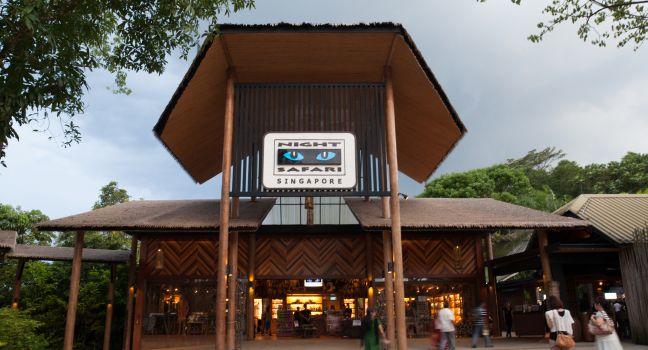
Sprawling over 65 acres of a 220-acre natural rain forest, this zoo has stunning views of nearby reservoir lakes. The zoo uses an open-concept design, with spacious enclosures using minimal glass and fencing to separate animals from zoo-goers: a 3-foot-deep moat, for instance, will keep humans and giraffes apart, since a giraffe's gait makes even a shallow trench impossible to negotiate. In total, there are about 4,200 animals from around 300 species here, spread across zones from Australasia to Wild Africa. The Asian elephant and Bornean orangutan enclosures are definitely worth a visit, but there's joy in stumbling across species less well-known as you wander through the park. The zoo is renowned for its conservation work, and up to 34% of the species living here are threatened in the wild. Make sure to ask for animal feeding times and keeper talks at the entrance. To save a bit, you can buy a combo ticket for access to all four wildlife parks (Bird Paradise, Singapore Zoo, Night Safari, and River Wonders) or two of your choice, to be used within seven days of purchase.
Sri Mariamman Temple
Chinatown
Fodor's Choice
Share This
sunsetman / Shutterstock
Singapore's oldest Hindu temple has a pagoda-like entrance topped by one of the most ornate gopurams (pyramidal gateway towers) you're likely to ever see outside of South India. Hundreds of brightly colored statues of deities and mythical animals line the tiers of this towering porch; glazed concrete cows sit, seemingly in great contentment, atop the surrounding walls. The story of this temple begins with Naraina Pillay, Singapore's first recorded Indian immigrant, who arrived on the same ship as Sir Stamford Raffles in 1819 and set up his own construction business, often using convicts sent to Singapore from India, quickly making a fortune. The first temple, built in 1827 of wood and attap (wattle and daub), was replaced in 1843 by the current brick structure. The gopuram was added in 1936. Inside are some spectacular paintings that have been restored by Tamil craftsmen brought over from South India. This is where Hindu weddings, as well as the firewalking festival Thimithi, take place.
Sri Srinivasa Perumal Temple
Little India
Fodor's Choice
Share This
(c) Delray | Dreamstime.com
Dedicated to Vishnu the Preserver, the temple is easy to recognize by its 60-foot-high monumental gopuram, with tiers of intricate sculptures depicting Vishnu in the nine forms in which he has appeared on Earth. Especially vivid are the depictions of Vishnu's manifestations as Rama, on his seventh visit, and as Krishna, on his eighth. Sri Srinivasa Perumal is very much a people's temple, with services that include Prasadam Offering and Term Archanai. Inside, you'll find devotees making offerings of fruit to one of the manifestations of Vishnu. This is done either by handing coconuts or bananas, along with a slip of paper with your name on it, to a temple official, who'll chant the appropriate prayers to the deity and place holy ash on your head, or by walking clockwise while praying, coconut in hand, around one of the shrines a certain number of times, then breaking the coconut (a successful break symbolizes that Vishnu has been receptive to the incantation). Dress conservatively—shawls can be provided—and be ready to take off your shoes before you enter.
Sultan Mosque
Kampong Glam
Fodor's Choice
Share This
(c) Jacetan | Dreamstime.com
The first mosque on this site was built in the early 1820s with a S$3,000 grant from the East India Company. The current structure, built in 1928 by Denis Santry of Swan & Maclaren—the architect who designed the Victoria Memorial Hall—is a dramatic building with golden domes and minarets that glisten in the sun. The walls of the vast prayer hall are adorned with green and gold mosaic tiles on which passages from the Koran are written in Arabic. The main dome has an odd architectural feature: hundreds of bottle ends are jammed in between the dome and base. This unusual feature originated as a way for lower-income Muslims to donate during the mosque's construction so that all could contribute. Five times a day—at dawn, 12:30, 4, sunset, and 8:15—the sound of the muezzin, or crier, calls the faithful to prayer. At midday on Friday, the Islamic Sabbath, Muslims from all over Singapore enter through one of the Sultan Mosque's 14 portals to recite the Koran. During Ramadan, the month of fasting, the nearby streets, especially Bussorah, and the square in front of mosque are lined with hundreds of stalls selling curries, cakes, and candy; at dusk Muslims break their day's fast in this square. Non-Muslims, too, come to enjoy the rich array of Muslim foods and the festive atmosphere. The best view of the Sultan Mosque is at the junction of Bussorah Street and Beach Road. Walk-ins are welcome Saturday through Thursday from 10 am to 12 pm and from 2 pm to 4 pm.
Thian Hock Keng Temple
Chinatown
Fodor's Choice
Share This
(c) Coseymo | Dreamstime.com
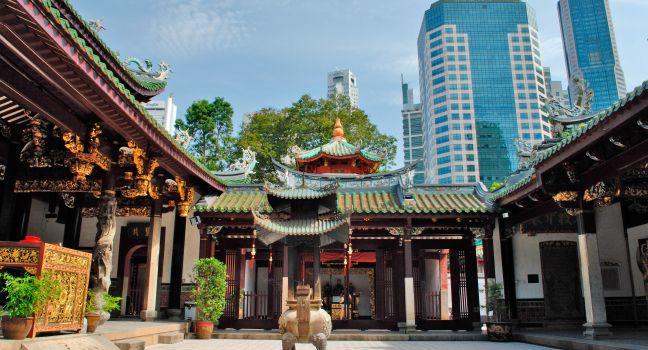
This structure was completed in 1842 to replace a simple shrine built 20 years earlier. It's one of Singapore's oldest Chinese temples, built on the spot where, prior to land reclamation, immigrants stepped ashore after a hazardous journey across the China Sea. In gratitude for their safe passage, the Hokkien people dedicated the temple to Ma Chu P'oh, the goddess of the sea. It's richly decorated with gilded carvings, sculptures, tile roofs topped with dragons, and fine carved-stone pillars. On either side of the entrance are two stone lions. The one on the left is female and holds a cup symbolizing fertility; the other, a male, holds a ball, a symbol of wealth. If the temple is open, note that as you enter, you must step over a high threshold board. This serves a dual function. First, it forces devotees to look downward, as they should when entering the temple. Second, it keeps out wandering ghosts—ghosts tend to shuffle their feet, so if they try to enter, the threshold board will trip them.
Inside, a statue of a maternal Ma Chu P'oh surrounded by masses of burning incense and candles dominates the room. On either side of her are the deities of health (on your left) and wealth. The two tall figures you'll notice are her sentinels: one can see for 1,000 miles; the other can hear for 1,000 miles. The gluey black substance on their lips—placed there by devotees in days past—is opium, meant to heighten their senses. Although the main temple is Taoist, the temple at the back is Buddhist and dedicated to Kuan Yin, the goddess of mercy. Her many arms represent how she reaches out to all those who suffer on earth.
This is a good place to learn your fortune. Choose a number out of the box, then pick up two small stenciled pieces of wood at the back of the altar and let them fall to the ground. If they land showing opposite faces, then the number you have picked is valid. If they land same-side up, try again. From a valid number, the person in the nearby booth will tell you your fate, and whether you like the outcome or not, you pay for the information. Leave the grounds by the alley that runs alongside the main temple. The two statues to the left are the gambling brothers. They will help you choose a lucky number for your next betting session; if you win, you must return and place lighted cigarettes in their hands.
Buddha Tooth Relic Temple
Chinatown
Fodor's Choice
Share This
Beautiful by day but especially lovely by night, Chinatown’s most iconic landmark is tiered in ornate red and gold, the design inspired by the Buddhist mandala, a symbol of Buddhist culture that represents the universe. The temple takes its name from what’s thought to be the left canine tooth of the Buddha, recovered from his funeral pyre in India and displayed inside the temple grounds.
Changi International Airport
Changi
Fodor's Choice
Share This
Singapore’s slick airport hasn’t just won multiple awards for World’s Best Airport—it’s also been named one of the world’s most outstanding retail real-estate projects. And it's no wonder: The sprawling four-terminal complex houses hundreds of stores and restaurants, many of which can’t be found elsewhere. If shopping and eating—the country’s most popular pastimes—aren’t your thing, there are plenty of other draws, like the Butterfly Garden, a Canopy Park (where you can walk across bouncy nets suspended across the top floor), and the Rain Vortex, a seven-story (and the world's tallest) indoor waterfall.
Clarke Quay
Clarke Quay
Fodor's Choice
Share This
Stretching along the riverfront, Clarke Quay is canopied by space-age umbrellas and filled with a smorgasbord of entertainment venues, restaurants, bars, and clubs. Come nightfall, the pedestrian-only streets are packed with a mix of visitors and locals hitting up the latest eateries and bars. With its bright lights and festive nightlife, the river along the quay is a world away from the sleepy waterway it was when Sir Stamford Raffles first arrived. Get a view from the river by boarding one of the many bumboats that offer daily 30-minute cruises. Thrill seekers will love the GX5 Extreme Swing, a ride at the river's edge, open from 4:30 pm.
Coney Island Park
Changi
Fodor's Choice
Share This
A lesser-visited gem of a park in the northeast of Singapore, uninhabited Coney Island (aka Pulau Serangoon) boasts hidden white-sand beaches and plenty of mangrove-draped trails through coastal forests, casuarina woodlands, and grasslands filled with flora and fauna. Start at Punggol Point Park, where boats and a bridge go to Coney Island Park. There are five main beach areas, and the 2.5-km-long Coney Island Park Connector to explore by bicycle or walking. GoCycling at Punggol Jetty rents bikes for S$10 an hour. On selected Saturday mornings in the months of June, November, and December, National Parks volunteers conduct two-hour guided walks. Amenities: toilets. Best for: solitude; swimming; walking; cycling.
East Coast Road
East Coast Park
Fodor's Choice
Share This
One of the earliest delineated thoroughfares in Singapore, East Coast Road is also one of the prettiest, with more than 800 heritage buildings from the early to mid 1900s, a time when the area served as a seaside retreat for the wealthy. Today, a stroll along this spirited enclave will give you a taste of the country’s diverse culture—the stretch is dotted with colorful Peranakan shophouses, museums, and quaint stores, as well as eateries that serve up everything from traditional rice dumplings to Thai mookata and Greek-influenced wood-fired breads.
Indian Heritage Centre
Little India
Fodor's Choice
Share This
Following the colonization of Singapore in 1819, Indians began to make their way over to Singapore, and today they form the country's third-largest ethnic group. Inside the stunning Indian Heritage Centre, the history of the Indian and South Asian communities is detailed through five permanent exhibitions. Other showcases include opulent gold jewelry from the Saigon Chettiars’ Temple Trust, personal heirlooms, and intricately carved doorways and frames, one holding as many as 5,000 carvings. Free guided tours in English, Tamil, and Chinese are offered. Before leaving, take time to admire the building, modeled after a baoli (Indian stepwell)—it's especially eye-catching at sunset.
ION Sky
Orchard
Fodor's Choice
Share This
ION Sky offers panoramic views of Singapore from the 56th floor of ION Mall, 718 feet above the ground. It's free to enter, but only after spending S$50 in ION Mall (you need to download the ION Orchard app, then scan your receipt to receive your QR ticket). Your admission includes a complimentary welcome drink at 1-Atico Lounge. Alongside the great views are a number of interactive exhibits, including films screened on the glass walls and historic portrayals of how Singapore once looked.
Lau Pa Sat
CBD
Fodor's Choice
Share This
This market is the largest Victorian cast-iron structure left in Southeast Asia. Already a thriving fish market in 1822, it was redesigned as an octagon by George Coleman in 1834 and again redesigned, as seen today, in 1894. It now serves as a food court, with hawker stalls that are busy during the day with office workers. After 7 pm, Boon Tat Street is closed to traffic, and the mood turns festive: hawkers wheel out their satay carts, and buskers often perform.
Marina Bay Sands
Marina Bay
Fodor's Choice
Share This
One of the most iconic structures on the Singapore skyline, Marina Bay Sands includes the biggest hotel in Singapore; The Shoppes at Marina Bay Sands, a glitzy mall filled with top fashion brands and its own casino; celebrity-chef restaurants; and the cavernous Marquee nightclub. Don't miss out on the atelier Louis Vuitton, set on an island accessible via a tunnel, and the state-of-the-art Apple Store Marina Bay Sands, an all-glass dome sphere floating on water and offering 360-degree views of the city's skyline. There's also the SkyPark, an observation deck that's 660 feet (200 meters) high and home to the hotel's much-Instagrammed, 150 meter-long infinity pool—the world's largest outdoor elevated body of water.
National Gallery Singapore
Civic District
Fodor's Choice
Share This
A restoration and integration of Singapore’s former City Hall and Supreme Court, this Southeast Asian visual arts museum is a work of art in itself. Immerse yourself in its extensive collection of modern art from the region—the world's largest public display—before grabbing a bite at one of the many globally acclaimed restaurants on site.
Newton Food Centre
Orchard
Fodor's Choice
Share This
Also known as Newton Circus, this is one of the best-known hawker centers in town. (The "circus" refers to a roundabout, as in Piccadilly Circus.) It's a great place to visit at night, when the atmosphere is buzzing, and it's usually very busy no matter which evening you go. Food vendors here often get pushy with their menus, so walk with confidence if you don't want to be accosted. Note that you can sit anywhere: it can feel strange buying food at one stall, then sitting down in front of another, but that's the practice. In fact, it can sometimes be hard to find a table, so grab whatever you can get. The barbecue seafood stalls are famous here, though things like tiger prawns and chilli crab are priced by weight, so have the bill tallied up ahead of time to avoid expensive surprises.
NUS Museum
Queenstown
Fodor's Choice
Share This
On the main campus of the National University of Singapore, the NUS Museum is the nation's oldest university museum. At any one time, it displays some 1,000 of its roughly 8,000 artifacts and artworks, which were first introduced by museum curator Michael Sullivan as a teaching collection in 1955. The works are split across four major exhibits, including the South and Southeast Asian Collection and the Straits Chinese Collection. Temporary exhibitions also pop up from time to time, alongside educational workshops. If you can't make the trip to the museum itself, you can also view more than 2,000 of the fascinating artifacts via the museum's online database.
Peranakan Museum
Civic District
Fodor's Choice
Share This
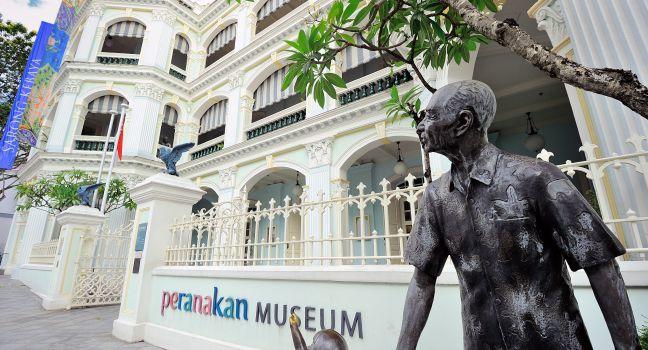
Formerly the Tao Nan School, built in 1910, this grand colonial building now houses the first museum in Southeast Asia devoted to the story of the Peranakans, the descendants of 17th-century Chinese and Indian immigrants who married local Malays. Its 10 galleries display artwork, jewelry, furniture, and clothing from members of the community.
S.E.A. Aquarium
Sentosa Island
Fodor's Choice
Share This
One of the world's largest aquariums, this underwater wonderland with seven themed zones provides views of more than 1,000 species from around the world. Gaze into a shipwreck habitat; walk through a tunnel surrounded by various shark species; and gape at goliath groupers, Napoleon wrasses, and a squadron of magnificent manta rays. There are educational shows on dive feeding and understanding dolphin behavior scheduled throughout the day. VIP tours can be organized.
Tekka Market
Little India
Fodor's Choice
Share This
Renovated in 2023, this is one of the city's largest and busiest wet markets (where meat and fish are sold). Tekka also has a staggering array of fruits, vegetables, herbs, and spices for sale. On the Sungei Road side of the ground floor are stalls selling Chinese, Indian, Malay, and Western foods. Many of the stalls are run by second- or third-generation hawkers, making this an excellent place to sample Singapore's famed hawker food. Upstairs shops sell hardware, shoes, luggage, textiles, and Indian clothing.
Universal Studios Singapore
Sentosa Island
Fodor's Choice
Share This
Packed with cutting-edge rides, shows, and movie-themed attractions, this theme park inside Resorts World Sentosa is a family favorite. Eighteen of the 24 movie-themed rides were designed or adapted especially for the Singapore park, including the world’s first Puss in Boots’ Giant Journey and the dueling Battlestar Galactica: Human vs Cyclone roller-coaster. Spread across seven themed sections, the park has a number of kid-friendly rides and shows, including Shrek 4-D Adventure, Dino-Soarin', and Donkey-Live as well as the Hello Kitty Studio Store and Minion Mart. The five-hour guided VIP tour includes priority access to eight popular rides like TRANSFORMERS The Ride: The Ultimate 3D Battle and photo-ops with characters. Popular dining spots like Mel's Drive-In, Fossil Fuel, and Fairy Godmother's Juice Bar provide fuel for what will be a busy day.
ArtScience Museum
Marina Bay
Share This
Everything / Shutterstock
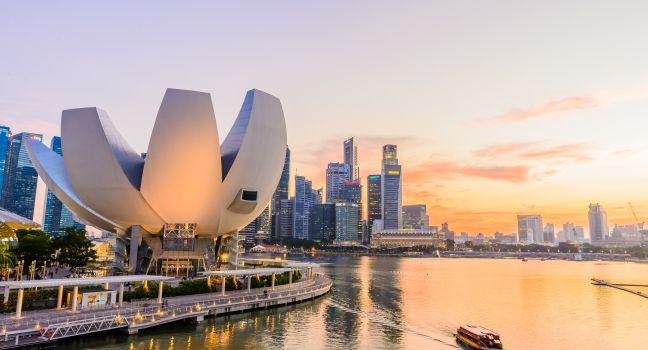
Part of Marina Bay Sands, this Moshe Safdie–designed structure is often compared to an open hand or a lotus flower. Inside, the exhibitions combine—you guessed it—art and science. Since its opening in 2011, major international exhibitions have been set up within the 21 gallery spaces, totaling 50,000 square feet. Guided tours leave at 4 and 5 pm from the Exhibition Entrance on basement level 2. Upstairs, the Sweet Spot has excellent coffee, cakes, and snacks.
Peranakan Place
Orchard
Share This
(c) Ravijohnsmith | Dreamstime.com
The building on the corner of Orchard and Emerald Hill roads is a masterpiece—albeit a somewhat diluted one—of Peranakan architecture. This style, a blend of Chinese and Malay aesthetics, emerged in the 19th century, when Chinese people born in what was then called the Straits Settlements (including Singapore) adopted, and often adapted, Malay fashion, cuisine, and design. The surrounding area is now a mix of upscale residences, with renovated shophouses doubling as bars and restaurants. Parts of Emerald Hill, from Orchard Road through the Ice Cold Beer bar, are for pedestrians only; there are several outdoor cafés and restaurants along the stretch. Stroll the arcaded street, and check out fretted woodwork, pastel washes, ornate wall tiles, and other typical Peranakan touches.
Subscribe to Newsletter
Sign up for Travel Tips & News
I want emails from Fodor's Travel with travel information and promotions. I can unsubscribe
any time using the unsubscribe link at the end of all emails.
Thank you for your interest!
Look out for our newsletters with travel tips and special offers.
Sign up for Travel Tips & News
By signing up for the
newsletter, I agree to the Privacy Policy. You must check the box to subscribe
Thank you for your interest!
Look out for our newsletters with travel tips and special offers.