Even for travelers with little interest in history or temples, this significant complex in the heart and soul of Asakusa is a must-see sight—as much for its five-story pagoda and 17th-century Shinto shrine as for its energy, which is particularly vibrant during the famous Sanja Matsuri festival in May. In addition, the surrounding area has interesting shops, winding backstreets, and an atmosphere unlike any other in Tokyo.
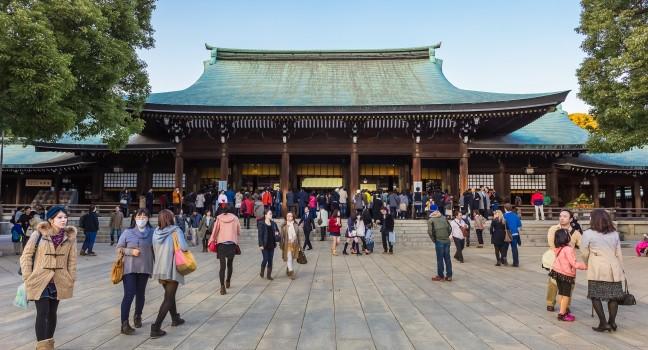
Established in 645, the bright red Main Hall has long been the center of Asakusa, though what you see today is a faithful replica of the original, which burned in the fire raids of 1945. It took 13 years to raise money for the restoration of the beloved Senso-ji, whose large lanterns were donated by the geisha associations of Asakusa and nearby Yanagi-bashi. Kabuki actors still come here to pay their respects before a new performance season, as do sumo wrestlers before a tournament. Indeed, most Japanese climb the stairs to offer prayers, after stopping at the huge bronze incense burner in front to ward off illnesses by bathing their hands and faces in the smoke.
Unlike in many other temples, however, part of the inside has a concrete floor, so you can enter without removing your shoes. In this area hang Senso-ji's chief claims to artistic importance: a collection of 18th- and 19th-century votive paintings on wood. Smaller, simpler versions of such plaques, called ema, are still offered to the gods at shrines and temples. The worshipper buys a little tablet of wood with the picture painted on one side and then inscribes a prayer on the other. The temple owns more than 50 of the larger works, which were removed in 1945 to keep them safe during the air raids. Only eight, depicting scenes from Japanese history and mythology, are on display.
Lighting is poor in the Main Hall, and the actual works are difficult to see. One thing that no one can see at all is the holy image of Kannon itself, which is supposedly buried somewhere deep under the temple. Not even the priests of Senso-ji have seen it, and there is, in fact, no conclusive evidence that it actually exists.
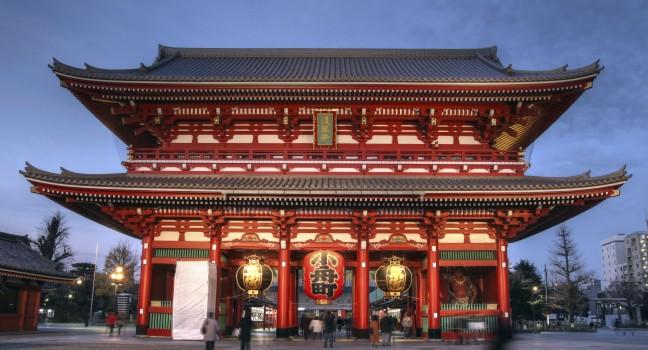
Hozo-mon, the temple courtyard gate, also serves as a repository for sutras (Buddhist texts) and other Senso-ji treasures. Should either of this gate's guardian gods decide to leave its post for a stroll, it can use the enormous pair of sandals hanging on the back wall—the gift of a Yamagata Prefecture village famous for its straw weaving.