


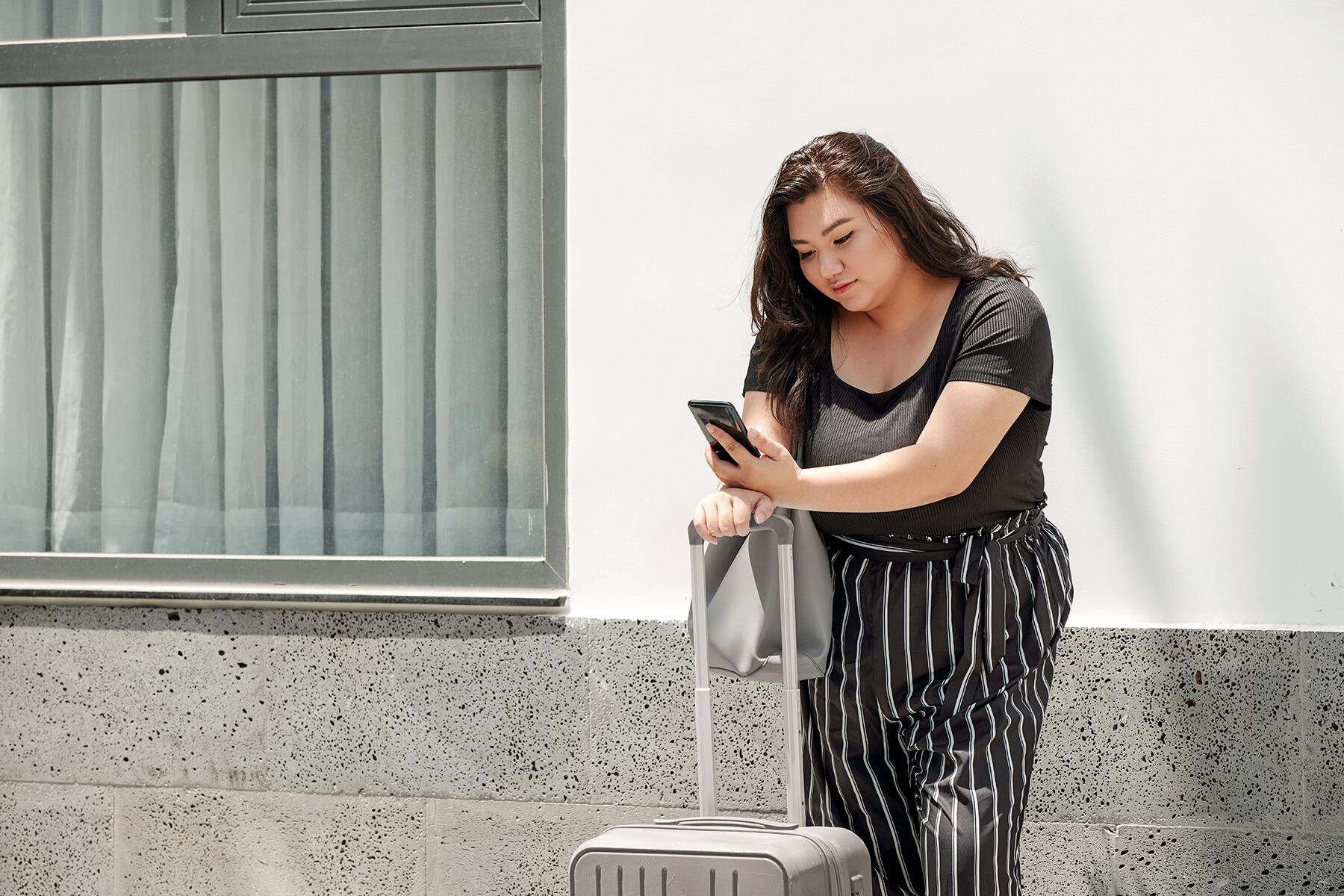

Navigating the world of travel can be difficult and intimidating as an overweight passenger, but these tips help make it easier.
After weeks of monitoring flight deals in July, my husband and I decided to buy tickets to Italy. But there was a catch: I needed to buy an extra seat for the first time in my weight-fluctuating life, and I had no idea how to make that happen.
No matter my size (ranging from a USA 26 to a 10), I’ve always been uncomfortable on planes. My hips are naturally wide, and I’m pretty tall for a woman (5’8”), so airline seats aren’t built for me. In the past couple of years, though, I’ve gained a significant amount of weight. I knew my clothing size had gone up and my shape had changed, but I didn’t think I’d crossed over into “too fat to fly” territory until I flew to California for a friend’s wedding in May and the seatbelt barely buckled.
I felt a fist of panic clench my heart, and for a good reason. Whether it’s Hawaiian Air weighing Samoan passengers and assigning seats according to weight, passengers being kicked off flights for being fat (even in business class), or simply the shameless abuse by fellow passengers who feel their smaller bodies make them morally superior, flying while fat has long been a nightmare. I still get flashbacks to the humiliation of people’s eyes on me as I walked down the aisle as a fat teen, sweating with fear that the belt might not fit or a neighboring passenger might cause a scene. Even at my largest, though, I never needed a lap-belt extender, let alone a second seat—plane seats were more humanely sized 20 years ago.
Top Picks for You

Recommended Fodor’s Video
The process was worse than I’d anticipated. We bought two round-trip tickets online to lock in the sale fare, and then I immediately got on the phone to buy a third “comfort seat.” It took four hours before an agent came on the line, and then it took three tries to get her to understand what I needed. I stayed on the line while she fumbled her way through attempting to reserve an extra seat. Eventually, after a further 45 minutes on hold, she came on the line to say the only way she could do it would be to cancel our current booking and re-book three seats together for $130 more per seat due to the fare going up while I was on hold. We’d stretched to afford the third seat, but there was no way we could add an extra $390 at the last minute.
Both of us had already done hours of online research before booking the flights, but apparently, it wasn’t enough. We did more research and discussed our options, and then we canceled our Delta flights and agreed to figure out our Plan B another day. I went to bed that night feeling heavier than my body could ever represent. Despite my best efforts, I internalized the idea that I’d ruined the trip simply by existing in a body that the airlines—and broader society—have deemed acceptable to oppress.
When I tweeted about my experience, my thin friends were supportive but also shocked—if you don’t experience the many ways society is set up to exclude or harm fat bodies every day, I guess it’s easy to forget that millions of people live this way. But we do, and it’s unjust. It’s absurd to charge the full fare for a seat that won’t have a person in it, meaning it won’t require a meal or a flight attendant’s time, especially when the only reason many people even need it is that the airlines have been squeezing more and more people into their planes for years, narrowing seats and shortening legroom at the same time that they charge us extra for ginger ale or an overhead bag.
Airlines don’t have to treat fat passengers with dignity because all of society is complicit in or actively perpetuating fat hatred—not only is our access restricted, both physically and financially in ways other bodies are not, but we’re treated as if this callous disregard for our personhood is our own fault. We’re morally repugnant at worst and inanimate at best.
As Aubrey Gordon, author of What We Don’t Talk About When We Talk About Fat and co-host of the Maintenance Phase podcast, said when she tweeted about her travel experience in 2017: “As a very fat person on a plane, I am treated like luggage—a cumbersome and exasperating inconvenience.” I would add that dogs, which I love but am severely allergic to, are greeted much more warmly on planes than larger-bodied humans.
In the end, my husband was able to find us an itinerary where each leg was either on an airline where we knew I could fit (however uncomfortably) with the armrests down, or where he was able to reserve a two-seat row. If I’m in anyone’s space, it will be his, and luckily he likes it when I’m pressed up against him.
Beyond our privilege to pay for flights in the first place, I’m privileged to be able to make this decision. I’m lucky I fit in some plane seats and that I have a partner who’s happy to share his space with me. Many people have it much worse, but these tips can hopefully help make traveling easier for those who are overweight.

1. Research Airline Policies Ahead of Time
Before you even look at fares, make sure you’re up on the latest policies of the airlines you’re considering. Policies are changing all the time, and they don’t even call it the same thing—some airlines have a “passenger/customer of size” policy. Others lump larger passengers in under “special seating arrangements.”
Policies often don’t include information about booking an extra seat or request accommodation—they refer to passenger rights (or lack thereof) and what would justify the airline forcing you to buy another seat or removing you from your flight.
For example, United Airlines has a page for “customers requiring extra seating,” but nowhere on that page is information about how to book an extra seat—that’s found on the “airline seating FAQs” page, under “special seating needs.”
On the other hand, Alaska Airlines has compiled all the relevant information in one place, on their “customers of size seating guidelines” page, with booking instructions and information about how to take advantage of their limited refund option.
2. Compare the Overall Cost of Various Airlines
That refund option is another reason to do plenty of research. Alaska’s policy on second seats stipulates that only after you have completed travel—if all Alaska Airlines flights in each direction departed with an open seat available—you will be eligible for a refund of the second seat. For domestic flyers, Southwest has a similarly humane policy.
In a case where you’re comparing flights with Alaska vs. another airline that doesn’t offer a refund, it might be worth a little extra on the initial fare for the potential of a big refund. Even if they don’t offer a full refund, some airlines might offer a discount, such as relatively new airline FrenchBee, which gives passengers a 30% discount on their extra seat. I’ll be trying them next time I go to Paris.

3. Assess the Size of the Plane Seats Ahead of Time
SeatGuru tells users the row layout and the seat width, and pitch on a huge range of aircraft makes and models and gives further details on individual seats in the cabin, such as under-seat storage blockages or limited seats recline. Having all this information ahead of time will empower you to make a more informed decision about which airline or route you take. SeatGuru was indispensable during my planning process and enabled us to find routes where the planes had two-seater rows.
4. Price-Compare Fare Classes
In some cases, although it’s rare with international flights, a single business or first-class seat may be less expensive than two coach seats. Many higher-fare cabins are equipped with wider seats and seat dividers, which protect larger passengers from difficult fellow travelers.
5. Call the Airline Before Booking
This is extremely irritating for those of us who operate on a tight budget and watch fares for weeks before purchasing, as my experience proves, but most airlines won’t add a seat after the purchase is made, and none that I’ve researched offers the chance to book an additional seat online for international flights. Try calling early in the morning, if you can, to reduce hold times.
6. Codeshare Beware
If possible, avoid booking flights that include a codeshare leg—in these cases, the airlines are empowered to sell you the tickets for the codeshare flight but not offer customer service on that leg. For example, when we booked our original flights through Delta, the itinerary included a leg on Alitalia. After we canceled, we found out they don’t allow passengers to purchase an additional seat on long-haul flights for any reason! I’m not going to miss them. Seating maps are also often inaccessible on codeshare legs when you book through a partner airline.
7. Share the Burden With a Loved One
If you have a companion who will be traveling with you, let them help! I was so upset that my body was affecting my husband, but his clear-headed analysis of the situation was responsible for us finding the solution we did.

8. Extra Tips to Keep in Mind
- Purchase your seatbelt extender and bring it with you. Even if you’re comfortable asking for one on the plane (which is great! You have nothing to be ashamed of!), the question can cause nearby passengers to fixate on your weight, which can lead to abuse.
- Board as early as possible to avoid bumping into people or any awkwardness with the narrow aisle and give yourself time to settle in and get your seatbelt extender buckled in without the pressure of other passengers.
- Ask the gate attendants about the possibility of getting a little extra space. If the flight isn’t full and you’re polite, they may move you, so you don’t have to worry about sharing your row at all.
- Be aware of your rights. Just because you’re in a larger body doesn’t mean you don’t have the same rights as other passengers. If you encounter any trouble with the airline you’re flying, check out AirHelp to see if you’re owed any compensation—they may be able to help you advocate for yourself.
- Try to remember that you deserve to travel just as much as smaller bodies and that your body being different from the proposed ideal doesn’t make you any less worthy. People might be cruel, but they might also be kind or even just unfazed by your existence. Either way, when you get to your destination, you’ll be glad you found the courage to fly there.