


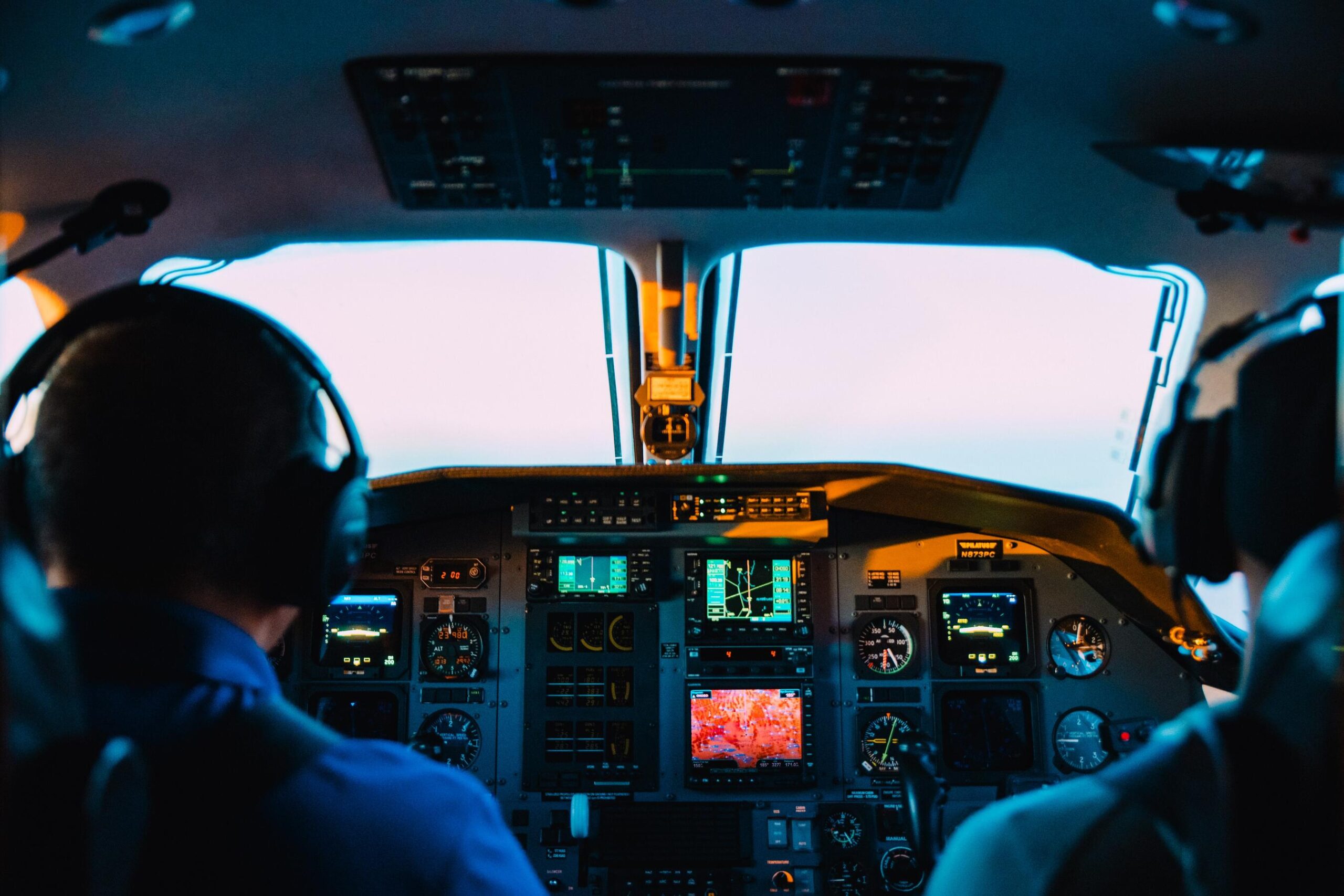

"Doors to manual and cross-check."
A
irline announcements are often regarded as strange artifacts of grammar and syntax. Why are they so redundant. If “Last Call” and “Final Call” mean the same thing, why do airlines insist on combining them into Last and Final call? Why must tray tables be not just upright, but Fully Upright and Locked? Why must passengers be informed that they cannot tamper with, disable, or destroy lavatory smoke detectors? Aren’t those all similar?
Well folks, we’ve got answers, so sit back, relax, and enjoy the journey.
Redundancy for the Sake of Redundancy
Some of the announcements can be grating because they just seem so redundant, right?
That’s by design. Decades of learning on aviation safety have driven the orthodoxy that there’s safety in redundancy—that is, backups for backups for backups. It’s why one pilot reads the checklist and the other one actions it. It’s why flight attendants “cross-check” doors they haven’t armed themselves, and it’s why there are multiple backup systems to control the aircraft in case one fails.
With announcements in particular, airlines know their failings, driven on decades of experience, both with passenger announcements and radio communications between aircraft and the ground. For example, software warns airline schedulers when they try to schedule two flights departing the same city around the same time with similar flight numbers. It can be confusing when American 1724 and American 1721 are operating in the same airspace, because sometimes transmissions are truncated and everybody might only hear American 17-. So, there’s software to prevent that. When it’s a coincidence, say Alaska 135 and American 135 operating in the same airspace, controllers will warn everybody in advance there’s a similar callsign.


Recommended Fodor’s Video
But how does this affect airport announcements? It’s the same understanding that sometimes announcements get cut off, interrupted by other noise, or only partially heard, that drives airlines to make them redundant.
Sure, you might have heard the entire screed of This is the last and final boarding call for American Flight 1724 to Sacramento both times the agent repeated it, but that doesn’t mean everyone did. If they were just coming out of the restroom and all they heard was “Flight 1724 to Sacramento”, they know to seek out more information.
Airlines also operate globally, and are aware English may not be many of their passengers’ first language—thus the need to use two different words that mean the same thing. Passengers with limited command of English may not immediately recall the meaning of “last” but might have faster recall with “final,” so airlines use both.
Laws Also Apply
Some onboard announcements are also regulated. Airlines have a bit of leeway with how they structure the onboard safety demonstration based on their own internal procedures. However, there are some parts that must be announced verbatim, using specific phrases without alteration, such as “FAA regulations require passenger compliance with lighted passenger information signs, posted placards, and crewmember instructions” and that “Smoking, including e-cigarettes, is prohibited in lavatories at all times. Tampering with, destroying, or disabling smoke detectors in lavatories is prohibited by federal law.”
Here, there are legal implications, so the exact wording is important—there can’t be any room for ambiguity.
Seatbacks, for example, are arguably upright, even if they’re reclined just an inch or two. But in the United States, the law requires that they be fully upright, so airlines use this particular verbiage to forestall any disagreement over what exactly upright means. It’s also why tray tables must be fully upright and locked. In both cases, the FAA has these requirements for passenger safety in the event of an emergency. Reclined seatbacks can impede passenger egress toward an exit, while unsecured tray tables can, at best, prevent passengers from properly assuming the brace position or prevent egress; and at worst can bisect passengers at the waist with the forces of deceleration.
There are also different requirements for airlines from different countries. U.S. regulators, for example, don’t require that crewmembers repeat safety briefings prior to landing, but Canadian and E.U. regulators require that airlines review some safety procedures, usually exit locations and evacuation procedures, prior to arrival on longer flights, as a refresher just before a safety-critical phase of flight.
Ultimately, while many airline practices may seem arbitrary (and there are certainly agents who sometimes “go rogue”) the prescribed texts on airline announcements are usually the result of decades of experience effectively and safely moving the traveling public by air.