



Mexico & Central America
Mexico & Central America


Top places to go in Mexico & Central America in 2025
Expand Full List


-
Alta Verapaz, Guatemala
-
León, Nicaragua
-
Mérida, Mexico
-
Veraguas, Panama


Alta Verapaz
Guatemala

Despite the universal appeal of dramatic mountain ranges, tranquil blue lagoons, and powerful rivers roaring through dense, thriving jungle, Alta Verapaz, in the central highlands of Guatemala, remains one of the lesser-traveled departments of the country.
Occupying a tropical monsoon climate zone, this region receives regular nourishment from the fine, misty chipi-chipi rains and the occasional sky-opening downpour, conditions that create a nearly never-ending cycle of water and keep the influx of visitors to a trickle. The abundance of water douses the craggy mountains and rushes toward lower elevations, surging on swift rivers and seeping underground into elaborate cave systems, creating spectacular landforms like shapely karst limestone outcrops and moody jungle panoramas, where valley views gaze upon verdant mountains and wispy clouds cling to the treetops.
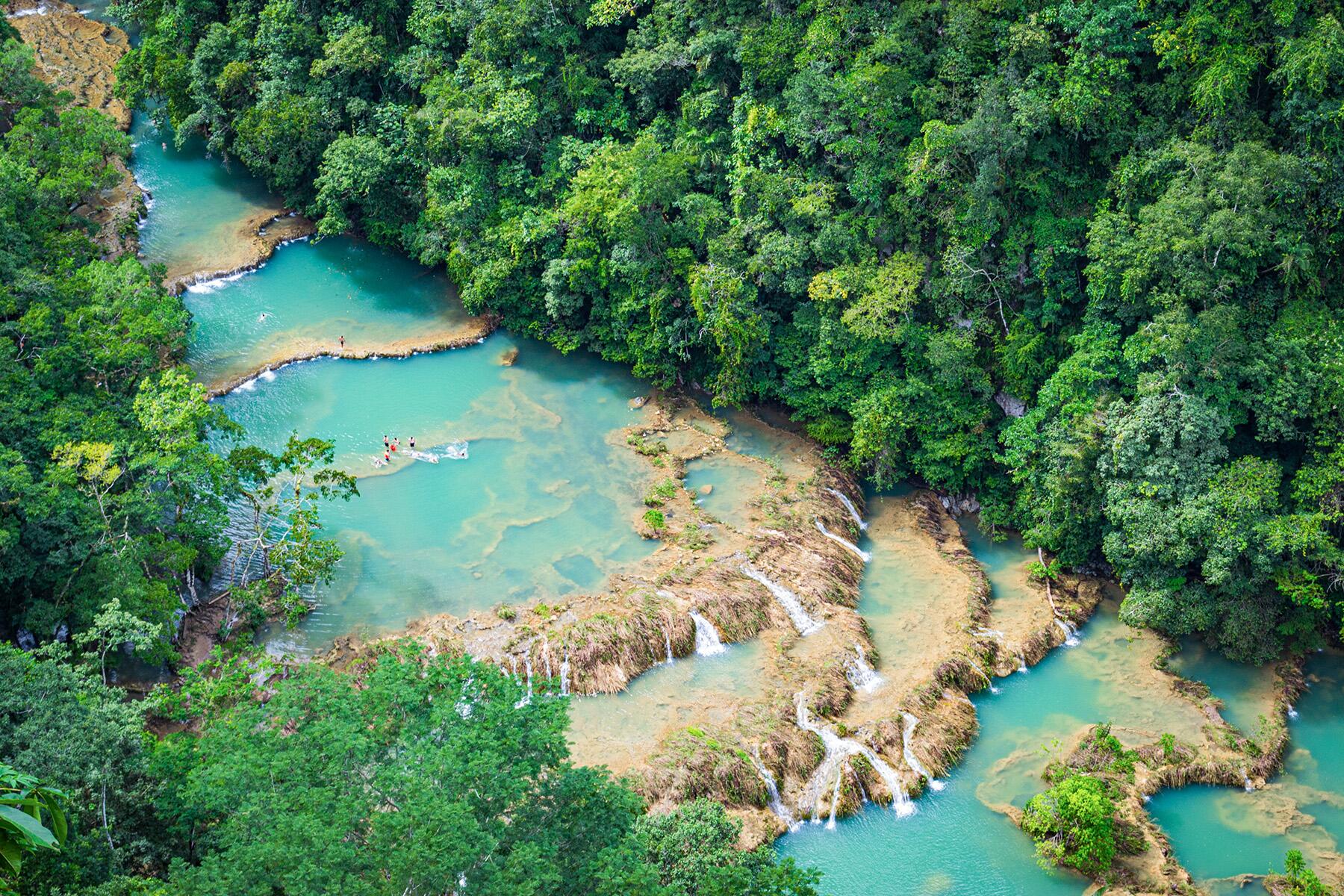
Nature enthusiasts and active travelers will find much to do in Alta Verapaz. Whitewater rafting trips navigate between boulders and through class IV rapids on the Cahabón River, and in Semuc Champey, water streams down a terrace of mustard-yellow rock, collecting into crystalline emerald pools perfect for swimming and basking in the marvelous scenery. An excursion into the Lanquín Caves traverses over a cold blue river and under elongated stalactites that drip from the ceiling and offer hospitable refuge to the enormous colonies of bats flitting and diving overhead. Toucans and butterflies can be found around Lachuá Lagoon, where an easy rainforest hike concludes with a delightful dip in clear turquoise waters that mirror the sky.
Set within mountainous cloud forests blooming with orchids is the highland city of Cobán, the principal urban center that serves as a base for exploring the region. Several Indigenous communities live in and around the city, cultivating coffee and cardamom in the surrounding plantations. South of Cobán is Biotopo del Quetzal, a high-altitude nature reserve where the resplendent quetzal, a sweet-faced bird with glowing green plumage and willowy blue tail feathers, can be spotted by lucky and patient observers.
Absorbed within a luscious green jungle, Hotel Panisté offers luxurious amenities such as a heated infinity pool, a Temescal sweat lodge, and an exceptional restaurant featuring a seasonal menu. At Mountain Nest in Lanquín, cozy, well-equipped wood and stone cabins look out across mountaintops piercing through a cover of clouds.
The dry season runs from November to April when the torrential downpours cease, and sunny days are more likely. This season is also when many cultural festivals take place, but if traveling during Semana Santa and Easter, be sure to book your accommodations well in advance.
Insider Tip
When in Cobán, try Kak’ik, a traditional Guatemalan spicy soup stewed with tomatoes, Cobanero chili peppers, and a turkey leg.


León
Nicaragua
The city of León, widely recognized for its role in shaping the culture and history of Nicaragua, expresses a distinct identity rooted in Spanish colonization, passionate political activism, and the artistic legacy of its people. As the former capital and second largest city, León is home to the most concentrated collection of colonial buildings and churches in Nicaragua. Overlooking the Central Plaza is the magnificent León Cathedral, the largest cathedral in Central America and also one of the most beautiful. Visitors can explore the light-filled interior or ascend to the roof to walk among the smooth white-washed domes and lanterns, taking in panoramic views of the town and its surroundings. Nearby, the Iglesia de la Recolección is a striking example of Mexican baroque style, the sooty, twisting columns enhancing the charm of the golden yellow facade.
The revolutionary legacy of the 1970s is infused into the very structure of León, and the images and slogans from the height of Nicaragua’s political struggle are tattooed onto the walls, creating a visual documentation of oppression and resistance that remains unresolved to this day. In addition to the abundance of street art, a superb collection of contemporary art can be viewed in the Museo de Arte Fundación Ortiz-Gurdián, a Creole civil-style museum where renowned artists like Diego Rivera and Pablo Picasso adorn the walls.
Around León are a number of enticing day trips and activities—relaxing on pretty black sand beaches, sipping Nicaragua’s finest rum at the Flor de Caña factory, or witnessing a mountaintop sunrise. However, there is one excursion in particular that draws adventurous visitors to León—boarding down the active Cerro Negro volcano. Those clamoring for the clout of having surfed the edge of a cinder cone can wriggle into full-body protective gear and head to the wind-blasted summit, where the ashy, obsidian slope looks far steeper than anyone expects.
Relax in hacienda luxury at Hotel El Convento, where guests can dine on a covered terrace overlooking a garden courtyard. Hostal Casa Abierta is a solid lower-priced option with a youthful clientele, a swimming pool, and live entertainment at the bar and restaurant.
León can be oppressively hot all year round. The dry season runs from December to April and is a good time to visit as the skies are sunny and clear. From May to November there is more chance of rain, with the height of the rainy season occurring in September and October.
Insider Tip
Around the corner from the León Cathedral is the Mercado Central, where fresh produce and tropical fruit are abundant, and Nicaraguan specialties are served hot from the pot. Visit the mercado for breakfast, when vendors are serving up steaming plates of fried eggs and gallo pinto.


Mérida
Mexico

As the capital of Yucatán, Mérida is a historic Spanish colonial city located in the northwest region of the state. Artists and creatives from around Mexico and beyond flock to its cafes, restaurants, and studios, often as a reprieve from the much busier Mexico City and as a new cosmopolitan gathering spot. At this pulsing city steeped in Mayan culture, visitors can find authentic Yucatán cuisine, artisan handicrafts, and plenty of museums, as well as a hip restaurant and bar scene. Known as the La Ciudad Blanca (or the White City) due to the limestone used in its colonial architecture, today, most historic structures are painted in vibrant hues, and visitors will love that it’s both highly walkable and has an international airport.
Unlike the neighboring state of Quintana Roo, which attracts tourists for its beaches and resorts, Yucatán’s Mérida gives travelers a more local Mexican experience (especially when it comes to art and food) with a mix of high-end hotel options and local stays. Dine at Hacienda Xcanatun, a historic, five-star hotel that serves up local flavors in a colorful, chic setting, or try an array of dishes (like panuchos de cochinita) at Museo de la Gastronomía Yucateca in the city center. While exploring, stop by Parque de las Américas for a snack from a local food vendor and listen to live music while you’re there, as well as Parque de Santa Lucía for outdoor dancing and Parque de Santiago for its market and nearby restaurants. When it’s time for a caffeine refuel, head to either Te Extraño, Extraño, or Manifesto for a truly delicious café, and when evening comes around, grab a couple of creative cocktails (or catch a film!) at the ultra-trendy Salón Gallos or Casa T’HŌ, a design-centric concept house with boutiques and an art gallery.
For exploring off-the-beaten path, Mérida is a great jumping-off point for visiting hundreds (if not thousands) of cenotes like Cenote Kankiriché or Hacienda Mucuyche, as well as archeological wonders like Uxmal and hyper-local beaches like Sisal. Plus, Chichén Itzá—a UNESCO World Heritage Site—is roughly an hour and a half drive from the city.
For a splash of luxury, check out Casa Lecanda, an adult-only boutique hotel near the city center. For a more budget-friendly option, try Casa Dos Lirios, a modest hotel with consistently good reviews and a pool. And for a truly tranquil getaway just one hour south of the city center, try Hacienda Temozón, a restored 17th-century hacienda with 5-star amenities, an on-site cenote, and gardens.
The best time to visit Merida is during the late fall, winter, and early spring, as temperatures can get very hot in the summer months.
Insider Tip
For Mexican jewelry, artisan wares, and handcrafted alebrijes, don’t miss Caracol Púrpura, which is close to the city center.


Veraguas
Panama

Packed with towering mountains, pristine islands, and a whole lot of waterfalls, Veraguas Province offers some of the most verdant landscapes in all of Panama. For a truly idyllic escape, head to Coiba National Park. Centered around the largest island in all of Central America, this scenic preserve is renowned for its sandy beaches and top-tier snorkeling opportunities, while the verdant Coiba Island itself is abundant with native species like the Panamanian white-faced capuchin and the Coiban agouti. Book a trip with local tour company Pacific Adventures for dedicated excursions that highlight deep-sea fishing and whale watching.
Further east, Panama’s Azuero Peninsula is home to abundant natural beauty, with the sprawling Cerro Hoya National Park serving as one of its top destinations for ecotourism. This mountainous expanse of land is rich with native montane forests where indigenous fauna flourish. During a tour with Azuero Adventures, visitors can spot dazzling birds like the golden-hooded tanager and gartered trogon and furry residents, including the ocelot and jaguarundi. To sweeten the deal, there’s no shortage of towering waterfalls to enjoy along the way.
On the western edge of the Azuero Peninsula, Morrillo Beach Eco Resort is popular with nature lovers, providing opportunities to spot sea turtles laying eggs on the beach as well as marvel at the property’s resident endangered howler monkey subspecies. Meanwhile, the idyllic Nativo Boutique Hotel serves as the perfect base for exploring the town of Santa Catalina, with an outdoor infinity pool and open-air bar to aid relaxation after a long day.
The best time to visit Veraguas Province is between December and April during the dry season.
Insider Tip
While Coiba Island is the star attraction of Veraguas Province’s southern coast, its neighbor Isla Ranchería offers its own picturesque beaches with just a fraction of the visitors.


