


Greeneville. With an "E."
 Aug 13th, 2020 | 11:27 AM
#1
Original Poster

Joined: Nov 2006
Posts: 3,050
Likes: 26
Greeneville. With an "E."
How else to combine Barn Quilts; a President's Homestead; and The Lost State of Franklin?
Oh, Tennessee's oldest college and a covered bridge, too.
Oftentimes in Central Europe we would explore smaller, sleepier towns or villages when they had a "special offer" on, like a festival or holiday market; and that has remained a guiding sightseeing principle here in East Tennessee. Up in the northeast corner of the state there is a cluster of historic towns, each worth a visit. "The Plan" had been to explore each during their "special offer" but then, pandemic.
So we threw a virtual dart at the map one day and it landed on Greeneville. With an "E," the only Greeneville in the U.S. spelled so. In case you wondered, the other 34 Greenville's across America are short one "E." Greeneville is named for Nathanael Greene, a Revolutionary War General...from Rhode Island. Makes complete sense.
We began our tour chronologically with The Lost State of Franklin. In the post-original Brexit years it was not a given that states would necessarily default and join the United States. Feeling that they were a separate people (being west of the Appalachians) from North Carolina, of which they were a part, the good people declared their independence. From ~1784-1789 Franklin encompassed a fair number of counties that were once part of North Carolina, as Tennessee did not yet exist. Of course, Franklin never really existed as a state because it was never authorized by Congress, but for four years and change its citizens fought (and died) for legitimate statehood.
(The “State” was so named for Benjamin Franklin as a ploy to get his buy-in, even had a State House in Greeneville. Spoiler: Ben never approved.)
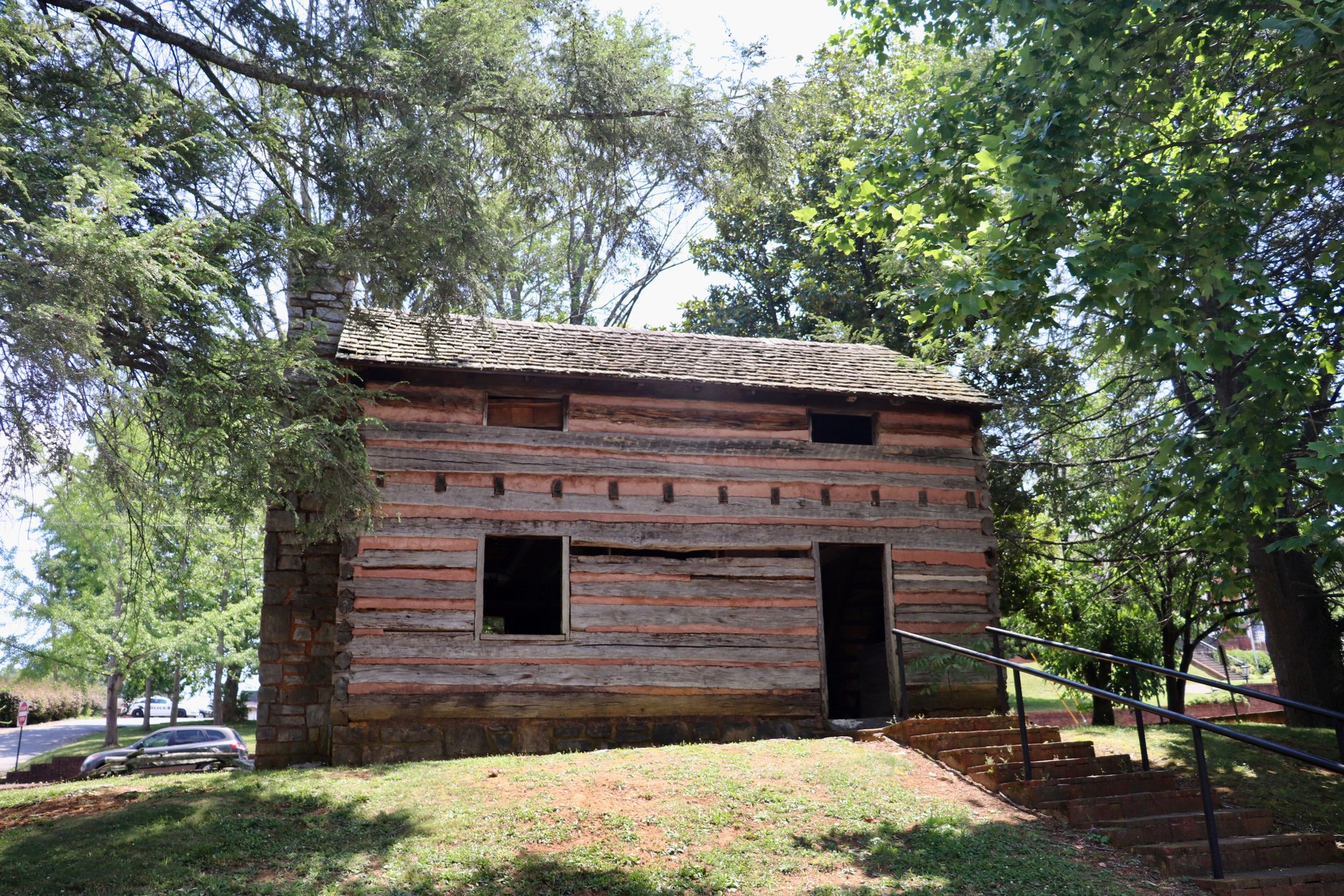
How did this autonomous zone come to be? The story goes that Franklinites were concerned that North Carolina had given their territories to Congress as a way to pay off NC's Revolutionary War debts, so they attempted to secede. For four years or so Franklin ran a parallel government with North Carolina. Eventually North Carolina took control over Franklin again but ceded the Territory to the U.S. in 1789 when it ratified the U.S. Constitution. Seven years later this "Southwest Territory" and then some would become Tennessee in 1796.
The creation of Franklin was novel in that it resulted from both a cession (an offering from North Carolina to Congress) and a secession (seceding from North Carolina, when its offer to Congress was not acted upon and the original cession was rescinded.) Not to mention it being a not so subtle hint that the Founders needed to pay more attention to the "West."
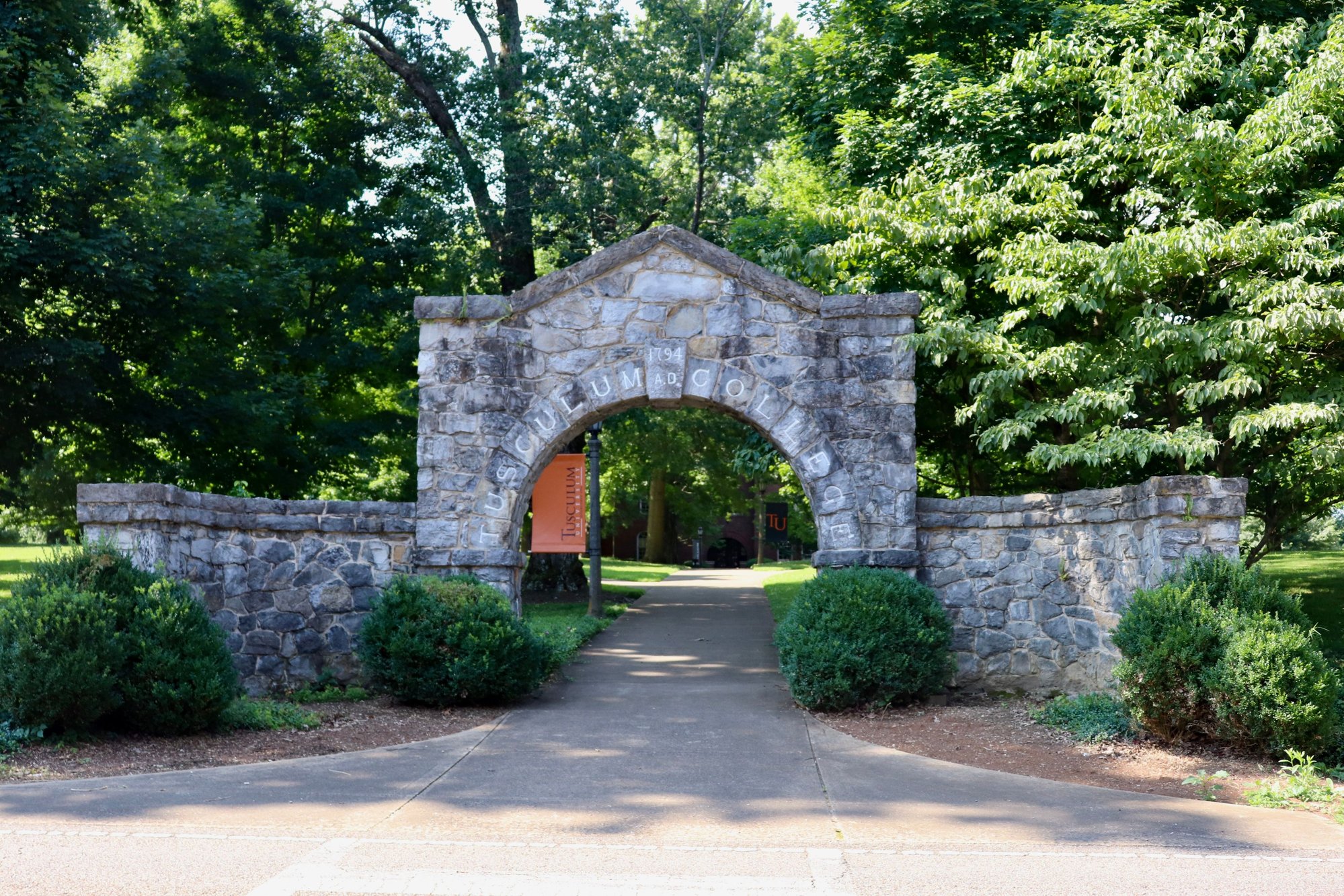
Two years before Statehood was bestowed upon the Volunteer State, however Tusculum University was founded just outside of Greeneville. It is Tennessee's oldest institution of higher learning, established by Scots-Irish ministers to educate settlers of the American frontier.
Fast forward to the 1820s. A young and uneducated apprentice named Andrew Johnson moved from Raleigh to Greeneville to establish himself as a tailor. A year later he married Eliza McCardle, who taught him the Three R's. Johnson put knowledge to power to become Mayor of Greeneville, then moved into the state legislature and eventually to Congress, with a brief stint back to serve as governor of Tennessee. Abraham Lincoln named him as his Veep, and we all know how his rise to the presidency went down.
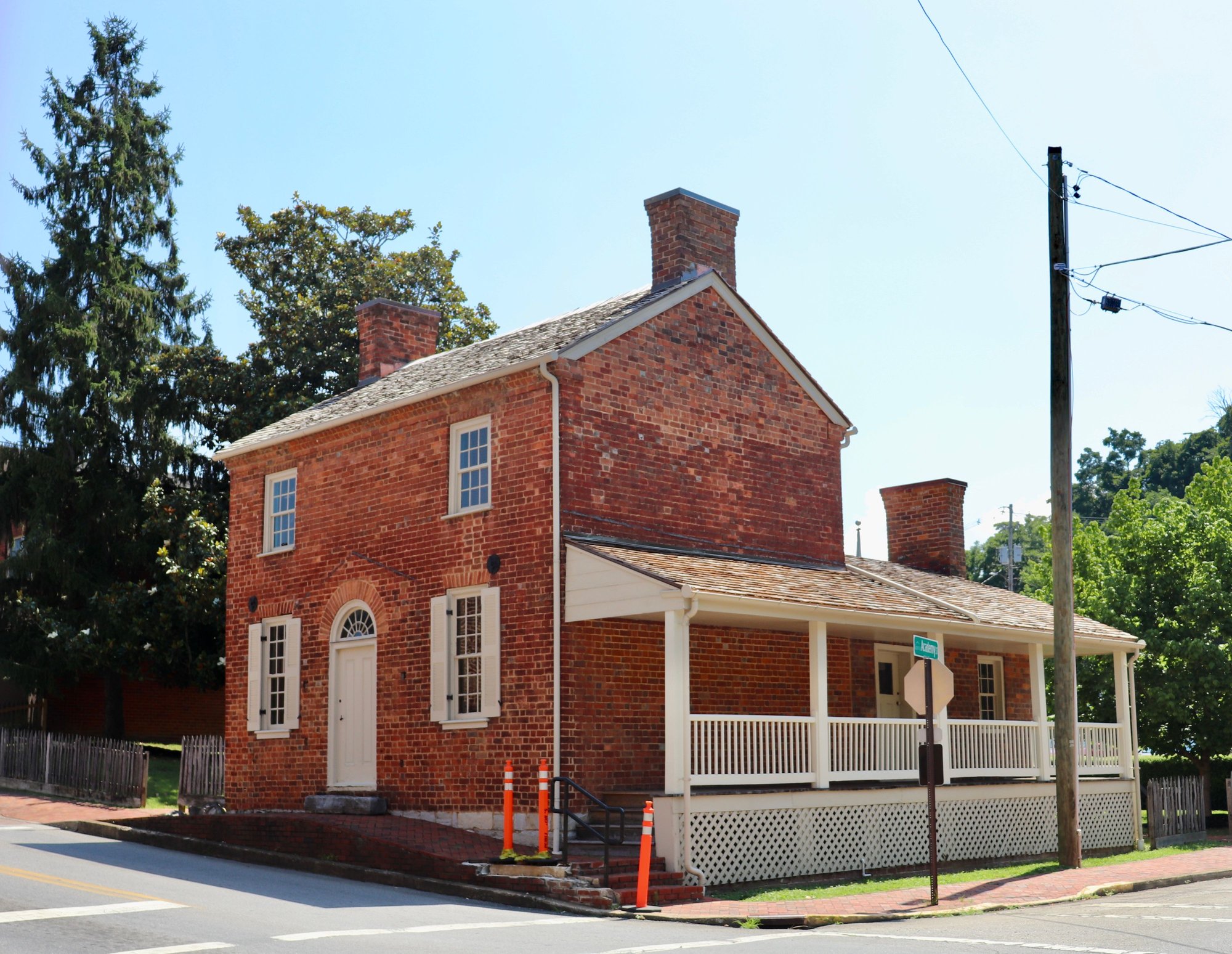
Johnson's Tailors Shop lies within his early homestead; now it is the Andrew Johnson Visitor Center. The ever-so-kindly NPS Park Ranger talked to DDog outdoors, who had joined us on this outing while we toured the Center.
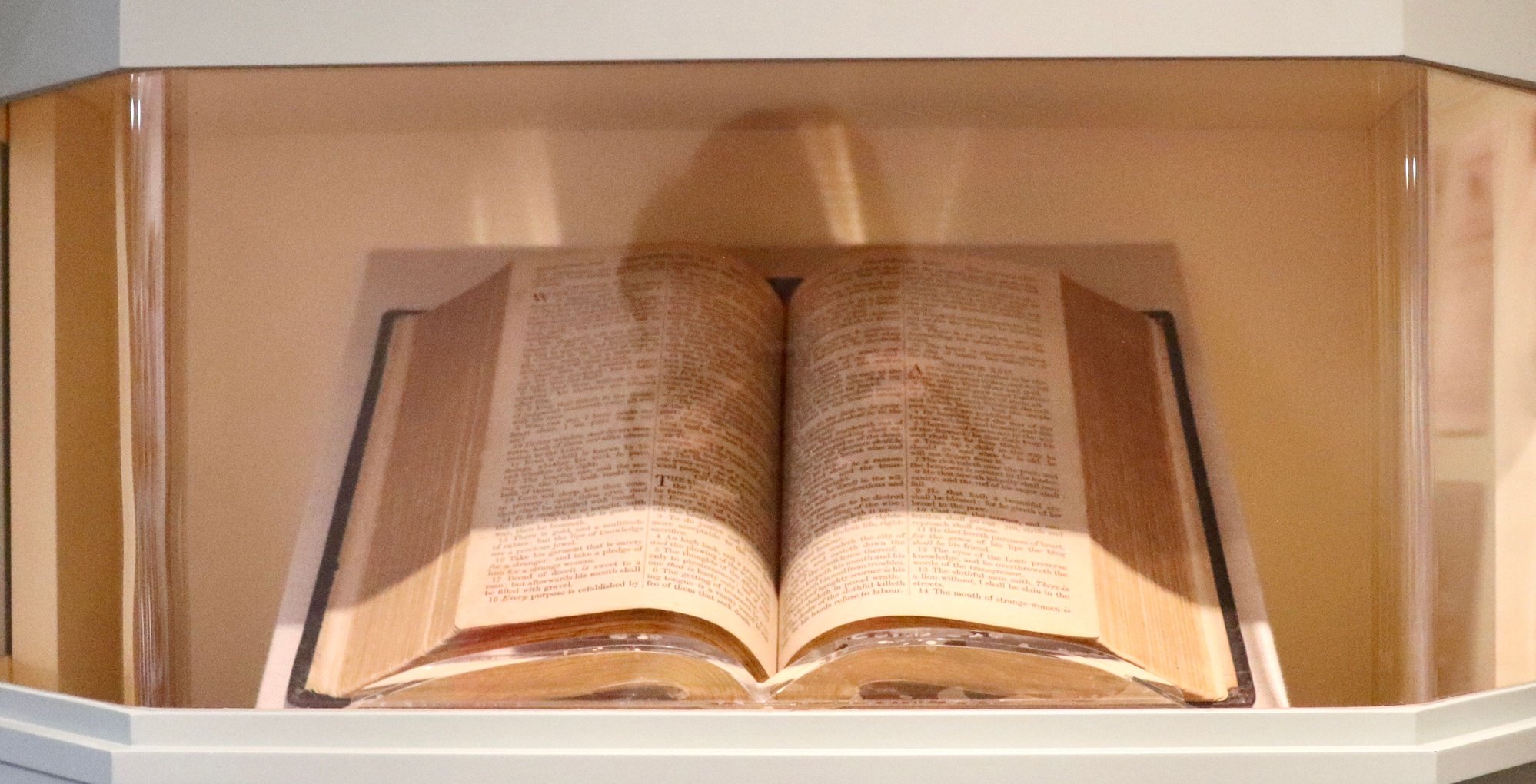
The Bible upon which Andrew Johnson was sworn in as President following Lincoln's assassination.
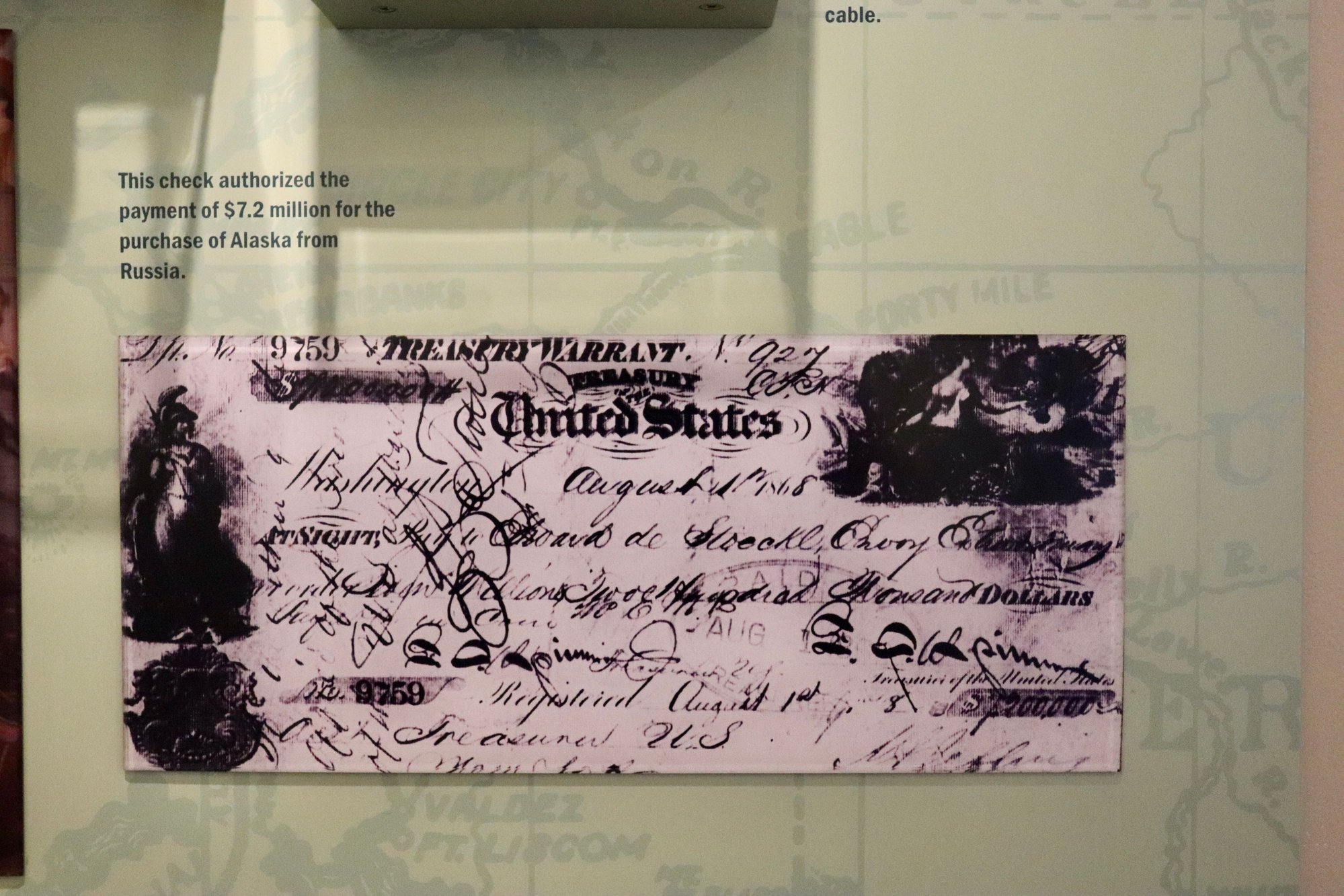
Under Johnson's tenure as President the Alaskan Territory was purchased, though considered a folly by some at the time.
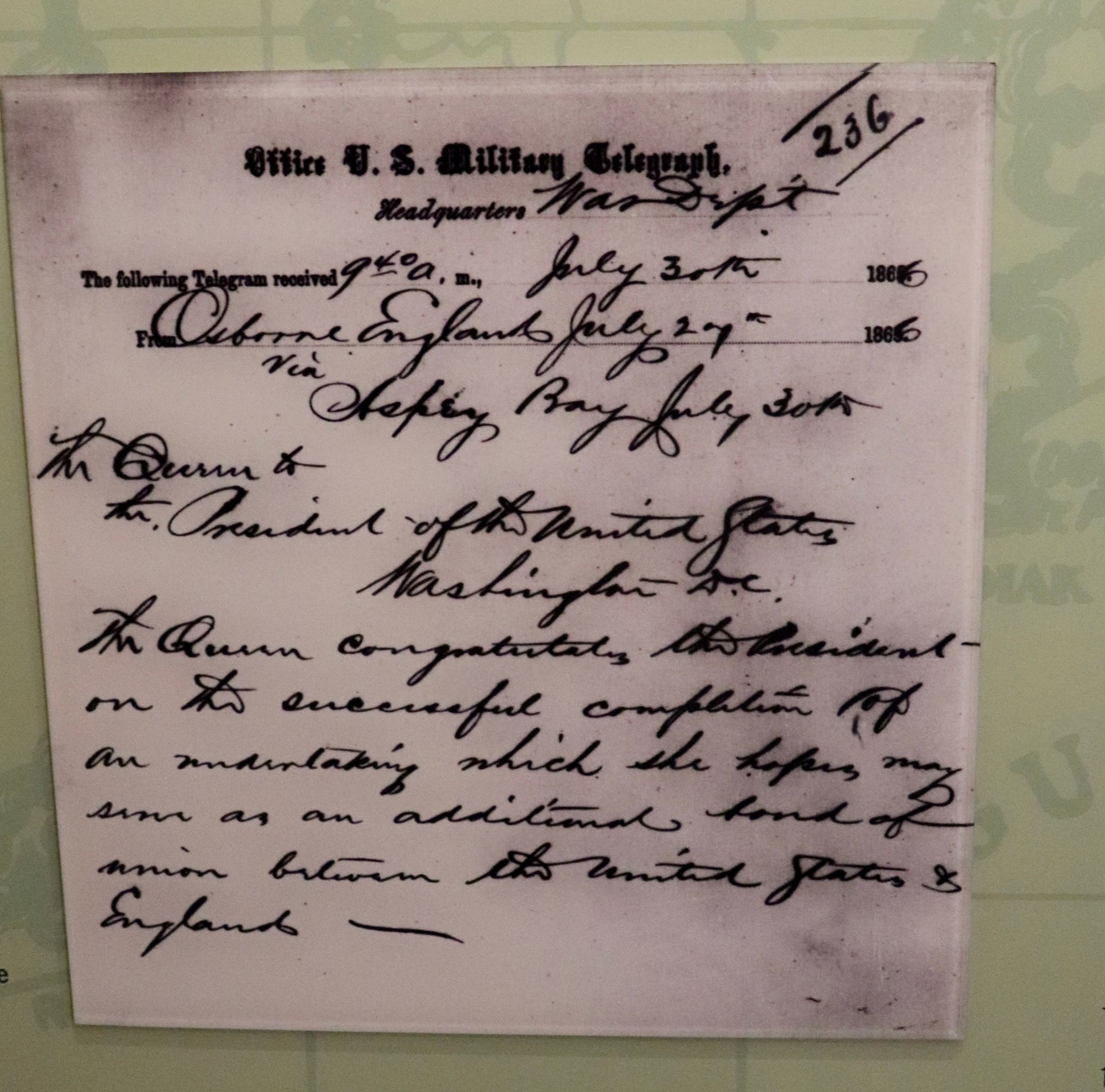
President Johnson and the Queen of England exchanged kind words of unity via the first Transatlantic Cable.
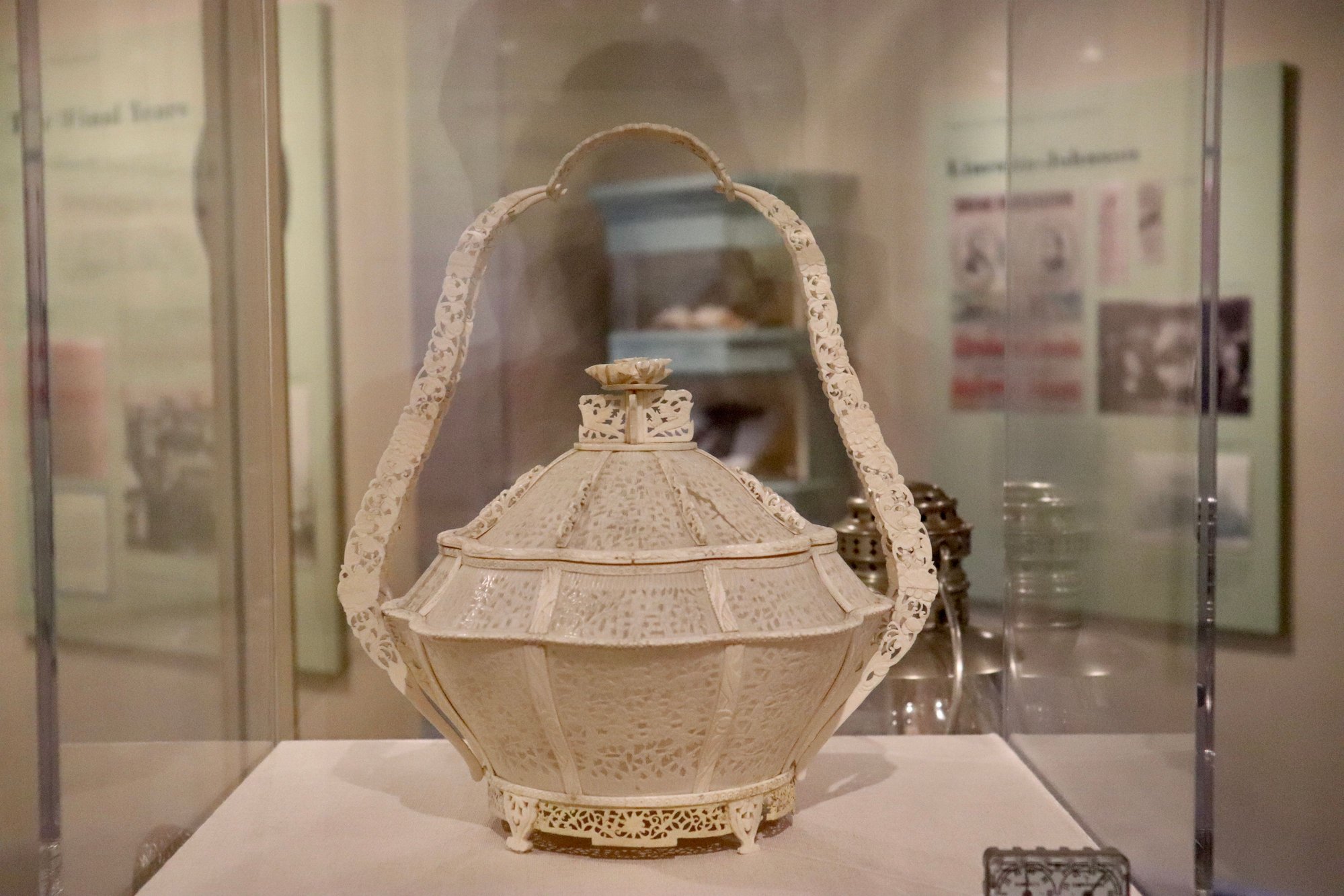
Johnson was the first president to host a visit by a Queen in the White House, Queen Emma Kalanikaumakaʻamano Kaleleonālani Naʻea Rooke of Sandwich Island, now Hawai'i. (Try saying that name three times in rapid succession.) She brought a lovely ivory basket as a gift.
But the love was just not there for Johnson and his plans for Reconstruction. Impeachment and acquittal followed for our 17th President.
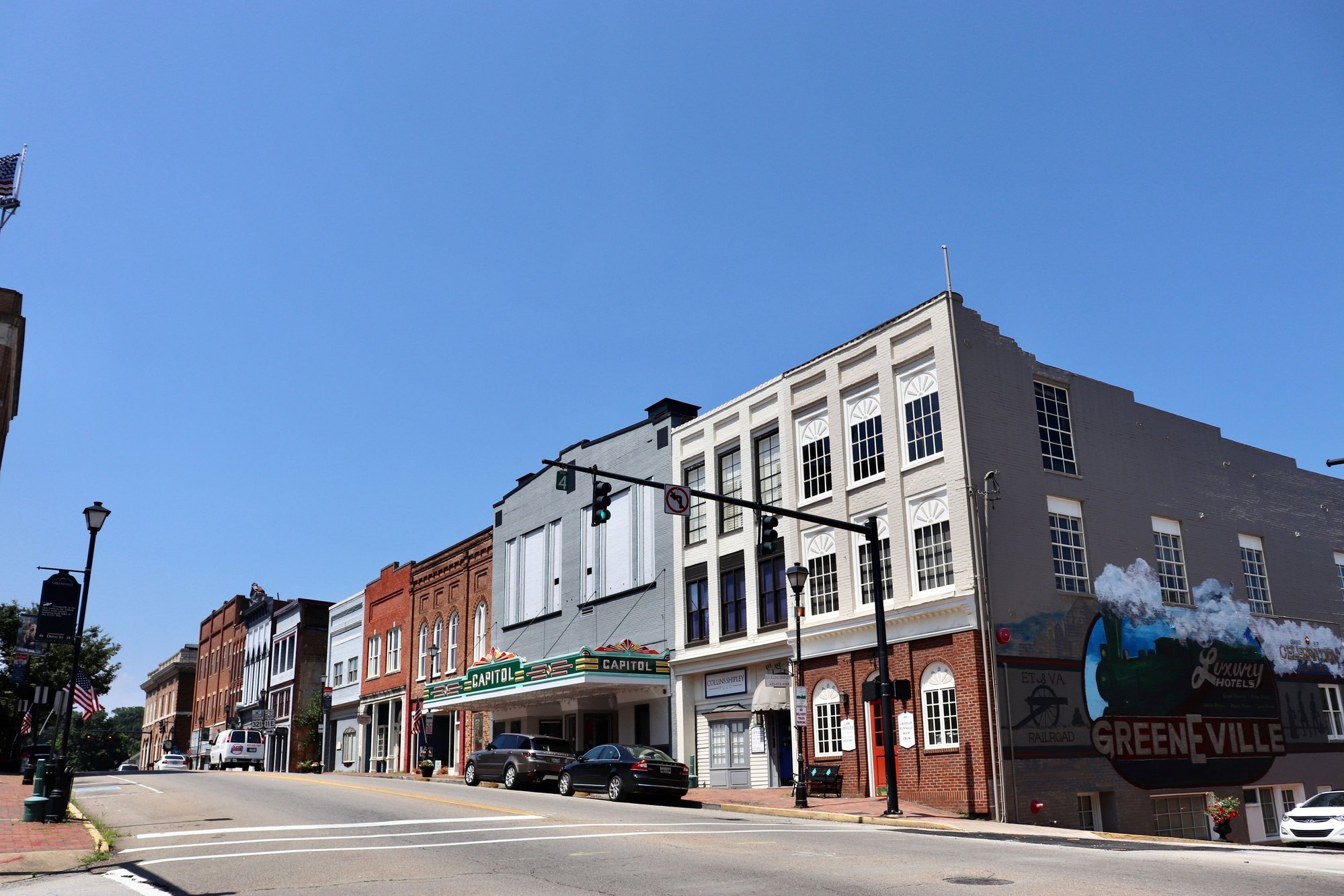
The Johnson familial homestead was not open for touring, but you know what the interior of these homes look like. We wandered the historic downtown of Greeneville, pretty enough but terribly quiet on our visit.
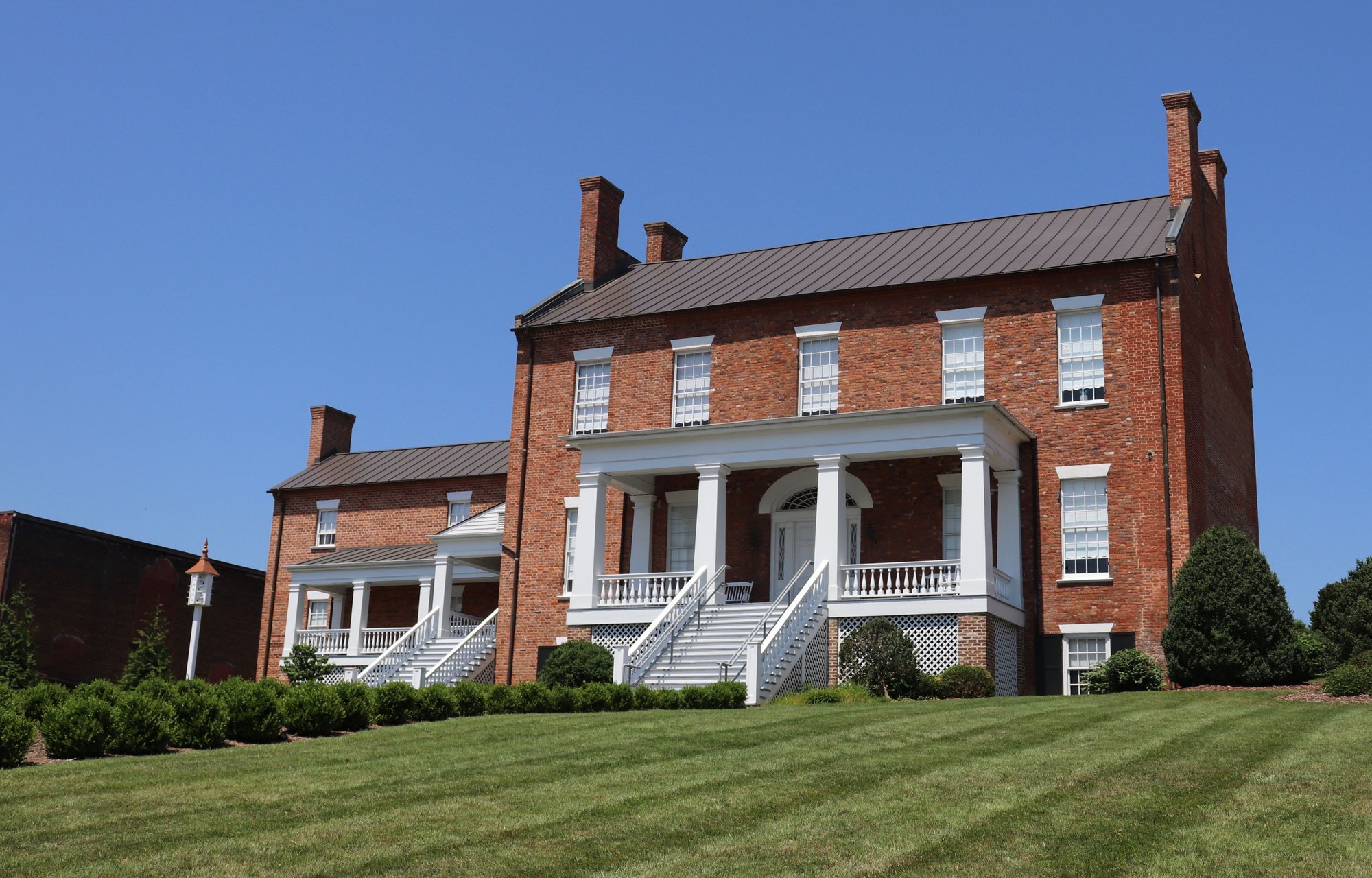
The Dickson-Willams Mansion is a gorgeous example of Federal architecture, though it, too, was not open for touring. During the Civil War it housed both Union and Confederate officers, most famously the Confederate General John Morgan, who was killed in the garden. Greeneville's stately hotel is named for him, so I suppose that if and when cancel culture ever reaches these parts, there's enough history around here to keep the revisionists busy for weeks.
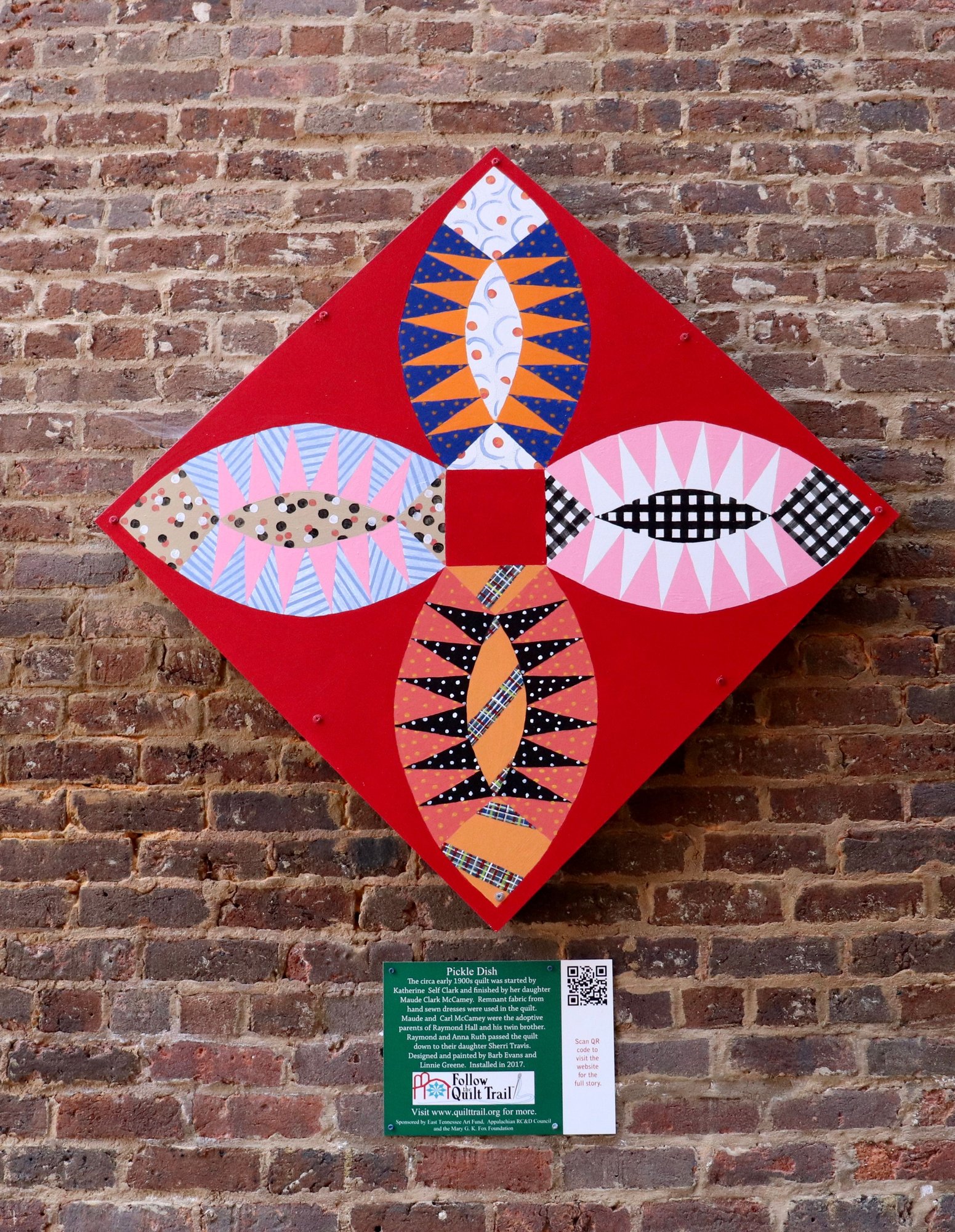
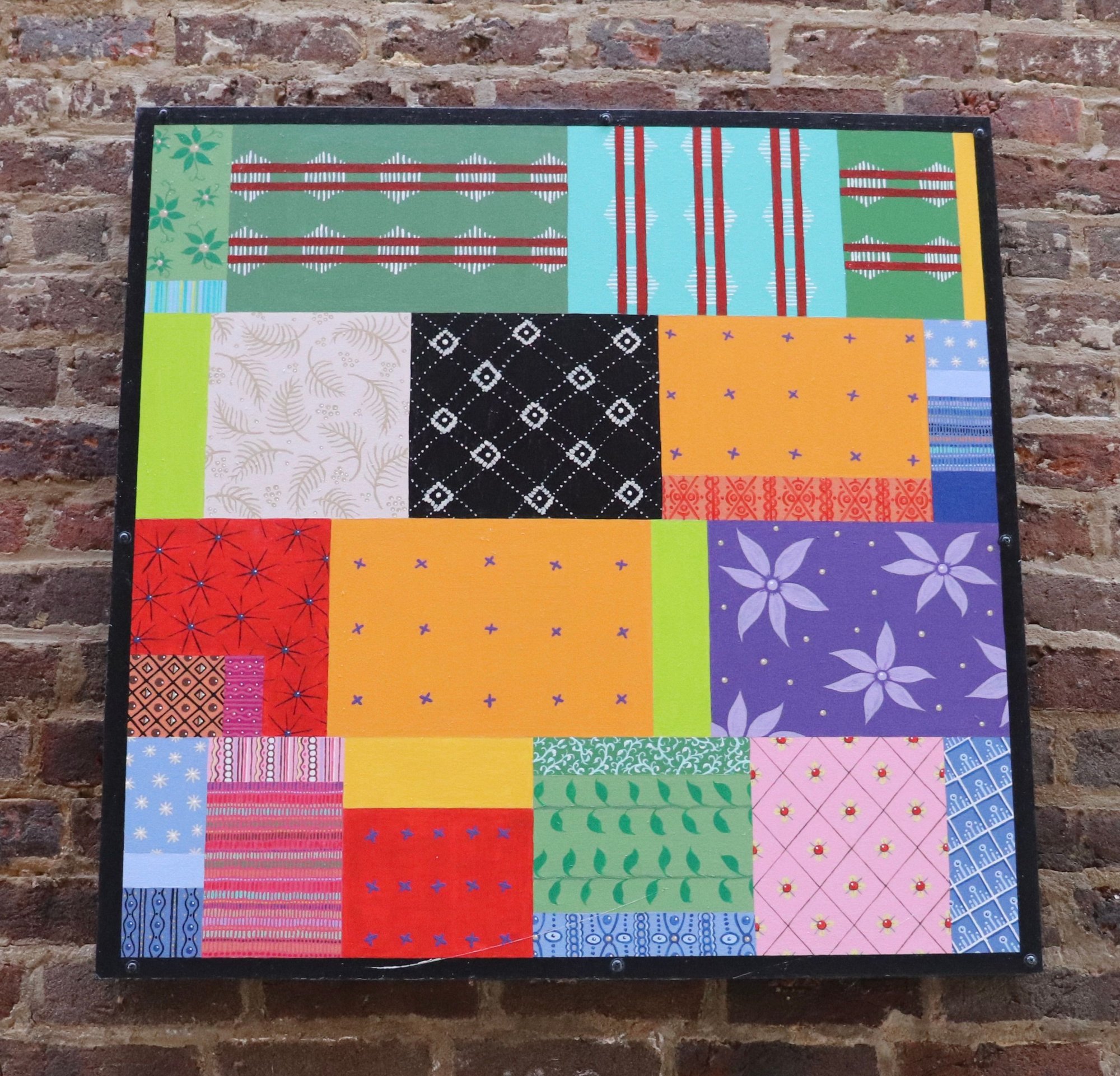
Greeneville, with all of its history, is also a town along Tennessee's Quilt Trail. I liken this trail to the unmarked Kunst am Bau that I would stumble upon serendipitously while out and about in Vienna. There is no map, there is no city-managed list from which I can plot my outings. I just have to stumble upon them, and stumble upon them we did in spades here.
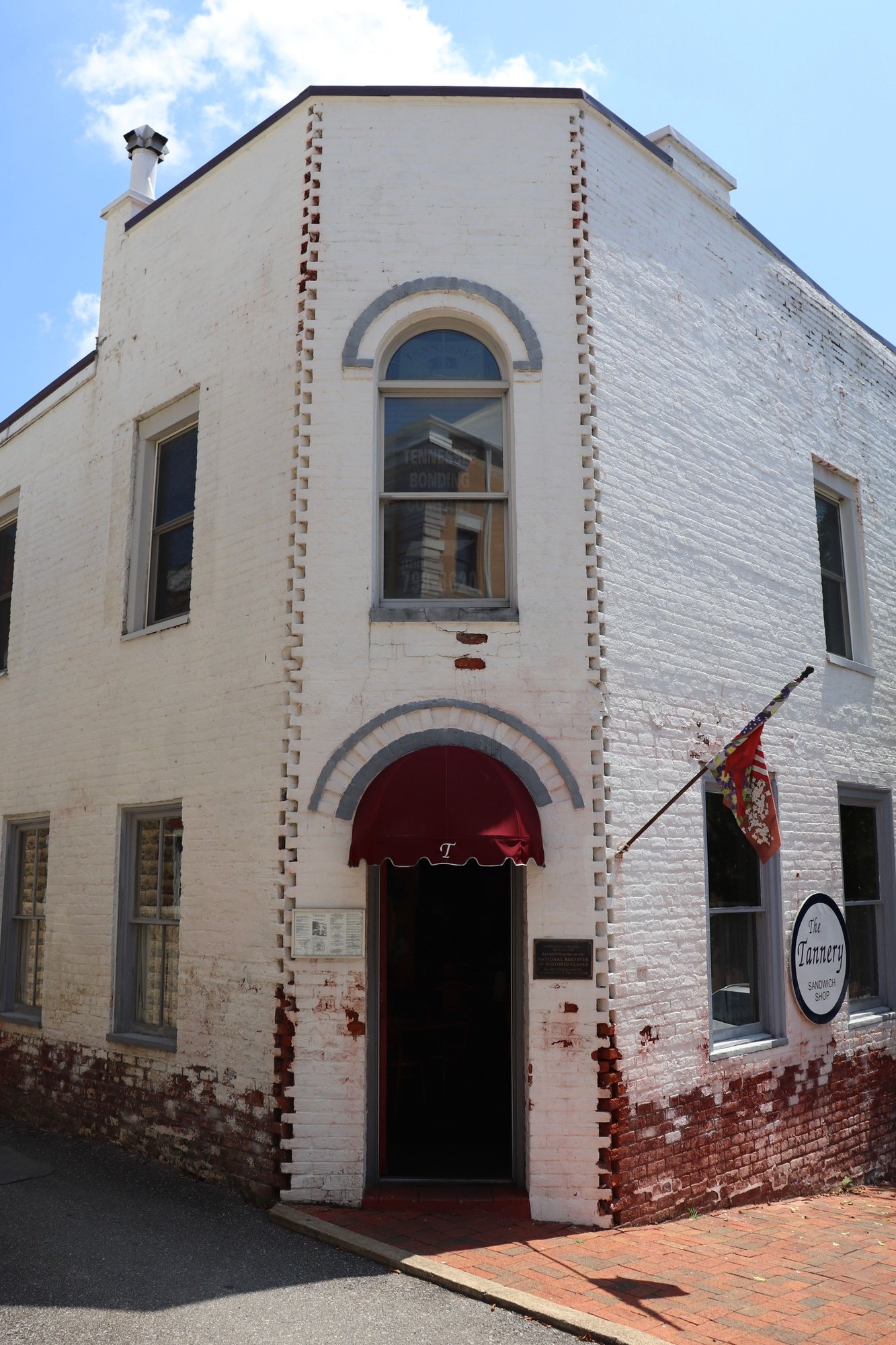
A dog-friendly former Tannery (on the National Historic Register) turned eatery for lunch. Fab sandwiches for us and love for our Hound.
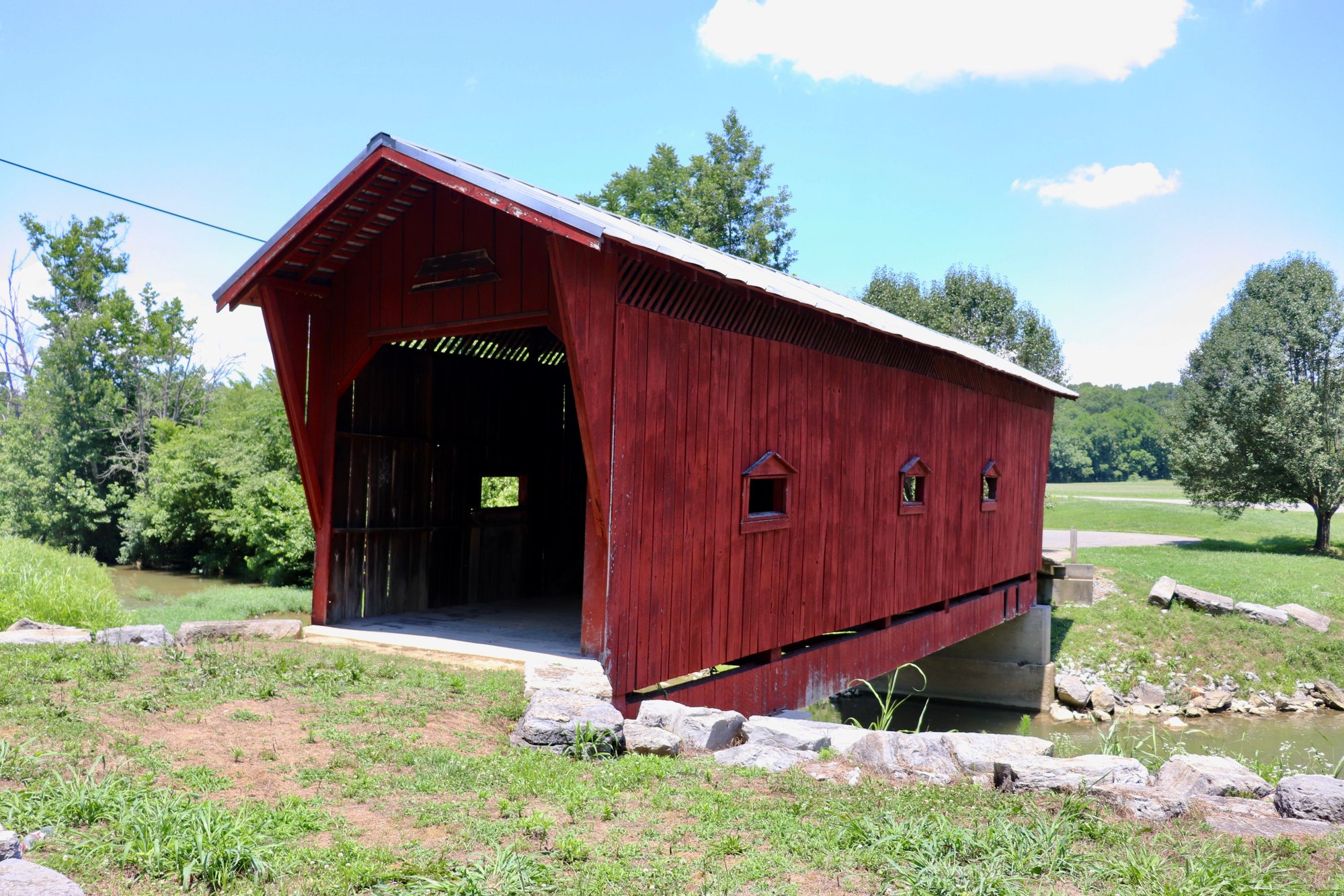
En route to our own homestead after this history-dense outing, a pass by the Bible Covered Bridge. Nothing religious, just a pretty and well-constructed bridge built by E.A. Bible in 1932 as a private traverse to serve their farmer and one of just 6 in the state.
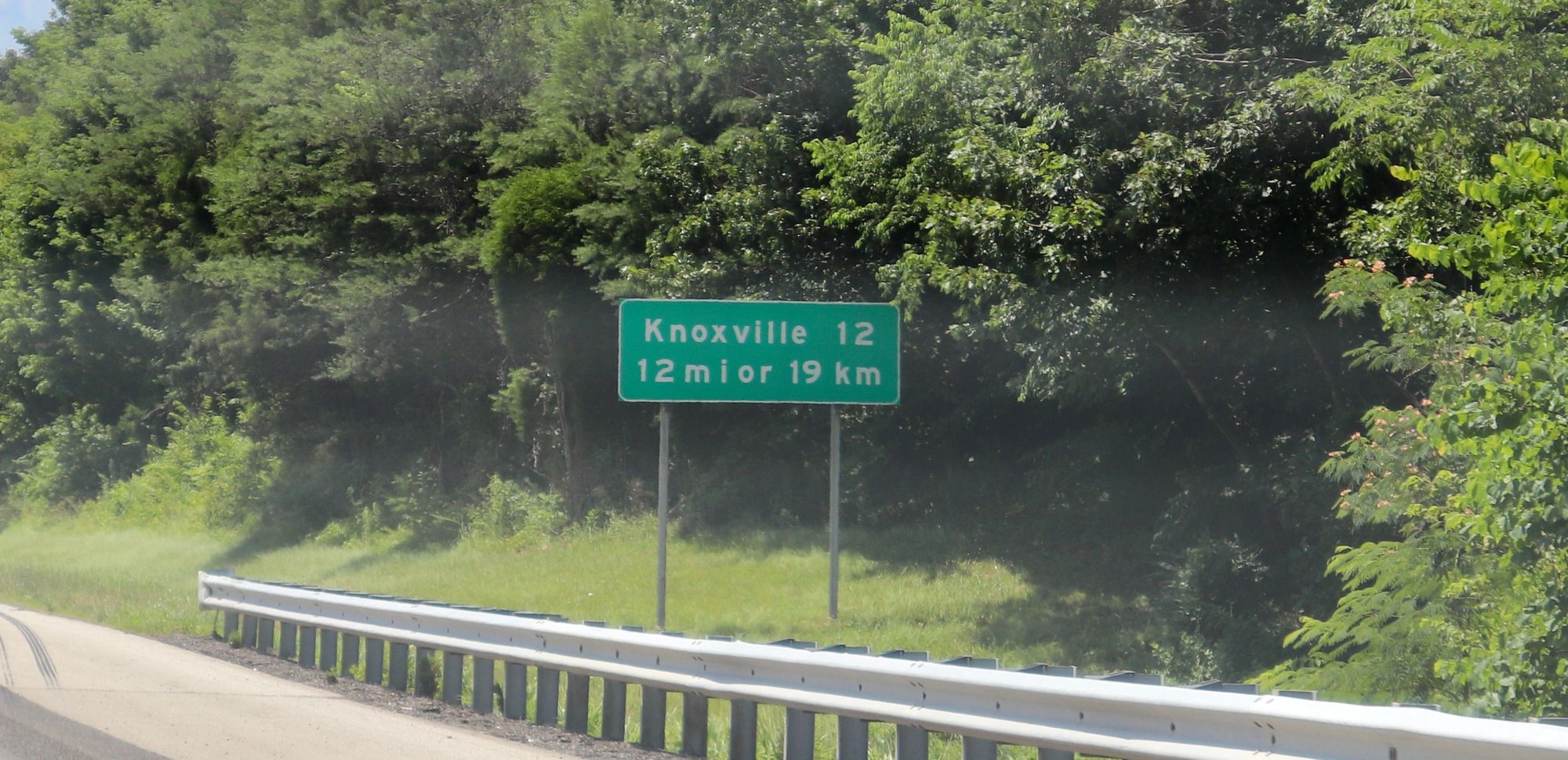
In contemporary history, a hangover from the 20th century attempt to convert highway signs from Imperial to Metric units. That never caught on, and TDOT never saw fit to remove the signs. Given that the settings in my wagon are Metric, this is the only sign I understand.
Thank you for reading.
Oh, Tennessee's oldest college and a covered bridge, too.
Oftentimes in Central Europe we would explore smaller, sleepier towns or villages when they had a "special offer" on, like a festival or holiday market; and that has remained a guiding sightseeing principle here in East Tennessee. Up in the northeast corner of the state there is a cluster of historic towns, each worth a visit. "The Plan" had been to explore each during their "special offer" but then, pandemic.
So we threw a virtual dart at the map one day and it landed on Greeneville. With an "E," the only Greeneville in the U.S. spelled so. In case you wondered, the other 34 Greenville's across America are short one "E." Greeneville is named for Nathanael Greene, a Revolutionary War General...from Rhode Island. Makes complete sense.
We began our tour chronologically with The Lost State of Franklin. In the post-original Brexit years it was not a given that states would necessarily default and join the United States. Feeling that they were a separate people (being west of the Appalachians) from North Carolina, of which they were a part, the good people declared their independence. From ~1784-1789 Franklin encompassed a fair number of counties that were once part of North Carolina, as Tennessee did not yet exist. Of course, Franklin never really existed as a state because it was never authorized by Congress, but for four years and change its citizens fought (and died) for legitimate statehood.
(The “State” was so named for Benjamin Franklin as a ploy to get his buy-in, even had a State House in Greeneville. Spoiler: Ben never approved.)
How did this autonomous zone come to be? The story goes that Franklinites were concerned that North Carolina had given their territories to Congress as a way to pay off NC's Revolutionary War debts, so they attempted to secede. For four years or so Franklin ran a parallel government with North Carolina. Eventually North Carolina took control over Franklin again but ceded the Territory to the U.S. in 1789 when it ratified the U.S. Constitution. Seven years later this "Southwest Territory" and then some would become Tennessee in 1796.
The creation of Franklin was novel in that it resulted from both a cession (an offering from North Carolina to Congress) and a secession (seceding from North Carolina, when its offer to Congress was not acted upon and the original cession was rescinded.) Not to mention it being a not so subtle hint that the Founders needed to pay more attention to the "West."
Two years before Statehood was bestowed upon the Volunteer State, however Tusculum University was founded just outside of Greeneville. It is Tennessee's oldest institution of higher learning, established by Scots-Irish ministers to educate settlers of the American frontier.
Fast forward to the 1820s. A young and uneducated apprentice named Andrew Johnson moved from Raleigh to Greeneville to establish himself as a tailor. A year later he married Eliza McCardle, who taught him the Three R's. Johnson put knowledge to power to become Mayor of Greeneville, then moved into the state legislature and eventually to Congress, with a brief stint back to serve as governor of Tennessee. Abraham Lincoln named him as his Veep, and we all know how his rise to the presidency went down.
Johnson's Tailors Shop lies within his early homestead; now it is the Andrew Johnson Visitor Center. The ever-so-kindly NPS Park Ranger talked to DDog outdoors, who had joined us on this outing while we toured the Center.
The Bible upon which Andrew Johnson was sworn in as President following Lincoln's assassination.
Under Johnson's tenure as President the Alaskan Territory was purchased, though considered a folly by some at the time.
President Johnson and the Queen of England exchanged kind words of unity via the first Transatlantic Cable.
Johnson was the first president to host a visit by a Queen in the White House, Queen Emma Kalanikaumakaʻamano Kaleleonālani Naʻea Rooke of Sandwich Island, now Hawai'i. (Try saying that name three times in rapid succession.) She brought a lovely ivory basket as a gift.
But the love was just not there for Johnson and his plans for Reconstruction. Impeachment and acquittal followed for our 17th President.
The Johnson familial homestead was not open for touring, but you know what the interior of these homes look like. We wandered the historic downtown of Greeneville, pretty enough but terribly quiet on our visit.
The Dickson-Willams Mansion is a gorgeous example of Federal architecture, though it, too, was not open for touring. During the Civil War it housed both Union and Confederate officers, most famously the Confederate General John Morgan, who was killed in the garden. Greeneville's stately hotel is named for him, so I suppose that if and when cancel culture ever reaches these parts, there's enough history around here to keep the revisionists busy for weeks.
Greeneville, with all of its history, is also a town along Tennessee's Quilt Trail. I liken this trail to the unmarked Kunst am Bau that I would stumble upon serendipitously while out and about in Vienna. There is no map, there is no city-managed list from which I can plot my outings. I just have to stumble upon them, and stumble upon them we did in spades here.
A dog-friendly former Tannery (on the National Historic Register) turned eatery for lunch. Fab sandwiches for us and love for our Hound.
En route to our own homestead after this history-dense outing, a pass by the Bible Covered Bridge. Nothing religious, just a pretty and well-constructed bridge built by E.A. Bible in 1932 as a private traverse to serve their farmer and one of just 6 in the state.
In contemporary history, a hangover from the 20th century attempt to convert highway signs from Imperial to Metric units. That never caught on, and TDOT never saw fit to remove the signs. Given that the settings in my wagon are Metric, this is the only sign I understand.
Thank you for reading.


 Aug 15th, 2020 | 01:28 PM
#6
Original Poster
Joined: Nov 2006
Posts: 3,050
Likes: 26
Thank you all for the comments.
Not an overnight, as Greeneville is but a couple of hours from our home, so just a longer day outing. A lovely little city packed with history to visit, with more to explore in the surrounds, like David Crockett's Birthplace Museum (NPS), the trails of which we had previously hiked, and their annual festivals. Next time, of course.
Not an overnight, as Greeneville is but a couple of hours from our home, so just a longer day outing. A lovely little city packed with history to visit, with more to explore in the surrounds, like David Crockett's Birthplace Museum (NPS), the trails of which we had previously hiked, and their annual festivals. Next time, of course.
Trending Topics
Aug 16th, 2020 | 02:54 PM
#8
Original Poster
Joined: Nov 2006
Posts: 3,050
Likes: 26
 Aug 19th, 2020 | 10:03 AM
#9
Joined: Feb 2003
Posts: 3,013
Likes: 0
Thanks for the great trip report. I have been to Greeneville a few times on business but have never had (or taken) time to explore.
Here is a great guide to TN quilts.
https://arcd.org/quilt-trail/
Here is a great guide to TN quilts.
https://arcd.org/quilt-trail/
Nov 7th, 2020 | 03:54 PM
#10
Joined: Oct 2010
Posts: 2,390
Likes: 0
I live so close to this town - about 45 minute away. There is the Niswonger performing arts center in Greeneville that offers some fun older musical groups. Jonesborough is another great little town that is about 30 minutes from Greeneville. Both towns have so much to offer! The National Storytelling Festival is held every year (minus this one ) in Jonesborough - great fun! I am glad you enjoyed a little bit of my part of the state!
) in Jonesborough - great fun! I am glad you enjoyed a little bit of my part of the state!

Thread
Original Poster
Forum
Replies
Last Post
Cholmondley_Warner
Europe
10
May 12th, 2008 05:39 AM
Susan
United States
14
Jan 14th, 2003 03:51 PM


