


April 2025: From Tokyo to Kyoto - there and back again
 May 24th, 2025 | 05:52 AM
#1
Original Poster
Joined: Jul 2008
Posts: 191
Likes: 0
April 2025: From Tokyo to Kyoto - there and back again
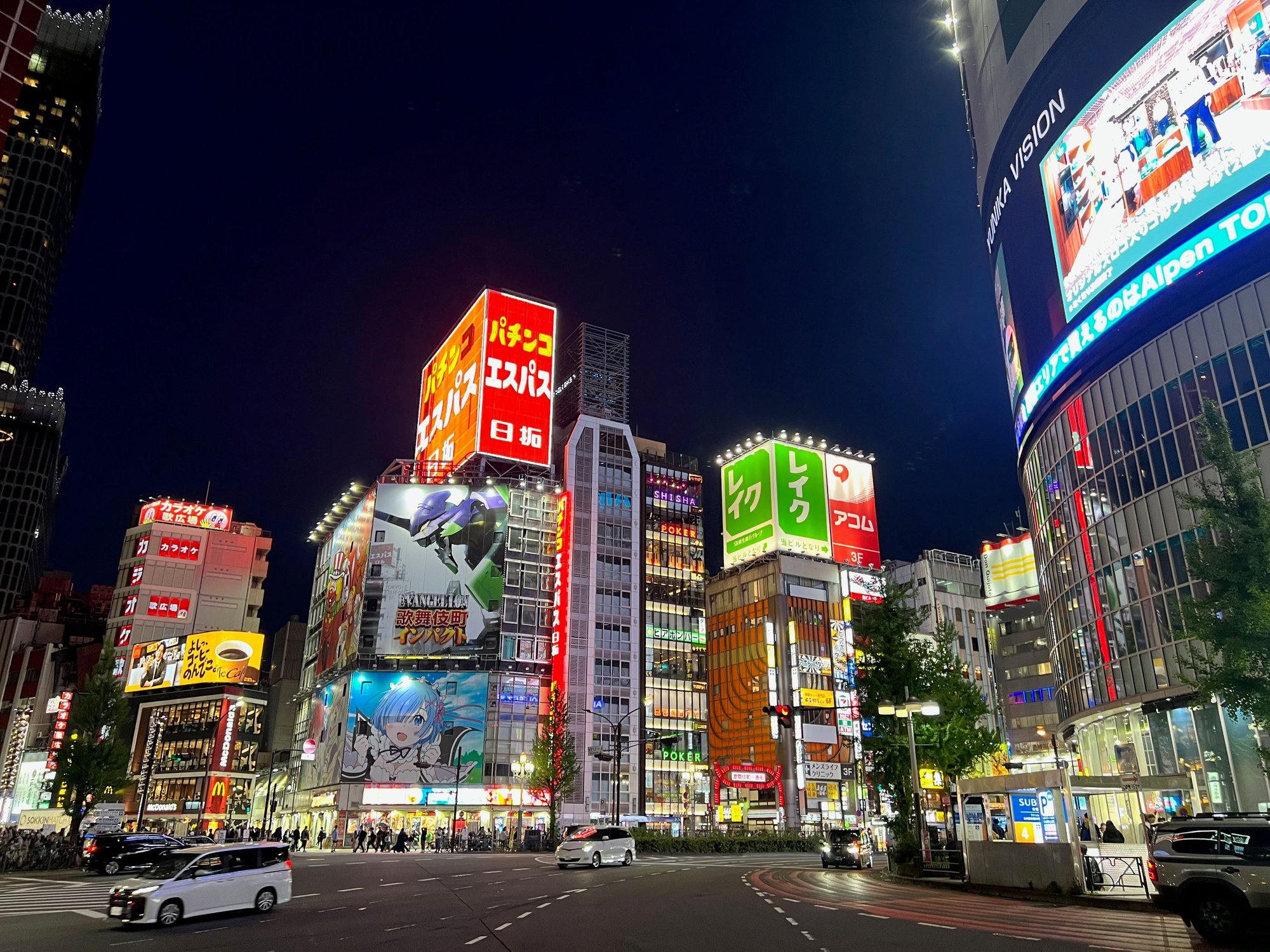
Shinjuku, Tokyo
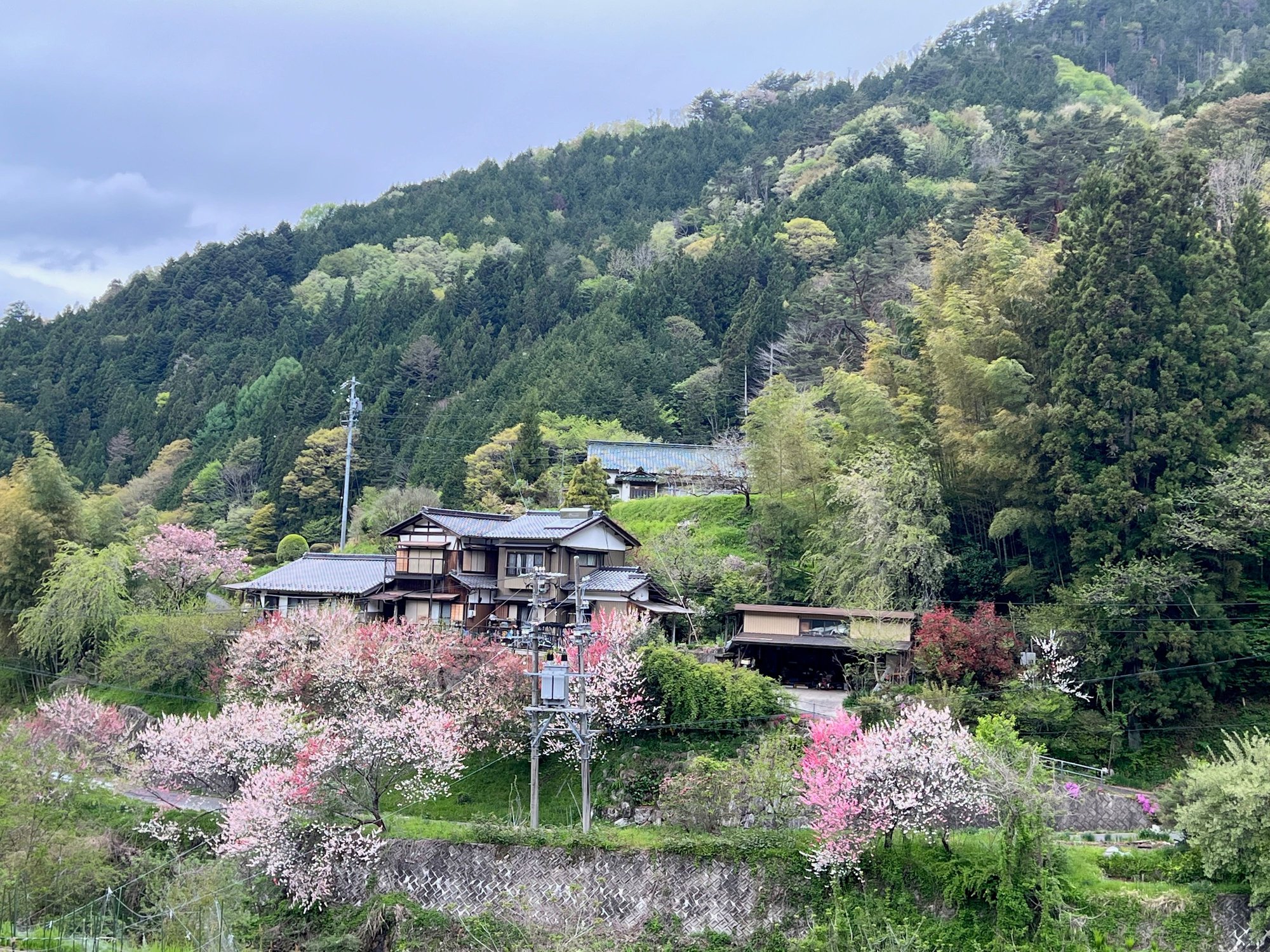
Cherry blossoms in the Kiso Valley
DH and I recently returned from our trip to Japan. The impetus for finally visiting came from my college classmate who now lives in New Zealand. She What’sApped a group of classmates to say “Hey, let’s get together on this walking tour of the Nakasendo Way in Japan!” She had already put down a deposit with Life’s An Adventure (LAA) - an Australian based travel company that offers supported walking tours. Surprisingly, DH said “Let’s do it!” with no hesitation. For years we had both been resistant to visiting Japan because of prior not so stellar experiences. As a pre-teen, my family had a layover in Tokyo on our way to Korea. All I can remember is being trapped in a cab while we slowly traversed what felt like the entire length of Tokyo during rush hour. The pollution, the hordes of commuters at every crosswalk made me want to scream and run away never to return to Japan ever again. In 2012, DH had travelled with our college age daughter for a quick visit to Seoul, Hong Kong and Tokyo. His overriding memory of Tokyo was of being trapped at the hotel waiting for DD to wake up each day and then not having much time to explore.
Of course, our attitude towards visiting Japan changed once we started to see the recent travel photos from family and friends. Tokyo, Kyoto, Osaka, Hiroshima, Naoshima Island, Hokkaido, all beckoned invitingly. In the end, my classmate’s invitation hit at the right moment and we put our deposit down and started planning.
The Nakasendo Way or The Way of the Samurai runs between Tokyo and Kyoto through the Japanese Alps and the Kiso Valley. My husband and I are not big time hikers and this supported walk seemed like the perfect solution as LAA drops you and your guides off at the trailhead and picks you up to take you and your luggage to the next ryokan or hotel. Previously I had had aspirations to walk the Kumano Kodo - a famous pilgrimage trail. However, the more I read about it the more I realized that it was probably too strenuous for me and DH. The Nakasendo Way was much gentler and reasonable for us. My classmate had already signed up for a Kyoto to Tokyo run and a group of us jumped in and signed up for that same tour. Later we realized that maybe our timing wasn’t the most ideal as we were on the trail during Japan’s Golden Week (more on that later.) On the other hand, though we missed the traditional cherry blossom season we also missed some of the more massive crowds of tourists in the cities. And as you can see in the photo above, we were gifted the surprise bonus of seeing cherry blossoms in the mountains!
Anyway, knowing that we were going to explore the Japanese countryside provided some structure to our trip. We had some time constraints and could only plan on a 2 week visit. Thus, we decided to fly into Tokyo to explore for a few days, then hop on the Shinkansen to explore Kyoto for a few days on our own before meeting the LAA guides for our 8 day walking tour back to Tokyo via the Nakasendo Way. With this itinerary we were able to experience the fascinating contrast of both urban and rural Japan.
Our itinerary:
Day 1 - depart West Coast for non-stop flight to Haneda
Day 2 - arrive at Haneda, check-in to Hyatt Centric Ginza
Day 3 - 5 - Tokyo
Day 6 - take Shinkansen bullet train to Kyoto, check-in to Hotel Mume
Day 7-8 - Kyoto
Day 9 - Start Life’s An Adventure (LAA) tour with overnight at the Royal Park Hotel Sanjo, Kyoto
Day 10 - Overnight at Ichikawa Onsen Inn (Ena)
Day 11 - Overnight at Enakyo Onsen Hotel (Tsumago)
Day 12 - Overnight at Maruya (Otsumago)
Day 13 - Overnight at Tsutaya Inn (Kiso Fukushima)
Day 14 - Overnight at Tsutaya Tokinoyado (Kiso)
Day 15 - Overnight at Ancient Hotel (Karuizawa)
Day 16 - Arrive Tokyo, check-in to Courtyard Tokyo Station
Day 17 - evening departure from Haneda on non-stop flight back to US

Hello Kitty - Japan's iconic ambassador
Next up - Arrival to Tokyo - let the food tour begin!
 May 24th, 2025 | 11:20 AM
#2
Original Poster
Joined: Jul 2008
Posts: 191
Likes: 0
Day 2 - 10,000 steps - arrival into Tokyo
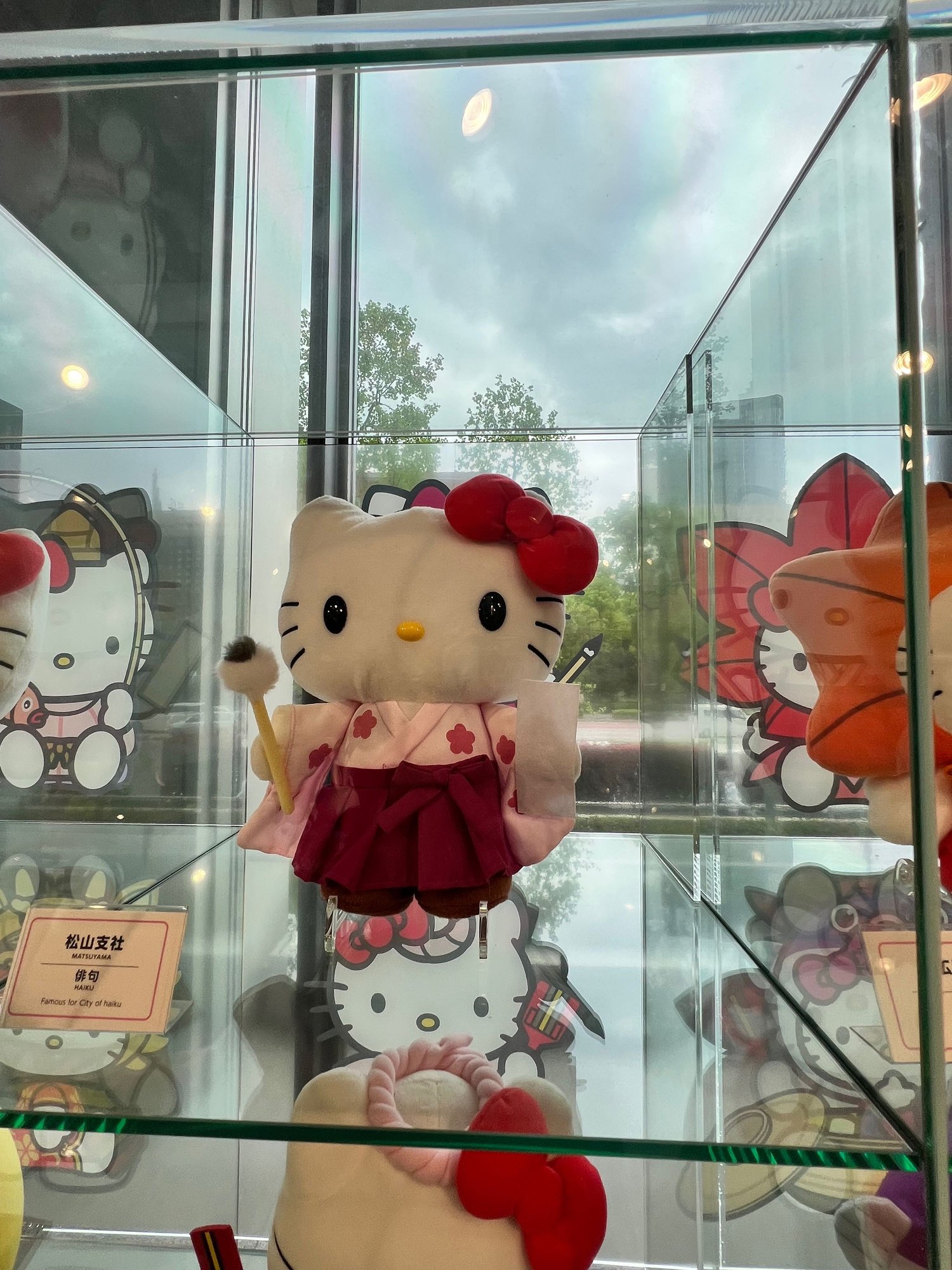
Another version of Hello Kitty
OK, you might want to skip the next paragraph as I can’t help but fixate on the logistics of entering Japan. At least here is a photo to entertain you. If you are curious about the arrival details keep reading, otherwise skip to the next photo and paragraph!
From touching down at Haneda airport to walking into our room at the Hyatt Centric Ginza, DH calculated that we spent about 3 hours on the process. Once we landed, DH noted that our plane taxied for about 15 minutes to get to the jetway. Then we walked for about 25 minutes from our gate just to get to Immigration. Even though we were one of the first off the plane we weren’t the only arriving flight. We entered the Immigration Hall to a vast Disneyland like set-up of crowd control stanchions. As we slowly wended our way through the endless line, I spent most of my time observing how many tourists were frantically scrolling through their phones trying to fill out the Japan web forms to generate a QR code in order to enter the country. I had already completed our forms before we left the US and had downloaded both screen shots and hard copy forms and was grateful that my only job was to keep pushing my suitcase along for the next 30 minutes. After getting Mt. Fuji stamped into our passports we spent another hour at the airport to withdraw yen from the ATM, run around for a while trying to find the booth to pick up my Japan Wireless pocket wi-fi device and setting it up, to finally entering one more line to get my Suica card. If you have an iPhone (like DH) you can just set it up on your phone through Apple Pay, but sadly if you have a Samsung (like I do) you have to get a physical card - unless you have a Japanese Samsung phone (which of course I do not). DH smugly sat off to the side to take a break while I stood in yet another line. Behind me a young couple asked me if this was the right line to get a Suica card as they had the exact same issue! Once I had my Welcome Suica card DH and I trundled off to the monorail and onward to get to our hotel. Using public transportation was very smooth and we had just a brief walk from the subway station to our hotel. DH kept commenting throughout the trip how much better the signage was compared to his last visit to Tokyo - there were virtually no signs in English back then. He speculated that hosting the Olympics might have provided the impetus to improving the signage.
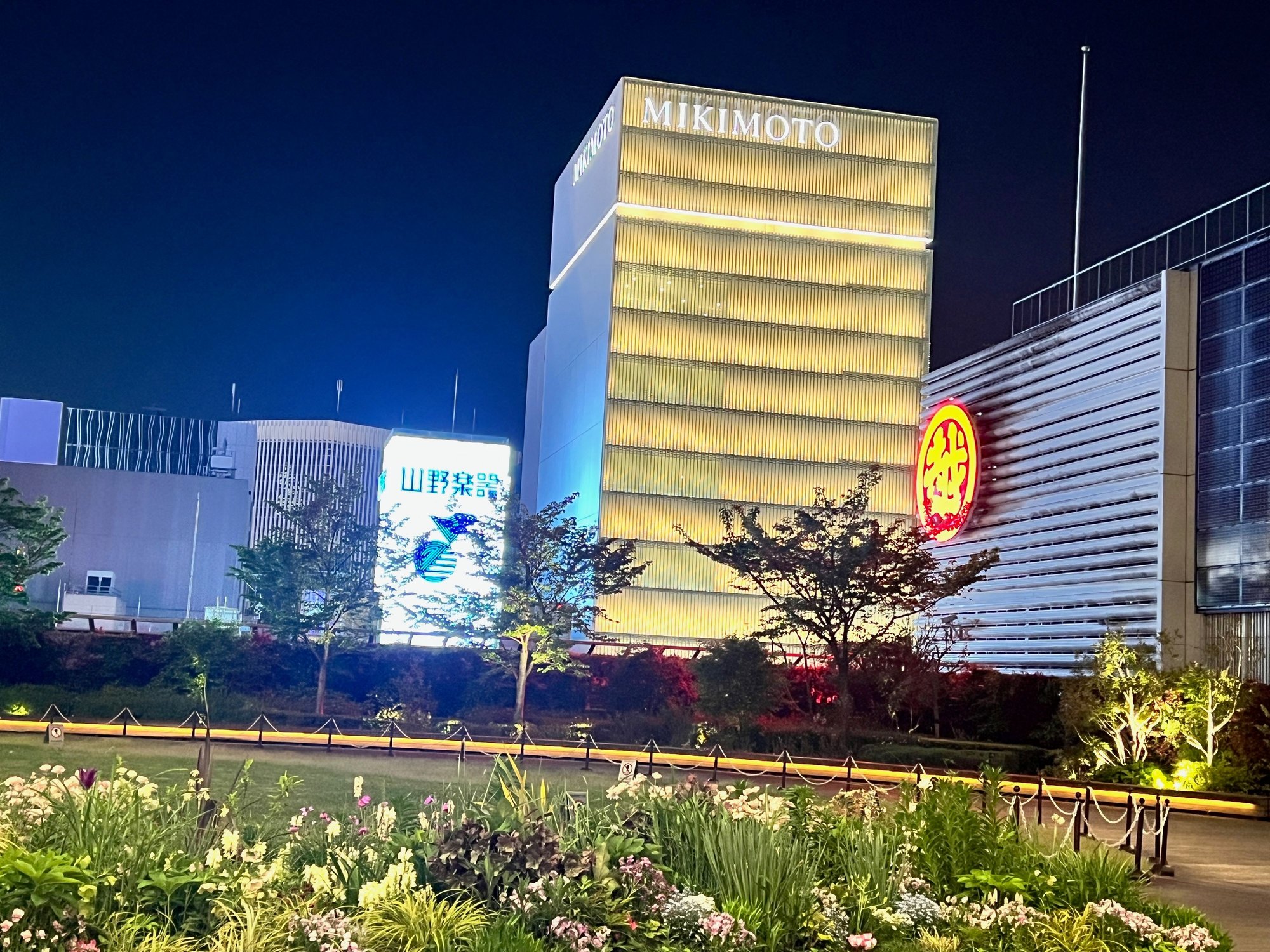
Eating dinner with a rooftop view from the Mitsukoshi Building
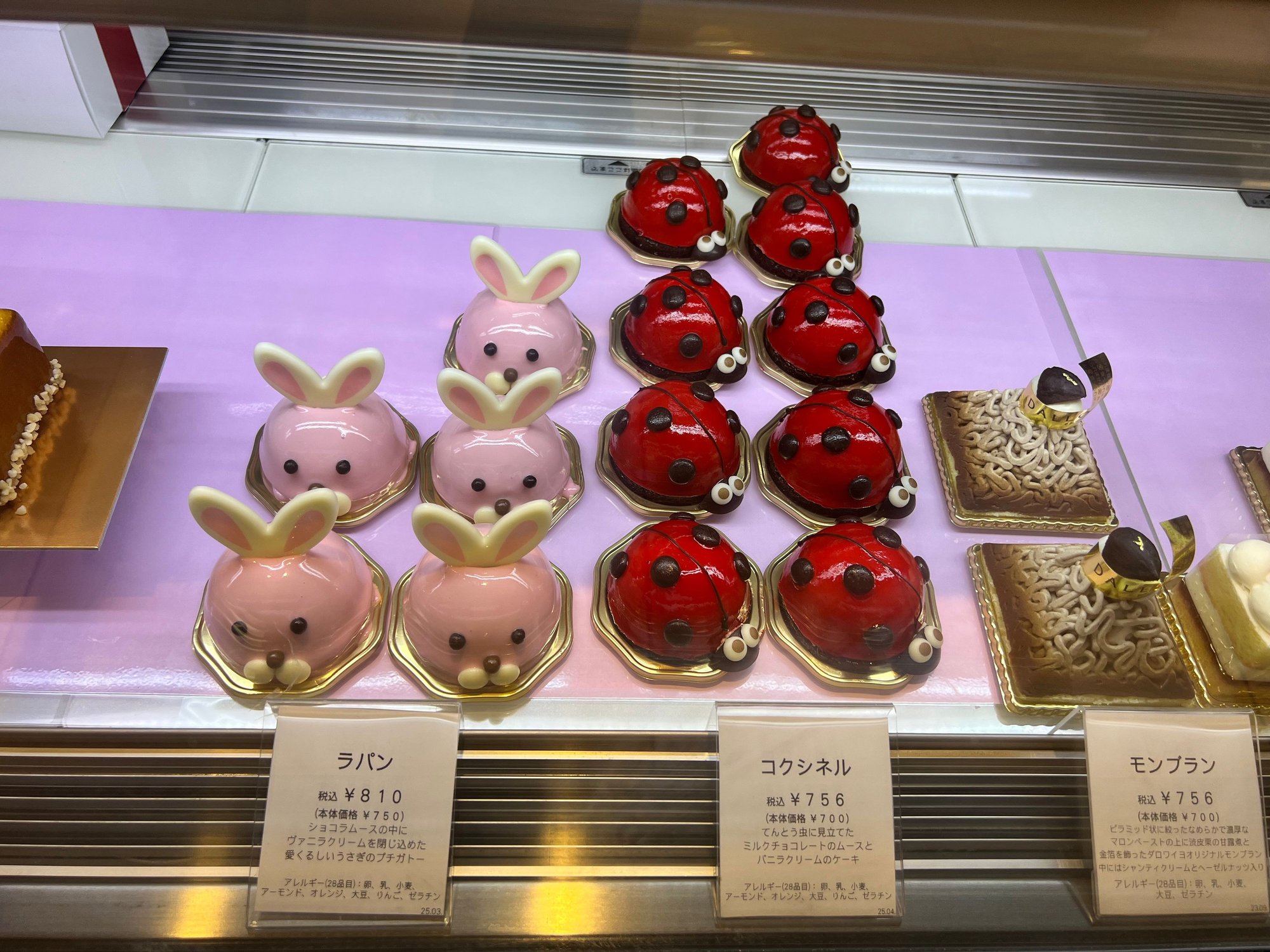
Our room at the Hyatt Centric Ginza felt surprisingly spacious and was very efficiently laid out. By this time it was past 6PM and after freshening up we took a short stroll to the nearby Mitsukoshi Ginza. Like many of the high end department stores, Mitsukoshi has a huge food hall in the basement with all sorts of ready made food for purchase. After perusing the enormous selection of food on offer, we eventually chose a simple selection of yakitori (chicken skewers), inari (seasoned rice in tofu pockets) and gyoza (Japanese version of potstickers) and took our food upstairs to the rooftop to eat. Maybe because it was the end of the day, but the rooftop area was very peaceful and calm with barely any other patrons. I realized with relief that though we were in the middle of Tokyo we were not surrounded by hordes of people. After we finished our dinner we went back to inspect the myriad of beautifully prepared desserts and selected a luscious slice of chiffon cake to take back to our room for later snacking!
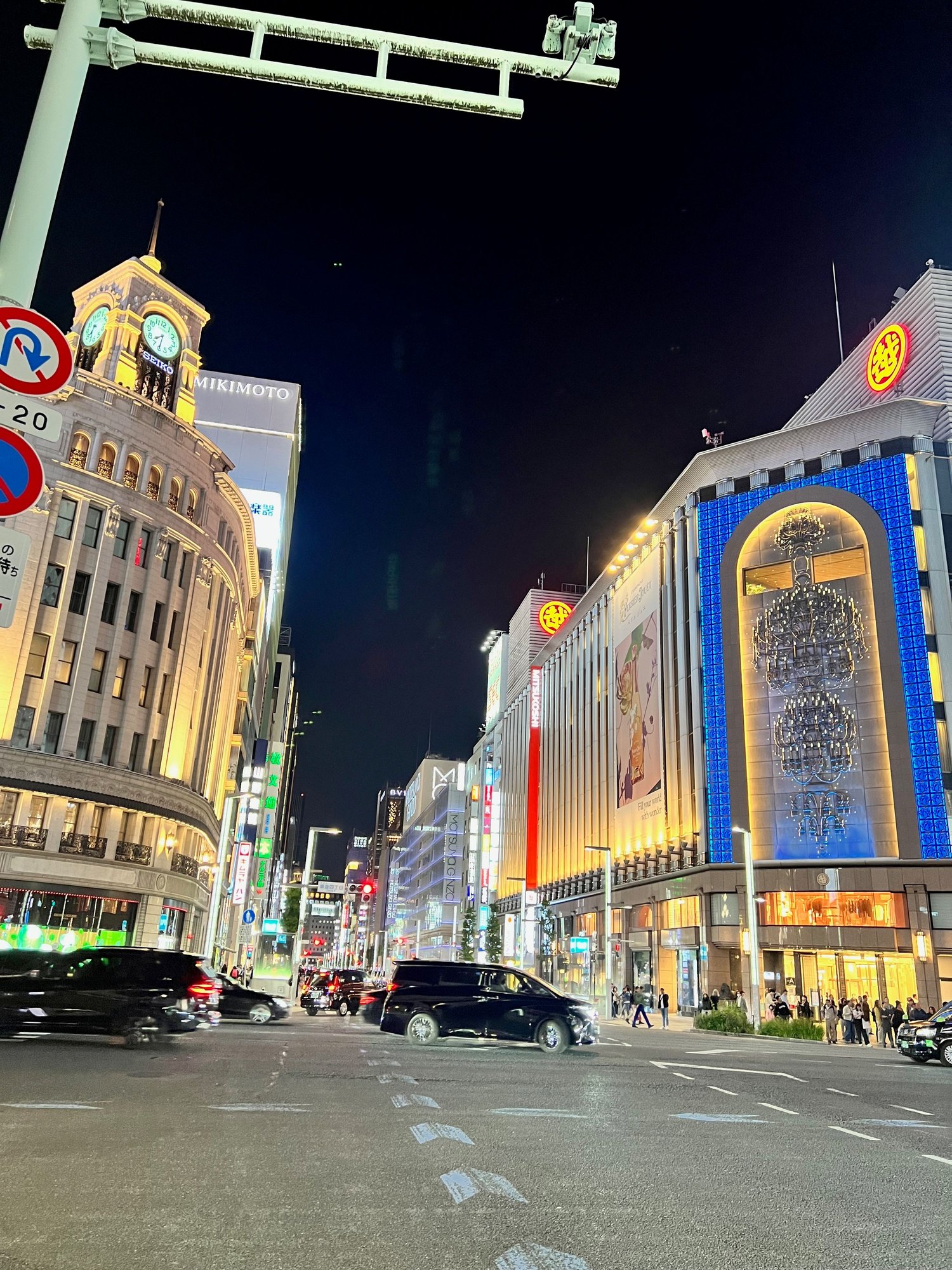
Nighttime view of the Seiko House Ginza Clock Tower
Next up - Day #3 - Walking 23,000 steps to justify eating at Chosoku Lab, Tempura Azabu Yokota AND Ginza Sand
Another version of Hello Kitty
OK, you might want to skip the next paragraph as I can’t help but fixate on the logistics of entering Japan. At least here is a photo to entertain you. If you are curious about the arrival details keep reading, otherwise skip to the next photo and paragraph!
From touching down at Haneda airport to walking into our room at the Hyatt Centric Ginza, DH calculated that we spent about 3 hours on the process. Once we landed, DH noted that our plane taxied for about 15 minutes to get to the jetway. Then we walked for about 25 minutes from our gate just to get to Immigration. Even though we were one of the first off the plane we weren’t the only arriving flight. We entered the Immigration Hall to a vast Disneyland like set-up of crowd control stanchions. As we slowly wended our way through the endless line, I spent most of my time observing how many tourists were frantically scrolling through their phones trying to fill out the Japan web forms to generate a QR code in order to enter the country. I had already completed our forms before we left the US and had downloaded both screen shots and hard copy forms and was grateful that my only job was to keep pushing my suitcase along for the next 30 minutes. After getting Mt. Fuji stamped into our passports we spent another hour at the airport to withdraw yen from the ATM, run around for a while trying to find the booth to pick up my Japan Wireless pocket wi-fi device and setting it up, to finally entering one more line to get my Suica card. If you have an iPhone (like DH) you can just set it up on your phone through Apple Pay, but sadly if you have a Samsung (like I do) you have to get a physical card - unless you have a Japanese Samsung phone (which of course I do not). DH smugly sat off to the side to take a break while I stood in yet another line. Behind me a young couple asked me if this was the right line to get a Suica card as they had the exact same issue! Once I had my Welcome Suica card DH and I trundled off to the monorail and onward to get to our hotel. Using public transportation was very smooth and we had just a brief walk from the subway station to our hotel. DH kept commenting throughout the trip how much better the signage was compared to his last visit to Tokyo - there were virtually no signs in English back then. He speculated that hosting the Olympics might have provided the impetus to improving the signage.
Eating dinner with a rooftop view from the Mitsukoshi Building
Our room at the Hyatt Centric Ginza felt surprisingly spacious and was very efficiently laid out. By this time it was past 6PM and after freshening up we took a short stroll to the nearby Mitsukoshi Ginza. Like many of the high end department stores, Mitsukoshi has a huge food hall in the basement with all sorts of ready made food for purchase. After perusing the enormous selection of food on offer, we eventually chose a simple selection of yakitori (chicken skewers), inari (seasoned rice in tofu pockets) and gyoza (Japanese version of potstickers) and took our food upstairs to the rooftop to eat. Maybe because it was the end of the day, but the rooftop area was very peaceful and calm with barely any other patrons. I realized with relief that though we were in the middle of Tokyo we were not surrounded by hordes of people. After we finished our dinner we went back to inspect the myriad of beautifully prepared desserts and selected a luscious slice of chiffon cake to take back to our room for later snacking!
Nighttime view of the Seiko House Ginza Clock Tower
Next up - Day #3 - Walking 23,000 steps to justify eating at Chosoku Lab, Tempura Azabu Yokota AND Ginza Sand

 May 24th, 2025 | 06:23 PM
#5
Original Poster
Joined: Jul 2008
Posts: 191
Likes: 0
Day 3 - 23,700 steps - Tokyo
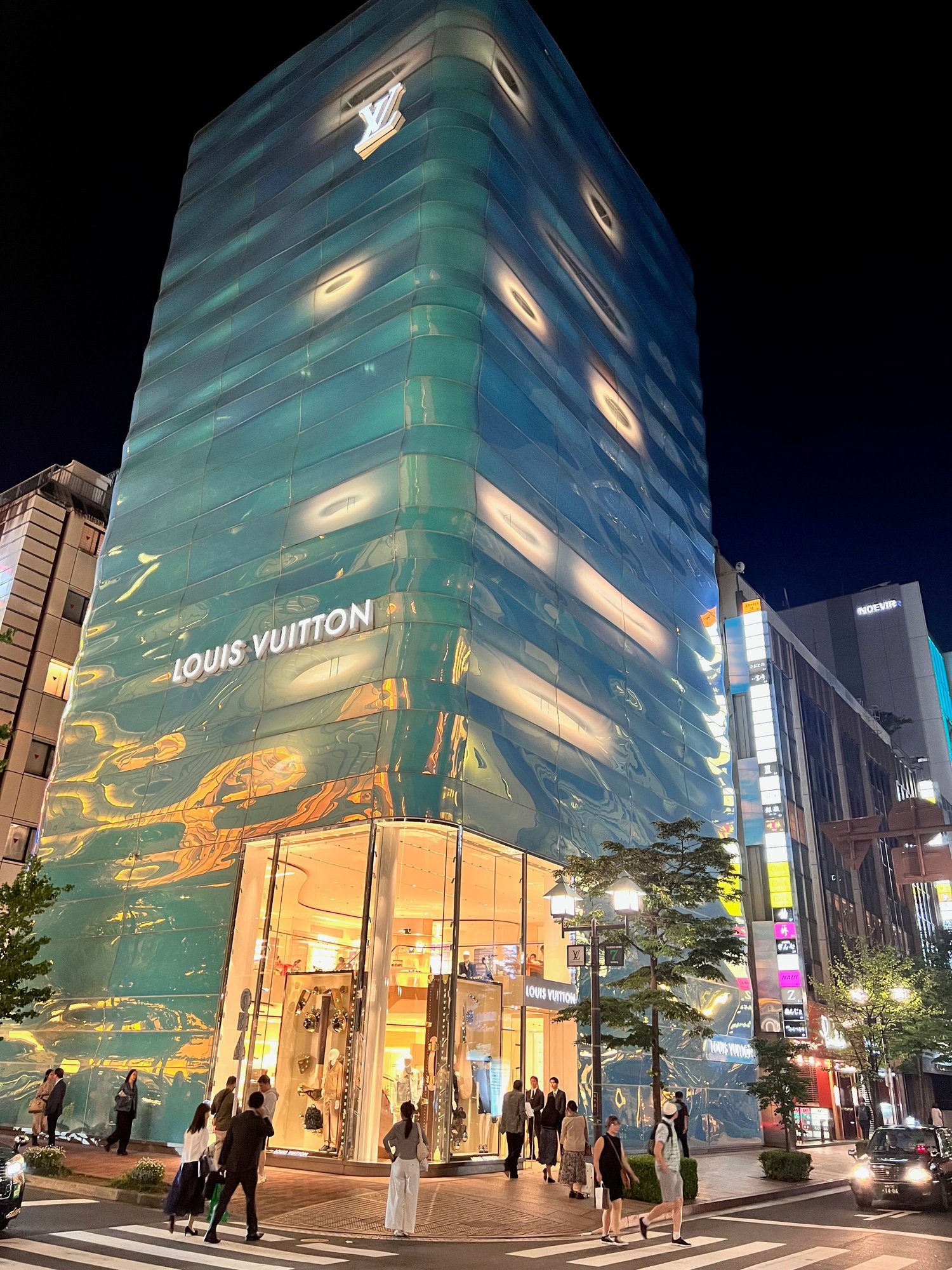
The Louis Vuitton building at night.
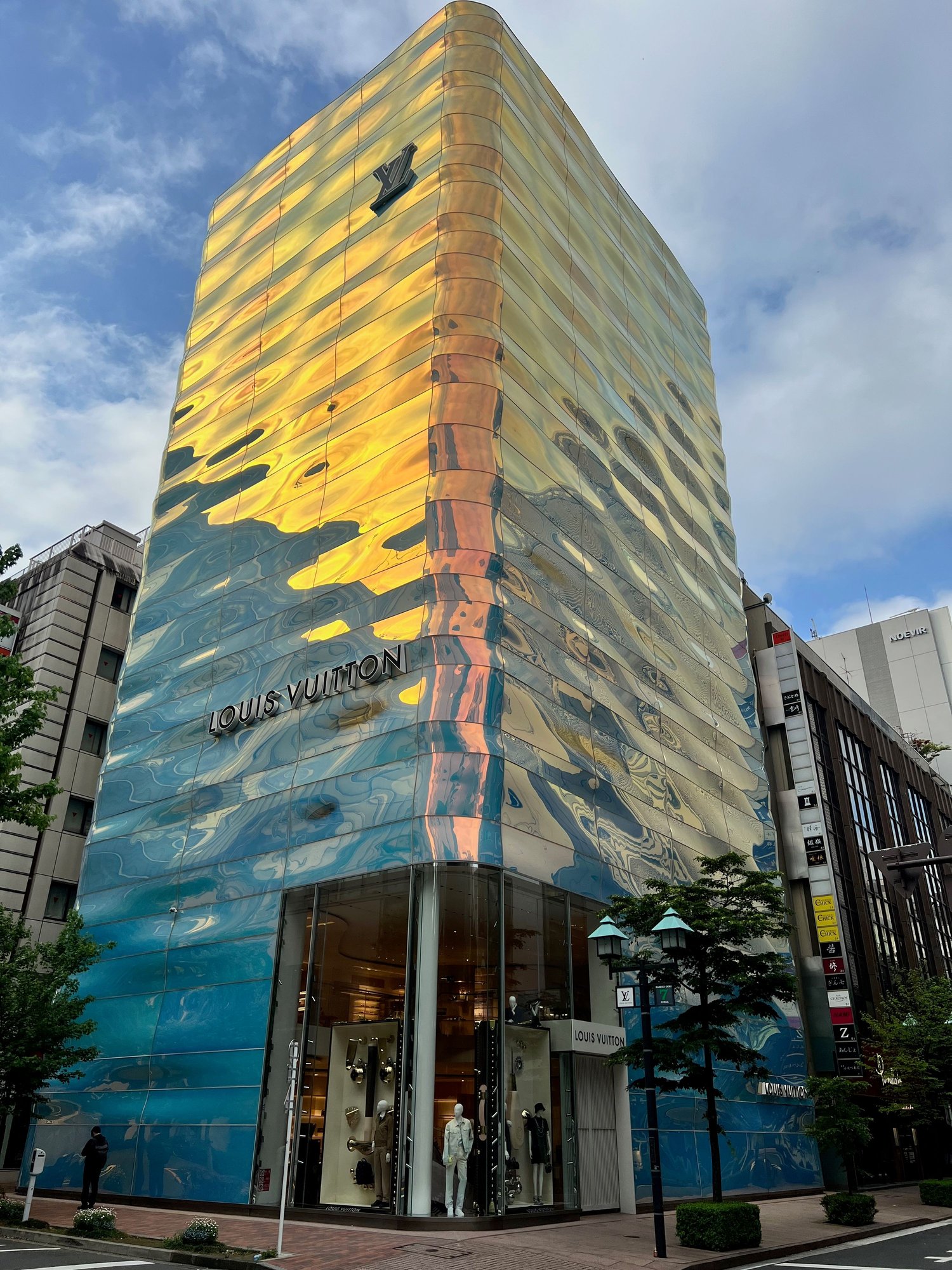
...and duriing the daytime.
On our way to our breakfast reservation we noticed that the nearby Louis Vuitton building had changed colors in the morning light. We had first noticed how cool it looked the night before and would end up checking it out every time we passed by to observe its changing appearance. Once we arrived to Ginza Chosoku Lab I discovered to my horror that I had made the reservation for the next day! However, since they had just opened for the morning they reassured me and quickly switched our reservation. And thus we began our eating odyssey through Japan (though I guess technically we had started the night before at Mitsukoshi.) At Chosoku Lab you have 50 minutes to eat from the buffet which consists of typical Japanese food items. They start you off with the 9 compartment tray. The selection of foods was varied and tasty and of course beautifully arranged.
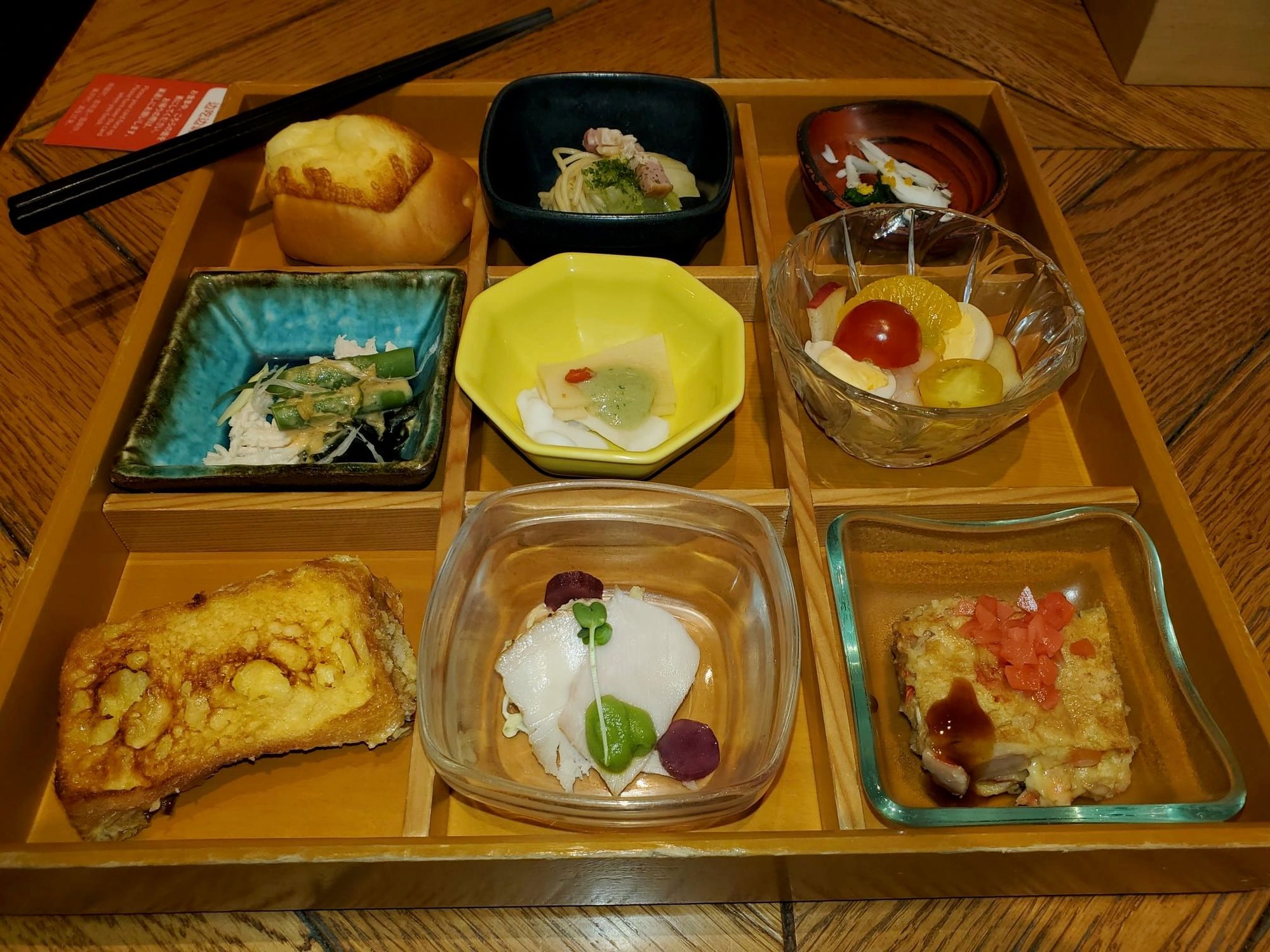
Opening round of our breakfast buffet at Ginza Chosoku Lab.
Once we finished breakfast we had just enough time before our tour of the Imperial Palace grounds to visit the Fukoku Friendly Forest. OK, I know this is really set up for children but I found it to be very fun. Located in the Fukokuseimei Building, it is a Sanrio sponsored waiting area with a “kawaii” (cute) display of Hello Kitty characters and a mini-stamp trail. You start with Stamp #1 and then follow the posted maps to find Stamps #2-6. In the end you have a complete picture that you can keep as a souvenir. DH started taking a photo of each and every Hello Kitty until I told him to stop that. He did help me find each stamp station though at one point one of the janitors had to point me down the escalator to find one of the stations. It is kind of hilarious as this is just a regular office building with office workers rapidly walking around as they rushed to work. Anyway, I very much enjoyed the experience!
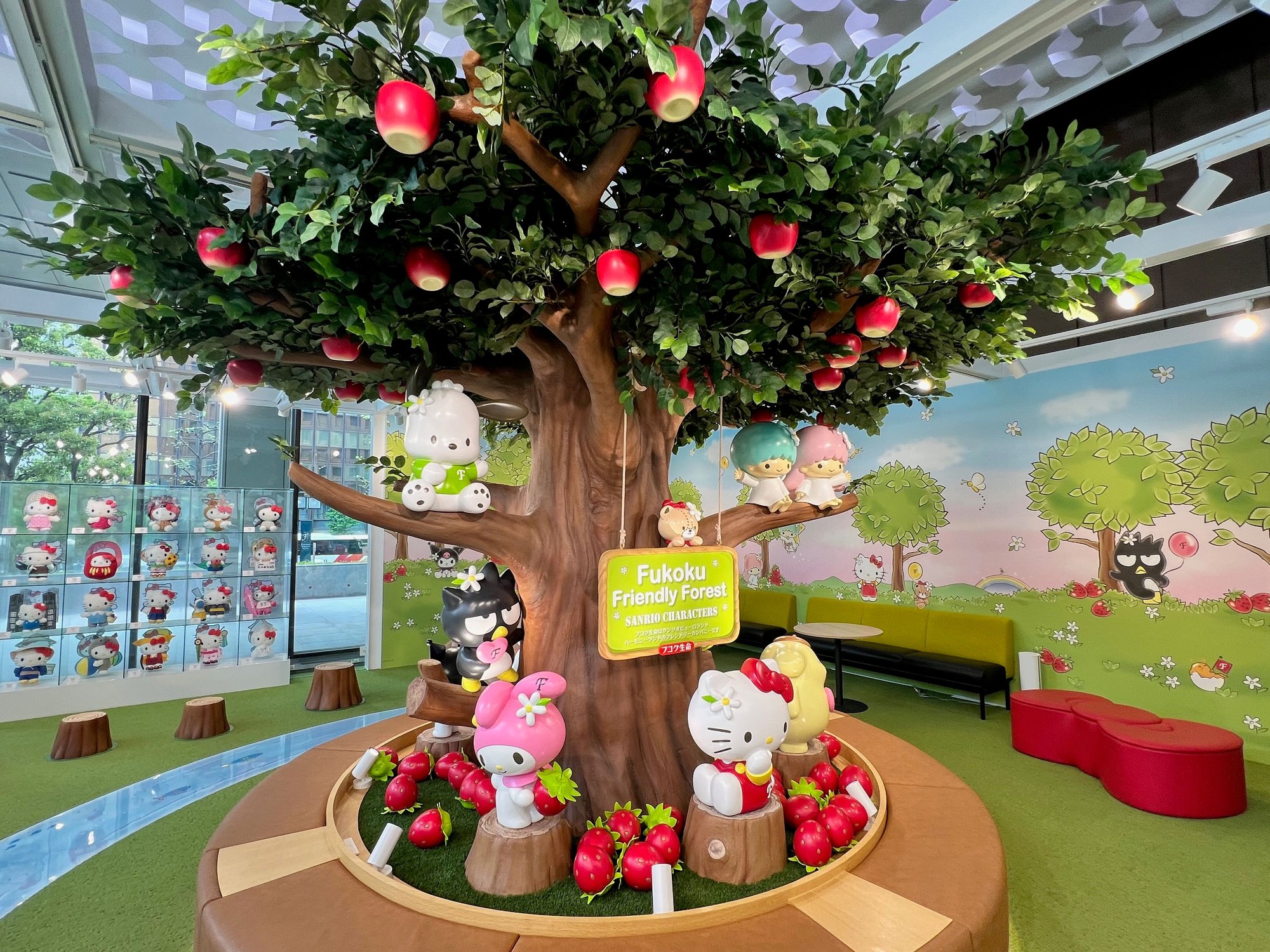
Fukoku Friendly Forest
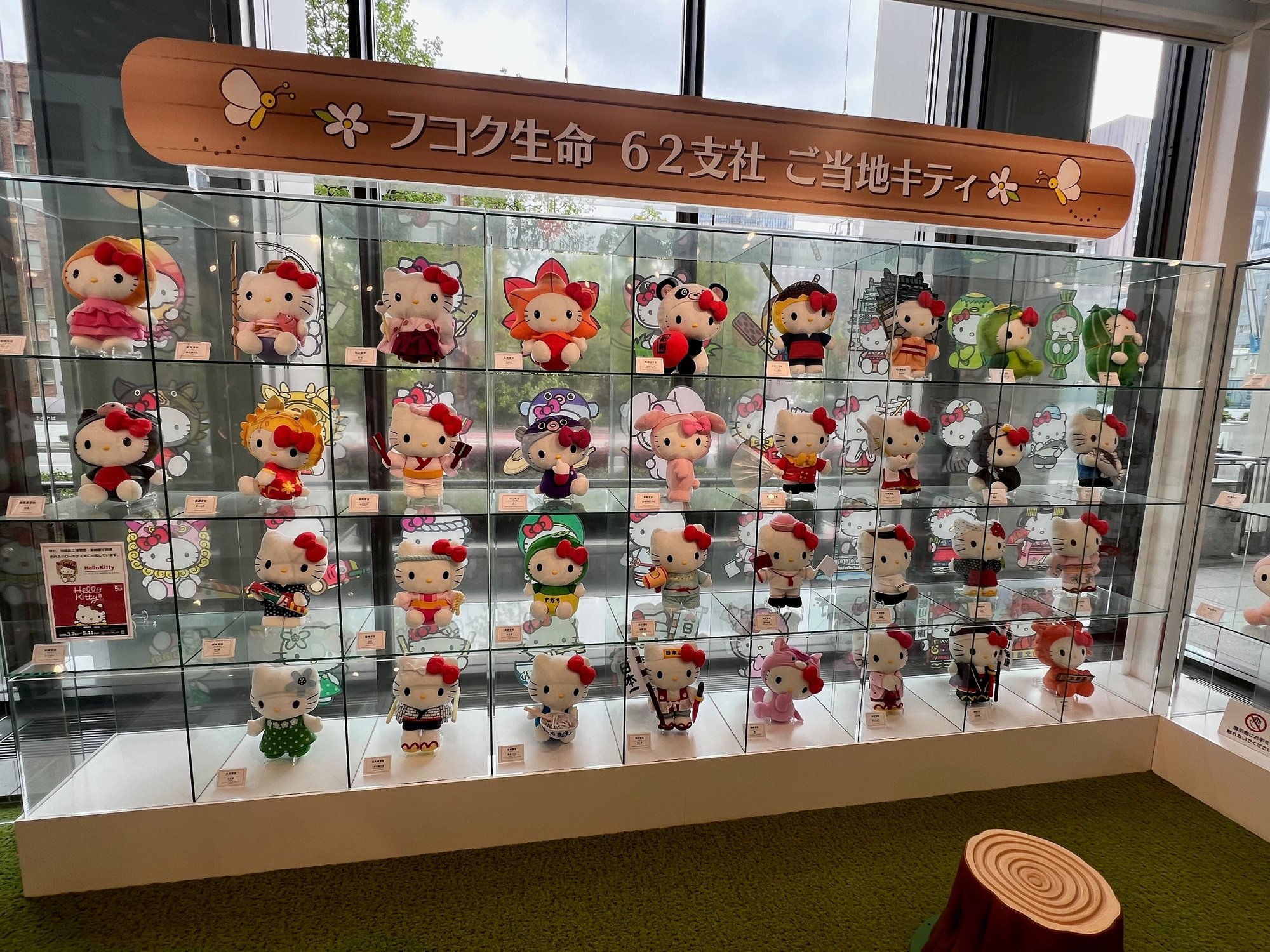
Who knew there were so many different Hello Kitties?
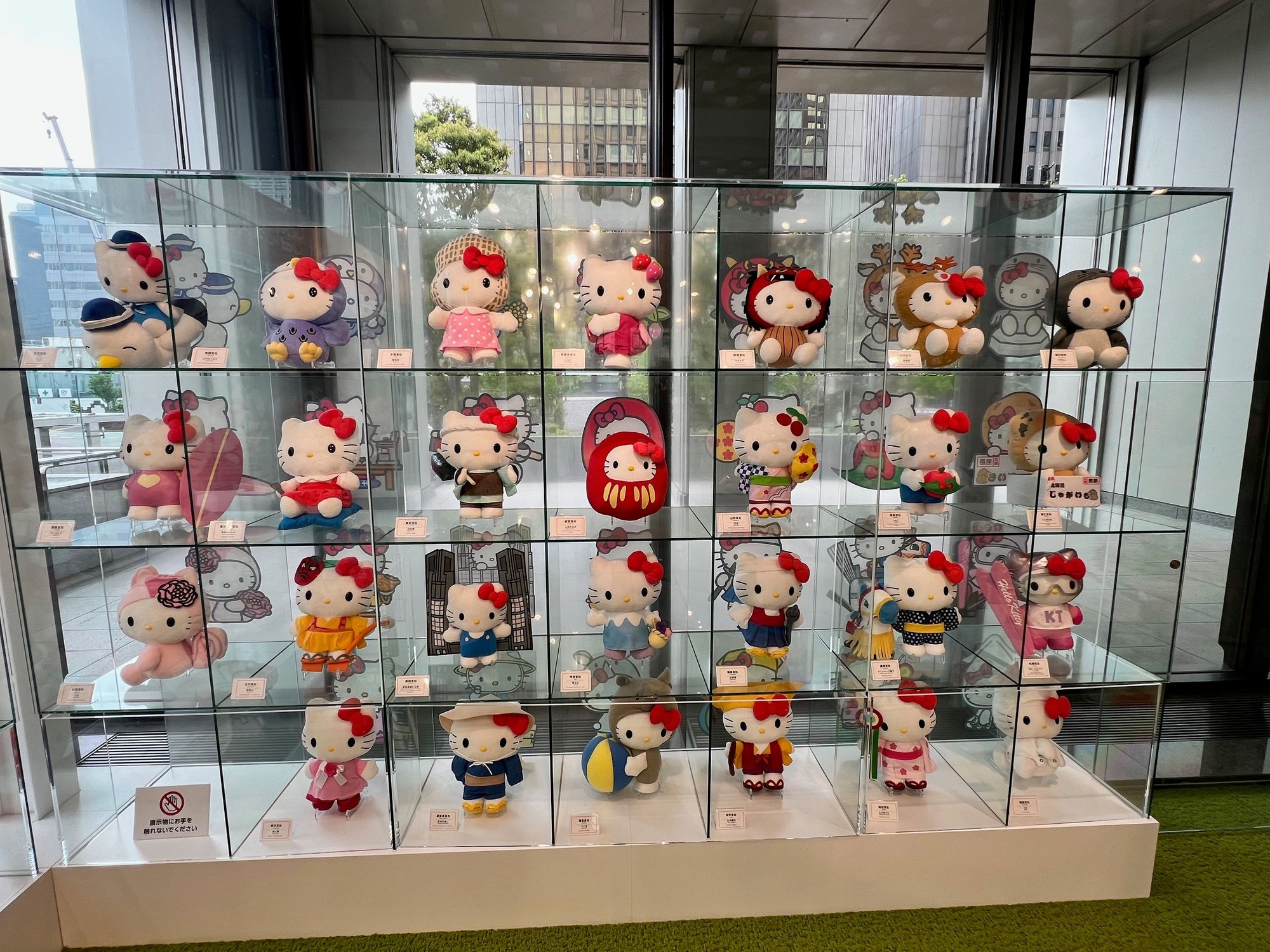
...and even more!

Stamp Station #1 - just a hint of the final picture

...and the final picture after Stamp #6.
We walked through Hibiya Park to catch the English-speaking tour of the Imperial Palace grounds. You can’t actually see the Imperial Palace but you do walk through the grounds and learn about the history of the palace. Despite the fact that there is a limit on the number of visitors allowed on the tour, they seem to run about 6 different language groups simultaneously - Japanese, Chinese, Korean, French, Spanish and English. I found it to be a bit tiresome as everyone sits together through the introductory talk which is given, one by one, in each language. Then they try to separate each group as they guide you through the various points of interest. The problem is that with the large numbers of tourists it is difficult to hear your particular guide and there is frequent overlap and crowding. While it is interesting to observe the contrast between the palace with modern Tokyo in the background, I wonder if we would have been better off downloading the free audio guide and exploring by ourselves. Also, we weren’t able to enter any of the buildings; however, further into the trip we were able to enter and view the interiors of other castles.
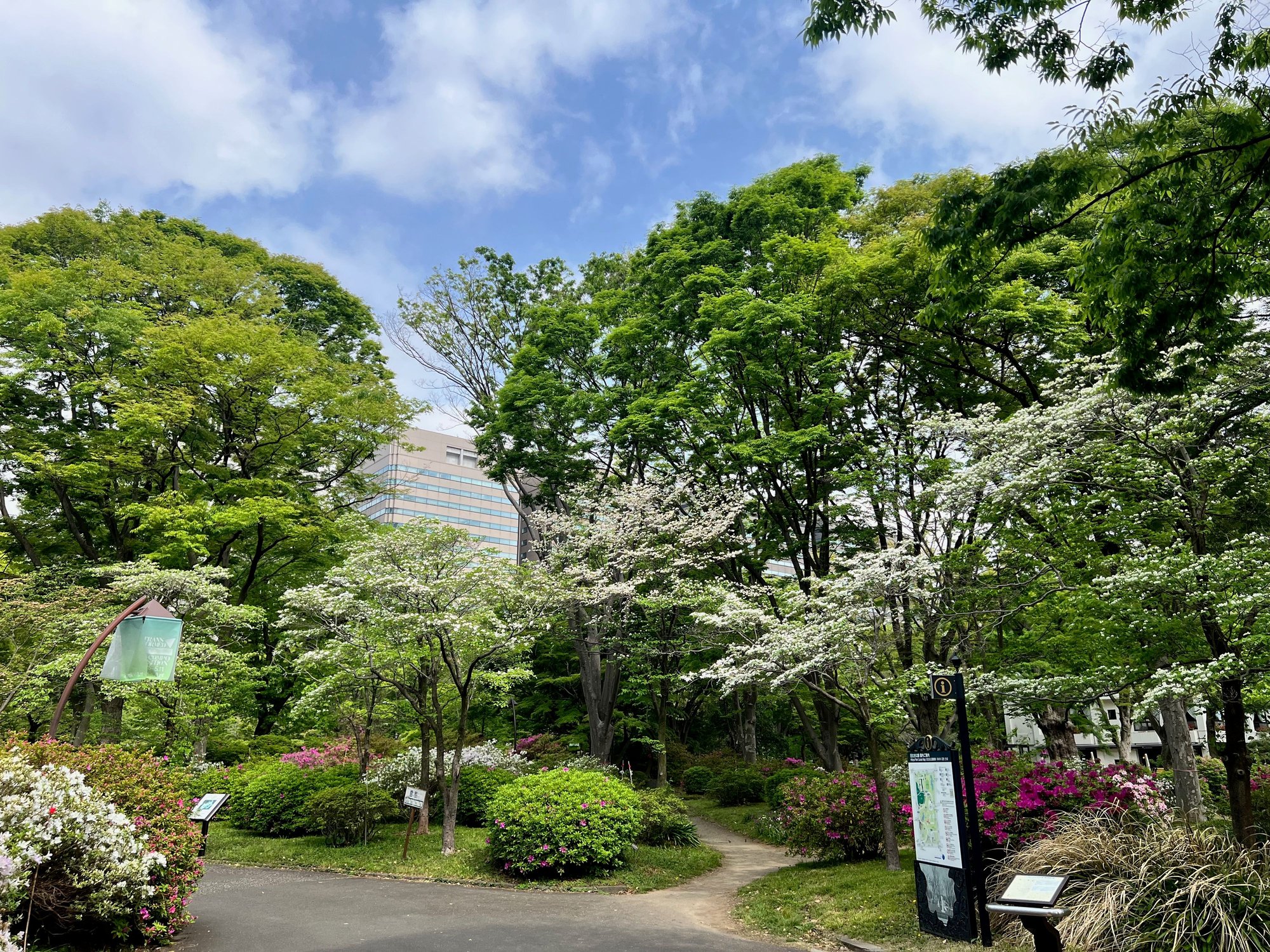
Beautiful Hibiya Park
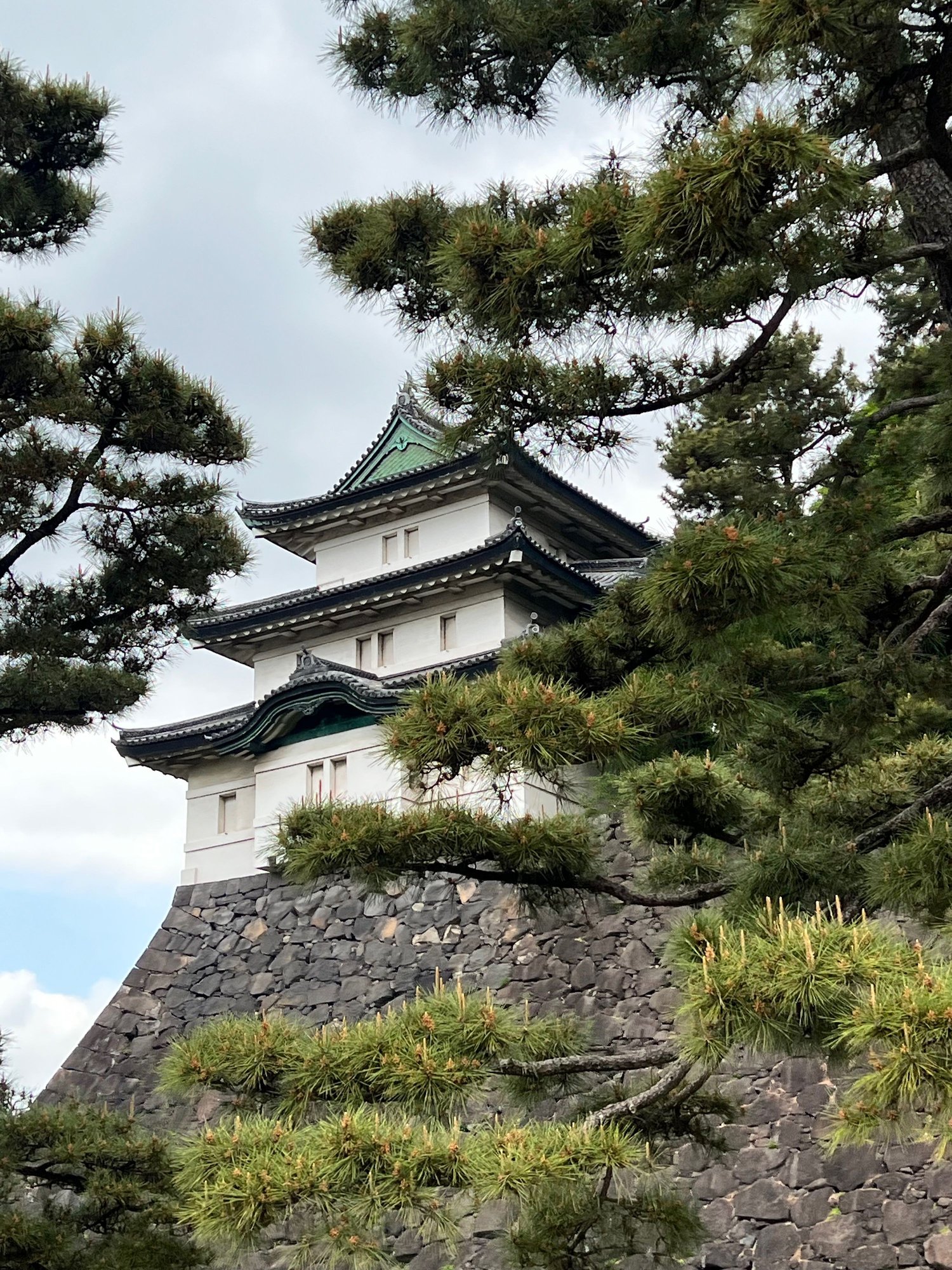
Fujimi-yagara Guard Keep, Imperial Palace
After the tour we walked back to Tempura Azabu Yokota for a delicious lunch! As we sat at the counter, we watched as the chef individually prepared, battered and deep-fried each course and then placed in front of us to admire and then eat. The quality of the tempura with its delicate coating of batter and perfectly cooked interior was truly exquisite. Our meal consisted of the following (sorry we became so engrossed in our meal we forgot to take photos of each plate):
Shrimp head
Tiger prawn
Lotus root
Green beans
Red snapper
Mushroom
Scallop
Japanese sweet potato
Japanese eggplant
Baby corn and Manganji pepper
Unagi (eel)
Followed by miso soup, shrimp tempura rice bowl, egg over chicken broth, Japanese pickle
Sorbet
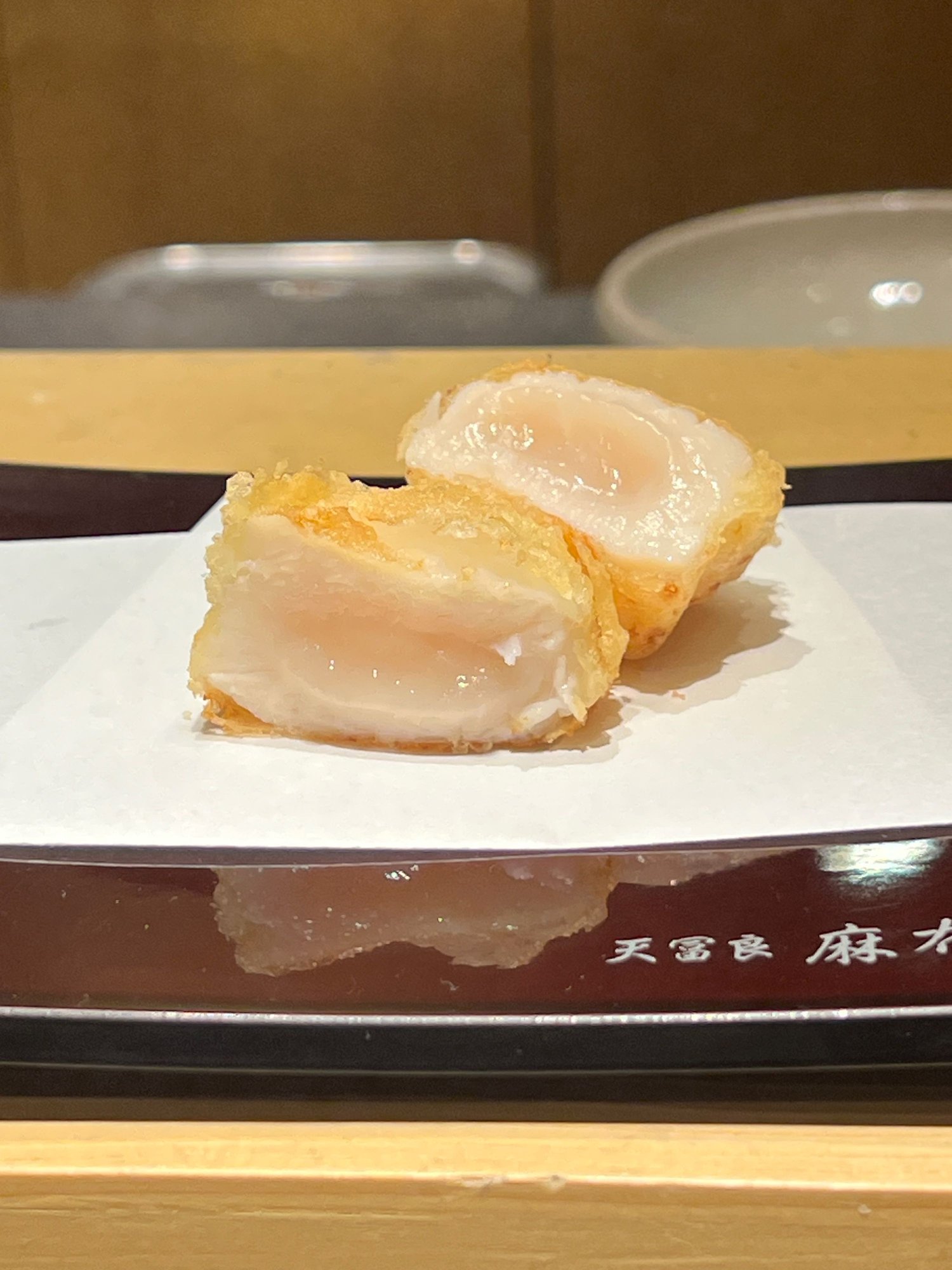
Perfectly cooked scallop tempura.
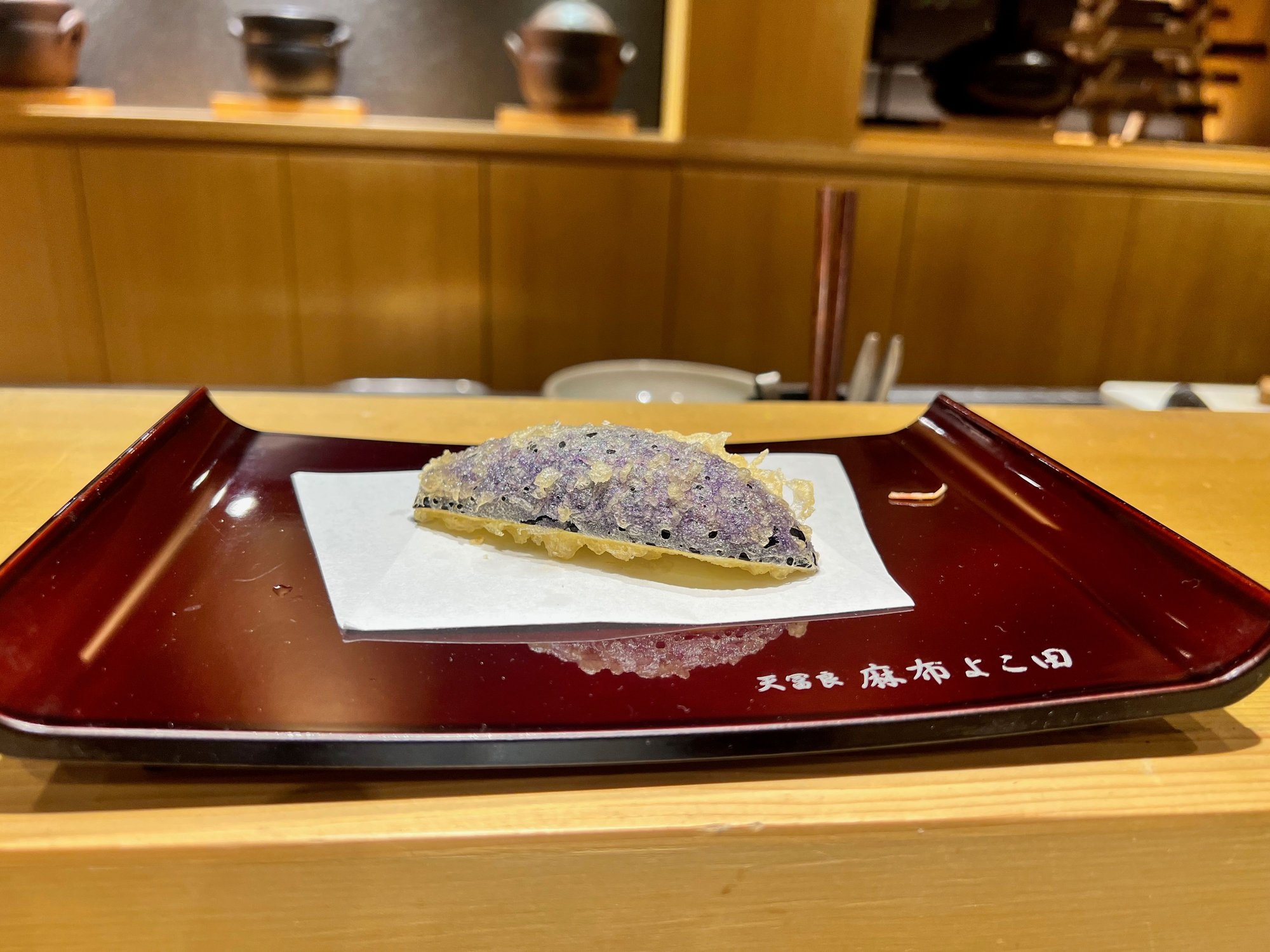
Japanese eggplant
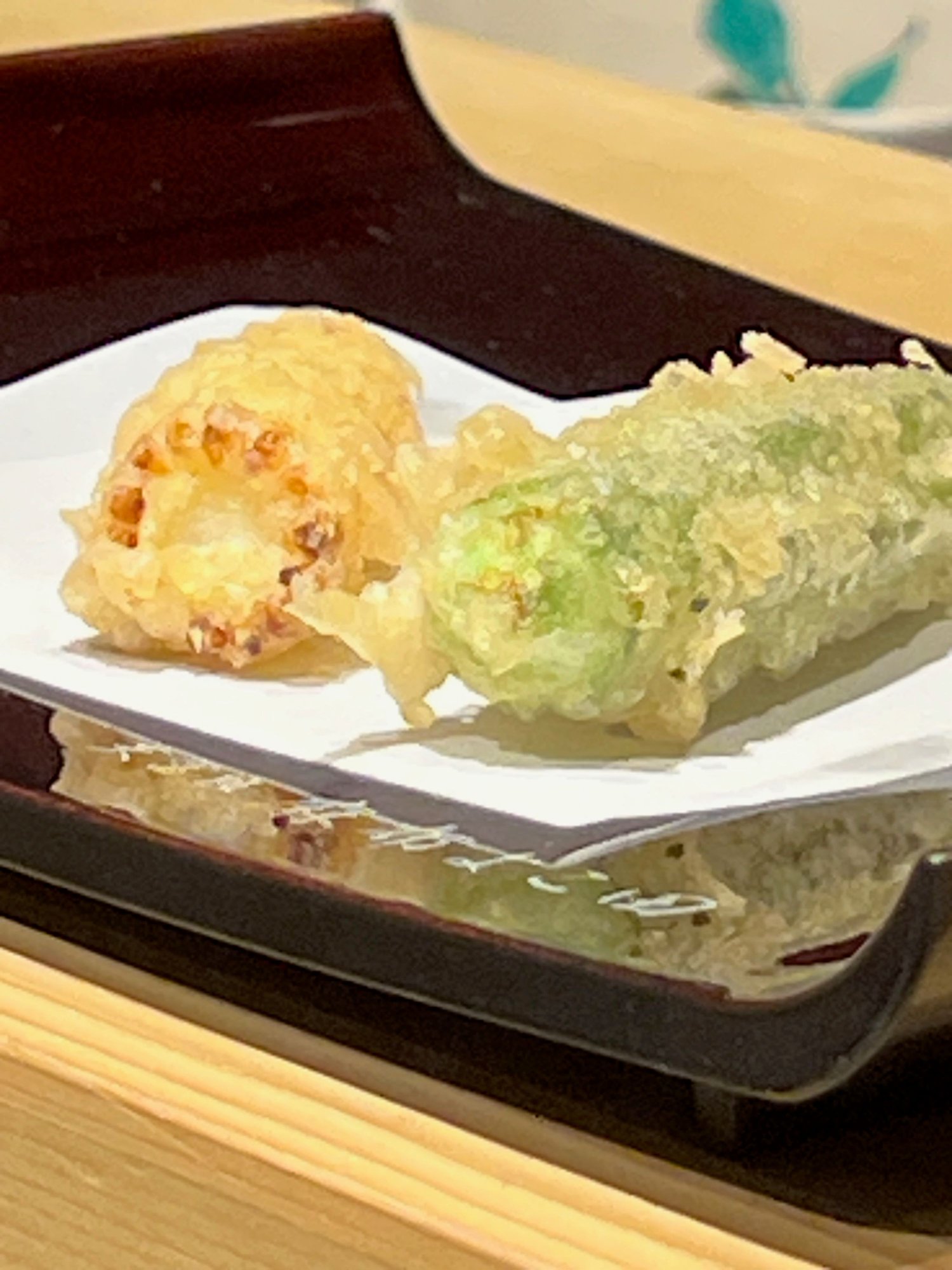
Baby corn and Manganji pepper
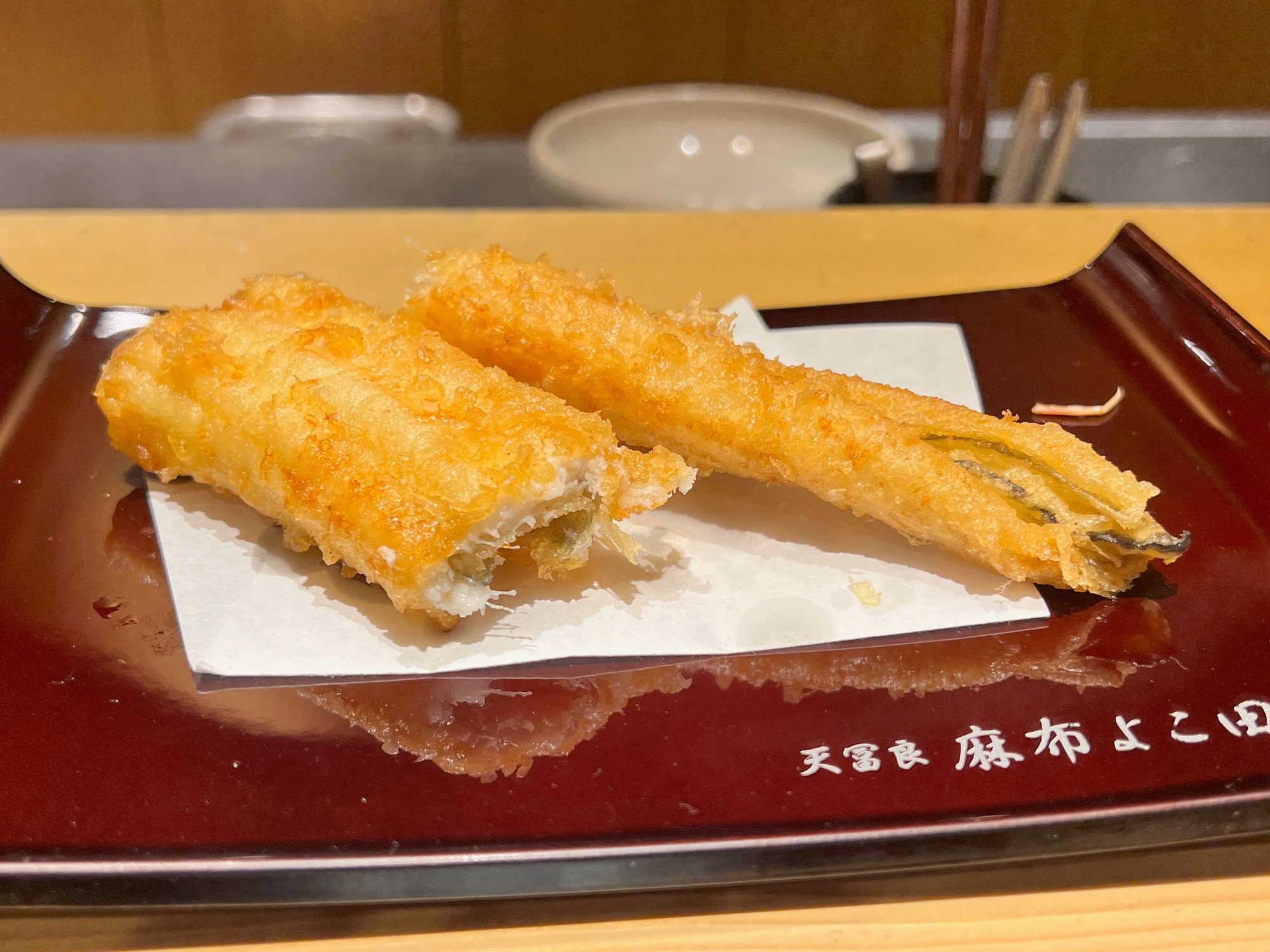
Unagi
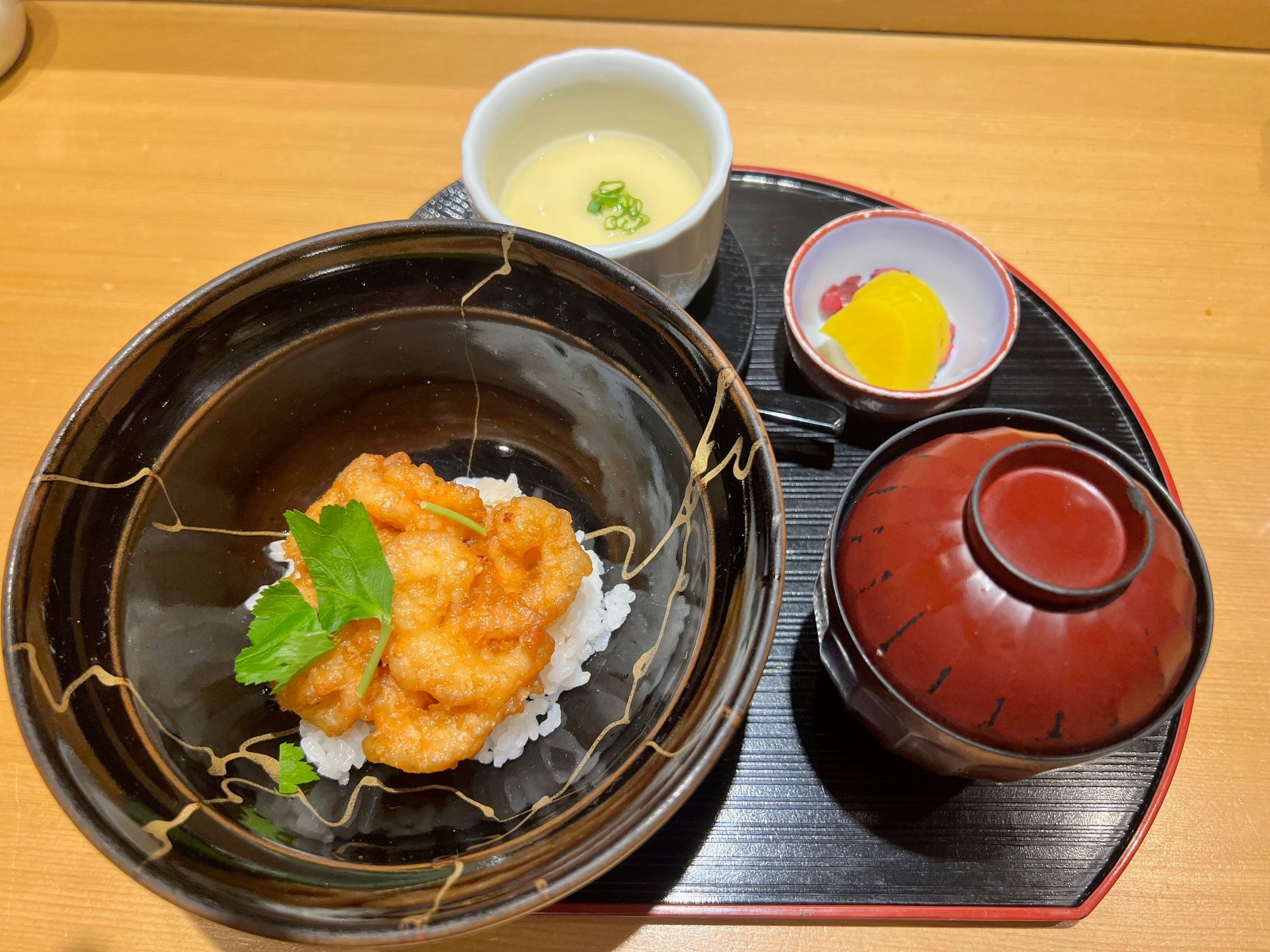
Shrimp tempura rice bowl
While we ate an office group entered and was seated at the counter to begin their meal. It was interesting to covertly observe the dynamics of their conversation and behavior which seemed very similar to subtitled Japanese dramas I had watched on Netflix. In particular, the younger members of the group would occasionally exclaim “Ehhhh!” in unison - presumably in response to a surprising or particularly interesting piece of gossip.
After our delicious lunch we rolled back to our hotel to rest up before taking the Metro to the Shinjuku district. With the aid of Google maps we managed to navigate the subway system with just one hiccup. We started going the wrong way on the Maranouchi line but quickly realized our mistake and switched trains. We also realized several things about using Google maps - while it would give you a ton of information - not only which train to take but which car on that particular train would be the most efficient to enter and which station exit number you should head for upon exiting - it also gave you connection info with the assumption that you would flawlessly make the 2 minute connection time instead of looking around in a bit of a daze as you tried to orient yourself. Invariably it would always take us longer, we would miss the perfectly timed connection and have to wait a few minutes for the next one. Anyway, Shinjuku Station is the busiest in the world with up to 3.64 million people passing through it in a single day,DH and I were proud of the fact that we managed to emerge from the station without too much trouble, having read horror stories of some people wandering around for an hour trying to find the right exit.
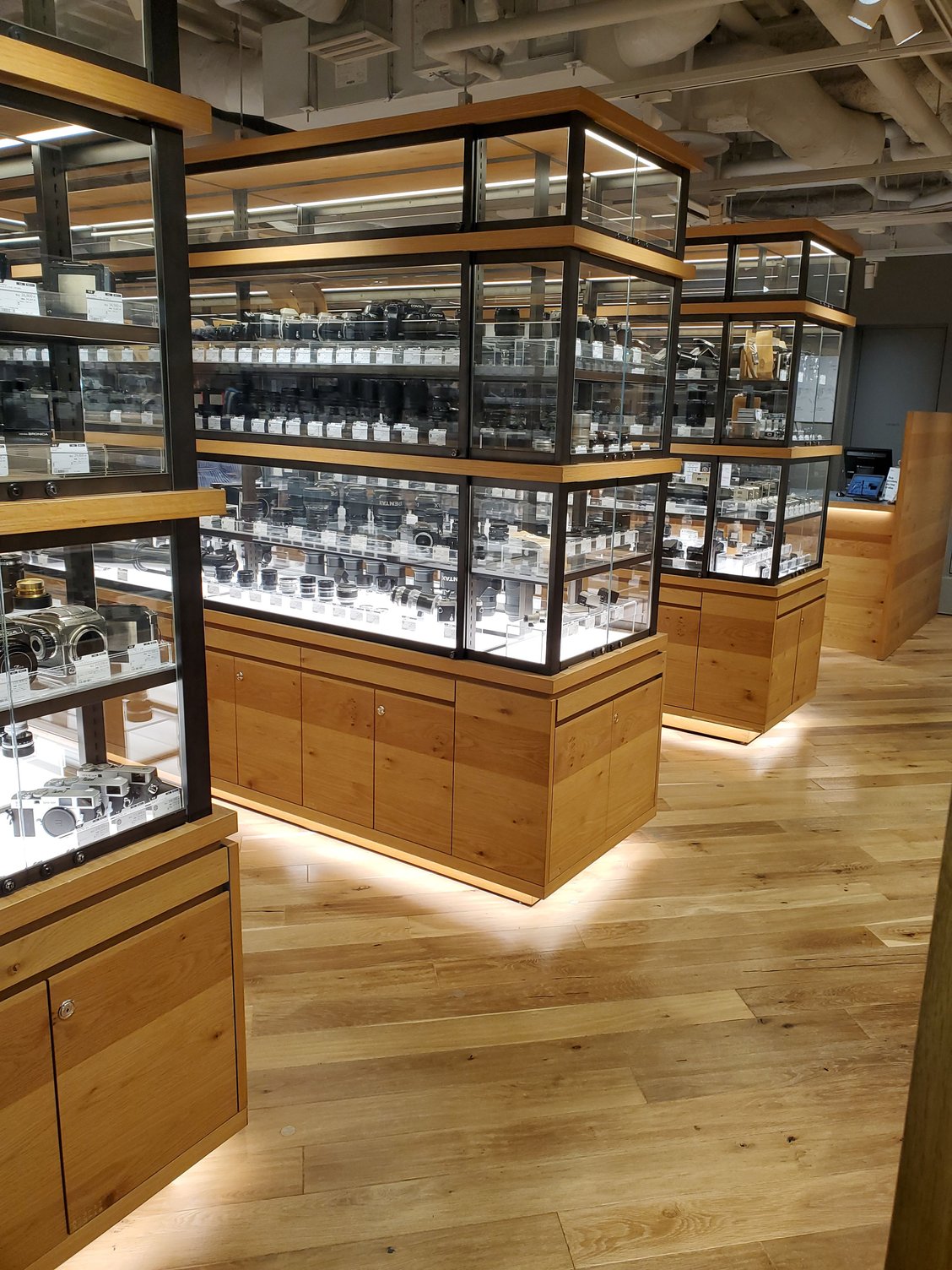
Display cases at Kitamura Camera store.
Once we arrived in Shinjuku we headed off to Kitamura Camera Store. Normally we are not really into shopping but DH loves photography and cameras and I had seen photos of this particular store. Kitamura did not disappoint. Beautifully laid out with display case after display case of cameras, it almost had the quality of museum exhibits. DH enjoyed window shopping and was even interested in a particular lens though in the end it was too expensive to purchase.
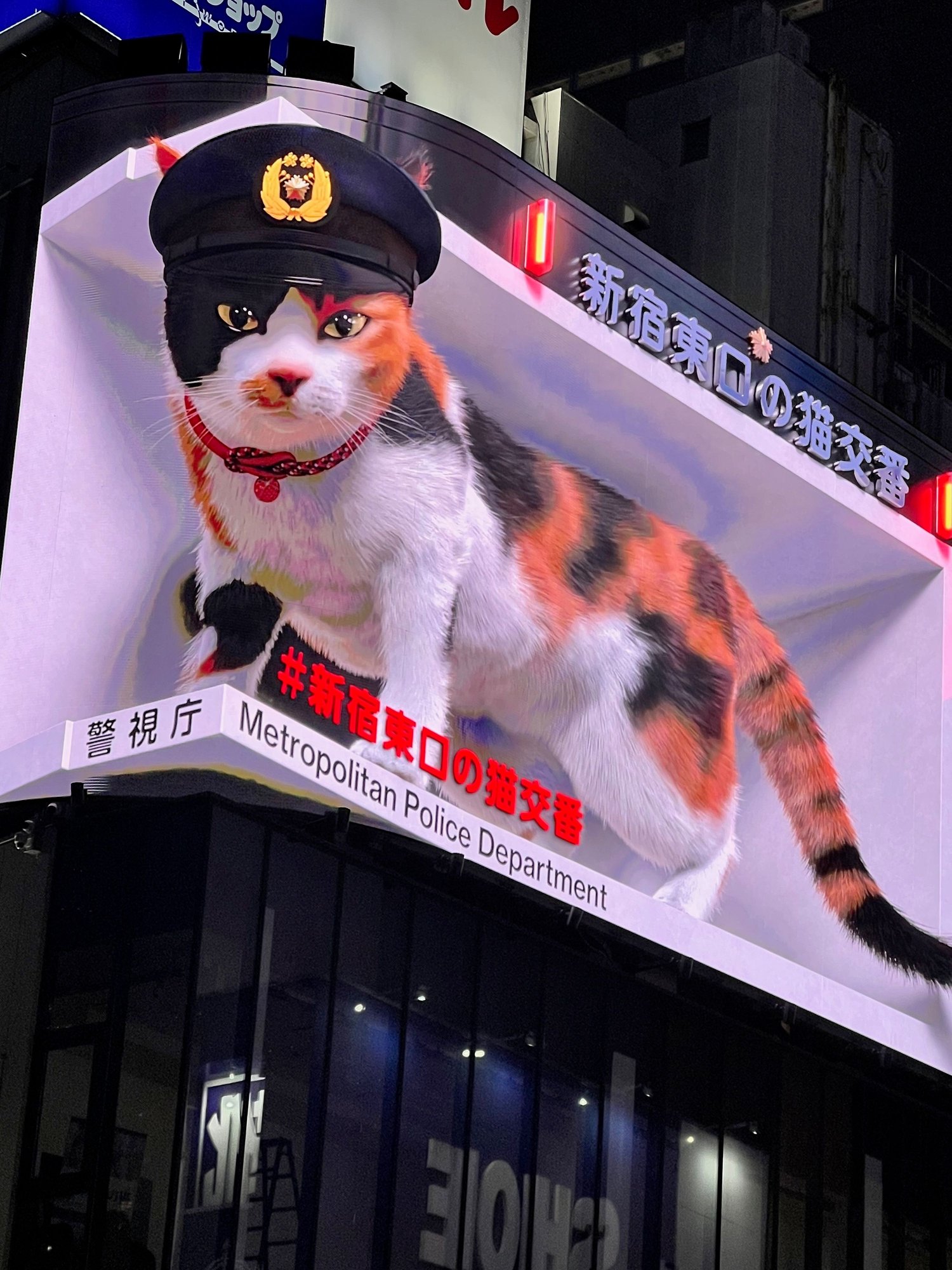
Giant 3D cat billboard which currently provides a public service announcement from the Tokyo Police
Our plan had been to go to a tonkatsu restaurant before our “Shinjuku Night Free Walking Tour” with Tokyo Localized. However, we were still too full after our tempura extravaganza. Instead we grabbed some coffee and then went off to start our walking tour which ended up being fun, fascinating and very informative. Our guide was a young Chinese woman who had moved to Japan and was pursuing a career as a photographer. Sarah spoke excellent English and had many anecdotes about Shinjuku, Japanese drinking culture, host clubs, love hotels and meet up behavior for the younger generation. DH and I were the oldest in the group and we showed our naiveté when we asked about the various giant billboards showing cute girls and handsome young men. We thought they were advertising J-pop girl groups and boy bands. In fact they were advertising the top hosts and hostesses in Shinjuku. While the lights and displays were exciting we found out that Godzilla was “broken.” Normally he lights up and roars and shoots “laser beams” every hour on the hour. However, he just peered menacingly over the building at us.
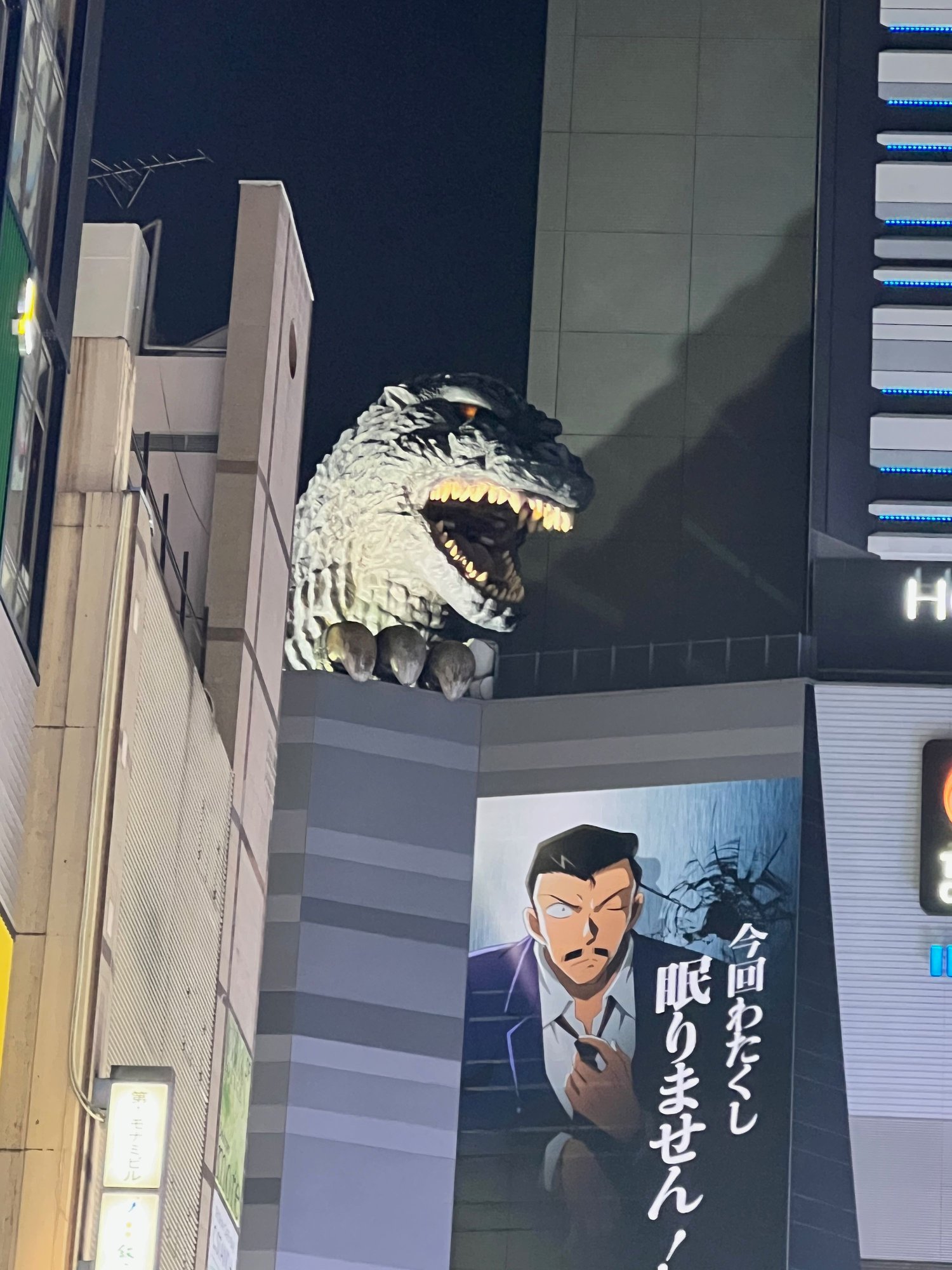
Godzilla looms over Shinjuku but refused to perform
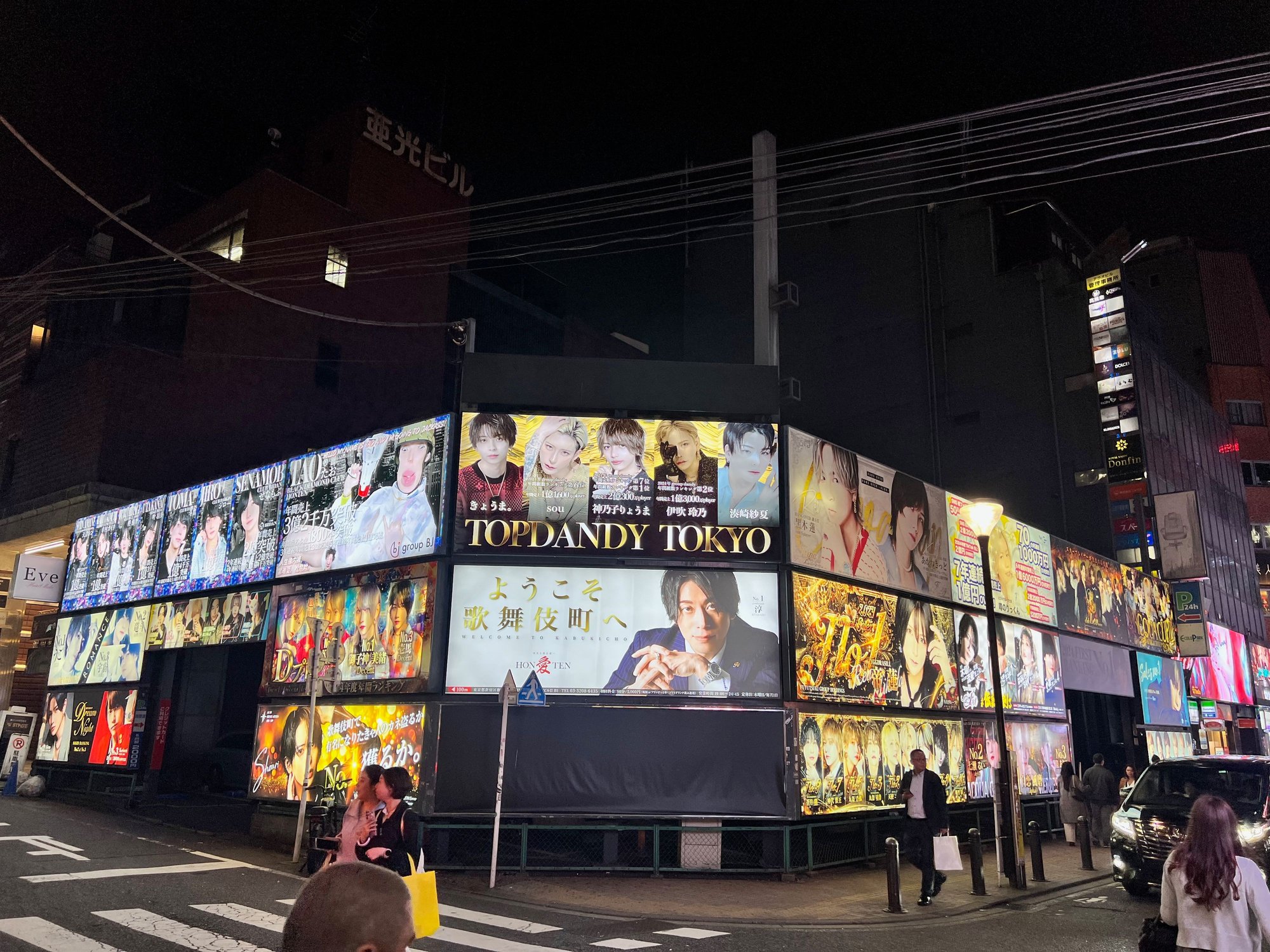
No these are not boy bands but the top hosts in Shinjuku
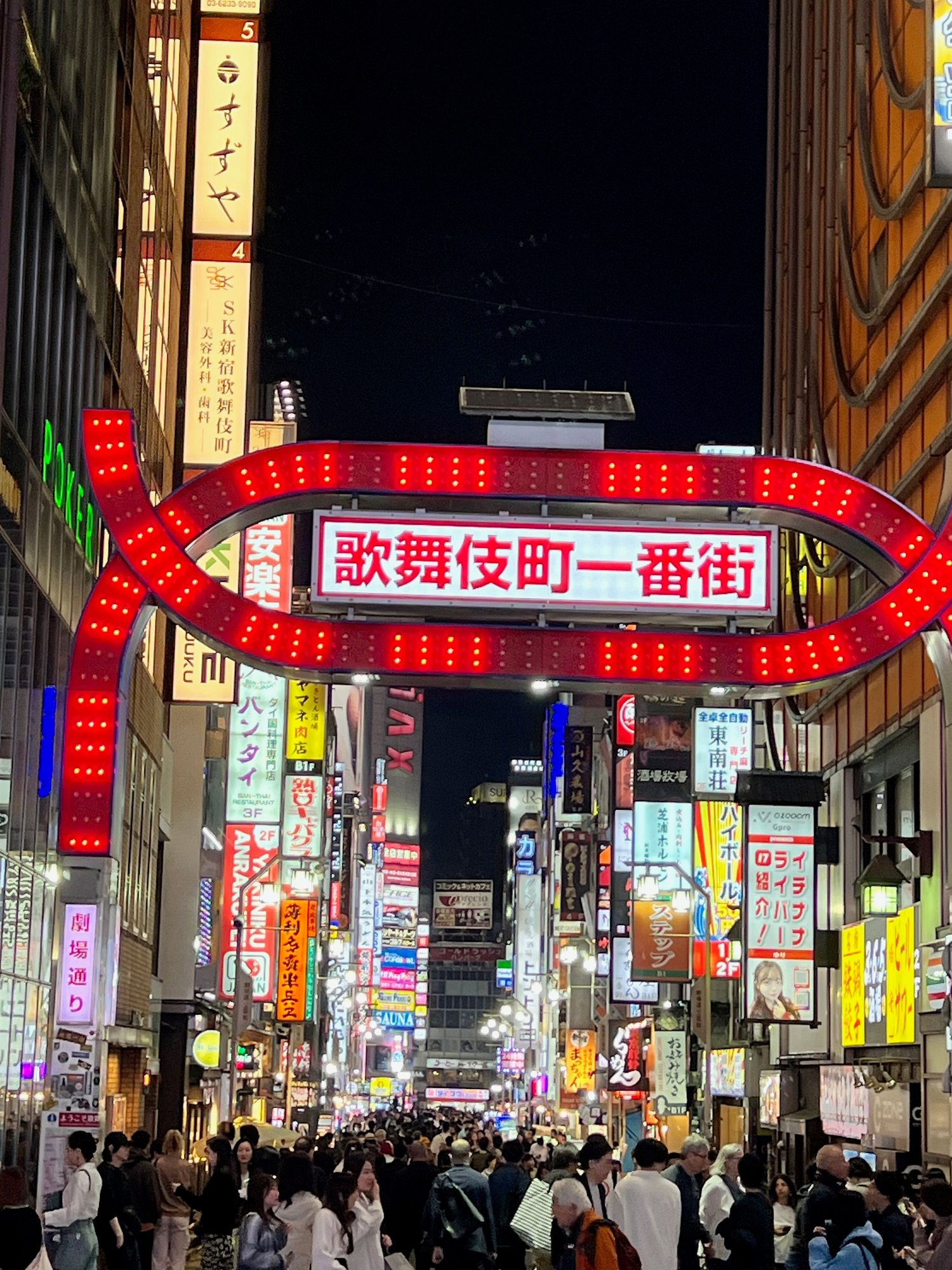
Kabuki-cho - the nightclub district of Shinjuku
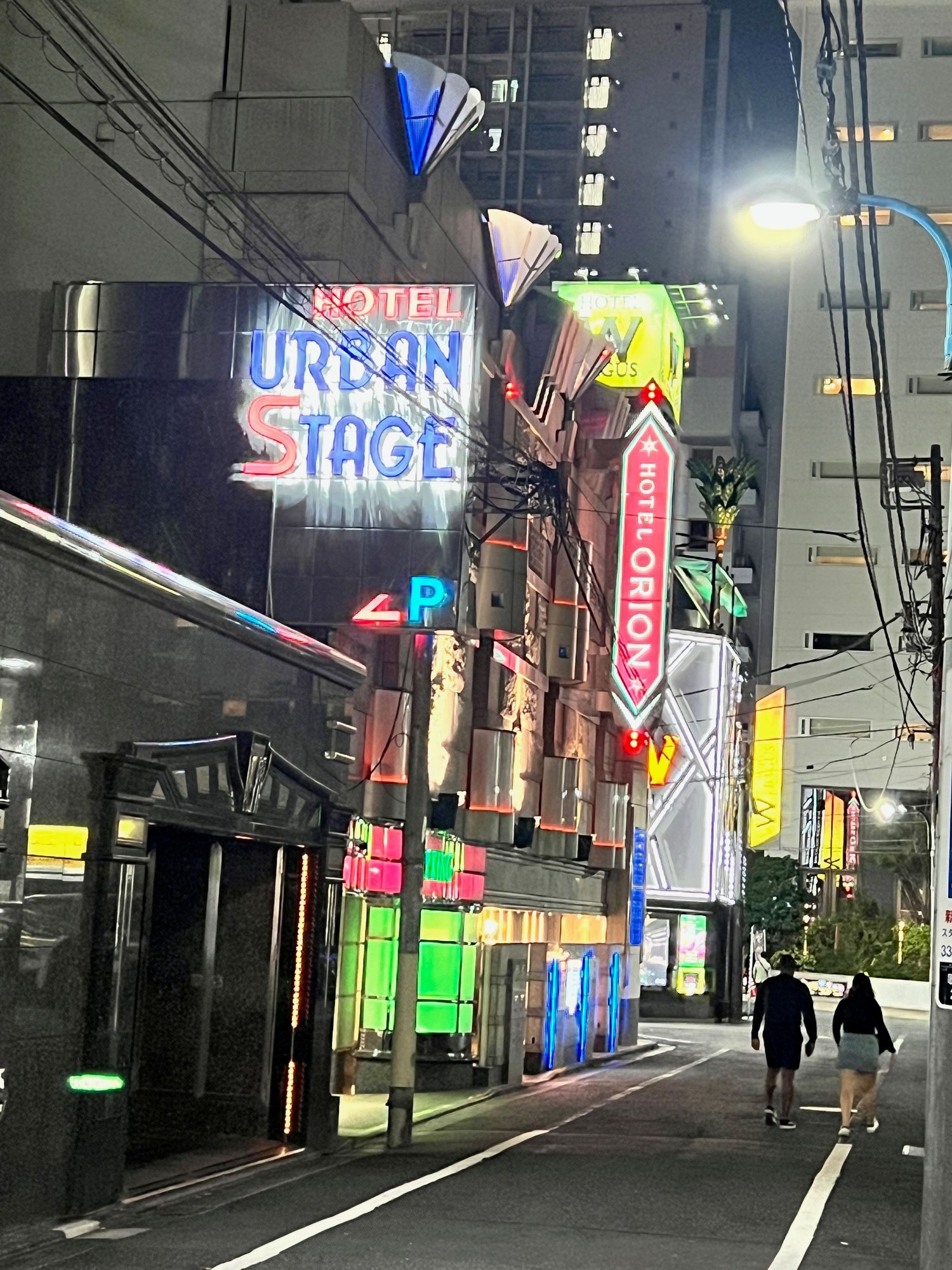
Love hotels
While Sarah gave us her introductory talk we stood at the corner of a small side street. I was amazed to watch the driver of a van who needed to turn off the main street into the little side street. The constant flow of people crossing from Shinjuku Station was never-ending. This driver patiently waited and waited and waited. He must have waited about 15 min before an opening finally appeared. Not once did he beep or try to aggressively intimidate pedestrians into letting him pass. I was super impressed and over the course of the trip realized that his behavior was really the norm. You rarely heard drivers beeping their horns - so different than NYC for instance.
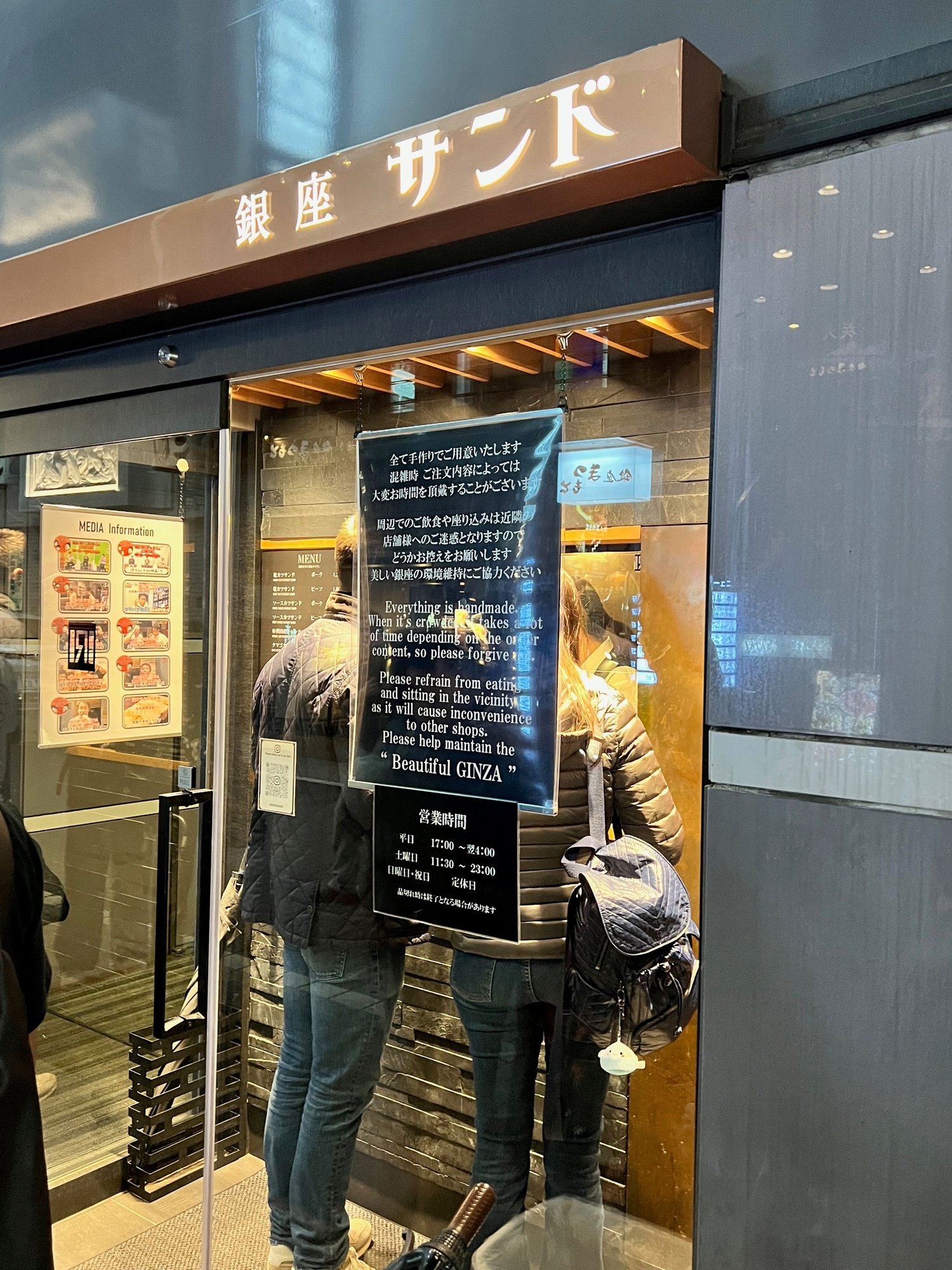
Ginza Sand - there is just enough room for one customer to enter and order at a time.
After finishing the tour, I had originally planned to walk over to the Tokyo Metropolitan Government Building to go up in the towers for a view. However, the clouds had started to roll in and we were pretty exhausted having walked >20,000 steps. There is also a projection show unto the Metropolitan building every 30 minutes but even that wasn’t enough to keep us in Shinjuku. We returned to the Ginza district by metro and DH managed to convince me to walk just a little bit more to Ginza Sand. Open until 4AM, this is a tiny sandwich shop which individually prepares each sandwich from scratch. We stood in a long line to enter and the first thing the young lady taking orders did was to point with her pencil to a note written in English that stated any order placed now would take 40 minutes to complete. We ordered the “prime Japanese beef fillet cutlet sandwich” and the “pork sauce cutlet sandwich”. We painfully waited on very sore feet but OMG - “oishi!” it was worth it. The sandwiches were juicy and flavorful - my mouth is watering even now as I remember how good they were. Again - sorry we were so hungry and tired by the time we got them back to our room we didn’t even wait to take photos. We loved these sandwiches so much we went back again 2 nights later! After dinner we collapsed into bed, completely wiped out.
Next up: Day 4 - only 14,500 steps spending a rainy day at the museums
Trending Topics
 May 25th, 2025 | 03:40 PM
#9
Original Poster
Joined: Jul 2008
Posts: 191
Likes: 0
millie2112 - I'm so glad that you are enjoying the report. It was hard enough to limit ourselves to Tokyo and Kyoto and the walk in between. When DH and I first started planning he wanted to stop off in Hiroshima and Osaka as well. I told him he could do it by himself but that I already had way too many things I wanted to do in just 2 cities. The choices were overwhelming in their variety and number. We had a blast but of course didn't get to everything on our wish list.
mrwunrfl - As I am sure you already know, it's not just the variety of delicious foods to eat in Japan. We were also impressed by the care that was taken with ingredient selection, the exacting cooking process and then the meticulous, yet artistic presentation of the meals. Every detail was just so perfect. I haven't even gotten to the nightly kaiseki meals we had on our Nakasendo Way hike!
tripplanner001 - we ate A LOT. I don't particularly enjoy cooking so this trip was perfect for me - delicious food either on demand or magically appearing at every stop along the way.
mrwunrfl - As I am sure you already know, it's not just the variety of delicious foods to eat in Japan. We were also impressed by the care that was taken with ingredient selection, the exacting cooking process and then the meticulous, yet artistic presentation of the meals. Every detail was just so perfect. I haven't even gotten to the nightly kaiseki meals we had on our Nakasendo Way hike!
tripplanner001 - we ate A LOT. I don't particularly enjoy cooking so this trip was perfect for me - delicious food either on demand or magically appearing at every stop along the way.
May 25th, 2025 | 04:35 PM
#10
Original Poster
Joined: Jul 2008
Posts: 191
Likes: 0
Day 4 - only 14,500 steps while spending a rainy day at the museums
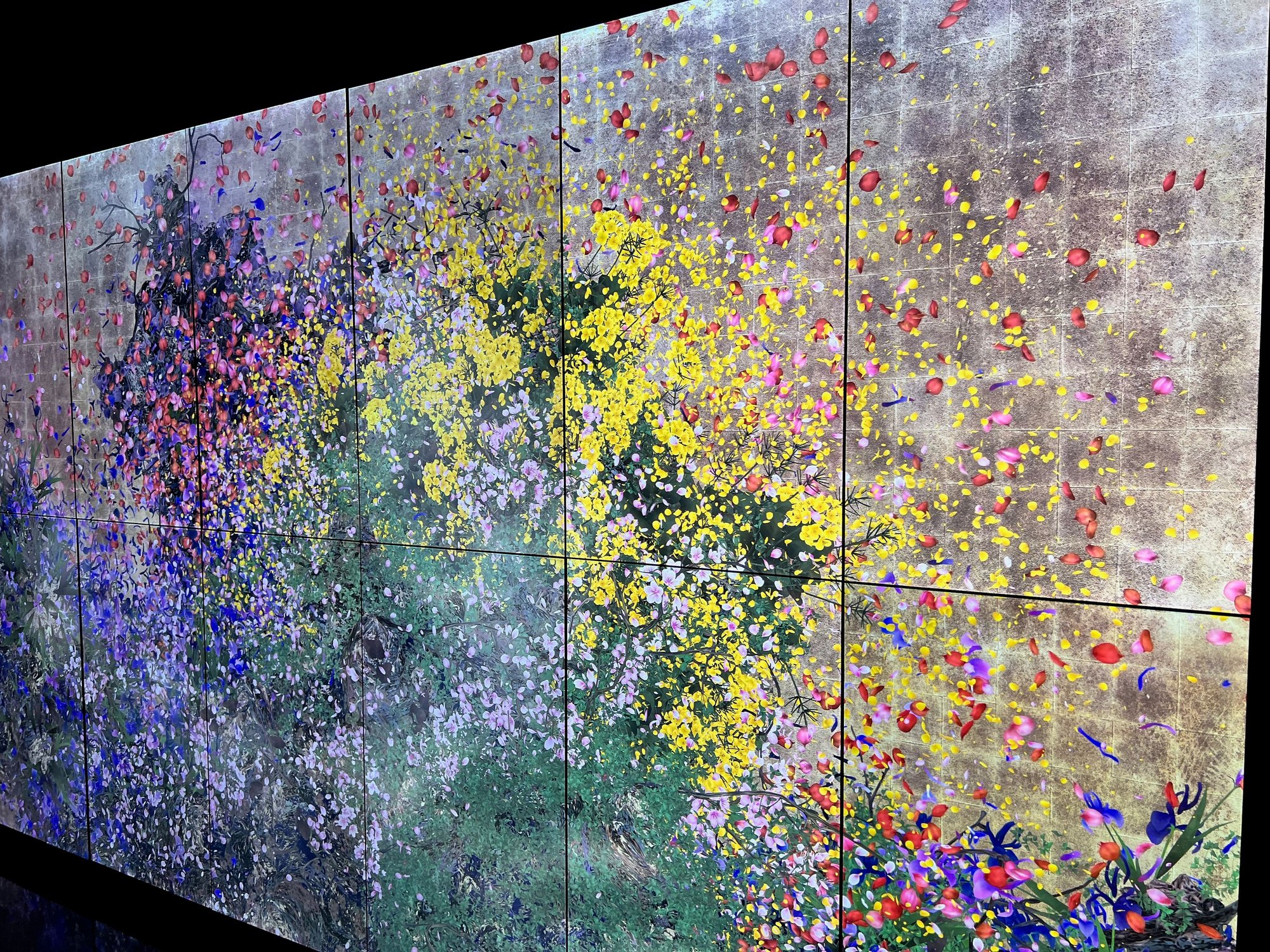
teamLab Borderless - this is just a still frame of a constantly moving display
We woke up early to eat a quick and light breakfast in our room. We had stopped at one of the ubiquitous 7-Elevens the night before to pick up some fruit, yogurt and pastries. Since we had eaten so much the day (and night) before we didn’t need to eat a large meal. (As an aside, we thought it was kind of weird how there could be so many 7-Eleven stores in Tokyo - sometimes 2 on the same block. I guess the density of the population can support all of them?) We arrived by metro to the Azubudai Hills area about 30 minutes before the teamLab Borderless museum opened. I had purchased tickets for the opening time to try to maximize our time before the crowds built up. Over and over again, I found that this strategy worked for many of the popular sites, allowing us to avoid the claustrophobia generated by crowds of fellow tourists. The teamLab museums have started to pop up all over the world and in fact a version of the Borderless museum even visited San Francisco a few years ago. The concept is of a large maze like space in which different rooms present ever changing digital art. You aren’t given a map and the presentation is constantly changing over time or with personal interaction.
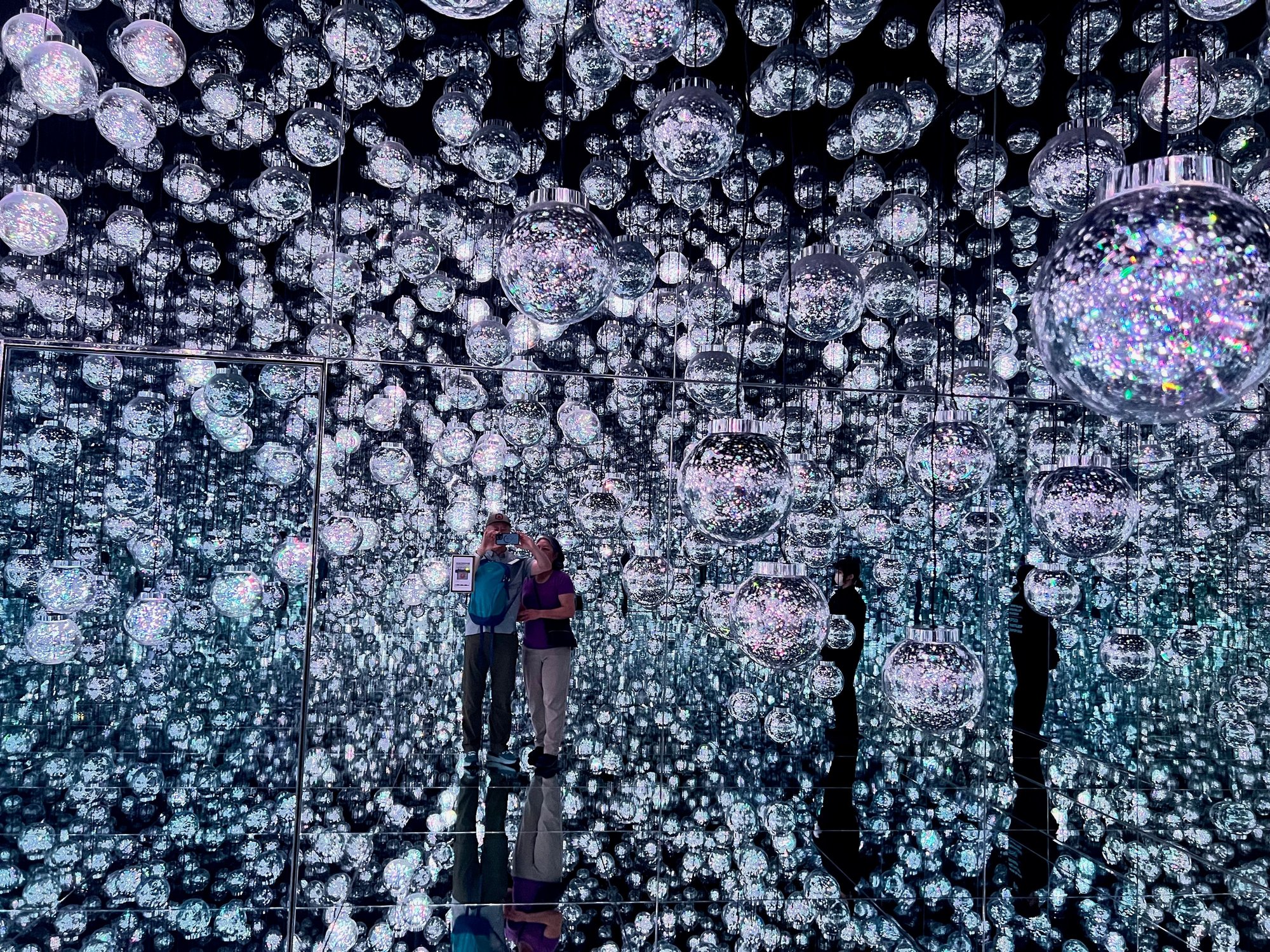
Lost in the "Bubble Room"
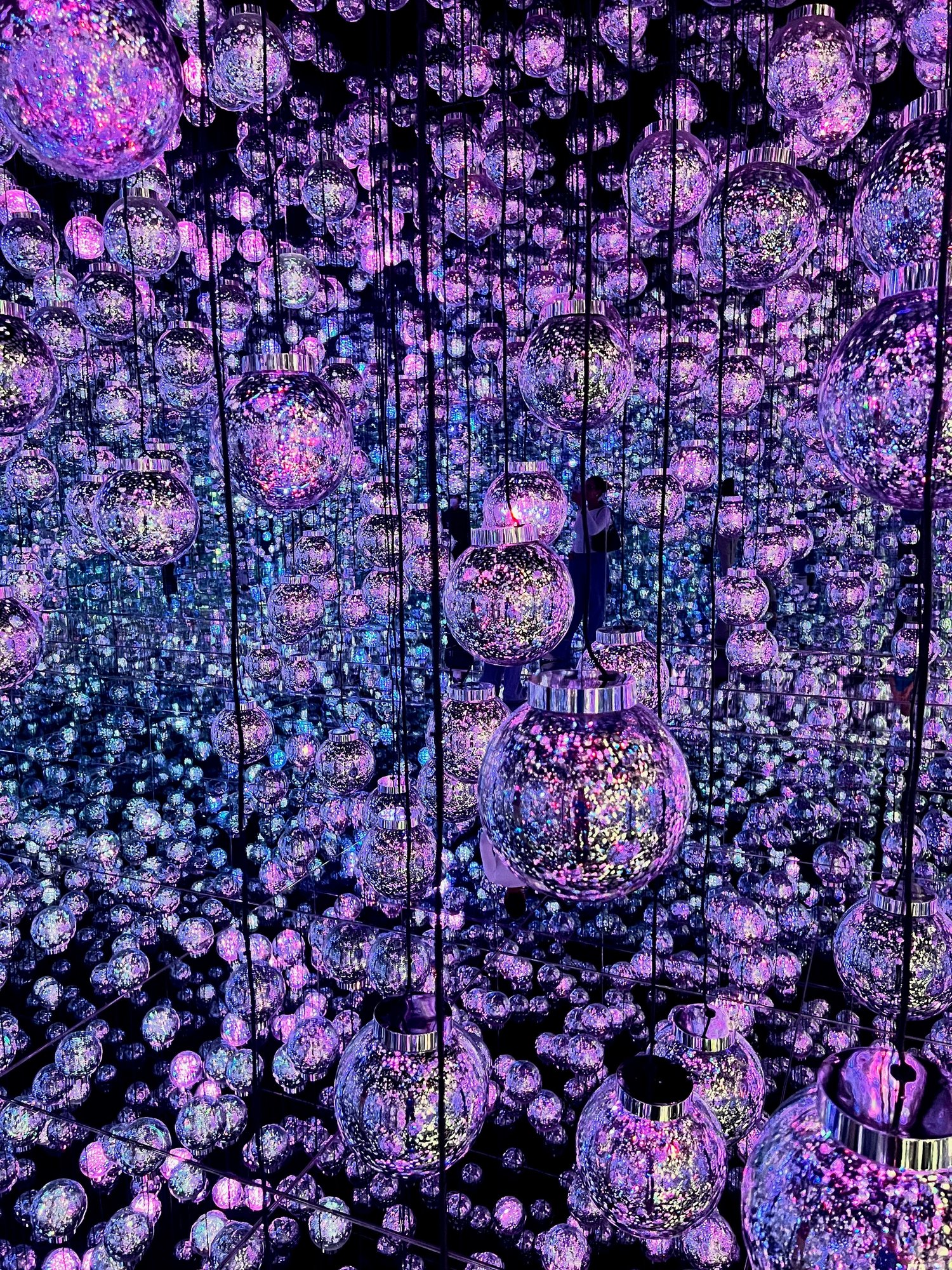
The "bubbles" will change color and pattern as you move your body and hands around them.
If you have ever visited a Yayoi Kusama exhibit I would liken teamLab to a Kusama exhibit on steroids. We especially enjoyed the Sketch Aquarium in which you start with selecting a sea creature template. I chose a squid and DH chose a shark. You sit at a table and color in your sea creature with vivid crayons and once you are finished you present your masterpiece to a staff member who will scan it into their system. Then you walk out into the next room which is the “Aquarium” and voila! You will see your sea creature swim on out and proceed to travel around the room.
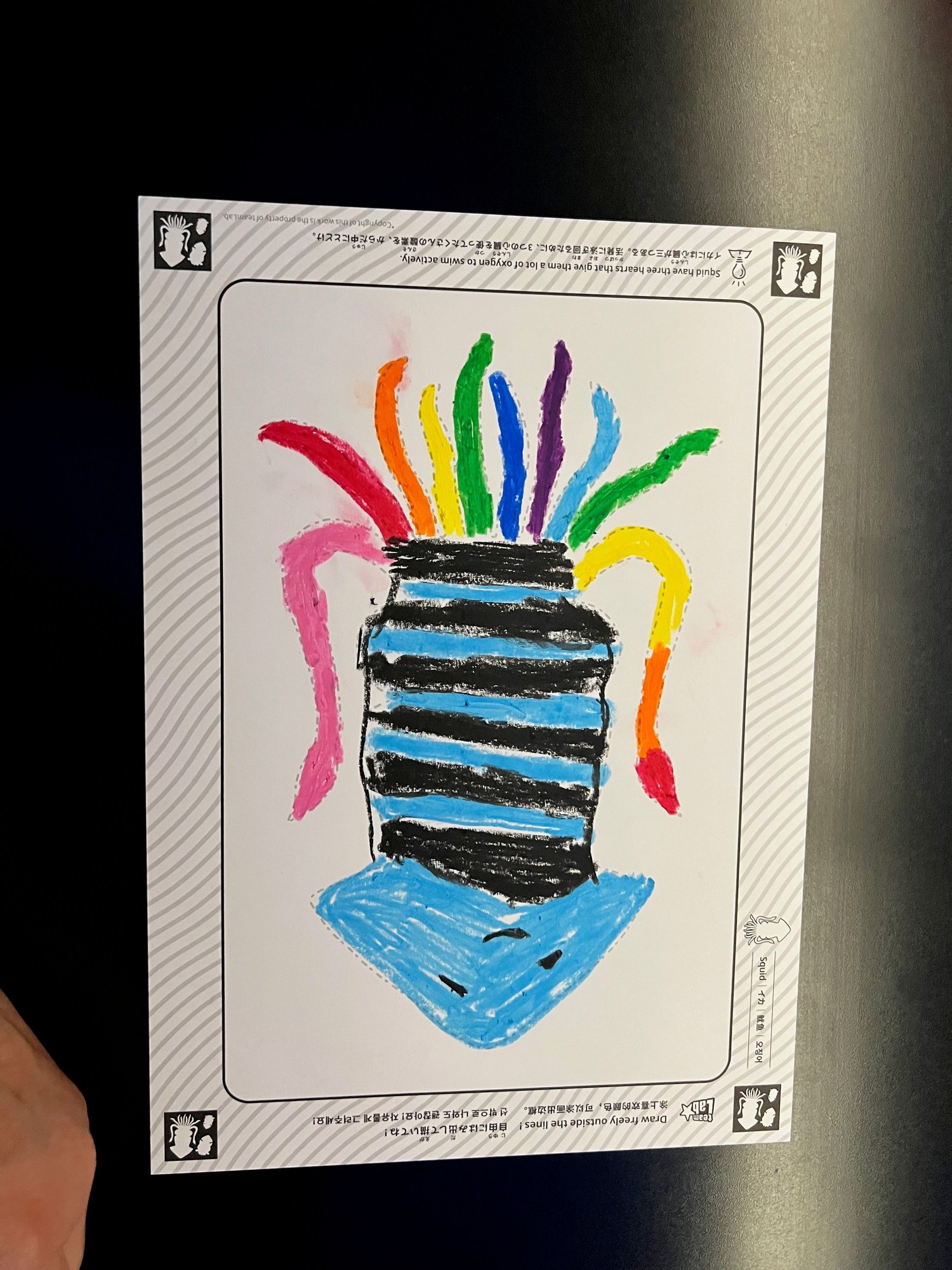
My multi-colored squid masterpiece!
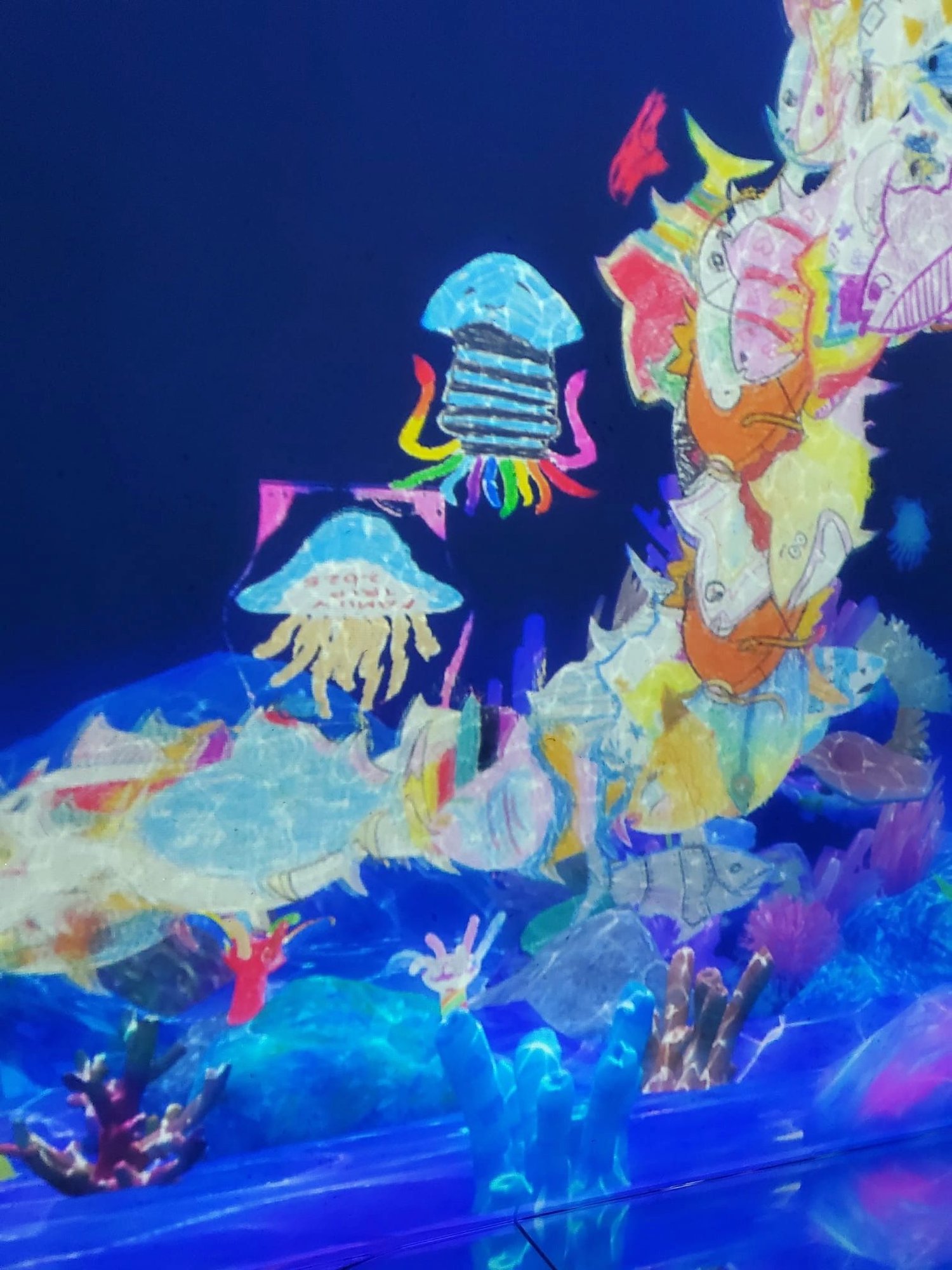
My squid now happily swimming in the Sketch Aquarium exhibit.
We watched for a while, left to go to other exhibits and then returned for another round of enjoyment. It is so much fun to watch everyone’s colorful creations swim around the entire room. In total we spent about 2 1/2 hours at teamLab but finally had to leave as we were feeling a bit overstimulated! The museum was certainly captivating and fulfilled its mission to be completely immersive.
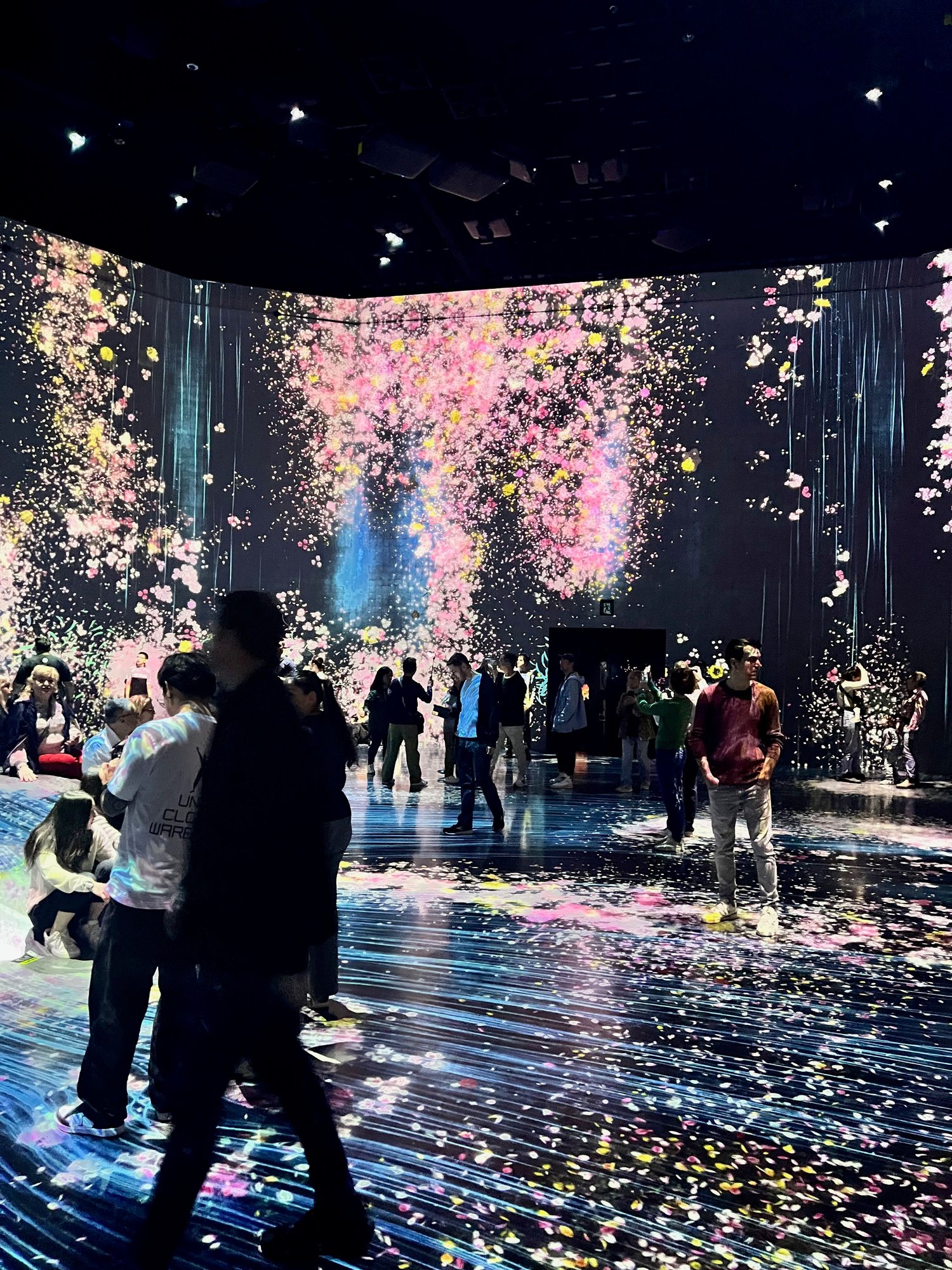

teamLab Borderless
The weather forecast had projected a 100% chance of rain so we were prepared with umbrellas once we continued on the metro to the Shibuya scramble crossing. DH thought it was a bit silly that I wanted to see it but I just did. In fact we had to cross through it and I thought it was interesting to see the sea of moving umbrellas as everyone set out every which way to make the crossing. We were hungry by this point and made our way to Ichiran Ramen. This is a chain restaurant which was on my checklist of a dining experience I wanted to try. We waited in line with high school girls, other tourists and even single Japanese office workers. Once we made it to the head of the line we ordered our ramen from a sort of vending machine. We paid the machine and took our order ticket and then waited until the electronic board showed empty stalls once other customers had finished. DH and I were directed to our individual stalls, presented our order tickets to the server behind the curtain - you never saw their face - and then waited until they served your individual order of steaming ramen. On a cold, rainy day the ramen was the perfect lunch. I wouldn’t say it was the most amazing ramen I had ever had, but it was certainly delicious and it was fun to try a unique and interesting process. It was certainly efficient to boot.

Ichiran Ramen seating status board
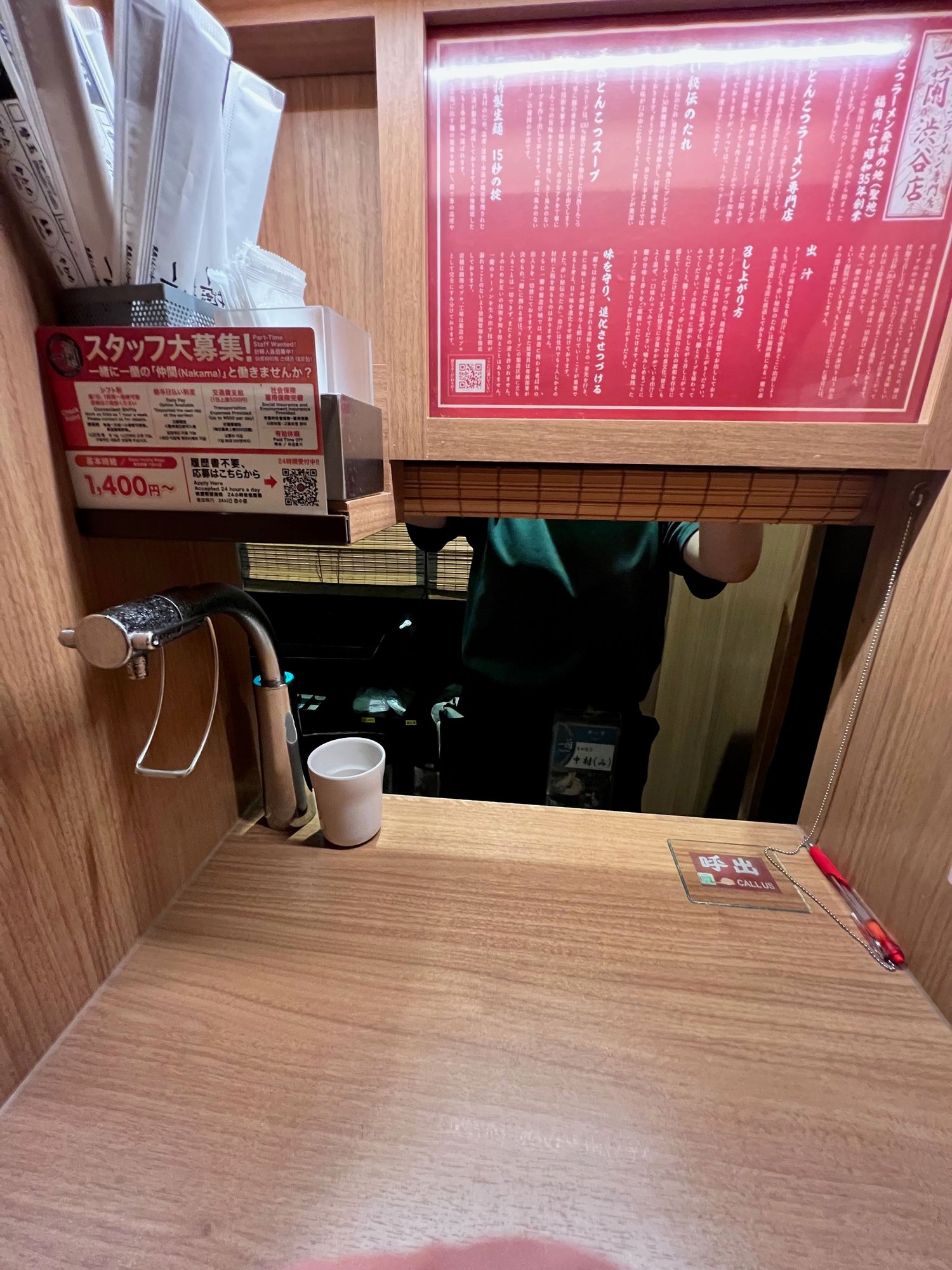
My individual eating booth - notice I cannot see the face of my server!
After lunch we took the metro to the Roppongi Hills area to visit the Mori Art Museum. One thing we realized is that the Japanese are VERY punctual. I just assumed when we arrived early that we would be allowed to enter if we had our tickets. However, they asked us to return at the reserved time. We grabbed some coffee at a nearby cafe and then entered at our 2PM ticketed time slot. I was very curious to see the featured exhibition - “Machine Love: Video Game, AI and Contemporary Art”. I would characterize the exhibition as thought provoking, dystopian and somewhat disturbing. The intersection of the digital world, human emotion and behaviors and how we try to make sense of it all through art is explored through a variety of mediums - both digital and real world. DH did not enjoy it as much as teamLab Borderless. I think it was a bit hard on our brains following on the heels of the teamLab digital experience. On the other hand, the juxtapositionof these two museum makes for an interesting commentary on how the digital experience -AI, gaming, virtual reality, digital devices have taken over our lives.
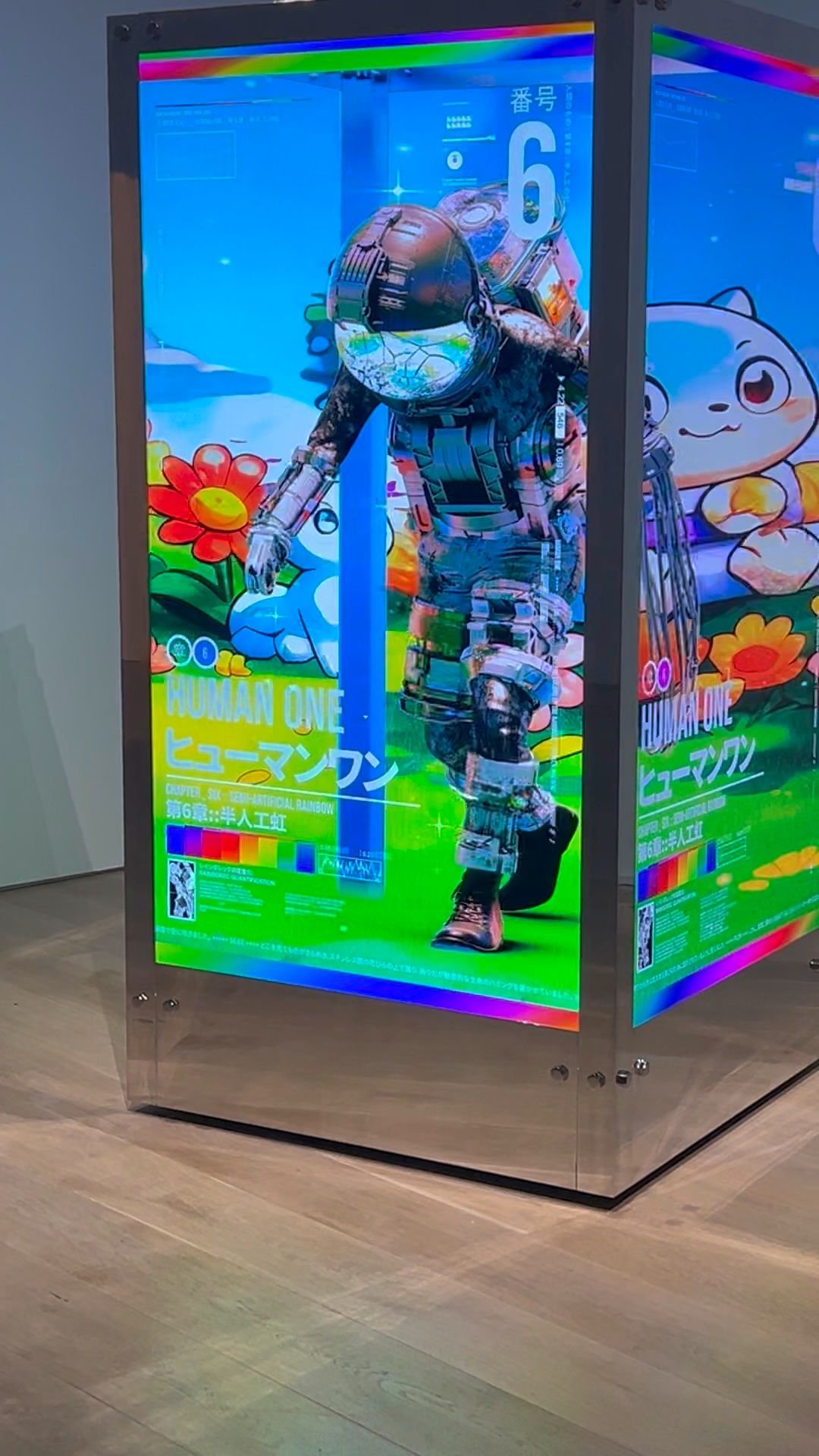
Human One - artist Beeple
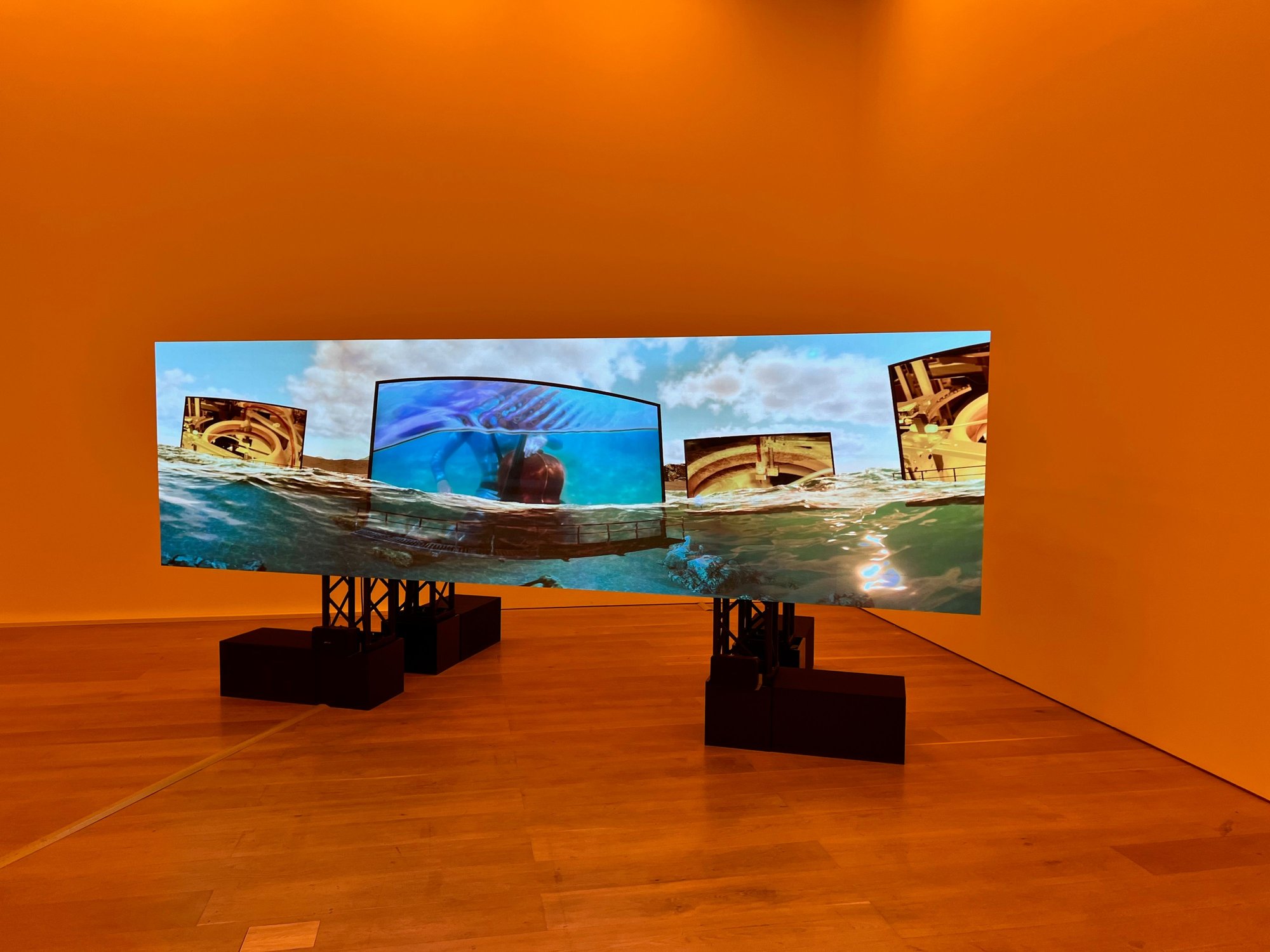
Silicon Serenade - artist Hsu Chia-Wei
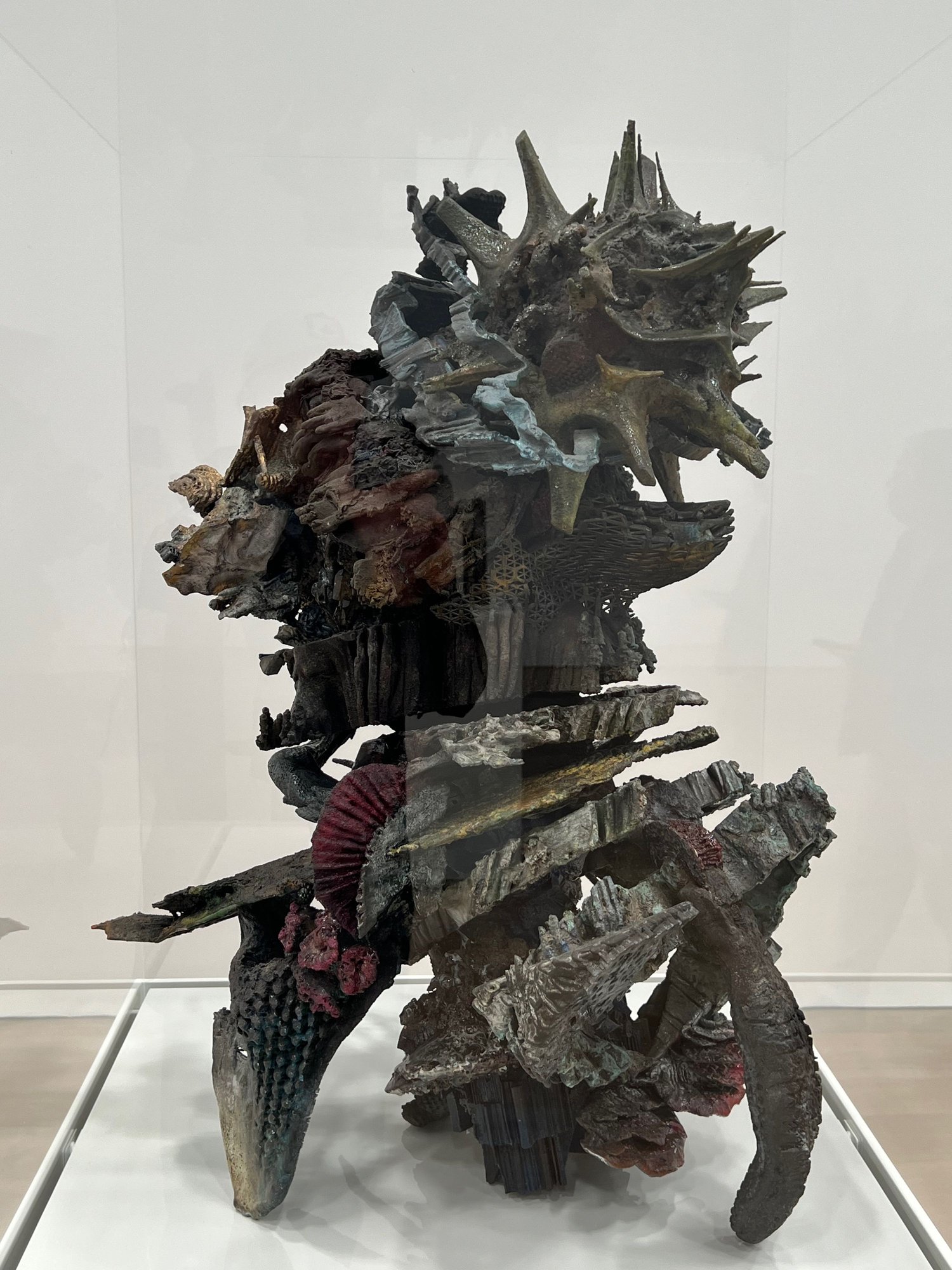
From the series "End of Imagination" - artist Adrian Villar Rojas
Since it was still raining AND we were exhausted we decided to head back to our hotel. We spoke to the hotel staff and arranged for a 4:30AM taxi pick-up the next morning to take us to the Toyosu Fish Market to watch the tuna auction. After a nice nap we walked over to Tsukiji Fish Market - the former site for the tuna auction. Since we were visiting in the evening it was fairly quiet. We made our way to yet another chain restaurant. Sushi Zanmai. Probably because we came a bit early we were seated at the counter right away. It is always fascinating to watch the sushi chefs as they work in front of you, rapidly preparing the never ending stream of orders. We then proceeded to have an amazing sushi dinner ourselves. Since we live in California we eat sushi frequently. But we were surprised at the quality of the sushi that was served in Tokyo. The fish literally just melts in your mouth! DH also ordered black cod with miso sauce. Oishii! - another dish to die for! With happy tummies we made our way back to the hotel for an early night so that we could meet our early AM taxi.

Sushi Zanmai - Tsukiji Market location: It may not look like much but this miso black cod was scrumptious!
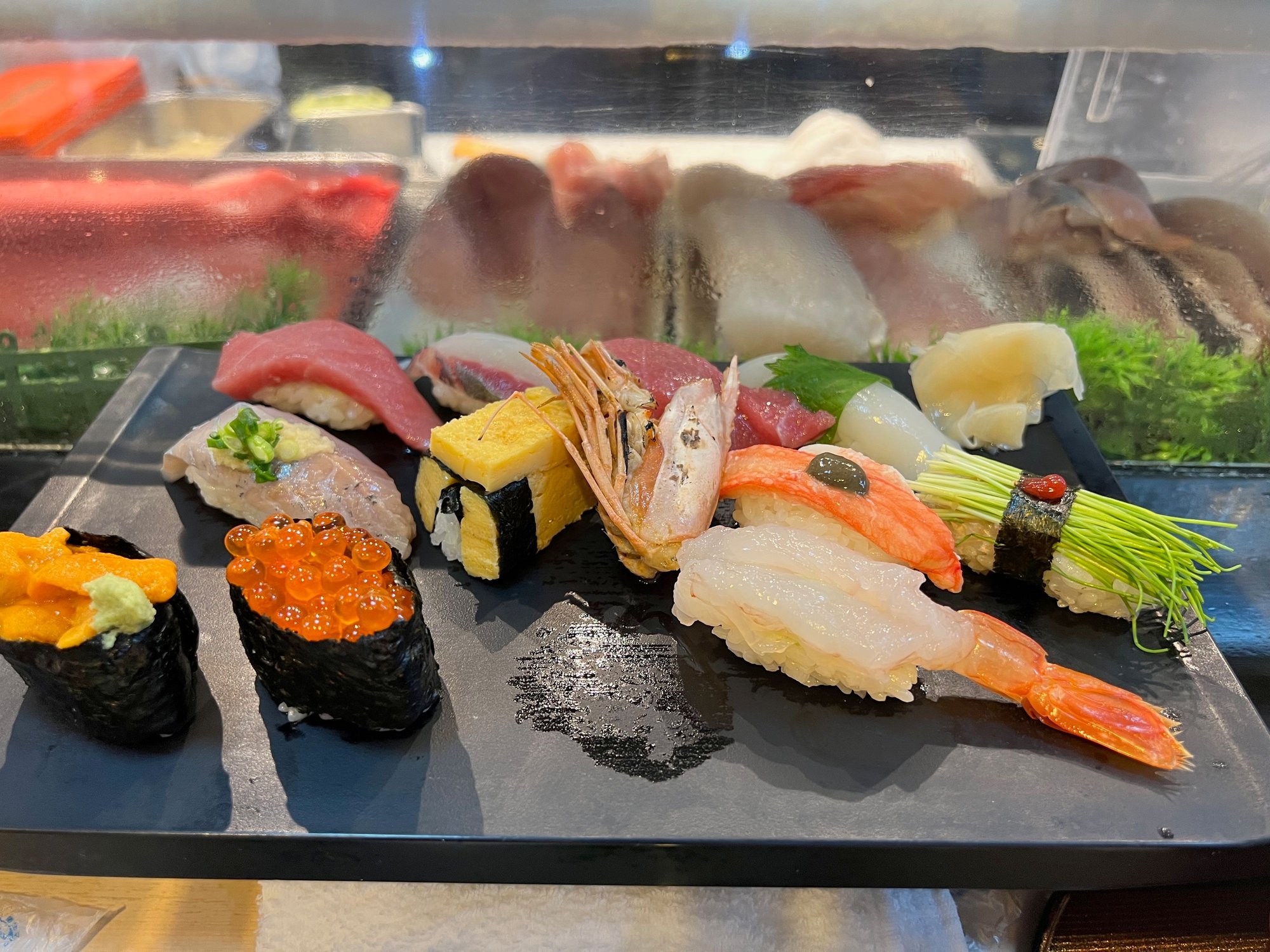
Sushi Zanmai
Next up: Day 5 - 28,500 steps walking through Tokyo!
May 26th, 2025 | 07:40 AM
#12



Joined: Jan 2003
Posts: 21,719
Likes: 0
>> Hello Kitty characters and a mini-stamp trail
Oh, those are ink stamps, desu ne? Shachihata produces ink and stationary.
Some people collect ink stamps in a stamp book. You enter a place and there is an ink pad and stamp, and you can DIY like a passport stamp. You can find these in temples and shrines and many other sites like castles, train stations, etc.
You can get a stamp book to collect these seals/stamps. The books are called goshuincho. A stamp is called goshuin or eki stamp (eki meaning train station) The word stamp is pronounced su-ta-m-pu in Japanese but the English pronunciation would be understood. This would be a must have/use if you were on a pilgrimage like the one in Shikoku.
Did you visit the outer market at Tsukiji? What did you think. There are two or three Sushizanmai locations in Tsukiji.
Oh, those are ink stamps, desu ne? Shachihata produces ink and stationary.
Some people collect ink stamps in a stamp book. You enter a place and there is an ink pad and stamp, and you can DIY like a passport stamp. You can find these in temples and shrines and many other sites like castles, train stations, etc.
You can get a stamp book to collect these seals/stamps. The books are called goshuincho. A stamp is called goshuin or eki stamp (eki meaning train station) The word stamp is pronounced su-ta-m-pu in Japanese but the English pronunciation would be understood. This would be a must have/use if you were on a pilgrimage like the one in Shikoku.
Did you visit the outer market at Tsukiji? What did you think. There are two or three Sushizanmai locations in Tsukiji.
May 26th, 2025 | 01:01 PM
#13
Original Poster
Joined: Jul 2008
Posts: 191
Likes: 0
Day 5 - 28,500 steps through Tokyo

Checking on the quality of frozen tuna prior to auction at Toyosu Market. This is your view from the Visitor Walkway.
Our taxi was waiting at 4:30 to take us to Toyosu Fish Market since the metro does not start running early enough to reliably get you to the site in time for the auction. I had applied for and won tickets to the lottery to visit the Tuna Auction Observation Deck. It is a somewhat convoluted process which involves submitting your application during a very specific time period the month before you plan to visit. You can just go to the Visitor Walkway without a ticket or reservation. Either method is free. However, we realized that if you are standing on the walkway you cannot see the auction of the giant, fresh tuna as they are positioned directly underneath the walkway. However, from the walkway you can observe the auctioning of the frozen tuna which has been shipped from more distant seas. I wasn’t sure if DH would want to wake up so early to see this, but it turns out that he loves to watch the Nat Geo channel reality show “Wicked Tuna” (I call it Bad Tuna - LOL). Anyway he was really excited to see what he felt was the real ending of the show when the tuna actually comes to market. The auctioneers jump up as they fling their hands up in the air seeking bids. It was impressive to see the workers manipulate these giant fish into their packing cases. Afterward we went to a nearby restaurant for a sushi breakfast. Unfortunately, it was good, but not great. In fact we felt that it was similar to the sushi we eat in the States, definitely not as good as last night’s meal.
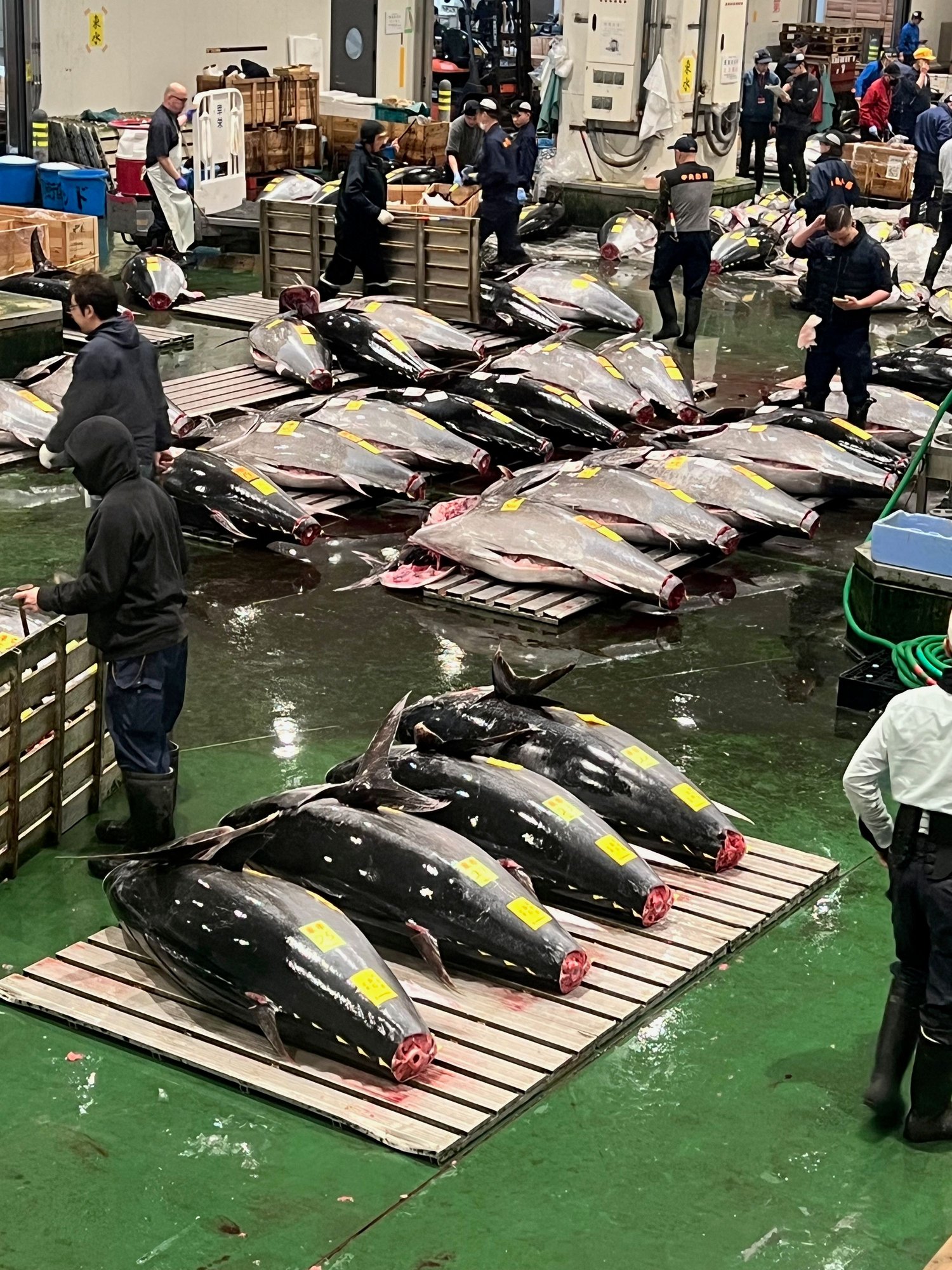
Fresh tuna ready for auction. You can only see this from the ticketed area on the 2nd floor.

If you look closely you can see the auctioneer gesturing with his fingers as he auctions off the tuna.
Next up we took the metro to Senso-ji Temple. I know, I know - this is another typical tourist destination, but it was certainly an impressive sight to see. Because our day had started so early with the tuna auction we arrived early enough to visit the temple comfortably without crowding. We even had time to check our fortunes. I received the “Best Fortune.” However, my husband received the “Lowest Fortune.” Convinced he could do better than that, he tried again. This time he received the “WORST Fortune.” He decided he had better quit at that point! We veered off into the Denbou-in Garden and wandered peacefully through it - admiring the flowering azaleas, the calm atmosphere and taking photos of the nearby Tokyo Skytree juxtaposed against the beautiful Five-Storied Pagoda. I have since learned that the Denbou-in Garden is only open once a year for a limited time from late April to early May. Maybe this was part of my “Best Fortune” kicking in. Feeling restored we exited the garden into…mass chaos! There were just hordes of people flowing down Nakamise-dori and into the temple complex. Now we were reaping DH’s “Worst Fortune”!
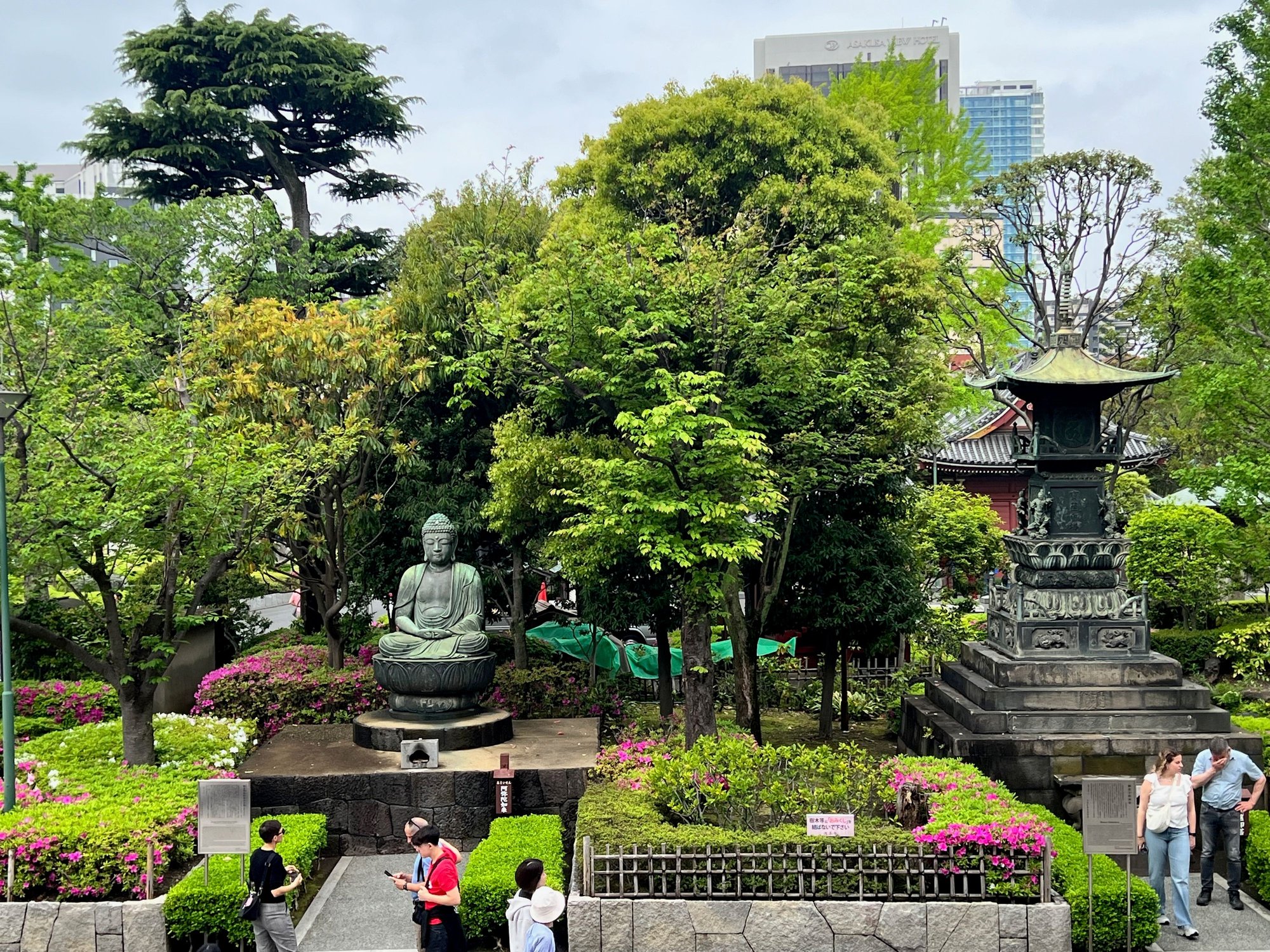
Beautiful Denbou-in Garden.
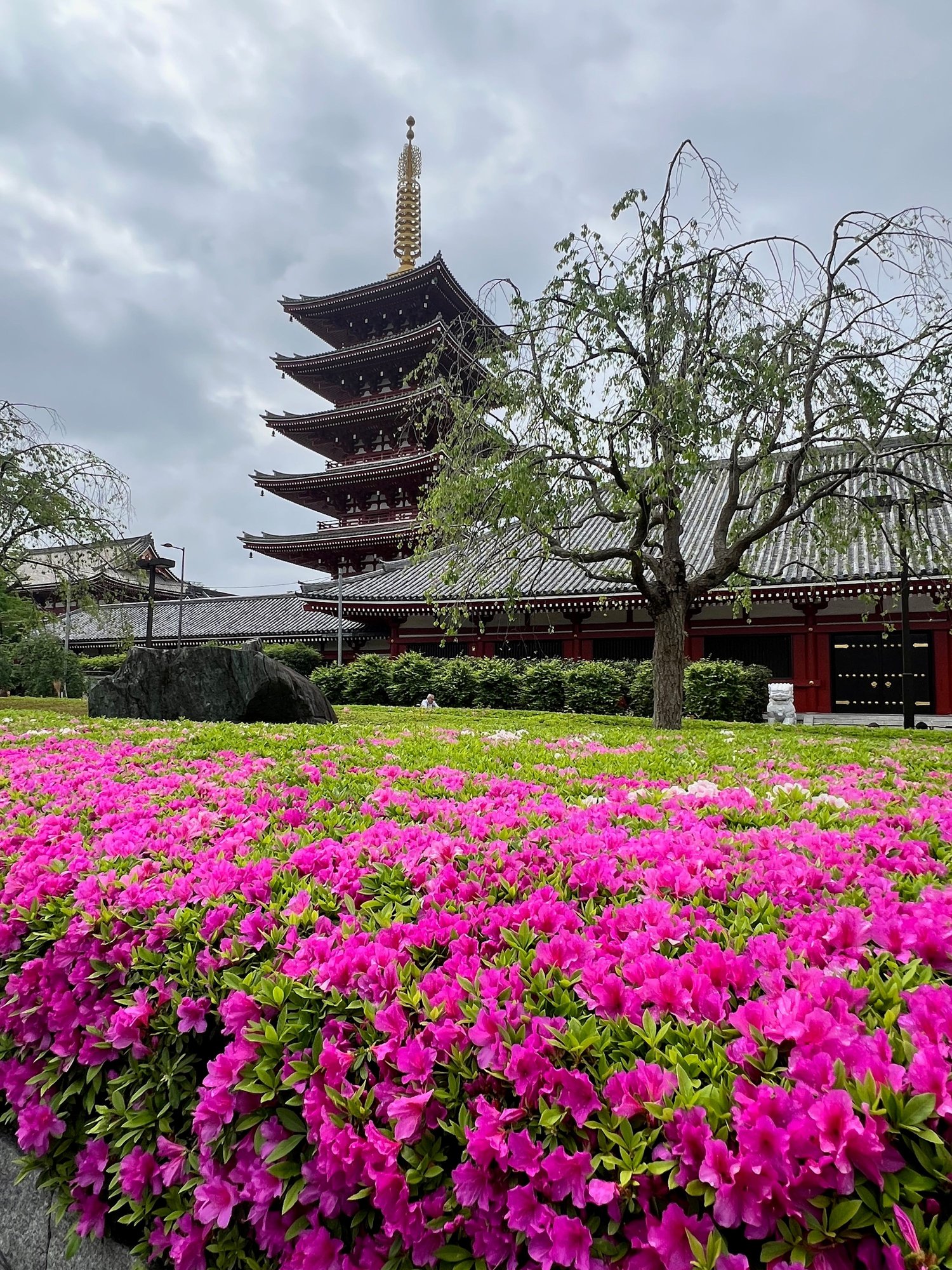
Azaleas in full bloom in Denbou-in Garden
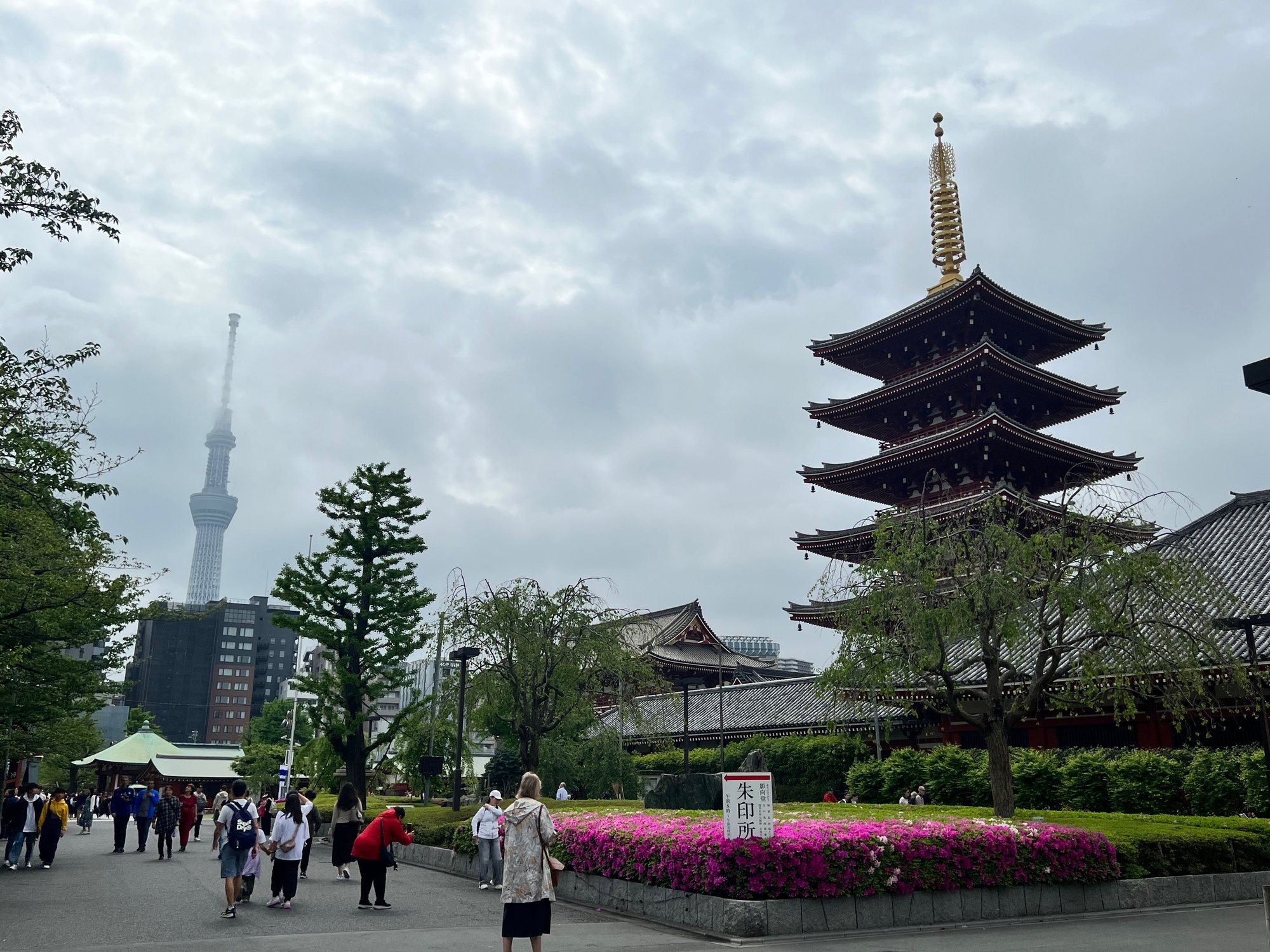
Five-Storied Pagoda stands in contrast toTokyo Skytree in the background.
So a word about Golden Week - Every year during a period starting at the end of April and extending into early May, Japan celebrates 4 national holidays in quick succession: Showa Day, Constitution Memorial Day, Greenery Day, and Children's Day. Many Japanese take advantage of time off to take vacation and travel. Plane and hotel reservations can be harder to obtain and are definitely more expensive. We had been expecting more crowds and up until now had been pleasantly surprised that they had not appeared. Now, once we left the garden, we watched a parade of kindergarten children wending their way up to the temple. We saw clusters of uniformed middle school kids running to the most popular food vendors. We figured they knew which vendors had the best snacks but there were just so many of them we knew it would be almost impossible to even get in line. DH quickly bought some snacks and then we rapidly walked against the human tide to leave the area. As we left we saw several more buses pull up to disgorge even more students!

Parade of very cute kindergartners marching up Nakamise-dori.
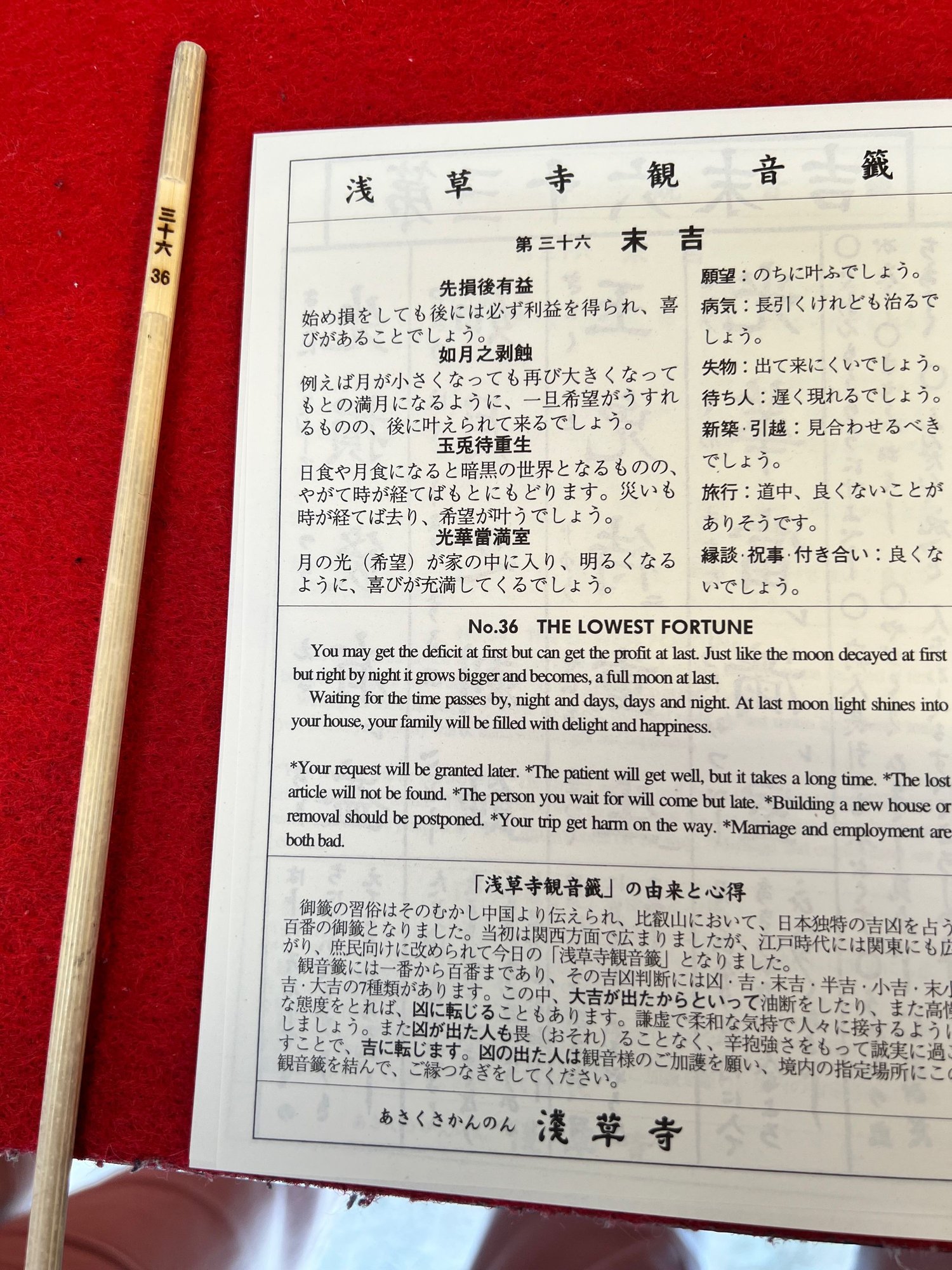
DH draws the "Lowest Fortune." He also drew the "Worst Fortune" but didn't want to take a photo of it.
Because we hadn’t had a chance to eat tonkatsu the night that we went to Shinjuku, DH searched for and found a local tonkatsu restaurant within easy walking distance. We arrived about 10 min before Tonkatsu Yamabe opened and joined the line of patiently waiting customers - again a mix of tourists and locals. Once the restaurant opened we were shown to our table - the menu was very simple with about 7 main menu items. When the tonkatsu arrived it looked so large I thought maybe we should have just ordered 1 and split it. Then I started eating and before I had even finished my order, DH had gobbled his down and was hungrily eyeing my meal. I was still happily savoring my delicious tonkatsu and did not want to share at all! I think I grudgingly gave him one bite of mine. The meal was simple, cheap and delicious - in other words, perfect.
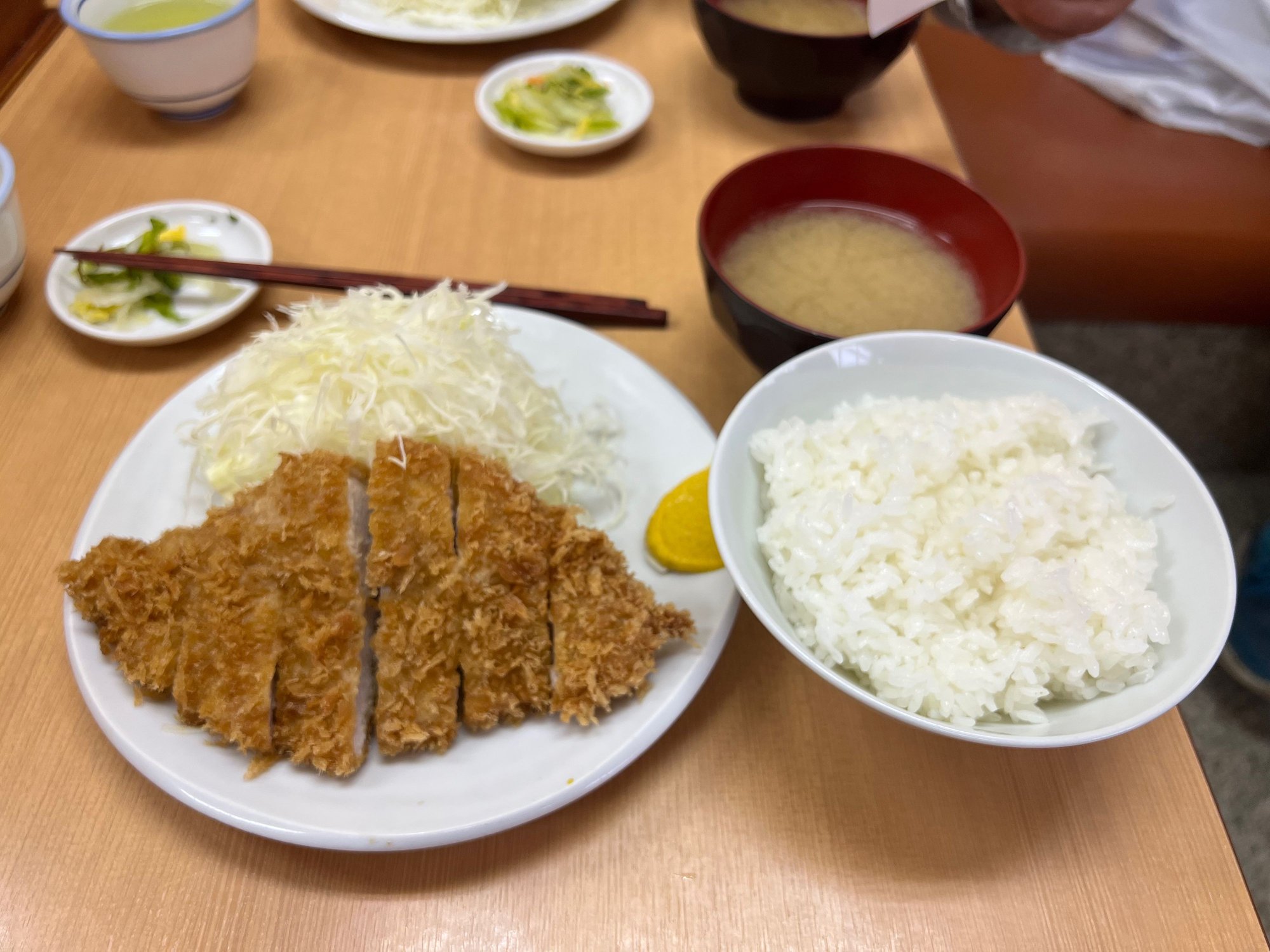
My giant serving of delicious tonkatsu - yum!
Because we had had such a filling meal we decided to walk to the Nezu metro station where we would meet our guide for our Yanaka Ginza walking tour. This was an easy mile long walk passing through Ueno Park. Local people were out in the park eating their lunches, paddling in the swan boats on the lake, taking a stroll or just a nap on the benches. We identified our meeting spot and then found a local cafe to order coffee and a slice of cake for a quick pick me up.
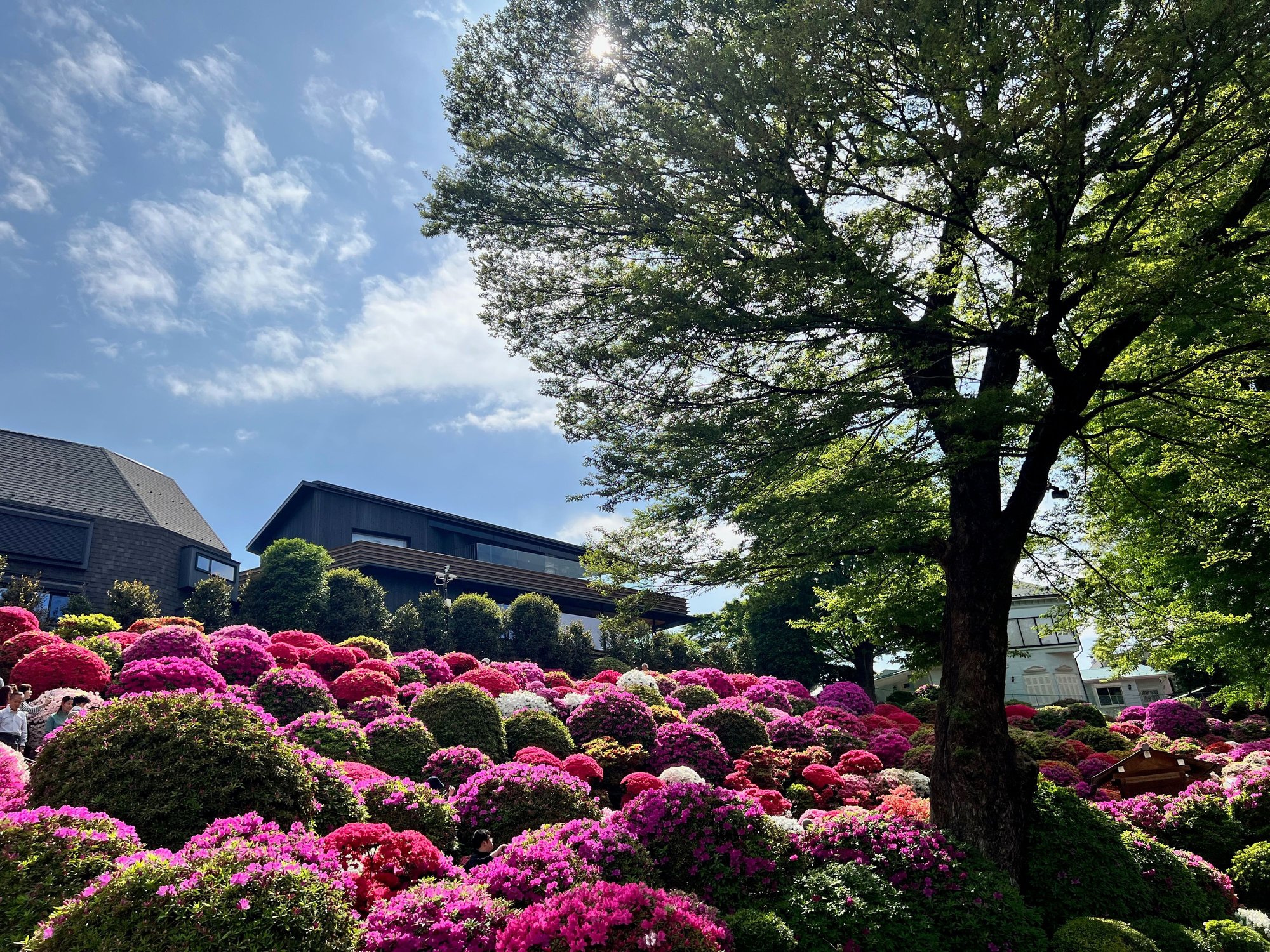
Flowering azaleas at Nezu Shrine.
We then met up with our guide, Nori. Nori is a retired, former civil servant who lived about 90 minutes away from Tokyo. While he was not the most dynamic tour guide we have ever met, he was very conscientious in showing us the sights of Yanaka Ginza. This area is quite interesting - a marked contrast from the busy, more modern areas that we had visited. My sense of Yanaka was of an older, more established neighborhood. As soon as you moved even one block away from the main streets, you were walking through small streets surrounded by private homes - many beautifully restored, some just wooden shacks. The area also is home to dozens of Buddhist temples and Shinto shrines. Nezu Shrine, in particular, had the most amazing hillside of azalea bushes in full bloom. We walked past temple after temple and then through Yanaka Cemetery. In some ways it reminded me of Recoleta Cemetery (Buenos Aires) or Bonaventure Cemetery (Savannah, GA). Nori would comment that the neglected gravesites meant either the descendants were falling down on the job or that the family line had run out and there were no descendants left to continue to show proper respect. He clearly thought that the former option was quite shameful.
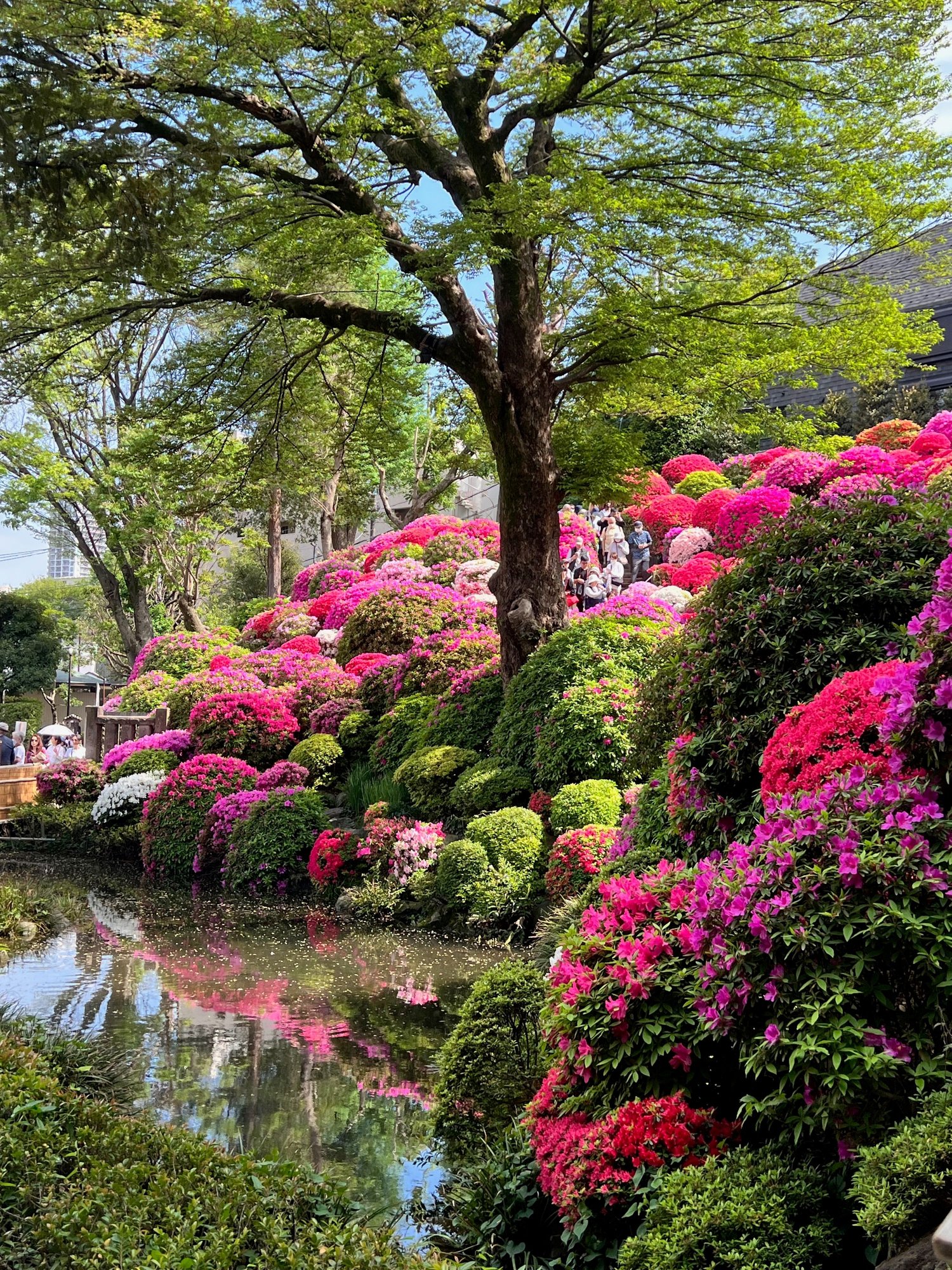
Nezu Shrine
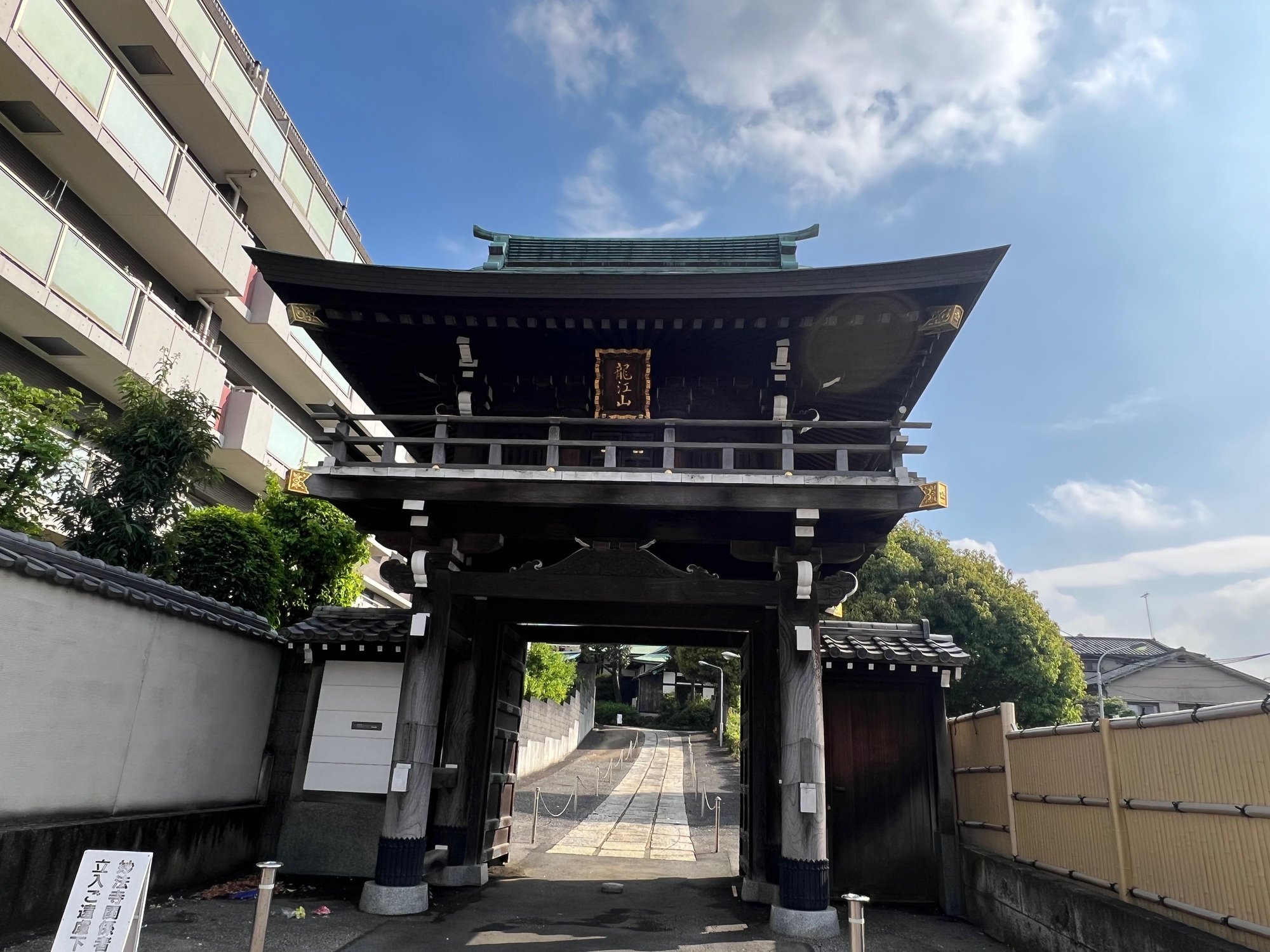
A Buddhist temple
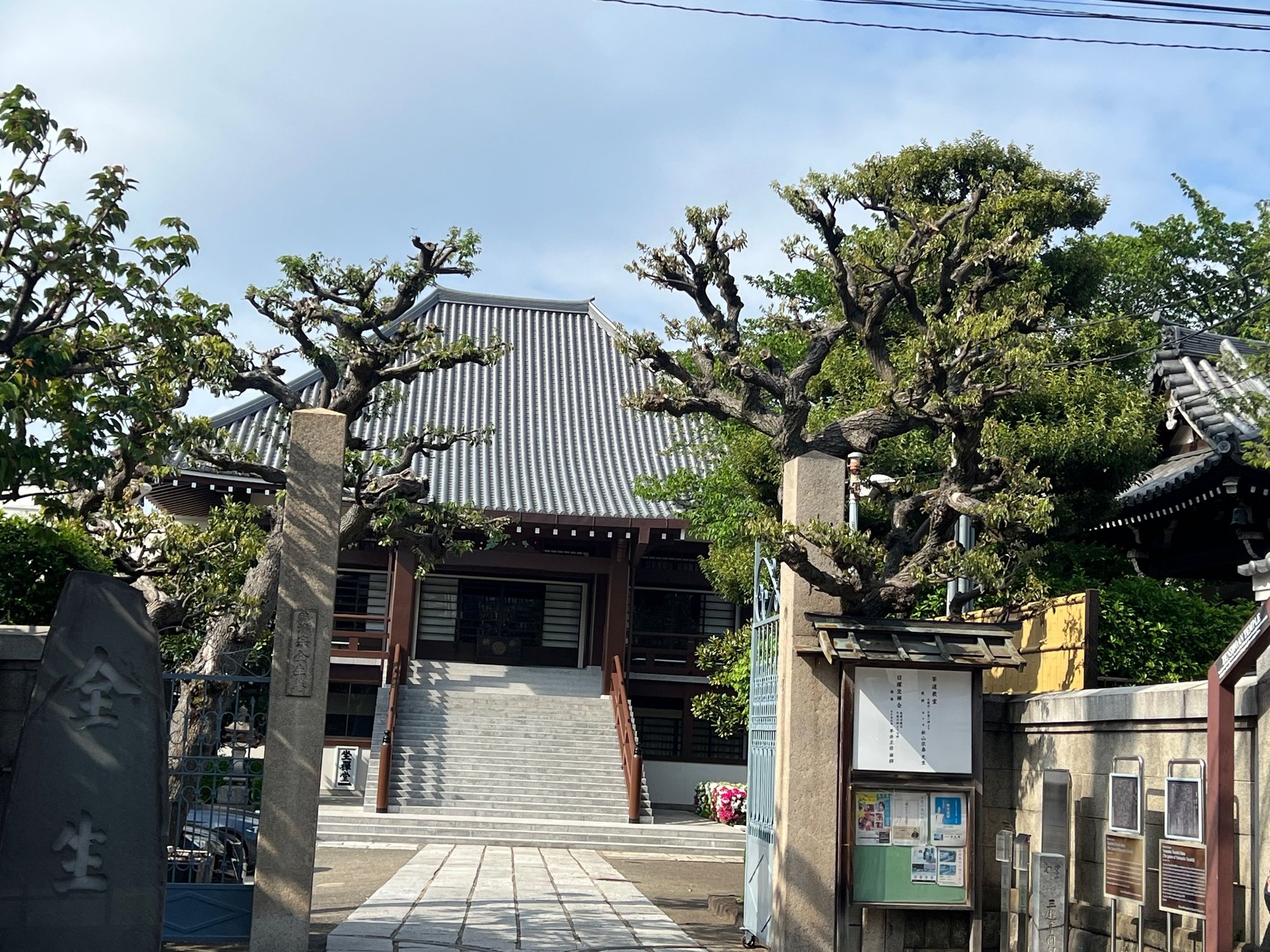
Another Buddhist temple
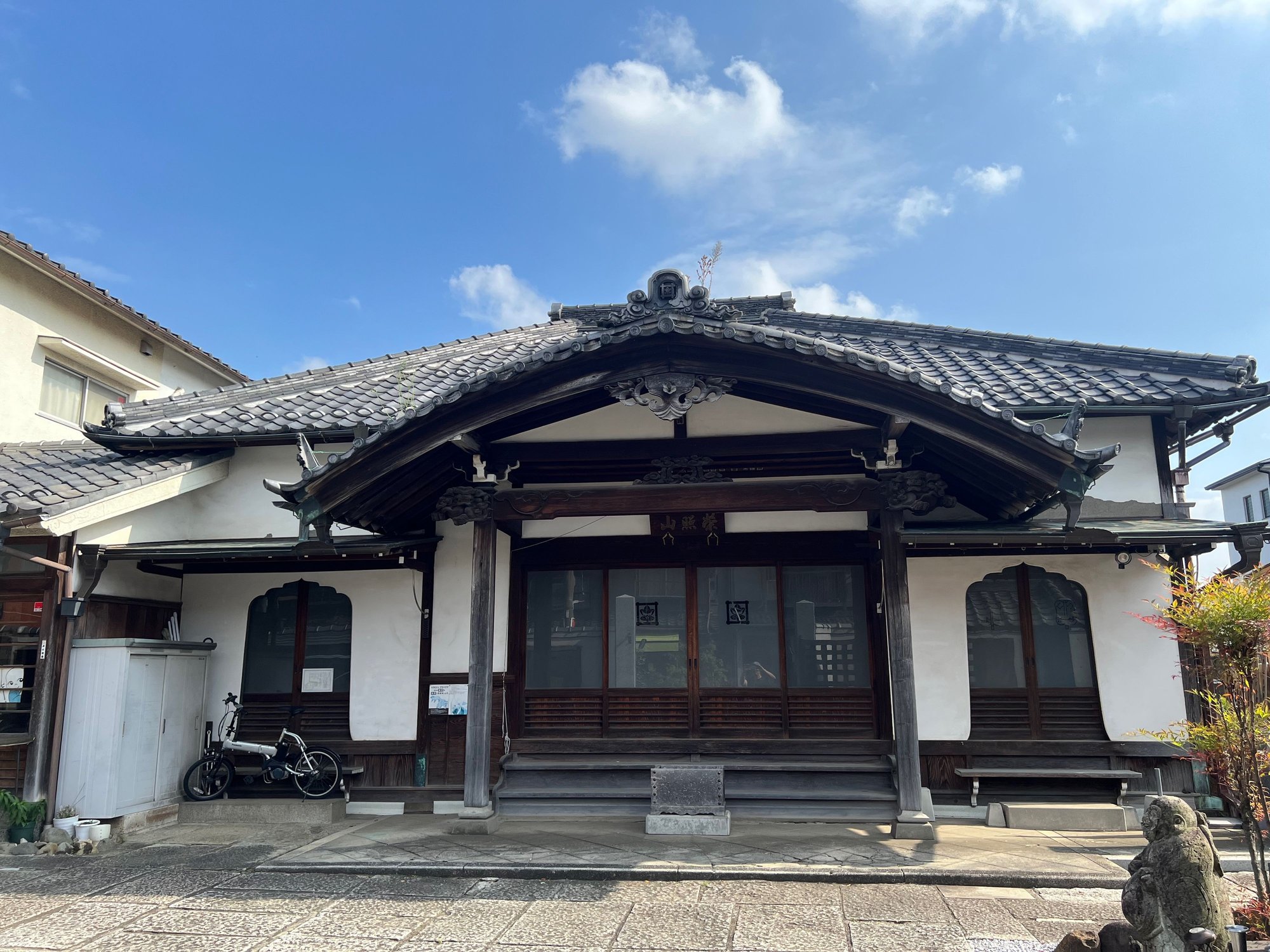
...and yet another Buddhist temple.
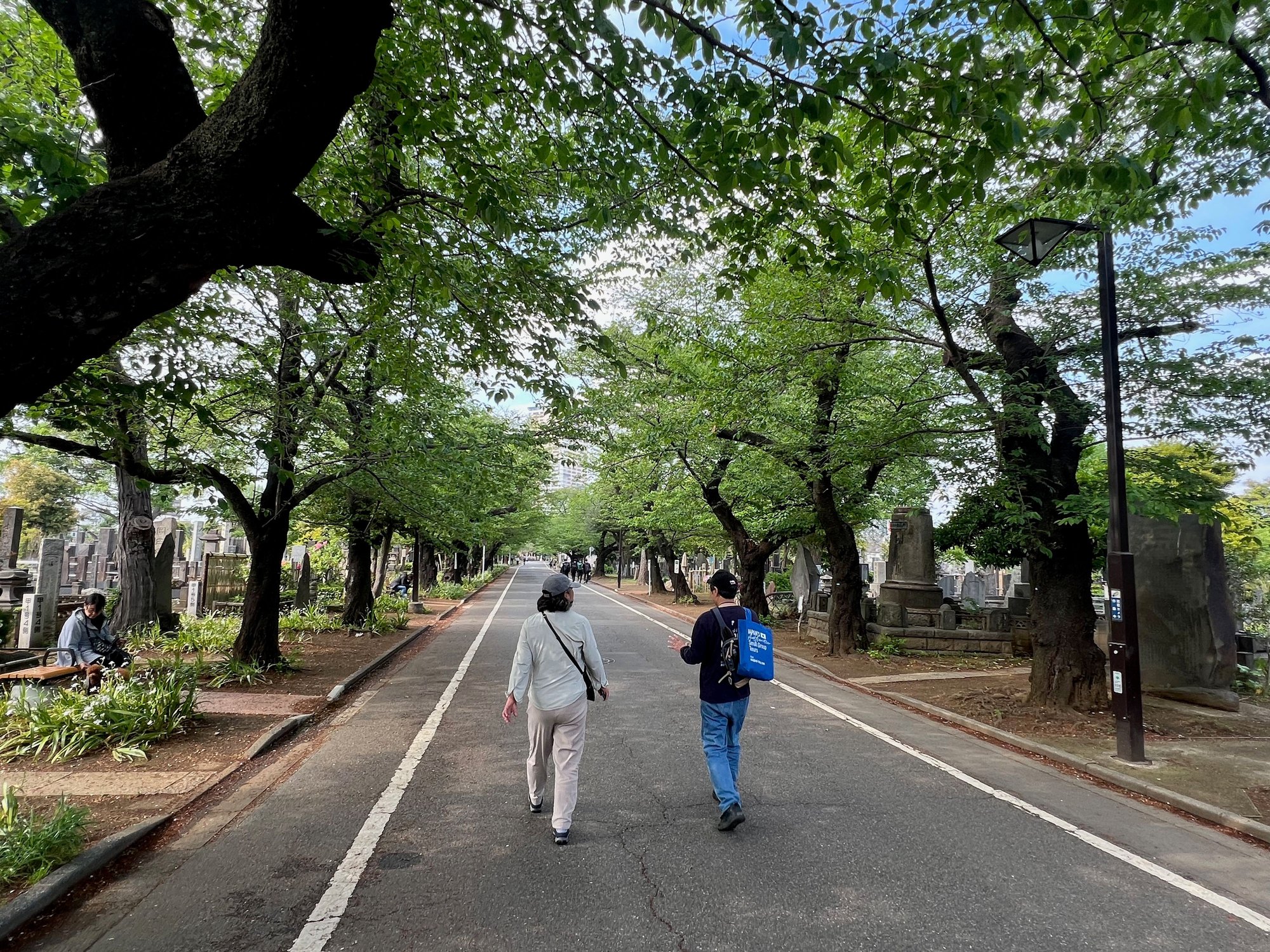
Walking through Yanaka Cemetery
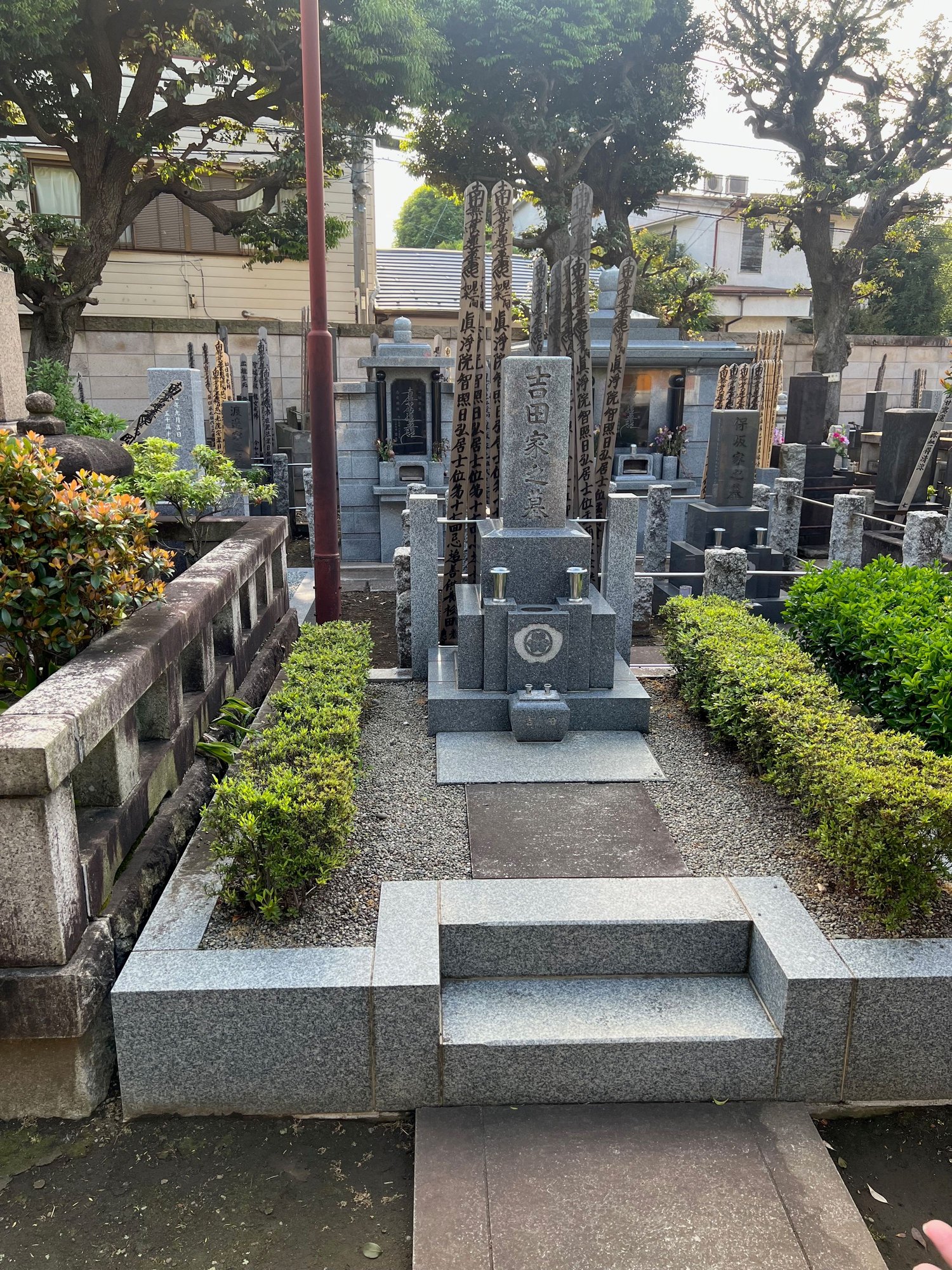
A well-tended family plot
We made one stop at a tea shop to take a break and to do a little craft project! We were presented with a variety of tiny cat figurines. DH and I each selected a particular pose and were given a completely blank figurine and fine point markers to “decorate” the cats. As you can see, DH’s came out nicely. Mine…not so nicely. Every friend we have shown has burst out laughing when they saw how my cat turned out. At least it provides comic relief.
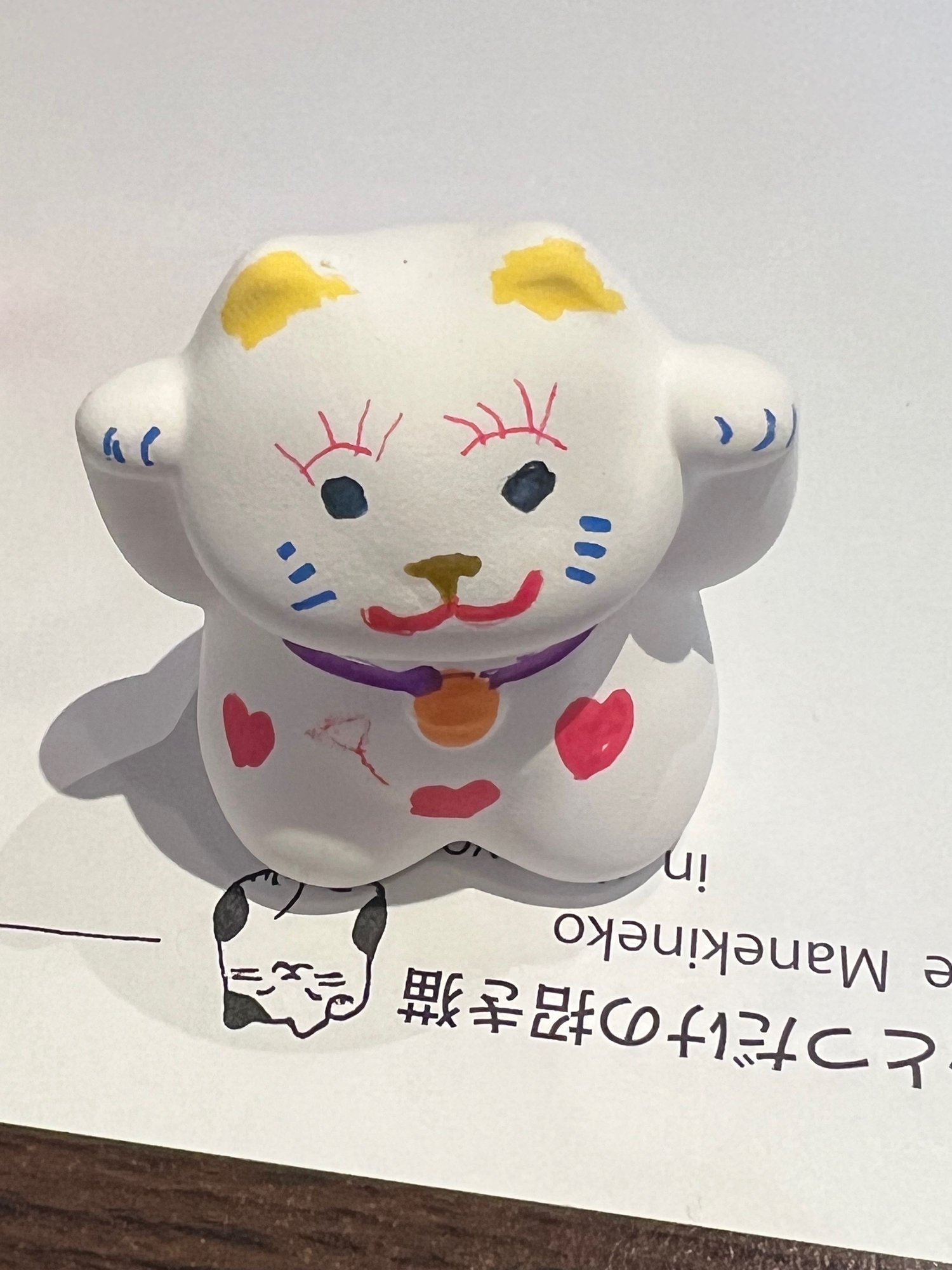
DH's cute little cat.
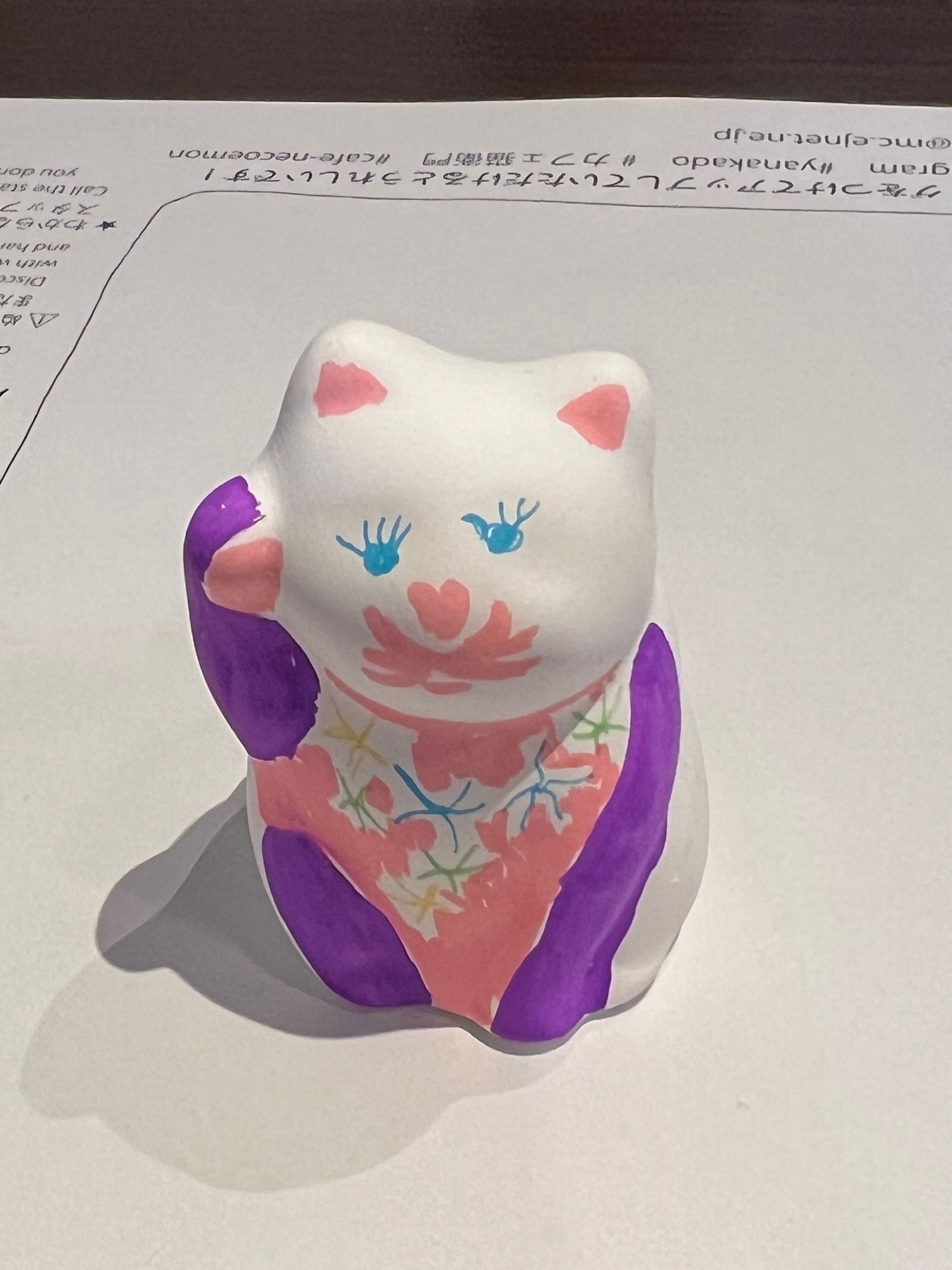
My not so cute cat - it's okay to laugh
At the end of the tour we walked down Yanaka Ginza shopping street. Nori bought us a bottle of Ramune - a lemon-lime carbonated beverage that comes in a “Codd-neck bottle sealed with a blue marble”. When you are ready to drink it you slap the marble down into the bottle which releases the seal and allows you to drink from the bottle. DH didn’t quite understand how this was supposed to work and hit the marble so hard, the drink kind of exploded out the top as the marble popped down. The shopkeeper started laughing and we helped to wipe up the mess. Nori said that Ramune was a classic and popular drink that everyone in Japan had tried at one time or another. And with that explosive conclusion we said our good-byes. As we rode the metro back to Ginza we agreed to just go to Ginza Sand and order sandwiches again. Fortunately, the wait wasn’t quite as long as we got there right after they opened, though there was still a line waiting. We limped back to the hotel, ate our sandwiches, packed our things and after going non-stop for 15 hours straight, collapsed into bed.
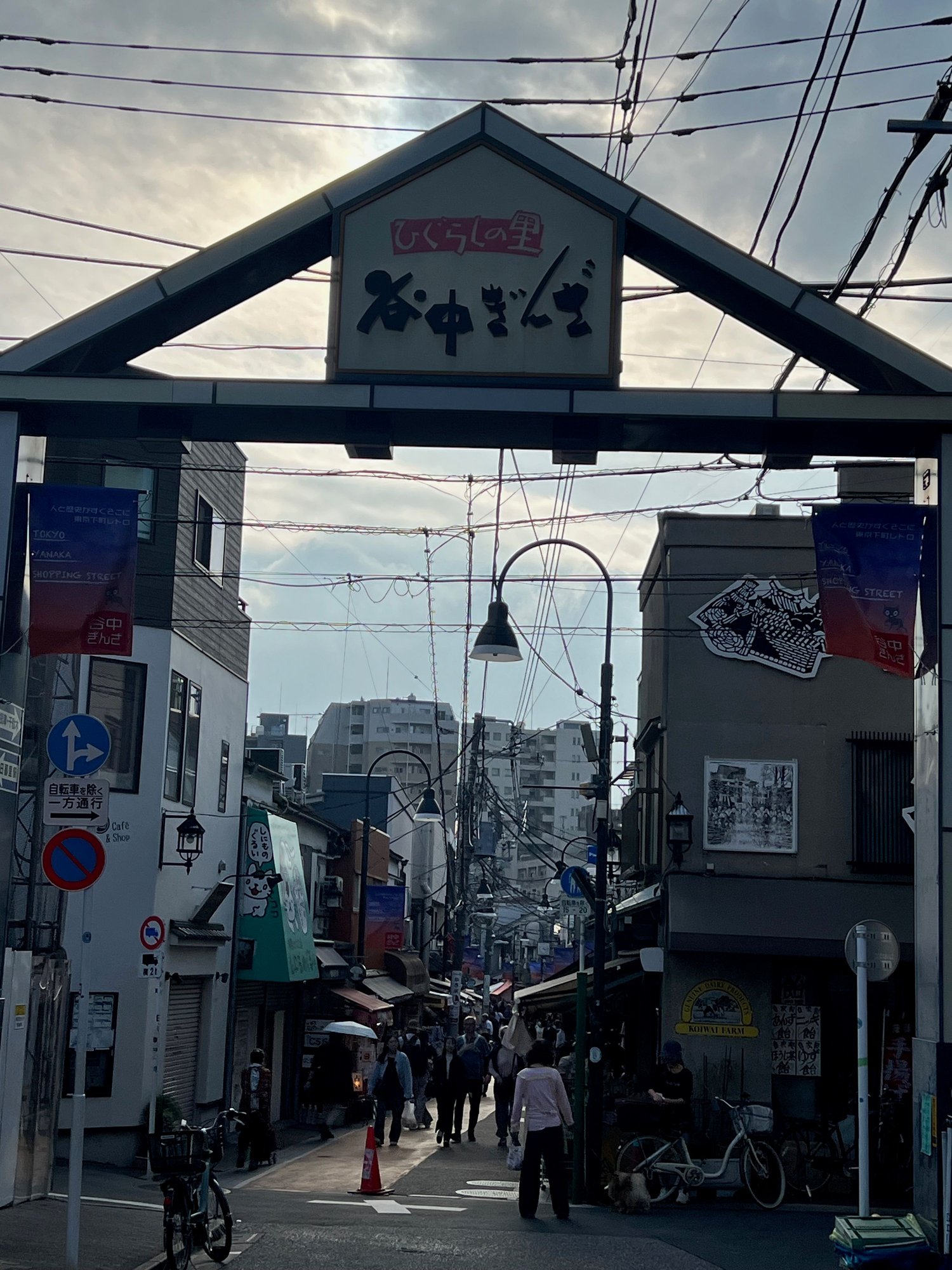
Entrance to Yanaka Ginza shopping street.
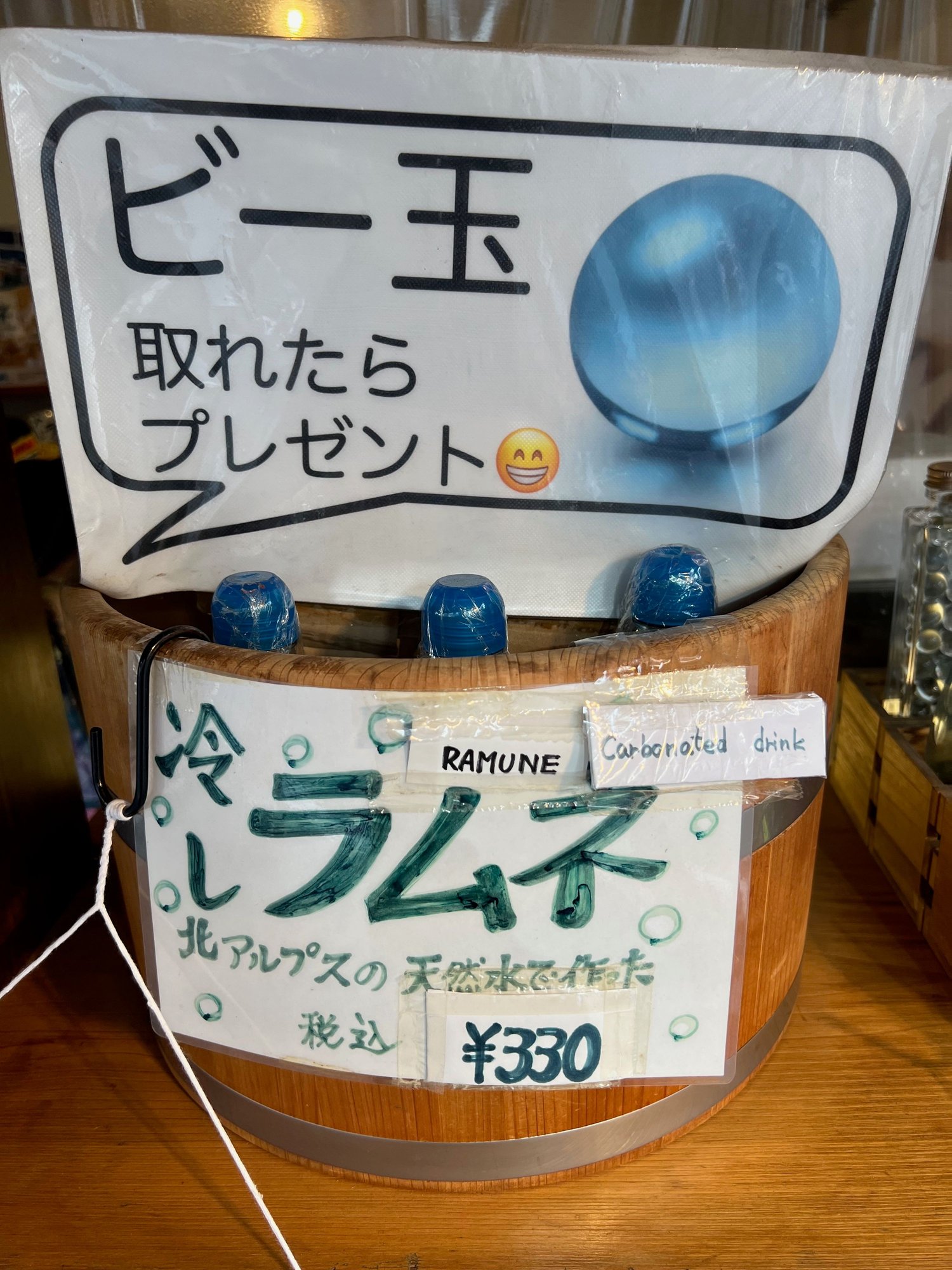
Bottles of Ramune in the bucket. You can just see the blue marble top peeking over the edge.
Next up Day 6 - Shinkansen to Kyoto, Hotel Mume!
May 26th, 2025 | 01:07 PM
#14
Original Poster
Joined: Jul 2008
Posts: 191
Likes: 0
mrwunrfl - I thought about starting a goshuincho but then decided that it would make me nuts trying to get that stamp at every possible location. Some of the places had lines and we were trying to avoid lines as much as possible.
With respect to Tsukiji we didn't really visit the outer market as we just made a beeline for Sushizanmai later in the evening only to eat dinner. I didn't realize there were multiple locations even within Tsukiji. There were just too many places to visit for the brief amount of time that we visited Tokyo.
With respect to Tsukiji we didn't really visit the outer market as we just made a beeline for Sushizanmai later in the evening only to eat dinner. I didn't realize there were multiple locations even within Tsukiji. There were just too many places to visit for the brief amount of time that we visited Tokyo.
May 28th, 2025 | 08:43 AM
#17

Joined: Apr 2007
Posts: 567
Likes: 0
I visited the Nezu shrine in November, and it's wonderful to see how those round bushes are covered in azaleas in the spring. My mouth is watering looking at your photo of tonkatsu!
Aren't the buildable stamp routes great! I did something similar at a garden I visited near the Tokyo Dome.
Aren't the buildable stamp routes great! I did something similar at a garden I visited near the Tokyo Dome.
May 28th, 2025 | 09:39 PM
#18
Original Poster
Joined: Jul 2008
Posts: 191
Likes: 0
Day 6 - 19,500 steps - Arriving in Kyoto
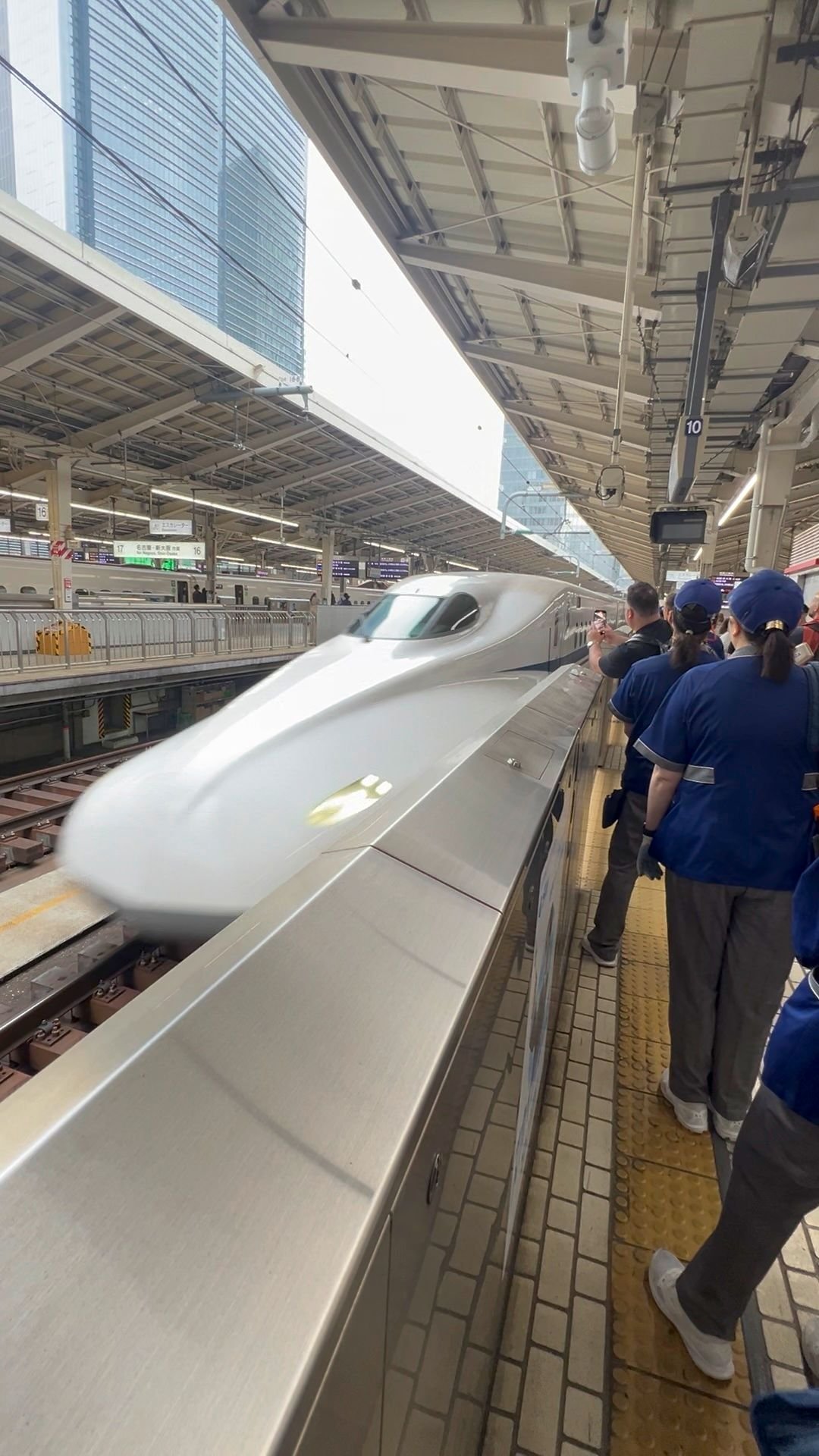
The sleek Shinkansen arriving into Tokyo.
After eating a quick light breakfast in our room we checked out of the Hyatt Centric Ginza. We very much enjoyed our stay at this hotel - we had used points and felt that it was a good value. Our room was quite comfortable, the staff were very friendly and helpful, and the hotel was conveniently located near the metro station. Despite this we decided to take a cab to Tokyo Station so we wouldn’t have to roll our suitcases down the sidewalk and tire ourselves out before we even started the day. Once we got to Tokyo Station we scouted around a few of the shops to select our ekibens - or train station lunch box meals. I thought it was interesting that there were all of these cautions about food etiquette in public spaces - if you bought take away you should either take it home or eat right next to the establishment - you shouldn’t eat while walking down the street. You should always be prepared to hold onto any trash you might have since there are no public trash cans. I would have thought the Japanese would frown upon eating on the Shinkansen, but in fact it’s a time honored tradition. Once we selected our ekibens we floundered a bit trying to find the platform for our train to Kyoto. But we managed to be waiting at the right spot with plenty of time to spare. I decided to buy our tickets online way in advance before we even left the US. Again, the process was a bit convoluted, but I was able to print out our QR code tickets and these worked without issue to enter through the gate to the appropriate platform.

Our brief glimpse of Mt. Fuji
Once we boarded we stowed our carry-on size luggage above our heads. We had hardly started moving when DH and I happily broke open our ekibens and started eating. We ate quickly and then both of us conked out for a nap. We were exhausted from the past 3 days of constant walking and the train ride was so smooth. All of a sudden I was startled awake by my very loud cell phone reminding me that it was time to wake up. I was embarrassed by how loud it sounded in the very quiet train and hastily turned it off. I had set the alarm to wake me up by 40 min out of Tokyo Station so that we could try to see Mt. Fuji. I didn’t have much hope since it was such a cloudy day. Nevertheless, I set the alarm to give it a try. And all of a sudden the clouds parted for about a minute - long enough to see Mt. Fuji and to even grab a photo before the clouds came back in again like a curtain drawn closed.

Directions to Hotel Mume written in Japanese for the taxi driver.
The trip went by quickly and upon arriving into Kyoto we disembarked and proceeded to walk all the way to the other end of the station to enter the taxi line. Here is where I would like to say many “thanks” to progol for her amazing 2023 Japan trip report (see First-timers’ trip to Japan: 4 weeks, an unexpectedly awesome trip). She had written about her wonderful stay at Hotel Mume, a small boutique hotel located in the Gion district. When I first started to look at possibly booking a room I thought I was trying too far in advance. However, once I realized we would be coming during Golden Week, I tried emailing the hotel. To my dismay I was already too late but was asked if I wanted to go on a waiting list. Eventually someone cancelled and we were offered the Butterfly room! From that point on, I emailed a multitude of questions that the staff at Hotel Mume would promptly answer. I found that trying to plan our time in Kyoto was super confusing. The public transportation system is not quite as seamless as that in Tokyo. There are so many varied sites - some located quite far from the city center. Nana Shimuzu always responded promptly and thoroughly to all of my questions and I was so grateful for her thoughtful and kind assistance. An example: for some reason I didn’t think it would be possible to view a geisha performance. Nana pointed out that the Miyako Odori was actually holding performances during the time period that we were visiting. I was barely able to purchase tickets as by the time I went online, they were almost sold out. Nana also sent me detailed instructions in Japanese on Hotel Mume’s address with the best route from Kyoto Station that I could print out to show the taxi driver. This worked perfectly as our taxi driver did not speak English but was able to navigate using Nana’s information.
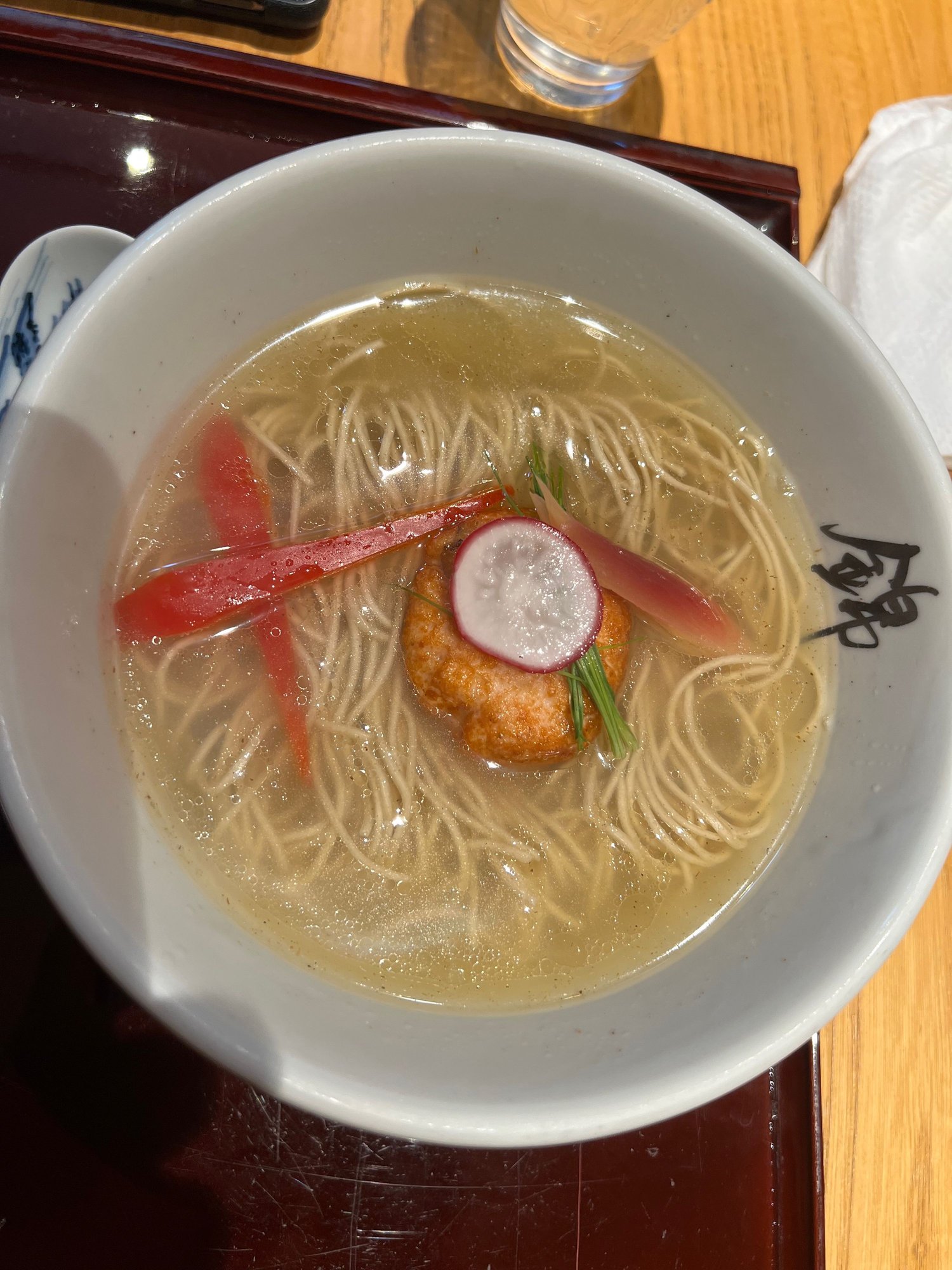
Ramen Nishiki: Salt based ramen with citrus
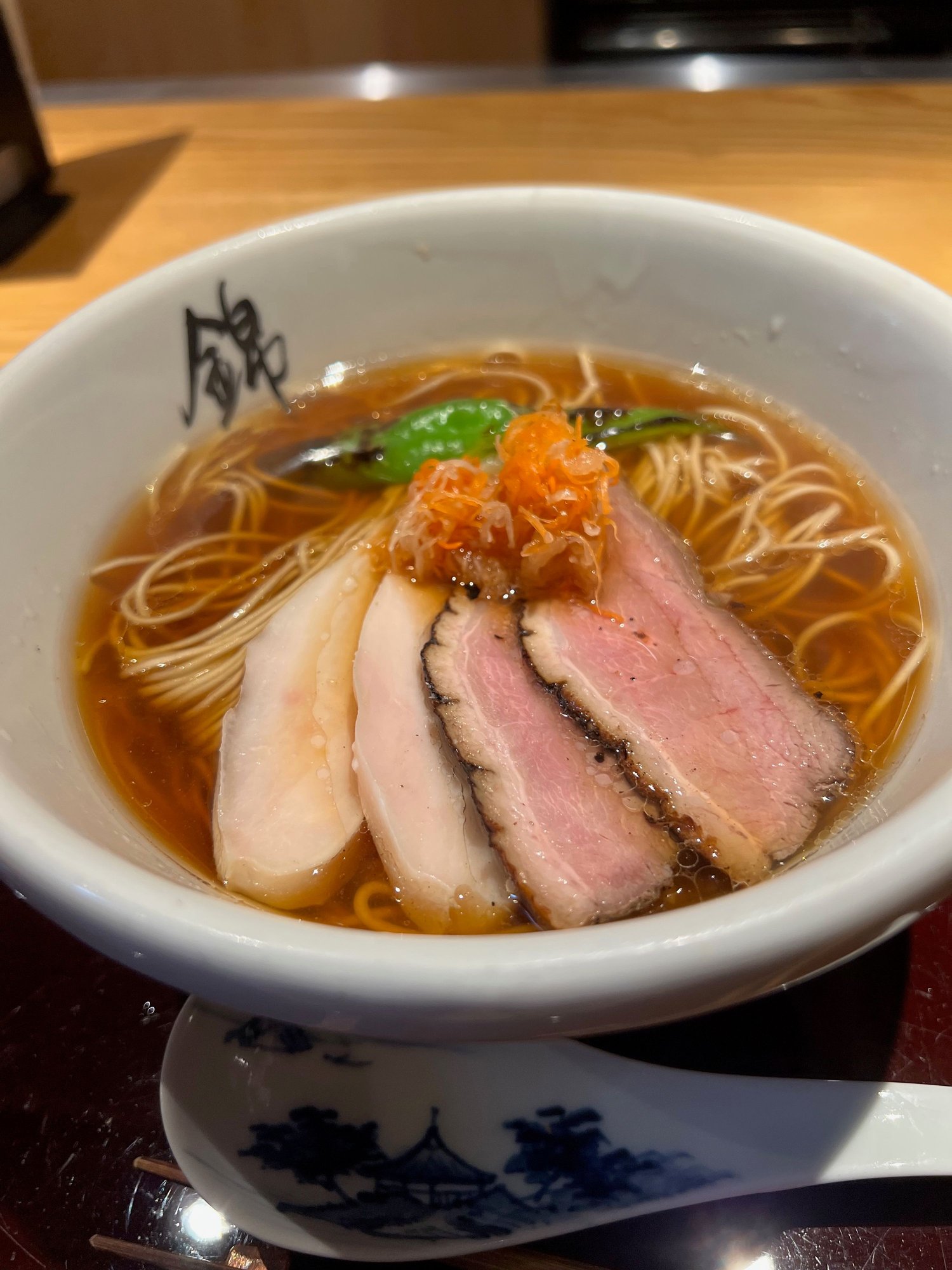
Ramen Nishiki: Soy based ramen with roasted duck
The CBD (Central Business District) where Kyoto Station is located was very busy, with both tourists and locals. However, to me the vibe of the city felt as if it were still in the 1980’s or thereabouts. This was in comparison to the ultra-modern atmosphere in much of Tokyo. However, once we turned down the tiny street in the Gion district, where Hotel Mume was located, it was as if all of the hustle and bustle of the city completely melted away. `We entered into a tranquil oasis. Even though we were early the staff happily informed us that our room was ready for check-in. We dropped off our luggage and headed back out to eat lunch at Ramen Nishiki. I had asked Nana for some recommendations as to where we could eat a quick lunch before we made our way to the meeting point for our Kyoto Free Walking Tour. Ramen Nishiki is a cool little restaurant with counter seating around the small, but efficiently laid out kitchen. You can watch as the chef makes your order. I ordered the Salt based ramen with citrus and DH ordered the Soy based ramen with roasted duck. I love eating hand-made noodles. This combined with the sea bream based broth made for a unique and delicious meal. We happily slurped up all of our noodles quickly.
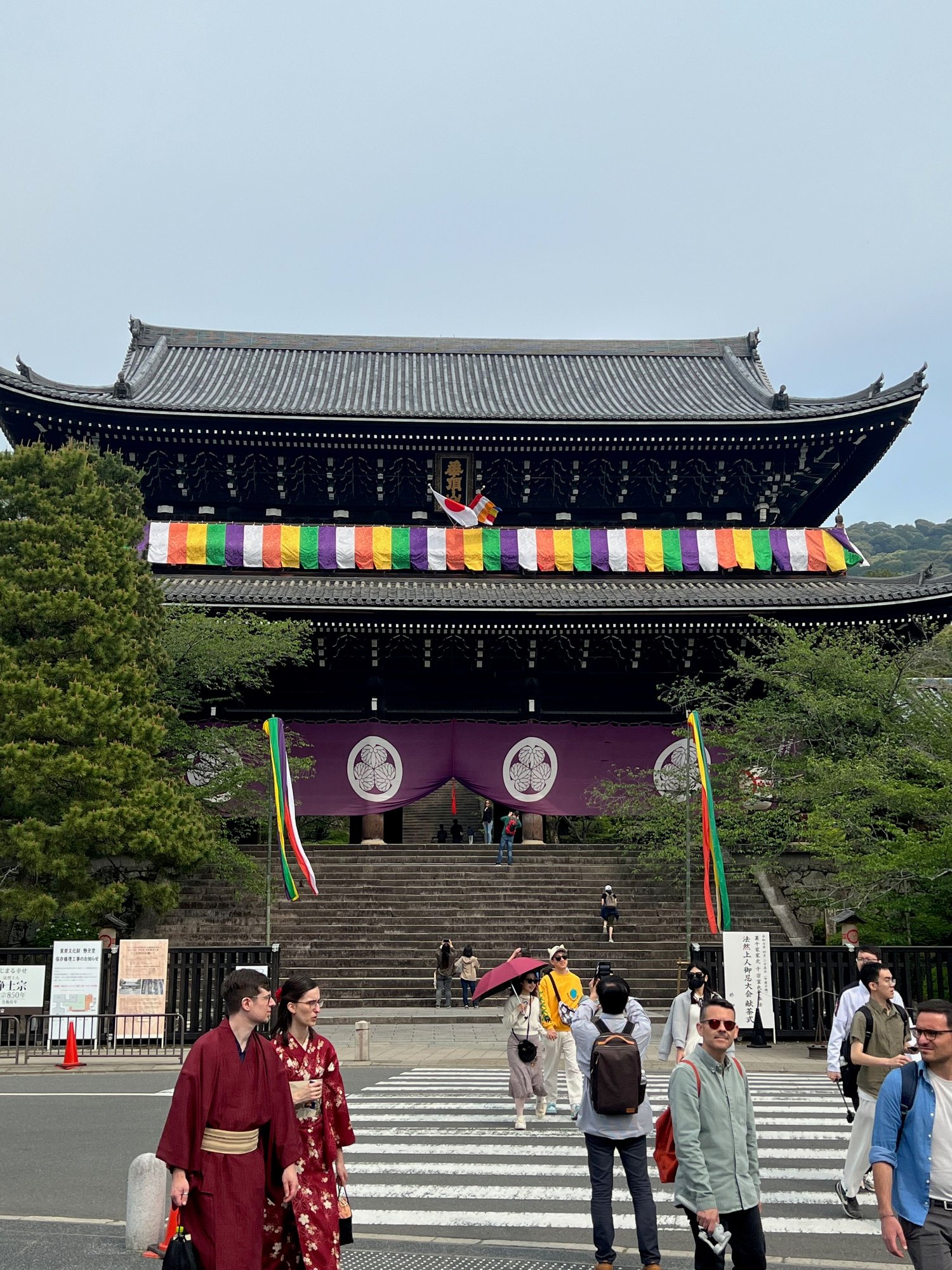
Chionin
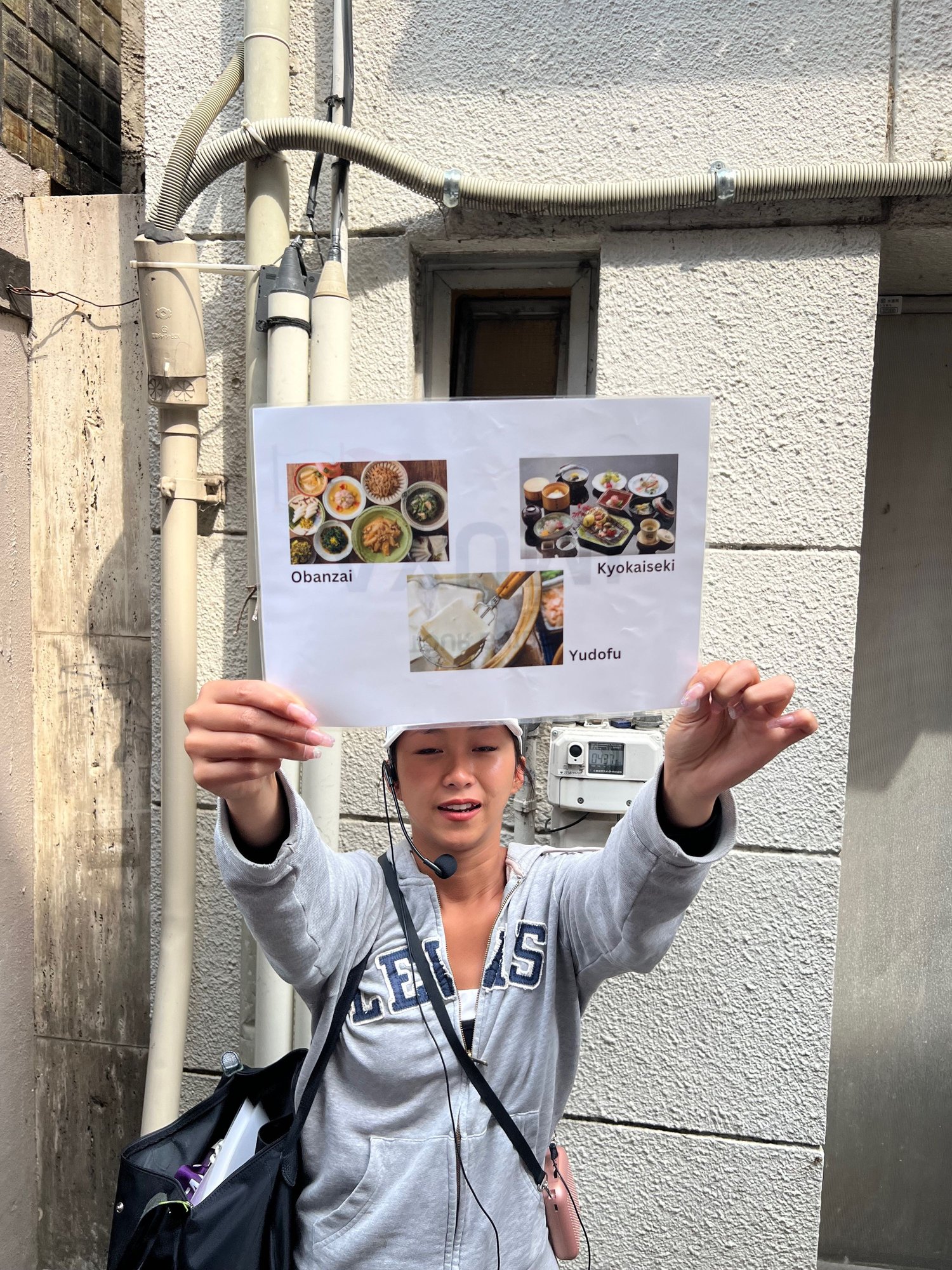
Our Kyoto Free Walking Tour guide - Ayumi
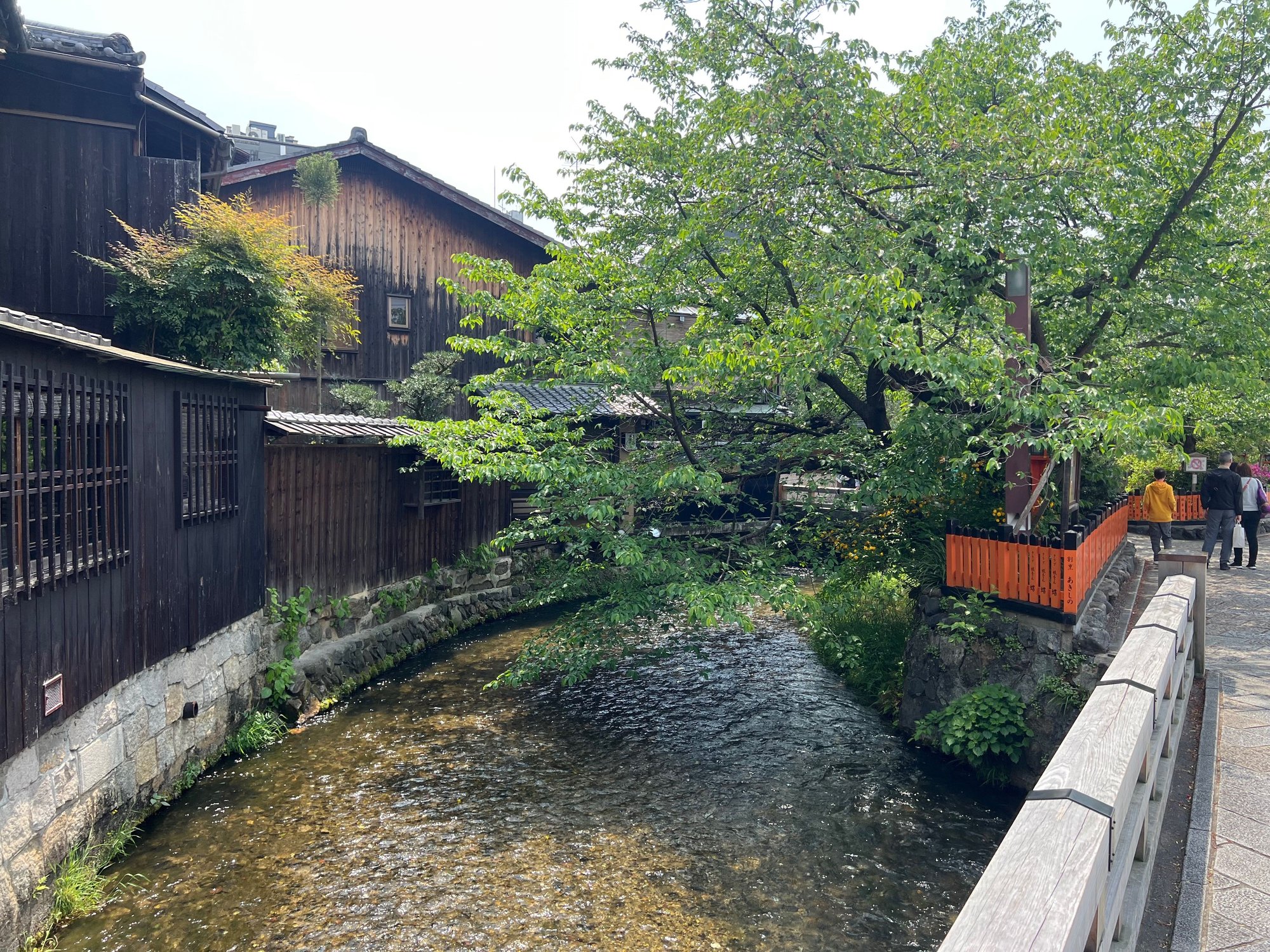
Shirakawa
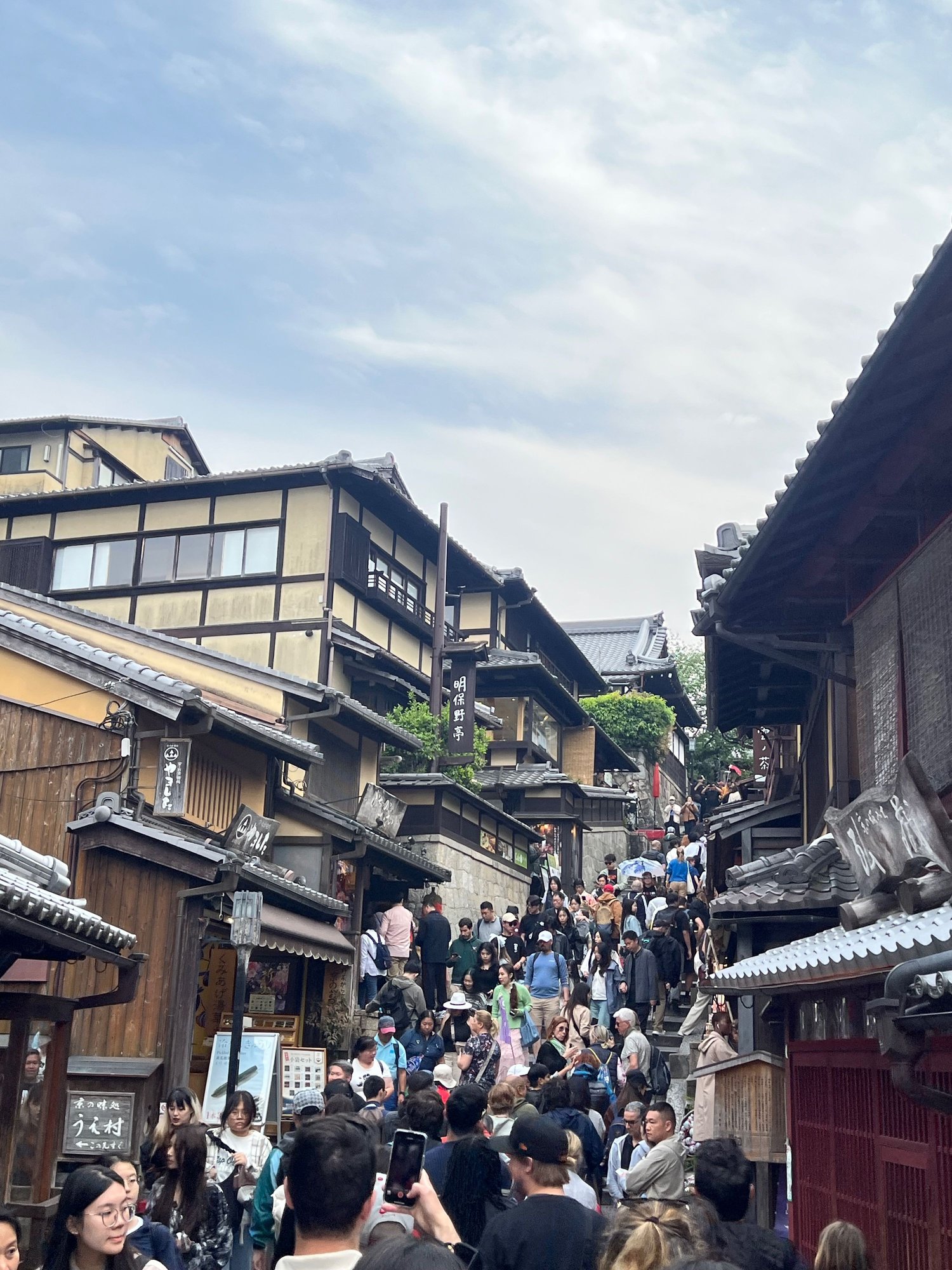
The requisite photo demonstrating over tourism in Kyoto.
We then walked to the meeting point for our free walking tour. - the McDonald’s Shijo Ohashi. As you can probably tell, DH and I enjoy starting visits to a new city with free walking tours. The guides are usually very entertaining and you get an overview of the city or at least a region of the city. Our guide, Ayumi, led us around for 3 hours touring the Higashiyama Ward of Kyoto. This is one of the best preserved historic areas of Kyoto. It included the standard sites: Shirakawa canal, Maruyama Park, Chionin Sanmon, Yasaka Pagoda, Ninenzaka and Sannenzaka and ended at Kiyomizu Temple. Ayumi was cute, fun, informative, organized and very efficient at guiding our group. As the afternoon went on the crowds kept building and building. By the time we started to climb up Sannenzaka - a narrow cobblestone street lined with cute shops selling souvenirs and a variety of snacks and treats, the density of the crowd was almost dangerous. I have to say that the memory of the 2022 Halloween stampede that occurred in the Itaewon district of Seoul passed through my mind. I just grimly held onto DH’s shirt and kept moving upward. Our group finally broke free and arrived at the entrance of Kiyomizu Temple - the final stop of our tour. Despite the crowding, we marveled at the beauty of the many temples, outdoor spaces and gardens that seemed to blend seamlessly with modern Kyoto.

Excellent sake to accompany our delicious meal at Maruhiro
We headed back to our hotel to take a mini break before heading out to dinner at Maruhiro. I had asked Nana if she could recommend restaurants nearby Hotel Mume that we could consider for dinner. I know that Kyoto has many, many excellent restaurants but didn’t have the energy to sort through the choices. She sent me a list of about 15 restaurants with detailed information about each one. DH and I picked 3 restaurants for the nights that we were staying in Kyoto and asked Nana if she could make the reservations. Like clockwork the email reply arrived the next day with each of our reservations confirmed. For this first night we had a mouth watering scrumptious yakiniku meal. Maruhiro is a tiny restaurant almost hidden away completely. We again sat at the counter while the chef prepared 3 separate and different rounds of beef that we cooked on a small grill. Interspersed throughout the meal were vegetables and other side dishes. Honestly, it is hard to remember what else was served because the meat was incredibly delicious - tender, melt in your mouth with so much flavor. In addition, the chef was so happy and friendly - he was constantly speaking into his cell phone to use Google translate to hold a conversation with us. Between the quality of the food and the friendliness of the chef and his staff we felt as if we were eating at a friend’s home, albeit a gourmet level meal. I just realized that we didn’t even take any photos of the meat since we were too busy eating!
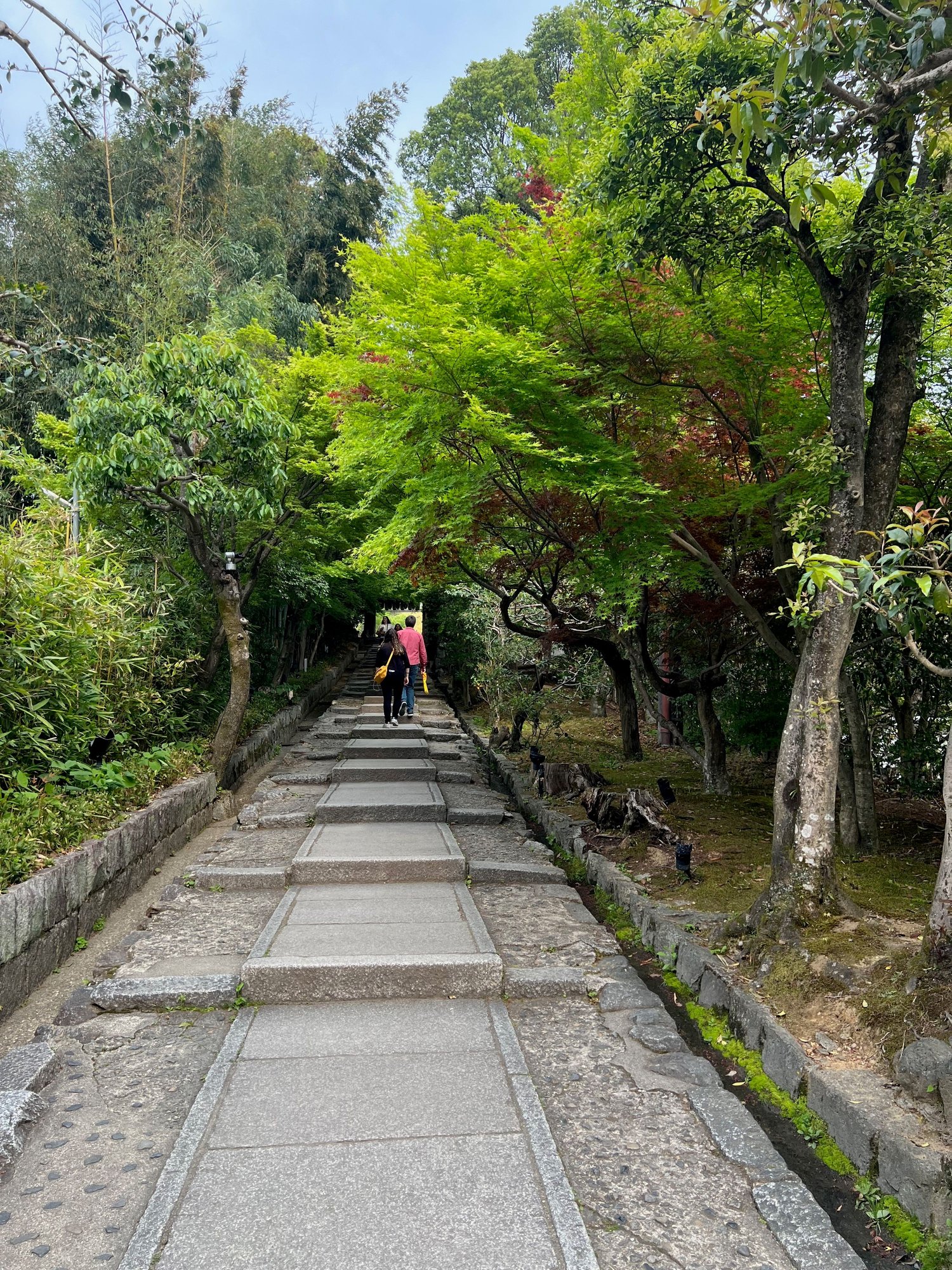
Pathway entering Kodaji in the daytime...
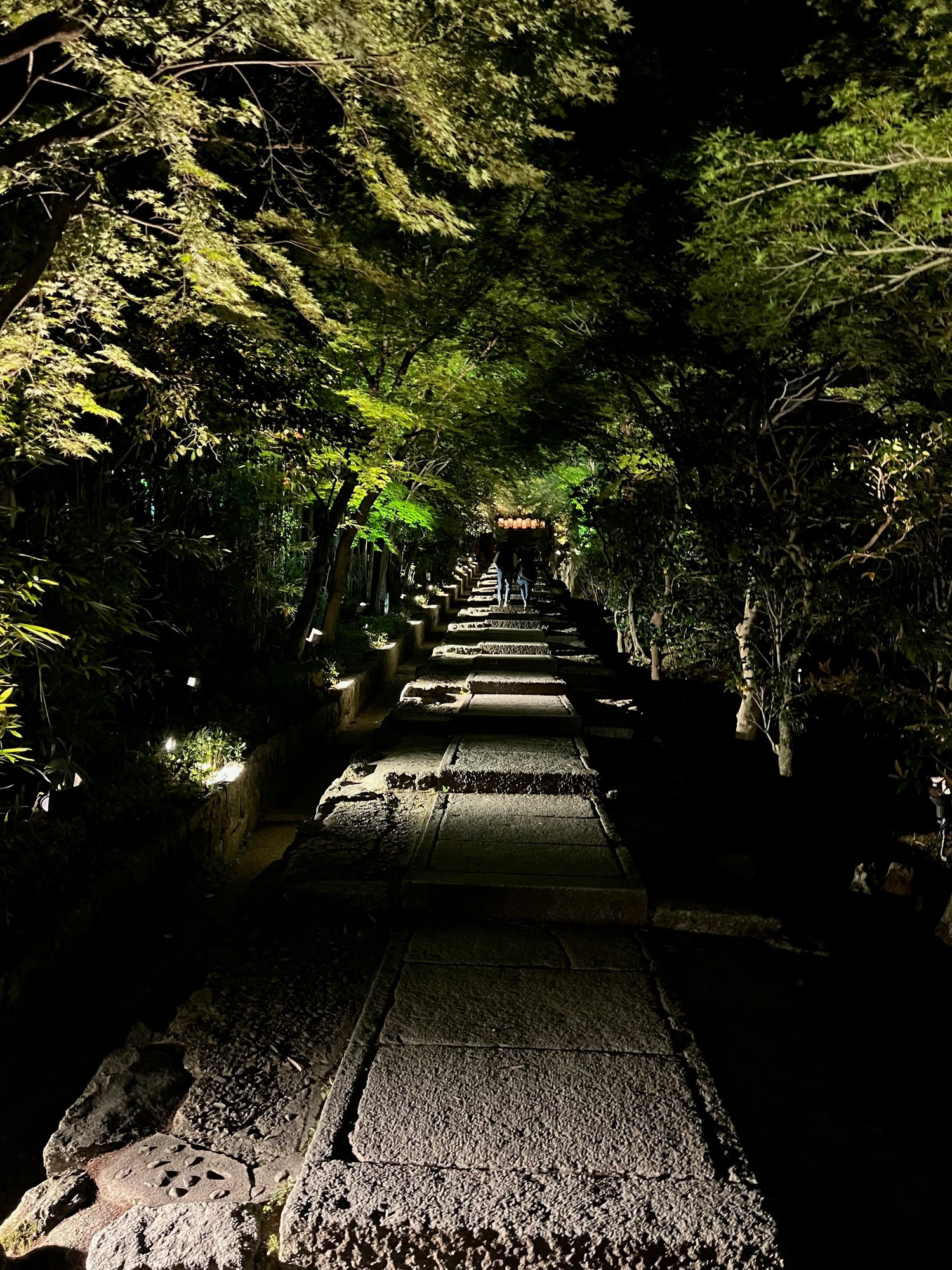
...and entering Kodaji at night
Pleasantly satiated we decided that we might benefit from a post prandial walk. I knew that Koda-ji Temple had a Spring Nighttime Illuminations event. This turned out to be a perfect way to end our evening - the beautiful display of lights transformed the grounds and the temple into a mysterious, yet inviting setting . There was even a small bamboo grove with tiny flickering lights reminiscent of fireflies. Best of all - it was relatively empty, peaceful and quiet. Afterward, we headed back, fell into bed with plans to get up early to see the Golden Pavilion before the crowds arrived.
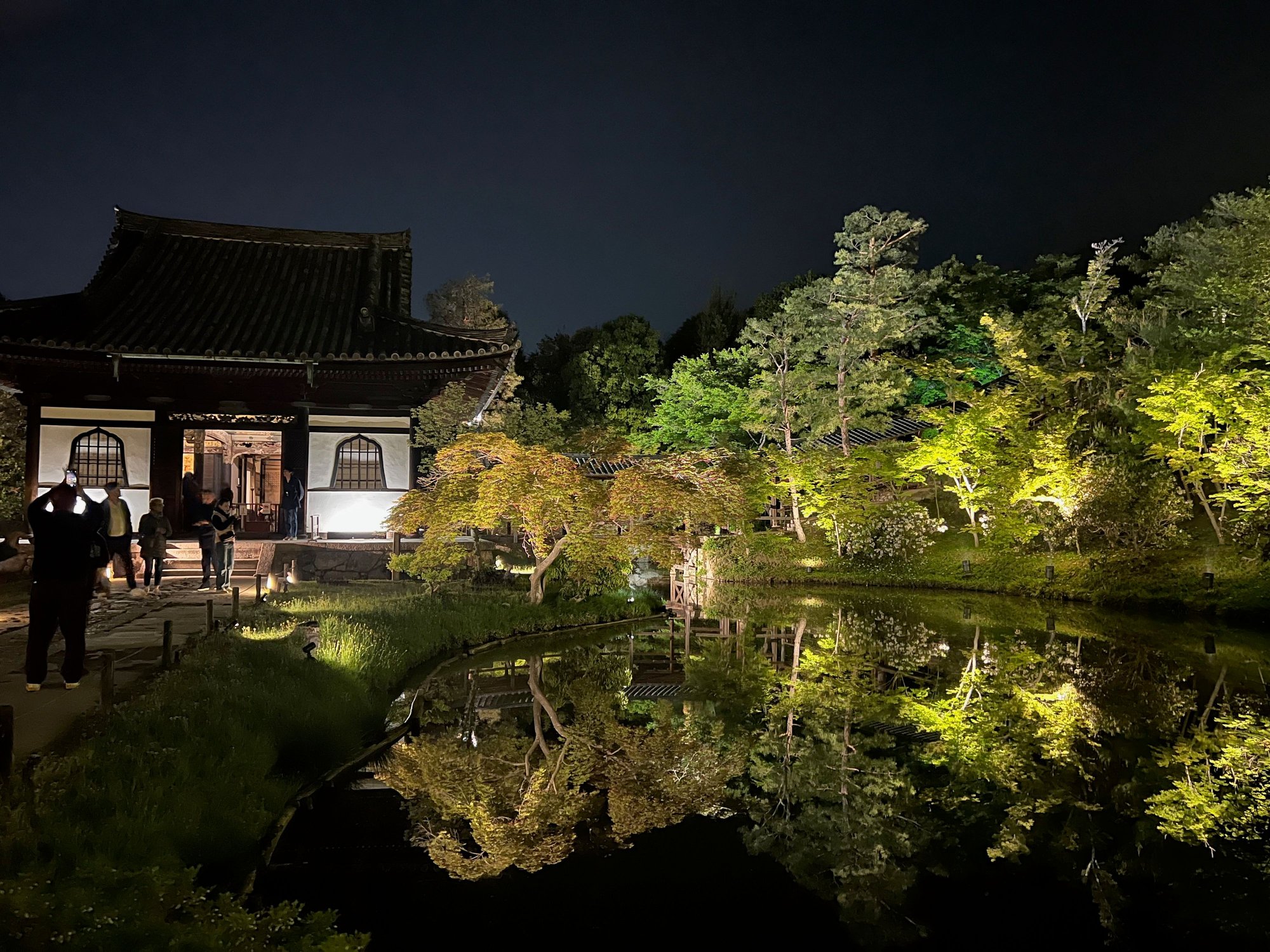
Nightime illuminations at Kodaji
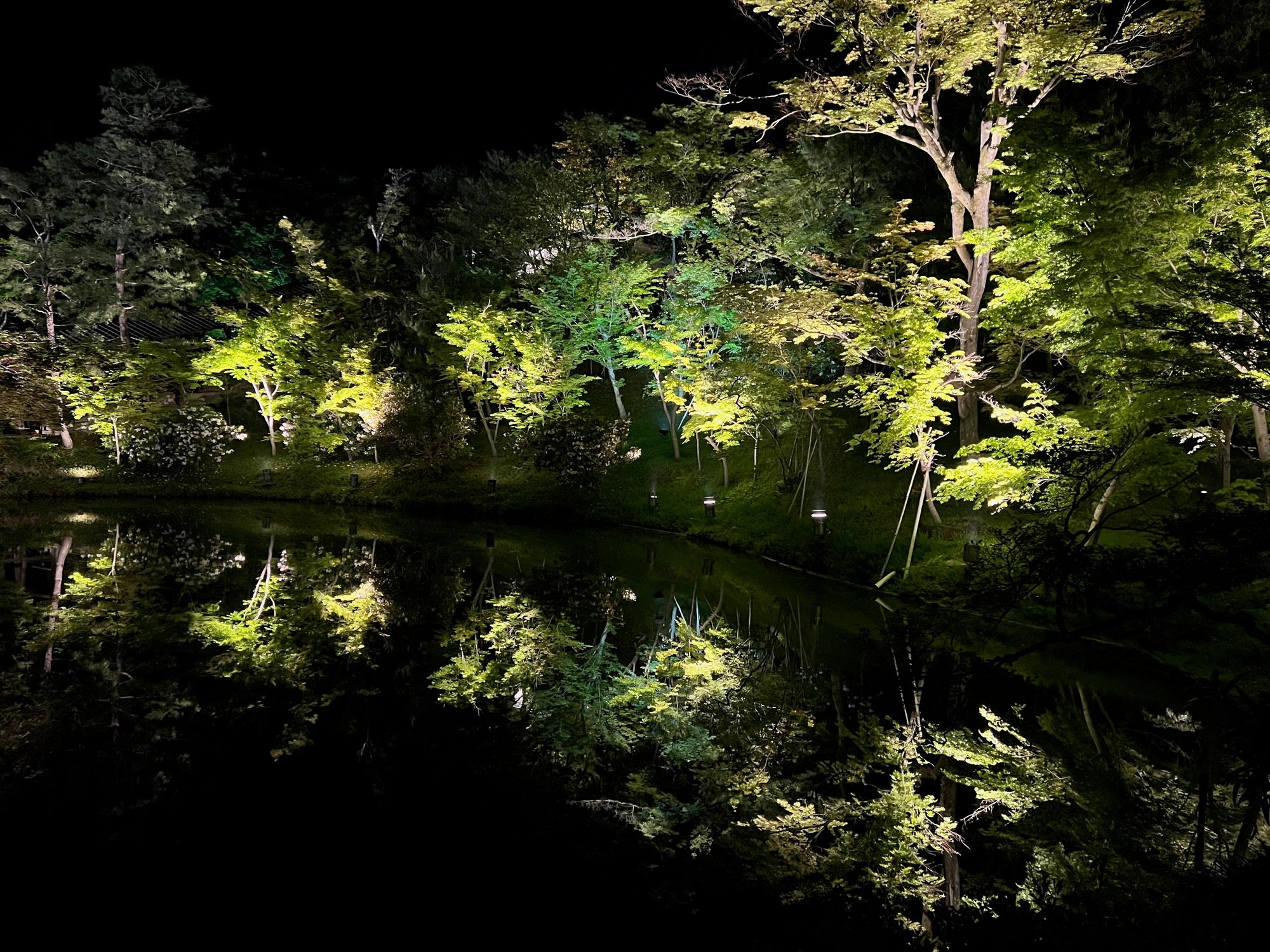

"Fireflies" amongst the bamboo grove at Kodaji
Next up - Day 7 - 21,500 steps traipsing through Kyoto
May 28th, 2025 | 09:55 PM
#19
Original Poster
Joined: Jul 2008
Posts: 191
Likes: 0
memejs - I do think the stamps are a lot of fun! Thank goodness it is a relatively self contained project. The ekistamps also look like a lot of fun but obviously so many more to collect.
tripplanner001 - The azaleas were a beautiful surprise for us. We had never seen them pruned into these round shapes before. To see the hillside at Nezu Shrine awash with color was spectacular. Glad you enjoyed.
tripplanner001 - The azaleas were a beautiful surprise for us. We had never seen them pruned into these round shapes before. To see the hillside at Nezu Shrine awash with color was spectacular. Glad you enjoyed.
May 28th, 2025 | 09:57 PM
#20
Original Poster
Joined: Jul 2008
Posts: 191
Likes: 0
millie2112 - I just posted about how we were able to reserve at Hotel Mume. Have you emailed them directly? Even if their site doesn't allow booking, they will take requests for the future (especially for the popular seasons) by email and put you on a waiting list. This is how we did it.

