


Honduras Trip Report: The Big Cities (& additional places and comments)
 Jun 22nd, 2025 | 02:07 PM
#1
Original Poster
Joined: Apr 2022
Posts: 202
Likes: 0
Honduras Trip Report: The Big Cities (& additional places and comments)
HONDURAS: THE TWO BIG CITIES (San Pedro Sula and Tegucigalpa, plus a couple of other nice places, and some general comments about mainland Honduras), early March 2025
[Note: Photos follow in the "replies" section.]
INTRODUCTION
Over three months have elapsed since I returned from my most recent Honduras visit, but while searching this forum for unrelated information, I happened to notice that some of my early 2023 Honduras Trip Reports had respectable, if not excessive, numbers of “views”; so even allowing for the strong possibility that some of those views were rather cursory, perhaps there is some curiosity out there about this country. But apart from my own, there are no recent trip reports about mainland Honduras on this forum to satisfy that curiosity, nor much other commentary on the main forum. So I finally decided it would be as well to post an update.
I will still refer anyone curious about travel on mainland Honduras to the series of Trip Reports I posed on this forum in March 2023 (and two in April 2022), all with photographs. On my visit last March (2025), I found that in their general comments, and for the three destinations I revisited, those reports are still essentially valid; and I’ll assume the same for the other reports as well. (I realize it doesn’t look good to promote one’s own reports; but as I mentioned above, there are no other recent ones for mainland Honduras on this forum but mine!). Below, I mainly provide some general comments, and updates.
General Comments on Mainland Honduras
On my trip last month, as on my two previous ones (Nev-Dec 2021, and Jan-Feb 2023), I found the mainland destinations I visited to be safe, and in fact generally friendly and welcoming — Honduras has always impressed me as a country that still appreciates its foreign visitors.
Still, it may not be for everyone. Honduras is a poor country, and this will show. Apart perhaps from its resort islands, it may not be the ideal place for a pampered, carefree family vacation. On the other hand, it could be a good choice for curious, independent travellers who are serious when they talk — as everyone else does — about getting “off the beaten path.” There are many beautiful places, nature parks as well as quaint colonial towns, all of which can be enjoyed without tourist throngs. And while there is often something of a what-you-see-is-what-you-get quality to travel here (which I happen to like; I just think of it as authenticity), many of the hotels, guest houses, cafes, restaurants, and tourist sites I encountered were very nice, some of them remarkably so — it seemed to me as if everyone were doing an earnest and generally successful job of preparing for visitors, and now all they need are the visitors themselves. (But don't worry, you won't be alone -- I did actually meet more foreign tourists than one might have thought. Young, independent European tourists seem not to worry as much about coming here as certain others do.)
(Note: Though I believe than mainland Honduras is generally safer and more pleasant than the media imply, things might change -- before planning a trip there, be sure to check out the most recent news, especially tourism-related news on sites like this one.)
For tourists, the main issue on the mainland is overland public transportation, which basically means buses. However, the bus rides I’ve had in Honduras so far, even if not a representative sample, haven’t been that bad; they were superior to everyone’s notion of “chicken bus,” and in fact most were fairly pleasant rides. And the Cristina bus I rode from Tegucigalpa to San Pedro Sula on this recent trip was flawless — a large, modern, comfortable bus of the sort you might ride in any more developed country. I don’t know whether all Cristina buses are as good as the one I rode; but when going between those two cities, or on to Tela and La Ceiba, at least check them out.
I believe that Uber, or something similar, is available, though I didn’t check it out myself. Also, your hotel, especially in San Pedro Sula or Tegucigalpa, may be able to arrange a private car for moderate distances — it will be probably economical compared to private cars in most other countries, and could be rather economical of groups of two to four..
TEGUCIGALPA AND VALLE DE ANGELES
Valle de Angeles is a small, quaint, charming colonial town about 22 miles from central Tegucigalpa. In 1881, the President of Honduras himself, Marco A. Soto, wrote about this town in what was probably the first travel article ever published on Honduras, — unable to stop heaping praises on Valle de Angeles, and on the valley where it is located, he concluded with the words “In Valle de los Angeles everybody smiles, and all exude life and contentment; and I feel immense gratitude towards this place.” That may have been a little overdone, but insofar as I could judge from an afternoon’s visit, I would say that Valle de Angeles is essentially the same pleasant place to visit as President Soto himself found it to be.
Valle de Angeles is devoted mainly to arts and crafts shops, mostly tourist-oriented, but fortunately a tourist town in the middle of Honduras is going to a much more manageable place than a tourist town in Europe. (And anyway, it’s likely that most of the other tourists in town will be Honduran.) I made a day trip myself, and liked it enough to wish I had arranged to stay overnight.
At the time of my visit, buses from Tegucigalpa to Valle de Angeles left from a spot in a safe commercial area, across the street and slightly west from the San Felipe Hospital, not far from the grand monument to the Great Liberator Simon Bolívar. The last return bus leaves Valle de Angeles either at 4pm or 5pm, depending on who is giving you advice; and probably earlier on Sunday.
A note on nearby Cantarranas: A bit of careless planning on my part kept me from getting there, but I’ll point out that about 12 miles beyond Valle de Angeles is another colonial town, Cantarranas, which from all I’ve heard and read is also worth visiting. In particular, large colorful outdoor murals have been painted tnhroughout the town center, mostly illustrating cultural and historic themes.
Tegucigalpa
(See my “Trip Report. Honduras Travel Part 4: Tegucigalpa and San Pedro Sula,” posted on this forum 10 March 2023)
My earlier trip report on Tegucigalpa, the capital of Honduras, is still basically as valid now as it was when I posted it in 2023; but on this visit I made it to El Picacho Park. From anywhere in the city, look north into the mountains and spot the big Jesus statue; that’s where El Picacho is. The park’s biggest attractions, of course, are its several look-out points, or “miradores,” from where you get great views of the city. But it’s also a great place just to hang out in for an afternoon; in addition to those great views, you’ll find two or three cafes, gardens and walking paths for strolling around, the huge Jesus statue of course, a reconstruction of a Mayan temple, and maybe looking a little out of place, what appears to be a small-scale reconstruction of the Eiffel Tower (maybe a bit out of proportion as well).
Many taxi drivers will take you up to El Picacho; just make sure that Uber, or some local equivalent, exists, and that you are able to contact it, for finding a taxi on-site to take you back down could be tricky. You can also take the El Hatillo bus, which I did for my return trip, and which leaves from, and returns to, Herrera Prak in the historic center (with a few other stops along its route). On your way up, just make sure that the conductor knows you want to get off at the turn-off to the Park, from where it’s about a 1km walk into the Park itself.
In the historic center of Tegucigalpa, the Museum of National Identity is worth visiting, at least for its uniquness. It is not a traditional museum (as you might have already have guessed from the name) with glassy display cases laid out in chronological order. Rather, it is a mix of ancient and colonial artefacts, plus photos, videos, and wall displays on contemporary life, which collectively attempt to give a holistic interpretation of Honduran identity — or anyway, that’s my best guess at what the attempt was. One video exhibit, for example, presented several Hondurans of different regions, and of different ethnic goups, in turn describing themselves and their respective cultures; another exhibit was an extensive series of photos which as far as I could tell attempted to convey the many social issues poorer women in Honduras still endure. (My recollection is that all written and video commentary in the museum was in Spanish only.)
(Finally, though this may not matter to most tourists, I must commend the anonymous author of the Tegucigalpa travel essay (undated) elsewhere on Fodor’s on-line site, for pointing out that the city’s charming name may not actually mean “Silver Hill,” as most travel-guide authors state witout qualification. No one really knows for certain, but the probable tranlsation cited by the Fodor’s writer, “[Place of] Colored Rocks,” is a plausible alternative, and happens to have an authoritative source, the Honduran historian Leticia de Oyuela.)
The Airport: The Toncontin International Airport (TGU) at the southern edge of Tegucigalpa is no longer any such thing except for cargo; its passener flights serve only national destinations, including Roatan. The official international airport is now the splended new Palmerola International (XPL), about 50 highway-miles north, just outside the attractive colonial city of Comaygua (subject of one of my March 2023 trip reports, and worth spending at least one night in). At the time of my last visit to this airport, early 2023, there were five large, inexpensive buses each day (four on Sunday) going between here and the Toncontin Airport, from where taxis into the city were always waiting. It’s possible that there are more transporation options now.
Buses: As I mentioned above, consider the Cristina bus line if going on to San Pedro Sula. Like most other buses, Cristina will park at the big San Pedro Sula bus terminal, from where you will get connections to many other destinations, like Copán, where the grand Mayan ruins are; or to La Ceiba, the coastal departure point for Roatan. In Tegucigalpa, Cristina has its own proper station, complete with seating and timetables.
Where to Stay: The neighborhood of Colonia Palmira, about a mile east of the historic center, is an attractive, middle-class, and seemingly safe area, and probably the one where you will want to lodge. There is a skyline of large, international-class hotels there; further into the residential area, there are at least a couple of smaller independent hotels, and also the budget-priced Palmira Hostel, where I lodged, and which I can strongly recommend.
Brief note on LAKE YOJOA: On my most recent trip, I found the Los Naranjos area on the north side of Lake Yojoa, and D&D Brewery and Lodge, to be just as great as I reported it all to be in my April 2022 Trip Report (with updates and photos added in 2023); there is no need to add anything, though I was pleased to find that Ivo’s chaming, friendly coffee and pastry cafe is still there as before. (See “Trip Report: Honduras, Los Naranjos (Lake Yojoa),” 10 April 2022. Also, check the excellent website of D&D Brewery, ddbrewery.com)
SAN PEDRO SULA
(See my “Trip Report. Honduras Travel Part 4: Tegucigalpa and San Pedro Sula,” posted on this forum 10 March 2023)
I’m guessing that this city is not high on most people’s “bucket lists,” so I’m writing neither to promote nor to discourage a visit, but just to let you know what to expect if, whether from necessity or curiosity, you spend a night or two (or more!) here. And whether changing planes in its international airport, or changing buses in its big, consolidated bus terminal (both on the outskirts of the city, and safe); you could possibly end up spending a night. If so, don’t panic; you’ll be perfectly safe in the near-by airport hotels, or in any of the big, standard-class hotels in the southwestern quarter of the city — Hilton, Intercontinental, Copantl, Monteolivos, and perhaps a couple of others. (But better yet, check out the lodging described a little further below.) In general, if you lodge within the better western half of the ctiy, and follow what we call the “usual precautions” (but follow them scrupulously!), you can stay safe in this city, and possibly even have a good time.
But my biggest issue with San Pedro Sula (SPS) has not been real, exaggerated, or imagined dangers (none of which I have encountered yet), but the heat, which unfortunately is not a rare experience in this city. Still, for my early-March visit, the humidity was fairly low (though it will go up by summer) so even if the days were hot, the evenings and nights were pleasant. I won’t go into the SPS climate further; I’ll just advise those who don’t like heat that SPS could be a bit of a challenge any time from March through October. Winters are usually milder, but even then, uncomfortably warm and humid days can occur. Note, too, that SPS lies in the lowlands, so the higher elevations, which means most of western Honduras, will usually be much more tolerable than SPS at any given time of the year.
Around town: On my 2021 visit I spent most of my time in the city’s outhwest quarter, which I found safe, at least by day, if not overly attractive. On my visit last March visit I explored the northwestern quarter on a couple of long walks which together took me from the central plaza three blocks north to the museum, then westwards to the Guamilito market, and further west into the Los Andes neighborhood, thereby covering a good cross-section of the citys north-west sector. I know not to deduce too much from a couple of afternoon strolls, but I never felt unsafe; and in fact I found the Guamilito area to be a little nicer in appearance than most of SPS, and the Los Andes area, even nicer still.
Quite apart from any real, exaggerated, or imagined dangers, San Pero Sula is not a natural tourist destination. San Pedro Sula’s main reason for being there is to serve as the business center for the north-coast agricultural industries, and tourism was never really part of the plan. But the Museum of History and Anthropology is excellent. It focuses, of course, on the anciernt civilizations of the Ulua valley, where San Pedro Sula is, and this museum may be the best place to learn about them, since they don’t get much coverage in standard textbooks on the ancient American societies. (The Mayas get their due as well in this museum, though they probably didn’t make it this far east.) The use of English in this museum is rather unpredictable; some item tags have English translations, some don’t. But each of the several galleries offers a wall-pocket containing large, laminated cards which describe what you see in English; so even if you don’t read Spanish, a visit to this museum should be worth while if you have an interest in these things. Though ancient history is the dominant theme, there are also interesting galleries convering the conquest and colonial eras. Of course, check the website for hours — at the time of my visit, the Museum closed at 4:30pm.
(I should add that the Museum seemed to be located approximately where the city starts looking not-so-nice. A taxi ride here will be safe, and even the three-block walk north from the central plaza struck me as safe, if uninspiring; however, I wouldn’t wander much further north or east.)
The Guamilito Market, several blocks west of the Museum, and in a seemingly safe neighborhood, is no longer quite the typically intense, serious, hard-core Latin-America style market it once was. In fact it was totally renovated a few years ago, and though it still has a few traditional stalls offering fruits and vegetables, hardware, and common household goods, as well as a long aisle of humble look-alike food-serving stalls, it is now mainly a clean, well-lit arts-and-crafts center — but a good one. It’s a great place to look for souvenirs, or gifts for friends back home. The adjacent streets are mostly devoted to flower-selling stalls.
Where to stay: If out of necessity, or curiosity, you do spend a night or two in San Pedro Sula, you’ll be perfectly safe in any of the standard, world-class hotels in the southwestern edge of the city: Hilton, Intercontinental, Copantl, Monteolivos, and others. But I would strongly recommend looking into Anglei Gardens, in the outskirts of the same general area — a great, independent hotel located within its own secure garden-like estate, with a swimming pool and its own restaurant; friendly staff members; and a generally pleasant ambience. In fact, more curious, independent travellers may find that the Museum, the Guamilito Market, and Angeli Gardens together will suffice to justify a one- or two-night stay in the city (or more!).
Transportation: San Pedro Sula’s airport is officially the Ramon Villeda Moreles International Airport (named after a president of the 1950s), but it’s known locally as just “el aeropuerto.” It’s a small but respectable airport, with a small but adequate selection of cafes in the check-in area, and a couple more restaurants, plus one or two duty-free shops, in its one departure concourse. If you’re there to chage to a Roatan-bound flight — and that’s probably why you’ll be there — the transfer should be fairly easy, as long as nothing unexpected occurs; everything — passport control, baggage claim, customs, check-in for Roatan — takes place along a relatively short walk through the one terminal.
There is a consolidated Metropolitan Bus Terminal on the south-west outskirts of the city. I passed through it only once on this trip, and twice on my 2021 visit; each time it was busy, and appeared safe. It’s something of a “hub” when getting around Honduras — for example, if you’re going by bus from La Ceiba (the coastal jumping-off point for Roatan) to Copán, where the ancient Mayan site is, you will probably change buses here.
[Note: Photos follow in the "replies" section.]
INTRODUCTION
Over three months have elapsed since I returned from my most recent Honduras visit, but while searching this forum for unrelated information, I happened to notice that some of my early 2023 Honduras Trip Reports had respectable, if not excessive, numbers of “views”; so even allowing for the strong possibility that some of those views were rather cursory, perhaps there is some curiosity out there about this country. But apart from my own, there are no recent trip reports about mainland Honduras on this forum to satisfy that curiosity, nor much other commentary on the main forum. So I finally decided it would be as well to post an update.
I will still refer anyone curious about travel on mainland Honduras to the series of Trip Reports I posed on this forum in March 2023 (and two in April 2022), all with photographs. On my visit last March (2025), I found that in their general comments, and for the three destinations I revisited, those reports are still essentially valid; and I’ll assume the same for the other reports as well. (I realize it doesn’t look good to promote one’s own reports; but as I mentioned above, there are no other recent ones for mainland Honduras on this forum but mine!). Below, I mainly provide some general comments, and updates.
General Comments on Mainland Honduras
On my trip last month, as on my two previous ones (Nev-Dec 2021, and Jan-Feb 2023), I found the mainland destinations I visited to be safe, and in fact generally friendly and welcoming — Honduras has always impressed me as a country that still appreciates its foreign visitors.
Still, it may not be for everyone. Honduras is a poor country, and this will show. Apart perhaps from its resort islands, it may not be the ideal place for a pampered, carefree family vacation. On the other hand, it could be a good choice for curious, independent travellers who are serious when they talk — as everyone else does — about getting “off the beaten path.” There are many beautiful places, nature parks as well as quaint colonial towns, all of which can be enjoyed without tourist throngs. And while there is often something of a what-you-see-is-what-you-get quality to travel here (which I happen to like; I just think of it as authenticity), many of the hotels, guest houses, cafes, restaurants, and tourist sites I encountered were very nice, some of them remarkably so — it seemed to me as if everyone were doing an earnest and generally successful job of preparing for visitors, and now all they need are the visitors themselves. (But don't worry, you won't be alone -- I did actually meet more foreign tourists than one might have thought. Young, independent European tourists seem not to worry as much about coming here as certain others do.)
(Note: Though I believe than mainland Honduras is generally safer and more pleasant than the media imply, things might change -- before planning a trip there, be sure to check out the most recent news, especially tourism-related news on sites like this one.)
For tourists, the main issue on the mainland is overland public transportation, which basically means buses. However, the bus rides I’ve had in Honduras so far, even if not a representative sample, haven’t been that bad; they were superior to everyone’s notion of “chicken bus,” and in fact most were fairly pleasant rides. And the Cristina bus I rode from Tegucigalpa to San Pedro Sula on this recent trip was flawless — a large, modern, comfortable bus of the sort you might ride in any more developed country. I don’t know whether all Cristina buses are as good as the one I rode; but when going between those two cities, or on to Tela and La Ceiba, at least check them out.
I believe that Uber, or something similar, is available, though I didn’t check it out myself. Also, your hotel, especially in San Pedro Sula or Tegucigalpa, may be able to arrange a private car for moderate distances — it will be probably economical compared to private cars in most other countries, and could be rather economical of groups of two to four..
TEGUCIGALPA AND VALLE DE ANGELES
Valle de Angeles is a small, quaint, charming colonial town about 22 miles from central Tegucigalpa. In 1881, the President of Honduras himself, Marco A. Soto, wrote about this town in what was probably the first travel article ever published on Honduras, — unable to stop heaping praises on Valle de Angeles, and on the valley where it is located, he concluded with the words “In Valle de los Angeles everybody smiles, and all exude life and contentment; and I feel immense gratitude towards this place.” That may have been a little overdone, but insofar as I could judge from an afternoon’s visit, I would say that Valle de Angeles is essentially the same pleasant place to visit as President Soto himself found it to be.
Valle de Angeles is devoted mainly to arts and crafts shops, mostly tourist-oriented, but fortunately a tourist town in the middle of Honduras is going to a much more manageable place than a tourist town in Europe. (And anyway, it’s likely that most of the other tourists in town will be Honduran.) I made a day trip myself, and liked it enough to wish I had arranged to stay overnight.
At the time of my visit, buses from Tegucigalpa to Valle de Angeles left from a spot in a safe commercial area, across the street and slightly west from the San Felipe Hospital, not far from the grand monument to the Great Liberator Simon Bolívar. The last return bus leaves Valle de Angeles either at 4pm or 5pm, depending on who is giving you advice; and probably earlier on Sunday.
A note on nearby Cantarranas: A bit of careless planning on my part kept me from getting there, but I’ll point out that about 12 miles beyond Valle de Angeles is another colonial town, Cantarranas, which from all I’ve heard and read is also worth visiting. In particular, large colorful outdoor murals have been painted tnhroughout the town center, mostly illustrating cultural and historic themes.
Tegucigalpa
(See my “Trip Report. Honduras Travel Part 4: Tegucigalpa and San Pedro Sula,” posted on this forum 10 March 2023)
My earlier trip report on Tegucigalpa, the capital of Honduras, is still basically as valid now as it was when I posted it in 2023; but on this visit I made it to El Picacho Park. From anywhere in the city, look north into the mountains and spot the big Jesus statue; that’s where El Picacho is. The park’s biggest attractions, of course, are its several look-out points, or “miradores,” from where you get great views of the city. But it’s also a great place just to hang out in for an afternoon; in addition to those great views, you’ll find two or three cafes, gardens and walking paths for strolling around, the huge Jesus statue of course, a reconstruction of a Mayan temple, and maybe looking a little out of place, what appears to be a small-scale reconstruction of the Eiffel Tower (maybe a bit out of proportion as well).
Many taxi drivers will take you up to El Picacho; just make sure that Uber, or some local equivalent, exists, and that you are able to contact it, for finding a taxi on-site to take you back down could be tricky. You can also take the El Hatillo bus, which I did for my return trip, and which leaves from, and returns to, Herrera Prak in the historic center (with a few other stops along its route). On your way up, just make sure that the conductor knows you want to get off at the turn-off to the Park, from where it’s about a 1km walk into the Park itself.
In the historic center of Tegucigalpa, the Museum of National Identity is worth visiting, at least for its uniquness. It is not a traditional museum (as you might have already have guessed from the name) with glassy display cases laid out in chronological order. Rather, it is a mix of ancient and colonial artefacts, plus photos, videos, and wall displays on contemporary life, which collectively attempt to give a holistic interpretation of Honduran identity — or anyway, that’s my best guess at what the attempt was. One video exhibit, for example, presented several Hondurans of different regions, and of different ethnic goups, in turn describing themselves and their respective cultures; another exhibit was an extensive series of photos which as far as I could tell attempted to convey the many social issues poorer women in Honduras still endure. (My recollection is that all written and video commentary in the museum was in Spanish only.)
(Finally, though this may not matter to most tourists, I must commend the anonymous author of the Tegucigalpa travel essay (undated) elsewhere on Fodor’s on-line site, for pointing out that the city’s charming name may not actually mean “Silver Hill,” as most travel-guide authors state witout qualification. No one really knows for certain, but the probable tranlsation cited by the Fodor’s writer, “[Place of] Colored Rocks,” is a plausible alternative, and happens to have an authoritative source, the Honduran historian Leticia de Oyuela.)
The Airport: The Toncontin International Airport (TGU) at the southern edge of Tegucigalpa is no longer any such thing except for cargo; its passener flights serve only national destinations, including Roatan. The official international airport is now the splended new Palmerola International (XPL), about 50 highway-miles north, just outside the attractive colonial city of Comaygua (subject of one of my March 2023 trip reports, and worth spending at least one night in). At the time of my last visit to this airport, early 2023, there were five large, inexpensive buses each day (four on Sunday) going between here and the Toncontin Airport, from where taxis into the city were always waiting. It’s possible that there are more transporation options now.
Buses: As I mentioned above, consider the Cristina bus line if going on to San Pedro Sula. Like most other buses, Cristina will park at the big San Pedro Sula bus terminal, from where you will get connections to many other destinations, like Copán, where the grand Mayan ruins are; or to La Ceiba, the coastal departure point for Roatan. In Tegucigalpa, Cristina has its own proper station, complete with seating and timetables.
Where to Stay: The neighborhood of Colonia Palmira, about a mile east of the historic center, is an attractive, middle-class, and seemingly safe area, and probably the one where you will want to lodge. There is a skyline of large, international-class hotels there; further into the residential area, there are at least a couple of smaller independent hotels, and also the budget-priced Palmira Hostel, where I lodged, and which I can strongly recommend.
Brief note on LAKE YOJOA: On my most recent trip, I found the Los Naranjos area on the north side of Lake Yojoa, and D&D Brewery and Lodge, to be just as great as I reported it all to be in my April 2022 Trip Report (with updates and photos added in 2023); there is no need to add anything, though I was pleased to find that Ivo’s chaming, friendly coffee and pastry cafe is still there as before. (See “Trip Report: Honduras, Los Naranjos (Lake Yojoa),” 10 April 2022. Also, check the excellent website of D&D Brewery, ddbrewery.com)
SAN PEDRO SULA
(See my “Trip Report. Honduras Travel Part 4: Tegucigalpa and San Pedro Sula,” posted on this forum 10 March 2023)
I’m guessing that this city is not high on most people’s “bucket lists,” so I’m writing neither to promote nor to discourage a visit, but just to let you know what to expect if, whether from necessity or curiosity, you spend a night or two (or more!) here. And whether changing planes in its international airport, or changing buses in its big, consolidated bus terminal (both on the outskirts of the city, and safe); you could possibly end up spending a night. If so, don’t panic; you’ll be perfectly safe in the near-by airport hotels, or in any of the big, standard-class hotels in the southwestern quarter of the city — Hilton, Intercontinental, Copantl, Monteolivos, and perhaps a couple of others. (But better yet, check out the lodging described a little further below.) In general, if you lodge within the better western half of the ctiy, and follow what we call the “usual precautions” (but follow them scrupulously!), you can stay safe in this city, and possibly even have a good time.
But my biggest issue with San Pedro Sula (SPS) has not been real, exaggerated, or imagined dangers (none of which I have encountered yet), but the heat, which unfortunately is not a rare experience in this city. Still, for my early-March visit, the humidity was fairly low (though it will go up by summer) so even if the days were hot, the evenings and nights were pleasant. I won’t go into the SPS climate further; I’ll just advise those who don’t like heat that SPS could be a bit of a challenge any time from March through October. Winters are usually milder, but even then, uncomfortably warm and humid days can occur. Note, too, that SPS lies in the lowlands, so the higher elevations, which means most of western Honduras, will usually be much more tolerable than SPS at any given time of the year.
Around town: On my 2021 visit I spent most of my time in the city’s outhwest quarter, which I found safe, at least by day, if not overly attractive. On my visit last March visit I explored the northwestern quarter on a couple of long walks which together took me from the central plaza three blocks north to the museum, then westwards to the Guamilito market, and further west into the Los Andes neighborhood, thereby covering a good cross-section of the citys north-west sector. I know not to deduce too much from a couple of afternoon strolls, but I never felt unsafe; and in fact I found the Guamilito area to be a little nicer in appearance than most of SPS, and the Los Andes area, even nicer still.
Quite apart from any real, exaggerated, or imagined dangers, San Pero Sula is not a natural tourist destination. San Pedro Sula’s main reason for being there is to serve as the business center for the north-coast agricultural industries, and tourism was never really part of the plan. But the Museum of History and Anthropology is excellent. It focuses, of course, on the anciernt civilizations of the Ulua valley, where San Pedro Sula is, and this museum may be the best place to learn about them, since they don’t get much coverage in standard textbooks on the ancient American societies. (The Mayas get their due as well in this museum, though they probably didn’t make it this far east.) The use of English in this museum is rather unpredictable; some item tags have English translations, some don’t. But each of the several galleries offers a wall-pocket containing large, laminated cards which describe what you see in English; so even if you don’t read Spanish, a visit to this museum should be worth while if you have an interest in these things. Though ancient history is the dominant theme, there are also interesting galleries convering the conquest and colonial eras. Of course, check the website for hours — at the time of my visit, the Museum closed at 4:30pm.
(I should add that the Museum seemed to be located approximately where the city starts looking not-so-nice. A taxi ride here will be safe, and even the three-block walk north from the central plaza struck me as safe, if uninspiring; however, I wouldn’t wander much further north or east.)
The Guamilito Market, several blocks west of the Museum, and in a seemingly safe neighborhood, is no longer quite the typically intense, serious, hard-core Latin-America style market it once was. In fact it was totally renovated a few years ago, and though it still has a few traditional stalls offering fruits and vegetables, hardware, and common household goods, as well as a long aisle of humble look-alike food-serving stalls, it is now mainly a clean, well-lit arts-and-crafts center — but a good one. It’s a great place to look for souvenirs, or gifts for friends back home. The adjacent streets are mostly devoted to flower-selling stalls.
Where to stay: If out of necessity, or curiosity, you do spend a night or two in San Pedro Sula, you’ll be perfectly safe in any of the standard, world-class hotels in the southwestern edge of the city: Hilton, Intercontinental, Copantl, Monteolivos, and others. But I would strongly recommend looking into Anglei Gardens, in the outskirts of the same general area — a great, independent hotel located within its own secure garden-like estate, with a swimming pool and its own restaurant; friendly staff members; and a generally pleasant ambience. In fact, more curious, independent travellers may find that the Museum, the Guamilito Market, and Angeli Gardens together will suffice to justify a one- or two-night stay in the city (or more!).
Transportation: San Pedro Sula’s airport is officially the Ramon Villeda Moreles International Airport (named after a president of the 1950s), but it’s known locally as just “el aeropuerto.” It’s a small but respectable airport, with a small but adequate selection of cafes in the check-in area, and a couple more restaurants, plus one or two duty-free shops, in its one departure concourse. If you’re there to chage to a Roatan-bound flight — and that’s probably why you’ll be there — the transfer should be fairly easy, as long as nothing unexpected occurs; everything — passport control, baggage claim, customs, check-in for Roatan — takes place along a relatively short walk through the one terminal.
There is a consolidated Metropolitan Bus Terminal on the south-west outskirts of the city. I passed through it only once on this trip, and twice on my 2021 visit; each time it was busy, and appeared safe. It’s something of a “hub” when getting around Honduras — for example, if you’re going by bus from La Ceiba (the coastal jumping-off point for Roatan) to Copán, where the ancient Mayan site is, you will probably change buses here.
Last edited by Faedus; Jun 22nd, 2025 at 03:05 PM.
 Jun 22nd, 2025 | 02:31 PM
#2
Original Poster
Joined: Apr 2022
Posts: 202
Likes: 0
SCENES FROM VALLE DE ANGELES:

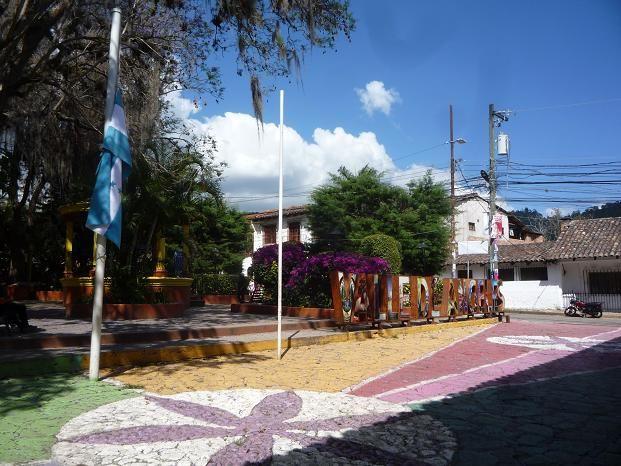
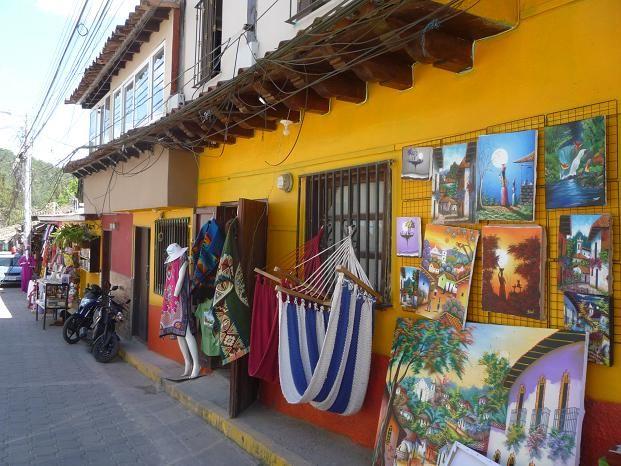

===================================
TEGUCIGALPA
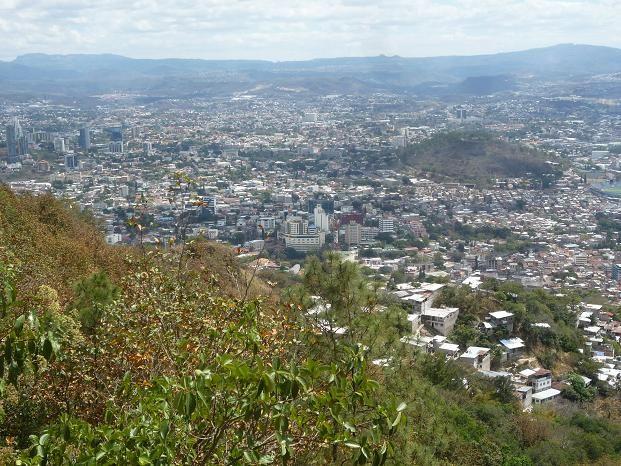
Looking south across Tegucigalpa from a "mirador" at El Picacho Park.
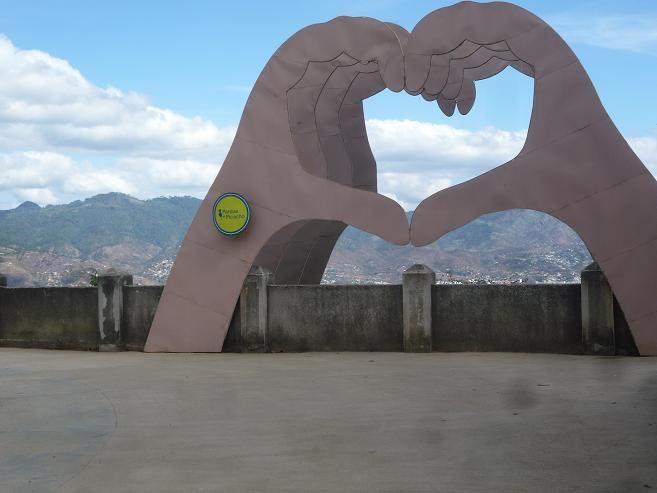
Another mirador at El Picacho.
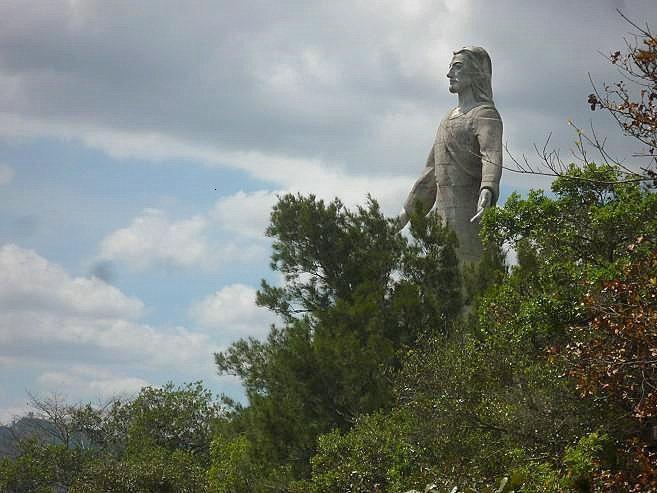
Jesus at El Picacho. You can spot this statue from all over Tegucigalpa.
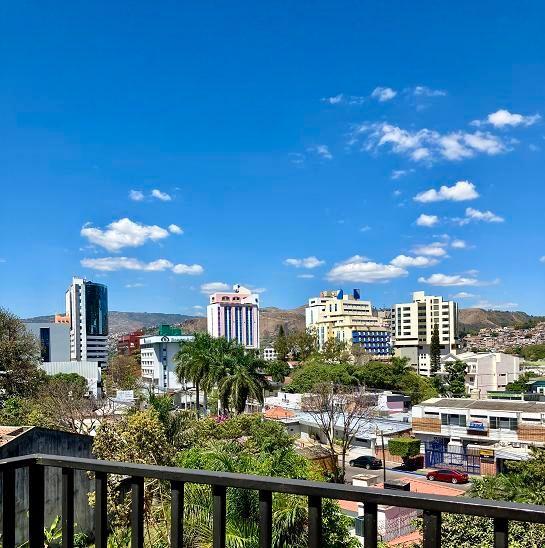
The hotel skyline of the Colonia Palmira neighborhood.
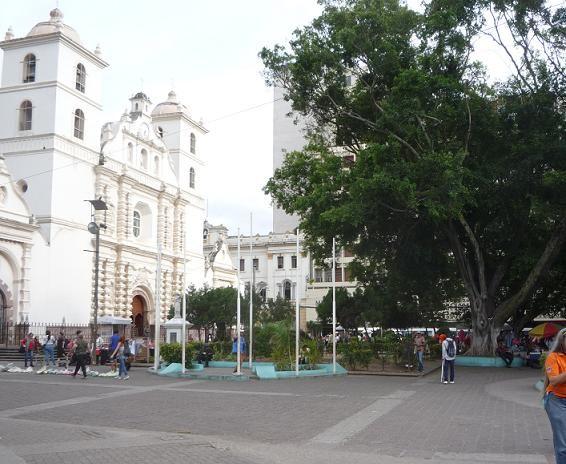
Tegucigalpa's Central Plaza.
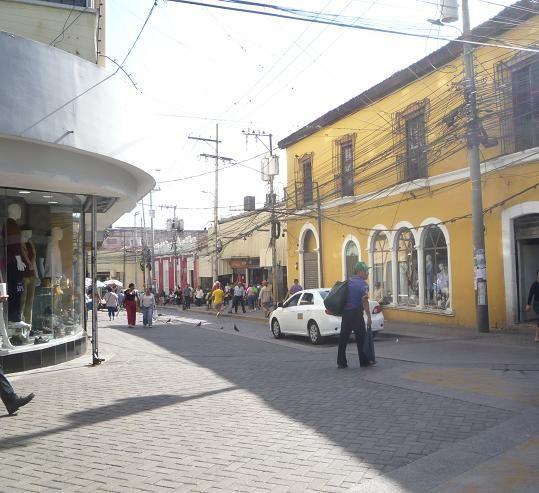
A typical scene in the historic center.
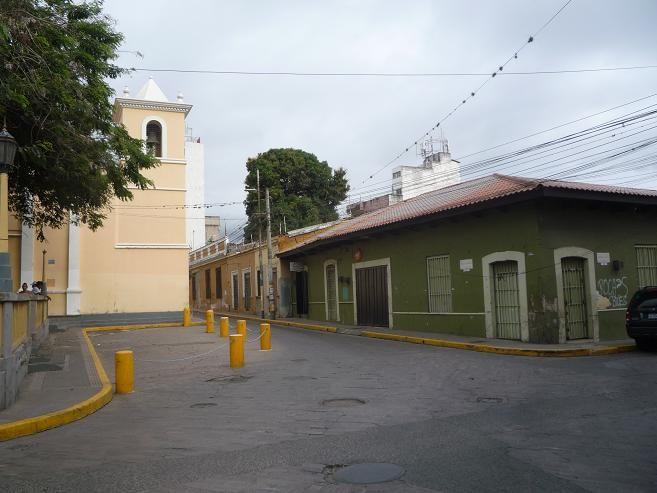
Apart from a few impressive buildings, Tegucigalpa's historic center is not particularly historic-looking, but there is this small, quainter area a little east of the Central Plaza.
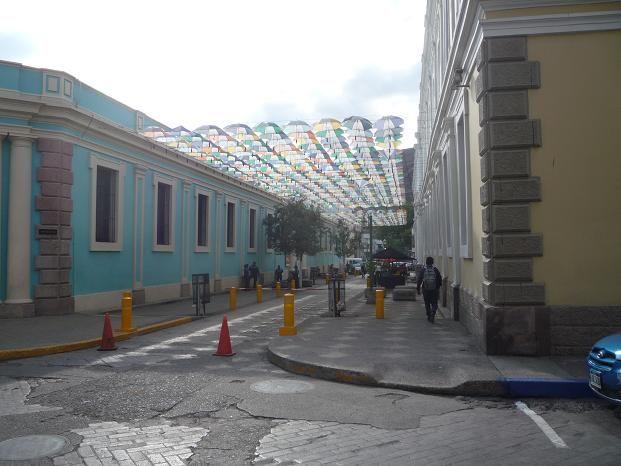
Still in the historic center: the unique Museum of National Identity is halfway down this umbrella-lined street.
====================================
SAN PEDRO SULA
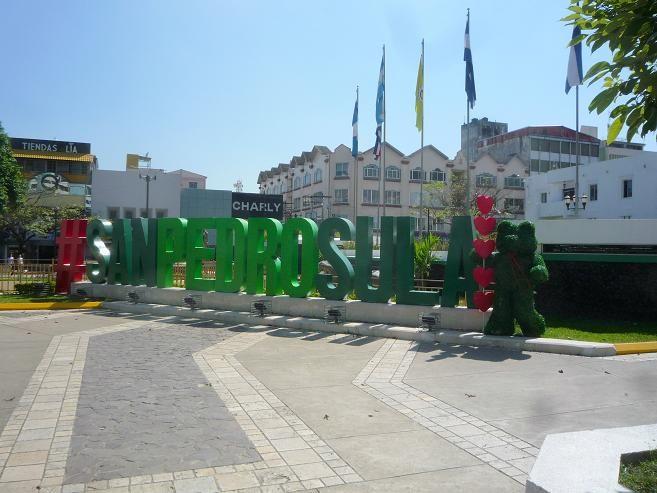
The Central Plaza (officially, the "Central Park") of San Pedro Sula.

Looking north-east across the Central Plaza.

A typical street in the city center.
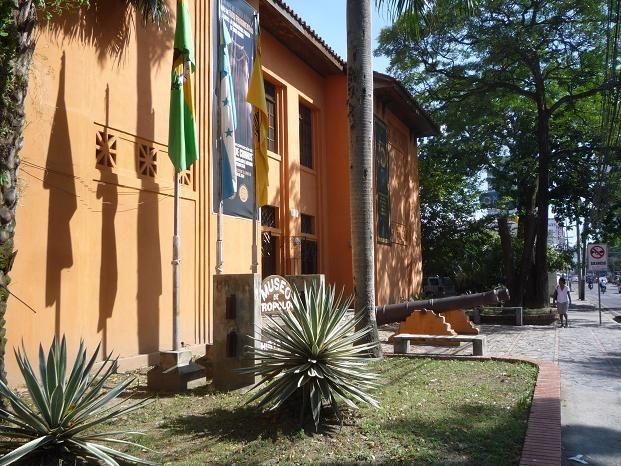
The excellent Museum of Anthropology and History.
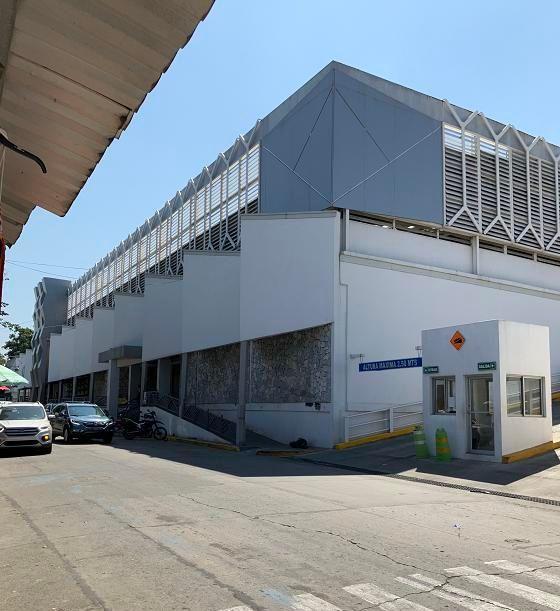
The Guamilito Market, complete with modern parking.
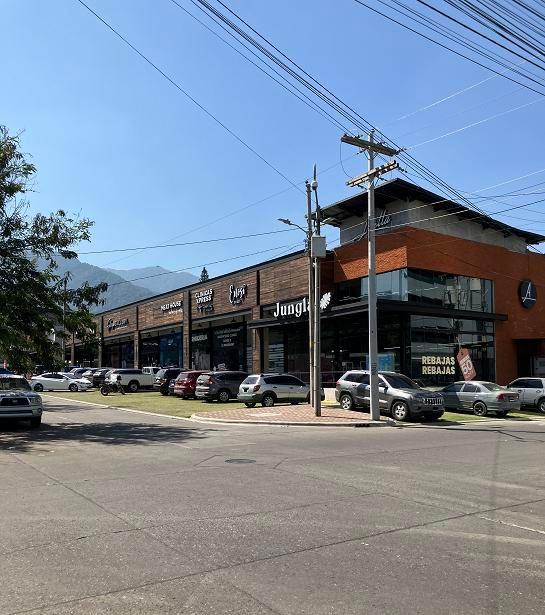
A typical shopping center in the Los Andes neighborhood.
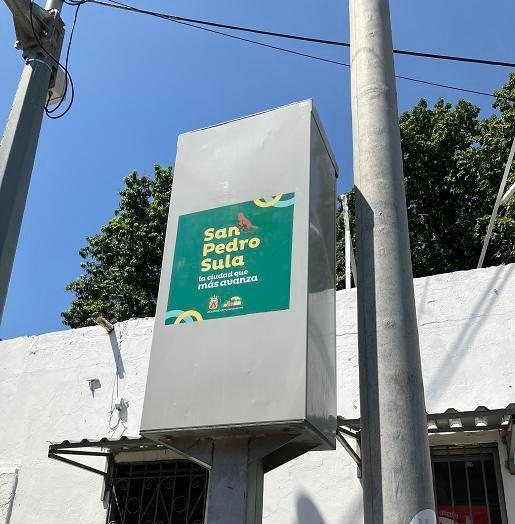
A bit of local pride. Whether or not San Pedro Sula really is "advancing the most," as stated, I personally thought it was doing rather well, everything considered.
===================================
TEGUCIGALPA
Looking south across Tegucigalpa from a "mirador" at El Picacho Park.
Another mirador at El Picacho.
Jesus at El Picacho. You can spot this statue from all over Tegucigalpa.
The hotel skyline of the Colonia Palmira neighborhood.
Tegucigalpa's Central Plaza.
A typical scene in the historic center.
Apart from a few impressive buildings, Tegucigalpa's historic center is not particularly historic-looking, but there is this small, quainter area a little east of the Central Plaza.
Still in the historic center: the unique Museum of National Identity is halfway down this umbrella-lined street.
====================================
SAN PEDRO SULA
The Central Plaza (officially, the "Central Park") of San Pedro Sula.
Looking north-east across the Central Plaza.
A typical street in the city center.
The excellent Museum of Anthropology and History.
The Guamilito Market, complete with modern parking.
A typical shopping center in the Los Andes neighborhood.
A bit of local pride. Whether or not San Pedro Sula really is "advancing the most," as stated, I personally thought it was doing rather well, everything considered.
Last edited by Faedus; Jun 22nd, 2025 at 03:01 PM.
Jun 22nd, 2025 | 07:53 PM
#3
Joined: Apr 2023
Posts: 291
Likes: 0
What an amazing trip report. So much better than 'ask me a question' about 'x' trip reports. I admit, at this point in our lives, we'll probably never get to Honduras. Just the same, reports from bigger Latin American cities are always entertaining & informative, since they are often the 'heart' of the respective country and often overlooked. And because of the relative inactivity of the forum lately, a 'review' of previously posted TR's are welcome reading. Especially as I get older and forget stuff, lol.
Jun 22nd, 2025 | 07:55 PM
#4

Joined: May 2003
Posts: 4,070
Likes: 0
Nice trip report and photos, Faedus. Thank you!
Of the two cities, I far prefer Tegucigalpa over SPS. Like you, I find the heat of the lowlands daunting. Tegus's springlike climate is just more refreshing. I stroll around both cities now and walk by places I one stayed when I was young and on a tight budget. I always think: I stayed THERE? What was I thinking? Amazing how your perspective changes when you can loosen the purse strings a bit.
That was me. I remember being surprised to find that out -- after all, you repeat a "fact" enough times, it takes on a life of its own. I decided, I've got to put that tidbit of information in there.
Of the two cities, I far prefer Tegucigalpa over SPS. Like you, I find the heat of the lowlands daunting. Tegus's springlike climate is just more refreshing. I stroll around both cities now and walk by places I one stayed when I was young and on a tight budget. I always think: I stayed THERE? What was I thinking?
Amazing how your perspective changes when you can loosen the purse strings a bit.
(Finally, though this may not matter to most tourists, I must commend the anonymous author of the Tegucigalpa travel essay (undated) elsewhere on Fodor’s on-line site, for pointing out that the city’s charming name may not actually mean “Silver Hill,” as most travel-guide authors state witout qualification. No one really knows for certain, but the probable tranlsation cited by the Fodor’s writer, “[Place of] Colored Rocks,” is a plausible alternative, and happens to have an authoritative source, the Honduran historian Leticia de Oyuela.)
I remember being surprised to find that out -- after all, you repeat a "fact" enough times, it takes on a life of its own. I decided, I've got to put that tidbit of information in there.
Jun 23rd, 2025 | 05:56 AM
#6

Joined: Sep 2007
Posts: 10,994
Likes: 3
Thanks for this detailed report. I've long wanted to visit Copan, but that goal seems to be receding every year. One reason for hesitating was the reputation of the the larger cities which had to be transited. Encouraged to hear they are not as intimidating as they are sometimes painted.
Jun 23rd, 2025 | 03:03 PM
#7
Joined: Jan 2003
Posts: 3,645
Likes: 0
Thanks Faedus for the 2025 Honduras city updates. I have not been back to Honduras since 2019 (and that was only scratching the surface in Copán Ruinas, which a friend of mine teases me is not really like much of Honduras, “essentially Guatemala”, he says. Having not been to other parts, not sure what he means. Culturally? In feel?) but I always appreciate your Honduras reports.
Trending Topics
Jun 23rd, 2025 | 08:36 PM
#8
Original Poster
Joined: Apr 2022
Posts: 202
Likes: 0
Thanks much for the replies — a few individual responses:
bald0ne: As with you and Honduras, I had been wondering when, or even whether, I might ever make it back to Mexico — I really ought to get there some time; but in the meantime I’ve enjoyed reading your Mexico reports and comments. (I studied some of your reports last year in an anticipation of a trip there, but things went wrong and the trip didn't happen.)
Diavolo: I can understand concerns about the larger cities, not just in Honduras but throughout Latin America — those capitals and other big cities are usually not places that people fall in love with at first sight, like Paris or San Francisco. But I’m rather a city person myself, and I’ve always found the capitals and larger cities to be essential for getting into the history of a country. Anyway, in the case of the two big Honduran cities, I think following what we call the "usual precautions" -- but following them to the letter -- will suffice. And if you fly into the new Palmerola Airport, near Comayagua, it's possible to visit several good mainland sites, including Copán, without having to go into the two big cities at all.
Daniel: I think you can safely consider yourself to have seen at least some of the real Honduras, for I wouldn’t quite agree with your friend that Copán is “essentially Guatemalan.” In its overall friendliness, its laid-back “vibe,” and at least as of 2023, the absence of foreign food and hotel chains, I’ve actually found Copán to be "essentially Honduran"!
Jeff: I’ve looked further at the Honduras destination section of the Fodors site, and it’s quite well done. I’m not sure how much more of it you have written yourself, but it’s one of the better on-line Honduras travel sites I’ve encountered. The Mayas were great, but I was glad to see the Lencas getting their due. (Also, Angeli Gardens should probably be considered for the list of San Pedro Sula hotels; and for budget travellers, the Palmira Hostel in Tegucigalpa -- though perhaps Fodors has its own internal policies for hotel recommendations.)
bald0ne: As with you and Honduras, I had been wondering when, or even whether, I might ever make it back to Mexico — I really ought to get there some time; but in the meantime I’ve enjoyed reading your Mexico reports and comments. (I studied some of your reports last year in an anticipation of a trip there, but things went wrong and the trip didn't happen.)
Diavolo: I can understand concerns about the larger cities, not just in Honduras but throughout Latin America — those capitals and other big cities are usually not places that people fall in love with at first sight, like Paris or San Francisco. But I’m rather a city person myself, and I’ve always found the capitals and larger cities to be essential for getting into the history of a country. Anyway, in the case of the two big Honduran cities, I think following what we call the "usual precautions" -- but following them to the letter -- will suffice. And if you fly into the new Palmerola Airport, near Comayagua, it's possible to visit several good mainland sites, including Copán, without having to go into the two big cities at all.
Daniel: I think you can safely consider yourself to have seen at least some of the real Honduras, for I wouldn’t quite agree with your friend that Copán is “essentially Guatemalan.” In its overall friendliness, its laid-back “vibe,” and at least as of 2023, the absence of foreign food and hotel chains, I’ve actually found Copán to be "essentially Honduran"!
Jeff: I’ve looked further at the Honduras destination section of the Fodors site, and it’s quite well done. I’m not sure how much more of it you have written yourself, but it’s one of the better on-line Honduras travel sites I’ve encountered. The Mayas were great, but I was glad to see the Lencas getting their due. (Also, Angeli Gardens should probably be considered for the list of San Pedro Sula hotels; and for budget travellers, the Palmira Hostel in Tegucigalpa -- though perhaps Fodors has its own internal policies for hotel recommendations.)
Last edited by Faedus; Jun 23rd, 2025 at 09:07 PM.


Thread
Original Poster
Forum
Replies
Last Post
bbqboy
United States
23
Apr 8th, 2011 10:02 AM
Mylesaway
Europe
70
Jun 3rd, 2005 02:02 PM


