


Remarkable Romania!
 Aug 17th, 2024 | 08:26 PM
#41

Joined: Oct 2012
Posts: 2,279
Likes: 0
Glad you got to Astra, it is an astounding place. You hit so many historic highlights and artifacts still in view. These places are an ever-present part of both history and a part of how people live and think of their identity today as Romanians.
The little pictograms on the gravestones are so individually expressive and thoughtful.
The little pictograms on the gravestones are so individually expressive and thoughtful.
 Aug 18th, 2024 | 09:03 AM
#42
Original Poster
Joined: Dec 2006
Posts: 25,714
Likes: 0
@ Travel_Nerd &
@ KarenWoo &
@ shelemm:
The Cimitirul Vesel in Săpânța, aka “The Merry Cemetery,” is quite unusual. As I understand it, a local man decided to make these grave markers, on his own time, as a way to honor those who were buried there. He carved and painted all of them, working over many years. Each has an individualized image that shows something about the person – a woman at her loom, a man with his hunting rifle, and so forth -- along with birth and death dates and a few words about the person, always (or almost always) starting with the words, “Here lies.…”
@ shelemm: You hit the proverbial nail on its head! I was glad to see these things, but a huge part of what made them particularly noteworthy is the evidence that these things – these artifacts and places and traditions – seem fundamental to the sense of identity of so many Romanians. As you undoubtedly know (but others might not), even though Romanians trace their roots and their language back to the Romans, Romania as we know it today is a young country, forged in the aftermath of WWII, largely through the efforts of their queen Marie (who is venerated). The people I encountered were very proud of their heritage and their nationality.
@ KarenWoo &
@ shelemm:
The Cimitirul Vesel in Săpânța, aka “The Merry Cemetery,” is quite unusual. As I understand it, a local man decided to make these grave markers, on his own time, as a way to honor those who were buried there. He carved and painted all of them, working over many years. Each has an individualized image that shows something about the person – a woman at her loom, a man with his hunting rifle, and so forth -- along with birth and death dates and a few words about the person, always (or almost always) starting with the words, “Here lies.…”
@ shelemm: You hit the proverbial nail on its head! I was glad to see these things, but a huge part of what made them particularly noteworthy is the evidence that these things – these artifacts and places and traditions – seem fundamental to the sense of identity of so many Romanians. As you undoubtedly know (but others might not), even though Romanians trace their roots and their language back to the Romans, Romania as we know it today is a young country, forged in the aftermath of WWII, largely through the efforts of their queen Marie (who is venerated). The people I encountered were very proud of their heritage and their nationality.
Aug 18th, 2024 | 09:18 AM
#43
Original Poster
Joined: Dec 2006
Posts: 25,714
Likes: 0
What I liked best – continued
Magnificent scenery
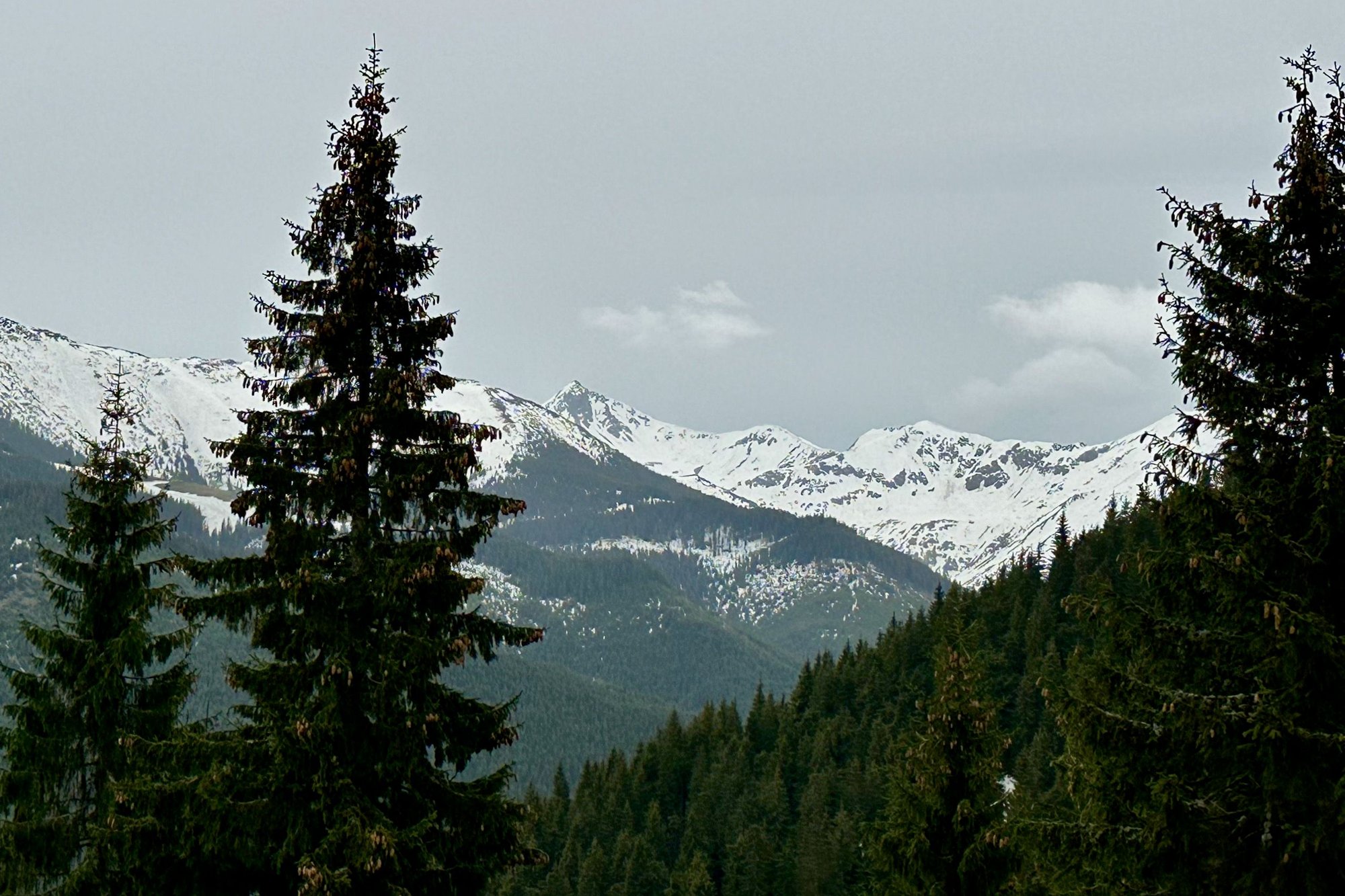
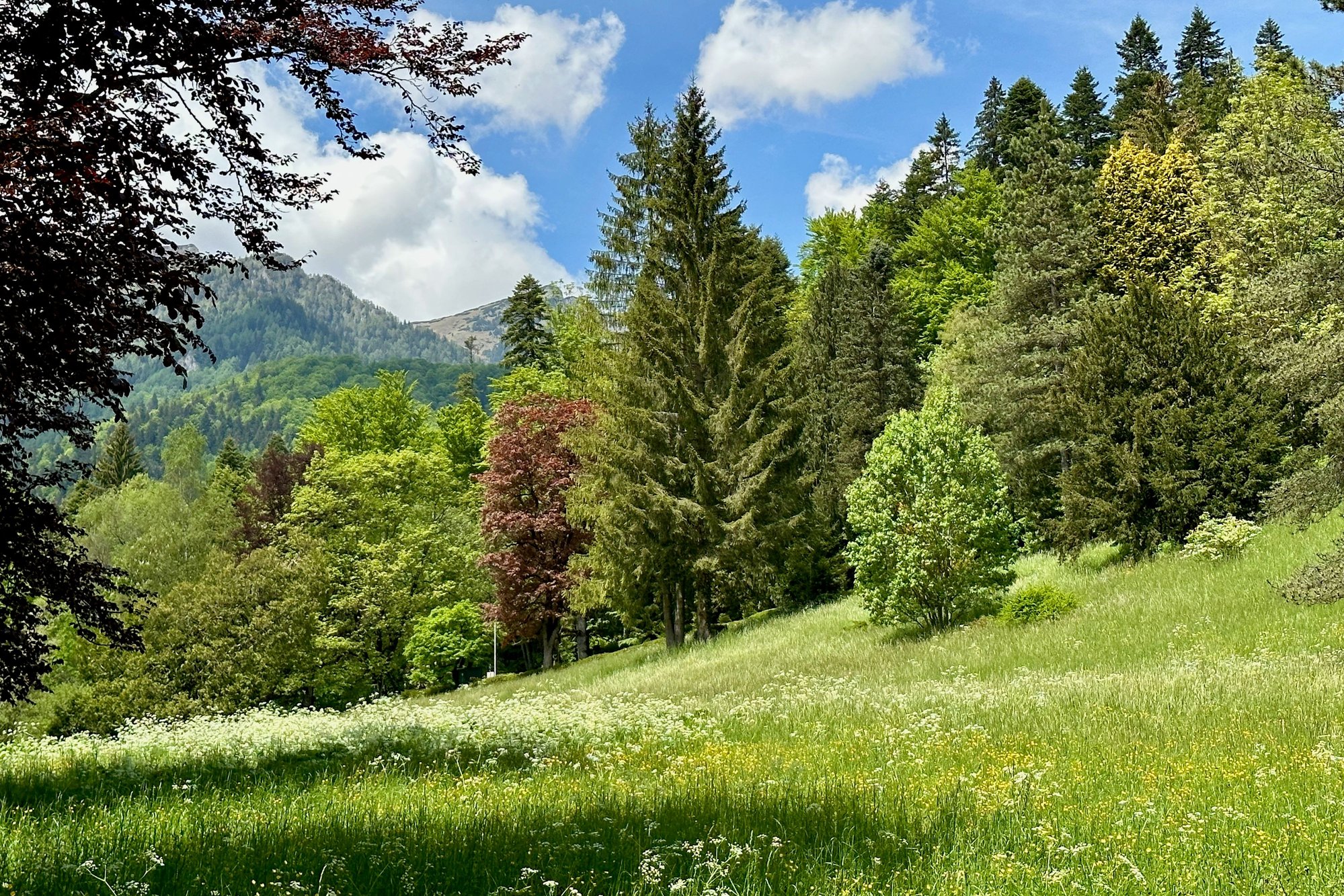
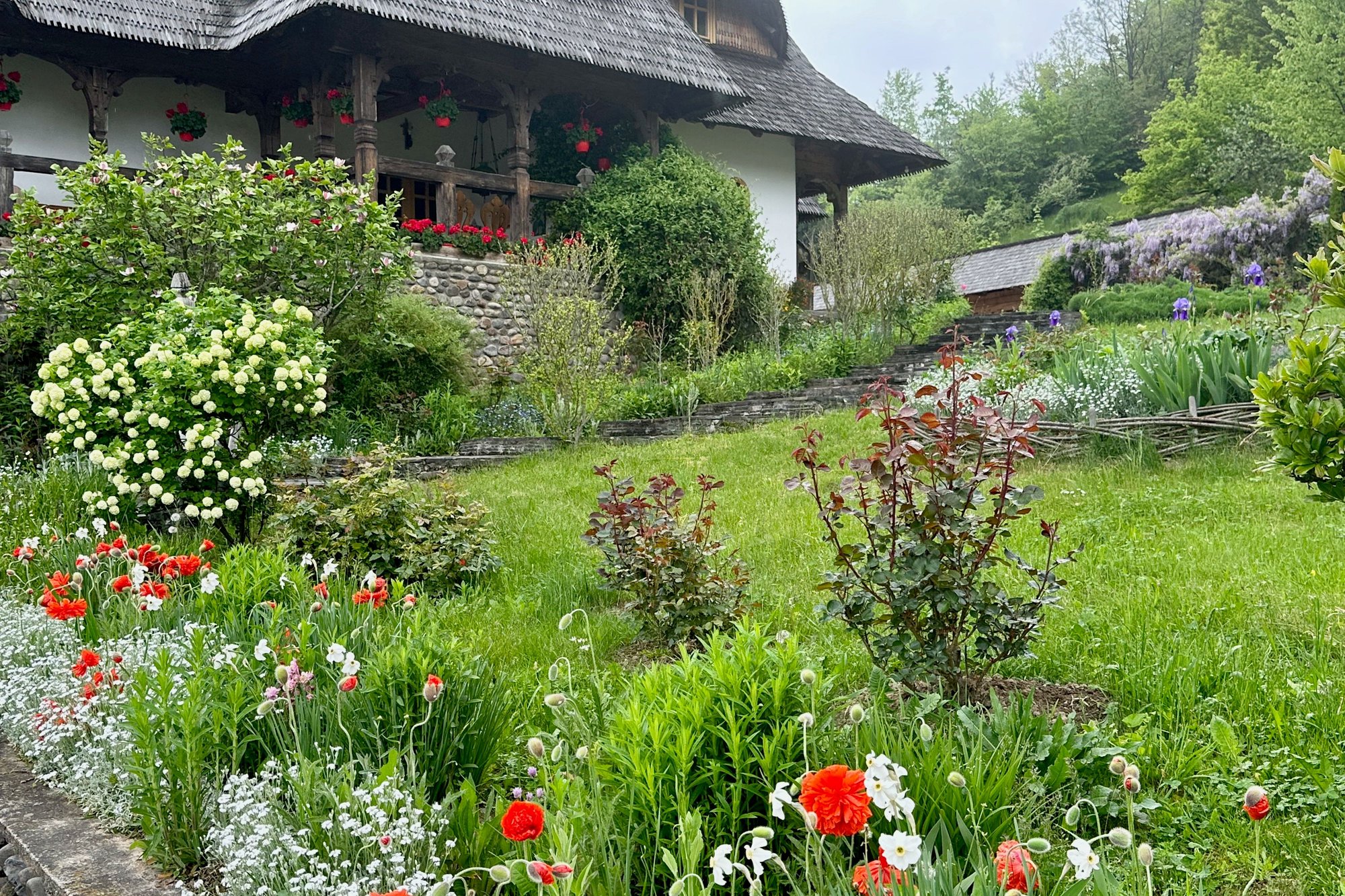
I was wowed by the scenery, from snowcapped mountains to gently rounded hills, lush farmland to forested hills, quiet rivers and rivers rushing with runoff… And May is a glorious time to visit Romania, perhaps especially in the north and in the mountains. There were blooming fruit trees interspersed among the deep, dark green of coniferous trees and the light, bright green of new deciduous leaves; and nesting storks on just about every pole. And flowers galore -- wonderfully colorful and aromatic flowers. It seemed that every house had a lilac or some iris (or both), and some of the walled churches and monasteries were powerfully redolent of lilac.
Many of the photos I’ve already posted give hints of these things. Here are a few more to highlight a few things:
From a pass through the Carpathians:
The hillside below Peleș Castle:
And the grounds of Mănăstirii Bârsana:
More to come….
Magnificent scenery
I was wowed by the scenery, from snowcapped mountains to gently rounded hills, lush farmland to forested hills, quiet rivers and rivers rushing with runoff… And May is a glorious time to visit Romania, perhaps especially in the north and in the mountains. There were blooming fruit trees interspersed among the deep, dark green of coniferous trees and the light, bright green of new deciduous leaves; and nesting storks on just about every pole. And flowers galore -- wonderfully colorful and aromatic flowers. It seemed that every house had a lilac or some iris (or both), and some of the walled churches and monasteries were powerfully redolent of lilac.
Many of the photos I’ve already posted give hints of these things. Here are a few more to highlight a few things:
From a pass through the Carpathians:
The hillside below Peleș Castle:
And the grounds of Mănăstirii Bârsana:
More to come….
Aug 18th, 2024 | 09:34 AM
#44
Joined: Oct 2012
Posts: 2,279
Likes: 0
@ Travel_Nerd &
@ KarenWoo &
@ shelemm:
The Cimitirul Vesel in Săpânța, aka “The Merry Cemetery,” is quite unusual. As I understand it, a local man decided to make these grave markers, on his own time, as a way to honor those who were buried there. He carved and painted all of them, working over many years. Each has an individualized image that shows something about the person – a woman at her loom, a man with his hunting rifle, and so forth -- along with birth and death dates and a few words about the person, always (or almost always) starting with the words, “Here lies.…”
@ shelemm: You hit the proverbial nail on its head! I was glad to see these things, but a huge part of what made them particularly noteworthy is the evidence that these things – these artifacts and places and traditions – seem fundamental to the sense of identity of so many Romanians. As you undoubtedly know (but others might not), even though Romanians trace their roots and their language back to the Romans, Romania as we know it today is a young country, forged in the aftermath of WWII, largely through the efforts of their queen Marie (who is venerated). The people I encountered were very proud of their heritage and their nationality.
@ KarenWoo &
@ shelemm:
The Cimitirul Vesel in Săpânța, aka “The Merry Cemetery,” is quite unusual. As I understand it, a local man decided to make these grave markers, on his own time, as a way to honor those who were buried there. He carved and painted all of them, working over many years. Each has an individualized image that shows something about the person – a woman at her loom, a man with his hunting rifle, and so forth -- along with birth and death dates and a few words about the person, always (or almost always) starting with the words, “Here lies.…”
@ shelemm: You hit the proverbial nail on its head! I was glad to see these things, but a huge part of what made them particularly noteworthy is the evidence that these things – these artifacts and places and traditions – seem fundamental to the sense of identity of so many Romanians. As you undoubtedly know (but others might not), even though Romanians trace their roots and their language back to the Romans, Romania as we know it today is a young country, forged in the aftermath of WWII, largely through the efforts of their queen Marie (who is venerated). The people I encountered were very proud of their heritage and their nationality.
Aug 18th, 2024 | 12:16 PM
#45

Joined: Aug 2007
Posts: 16,292
Likes: 0
@ Travel_Nerd &
@ KarenWoo &
@ shelemm:
The Cimitirul Vesel in Săpânța, aka “The Merry Cemetery,” is quite unusual. As I understand it, a local man decided to make these grave markers, on his own time, as a way to honor those who were buried there. He carved and painted all of them, working over many years. Each has an individualized image that shows something about the person – a woman at her loom, a man with his hunting rifle, and so forth -- along with birth and death dates and a few words about the person, always (or almost always) starting with the words, “Here lies.…”
@ shelemm: You hit the proverbial nail on its head! I was glad to see these things, but a huge part of what made them particularly noteworthy is the evidence that these things – these artifacts and places and traditions – seem fundamental to the sense of identity of so many Romanians. As you undoubtedly know (but others might not), even though Romanians trace their roots and their language back to the Romans, Romania as we know it today is a young country, forged in the aftermath of WWII, largely through the efforts of their queen Marie (who is venerated). The people I encountered were very proud of their heritage and their nationality.
@ KarenWoo &
@ shelemm:
The Cimitirul Vesel in Săpânța, aka “The Merry Cemetery,” is quite unusual. As I understand it, a local man decided to make these grave markers, on his own time, as a way to honor those who were buried there. He carved and painted all of them, working over many years. Each has an individualized image that shows something about the person – a woman at her loom, a man with his hunting rifle, and so forth -- along with birth and death dates and a few words about the person, always (or almost always) starting with the words, “Here lies.…”
@ shelemm: You hit the proverbial nail on its head! I was glad to see these things, but a huge part of what made them particularly noteworthy is the evidence that these things – these artifacts and places and traditions – seem fundamental to the sense of identity of so many Romanians. As you undoubtedly know (but others might not), even though Romanians trace their roots and their language back to the Romans, Romania as we know it today is a young country, forged in the aftermath of WWII, largely through the efforts of their queen Marie (who is venerated). The people I encountered were very proud of their heritage and their nationality.
A Romanian woman in my Italian class reminded us that Romanian is a Romance language having much in common with languages such as Italian, Spanish, French and Portuguese.
. Compared with the other Romance languages, the closest relative of Romanian is Italian.
In spite being in the middle of Slavic speaking nations ( except Hungary) and Communist oppression, the language and culture
apparently thrived.
Have you seen a museum ( or similar) about the time under Ceausescu ?
Aug 18th, 2024 | 06:01 PM
#46
Joined: Apr 2010
Posts: 1,857
Likes: 0
danon, a Romanian friend of my brother’s was telling us about the language just a week back. I had always presumed Romanian was another Slavic language and was surprised to learn otherwise. An unexpected quirk, so to say!
Incidentally, kja, my husband and I have driven through parts of the old Yugoslavia in the early to mid eighties when we lived in Paris, mostly when we were going from Austria to Italy. It was a rather dark and dreary place, though we used to stop at some places with thermal baths, near Zagreb, if I remember.
One year we drove through Ljubljana, then Trieste and onto Venice. We went again to Ljubljana in 1990/91 after the fall of the Wall and it had a completely different vibe, even though it was still part of Yugoslavia. I think the collapse of Communism had changed people’s thinking and they were less wary of voicing their opinions.
Incidentally, kja, my husband and I have driven through parts of the old Yugoslavia in the early to mid eighties when we lived in Paris, mostly when we were going from Austria to Italy. It was a rather dark and dreary place, though we used to stop at some places with thermal baths, near Zagreb, if I remember.
One year we drove through Ljubljana, then Trieste and onto Venice. We went again to Ljubljana in 1990/91 after the fall of the Wall and it had a completely different vibe, even though it was still part of Yugoslavia. I think the collapse of Communism had changed people’s thinking and they were less wary of voicing their opinions.
Aug 18th, 2024 | 07:01 PM
#47
Original Poster
Joined: Dec 2006
Posts: 25,714
Likes: 0
@ shelemm, danon, and geetika -- thanks for your continued interest and comments! Since you've touched on some common themes, I'll respond to the three of you in combination.
Romanian, the language has some of the sounds of Slavic languages, but the roots and grammar are Latin -- it dates back to the time of Roman rule over the area. I found it interesting to hear that the boundaries of modern Romania were established to encompass speakers of Romanian, which many believe to mean that the "real" Romania has finally been united again through Queen Marie's efforts. Although I didn't mention it above, I was glad to visit Brașov's Muzeul Prima Școală Românească -- the first school in the country to offer lessons in the Romanian language. One can visit it only with a guide, and oh, did that guide communicate his pride in that small place and its printing press!
The fall of communism. As you probably know (but for the potential benefit of others reading this thread), 1989 was quite a year: Romania overthrew communism, the Velvet Revolution led to a non-communist government in Czechoslovakia, Hungary established a democracy, the Berlin Wall fell, and semi-free elections were held in Poland.Yugoslavia remained intact, but the government had lost strength and challenges were growing. And with the end to communism, as shelemm suggests, people became free to express their individual identities and reclaim their cultural traditions. I agree that it is a joy to see the results!
So geetika's 1990/91 trip -- which I imagine was very interesting! -- was indeed at a time when there must have been undercurrents of change. I didn’t make it to any part of the former Yugoslavia until 2009, when it was the Balkan wars of the 1990s, not communism or the cold war, that was still reverberating in certain areas.
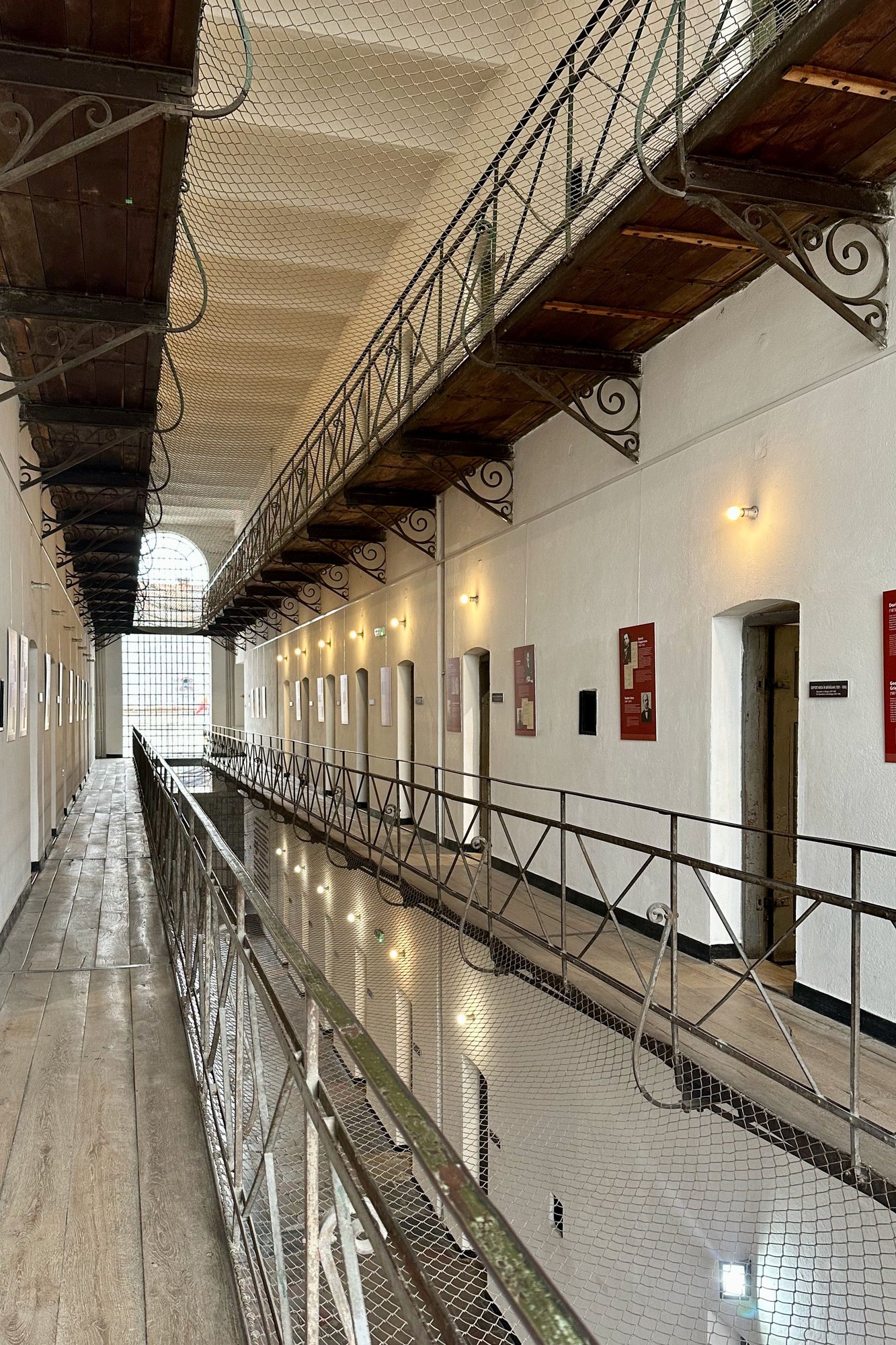
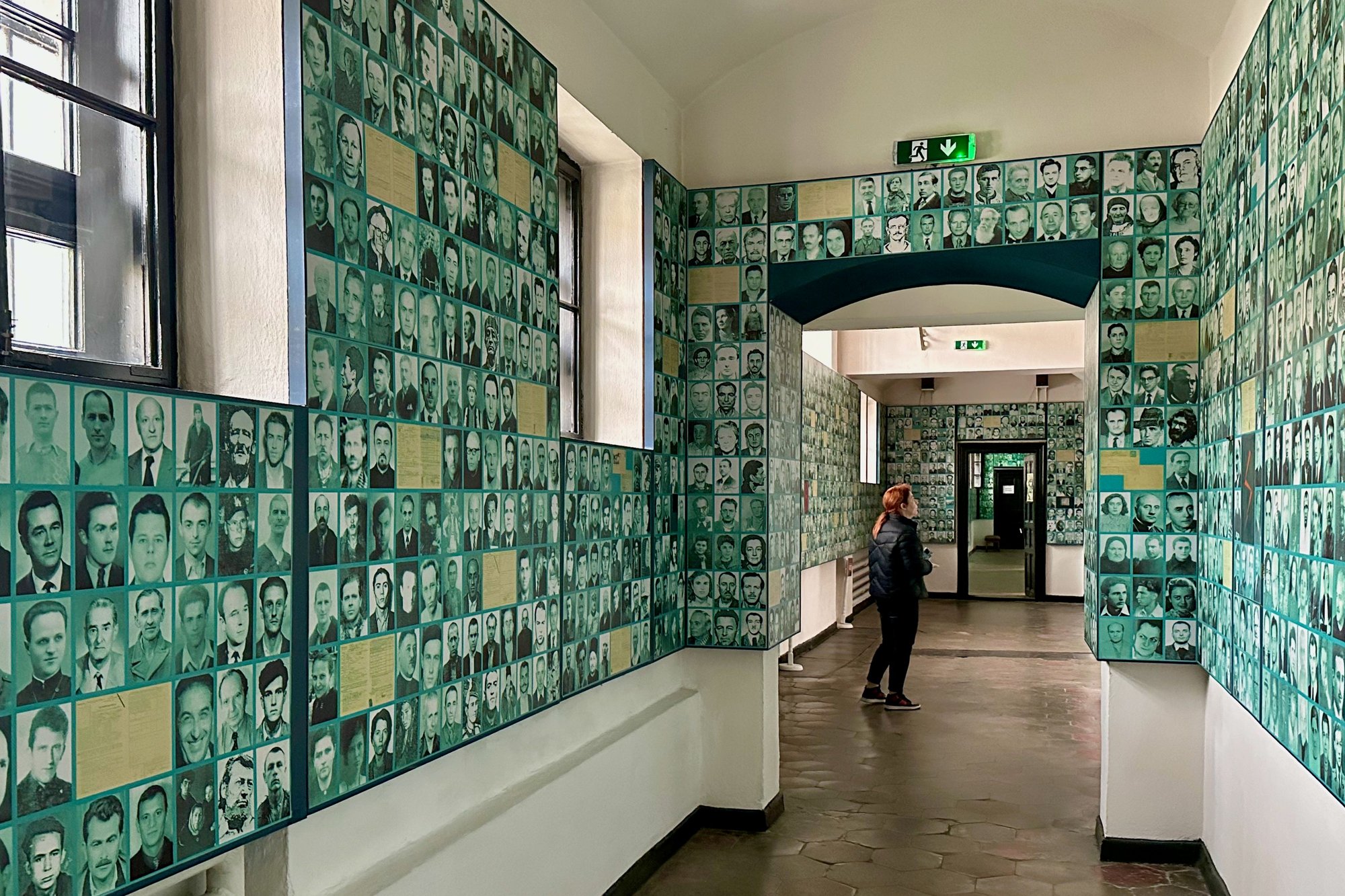
The museum that I visited about time under Ceaușescu was the Prison Museum in Sighet. As mentioned above, it was once a prison – the one used for those who were considered the most serious threats to the regime. These prisoners included political leaders, clerics and bishops, intellectuals, journalists, and others. There, they were tortured; many died. Apropos to the theme of these last few posts, the foundation that supports this museum argues that communism succeeds, in part, by forcing people to abandon their memories and traditions. In contrast, while Ceaușescu and his regime succeeded in forcing the temporary abandonment of certain traditions, the memories were not lost -- not completely.
The museum includes part of the actual prison, with individual cells used to provide information about the inmates (religious leaders, students, etc.) or aspects of their lives (how they communicated with each other from within their cells, the things they created while there, etc.). The museum also includes exhibitions about the resistance to communism within Romania, efforts to overthrow communism in other countries, and a memorial to those who died anywhere in the fight for freedom. I found it very moving.
As an aside: Sighet was also the birthplace of Elie Wiesel and his natal home is now a museum. So there are museums about both communism and the Holocaust within steps of each other … and within steps of the border with Ukraine.
Here's a photo of the Prison Museum:
and the Prison Museum's homage to those who fought for freedom:
Romanian, the language has some of the sounds of Slavic languages, but the roots and grammar are Latin -- it dates back to the time of Roman rule over the area. I found it interesting to hear that the boundaries of modern Romania were established to encompass speakers of Romanian, which many believe to mean that the "real" Romania has finally been united again through Queen Marie's efforts. Although I didn't mention it above, I was glad to visit Brașov's Muzeul Prima Școală Românească -- the first school in the country to offer lessons in the Romanian language. One can visit it only with a guide, and oh, did that guide communicate his pride in that small place and its printing press!
The fall of communism. As you probably know (but for the potential benefit of others reading this thread), 1989 was quite a year: Romania overthrew communism, the Velvet Revolution led to a non-communist government in Czechoslovakia, Hungary established a democracy, the Berlin Wall fell, and semi-free elections were held in Poland.Yugoslavia remained intact, but the government had lost strength and challenges were growing. And with the end to communism, as shelemm suggests, people became free to express their individual identities and reclaim their cultural traditions. I agree that it is a joy to see the results!
So geetika's 1990/91 trip -- which I imagine was very interesting! -- was indeed at a time when there must have been undercurrents of change. I didn’t make it to any part of the former Yugoslavia until 2009, when it was the Balkan wars of the 1990s, not communism or the cold war, that was still reverberating in certain areas.
The museum that I visited about time under Ceaușescu was the Prison Museum in Sighet. As mentioned above, it was once a prison – the one used for those who were considered the most serious threats to the regime. These prisoners included political leaders, clerics and bishops, intellectuals, journalists, and others. There, they were tortured; many died. Apropos to the theme of these last few posts, the foundation that supports this museum argues that communism succeeds, in part, by forcing people to abandon their memories and traditions. In contrast, while Ceaușescu and his regime succeeded in forcing the temporary abandonment of certain traditions, the memories were not lost -- not completely.
The museum includes part of the actual prison, with individual cells used to provide information about the inmates (religious leaders, students, etc.) or aspects of their lives (how they communicated with each other from within their cells, the things they created while there, etc.). The museum also includes exhibitions about the resistance to communism within Romania, efforts to overthrow communism in other countries, and a memorial to those who died anywhere in the fight for freedom. I found it very moving.
As an aside: Sighet was also the birthplace of Elie Wiesel and his natal home is now a museum. So there are museums about both communism and the Holocaust within steps of each other … and within steps of the border with Ukraine.
Here's a photo of the Prison Museum:
and the Prison Museum's homage to those who fought for freedom:
Last edited by kja; Aug 18th, 2024 at 07:42 PM. Reason: to mention the Romanian language school museum in Brasov
 Aug 18th, 2024 | 08:11 PM
#49
Joined: Aug 2007
Posts: 16,292
Likes: 0
danon, a Romanian friend of my brother’s was telling us about the language just a week back. I had always presumed Romanian was another Slavic language and was surprised to learn otherwise. An unexpected quirk, so to say!
Incidentally, kja, my husband and I have driven through parts of the old Yugoslavia in the early to mid eighties when we lived in Paris, mostly when we were going from Austria to Italy. It was a rather dark and dreary place, though we used to stop at some places with thermal baths, near Zagreb, if I remember.
One year we drove through Ljubljana, then Trieste and onto Venice. We went again to Ljubljana in 1990/91 after the fall of the Wall and it had a completely different vibe, even though it was still part of Yugoslavia. I think the collapse of Communism had changed people’s thinking and they were less wary of voicing their opinions.
Incidentally, kja, my husband and I have driven through parts of the old Yugoslavia in the early to mid eighties when we lived in Paris, mostly when we were going from Austria to Italy. It was a rather dark and dreary place, though we used to stop at some places with thermal baths, near Zagreb, if I remember.
One year we drove through Ljubljana, then Trieste and onto Venice. We went again to Ljubljana in 1990/91 after the fall of the Wall and it had a completely different vibe, even though it was still part of Yugoslavia. I think the collapse of Communism had changed people’s thinking and they were less wary of voicing their opinions.
People traveled freely to the west.
One of my exes had a family in that part of the world.
We visited the the coast and number of towns inland. It was in the 80s. We didn’t find it dreary,
we were young …had a great time.
The end of communism opened the possibility of break up of Yugoslavia and started the war among
different ethic /religious groups in the early 90s. Sometimes reclaiming cultural identities ends up in bloodshed. Luckily, it didn’t happen in former Czechoslovakia..
Thousands have died, thousands were ethnically cleansed, thousands emigrated to the west.
The ethnic conflicts in different areas continued for years.
Some new countries like Slovenia and Croatia seem to have prospered, others like Kosovo region and Bosnia are still struggling.
Sorry to go on about another country on this thread.
Last edited by danon; Aug 18th, 2024 at 08:57 PM.
Aug 18th, 2024 | 11:37 PM
#50
Original Poster
Joined: Dec 2006
Posts: 25,714
Likes: 0
Hmmm ... I don't think geetika suggested that Yugoslavia was "behind the Wall" -- I took that reference to the wall as one to the timing of that trip -- a trip taken after the fall of the Berlin Wall. i could be wrong! But in any case...
@ danon: I deeply appreciate the passion your post conveys for this part of the world and your reminder that changes that seem to be for the better can open a Pandora's Box of other awful, even deadly effects.
@ geetika: I treasure your observations about the changes you saw in the area in two separate visits, years apart.
I, for one, am grateful to hear two very different reports about experiences in this area. Dreary because of the times or rain? Bright because of sunshine or youth? Aren't they all possible and all valid? Don't we come away with a deeper appreciation if we accept both than if we had only one or the other?
I would hope that we can recognize that we have different experiences and still come together to stand in opposition to genocide and ethnic cleansing and forces that work to suppress our freedom and individuality. And perhaps we can celebrate the freedoms some of these places now have while joining together in wishing well for other parts of the region.
Could someone please lend me a magic wand?
@ danon: I deeply appreciate the passion your post conveys for this part of the world and your reminder that changes that seem to be for the better can open a Pandora's Box of other awful, even deadly effects.
@ geetika: I treasure your observations about the changes you saw in the area in two separate visits, years apart.
I, for one, am grateful to hear two very different reports about experiences in this area. Dreary because of the times or rain? Bright because of sunshine or youth? Aren't they all possible and all valid? Don't we come away with a deeper appreciation if we accept both than if we had only one or the other?
I would hope that we can recognize that we have different experiences and still come together to stand in opposition to genocide and ethnic cleansing and forces that work to suppress our freedom and individuality. And perhaps we can celebrate the freedoms some of these places now have while joining together in wishing well for other parts of the region.
Could someone please lend me a magic wand?
Aug 19th, 2024 | 01:53 AM
#51

Joined: Feb 2003
Posts: 2,698
Likes: 0
kja, some of the headstones in the Merry Cemetery also had illustrations of how the person actually died. I wrote about it in my blog, back in 2013.
A Romanian friend translated one of the headstones I took a photo of - this is the translation: And the headstone was very graphic.
“1941
I lived 53 years
This is how they cut his head from his body
Oh, hard it is for me to rest,
Saulic Ion is my name.
In the garden in Belmezau,
Sheep I was counting
But I missed just one
My head was shot
The head from the body was cut
And this is how they buried me
Be they forever cursed.”
A truly unique place!
A Romanian friend translated one of the headstones I took a photo of - this is the translation: And the headstone was very graphic.
“1941
I lived 53 years
This is how they cut his head from his body
Oh, hard it is for me to rest,
Saulic Ion is my name.
In the garden in Belmezau,
Sheep I was counting
But I missed just one
My head was shot
The head from the body was cut
And this is how they buried me
Be they forever cursed.”
A truly unique place!
Aug 19th, 2024 | 04:56 AM
#52
Joined: Apr 2010
Posts: 1,857
Likes: 0
Yes, kja’s right, I meant the difference between the early eighties and early nineties, after the wall fell. Looking back, it could also be a difference in perception on my part, at 30+ I was seeing things differently than when I was 10 years younger. A combination of factors for sure.
Aug 19th, 2024 | 05:26 AM
#53
Joined: Oct 2012
Posts: 2,279
Likes: 0
Thank you so much for your report on the museum in Sighet. Tremendous insight into this very dark period, yet also a tribute to the the brave ones who dared to fight - and eventually bring down- a heinous system.
Another reminder that once you go down a dark path, there are awful things you have to do to keep going.
Another reminder that once you go down a dark path, there are awful things you have to do to keep going.
Aug 19th, 2024 | 05:35 AM
#54
Joined: Oct 2012
Posts: 2,279
Likes: 0
kja, some of the headstones in the Merry Cemetery also had illustrations of how the person actually died. I wrote about it in my blog, back in 2013.
A Romanian friend translated one of the headstones I took a photo of - this is the translation: And the headstone was very graphic.
“1941
I lived 53 years
This is how they cut his head from his body
Oh, hard it is for me to rest,
Saulic Ion is my name.
In the garden in Belmezau,
Sheep I was counting
But I missed just one
My head was shot
The head from the body was cut
And this is how they buried me
Be they forever cursed.”
A truly unique place!
A Romanian friend translated one of the headstones I took a photo of - this is the translation: And the headstone was very graphic.
“1941
I lived 53 years
This is how they cut his head from his body
Oh, hard it is for me to rest,
Saulic Ion is my name.
In the garden in Belmezau,
Sheep I was counting
But I missed just one
My head was shot
The head from the body was cut
And this is how they buried me
Be they forever cursed.”
A truly unique place!
This is such a great thread because it makes you think about other things than just 'sightseeing.' You begin to understand a culture.
Aug 19th, 2024 | 09:04 AM
#56
Original Poster
Joined: Dec 2006
Posts: 25,714
Likes: 0
What I liked best – continued … and the LAST of this long list of the things I most enjoyed in Romania.
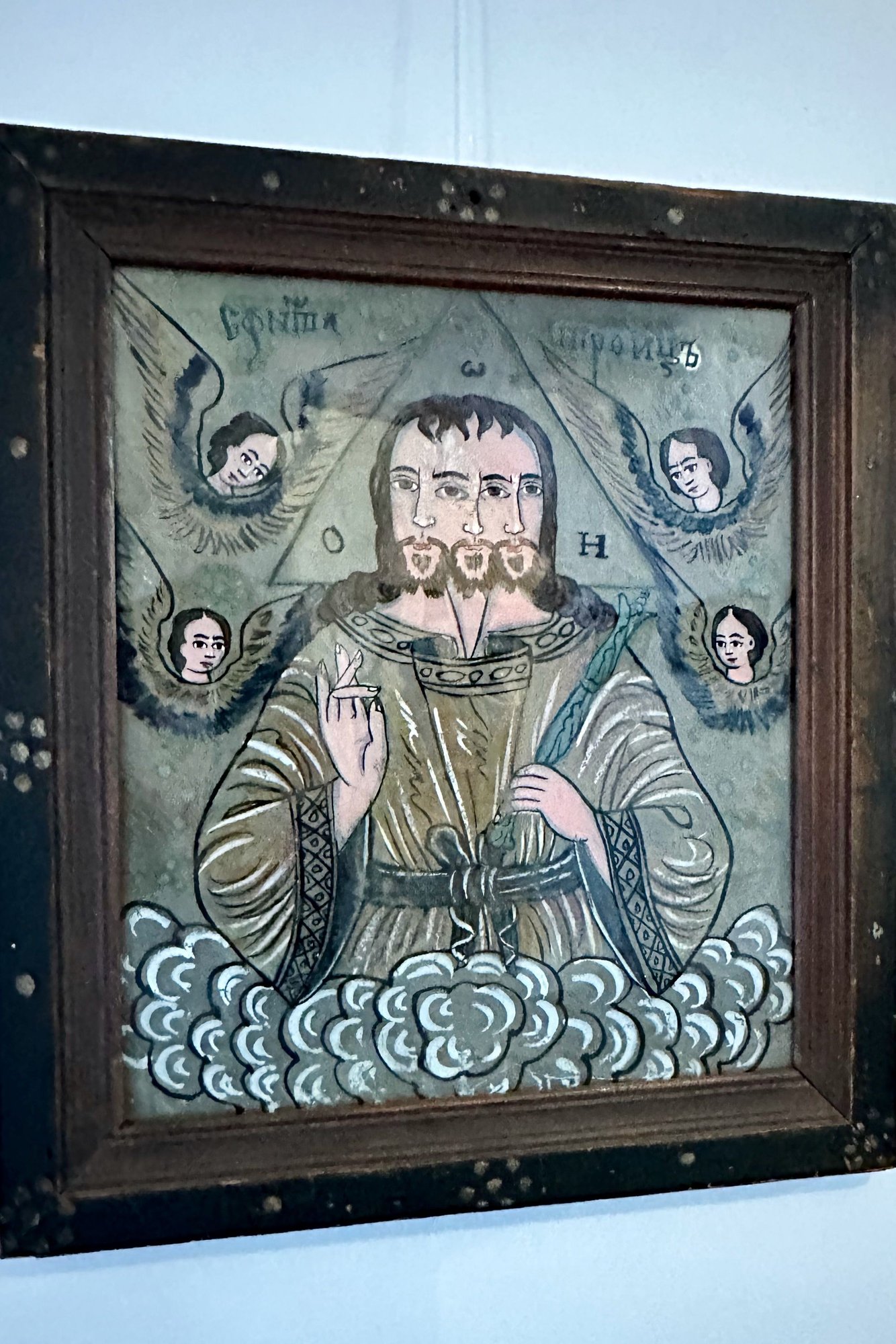
The arts! Glorious works of art! In addition to some striking Western masterpieces, I was glad to learn more about any number of Romanian artists who I thought deserving of much wider acclaim than they currently enjoy. I knew a little about Nicolae Grigorescu before this trip and I felt fortunate to see a wonderful special exhibition of his work in Bucharest. During this trip, I was delighted to learn a bit about other Romanian artists, including
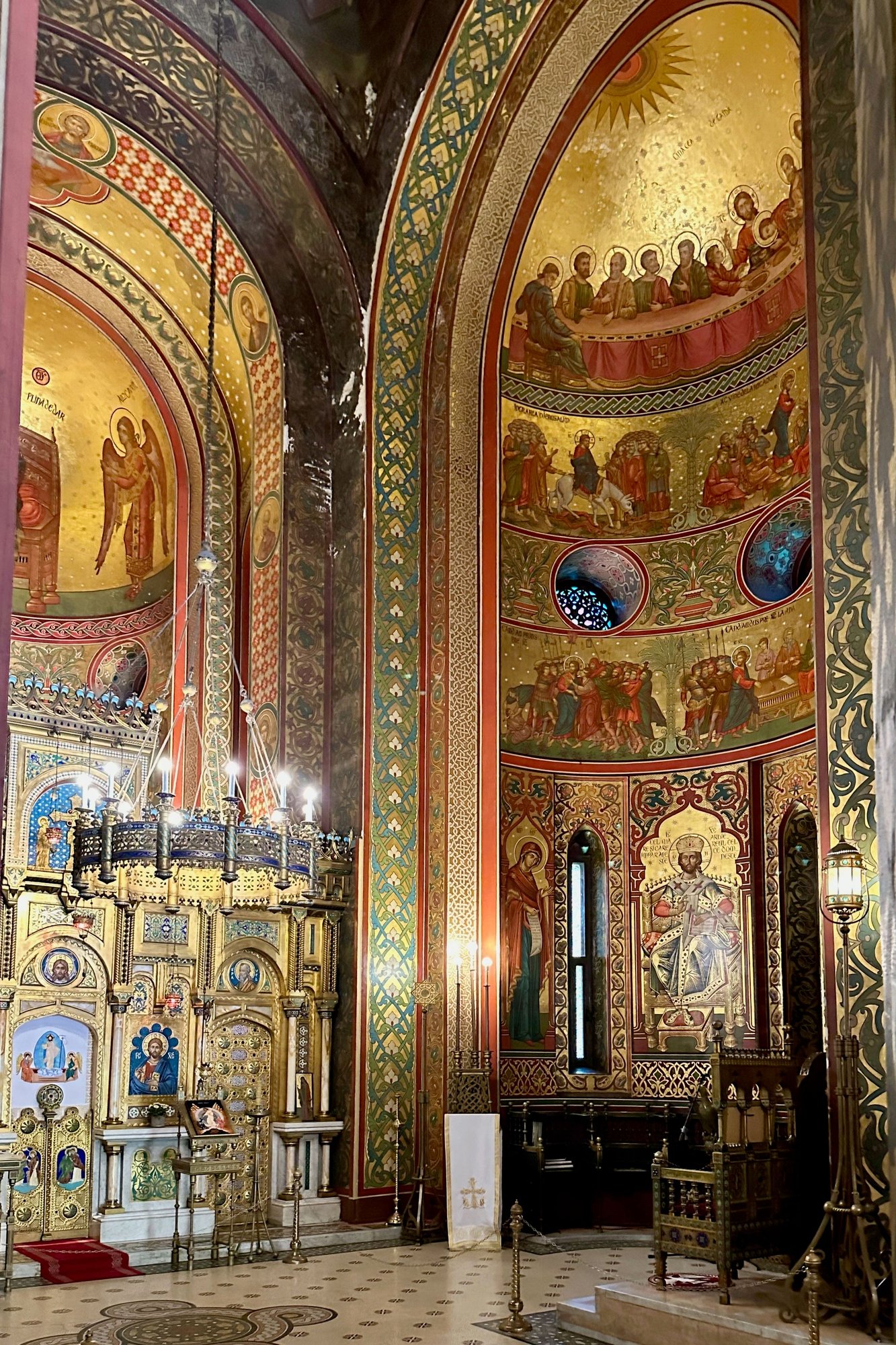
Of course, there were many exquisite Byzantine works in addition to the amazing exterior frescoes already described. Here’s a photo of the interior of Mănăstirea Curtea de Argeș:
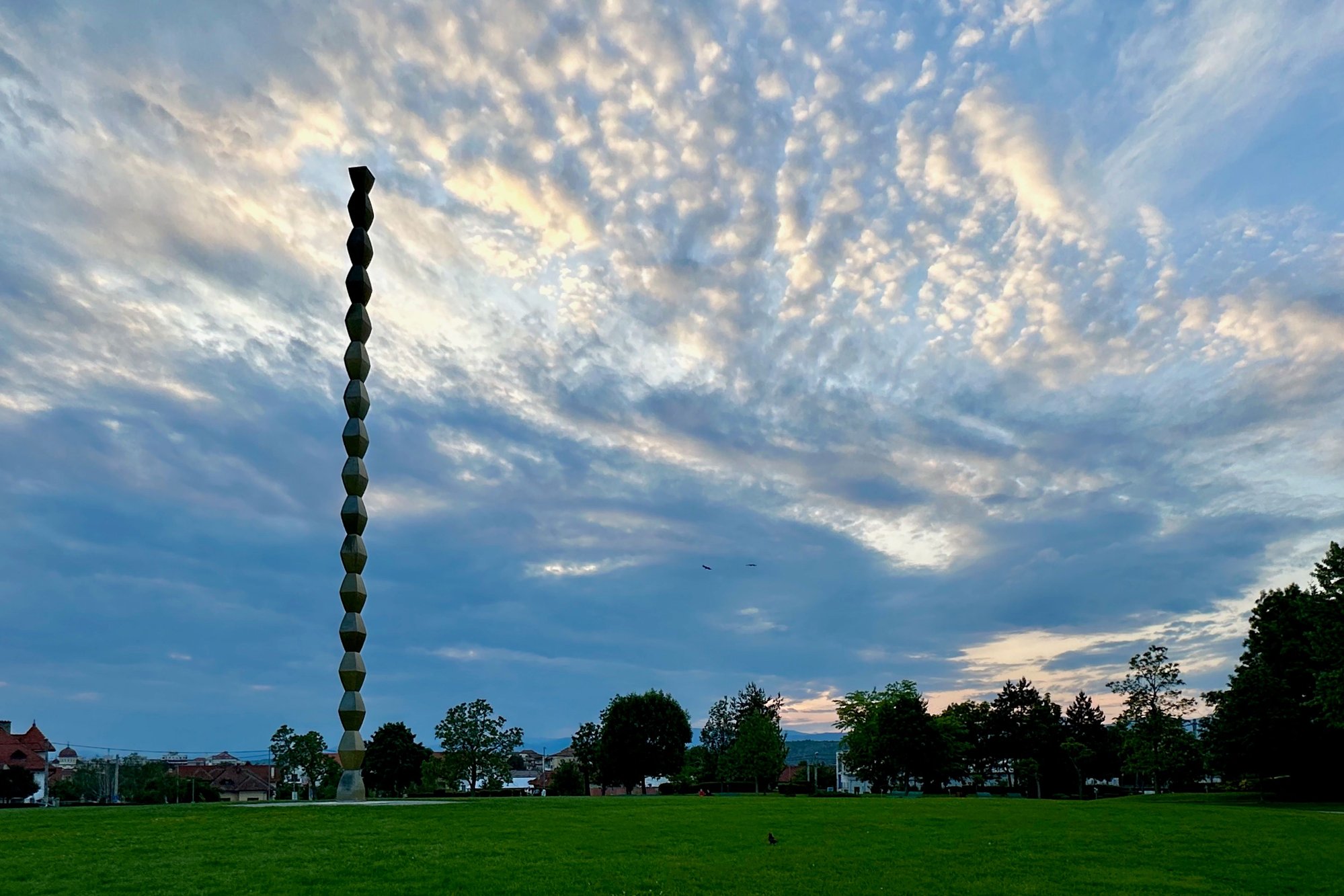
And works of art weren’t limited to churches or museums: There were many public sculptures, including the Brancusi ensemble in Târgu Jiu, another UNESCO World Heritage Site. Here’s his Infinity Column:
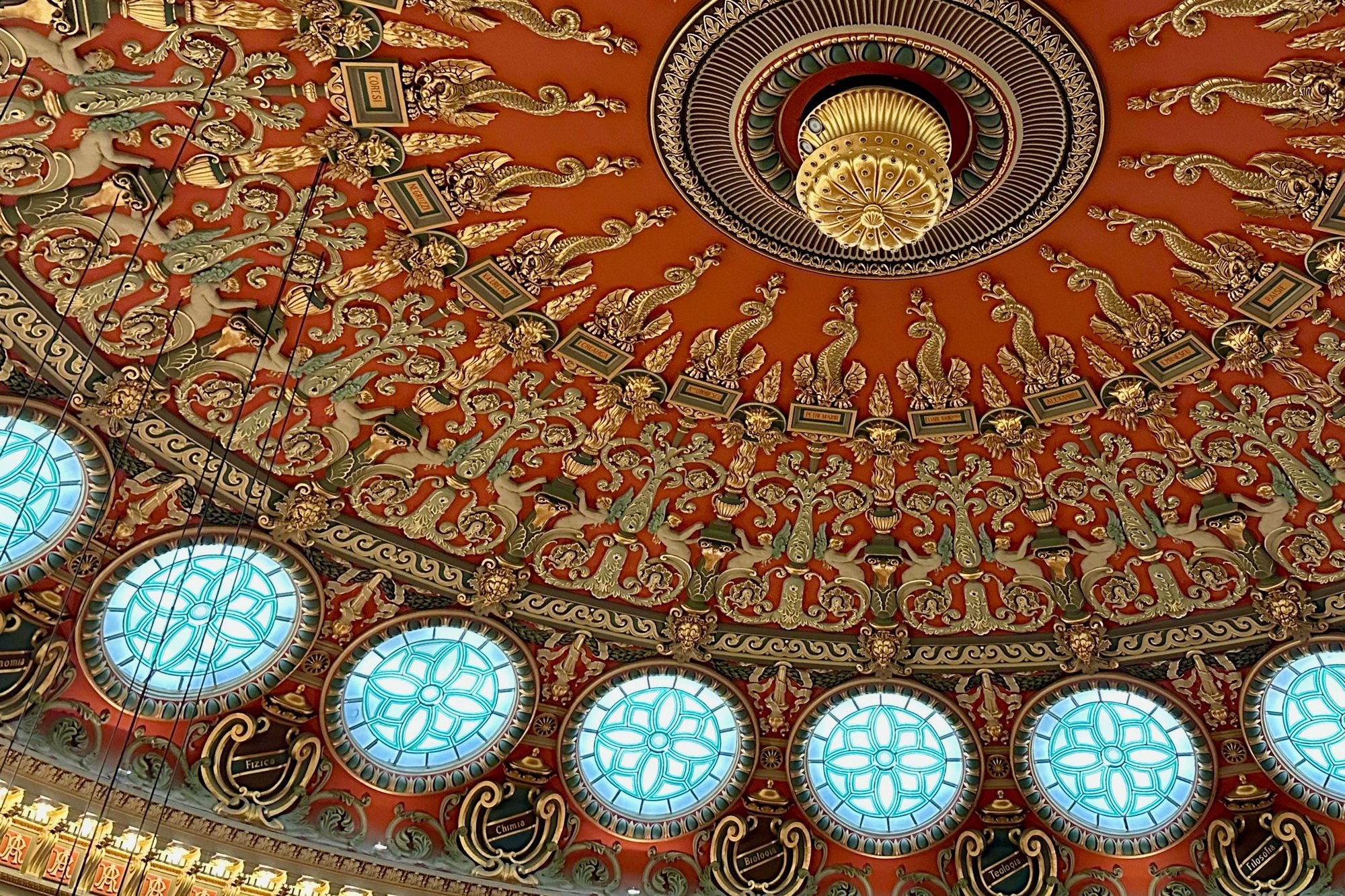
And last, but not least, I attended a glorious concert at Bucharest’s Ateneul Roman. It’s a beautiful theater and the performance was memorable, featuring the George Enescu Philharmonic Orchestra and several solo celloists. This photo shows the dome over the main concert hall:
I hope this trip report provides a sense of some of the options available to those who travel to Romania. I found it a richly rewarding journey.
Many thanks to those who have read parts of this report and posted reactions!
Questions and comments are welcome at any time.
The arts! Glorious works of art! In addition to some striking Western masterpieces, I was glad to learn more about any number of Romanian artists who I thought deserving of much wider acclaim than they currently enjoy. I knew a little about Nicolae Grigorescu before this trip and I felt fortunate to see a wonderful special exhibition of his work in Bucharest. During this trip, I was delighted to learn a bit about other Romanian artists, including
- Ioan Andreesccu,
- Corneliu Baba,
- Nicolae Darascu,
- Nicolae Enea,
- Iosef Iser,
- Ştefan Luchian,
- Hans Mattis-Teutsch,
- Theodor Pallady,
- Elena Popea,
- Nicolae Vermont,
- so many others!
Of course, there were many exquisite Byzantine works in addition to the amazing exterior frescoes already described. Here’s a photo of the interior of Mănăstirea Curtea de Argeș:
And works of art weren’t limited to churches or museums: There were many public sculptures, including the Brancusi ensemble in Târgu Jiu, another UNESCO World Heritage Site. Here’s his Infinity Column:
And last, but not least, I attended a glorious concert at Bucharest’s Ateneul Roman. It’s a beautiful theater and the performance was memorable, featuring the George Enescu Philharmonic Orchestra and several solo celloists. This photo shows the dome over the main concert hall:
I hope this trip report provides a sense of some of the options available to those who travel to Romania. I found it a richly rewarding journey.
Many thanks to those who have read parts of this report and posted reactions!
Questions and comments are welcome at any time.
Aug 19th, 2024 | 10:12 AM
#57

Joined: Mar 2003
Posts: 6,222
Likes: 0
Well, I love your entire report! The photos are gorgeous and the history lesson is fascinating. I, for one, didn't know that Romanian is a Romance language. And I feel very ignorant because I either didn't know or I had forgotten that Elie Wiesel is Romanian.
Speaking of Ceausescu, I remember seeing the news on TV when Romanians were booing him and jeering at him in a public square when he was giving a speech. Did they storm his residence? I seem to remember the unruly crowd breaking into a building. My memory is a bit fuzzy on that. And then just several days later, I think, Ceausescu and his wife were executed. Yes, 1989 was very dramatic.
We did not visit Yugoslavia when it was Yugoslavia, but we did visit Croatia in 2019. While in Dubrovnik, we visited War Photo Limited which is a permanent photo exhibition about the ethnic wars in the 90's. It's very informative and poignant. I remember while the wars were going on being very confused because of all the different ethnic groups involved. This exhibit helps understand what happened better. And, IIRC, these really were several different wars/conflicts going on at the same time. My memory is not as good as it used to be so I know I've forgotten some stuff, but this exhibit did help my understanding at the time. They also have a temporary exhibit along with the permanent exhibit. The temporary exhibit at the time was about the Vietnam War and one of the more prominent photographers. Sadly, we were one of the very few people visiting War Photo Limited on that day. I have a feeling it's not on everyone's sightseeing list. (Sorry to get sidetracked about Yugoslavia/Croatia.)
kja, did you know a lot about Romanian history before you took the trip? You certainly know a lot more than I do. Did you have many guides? I know you mention a guide at the school.
Love your last batch of photos about the arts! The Infinity Column is very striking against the very green grass and that gorgeous blue sky with clouds!
Speaking of Ceausescu, I remember seeing the news on TV when Romanians were booing him and jeering at him in a public square when he was giving a speech. Did they storm his residence? I seem to remember the unruly crowd breaking into a building. My memory is a bit fuzzy on that. And then just several days later, I think, Ceausescu and his wife were executed. Yes, 1989 was very dramatic.
We did not visit Yugoslavia when it was Yugoslavia, but we did visit Croatia in 2019. While in Dubrovnik, we visited War Photo Limited which is a permanent photo exhibition about the ethnic wars in the 90's. It's very informative and poignant. I remember while the wars were going on being very confused because of all the different ethnic groups involved. This exhibit helps understand what happened better. And, IIRC, these really were several different wars/conflicts going on at the same time. My memory is not as good as it used to be so I know I've forgotten some stuff, but this exhibit did help my understanding at the time. They also have a temporary exhibit along with the permanent exhibit. The temporary exhibit at the time was about the Vietnam War and one of the more prominent photographers. Sadly, we were one of the very few people visiting War Photo Limited on that day. I have a feeling it's not on everyone's sightseeing list. (Sorry to get sidetracked about Yugoslavia/Croatia.)
kja, did you know a lot about Romanian history before you took the trip? You certainly know a lot more than I do. Did you have many guides? I know you mention a guide at the school.
Love your last batch of photos about the arts! The Infinity Column is very striking against the very green grass and that gorgeous blue sky with clouds!
Aug 19th, 2024 | 10:55 AM
#58
Joined: Aug 2007
Posts: 16,292
Likes: 0
Thank you for writing such detailed , informative and interesting report.
Not many travellers are familiar (or expected to be ) with long , inevitably complicated history of regions we visit.
Trip reports, exchanges of opinions and impressions, photographs, recommendations …etc make Fodor’s a good place.
Not many travellers are familiar (or expected to be ) with long , inevitably complicated history of regions we visit.
Trip reports, exchanges of opinions and impressions, photographs, recommendations …etc make Fodor’s a good place.
Aug 19th, 2024 | 12:18 PM
#59
Joined: Oct 2012
Posts: 2,279
Likes: 0
Lovely reporting. I am jealous you got to the Brancusi at Targu Jiu.
I did go to the George Enescu House Museum in Sinaia. Maybe only classical music fans will appreciate.... but it was one of those small, humble, yet meaningful museums that gave me excellent insight to the composer, his ideas, and his place in music. I am also a fan of the admittedly old-fashioned audio guides they hand you, compared to the ones you can download on your phone. Those are often a waste of time, if you can download them at all.
I did go to the George Enescu House Museum in Sinaia. Maybe only classical music fans will appreciate.... but it was one of those small, humble, yet meaningful museums that gave me excellent insight to the composer, his ideas, and his place in music. I am also a fan of the admittedly old-fashioned audio guides they hand you, compared to the ones you can download on your phone. Those are often a waste of time, if you can download them at all.
Aug 19th, 2024 | 08:41 PM
#60
Original Poster
Joined: Dec 2006
Posts: 25,714
Likes: 0
@ KarenWoo: Thank you so much!
Don’t feel bad about what you didn’t know -- I learned almost everything I know about Romania while researching this trip. I don’t remember the details of Ceaușescu’s final days, but you are right about the executions – he and his wife were tried, convicted, and killed by firing squad in short order after they fled Bucharest.
I joined a guided tour of the School Museum (there are ones in English at specific times). Other than that, I relied on English signage, my notes, and a guidebook (on Kindle) for everything else.
I remember the War Photo Limited Museum in Dubrovnik very well. Like you, I found it powerful and am glad I visited it.
Isn’t that Infinity Column something?!? It’s almost 100 feet tall! I had planned to see it as sunset, but you never know what the light will be like. I was lucky – it was gorgeous!
Thanks again for reading this TR, asking such wonderful questions, and providing such lovely compliments.
@ danon: Thank you for your kind words, too, and for following and commenting on this TR! I don’t pretend to mastery of the history of any of the places I visit, but learning about it is one of the things I enjoy about both planning and experiencing travel.
@ shelemm: And thank you for reading, commending, and complimenting – and for inspiring me to write this trip report.
I’m very glad I saw the Brancusi ensemble. From what I read, there was a plan to demolish that column while Romania was under communist rule. Thank goodness it survived and was restored!
Sounds like the George Enescu House Museum in Sinaia was a special place. I’m glad you got to see it!
Don’t feel bad about what you didn’t know -- I learned almost everything I know about Romania while researching this trip. I don’t remember the details of Ceaușescu’s final days, but you are right about the executions – he and his wife were tried, convicted, and killed by firing squad in short order after they fled Bucharest.
I joined a guided tour of the School Museum (there are ones in English at specific times). Other than that, I relied on English signage, my notes, and a guidebook (on Kindle) for everything else.
I remember the War Photo Limited Museum in Dubrovnik very well. Like you, I found it powerful and am glad I visited it.
Isn’t that Infinity Column something?!? It’s almost 100 feet tall! I had planned to see it as sunset, but you never know what the light will be like. I was lucky – it was gorgeous!
Thanks again for reading this TR, asking such wonderful questions, and providing such lovely compliments.
@ danon: Thank you for your kind words, too, and for following and commenting on this TR! I don’t pretend to mastery of the history of any of the places I visit, but learning about it is one of the things I enjoy about both planning and experiencing travel.
@ shelemm: And thank you for reading, commending, and complimenting – and for inspiring me to write this trip report.
I’m very glad I saw the Brancusi ensemble. From what I read, there was a plan to demolish that column while Romania was under communist rule. Thank goodness it survived and was restored!
Sounds like the George Enescu House Museum in Sinaia was a special place. I’m glad you got to see it!

