


Our Amazing Journey Through Romania with a Stop in Beautiful Budapest!!!
 Dec 8th, 2025 | 03:32 PM
#41
Original Poster


Joined: Mar 2003
Posts: 6,258
Likes: 0
September 10, 2025: Wooden Churches, Rural Villages, A Merry Cemetery, and A Tragic History
Today we check out of our hotel in Gura Humorului and drive over the forested Carpathian Mountains to the rural county of Maramures, which borders Hungary and Ukraine. The allure of Maramures is its rural villages with wooden churches and wooden houses, a traditional way of life, the colorful Merry Cemetery and the Sighet Prison Museum.
The wooden churches are historic. Starting in the 1200’s, the Orthodox Romanians were forbidden by their Catholic Hungarian overlords to build churches in stone, and so they used wood to build these narrow churches with very tall spires. Eight of them are on the UNESCO World Heritage List. Many of them are located in cemeteries. They are nestled in picturesque settings, sometimes on hills, and portray quite the pastoral and peaceful way of life. There are many of these wooden churches located across Eastern Europe, from northern Russia to the Adriatic, but the churches in Maramures represent the best and richest quality.
So, we begin our very pretty drive to Maramures via the serpentine road over the Prislop Pass. At the pass there is a small restaurant (closed for the season) and bakery (luckily it was open) and some vendors selling their wares. At the bakery an elderly woman had just finished baking delicious cheese-filled pastries that were literally hot from the oven. She didn’t speak any English, but she was obviously so pleased that we ordered some of her pastries along with coffee. What a delicious snack, sitting outside at a table and overlooking the mountains.
We continued on our drive until we arrived in the village of Barsana where we planned to visit the wooden church of Barsana. We saw a sign, pulled into the parking lot, and were quite surprised to see this huge majestic complex with gorgeous flower gardens. This was obviously not the small wooden church we came to see. This is the fairly new Barsana Monastery built in 1993. We quickly googled the small wooden church of Barsana and discovered it is located about a mile down the street. We did walk around the monastery for a few minutes and took some photos, but we knew we didn’t have the time to visit any of the buildings.
So, we drove down the street and almost missed the UNESCO Heritage sign because it is so small. And the church is located on a side street off the main road so it’s difficult to see. We parked our car, the only one there, and walked through the cemetery to the church. We absolutely love the setting of this church. There is a plum tree orchard in the cemetery along with hay stacks! So bucolic and so peaceful. We enjoyed this church so much more than the huge monastery we just came from. The guide inside the church was very happy to see us, and she sadly admitted the church doesn’t get a lot of visitors. I’m not surprised considering the small size of the UNESCO sign. She happily talked about the history of the church. While we were there, another couple arrived, but no one else. There are very, very old paintings inside the church including images of angels covered in eyes!
From here, we drove to our lodgings for the next three nights, Hotel Gradni Morii in Sighetu Marmatiei, commonly referred to as Sighet. The hotel is situated in a beautiful park-like setting. The lobby is very nice with loads of old-world charm. There is a restaurant with a terrace for dining. I had reserved a suite on the third floor. The suite is HUGE!!! I don’t think we’ve ever stayed in such a large room. But, unfortunately, we were disappointed in our room. The elevator only goes to the second floor, so we had to carry our luggage up a flight of stairs. But what was worse is that our room was very, very dimly lit. It really wasn’t enjoyable to be in. I wonder if we would have been happier with a smaller room on the second floor. Those all have balconies overlooking the terrace and beautiful grounds.
It was a long day so rather than look for a restaurant for dinner, we decided to eat at the hotel. This was one of the better meals of our trip, and we enjoyed dining outside on the terrace. I ordered pork schnitzel; Ed ordered sea bass, and we shared a decadent chocolate mousse with chocolate lava cake and ice cream. A great way to end a busy and rewarding day!
Today we check out of our hotel in Gura Humorului and drive over the forested Carpathian Mountains to the rural county of Maramures, which borders Hungary and Ukraine. The allure of Maramures is its rural villages with wooden churches and wooden houses, a traditional way of life, the colorful Merry Cemetery and the Sighet Prison Museum.
The wooden churches are historic. Starting in the 1200’s, the Orthodox Romanians were forbidden by their Catholic Hungarian overlords to build churches in stone, and so they used wood to build these narrow churches with very tall spires. Eight of them are on the UNESCO World Heritage List. Many of them are located in cemeteries. They are nestled in picturesque settings, sometimes on hills, and portray quite the pastoral and peaceful way of life. There are many of these wooden churches located across Eastern Europe, from northern Russia to the Adriatic, but the churches in Maramures represent the best and richest quality.
So, we begin our very pretty drive to Maramures via the serpentine road over the Prislop Pass. At the pass there is a small restaurant (closed for the season) and bakery (luckily it was open) and some vendors selling their wares. At the bakery an elderly woman had just finished baking delicious cheese-filled pastries that were literally hot from the oven. She didn’t speak any English, but she was obviously so pleased that we ordered some of her pastries along with coffee. What a delicious snack, sitting outside at a table and overlooking the mountains.
We continued on our drive until we arrived in the village of Barsana where we planned to visit the wooden church of Barsana. We saw a sign, pulled into the parking lot, and were quite surprised to see this huge majestic complex with gorgeous flower gardens. This was obviously not the small wooden church we came to see. This is the fairly new Barsana Monastery built in 1993. We quickly googled the small wooden church of Barsana and discovered it is located about a mile down the street. We did walk around the monastery for a few minutes and took some photos, but we knew we didn’t have the time to visit any of the buildings.
So, we drove down the street and almost missed the UNESCO Heritage sign because it is so small. And the church is located on a side street off the main road so it’s difficult to see. We parked our car, the only one there, and walked through the cemetery to the church. We absolutely love the setting of this church. There is a plum tree orchard in the cemetery along with hay stacks! So bucolic and so peaceful. We enjoyed this church so much more than the huge monastery we just came from. The guide inside the church was very happy to see us, and she sadly admitted the church doesn’t get a lot of visitors. I’m not surprised considering the small size of the UNESCO sign. She happily talked about the history of the church. While we were there, another couple arrived, but no one else. There are very, very old paintings inside the church including images of angels covered in eyes!
From here, we drove to our lodgings for the next three nights, Hotel Gradni Morii in Sighetu Marmatiei, commonly referred to as Sighet. The hotel is situated in a beautiful park-like setting. The lobby is very nice with loads of old-world charm. There is a restaurant with a terrace for dining. I had reserved a suite on the third floor. The suite is HUGE!!! I don’t think we’ve ever stayed in such a large room. But, unfortunately, we were disappointed in our room. The elevator only goes to the second floor, so we had to carry our luggage up a flight of stairs. But what was worse is that our room was very, very dimly lit. It really wasn’t enjoyable to be in. I wonder if we would have been happier with a smaller room on the second floor. Those all have balconies overlooking the terrace and beautiful grounds.
It was a long day so rather than look for a restaurant for dinner, we decided to eat at the hotel. This was one of the better meals of our trip, and we enjoyed dining outside on the terrace. I ordered pork schnitzel; Ed ordered sea bass, and we shared a decadent chocolate mousse with chocolate lava cake and ice cream. A great way to end a busy and rewarding day!
 Dec 8th, 2025 | 03:58 PM
#42
Original Poster
Joined: Mar 2003
Posts: 6,258
Likes: 0

Delicious cheese filled pastry - hot out of the oven! This was our snack at the top of Prislop Pass

Sign advertising these pastries

Vendor selling his wares

These animal-designed hats are ubiquitous in Maramures County
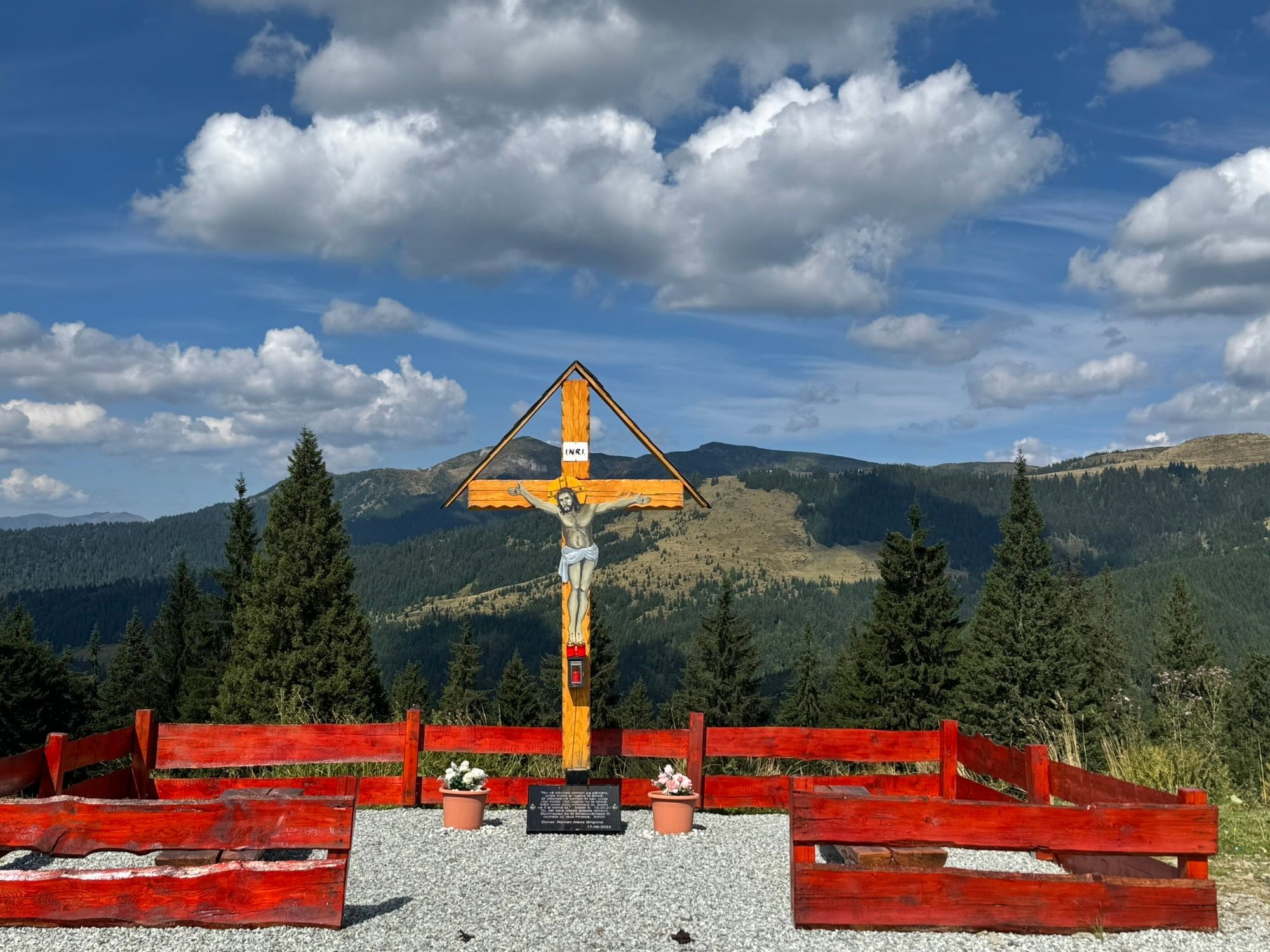
Religious shrine at the top of Prislop Pass in the Carpathian Mountains
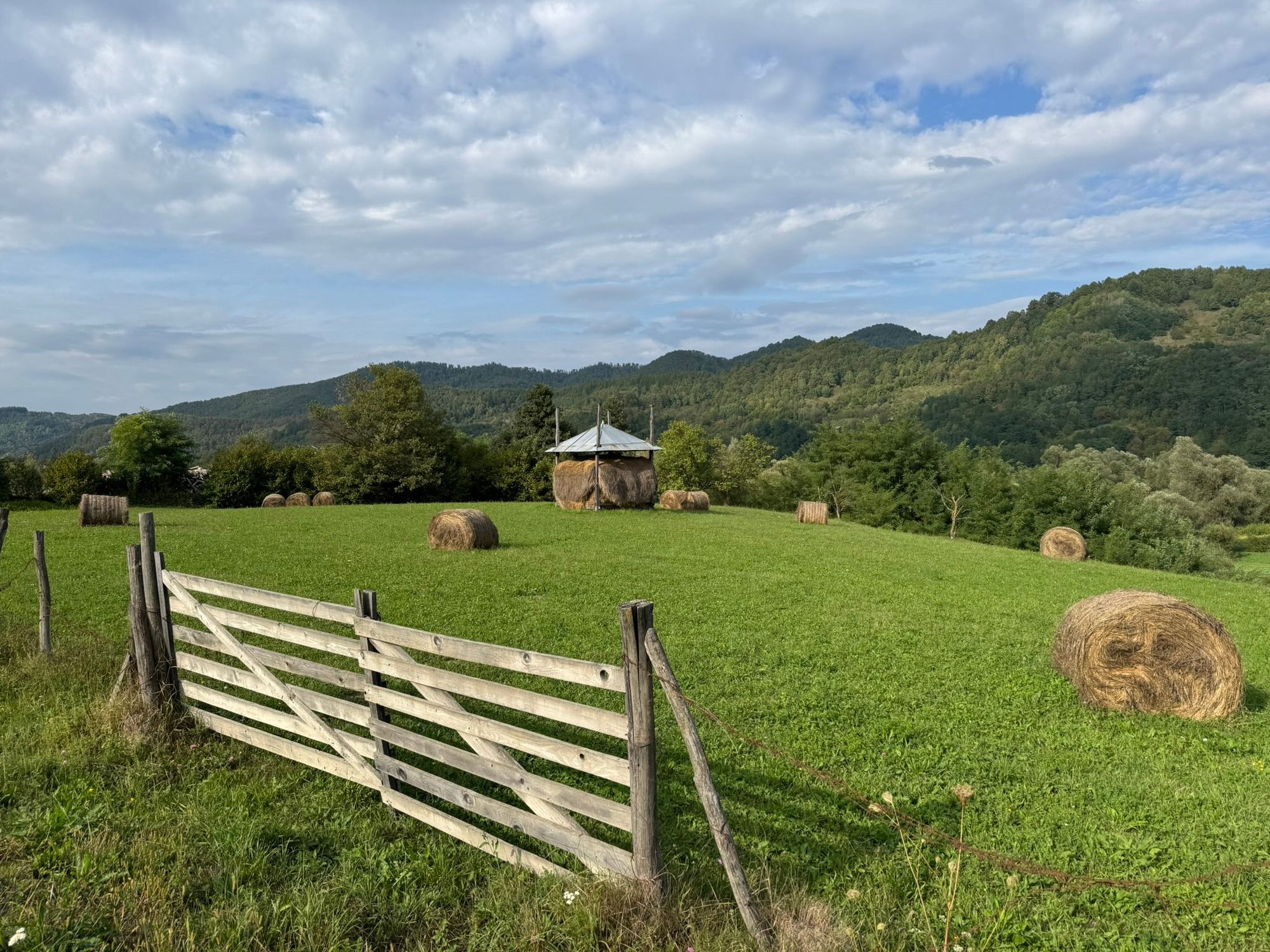
Typical Romanian scenery
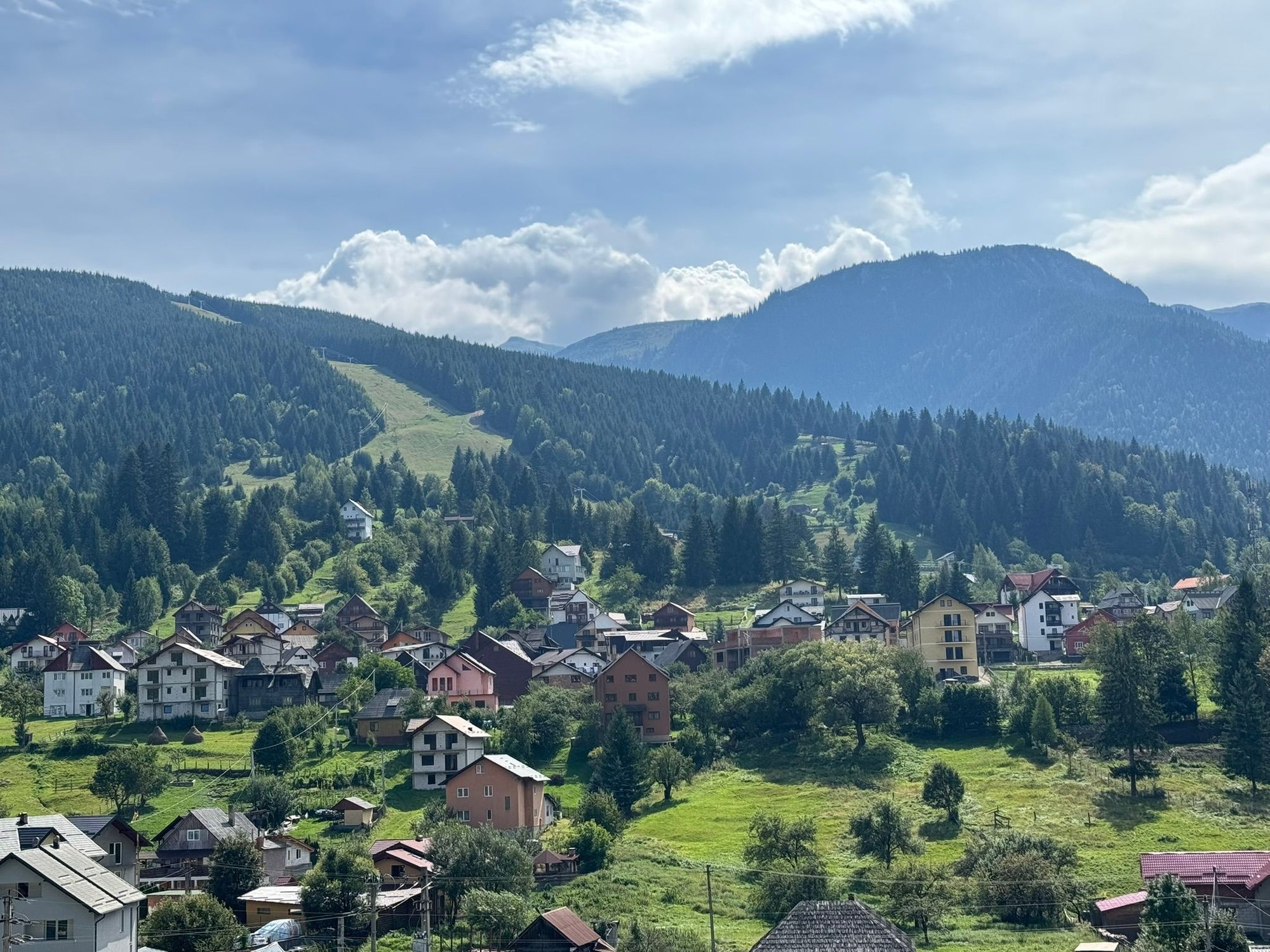
Gorgeous scenery that we saw along the way to Sighet
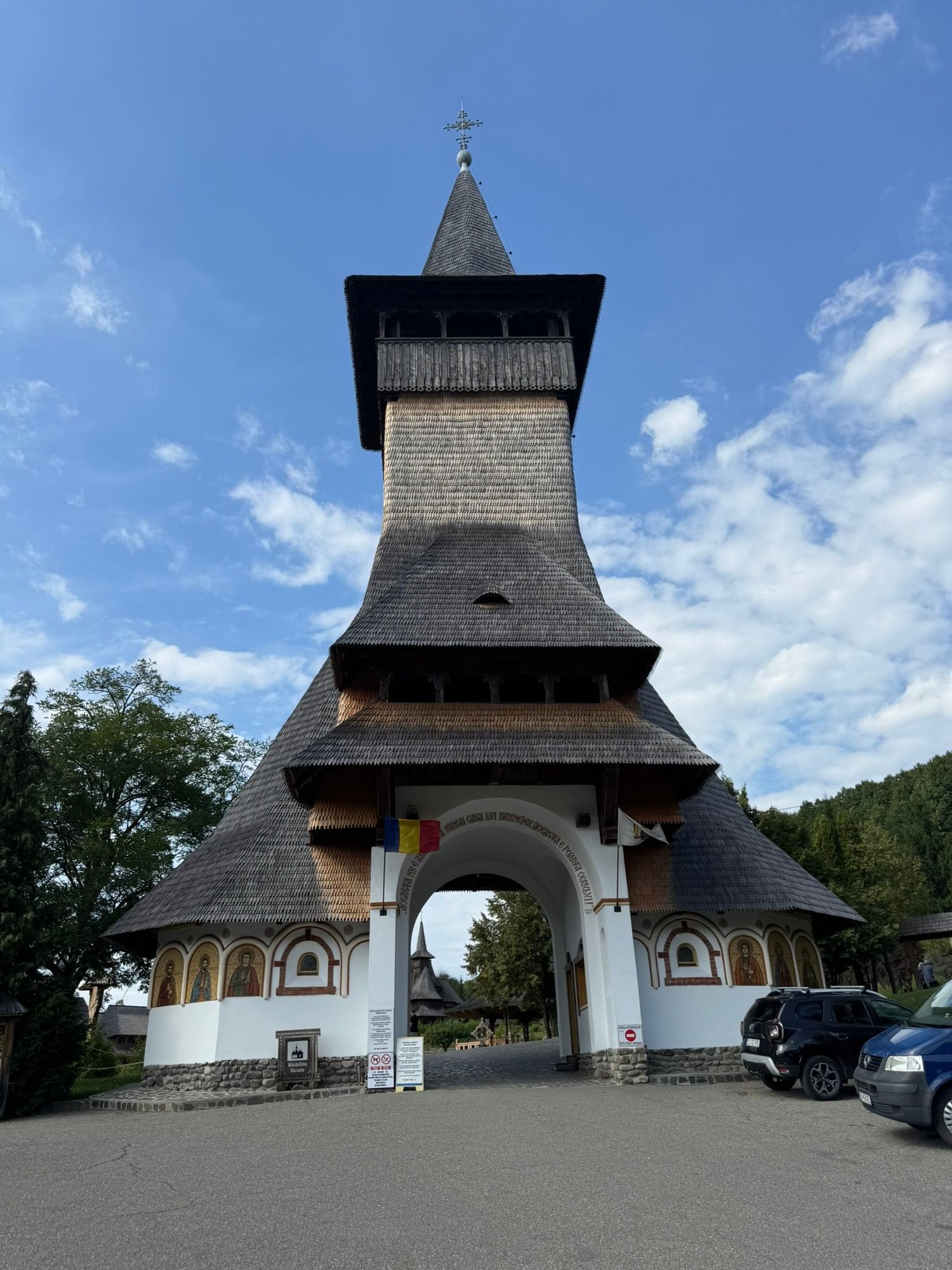
The entrance to the huge Barsana Monastery

Barsana Monastery - built in 1993 - traditional architecture

Barsana Monastery
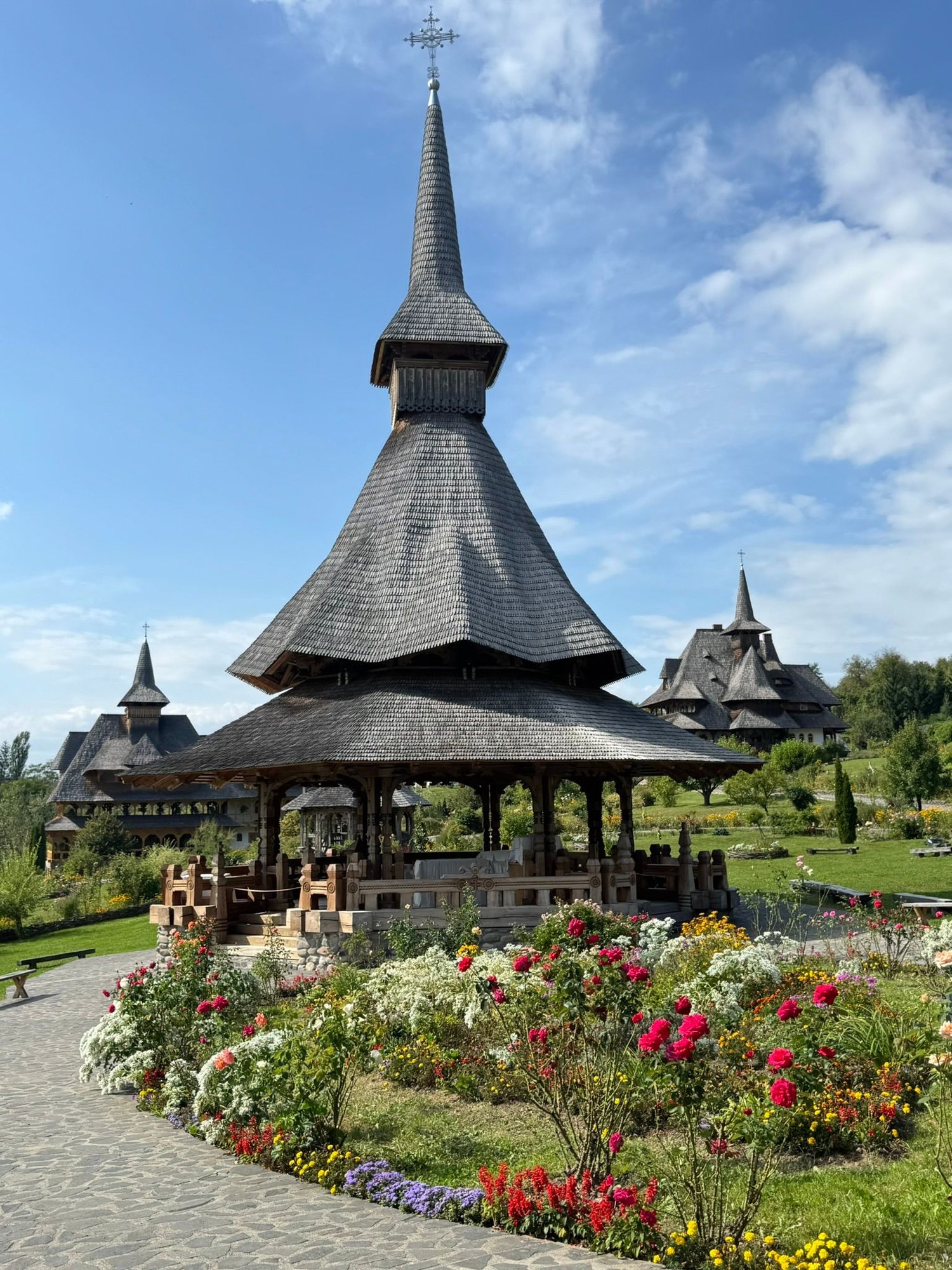
Barsana Monastery and its beautiful flowers
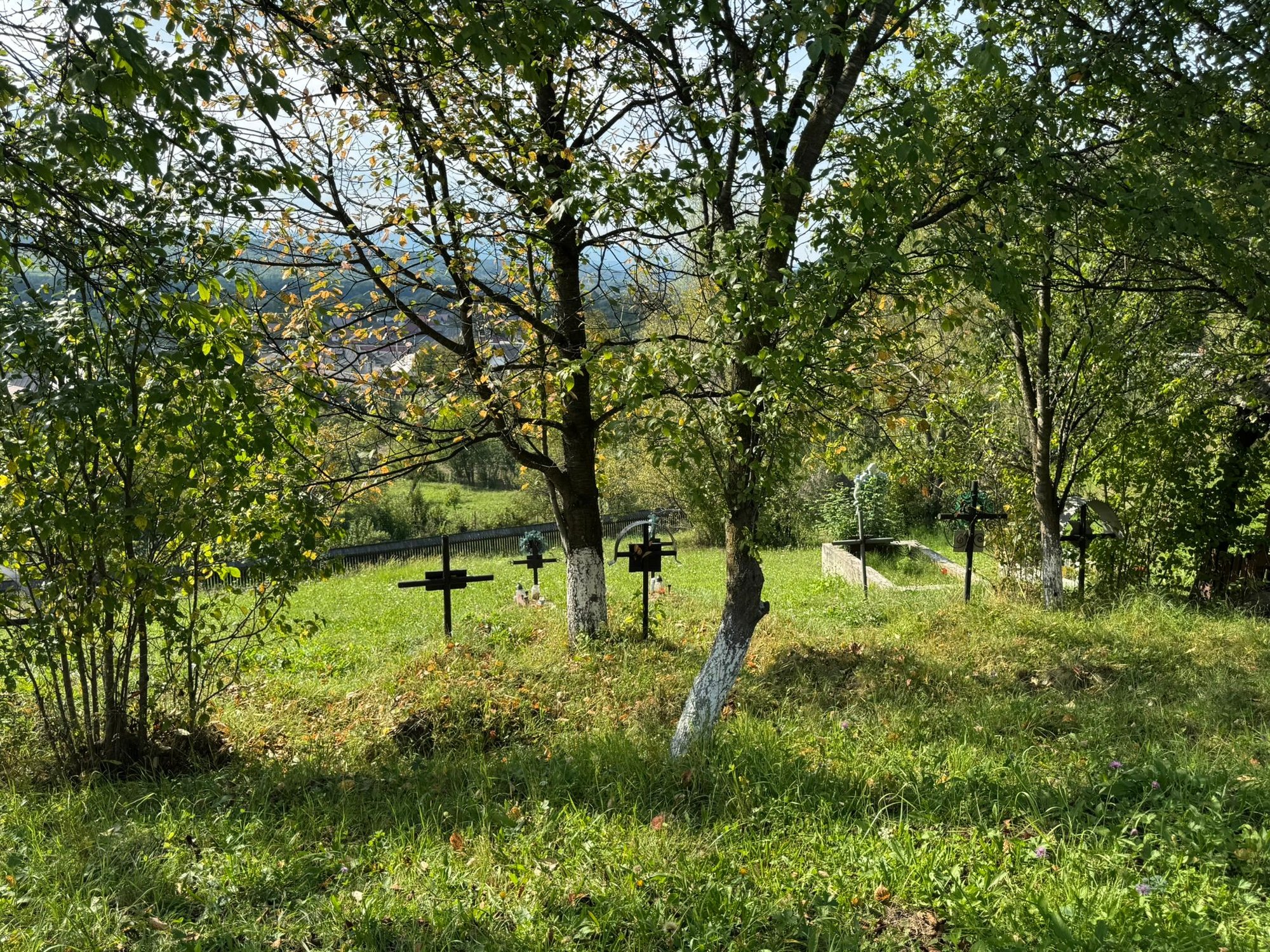
The cemetery in which the small wooden church of Barsana is located
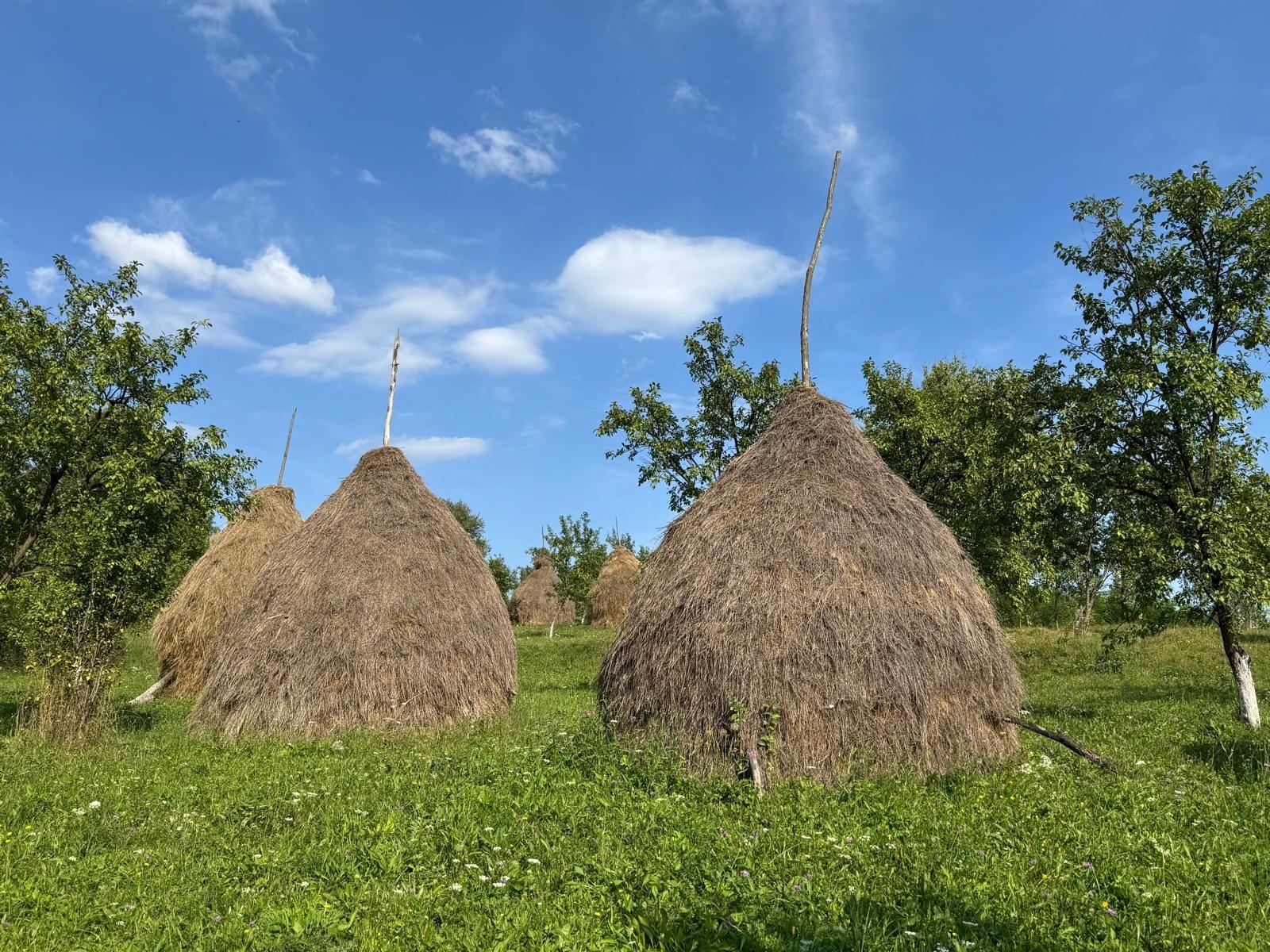
Haystacks in the cemetery surrounded by plum trees - what a combination!
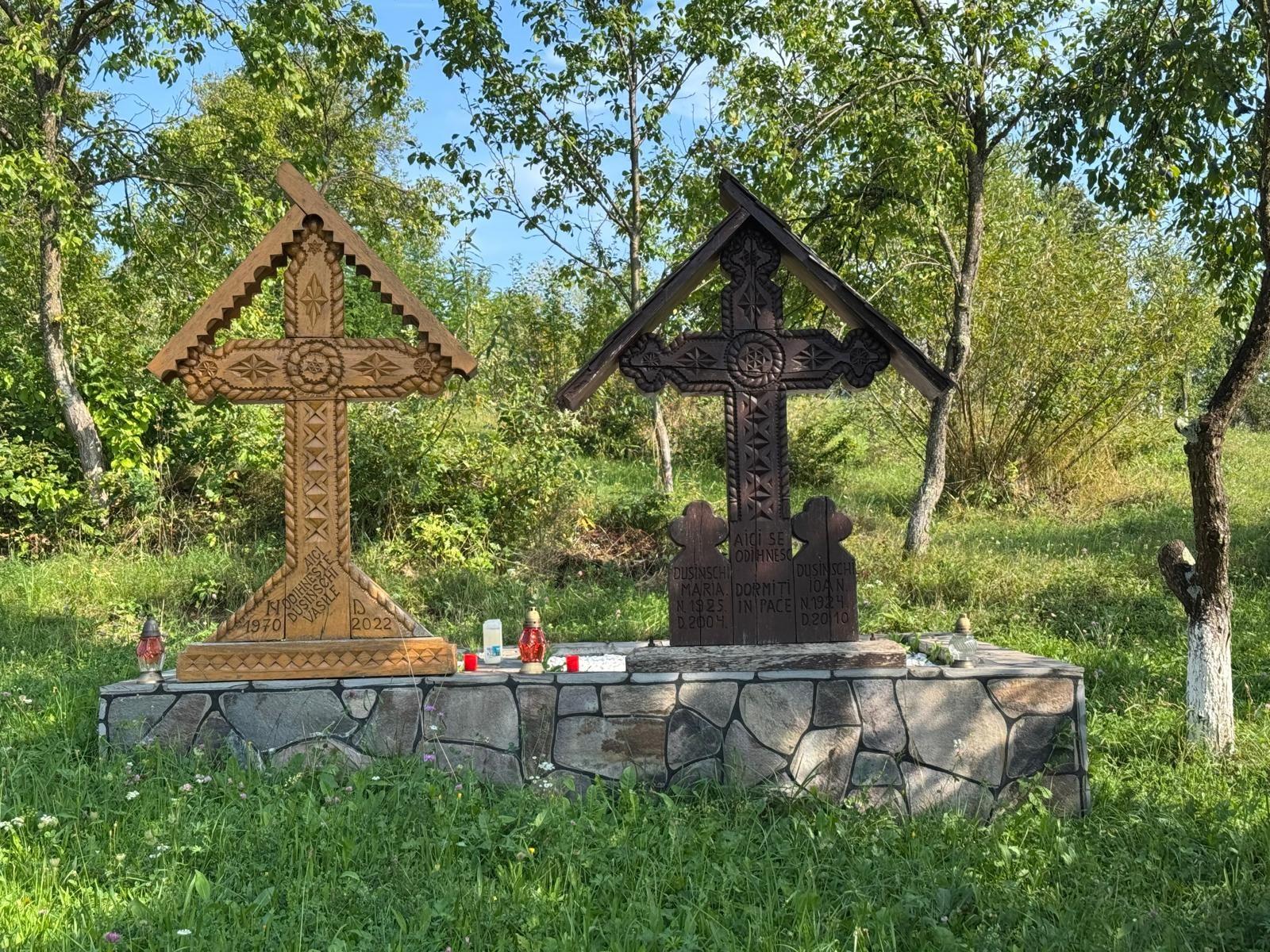
Note the wooden headstones

Ed and I in front of the small wooden church

The interior of the church is filled with paintings

Faded but still impressive

Another gorgeous painting

Angels covered in eyes!

The view from our hotel room in Sighet - the park-like setting is a definite plus to staying here . . .
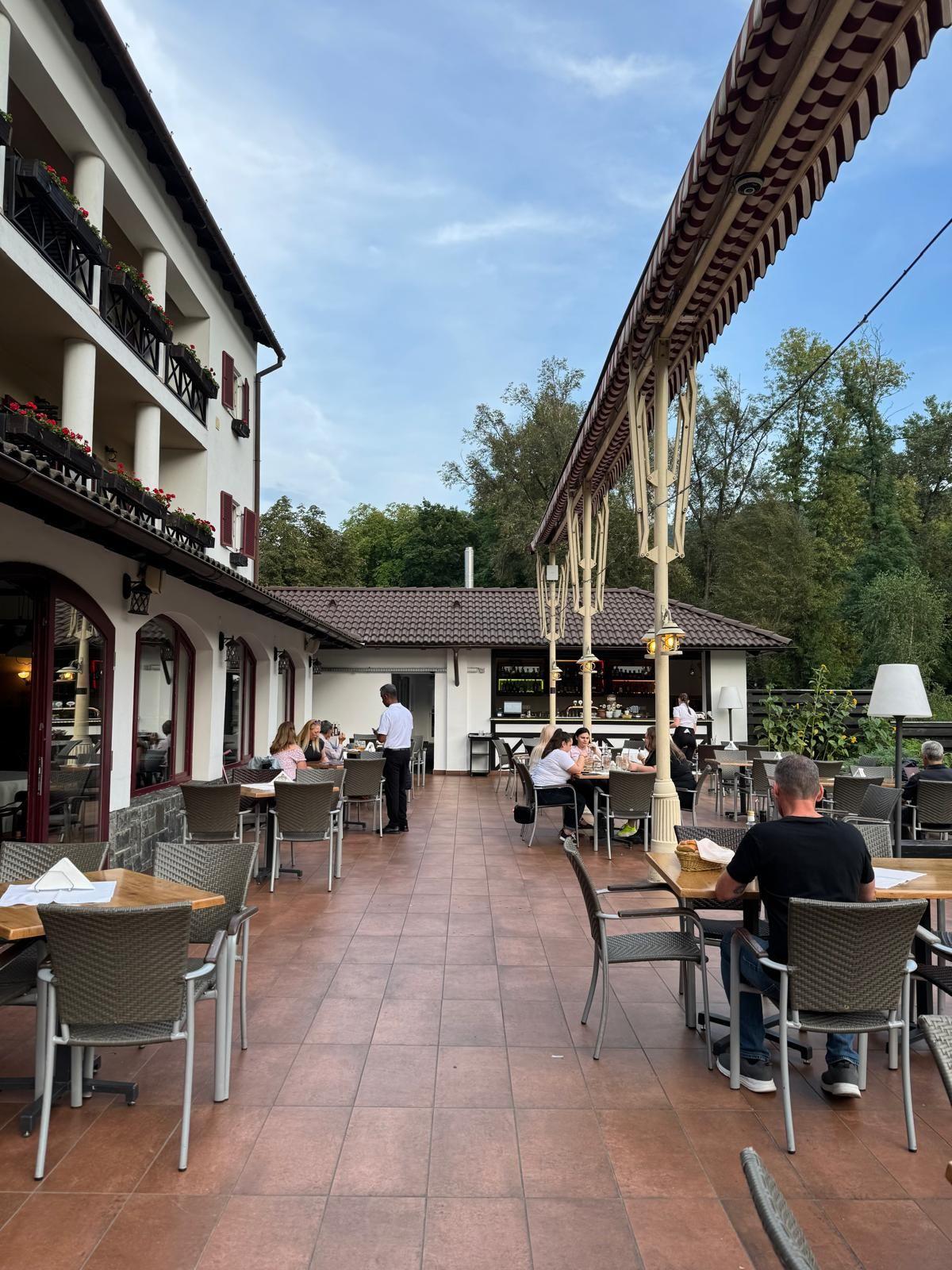
. . . and the lovely terrace where we had dinner

My pork schnitzel

Ed's sea bass
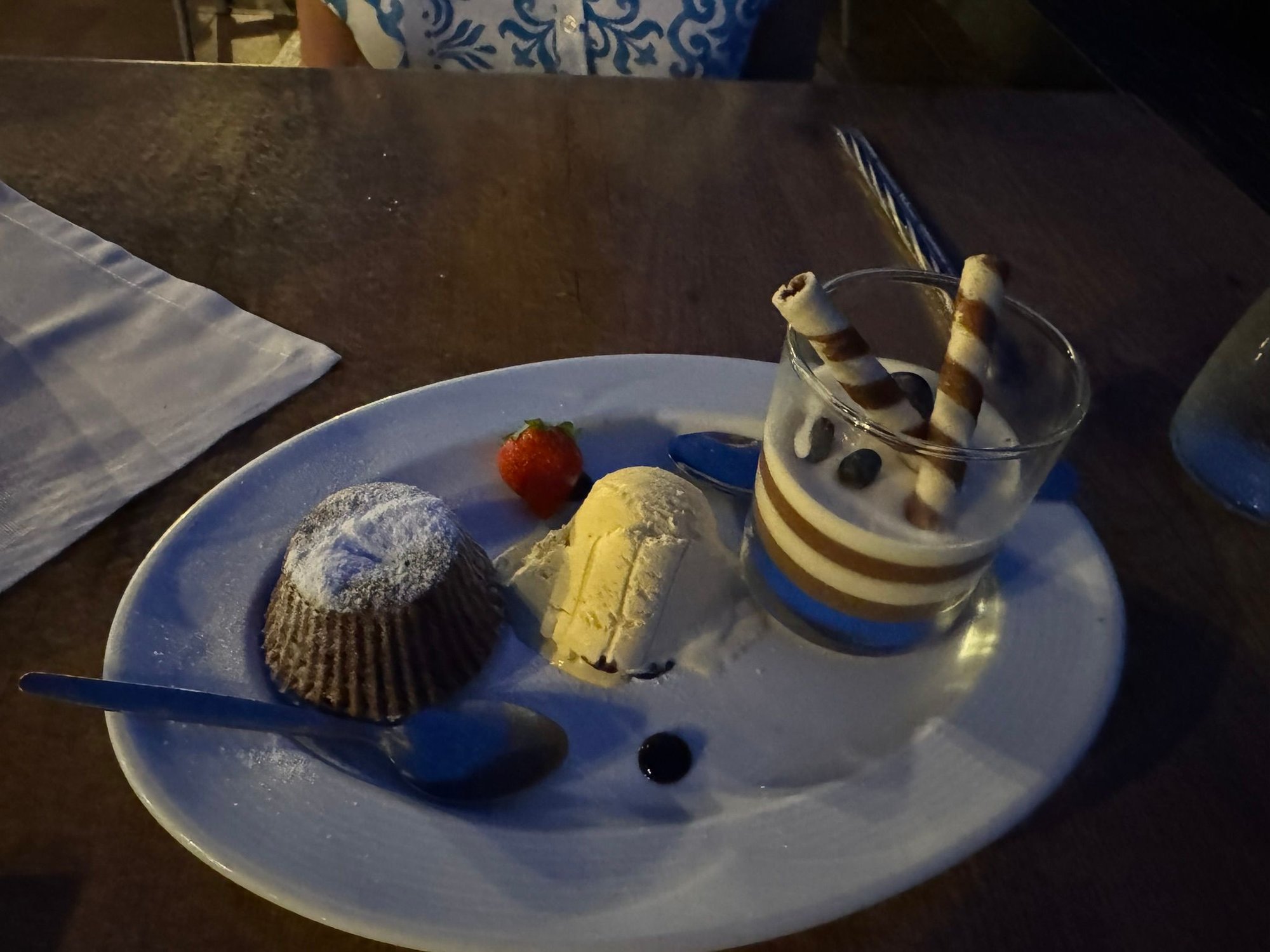
and our decadent dessert!
Last edited by KarenWoo; Dec 8th, 2025 at 04:05 PM.
 Dec 9th, 2025 | 12:35 AM
#47
Joined: Jan 2003
Posts: 4,109
Likes: 1
Karen, thank you, this is so interesting. I've never even thought of visiting Romania but we did have a long weekend in Budapest, when we lived in the UK. I loved the grand old cafes.
You mentioned how close you were to Ukraine, was the war ever an issue, when you were there?
You mentioned how close you were to Ukraine, was the war ever an issue, when you were there?
Dec 9th, 2025 | 05:17 AM
#48

Joined: Oct 2012
Posts: 2,296
Likes: 0
Wow, wow, wow Barsana is such a surprise. I've seen a lot of wooden architecture, but this is something completely different. And thanks for the origin story of using wood instead of stone.
There must be some kind of backstory for the angles with all those eyes..... unique and thrilling.
There must be some kind of backstory for the angles with all those eyes..... unique and thrilling.
Dec 9th, 2025 | 08:33 AM
#49
Joined: Dec 2013
Posts: 436
Likes: 41
I do not know if I will ever get to visit Romania, but am booked marking for reference.
Kudos to Ed’s relentless driving and your excellent planning for the trip. Romania is sure a surprise and the painted monasteries are indeed very beautiful.
Thanks and happy travels!
Kudos to Ed’s relentless driving and your excellent planning for the trip. Romania is sure a surprise and the painted monasteries are indeed very beautiful.
Thanks and happy travels!
 Dec 9th, 2025 | 10:16 AM
#51
Joined: Jan 2004
Posts: 27,110
Likes: 0
Right?! I am researching my trip to Norway and came across their Stave churches, and I am so struck by how similar in style they are with that photo of the church in Barsana! They are from similar period I noticed (1200s?) so I'm guessing could be from similar peoples/tribes?
Dec 10th, 2025 | 09:08 AM
#53
Joined: May 2023
Posts: 663
Likes: 0
Continued great pictures, really enjoying reading along.
No restaurant recommendations for Miami as last time was for family wedding at the elegant Four Seasons, although we stayed a few blocks away at the Novotel.
Two breakast spots to recommend, Hariette's in Key Largo, a local hot spot if you are driving from one place to another and in Key West itself, Breakfast Too. Didn't especially enjoy the restaurants we went to for dinner enough to recommend
No restaurant recommendations for Miami as last time was for family wedding at the elegant Four Seasons, although we stayed a few blocks away at the Novotel.
Two breakast spots to recommend, Hariette's in Key Largo, a local hot spot if you are driving from one place to another and in Key West itself, Breakfast Too. Didn't especially enjoy the restaurants we went to for dinner enough to recommend
Dec 10th, 2025 | 04:31 PM
#54
Original Poster
Joined: Mar 2003
Posts: 6,258
Likes: 0
September 11, 2025: Sighet Prison – A Tragic History
The breakfast buffet at our hotel is decent. There isn’t a huge selection but the quality is very good.
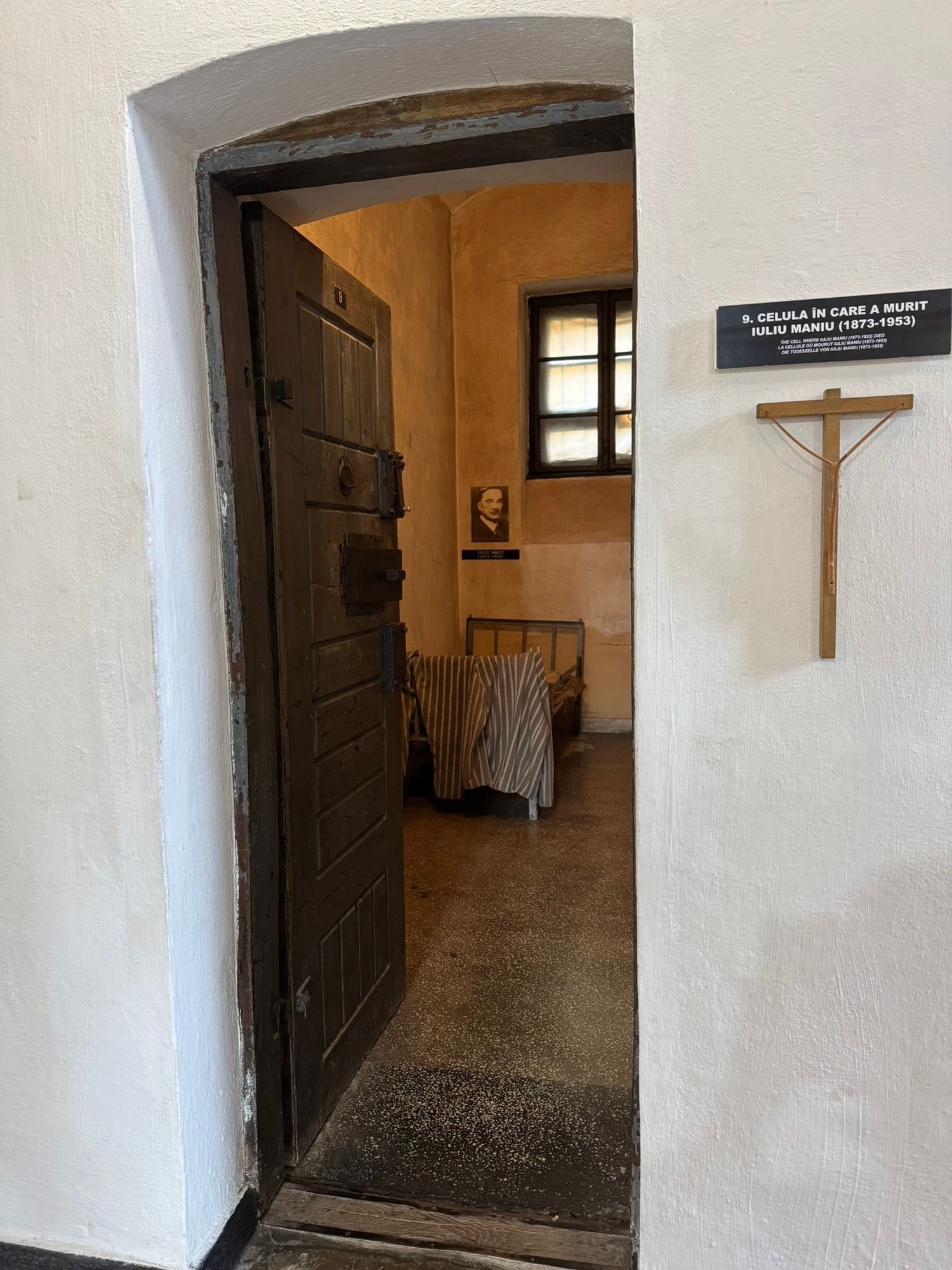
Today is a rainy day so we decided to visit the Sighet Prison, which is now the Memorial Museum of the Victims of Communism and of the Resistance. The history is tragic and sad, of course, but also very interesting. I learned a lot I didn’t know. The prison operated from 1898 until 1977. From 1950 to 1955, the prison housed political prisoners who were former government ministers, generals, academics, and bishops. Many of the men held here were over 60 years old, and many of them died here. The most important person who died here was Iuliu Maniu. He was the former Prime Minister of Romania and a lawyer, and he founded the National Peasants Party. His cell is the only cell left intact, as it was when he was imprisoned at Sighet. The other cells have been converted into exhibition rooms showcasing photos, documents, etc. to document the oppression of the Communist Era.
One room that is difficult to forget documents the deportation of 44,000 people who were taken from their homes and deported to the Baragan steppe in southeastern Romania. These people were Romanians, Germans, Serbs, Bulgarians and refugees from Bessarabia and northern Bukowina. They were loaded onto wagons and after 10 to 14 days of travel, they were dumped on the steppe. There was nothing there. They had to build homes from mud and cover them with straw. Many people died here, of course; the oldest was 100 years old; he was deported when he was 95.
This was a very depressing visit, as you can imagine, but also very educational. It’s the responsibility of present and future generations to know the history of the world and to not allow these tragedies to happen again.
We stopped for a quick lunch nearby, and then made our way to the childhood home of Elie Wiesel, the Auschwitz survivor and winner of the 1986 Nobel Peace Prize. I did not know Elie Wiesel was from Romania until I read kja’s trip report. His home is now a memorial house and the Museum of Jewish Culture in Maramures. There are books, furniture and religious items donated by local Jewish families. All the documents are only in Romanian, however. I am sure I missed a lot of important historical information but the visit was still worthwhile.
Our dinner tonight was probably the worst meal of our trip. Ed did some research and decided the Flamingo Pension would be a good choice. It was not. I ordered lamb chops over sauteed mushrooms; the lamb was very tough and chewy. As much as I like mushrooms, there were too many of them and I couldn’t finish. Ed ordered duck, which was also very tough.
The breakfast buffet at our hotel is decent. There isn’t a huge selection but the quality is very good.
Today is a rainy day so we decided to visit the Sighet Prison, which is now the Memorial Museum of the Victims of Communism and of the Resistance. The history is tragic and sad, of course, but also very interesting. I learned a lot I didn’t know. The prison operated from 1898 until 1977. From 1950 to 1955, the prison housed political prisoners who were former government ministers, generals, academics, and bishops. Many of the men held here were over 60 years old, and many of them died here. The most important person who died here was Iuliu Maniu. He was the former Prime Minister of Romania and a lawyer, and he founded the National Peasants Party. His cell is the only cell left intact, as it was when he was imprisoned at Sighet. The other cells have been converted into exhibition rooms showcasing photos, documents, etc. to document the oppression of the Communist Era.
One room that is difficult to forget documents the deportation of 44,000 people who were taken from their homes and deported to the Baragan steppe in southeastern Romania. These people were Romanians, Germans, Serbs, Bulgarians and refugees from Bessarabia and northern Bukowina. They were loaded onto wagons and after 10 to 14 days of travel, they were dumped on the steppe. There was nothing there. They had to build homes from mud and cover them with straw. Many people died here, of course; the oldest was 100 years old; he was deported when he was 95.
This was a very depressing visit, as you can imagine, but also very educational. It’s the responsibility of present and future generations to know the history of the world and to not allow these tragedies to happen again.
We stopped for a quick lunch nearby, and then made our way to the childhood home of Elie Wiesel, the Auschwitz survivor and winner of the 1986 Nobel Peace Prize. I did not know Elie Wiesel was from Romania until I read kja’s trip report. His home is now a memorial house and the Museum of Jewish Culture in Maramures. There are books, furniture and religious items donated by local Jewish families. All the documents are only in Romanian, however. I am sure I missed a lot of important historical information but the visit was still worthwhile.
Our dinner tonight was probably the worst meal of our trip. Ed did some research and decided the Flamingo Pension would be a good choice. It was not. I ordered lamb chops over sauteed mushrooms; the lamb was very tough and chewy. As much as I like mushrooms, there were too many of them and I couldn’t finish. Ed ordered duck, which was also very tough.
Dec 10th, 2025 | 04:53 PM
#55
Original Poster
Joined: Mar 2003
Posts: 6,258
Likes: 0

Sighet Prison - Memorial Museum of the Victims of Communism and of the Resistance. Photos of some of the prisoners.
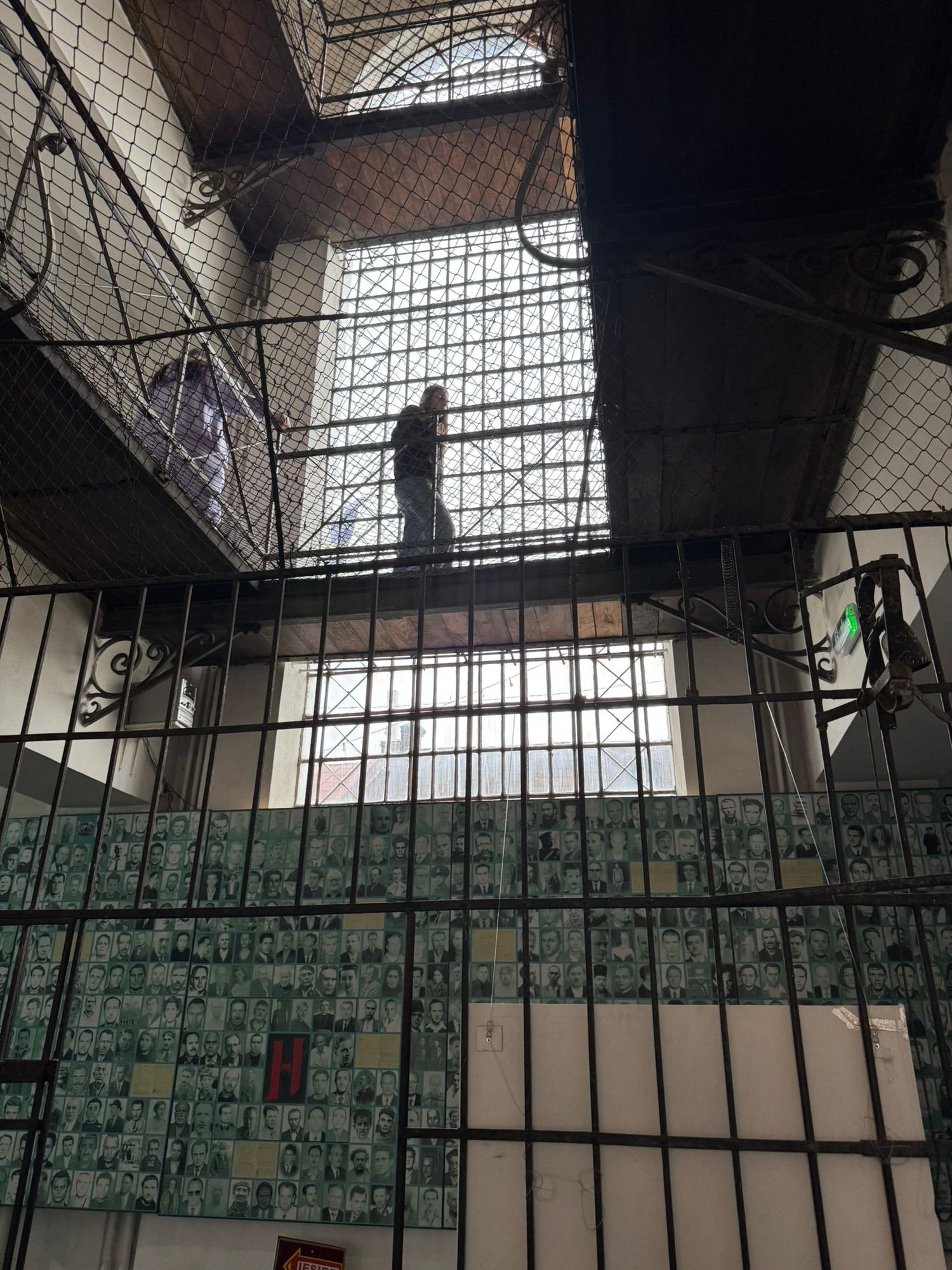
Sighet Prison Museum with photos of more prisoners
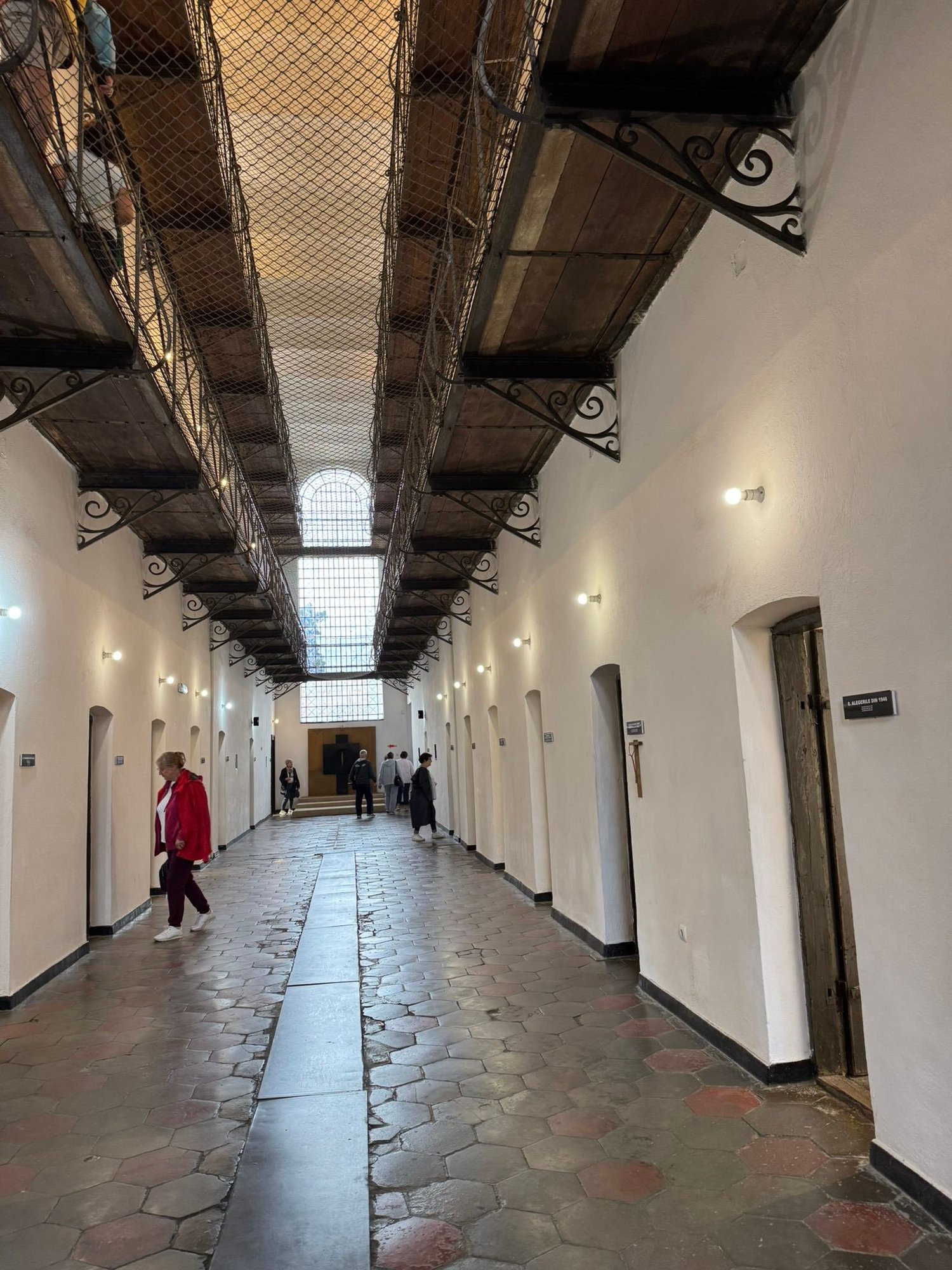
Sighet Prison Museum
A peak into the cell of Iuliu Maniu

The cell of Iuliu Maniu who died here in 1953. He was the former Prime Minister of Romania and the co-founder of the National Peasants Party.

These are photos of the people who were deported to the Baragan Steppe.

They built homes made from mud and covered them with straw.
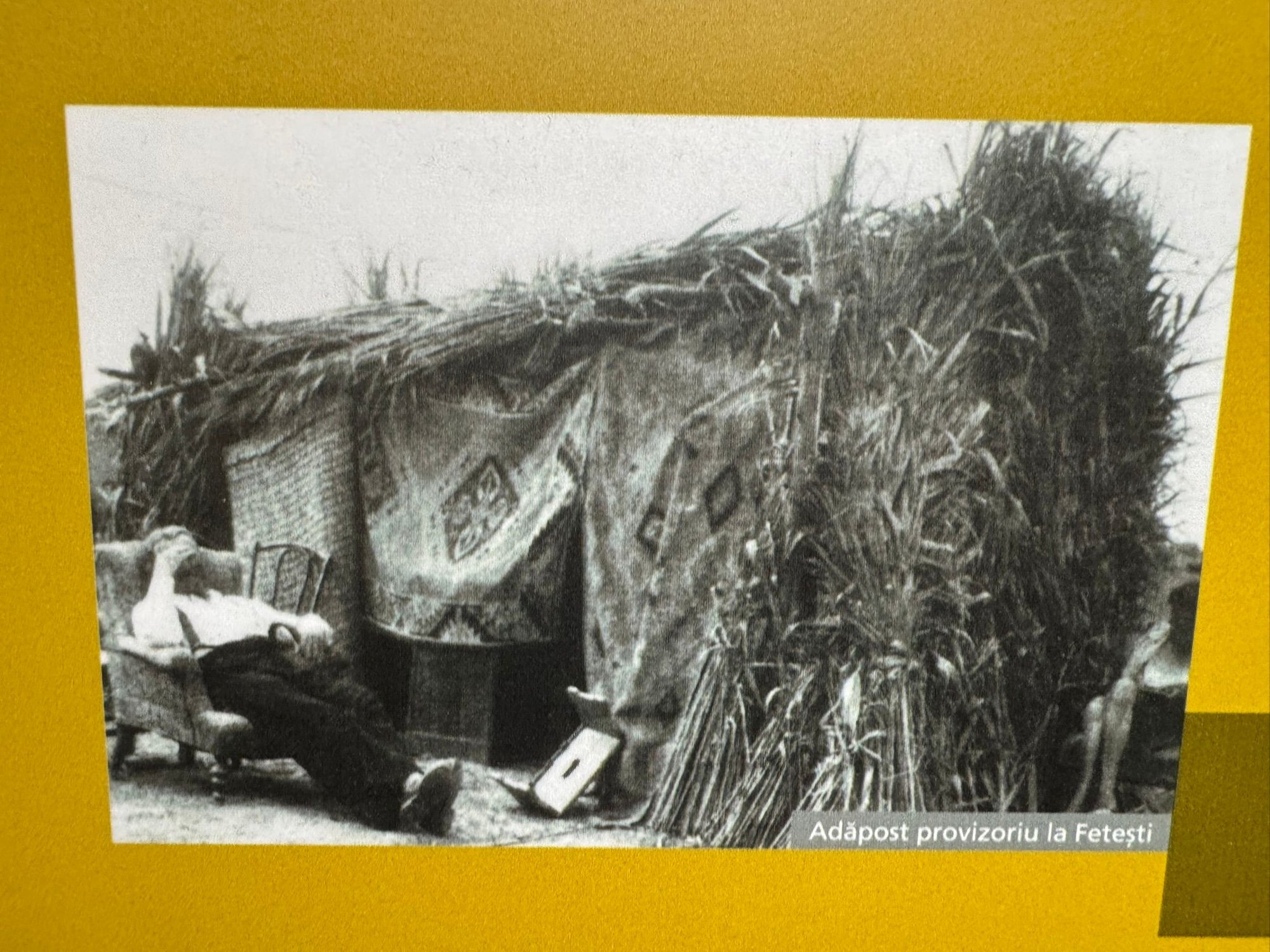
As many as 1,700 people died here.

A memorial to the prisoners at Sighet Prison.

Elie Wiesel's modest childhood home.

The entrance to his home which is now the Museum of Jewish Culture in Maramures.
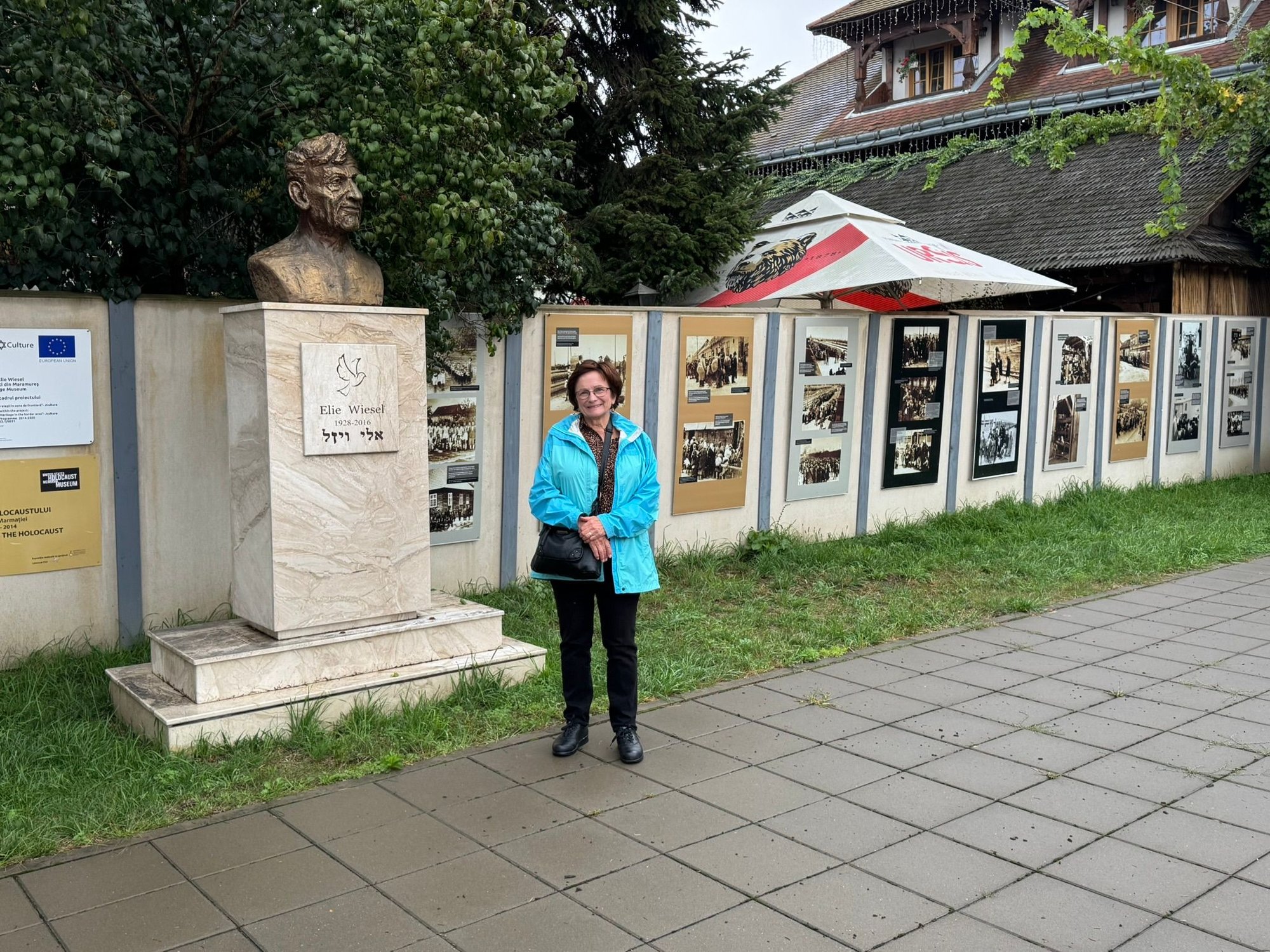
The courtyard with a bust of Elie Wiesel

The interior of Elie Wiesel's childhood home - books, furniture and religious items are donated by local Jewish families.
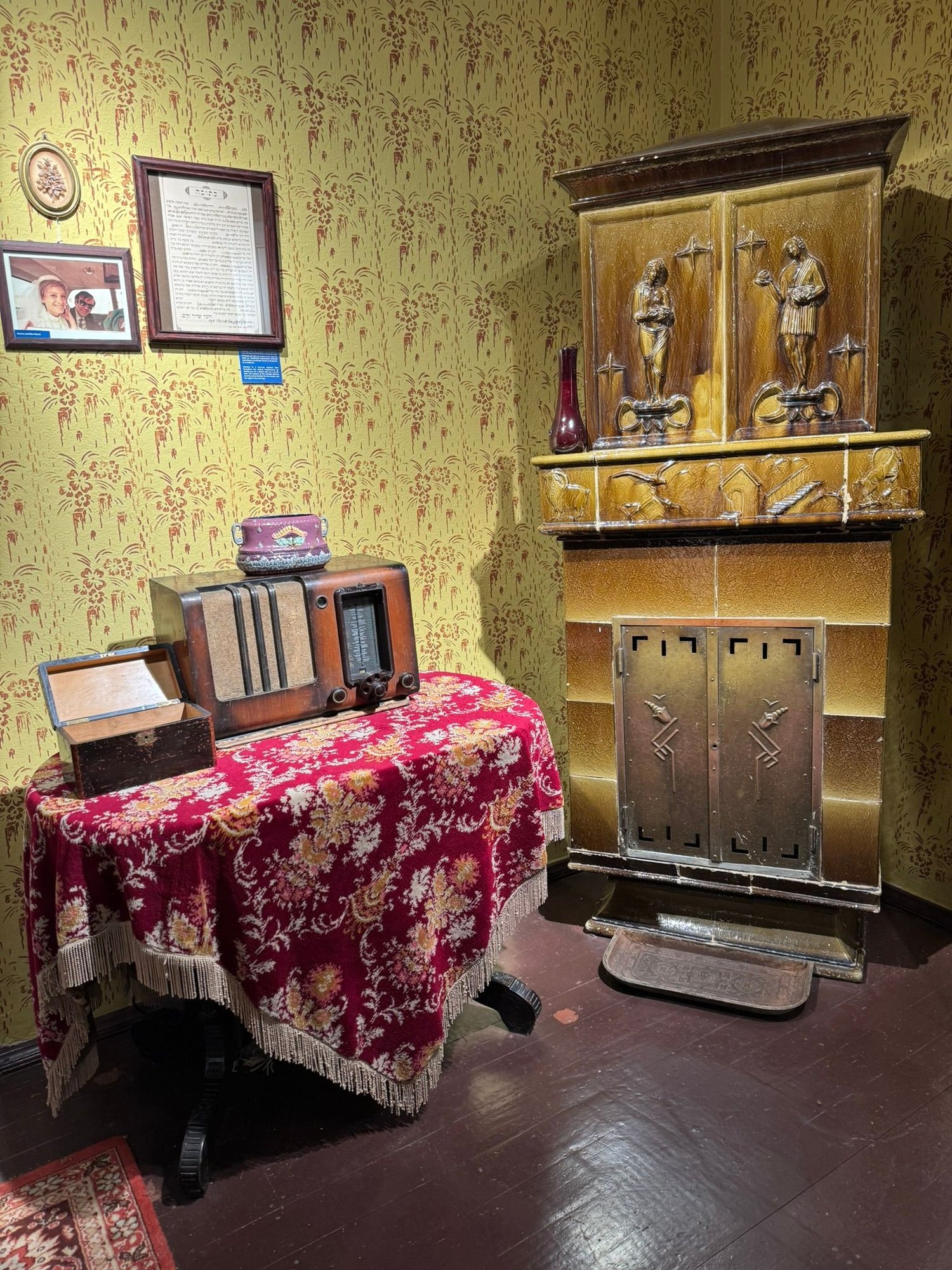
Interior of Elie Wiesel's childhood home

Mr. Wiesel won the Nobel Peace Prize for his work in helping to understand and remember the Holocaust.

My lamb chops sitting on a bed of sauteed mushrooms. A very disappointing meal.

Ed's duck which was very tough.
Dec 11th, 2025 | 03:40 AM
#56
Joined: Oct 2012
Posts: 2,296
Likes: 0
At first, when I saw only the top of your picture of the memorial with the candles, I had no idea what I was looking at. But as I scrolled down the entire memorial came into view on my screen. I did a double-take and finally realized it was a recessed opening in the ceiling. Looks like a dome. That is a very unusual and striking memorial. It's important to get a sense of history of a place, even when that history can be disturbing. Thanks for sharing that.
"All the documents are only in Romanian, however. I am sure I missed a lot of important historical information but the visit was still worthwhile." Although I am a self-confessed Luddite, I do use the Google Translate app on my phone. Works like a charm.
"All the documents are only in Romanian, however. I am sure I missed a lot of important historical information but the visit was still worthwhile." Although I am a self-confessed Luddite, I do use the Google Translate app on my phone. Works like a charm.
Dec 11th, 2025 | 05:21 AM
#57
Original Poster
Joined: Mar 2003
Posts: 6,258
Likes: 0
At first, when I saw only the top of your picture of the memorial with the candles, I had no idea what I was looking at. But as I scrolled down the entire memorial came into view on my screen. I did a double-take and finally realized it was a recessed opening in the ceiling. Looks like a dome. That is a very unusual and striking memorial. It's important to get a sense of history of a place, even when that history can be disturbing. Thanks for sharing that.
"All the documents are only in Romanian, however. I am sure I missed a lot of important historical information but the visit was still worthwhile." Although I am a self-confessed Luddite, I do use the Google Translate app on my phone. Works like a charm.
"All the documents are only in Romanian, however. I am sure I missed a lot of important historical information but the visit was still worthwhile." Although I am a self-confessed Luddite, I do use the Google Translate app on my phone. Works like a charm.
Dec 11th, 2025 | 01:22 PM
#59
Original Poster
Joined: Mar 2003
Posts: 6,258
Likes: 0
I saw your post above about the churches in Norway you found while researching your trip. It is very interesting that they seem similar to the wooden churches we saw.
Dec 11th, 2025 | 10:45 PM
#60


Joined: Jul 2006
Posts: 30,832
Likes: 4
I remember one museum in Romania, which showed the the history of the the 1930s race theory.... (just leaving that there for the moment)
The surprising element was not just the exhibition of human skull types, which was depressing at best but the two massive pyramids of skulls that were left over from the research. Not haunting, just depressing.
The surprising element was not just the exhibition of human skull types, which was depressing at best but the two massive pyramids of skulls that were left over from the research. Not haunting, just depressing.

