Welcome:
Login/Register

Home Destinations Europe Spain Barcelona Features Architecture in Barcelona

Architecture in Barcelona

Architecture in Barcelona

Barcelona's independent outlook has been spectacularly reflected in its anthology of architecture, which covers 2,000 years of history from classical Roman, Romanesque, Gothic, Renaissance and baroque, neoclassical, and Moderniste to the rationalist, minimalist, and postmodern solutions of Richard Meier, Santiago Calatrava, Rafael Moneo, Norman Foster, Ricardo Bofill, and Jean Nouvel.

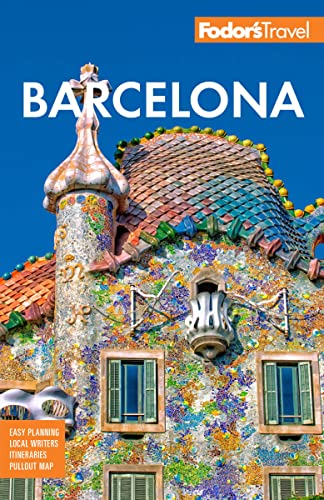
If Madrid is about paintings, Barcelona's forte is architecture, notably the work of Antoni Gaudí (1852-1926), whose buildings are the most startling manifestations of Modernisme -- the Spanish, and mainly Catalan, chapter of the late-19th-century Art Nouveau movement. Other leading Moderniste architects include Lluís Domènech i Montaner and Josep Puig i Cadafalch.

The most Art Nouveau-rife area is L'Eixample (The Expansion). Barcelona's Eixample claimed as its own the artistic movement called Art Nouveau in France, Modern Style in England, Sezessionstil in Austria, Jugendstil in Germany, Liberty or Floreale in Italy, Modernisme in Catalonia, and Modernismo in Spain. Scanning these terms provides a good overview of what Art Nouveau is all about: new, modern (in the late 19th century), playful, flowery, revolutionary, and free. Art Nouveau was a reaction to the misery and massification brought about by technology and the Industrial Revolution. It is what most characterizes the city: only Barcelona has 50 cataloged Moderniste buildings as well as more than 250 private houses with Art Nouveau facades, interiors, or other elements, with the works of Gaudí providing a separate chapter.

Barcelona's Roman, Romanesque, and Gothic legacy is equally interesting. The famous Rambla separates the Gothic Quarter and its Roman core from the Raval, where the medieval hospital, the shipyards, and Sant Pau del Camp, Barcelona's oldest church, are the main attractions, along with Richard Meier's rationalist MACBA (Museu d'Art Contemporani de Barcelona) and the CCCB (Centre de Cultura Contemporània de Barcelona) next door.

The medieval intimacy of the Gothic Quarter balances the grace and distinction of the wide boulevards in the Moderniste Eixample, while Roman walls and columns provide counterpoint to sleek new 21st-century structures in the Raval or the Olympic Port. A visit to Gaudí's Sagrada Família followed by a quick hop over to the Mediterranean Gothic Santa Maria del Mar will leave your senses reeling with the gap between Catalan Art Nouveau ornamentation and the early Catalan Gothic's classical economy. Even more dramatically, proceed from Domènech i Montaner's Moderniste showstopper, the Palau de la Música Catalana, to Mies van der Rohe's minimalist masterpiece, the Barcelona Pavilion: from more and more to less and less. For a look at the future, keep an eye on Ricardo Bofill's projected hotel in the form of a sail at the base of the Rompeolas (breakwater) in the port, or take a tram ride east from Ciutadella-Vil.la Olímpica into the Diagonal Mar district, taking in, along the way, Ricardo Bofill's Teatre Nacional de Catalunya, Rafael Moneo's Auditori, Jean Nouvel's rocket ship-like Torre Agbar, and the Fòrum building by Herzog & de Meuron.


Travel Talk

Visit the Travel Talk forums for help on planning your trip