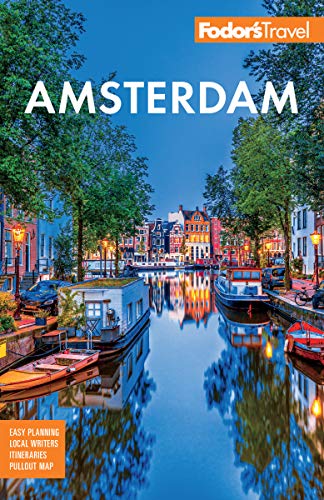
The gabled houses on the Canal Ring are Amsterdam's most picture-perfect historic feature. Starting in the 16th century, the tops of these narrow houses were richly ornamented with gables in various styles. This architecture garnish was the result of a tariff system that taxed width along the waterfront. To get the most bang for their gulden, houses were built on long, narrow lots, angled for optimum floor space, and with the slimmest side facing the canal. However, roof points had to be built facing the street full on; to hide the angle of the house, artists were asked to camouflage with decorative gables in the form of steps, vase necks, extended bottle necks, bells, and elegantly framed decorative pictures. Gable styles came and went, so the type of gable reflects how old a house is.
The Brouwersgracht (brewers' canal) has colorful house fronts harking back to Amsterdam's first economic impulse, which was the right to tax and brew beer from grains traded with medieval Hansestad cities in Northern Europe. Some gables show what different merchant companies had stored—grain, wood, gold, and coffee. Others have symbolic pictorial decorations and many carry the merchant family's shield. The gabled houses on the Keizersgracht (Emperor's canal) are altogether different, as fabulously wealthy 18th-century noblemen decorated their double houses in a grander, sober style reminiscent of palaces of the Holy Roman Empire.
One thing all canal houses have in common is the hook in the gable, oftentimes with a pulley wheel and rope hanging from it. This handy manual elevator system was developed from medieval shipping tactics and helps to avoid moving bulky goods up the precariously steep staircases. Boxes, pianos, couches or whatever are winched up using the rope and pulley, and hauled in through exceptionally wide windows. Keep your eyes peeled as you walk through the city and you may see a few Dutch movers in action.