
Great Itineraries
Great Itineraries
Beijing and the Silk Road
Day 1: Welcome to Beijing
Beijing is the cultural heart of China and the nation's top travel destination. Try to catch the daily flag-raising ceremony in Tiananmen Square. Most first-time visitors to China are drawn here as soon as they recover from jet lag. As you watch goose-stepping People's Liberation Army soldiers march from the Forbidden City into the world's largest public square under the watchful eye of Mao Zedong, you'll know you're not in Kansas anymore. After the flag raising, take a stroll around the square and soak in the atmosphere. And of course, a tour of the Forbidden City is an essential Beijing experience.
Logistics: Avoid unlicensed taxi touts who approach you in Beijing's airport. Proceed to the taxi stand outside, where a ride to your hotel should cost in the range of Y100. Tiananmen Square is best approached on foot or by subway, as taxis aren't allowed to let you off anywhere nearby.
Day 2: The Great Wall
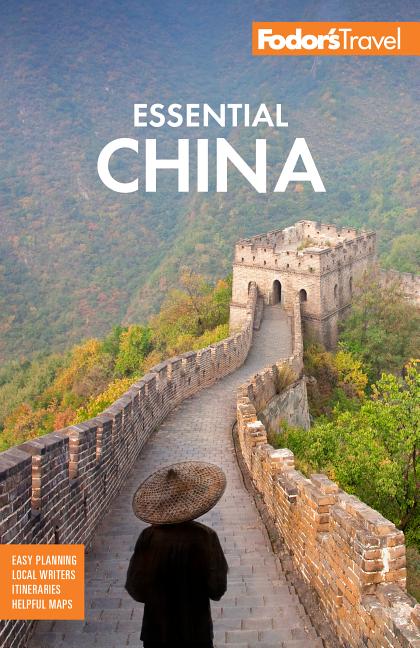
If you're really pressed for time, you could visit the Badaling section of the Great Wall in an afternoon, but we recommend a day trip out to the more impressive sections at Mutianyu, Simatai, or Jinshanling.
Logistics: The most economical way to reach any section of the Great Wall is by group tour bus. If you don't want to be rushed, however, you're better off hiring private transportation for the day.
Day 3: Jewels of the Empire
Beijing is dotted with numerous imperial palaces and pleasure gardens. The lovely Summer Palace in the city's northwest has come to symbolize the decadence that brought about the fall of the Qing Dynasty. The Temple of Heaven is considered to be the perfect example of Ming Dynasty architecture, and is a great place to take a break from the frenetic pace of the capital.
Logistics: Each of these imperial sites will take about three or four hours to tour properly, and are all best reached by taxi. There's no need to ask the driver to wait, though, as plenty of taxis are constantly coming and going.
Day 4: Capital Entertainment
Beijing is teeming with cultural performances, fabulous restaurants, and sprawling outdoor markets. If you're looking to do some souvenir shopping, plan on spending a few hours at Beijing Curio City or the Silk Alley Market in the Chaoyang district. In the evening, music enthusiasts will want to take in a glass-shattering performance of Beijing Opera. If that's not your thing, experience the city's more modern nightlife around Qianhai Lake, where fashionable bars and shops stay open late.
Logistics: Unless you're willing to try your luck on one of Beijing's public buses, these destinations are best reached by taxi.
Days 5-8: Xi'an, China's Ancient Capital
For most of China's history, Xi'an was the nation's capital. As the eastern terminus of the Silk Road, the area is packed with historically significant destinations, most of which can be covered in just a few days. One entire day should be devoted to visiting the Terracotta Warriors Museum and surrounding sites east of the city. The famous warriors, built to protect China's first emperor in the afterlife, are only part of a huge tomb complex that stretches for miles. If you have the time, we also recommend a day trip to the spectacular peaks of Hua Shan.
Logistics: Flights from Beijing to Xi'an take about two hours, with very frequent departures. Trains depart from Beijing's West Rail Station and take 12 hours. Most sites within Xi'an can be reached on foot. The Terracotta Warriors and Hua Shan are east of Xi'an, so you'll want to book a tour or catch one of the cheap public buses.
Travel Note
If you're not interested in continuing farther west along the Silk Road, Xi'an is the perfect transportation hub from which to catch a flight or train to Lhasa, Chengdu, Shanghai, or any other destination of your choice.
Days 9-10: Dunhuang
Once the border between China and the unknown barbarian lands to the west, Dunhuang was also a major stop for merchants and religious pilgrims traveling the Silk Road. Filled with more than 1,000 years of Buddhist carvings, the Mogao Grottoes are widely considered to be the best surviving example of early religious art in China.
Logistics: Flights from Xi'an to Dunhuang take three hours and depart regularly during the busy summer months, less often in the off-season.
Days 11-14: Ürümqi and Turpan
Xinjiang is China's vast western frontier, where the pagodas and temples of the East melt into the bazaars and minarets of Central Asia. The capital, Ürümqi, is certainly interesting as far as large cities in China go, but for a real taste of the region you'll want to head out to the countryside. Heavenly Lake is perhaps the most beautiful body of water in the whole country. The small city of Turpan provides a fascinating look into the Silk Road history that once defined the area and the Uighur minority way of life that dominates today. If you've an extra couple of days, head even farther west to Kashgar, closer to Baghdad than Beijing in both distance and culture.
Logistics: During the busy summer season, flights regularly connect Dunhuang with Ürümqi. Other times of the year you'll need to make the long journey by train or make a connecting flight in Lanzhou or Xi'an. There are multiple daily flights between Ürümqi and Kashgar, as well as between Ürümqi and Beijing.
Shanghai and the Chinese Heartland
Day 1: Welcome to Shanghai
Shanghai is all about the country's future, not its past. Once you've settled in, your first stop should be the Bund, Shanghai's unofficial tourist center. This waterfront boulevard is the city's best spot for people-watching and culinary exploration. For a bird's-eye view of China's sprawling economic capital, head across the Huangpu River to Pudong, where you can mount the Oriental Pearl Tower, the Jinmao Tower, or the Shanghai World Financial Center, aka the Bottle Opener.' There's also the Yu Garden, where you can relax amid carefully designed landscaping and traditional architecture evoking the China of yore.
Logistics: Unless you fear cutting-edge technology, you'll want to take the ultrafast maglev train from the airport into the city center. Shanghai is surprisingly easy to navigate on foot, although taxis are ubiquitous if your feet get tired. To get between the Bund and Pudong, the Y2 ferry across the Huangpu River departs every 10 minutes.
Day 2: Paris of the East
Shanghai's colonial history adds immeasurably to the city's charm. Be sure to visit the French Concession. Whether you're a fan of colonial architecture or enjoy sipping cappuccino in quiet cafés, this is a pleasant area to spend time in. Walk through Xintiandi, where restored traditional houses mix with bars, boutiques, and small museums. Spend some time searching for the perfect souvenir on Nanjing Road. Alternatively, you could brush up on your Chinese history at the Shanghai Museum, one of the finest in the country.
Logistics: All of these destinations are clustered together in a square mile located west of the Bund, easily accessible on foot or by taxi or subway.
Days 3-4: Suzhou and Zhouzhuang
Regarded by the Chinese in ancient times as heaven on earth, Suzhou manages to retain many of its charms despite the encroaching forces of modernization. Enjoy strolling through perfectly designed gardens and temples along the gently flowing branches of the Grand Canal. Luckily, Suzhou is close enough to work well as a day trip. Riding on a gondola past Zhouzhuang's signature tile-roof wooden houses, you'll understand why it was called the "Venice of the East." If you have only one day to get out of Shanghai, the area's water villages should be your destination.
Logistics: Transportation between Shanghai and Suzhou is most conveniently available by bus, of either the intercity or tourist variety; seats on a tourist coach to Zhouzhuang are also easily booked. If you're planning to visit both destinations, you'll probably want to spend the night at a hotel in Suzhou.
Days 5-8: Huang Shan
China's top natural scenic attraction, Huang Shan (Yellow Mountain) is an impossibly beautiful collection of 72 jagged peaks famous for grotesquely twisted pine trees and unusual rock formations. This area has provided the inspiration for generations of Chinese poets and artists, which is why its vistas and valleys may seem familiar to you. There are numerous ways to the top, either on foot or by cable car. To take part in Huang Shan's essential experience, spend a night at one of the mountaintop guesthouses before waking at dawn to watch the sun rise over an eerie sea of fog.
Logistics: Unless you're willing to spend 10 or more hours on a bus from Shanghai, your best bet is to fly into Huang Shan's airport in the nearby town of Tunxi. There's no need to book a tour of the mountain, as paths and scenic viewpoints are all well marked in English.
Day 9-10: Chengdu
As the capital of Sichuan Province, Chengdu has long been one of China's great cultural centers. Famous for its fiery local cuisine, the city has also managed to partially maintain a pleasant atmosphere of yesteryear. Essential sites include the Buddhist Wenshu Monastery and for animal lovers, the Giant Panda Breeding Research Base. No matter how little time you have available to spend here, make the day trip south to Leshan to see the world's largest stone-carved Buddha. With toes the size of a small bus, the seated Grand Buddha is impressive, to say the least.
Logistics: Like most tourist hubs, the airport near Huang Shan offers fairly frequent flights to major cities such as Chengdu only during the busy warmer months. You may find it easier to connect through Hefei or Shanghai. All hotels and travel agencies in Chengdu can book tours to Leshan, or you can travel on your own by public bus.
Travel note: If you're pressed for time and are set on cruising the Yangtze River, skip Chengdu and fly directly to Chongqing.
Days 11-14: The Three Gorges
Despite higher water levels caused by construction of the Three Gorges Dam, a cruise along the Yangtze River through the Three Gorges is impressive. Along the way, you'll pass over abandoned metropolises that were humming with life only a few years ago as well as their modern counterparts built on higher ground. Be sure to book yourself on a luxury boat catering to foreigners, or you'll end up spending three days on a damp, rat-infested ship. Don't miss a visit to the Little Three Gorges, where monkeys play near the water's edge.
Logistics: Boats depart from Chongqing, a two-hour bullet train ride away from Chengdu. If you book your tour in Chengdu, transportation to Chongqing is almost always included. Most cruises disembark at Yichang in Hubei Province, where you can get a flight back to most travel hubs.
Southern China and Tibet
Day 1: Welcome to Hong Kong
Despite the city's return to Chinese rule in 1997, Hong Kong is still a world away from the mainland. To get a feel for the city, take a ride on the Star Ferry connecting Hong Kong Island with Kowloon. The ferry offers the best possible views of the business district's skyline. Don't miss the smoke-filled Man Mo Temple and Hong Kong's famous assortment of antiques shops and art galleries. Ride the very steep tram to the summit of Victoria Peak, with views of the entire harbor.
Logistics: The new airport is connected to Kowloon and Hong Kong Island by express train, taking about 30 minutes. Taxis are available everywhere, although much of the city can be explored on foot. The tram to Victoria Peak is open until midnight.
Day 2: Getting out of the City
While the business districts clustered around the harbor feature some of the world's densest urban jungle, Hong Kong also has a relaxed natural side. The express ferry to Lantau can whisk you away from the city in about 40 minutes. Arriving at the town of Mui Wo, you can catch a bus to the island's top two attractions: Po Lin Monastery, featuring the world's tallest outdoor bronze statue of Buddha, and Tai O, an old fishing village dotted with terrific seafood restaurants. For even greater solitude, take the ferry to one of the smaller Outer Islands.
Logistics: Ferries for Lantau leave from the Outlying Islands Ferry Pier on Hong Kong Island. On the island, private buses travel between all of the main attractions.
Day 3: Macau
Even with a recent push to become Asia's Las Vegas, Macau is still decidedly quieter and more traditional than Hong Kong. The slower pace of development has left much of the city's colonial charm intact. Start with a visit to Largo do Senado (Senate Square), paved with Portuguese-style tiles and surrounded by brightly colored colonial buildings. The city is home to two beautiful churches, São Domingos and São Paulo, the latter featuring exhibits on the early history of Asian Christianity.
Logistics: TurboJets from Hong Kong to Macau depart frequently and at all times of the day, making the trip in about an hour. If you're not comfortable traveling around the city by taxi, book a tour before you leave Hong Kong.
Days 4-8: Yangshuo and Longsheng
The scenery in northern Guangxi is some of the most beautiful in all of China. Enchanted by dramatic groupings of sheer limestone karst mountains, visitors often find themselves loath to leave. You'll see more of the countryside by taking the four-hour Li River Cruise down to Yangshuo. Yangshuo is a laid-back town popular with backpackers, and an excellent base from which to explore natural sites like Green Lotus Peak and Moon Hill. If you've more time, head back through Guilin to the town of Longsheng, home to the famously photogenic Dragon's Backbone Rice Terraces.
Logistics: Direct flights to Guilin depart from Hong Kong airport, or nearby Shenzhen, just across the border.
Days 9-14: Northwest Yunnan
Sandwiched between the Tibetan Plateau and Myanmar, this area has long attracted foreigners with its mix of minority cultures and stunning natural beauty. Dali, beside the waters of Erhai Lake, is home to the Bai people, who settled here 4,000 years ago; the elegant Three Pagodas north of town is one of China's most iconic images. Farther north lies Lijiang, home of the Naxi people and the only place in the country where traditional Chinese music is said to survive in its original form. The highlight of the region is Tiger Leaping Gorge, one of the deepest river gorges in the world and a popular two-day hike.
Logistics: Most flights from Guilin to either Dali or Lijiang connect through Kunming. Travel between these destinations is by public bus or tour coach.
Days 15-18: Lhasa
Lhasa is the capital of a nation within a nation, with only tenuous ties to the rest of China. These ties have increased considerably with the opening of the train line to Tibet, yet the city is still unique. Start your tour of the city with a walk around the Barkhor, followed by a visit to Jokhang Temple, respectively Tibetan Buddhism's holiest pilgrimage circuit and holiest religious site. Don't miss the Sera Monastery, where monks hold animated theological debates every afternoon. Climb the long steps to the Potala Palace, followed by a visit to what was once the world's largest monastic complex, Drepung Monastery. If you spend only one day outside of Lhasa, make the two-hour trip to the mountaintop Ganden Monastery, with awe-inspiring views of the surrounding Lhasa River Valley. The five-day round-trip between Lhasa and Everest Base Camp with a number of stops along the way is the essential Tibet experience.
Logistics: Multiple daily flights connect Chengdu with Lhasa. Sites within Lhasa are accessible on foot or by taxi. Travel to sites outside Lhasa, like Everest Base Camp, must be arranged through an official tour operator.
Travel Note: Those wishing to visit Tibet can book flight or train tickets from many major transportation hubs.
Free Fodor's Newsletter
Subscribe today for weekly travel inspiration, tips, and special offers.
Fodor's Trip Planning Ideas
- Weekend Getaways: Fodor's Recommends the Best Weekend Escapes in the US
- Great American Vacation: Find Your Next U.S. Trip with Fodor's
- 80 Degrees: Fodor's Helps You Find Your Best Beach Vacation Spots
- Go List: Fodor's Top 25 Places to Go in 2013
- Hotel Awards 2012: Fodor's 100 Top Hotels
- Best of Europe: Fodor's Picks the Best Places to Visit in Europe
Travel Deals in China
- $1499 & up -- Hong Kong & Shanghai 6-Night Trip w/Air go-today
- Ageless China IExplore
- China & Yangtze Experience — $4,199 IExplore
- Cosmopolitan Hong Kong — $3,350 IExplore
- China Active: Hiking in Yunnan — $2,899 IExplore