279 Best Sights in Peru

Background Illustration for Sights

We've compiled the best of the best in Peru - browse our top choices for the top things to see or do during your stay.

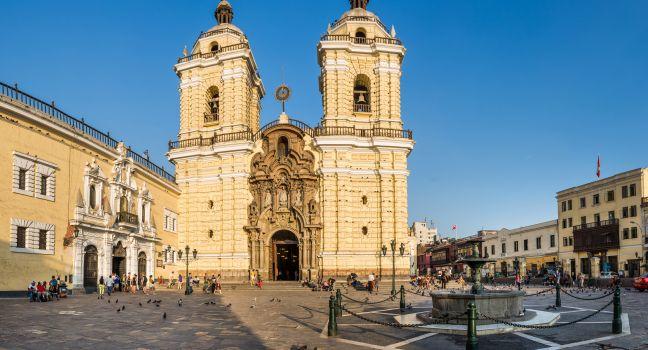
Convento de San Francisco

El Centro Fodor's Choice
Panoramic view of San San francisco church, in Lima, Peru
Christian Vinces / Shutterstock

With its ornate facade and bell towers, ancient library, and catacombs full of human skulls, the Convento de San Francisco is one of Lima's most impressive sites. The catacombs hold the remains of some 75,000 people, some of whose bones have been arranged in eerie geometric patterns (warning: the narrow, dusty tunnels aren't for the claustrophobic). Meanwhile, the convent's massive church, the Iglesia de San Francisco, is the quintessential example of Lima baroque. Its handsome, carved portal is like an oversized retablo, projecting the church's sacred space out onto the busy street, while the central nave is known for its beautiful ceilings carved in a style called mudéjar (a blend of Moorish and Spanish designs). The 50-minute tour includes the church, the library, ample colonial art, and the catacombs.

Huaca Pucllana

Miraflores Fodor's Choice
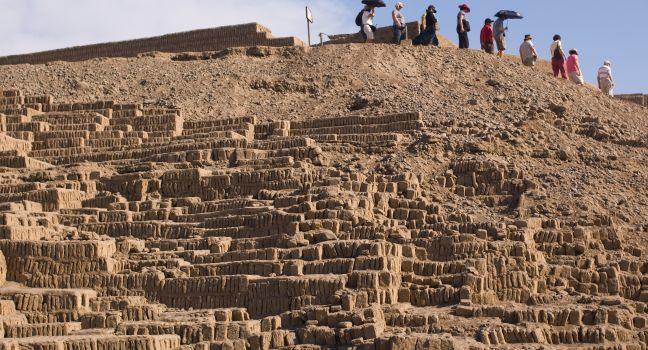
Group of tourists decends the Huaca Pucllana pyramid
e2dan / Shutterstock

Rising out of a nondescript residential neighborhood is Lima's most-visited huaca, or pre-Columbian temple—a huge, mud-brick platform pyramid that covers several city blocks. The site, which dates from at least the 5th century, has ongoing excavations, and new discoveries are announced every so often. A tiny museum highlights a few of those finds. Knowledgeable, English-speaking guides will lead you through reconstructed sections to the pyramid's top platform and, from there, to an area that is being excavated.

This site is most beautiful at night, when parts of it are illuminated. Thirty-minute partial tours are available during this time.

Cl. General Borgoño s/n, Lima, 18, Peru
01-617–7148
Sight Details
S/15 during the day, S/17 at night

Something incorrect in this review?

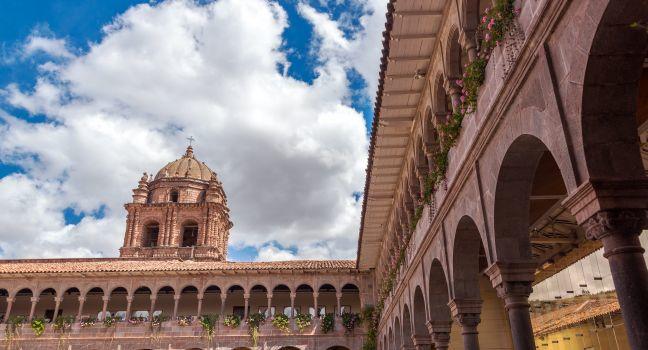
Qorikancha

Fodor's Choice
Courtyard and tower of the Santo Domingo church in Cuzco, Peru, also known as Qorikancha
Jess Kraft / Shutterstock

Built to honor the sun god, the empire’s most important deity, Qorikancha translates as "Court of Gold." Walls and altars were once plated with gold, and in the center of the complex sat a giant gold disc, positioned to reflect the sun and bathe the temple in light, while terraces were once filled with life-size gold-and-silver statues of plants and animals. Much of the wealth was removed to ransom the captive Inca ruler Atahualpa during the Spanish conquest. Eventually, the structure was passed on to the Dominicans, who constructed the church of Santo Domingo using stones from the temple and creating a jarring imperial-colonial architectural juxtaposition. An ingenious restoration lets you see how the church was built on and around the temple. In the Inca parts of the structure left exposed, estimated to be about 40% of the original temple, you can admire the mortarless masonry, earthquake-proof trapezoidal doorways, curved retaining wall, and exquisite carvings that exemplify the artistic and engineering skills of the Inca. The S/15 entrance allows you to visit the Monasterio de Santa Catalina and Qorikancha's ruins and church; a free prerecorded tour is available, but hire a guide to get the most out of the site.

Pampa del Castillo at Plazoleta Santo Domingo, Cusco, Peru
Sight Details
Ruins and church S/15; museum entrance via Boleto Turístico

Something incorrect in this review?

Recommended Fodor's Video

Sacsayhuamán

Fodor's Choice
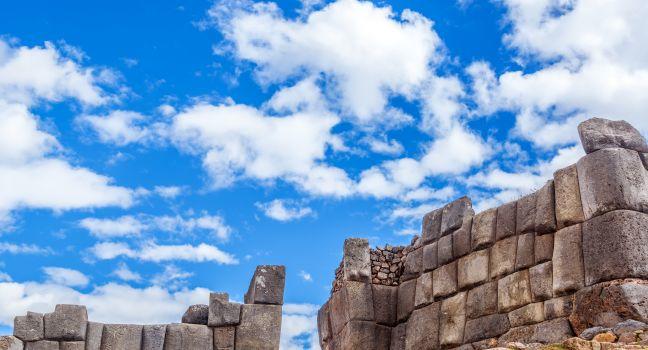
Incan ruins of a fortress known as Sacsayhuaman on the outskirts of Cusco, Peru
Jess Kraft / Shutterstock

Towering high above Cusco, the ruins of Sacsayhuamán are a constant reminder of the city's Inca roots. You may have to stretch your imagination to visualize how it was during Inca times—much of the site was used as a convenient source of building material by the conquering Spanish, but plenty remains to be marveled at. Huge stone blocks beg the question of how they were carved and maneuvered into position, and the masterful masonry is awe-inspiring. If you're not moved by stonework, the spectacular views over the city are just as impressive.

If the Incas designed Cusco in the shape of a puma, then Sacsayhuamán represents its ferocious head. Perhaps the most important Inca monument after Machu Picchu, Sacsayhuamán is thought to have been a religious complex during Inca times. That being said, from its strategic position high above Cusco, it was also excellently placed to defend the city, and its zigzag walls and cross-fire parapets allowed defenders to rain destruction on attackers from two sides.

Construction of the site began in the 1440s, during the reign of the Inca Pachacutec. It's thought that 20,000 workers were needed for Sacsayhuamán's construction, cutting the astonishingly massive limestone, diorite, and andesite blocks—the largest gets varying estimates of anywhere between 125 and 350 tons—rolling them to the site, and assembling them in traditional Inca style to achieve a perfect fit without mortar. The Inca Manco Cápac II, installed as puppet ruler after the conquest, retook the fortress and led a mutiny against Juan Pizarro and the Spanish in 1536. Fighting raged for 10 months in a valiant but unsuccessful bid by the Inca to reclaim their empire. History records that thousands of corpses from both sides littered the grounds and were devoured by condors at the end of the battle.

Today only the outer walls remain of the original fortress city, but even with one-fifth of the original complex left, the site is impressive. Sacsayhuamán's three original towers, used for provisions, no longer stand, though the foundations of two are still visible. The so-called Inca's Throne, the Suchuna, remains, presumably used by the emperor for reviewing troops. Today, those parade grounds, the Explanada, are the ending point for the June 24 Inti Raymi Festival of the Sun, commemorating the winter solstice and Cusco's most famous celebration.

A large map at both entrances shows the layout of Sacsayhuamán, but once you enter, signage and explanations are minimal.

You may find guides waiting outside the entrances who can give you a two-hour tour (negotiate the price ahead of time). Most are competent and knowledgeable, but depending on their perspective, you'll get a strictly historic, strictly mystical, strictly architectural, or all-of-the-above-type tour, and almost all guides work the standard joke into their spiel that the name of the site is pronounced "sexy woman." It's theoretically possible to sneak into Sacsayhuamán after hours, but lighting is poor, surfaces are uneven, and robberies have occurred at night.

Cusco, Peru
Sight Details
Boleto Turístico

Something incorrect in this review?

Amantani Island

Fodor's Choice

This island has a small set of pre-Inca ruins that are a highlight of a visit here, along with the experience of the traditional life of its mainly agrarian society. Although it's dusty and brown and not as pretty as Taquile, Amantani is renowned for its homestay programs that bring in boatloads of visitors each day, giving some, albeit touristic, insight into the life of the people here. Facilities and food are basic but cozy. Every tour operator in Puno runs overnight trips here, usually combined with a stop on the Uros Islands and Taquile. Most of the younger generations here speak Spanish and even a smidgen of English, but the older generation speaks only Aymara. Amantani has a population of about 4,500. Sacred fertility rituals are held in its two pre-Inca temples, one of which is dedicated to masculine energy and the other to the feminine. The island is 45 km (28 miles) from Puno and almost three hours away by boat from Taquile.

Casa de Aliaga

El Centro Fodor's Choice

From the outside, you'd never guess this was one of Lima's most opulent addresses. Ranked as the oldest private residence in the Americas, the stunning Spanish colonial casona, built in 1535 by Jerónimo de Aliaga—one of Pizarro's officers—has been continuously inhabited by 17 generations of his descendants ever since. Each room boasts a different period decor, from colonial to republican, and Don Jerónimo's German-made sword is still on display in one of the salons. To visit, you must hire an officially approved guide or go as part of a city tour.

Casa Museo Nicolás Puga

Fodor's Choice

The owner of this splendid museum, Nicolás Puga Cobián, has spent more than 50 years amassing a mind-blowing array of treasures from Peru's pre-Hispanic, colonial, and republican past. Not content, however, with merely owning these artworks, he's also graciously opened his house to visitors so they can share in his passion for his native Cajamarca. Nazca textiles, Moche masks, polychrome crucifixes, portable retablos inlaid with mirrors: the collection is as varied as it is well chosen. No less impressive is the 200-year-old casona, whose furnishings were acquired from local families dating back to 1532. Visiting hours are flexible, but it's essential to call for an appointment so you don't surprise Don Nicolás at lunch.

Casa Torre Tagle

El Centro Fodor's Choice

This viceregal-era mansion sums up the graceful style of the early 18th century. Flanked by a pair of elegant balconies, the stone entrance is as expertly carved as that of any of the city's churches, while the patio is a jewel of the Andalusian baroque, with slender columns supporting delicate Moorish arabesques. The Casa Torre Tagle currently holds offices of the Foreign Ministry and is open to the public only occasionally, but if your timing is serendipitous, you can check out the tiled ceilings of the ground floor and see the house's 18th-century carriage. Across the street is Casa Goyeneche, built some 40 years later in 1771 and clearly influenced by the rococo movement.

Catedral

Fodor's Choice

You can't miss the imposing twin bell towers of this 1612 cathedral, with a facade guarding the entire eastern flank of the Plaza de Armas.

As the sun sets the imperial reflection gives the cathedral an amber hue.

The interior has high-vaulted ceilings above a beautiful Belgian organ. The ornate wooden pulpit, carved by French artist Buisine-Rigot in 1879, was transported here in the early 1900s. In the back, look for the Virgin of the Sighs statue in her white wedding dress and the figure of Beata Sor Ana de Los Ángeles, a nun from the Santa Catalina Monastery who was beatified by Pope John Paul II when he stayed in Arequipa in 1990. A fire in 1844 destroyed much of the cathedral, as did an 1868 earthquake, so parts have a neoclassical look. In 2001, another earthquake damaged one of the bell towers, which was repaired to match its sister tower.

Cerámica Seminario

Fodor's Choice

Husband-and-wife team Pablo Seminario and Marilú Behar spent years developing their art into what is now known as the Seminario style—taking the valley's distinctive red clay and turning it into ceramic works using modern adaptations of ancient Indigenous techniques and designs. Their works are world-famous, with pieces seen as far off as Chicago's Field Museum. More than a shop or art gallery, here you have the ability to view the workshop where the magic happens and even speak with the artist directly. The store features decorative and utilitarian pieces, as well as others that are pure art, all of which make fabulous Peruvian gifts for yourself or others. Purchases can be shipped to any location.

Chan Chan

Fodor's Choice

With its strange, honeycomblike walls and labyrinth of wavy parapets, this sprawling ancient capital is the largest adobe city in the world. Its surreal geometry once held boulevards, gardens, palaces, and some 10,000 dwellings in what was effectively the greatest pre-Columbian settlement in the Americas. Within its precincts, too, were nine royal compounds, one of which—the royal palace of Nik An (also known as the Tschudi complex, after a Swiss explorer)—has been partially restored and opened to the public. Although the city had its roots in Moche civilization, the Chimú people took control of the region around AD 900 and expanded the metropolis to its current size.

Before entering this UNESCO World Heritage Site, stop to check out the photo survey of the ruins at the time of their discovery. Then begin at Nik An's Plaza Principal, a vast square used for festivals and ceremonies. The king's throne is thought to have been in front, at the top of the ramp; note the carvings of sea otters at the base of the walls. From here, head deep into the ruins toward the royal palace of the lord of Chimú. The main corridor is marked by fishnet designs, marking the importance of the sea to these ancient people.

You'll also find renderings of pelicans, which served as ancient road signs, their beaks pointing to important sections of the city.

Just before you arrive at the recinto funerario, the funeral chamber of the Chimú lord, you'll pass a small natural reservoir called a huachaque: this pond was used both to raise crops and for ritual purposes. Further on, 44 secondary alcoves surround the funerary precinct where the king was buried. In his day, it was understood that when you passed to the netherworld, you could bring your worldly necessities with you, so Chimú potentates were interred with live concubines and a slew of personal effects—most of which have been looted. Though wind and rain have done their worst to undermine the city, its grandeur, visionary design, and size—20 square km (8 square miles)—still astonish.

Carretera Huanchaco, Trujillo, Peru
Sight Details
S/10, includes admission to Huaca Arco Iris, Huaca Esmeralda, and Chan Chan's Museo del Sitio

Something incorrect in this review?

Chavín de Huántar

Fodor's Choice

Indiana Jones would feel right at home in these fascinating ruins, which feature an underground labyrinth of stone corridors with a terrifying idol at their center. The idol, known as the Lanzón, is a 4-meter (13-foot) daggerlike slab with a jaguar's face and serpentine hair, and it was the Holy of Holies for the Chavín people, who constituted the mother civilization for the Andes. Pilgrims from all over South America would come here to worship, eventually spreading the cult of the so-called Fanged Deity throughout the continent. To make things even crazier, during ceremonies here, Chavín priests and their acolytes would ingest the psychedelic San Pedro cactus, thus facilitating their transformation into the smiling, ferocious god.

Visiting the Chavín archaeological complex, which dates from 1500 BC, is a favorite day trip from Huaraz. The UNESCO World Heritage Site sits on the southern edge of the tiny village of the same name and comprises two separate wings of the main temple, a large U-shaped main plaza, a second plaza surrounded with mysterious carvings, and an on-site museum that houses the grinning stone heads that once looked out from the temple's outer wall. On the drive southeast from Huaraz, you get good views of two Andean peaks, Pucaraju (5,322 meters/17,460 feet) and Yanamarey (5,237 meters/17,180 feet), as well as of the alpine Laguna de Querococha. The eight-hour tour costs about S/50 per person, not including the entrance fee to the ruins. If you'd prefer to get here on your own, regular buses run between Huaraz and Chavín, and you can hire a guide at the entrance to the site.

Colca Canyon

Fodor's Choice

Flying overhead, you can't miss the green, fertile trough as it cuts through the barren terrain, but it's all an illusion; only scrub brush and cactus cling to the canyon's sheer basalt sides and miles of ancient terraces.

The canyon is named for the stone warehouses (colcas) used to store grain by an ancient culture that lived along the walls of the gorge.

Carved into the foothills of the snow-covered Andes and sliced by the silvery Río Colca, Colca Canyon is 3,182 meters (10,440 feet) deep. The more adventurous can embark on a hike into the canyon—typically a two-, three-, or five-day excursion. Bird lovers (and anyone with a penchant for amazement) can visit the Cruz del Condor, currently home to 38-odd animals. Culture seekers can spend a night with a native family. Light hikers and archaeology aficionados can observe points along the rim, and those seeking pure relaxation can hit one of the all-inclusive lodges that offer horseback riding and thermal baths.

Chivay, Peru
Sight Details
S/70

Something incorrect in this review?

Collpa de Guacamayos Chuncho

Fodor's Choice

The largest collpa in this region is located in Tambopata National Reserve, behind an island on the Tambopata River. On any given morning, hundreds of birds congregate here to lick the clay. The action starts at the break of dawn, when flocks of parakeets begin to arrive. They are followed by several parrot species and up to five macaw species, which first gather in the treetops and wait for a moment when it seems safe to descend to the clay lick. When they do, it is an amazing sight. Collpa de Guacamayos Chuncho can only be visited on excursions from various lodges on the Tambopata River. You'll also see other wildlife along the river on the trip here.

Convento de Santa Rosa de Ocopa

Fodor's Choice

Originally a Franciscan mission whose purpose was to bring Christianity to the Natives of the Amazon, this 1725 convent has been completely reconstructed and now comprises an early 19th-century cloister, a neocolonial church erected in 1905, and a library with more than 30,000 books—some from the 15th century. The site's natural history museum displays a selection of regional archaeological finds, including traditional costumes and local crafts picked up by the friars during their evangelizing. A restaurant serves excellent, if simple, Andean food, and several spare but comfortable accommodations are available in the former monks' quarters. Take a S/25 taxi ride for a round-trip to the convent from Concepción's Plaza de Armas. Admission includes a guided tour.

Convento de Santo Domingo

El Centro Fodor's Choice

If the Iglesia de San Francisco is Lima Gothic—all skulls and penitential gloom—Santo Domingo represents the city's sunny side. From pink facade to rococo tower, every detail here glows with charm. The main cloister is especially enticing: long arcades with Sevillian tiles, gardens redolent of jasmine, coffered ceilings carved from Panamanian oak. But don't overlook the chapter room, which housed Peru's University of San Marcos when it was founded in 1551, or the tombs of Santa Rosa de Lima and San Martín Porres, the first two saints in the New World. In a city given over to the here and now, this temple offers a glimpse into another world. As of this writing, the convent's facade was receiving a much-needed makeover, which may continue through 2024, but the church interior and museum remain open to visitors.

Cotahuasi Canyon

Fodor's Choice

Colca Canyon may be the region's most famous natural attraction, but at 3,354 meters (11,001 feet), Cotahuasi is the world's deepest gorge, beating Colca Canyon by 163 meters (534 feet). It's nearly twice as deep as the Grand Canyon. The canyon has been carved by the Río Cotahuasi, which becomes the Río Ocuña before connecting to the Pacific. Its deepest point is at Ninochaco, below the quaint administrative capital of Quechualla and accessible only by kayak. Kayak explorations first documented the area and measured its depth in the mid-1990s. Since then, paddling the Cotahuasi River's Class V rapids is to kayakers what scaling Mount Everest is to mountaineers.

The road from Arequipa to the Cotahuasi Canyon ranks with the great scenic routes of the world. As you pass Corire and Toro Muerto, the road rides the western side of snowcapped Nevado Coropuno (6,424 meters, 21,076 feet), Peru's third-highest mountain, offering spectacular views as you descend into the valley of Cotahuasi.

Logistically speaking, it's a bumpy 11- to 13-hour bus ride or 10 hours by four-wheel drive from Arequipa.

The pavement ends in Chuquibamba after about five hours of driving, and then resumes for the last hour of the drive, at the Mirador of Cotahuasi and for the descent into the canyon. There is no fee to enter.

Arequipa, Peru
Sight Details
Free

Something incorrect in this review?

Cruz del Condor

Fodor's Choice

Cruz del Condor is a haunt for the giant birds, particularly at dawn, when they soar on the thermal currents rising from the deep valley. At 1,200 meters (3,937 feet), the "condor cross" precipice, between the villages of Pinchollo and Cabanaconde, is the best place to spot them.

From June to August, you're likely to see close to 20 or more condors during a morning visit.

By October and November, many of the female birds are nesting, so your chances of eyeing flocks are slim, though you'll likely spot a few birds. It is possible to take a taxi or bus to the Cruz del Condor from Chivay, but if you take a tour from there, your guide will likely only speak Spanish. If you want a guided tour in English, you will need to set this up with a tour operator ahead of time in Arequipa or Cusco. If you overnight in Cabanaconde or Chivay, you can also visit the mirador before the sun sets. It's when the condors return to their nests, and you'll have the place all to yourself.

Chivay, Peru

Something incorrect in this review?

El Brujo

Fodor's Choice

This intriguing complex is currently one of the hot properties on the Peruvian archaeological circuit. Plopped down in a barren dune about 6 km (4 miles) from Magdalena, it consists of three distinct huacas, or holy sites: Huaca Cao, Huaca Prieta, and Huaca Cortada. Huaca Cao is the star: in 2006, it was the site of the electrifying discovery of the Lady of Cao, a 1,600-year-old mummy whose tattoos marked her as a Moche priestess or ruler. The finding was immediately compared with that of King Tut's tomb in Egypt, as it completely turned notions of power in pre-Columbian Peru upside down. Equally impressive is the huaca's pyramid itself, where the multicolored friezes of warriors and human sacrifices give a powerful idea of the Moches' artistic skill. The excellent museum is among the most informative of its kind: in it, you'll find a forensic reconstruction of the Lady of Cao's appearance, as well as the mummy of the grande dame herself. The other two huacas are still undergoing excavation, but the entrance fee covers all three. The site is well worth the trip from Trujillo.

Off Hwy. 102, Magdalena de Cao, Peru
933-412–730
Sight Details
S/10

Something incorrect in this review?

El Cuarto del Rescate

Fodor's Choice

This ransom chamber is the only Inca building still standing in Cajamarca. After Pizarro and his men captured Atahualpa, the Inca king offered to fill the chamber once with gold and twice with silver. The ransom was met, up to a marking on the stone wall, but the war-hardened Spaniards killed Atahualpa anyway. Today, visitors aren't allowed in the room itself, but if you look closely, you can still make out the marks the Inca left in an attempt to buy off his captors.

Jr. Amalia Puga 750, Cajamarca, Peru
Sight Details
S/5

Something incorrect in this review?

Ferrocarril Central Andino

Fodor's Choice

Not long ago, the Central Highlands' Ferrocarril Central Andino laid claim to being the world's highest rail route. Then, in 2006, China's Qinghai-Tibet Railway opened, and the onetime Peruvian champ was knocked down to second place. Despite this loss of title, the trip still merits plenty of superlatives. As the train twists along the 335-km (207-mile) route through the Andes at an average elevation of 3,150 meters (10,335 feet), it regales travelers with some of the most heart-pounding vistas in the sierra. You feel the excitement as the engine chugs its way up the slim steel threads, traversing 58 bridges, endless hairpin curves, and 69 tunnels, including the 1,175-meter (3,854-foot) Galera Tunnel, which, at an altitude of 4,758 meters (15,606 feet), is the climax of the journey. As much as the sublime landscapes, however, it's the feats of engineering wizardry entailed in the railway's construction that leave you in awe.

Getting tickets to the Ferrocarril is a bit tricky: you have to plan around the train's infrequent departures if you want it to be a centerpiece of your Peruvian odyssey. The railway's website lists travel dates, with Lima-Huancayo service running just a handful of days between April and November. Trains leave Lima's Desamparados station for the 14-hour journey at 7 am, arriving in Huancayo around 9 in the evening. Snacks, lunch, and soft drinks are included in the price. You can request oxygen if you get short of breath over the high passes, and mate de coca flows freely at all hours. When making reservations, note that the decades-old clásico cars are okay in a pinch, but the newer turístico ones are much more comfortable, with reclining seats and access to the observation area and bar.  In 2023, the railway suffered severe damage from El Niño–caused landslides, prompting the authorities to suspend service for six months. Operators are looking to resume the Lima-Huancayo run in 2024.

Fortress of Ollantaytambo

Fodor's Choice

Walk above town to a formidable stone structure, where massive terraces climb to a temple area honoring the sun god. Although the elaborate, walled complex was the valley's main defense against the Antis (jungle peoples) from the neighboring rainforests, the sun temple, used for astronomical observation, and the Baños de la Ñusta (ceremonial princess baths) lead archaeologists to believe that Ollantaytambo existed for more than defensive purposes, as was typical with Inca constructions. Construction, which began during the reign of Pachacutec but was never completed, incorporates rose-colored granite that was not mined in this part of the valley. The structure was the site of the greatest Inca victory over the Spanish during the wars of conquest. Manco Inca fled here in 1537 with a contingent of troops after the disastrous loss at Sacsayhuamán and routed Spanish forces under Hernando Pizarro. The victory was short-lived: Pizarro regrouped and took the fortress. If you come on your own, take the time to walk up above and through a wooden door at the back to see an Intihuatana ("hitching post of the Sun").

Plaza Mañay Raquy, Ollantaytambo, Peru
Sight Details
Boleto Turístico

Something incorrect in this review?

Gocta Waterfall

Fodor's Choice

Amazingly, Gocta, a 771-meter (2,529-foot) waterfall believed to be the third-tallest in Peru, wasn't brought to the attention of the national government until 2006. The falls, about 50 km (31 miles) outside Chachapoyas, are strongest during the rainy season, from November to April, though during the dry season, the sun will likely be out and you'll be able to swim at their base. Occasionally, on the 2½-hour hike from the village of Cocachimba (you can hire guides there if you're not coming on a tour from Chachapoyas), you may be able to spot toucans or the endemic yellow-tailed woolly monkey. Trekking enthusiasts can also follow a 15-km (9-mile) circuit for up-close views of the upper and lower parts of the cataract.

The best way to appreciate the site is by staying at the charming, 16-room Gocta Lodge, especially if you aim to see the falls in morning or late-afternoon light.

Chachapoyas, Peru
Sight Details
S/20

Something incorrect in this review?

Huaca de la Luna and Huaca del Sol

Fodor's Choice

Stark and strange beneath the ash-gray hill that towers over them, these astonishing Moche pyramids were the scenes of bloody human sacrifices. Their exteriors may have eroded, but inside archaeologists have uncovered sinister octopus-shaped reliefs of the great Moche god Ai-Apaec, as well as evidence of a cataclysmic El Niño sequence that effectively destroyed Moche civilization.

The Huacas of the Sun and Moon are located some 8 km (5 miles) outside Trujillo, near the Río Moche. The former is the bigger of the two, but it's not open to the public due to its decayed state. (Built up of 130 million adobe bricks in eight continually expanding stages, its treasures were literally cleaned out of it in 1610, when the Spanish diverted the river to wash the imperial gold and silver from its innards.) The Huaca of the Moon is awesome in its own right, with numerous exterior and interior walls blazoned with bizarre mythological reliefs. These include spiderlike creatures, warriors, and the scowling face of Ai-Apaec, the ferocious god to whom captives were sacrificed at the pyramid's base. These sacrifices probably occurred to propitiate the gods of the weather, but alas, it didn't work. A series of violent El Niño events around the year 600 brought drought and sandstorms, eventually ending the Moche civilization.

When you visit the Huaca de la Luna, you'll start from the top, near the sacrificial altars, and work your way down through the inner galleries to the murals at the base. This was where archaeologists discovered bones of the Moches' victims in recent decades.

Be sure to allot time for the excellent museum, which includes exhibits of Moche artwork and informative discussions of the culture's history and religion.

Av. Santa Rosa off Panamericana Norte, Trujillo, Peru
044-221--269
Sight Details
Ruins S/10, museum S/5
Closed Mon.

Something incorrect in this review?

Islas Ballestas

Fodor's Choice

Spectacular rocks pummeled by waves and wind into ballestas (arched bows) along the cliffs are what characterize this haven of jagged outcrops and rugged beaches, which serve as home to thousands of marine birds and sea lions. You're not allowed to walk onshore, but you wouldn't want to—the land is calf-deep in guano.

Bring a hat, as tourists are moving targets for multitudes of guano-dropping seabirds. Also, be prepared for the smell: between the sea lions and the birds, the odor can be overpowering.

A boat provides the best views of the abundant wildlife: sea lions laze on the rocks, surrounded by Humboldt penguins, pelicans, seals, boobies, cormorants, and even condors, which make celebrity appearances for the appreciative crowds in February and March. On route to the islands is Punta Pejerrey, the northernmost point of the isthmus and the best spot for viewing the enormous, cactus-shaped geoglyph "El Candelabro" that is carved in the cliffs. It's variously said to be a religious symbol from the Chavín culture, a Masonic emblem left by the liberator José de San Martín, or a staff of the Inca creator-god Viracocha.

Paracas, Peru

Something incorrect in this review?

Islas Los Uros

Fodor's Choice

Known as the floating islands, Islas Los Uros are man-made islands woven together with totora reeds that grow in the lake shallows. Replenished often with layers because the underbelly reeds rot, these tiny islands resemble floating bales of hay and average 3 meters (10 feet) thick. They were originally created so communities could escape attacks from stronger, more aggressive neighbors. Today they stay in one place. While some travelers marvel at these 40-plus islands, some call them floating souvenir stands. Yes, locals try to sell trinkets insistently, but a visit to the floating islands affords a glimpse at a form of human habitation that has evolved over centuries. It also offers insight into one of the region's oldest cultures, the Uros, which is now mixed with Aymara culture. The closest group of "floating museums" is 7 km (4.35 miles) from Puno.

The islanders make their living by fishing, hunting, cutting reeds, collecting eggs, trapping birds, and selling visitors well-made miniature reed boats and other handicrafts. Virtually every operator offers a stop to the more touristed of these islands as part of their standard lake tour, but you can also find trips (or ask your tour operator to go specifically) to islands less visited where you can get a more intimate look at the culture.

Karajía

Fodor's Choice

Discovered in 1985, the six coffins that make up this uncanny funeral site 48 km (30 miles) northwest of Chachapoyas overlook a ruined village and are thought to contain the mummies of sorcerers and warriors. The Chachapoyas people built the tombs into a sheer cliff side sometime around the year 1460, and today the eerie funeral masks—together with the bones scattered around the site—provide a haunting reminder of the great chieftains that once held sway over the surrounding country. The Karajía sarcophagi, or "ancient wise men" as the locals call them, originally included eight coffins, but two have collapsed due to earthquakes. This has allowed archaeologists to study the contents of the wood-and-clay caskets, which were found to house a single individual in the fetal position, along with all the ceramics and other belongings the deceased carried with him into the afterlife. Visitors today can't get close to the sarcophagi due to their cliff-side location, but the view of them standing guard over the ravine below is awe-inspiring.

Chachapoyas, Peru
Sight Details
Free

Something incorrect in this review?

Kuélap

Fodor's Choice

Consistently compared to Machu Picchu, this extraordinary site high in the cloud forests of Chachapoyas was a walled city sufficient unto itself, housing farmers, shamans, and administrators, as well as the "warriors of the cloud" that made up the Chachapoyans' military class. Wandering the circular ruins, with their 20-meter-high (65-foot-high) stone walls and enigmatic carvings of faces and snakes, you catch a haunting glimpse of a fierce people that resisted the Inca Empire to the bitter end.

Kuélap sits at a dizzying 3,000 meters (9,840 feet), high above the Río Utcubamba. Consisting of more than 400 small, rounded buildings, it comprises lookout towers, huts with (reconstructed) grass roofs, turrets, and rhomboid friezes typical of the region. The most interesting of the rounded buildings has been dubbed El Tintero (The Inkpot) and features a large underground chamber with a huge pit. Archaeologists hypothesize that the Chachapoyans kept pumas in this pit, into whose ferocious jaws they threw human sacrifices during religious rituals. The ruins are in surprisingly good condition considering the antiquity (900 or so years) of the site: the Incas appear to have left it alone when they overran the Chachapoyans around 1470.

Carretera Kuélap, Chachapoyas, Peru
Sight Details
Ruins S/30, cable car S/20

Something incorrect in this review?

La Catedral

Plaza de Armas Fodor's Choice

Dominating the Plaza de Armas, the monumental Cathedral Basilica of the Assumption of the Virgin (or Cusco Cathedral) is one of Cusco's grandest buildings. Built in 1550 on the site of the palace of the Inca Wiracocha and using stones looted from the nearby Inca fortress of Sacsayhuamán, the cathedral is a perfect example of the imposition of the Catholic faith on the Indigenous population. The grander the building, went the theory, the more impressive (and seductive) the faith. With soaring ceilings, baroque carvings, enormous oil paintings, and glittering gold-and-silver altars, the cathedral certainly seemed to achieve its aim.

Today, Cusco's Catedral is one of the town's star attractions, noted mainly for its amazing collection of colonial art that mixes Christian and non-Christian imagery. Entering the Catedral from the Sagrada Familia chapel, head to your right to the first nave, where you'll find the famous oil painting (reputed to be the oldest in Cusco) depicting the earthquake that rocked the town in 1650. Among the depictions of burning houses and people fleeing, you'll see a procession in the plaza. Legend has it that during the earthquake, the citizens removed a statue of Jesus on the cross from the Catedral and paraded it around the plaza—halting the quake in its tracks. This statue, now known as the Señor de los Temblores, or Lord of the Earthquakes, is Cusco's patron, and you'll find him depicted in many Cusqueñan paintings.

To see the famous statue, head across the Catedral to the other side, where in the nave and to the right of the passage connecting the Catedral to the adjoining Iglesia del Triumfo, you'll find El Señor himself. The dark color of his skin is often claimed to be a representation of the Indigenous people of Cusco; actually, it's the effect of years of candle smoke on the native materials used in its fabrication.

Those interested in the crossover between Indigenous and Catholic iconography will find lots to look at. Figures of pumas, the Inca representation of Earth, are carved on the enormous main doors, and in the adjoining Iglesia del Triumfo you'll see an Andean Christ in one of the altars flanking the exit. No one should miss the spectacular painting of the Last Supper, by the Indigenous artist Marcos Zapata, where you'll see the diners tucking into a delicious feast of vizcacha (wild chinchilla) and chicha (a corn beverage).

The cathedral's centerpieces are its massive, solid-silver altar, and the enormous 1659 María Angola bell, the largest in South America, which hangs in one of the towers and can be heard from miles away. Behind the main altar is the original wooden altar primitivo dedicated to St. Paul. The 64-seat cedar choir has rows of carved saints, popes, and bishops, all in stunning detail down to their delicately articulated hands.

If you're interested in a more in-depth look, enlist the services of a guide—you'll find them right outside the Catedral. Agree on a price before you start; it will cost a minimum of S/30 per group. Alternatively, there is a free audio guide.

Cusco, Peru
084-254–285
Sight Details
S/40, combined admission with Templo de San Blas and Museo de Arte Religioso

Something incorrect in this review?

Laguna 69

Fodor's Choice

Regularly cited among the "most beautiful lakes in the world," this small but stunning glacial lake in Parque Nacional Huascarán merits every bit of the hype it's garnered, due to its singular beauty and the spectacularly scenic hike leading up to it. This trek will take your breath away, figuratively and literally: the site's 4,600-meter (15,092-foot) elevation is ear-popping.

Smart visitors will come prepared—treat your outing to Laguna 69 like a high-altitude hike, not merely a photo op. Remind yourself that you'll be just 2,000 feet below the level of the base camp at Mount Everest, and train, pack, and allot yourself acclimatization time accordingly. It’s possible to get to Laguna 69 and do the hike solo, but it's cheaper (and safer) to take a tour. If you're an experienced high-altitude hiker, you can beat the crowds by staying at a campsite near the trek's trailhead and setting out before the tour buses arrive.

Huaraz, Peru
Sight Details
Park fee S/30

Something incorrect in this review?