46 Best Sights in Cusco and the Sacred Valley, Peru

Background Illustration for Sights

We've compiled the best of the best in Cusco and the Sacred Valley - browse our top choices for the top things to see or do during your stay.

Museo Inka

Everyone comes to "ooh" and "eeww" over this archaeological museum's collection of Inca mummies, but the entire facility serves as a comprehensive introduction to pre-Columbian Andean culture. Packed with textiles, ceramics, and dioramas, there's a lot to see here, and displays bear labels in Spanish and English. One room is dedicated to the story of Mamakuka ("Mother Coca"), and documents Indigenous people's use of the coca leaf for religious and medicinal purposes. The building was once the palace of Admiral Francisco Aldrete Maldonado, the reason for its common designation as the Palacio del Almirante (Admiral's Palace).

Ataúd at Córdoba del Tucumán, Cusco, Peru
084-237–380
Sight Details
S/10
Closed Sun.

Something incorrect in this review?

Qorikancha

Fodor's Choice
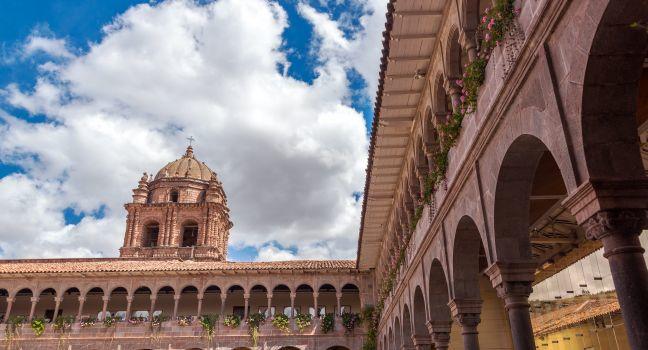
Courtyard and tower of the Santo Domingo church in Cuzco, Peru, also known as Qorikancha
Jess Kraft / Shutterstock

Built to honor the sun god, the empire’s most important deity, Qorikancha translates as "Court of Gold." Walls and altars were once plated with gold, and in the center of the complex sat a giant gold disc, positioned to reflect the sun and bathe the temple in light, while terraces were once filled with life-size gold-and-silver statues of plants and animals. Much of the wealth was removed to ransom the captive Inca ruler Atahualpa during the Spanish conquest. Eventually, the structure was passed on to the Dominicans, who constructed the church of Santo Domingo using stones from the temple and creating a jarring imperial-colonial architectural juxtaposition. An ingenious restoration lets you see how the church was built on and around the temple. In the Inca parts of the structure left exposed, estimated to be about 40% of the original temple, you can admire the mortarless masonry, earthquake-proof trapezoidal doorways, curved retaining wall, and exquisite carvings that exemplify the artistic and engineering skills of the Inca. The S/15 entrance allows you to visit the Monasterio de Santa Catalina and Qorikancha's ruins and church; a free prerecorded tour is available, but hire a guide to get the most out of the site.

Pampa del Castillo at Plazoleta Santo Domingo, Cusco, Peru
Sight Details
Ruins and church S/15; museum entrance via Boleto Turístico

Something incorrect in this review?

Sacsayhuamán

Fodor's Choice
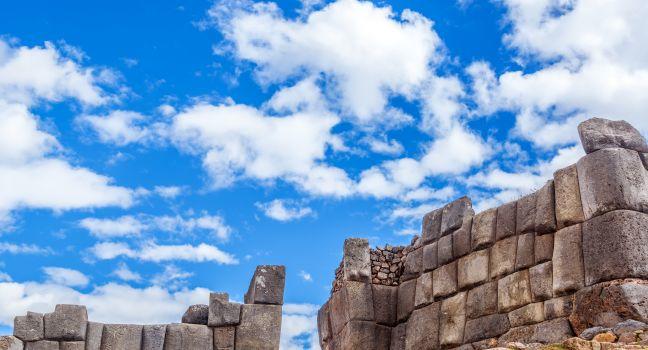
Incan ruins of a fortress known as Sacsayhuaman on the outskirts of Cusco, Peru
Jess Kraft / Shutterstock

Towering high above Cusco, the ruins of Sacsayhuamán are a constant reminder of the city's Inca roots. You may have to stretch your imagination to visualize how it was during Inca times—much of the site was used as a convenient source of building material by the conquering Spanish, but plenty remains to be marveled at. Huge stone blocks beg the question of how they were carved and maneuvered into position, and the masterful masonry is awe-inspiring. If you're not moved by stonework, the spectacular views over the city are just as impressive.

If the Incas designed Cusco in the shape of a puma, then Sacsayhuamán represents its ferocious head. Perhaps the most important Inca monument after Machu Picchu, Sacsayhuamán is thought to have been a religious complex during Inca times. That being said, from its strategic position high above Cusco, it was also excellently placed to defend the city, and its zigzag walls and cross-fire parapets allowed defenders to rain destruction on attackers from two sides.

Construction of the site began in the 1440s, during the reign of the Inca Pachacutec. It's thought that 20,000 workers were needed for Sacsayhuamán's construction, cutting the astonishingly massive limestone, diorite, and andesite blocks—the largest gets varying estimates of anywhere between 125 and 350 tons—rolling them to the site, and assembling them in traditional Inca style to achieve a perfect fit without mortar. The Inca Manco Cápac II, installed as puppet ruler after the conquest, retook the fortress and led a mutiny against Juan Pizarro and the Spanish in 1536. Fighting raged for 10 months in a valiant but unsuccessful bid by the Inca to reclaim their empire. History records that thousands of corpses from both sides littered the grounds and were devoured by condors at the end of the battle.

Today only the outer walls remain of the original fortress city, but even with one-fifth of the original complex left, the site is impressive. Sacsayhuamán's three original towers, used for provisions, no longer stand, though the foundations of two are still visible. The so-called Inca's Throne, the Suchuna, remains, presumably used by the emperor for reviewing troops. Today, those parade grounds, the Explanada, are the ending point for the June 24 Inti Raymi Festival of the Sun, commemorating the winter solstice and Cusco's most famous celebration.

A large map at both entrances shows the layout of Sacsayhuamán, but once you enter, signage and explanations are minimal.

You may find guides waiting outside the entrances who can give you a two-hour tour (negotiate the price ahead of time). Most are competent and knowledgeable, but depending on their perspective, you'll get a strictly historic, strictly mystical, strictly architectural, or all-of-the-above-type tour, and almost all guides work the standard joke into their spiel that the name of the site is pronounced "sexy woman." It's theoretically possible to sneak into Sacsayhuamán after hours, but lighting is poor, surfaces are uneven, and robberies have occurred at night.

Cusco, Peru
Sight Details
Boleto Turístico

Something incorrect in this review?

Recommended Fodor's Video

Cerámica Seminario

Fodor's Choice

Husband-and-wife team Pablo Seminario and Marilú Behar spent years developing their art into what is now known as the Seminario style—taking the valley's distinctive red clay and turning it into ceramic works using modern adaptations of ancient Indigenous techniques and designs. Their works are world-famous, with pieces seen as far off as Chicago's Field Museum. More than a shop or art gallery, here you have the ability to view the workshop where the magic happens and even speak with the artist directly. The store features decorative and utilitarian pieces, as well as others that are pure art, all of which make fabulous Peruvian gifts for yourself or others. Purchases can be shipped to any location.

Fortress of Ollantaytambo

Fodor's Choice

Walk above town to a formidable stone structure, where massive terraces climb to a temple area honoring the sun god. Although the elaborate, walled complex was the valley's main defense against the Antis (jungle peoples) from the neighboring rainforests, the sun temple, used for astronomical observation, and the Baños de la Ñusta (ceremonial princess baths) lead archaeologists to believe that Ollantaytambo existed for more than defensive purposes, as was typical with Inca constructions. Construction, which began during the reign of Pachacutec but was never completed, incorporates rose-colored granite that was not mined in this part of the valley. The structure was the site of the greatest Inca victory over the Spanish during the wars of conquest. Manco Inca fled here in 1537 with a contingent of troops after the disastrous loss at Sacsayhuamán and routed Spanish forces under Hernando Pizarro. The victory was short-lived: Pizarro regrouped and took the fortress. If you come on your own, take the time to walk up above and through a wooden door at the back to see an Intihuatana ("hitching post of the Sun").

Plaza Mañay Raquy, Ollantaytambo, Peru
Sight Details
Boleto Turístico

Something incorrect in this review?

La Catedral

Plaza de Armas Fodor's Choice

Dominating the Plaza de Armas, the monumental Cathedral Basilica of the Assumption of the Virgin (or Cusco Cathedral) is one of Cusco's grandest buildings. Built in 1550 on the site of the palace of the Inca Wiracocha and using stones looted from the nearby Inca fortress of Sacsayhuamán, the cathedral is a perfect example of the imposition of the Catholic faith on the Indigenous population. The grander the building, went the theory, the more impressive (and seductive) the faith. With soaring ceilings, baroque carvings, enormous oil paintings, and glittering gold-and-silver altars, the cathedral certainly seemed to achieve its aim.

Today, Cusco's Catedral is one of the town's star attractions, noted mainly for its amazing collection of colonial art that mixes Christian and non-Christian imagery. Entering the Catedral from the Sagrada Familia chapel, head to your right to the first nave, where you'll find the famous oil painting (reputed to be the oldest in Cusco) depicting the earthquake that rocked the town in 1650. Among the depictions of burning houses and people fleeing, you'll see a procession in the plaza. Legend has it that during the earthquake, the citizens removed a statue of Jesus on the cross from the Catedral and paraded it around the plaza—halting the quake in its tracks. This statue, now known as the Señor de los Temblores, or Lord of the Earthquakes, is Cusco's patron, and you'll find him depicted in many Cusqueñan paintings.

To see the famous statue, head across the Catedral to the other side, where in the nave and to the right of the passage connecting the Catedral to the adjoining Iglesia del Triumfo, you'll find El Señor himself. The dark color of his skin is often claimed to be a representation of the Indigenous people of Cusco; actually, it's the effect of years of candle smoke on the native materials used in its fabrication.

Those interested in the crossover between Indigenous and Catholic iconography will find lots to look at. Figures of pumas, the Inca representation of Earth, are carved on the enormous main doors, and in the adjoining Iglesia del Triumfo you'll see an Andean Christ in one of the altars flanking the exit. No one should miss the spectacular painting of the Last Supper, by the Indigenous artist Marcos Zapata, where you'll see the diners tucking into a delicious feast of vizcacha (wild chinchilla) and chicha (a corn beverage).

The cathedral's centerpieces are its massive, solid-silver altar, and the enormous 1659 María Angola bell, the largest in South America, which hangs in one of the towers and can be heard from miles away. Behind the main altar is the original wooden altar primitivo dedicated to St. Paul. The 64-seat cedar choir has rows of carved saints, popes, and bishops, all in stunning detail down to their delicately articulated hands.

If you're interested in a more in-depth look, enlist the services of a guide—you'll find them right outside the Catedral. Agree on a price before you start; it will cost a minimum of S/30 per group. Alternatively, there is a free audio guide.

Cusco, Peru
084-254–285
Sight Details
S/40, combined admission with Templo de San Blas and Museo de Arte Religioso

Something incorrect in this review?

Mirador de San Blas

San Blas Fodor's Choice

Set seven blocks northeast of Plaza de Armas, this charming spot perched high within the cobblestoned pedestrian streets of hip San Blas is one of the best spots to observe Cusco from above—and try to make out its original puma shape. A great time to visit is at sunset, when the city starts turning on its lights and locals start packing the district's little bars and bistros.

Cl. Kiskapata at Cl. Pasñapakana 133, Cusco, Peru

Something incorrect in this review?

Museo de Arte Precolombino

Fodor's Choice

For a different perspective on pre-Columbian ceramics, head to this spectacular museum, known as MAP, where art and pre-Columbian culture merge seamlessly. Twelve rooms in the 1580 Casa Cabrera, which was used as the convent of Santa Clara until the 17th century, showcase an astounding collection of pre-Columbian art from the 13th to 16th centuries, mostly in the form of carvings, ceramics, and jewelry. The art and artifacts were made by the Huari and Nazca, as well as the Inca, cultures. The stylish displays have excellent labels in Spanish and English that place the artifacts in their artistic and historical context. On the walls is commentary from European artists on South American art. Swiss artist Paul Klee wrote: "I wish I was newly born, and totally ignorant of Europe, innocent of facts and fashions, to be almost primitive." Most Cusco museums close at dark, but MAP remains open every evening. For a break after a walk around, find your way to the on-site café, one of Cusco's best restaurants (reservations are required for dinner).

Plaza de la Nazarenas 231, Cusco, Peru
084-595–092
Sight Details
S/20

Something incorrect in this review?

Plaza de Armas

Plaza de Armas Fodor's Choice

With park benches, green lawns, and splendid views of the Catedral, Cusco's gorgeous colonial Plaza de Armas invites you to stay awhile. Take a seat on one of those park benches, and the world will come to you—without moving an inch, you'll be able to purchase postcards, paintings, and snacks, organize a trip to Machu Picchu, get your photograph taken, and get those dirty boots polished.

What you see today is a direct descendant of imperial Cusco's central square, which the Inca called the Haukaypata (the only name indicated on today's street signs) and which extended as far as the Plaza del Regocijo.

According to belief, this was the exact center of the Inca Empire, Tawantinsuyo, the Four Corners of the Earth. Today, continuing the tradition, it's the tourism epicenter. From the plaza you'll see the Catedral and Iglesia de la Compañía de Jesús on two sides and the graceful archways of the colonial portales, or covered arcades, lining the other sides. Soft lighting bathes the plaza each evening and creates one of Cusco's iconic views. Many of the city's frequent parades (and some protests) pass through the plaza, especially on Sunday. Enjoy the views of colonial Cusco, but note that any attempt to sit on one of those inviting green lawns will prompt furious whistle-blowing from the police.

Rainbow Mountain

Fodor's Choice

With almost as many names as colors, Rainbow Mountain, aka Vinicunca, aka Montaña de Siete Colores (Mountain of Seven Colors), is a fairly recent addition to Peru's top-attraction list. Until a few years ago, the multicolored mountain was just another snow-capped peak. When the ice and snow that covered the mountain started to melt (this might be the one time in your life that you will want to say "thank you, global warming"), the water mixed with minerals in the ground like iron sulfide, chlorite, and goethite to create the striking stripes of color. Rainbow Mountain is about three hours from Cusco by car, and requires a strenuous, high-altitude hike, so you will need to plan your visit with time to acclimatize first. Do yourself a favor and book a tour. This is a full day's adventure and hiking in high altitude can really knock you out; you'll appreciate the chance to nap on the drive back to your hotel.

Many photos of this mountain are heavily Photoshopped so do not be disappointed if the mountain is not quite as vivid as you have been led to expect. Also, dull weather conditions can dampen the effect, so try to plan around good weather if you have flexibility in your schedule.

Cordillera de Vilcanota, Peru

Something incorrect in this review?

Salineras

Fodor's Choice

The famed terraced Inca salt pans of Salineras, which take advantage of a natural phenomenon, are still in use: the Inca dug shallow pools into a sloped hillside. The pools filled with water, and upon evaporation, salt crystallized and could be harvested. On-site shops offer many varieties of the salt mixed with different herbs for use at home—some for culinary seasoning, others for therapeutic soaks. This stunning site is a popular day trip from Cusco; it's often paired with visits to nearby Moray and Ollantaytambo.

Awana Kancha

PISAC, PERU - MARCH 2, 2006: Unidentified woman at Awana Kancha Llama Farm at Cusco-Pisac highway in Peru. Awana Kancha is a center which preserves the local fabric arts: wool-making and weaving.
Goran Bogicevic / Shutterstock

Loosely translated as "palace of weaving," Awana Kancha provides an opportunity to see products made from South America's four camelids (alpaca, llama, vicuña, and guanaco) from start to finish: the animal, the shearing, the textile weaving and dyeing, and the finished products, which you can purchase in the showroom. This is a good place to shop for high-quality textiles that you can trust. It makes a great stop for the whole family, as kids can feed the camelids that are on-site.

Plaza de Armas

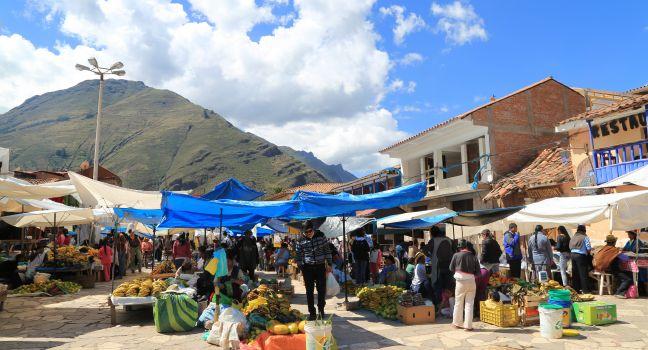
Pisac, Peru -  April, 20 2014 : The famous Sunday market in Pisac, Peru where tourist will find all kinds of handicrafts,antiques,Alpaca wool clothing and local food.
padchas / Shutterstock

Pisac's central square held the local Indigenous Artisanal Market for many years before it was moved to its own permanent space northwest of the plaza. You'll now find many of the ceramics, jewelry, and textiles vendors in rented retail spaces on nearby side streets. A tradition that continues in Plaza de Armas is the 11 am Sunday Quechua Mass at the Iglesia San Pedro Apóstolo. Watch the elaborate costumed procession led by the mayor, who carries his varayoc, a ceremonial staff, from the church after the service. 

Pisac, Peru

Something incorrect in this review?

Andahuaylillas

The main attraction of the small town of Andahuaylillas, 8 km (5 miles) southeast of Pikillacta, is a small 17th-century adobe-towered church built by the Jesuits on the central plaza over the remains of an Inca temple. The contrast between the simple exterior and the rich, expressive, colonial baroque art inside is notable: fine examples of the Escuela Cusqueña decorate the upper interior walls.

The ceiling is the church's special claim to fame, leading it to be referred to as the Sistine Chapel of America.

Km 40, Hwy. to Urcos, Cusco, Peru
Sight Details
S/15

Something incorrect in this review?

Awamaki

If you've made it to the Sacred Valley, you've likely seen your share of woven garments. But it's worth swinging by this fair-trade shop just down the road from the Plaza de Armas on the way to the ruins. All the extremely high-quality goods are produced as part of the Awamaki weaving project, which supports a cooperative of Quechua women from the Patacancha Valley. The organization also has a variety of cultural tours and other offerings, including homestays and weaving courses, all of which you can find out about at the shop.

Cl. Principal s/n, Ollantaytambo, Peru
084-436–744

Something incorrect in this review?

Calle Siete Borreguitos

Thanks to an urban rejuvenation projected initiated by locals in 2020, this narrow San Cristóbal’s stairway strewn with hanging potted plants, murals, and flowers has become Cusco’s most celebrated Instagram spot. Come for a stroll and to partake of the famed photo op. You can also enjoy artisanal ice cream from El Descanso del Borrego, a shop tucked in the middle of the stairway, or stop by Taller Leon, where artisans carve beautiful and intricate wooden furniture and frames. 

Cusco, Peru

Something incorrect in this review?

Casa de Garcilaso

Plaza de Armas

You'll find a bit of everything in this spot, which may leave you feeling like you've seen it all before. Colonial building? Check. Escuela Cusqueña paintings? Check. Ancient pottery? Check. Inca mummy? Check. This is the colonial childhood home of Inca Garcilaso de la Vega, the famous chronicler of the Spanish conquest and illegitimate son of one of Pizarro's captains and an Inca princess. Inside the mansion, with its cobblestoned courtyard, is the Museo de Historia Regional, with Cusco School paintings, pre-Inca mummies—one from Nazca has a 1½-meter (5-foot) braid—ceramics, metal objects, and other artifacts.

Centro Arqueologico Puka Pukara

Little is known of the archaeological ruins of Puka Pukara, a pink-stone site guarding the road to the Sacred Valley. Some archaeologists believe the complex was a fort—its name means "red fort"—but others claim it served as a hunting lodge and storage place used by the Inca nobility. Current theory holds that this center, likely built during the reign of the Inca Pachacutec, served all those functions. Whatever it was, it was put in the right place. Near Tambomachay, this enigmatic spot provides spectacular views over the Sacred Valley. Pull up a rock, and ponder the mystery yourself.

Km 10, Hwy. to Pisac, Cusco, Peru
Sight Details
Boleto Turístico

Something incorrect in this review?

Centro de Producción Artesanías Andina

This is one of the more organized places to learn about Chinchero's weaving tradition and techniques. Guests are welcomed with a cup of coca tea and then whisked through a series of hands-on explanations of the washing, dyeing, and weaving processes. There is also a good selection of handwoven sweaters and tapestries for sale from the weavers themselves.

Cl. Albergue 5, Chinchero, Peru
Sight Details
Free

Something incorrect in this review?

Chinchero Market

Locals come from miles away to sell their produce at the Sunday Chinchero Market, making it a truly authentic market experience; come early, though, because it's all over by noon. The artisanal markets in Chinchero, which are open daily, are some of the best places to find textiles. Within the large market building are smaller owner-operated stands where local weavers sell their own and others' creations. There are also demonstrations of local dyeing and weaving techniques.

Chinchero, Peru

Something incorrect in this review?

ChocoMuseo

Plaza Regocijo

This museum provides a delicious introduction to the history and process of chocolate making, from cacao bean to bar. Workshops allow you to make your own sweets; they are offered three times a day for a minimum of three people at an additional cost of S/75, and advance reservations are required. There is an additional museum location in Ollantaytambo near the archaeological site and in Pisac near the main square. An on-site shop is a great place for gift shopping, if you want to give the museum a pass.

Cl. Garcilaso 210, Cusco, Peru
084-244–765
Sight Details
Museum free; workshops from S/60

Something incorrect in this review?

Complejo Arqueologico Qenko

It may be a fairly serene location these days, but Qenko, which means "zigzag," was once the site of one of the Incas' most intriguing and potentially macabre rituals. Named after the zigzagging channels carved into the surface, Qenko is a large rock thought to have been the site of an annual pre-planting ritual in which priests standing on the top poured llama blood into a ceremonial pipe, allowing it to make its way down the channel. If the blood flowed left, it boded poor fertility for the coming season. If the liquid continued the full length of the pipe, it spelled a bountiful harvest. Other symbolic carvings mix it up on the rock face, too—the eagle-eyed might spot a puma, condor, and llama.  Today you won't see any blood, but the carved channels still exist, and you can climb to the top to see how they zigzag their way down.

Km 4, Hwy. to Pisac, Cusco, Peru
Sight Details
Boleto Turístico

Something incorrect in this review?

Cristo Blanco

Built in 1945 by cusqueño sculptor Ernesto Olazo Allende, the large white statue of Cristo Blanco towers above Cusco atop Cerro Pukamoqo (elevation 11,811 feet). The statue, which was donated by the local Palestinian colony, stands in proximity to Sacsayhuamán and can be reached either on foot from the upper reaches of the San Blas and San Cristóbal districts, or by hailing a cab (S/10–S/15) or Uber. The views from here span all over Cusco and the valley and are beautiful throughout the day. Sunsets are especially dramatic, after which the Christ sparkles with radiant lighting. 

Cusco, Peru

Something incorrect in this review?

Iglesia de la Compañía de Jesús

Plaza de Armas

With its ornately carved facade, this Jesuit church on the Plaza de Armas gives the Catedral a run for its money in the beauty stakes. The Compañía, constructed by the Jesuits in the 17th century, was intended to be the most splendid church in Cusco, which didn't sit too well with the archbishop. The beauty contest between the churches grew so heated that the pope was forced to intervene. He ruled in favor of the Catedral, but, by that time, the iglesia was nearly finished, complete with a baroque facade to rival the Catedral's grandeur. The interior is not nearly so splendid, however, although it's worth seeing the paintings on either side of the entrance depicting the intercultural marriage between a Spanish conquistador and an Inca princess. Tourists are admitted to masses under the condition that they participate in them; start wandering around and taking photos, and you'll be shown the door.

Cusco, Peru
Sight Details
S/10

Something incorrect in this review?

La Merced

The church may be overshadowed by the more famous Catedral and Iglesia de la Compañía, but La Merced contains one of the city's most priceless treasures—the Custodia, a solid gold container for Communion wafers that's more than a meter high and encrusted with thousands of precious stones. Rebuilt in the 17th century, this monastery, with two stories of portals and a colonial fountain, gardens, and benches, has a spectacular series of murals that depict the life of the founder of the Mercedarian order, St. Peter of Nolasco. A small museum is found to the side of the church.

Cl. Mantas 121, Cusco, Peru
Sight Details
S/15, free during mass (weekends at 7 am and 7 pm)

Something incorrect in this review?

Laguna Kinsa Cocha

Once an off-the-beaten-path secret, this high-altitude azure lake and its two sisters lie north of Pisac and have become a favorite tour from town or Cusco. Situated at more than 4,200 meters (13,780 feet) in elevation and located near Paru Paru mountain, Kinsa Cocha, Puma Cocha, and Azul Cocha are a stark contrast from Pisac's touristy town and Inca ruins. A trip here provides easy access to jaw-dropping—and literally breathtaking, given the altitude—Andean landscapes dotted by packs of wild llamas and vicuñas. To help contend with the high altitude, consider chewing some coca leaves as you walk around. For about S/150, you can hire a taxi to take you to the first lagoon and wait a couple of hours while you hike and explore the two neighbor lakes. 

Pisac, Peru
Sight Details
Free

Something incorrect in this review?

Mercado Artisanal

If you've come to Pisac in search of its famous Indigenous market, you’ll be ushered a few blocks north of its former location at Plaza de Armas to this new pavilion, open daily and hosting about a hundred stalls packed to the gills with a lot of stuff—most of it standard souvenir fare. Even if the quality is a bit disappointing, it's not all bad: the alpaca shawls, hats, and jewelry here are cheaper and of better quality than in Cusco, and you can bargain for the best price. Some stalls even accept credit cards. 

Intihuatana at Paucartambo, Pisac, Peru
992-211–948

Something incorrect in this review?

Monasterio de Santa Catalina de Siena

An extensive collection of Cusqueñan religious art is the draw at this still-working Dominican convent, which incorporates a 1610 church with high and low choirs and baroque friezes. Although there's not much to show of it these days, the convent represents another example of the pasting of Catholic religion over Indigenous faiths—it was built on the site of the Acllawasi, the house of some 3,000 Inca chosen women dedicated to teaching, weaving Inca ceremonial robes, and worshiping Inti, the Inca sun god. The entire complex was given a face-lift in 2010.

Santa Catalina Angosta 401, Cusco, Peru
Sight Details
S/40

Something incorrect in this review?

Moray

Scientists still marvel at the agricultural technology the Inca used at Moray. Taking advantage of four natural depressions in the ground and angles of sunlight, Indigenous engineers fashioned concentric circular irrigation terraces, 150 meters (492 feet) from top to bottom. This design resulted in a temperature difference of 15°C (60°F) from top to bottom, creating a series of engineered microclimates perfect for adapting, experimenting, mixing, matching, and cultivating foods, especially varieties of maize, the staple of the Inca Empire and normally impossible to grow at this altitude. Though the technology is attributed to the Inca, the lower portions of the complex are thought to date from the pre-Inca Wari culture. Entrance to Moray is included in the Boleto Turístico.

Maras, Peru
Sight Details
Boleto Turístico

Something incorrect in this review?

Museo de Arte Religioso del Arzobispado

San Blas

The building may be on the dark and musty side, but this San Blas museum has a remarkable collection of religious art. Originally the site of the Inca Roca's Hatun Rumiyoq palace, then the juxtaposed Moorish-style palace of the Marqués de Buenavista, the building reverted to the Archdiocese of Cusco and served as the archbishop's residence. In this primary repository of religious art in the city many of the paintings in the collection are anonymous, but you'll notice some by the renowned Indigenous artist Marcos Zapata. A highlight is a series of 17th-century paintings that depict the city's Corpus Christi procession. Free audio guides are available.

Hatun Rumiyoq and Herejes, Cusco, Peru
084-231–615
Sight Details
S/15; S/30 combined admission with Catedral and Templo de San Blas

Something incorrect in this review?