Get FREE email communications from Fodor's Travel, covering must-see travel destinations, expert
trip planning advice, and travel inspiration to fuel your passion.
We've compiled the best of the best in Seattle - browse our top choices for the top
things to see or do during your stay.
Sorry! We don't have any recommendations for Seattle right now.
Sights Filter
Lake Sammamish State Park
Share This
Two sandy beaches anchor this 531-acre park, with plenty of picnic tables (bring your own basket or hit the concession stands), a playground, and seasonal kayak and paddleboard rentals. There are a few shady walking trails, which offer good bird-watching and wildlife viewing. If you head east, you can connect to the Sammamish River Trail and walk or bike all the way to Marymoor Park.
The Museum of Flight
West Seattle
Share This
Boeing, the world's largest builder of aircraft, was founded in Seattle in 1916. This facility at Boeing Field, between Downtown and Sea-Tac airport, houses one of the city's best museums, and it's especially fun for kids, who can climb in many of the aircraft and pretend to fly, make flight-related crafts, or attend special programs. The Red Barn, Boeing's original airplane factory, houses an exhibit on the history of flight. The Great Gallery, a dramatic structure designed by Ibsen Nelson, contains more than three dozen vintage airplanes. The Personal Courage Wing showcases World War I and World War II fighter planes, and the Charles Simonyi Space Gallery is home to the NASA Full Fuselage Space Shuttle Trainer.
Alki Point and Beach
West Seattle
Fodor's Choice
Share This
HansUntch / iStockphoto
In summer, this is as close to California as Seattle gets—and some hardy residents even swim in the cold, salty waters of Puget Sound here (water temperature ranges from 45ºF to 60ºF). This 2½-mile stretch of sand has views of the Seattle skyline and the Olympic Mountains, and the beachfront promenade is especially popular with skaters, joggers, strollers, and cyclists. Year-round, Seattleites come to build sand castles, beachcomb, play volleyball, fly kites, enjoy the views, and people watch; in winter, storm-watchers come to see the crashing waves. Facilities include drinking water, grills, picnic tables, and restrooms; restaurants line the street across from the beach.
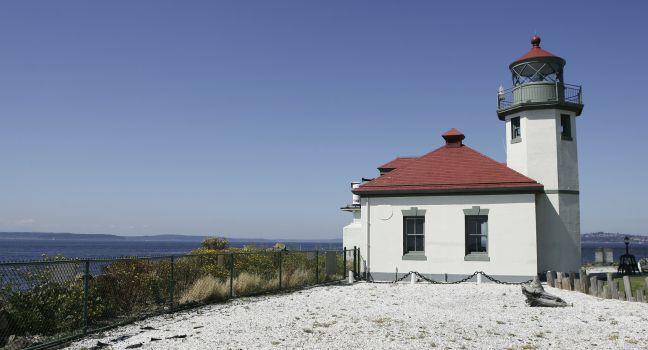
Alki Point is the place where David Denny, John Low, and Lee Terry arrived in September 1851, ready to found a city. The Alki Point Lighthouse dates from 1913. One of 195 Lady Liberty replicas found around the country, Miss Liberty (or Little Liberty) lives near the 2700 block of Alki Avenue SW and is a popular meeting point for beachfront picnics and dates.
To get to the beach from Downtown, take either Interstate 5 south or Highway 99 south to the West Seattle Bridge (keep an eye out, as this exit is easy to miss) and exit onto Harbor Avenue SW, turning right at the stoplight. After Harbor Ave. SW curves south to become Alki Ave. SW, watch for the Alki Flower Houses on the left at 1400 Alki Ave. SW. The pair of 1914 houses, tucked between two high-rise condominium buildings, overflow with vibrant blossoms, inspired by owner Randie Stone's Hawaiian upbringing and nurturing the property's status as a wildlife habitat, while making it a photo-worthy gem. Alki Beach is a three-minute drive south from here.
Recommended Fodor's Video
Discovery Park
Magnolia
Fodor's Choice
Share This
kathmanduphotog / Shutterstock
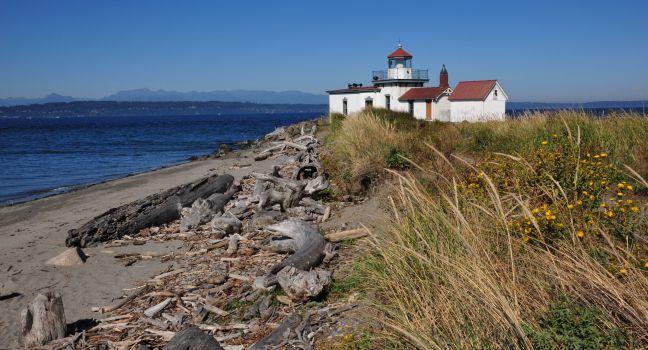
Come here to get a dose of the PNW's wild beauty without leaving the city. Located on Magnolia Bluff, northwest of Downtown (and across the Chittenden Locks by foot from Ballard), Seattle's largest park covers 534 acres and has an amazing variety of terrain: shaded, secluded forest trails lead to meadows, saltwater beaches, sand dunes, a lighthouse, and 2 miles of protected beaches. The North Beach Trail, which takes you along the shore to the lighthouse, is a must, and the South Bluff Trail has views as far south as Mt. Rainier.
The park has several entrances. If you want to stop at the Learning Center to pick up a trail map before exploring, use the main entrance at Government Way. The North Parking Lot is much closer to the North Beach Trail and to Ballard, if you're coming from that direction. First-come, first-served beach parking passes for the disabled, elderly, and families with small children are available at the Learning Center. Note that it's easier to combine a park day with an exploration of Ballard or Fremont than with a busy Downtown itinerary.
Gas Works Park
Wallingford
Fodor's Choice
Share This
neelsky / Shutterstock
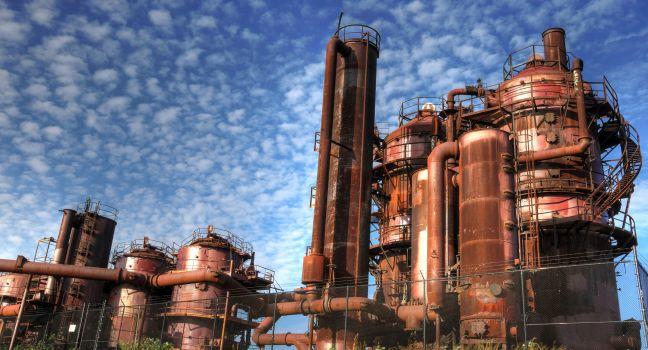
Far from being an eyesore, the hulking remains of an old 1907 gas plant actually lend quirky character to the otherwise open, hilly, 20-acre park. Get a great view of Downtown Seattle while seaplanes rise up from the south shore of Lake Union; the best vantage point is from the zodiac sculpture at the top of the very steep Kite Hill, so be sure to wear appropriate walking shoes. This is a great spot for couples and families alike; the enormous and modern playground has rope climbing structures, a variety of swings, and a padded floor. Crowds throng to picnic and enjoy outdoor summer concerts, movies, and the July 4th fireworks display over Lake Union. Gas Works can easily be reached on foot from Fremont, via the waterfront Burke-Gilman Trail.
Hiram M. Chittenden Locks
Ballard
Fodor's Choice
Share This
Paul Fell / Shutterstock
Also known as "Ballard Locks," these are an important passage in the 8-mile Lake Washington Ship Canal that connects Puget Sound to freshwater Lake Washington. Every year, tens of thousands of vessels, from kayaks to yachts to commercial ships, pass through the two locks. The main reason for visiting here is to see them in operation, draining and refilling like giant bathtubs. The visitor center has displays and videos and offers free tours May through September at 2 pm on days when the center is open.
The adjacent 7-acre Carl S. English Botanical Gardens are a lovely place to picnic or just relax. Various musical performances, from jazz bands to chamber music, serenade visitors on summer weekends. And you can watch determined salmon climbing a 21-step fish ladder en route to their freshwater spawning grounds. (You won't be alone; look for seals in the water and herons in the trees, all hoping for a salmon meal.)
Olympic Sculpture Park
Belltown
Fodor's Choice
Share This
Mariusz S. Jurgielewicz / Shutterstock
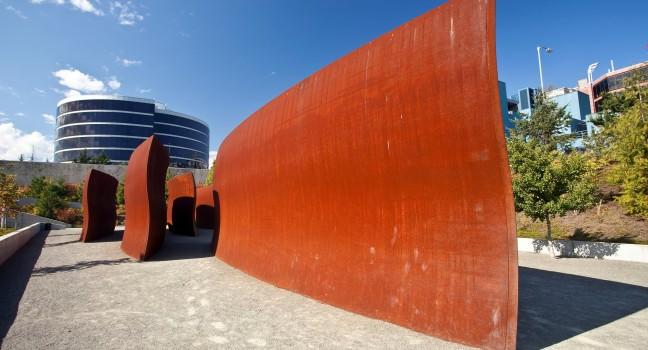
An outdoor branch of the Seattle Art Museum is a favorite destination for picnics, strolls, and quiet contemplation. Nestled at the edge of Belltown with views of Elliott Bay, the gently sloping green space features native plants, chairs overlooking the water, and walking paths that wind past larger-than-life public artwork. On sunny days, the park frames an astounding panorama of the Olympic Mountains, but even the grayest afternoon casts a favorable light on the site's sculptures. The grounds are home to works by such artists as Richard Serra, Louise Bourgeois, and Alexander Calder, whose bright-red steel Eagle sculpture is a local favorite (and a nod to the bald eagles that sometimes soar above). Echo, a 46-foot-tall elongated girl’s face by Spanish artist Jaume Plensa, is a beautiful and bold presence on the waterfront.
Pike Place Market
Downtown
Fodor's Choice
Share This
Mark B. Bauschke / Shutterstock
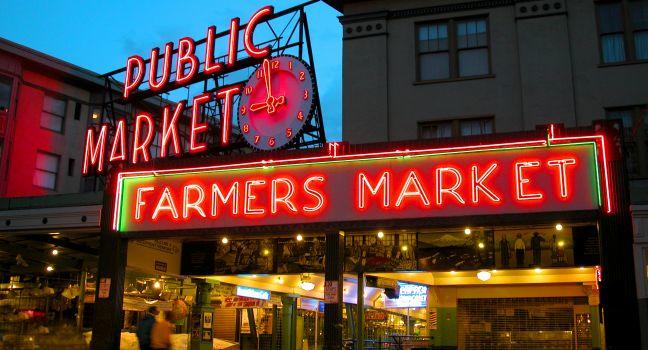
One of the nation's largest and oldest public markets dates from 1907. At one time the market was a madhouse of vendors hawking produce and haggling with customers over prices; now you might find fishmongers engaging in frenzied banter and hilarious antics, but chances are you won't get them to waver on prices. There are many restaurants, bakeries, coffee shops, and lunch counters—go to Pike Place hungry and you won't be disappointed. The flower market is also a must-see—gigantic fresh arrangements can be found for around $15. It's well worth wading through dense crowds to enjoy the market's many corridors, where you'll find specialty food items, quirky gift shops, tea, honey, jams, comic books, beads, eclectic crafts, and cookware.
In recent years, Pike Place Market debuted a significant expansion, fulfilling a decades-long vision for Seattle's Market Historic District. The market's newer digs feature artisanal-food purveyors, an on-site brewery, four public art installations, seasonal pop-up vendors, and a 30,000-square-foot open public space with a plaza and a viewing deck overlooking Elliott Bay and the Seattle waterfront. The famous "flying fish" fishmonger is located at the main entrance on Pike Street. Just be patient and eventually someone will toss a big fish through the air. Nearby, you'll also find Rachel the Piggy Bank, a life-size bronze pig that helps bring home the bacon for local social services; she's a favorite spot for Pike Place pics.
Seattle Aquarium
Downtown
Fodor's Choice
Share This
(c) Afagundes | Dreamstime.com
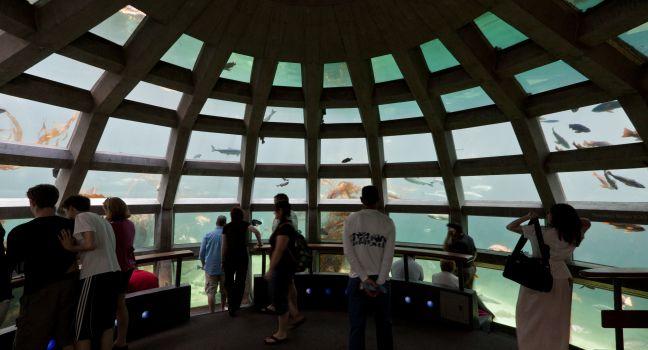
The Seattle Aquarium ranks among the best in the country, sitting right on the water's edge and housing exhibits that highlight the beauty and biodiversity of the Pacific Northwest. Inside, darkened galleries and glowing tanks showcase everything from hypnotic jellyfish to clever, color-shifting octopuses. The Life on the Edge tide pools recreate Washington’s rocky shores, letting kids get hands-on with sea stars, urchins, and sponges. If you’re visiting in fall or winter, bundle up—the Marine Mammal area sits outdoors along the waterfront, where brisk Puget Sound breezes are part of the experience.
The Seattle Public Library
Downtown
Fodor's Choice
Share This
(c) Jackbluee | Dreamstime.com
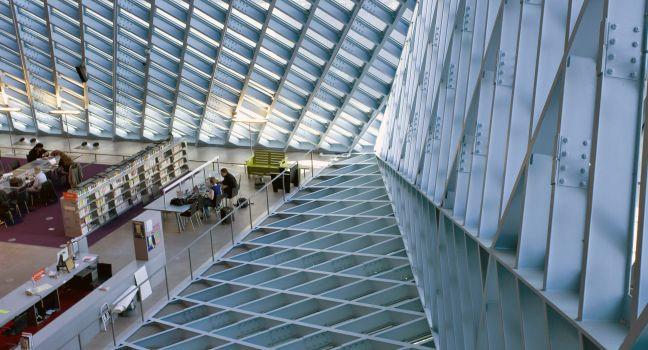
The hub of Seattle's 26-branch library system is a stunning jewel of a building that stands out against the concrete jungle of Downtown. Designed by renowned Dutch architect Rem Koolhaas and Joshua Ramus, this 11-story structure houses more than a million books, a language center, terrific areas for kids and teens, hundreds of computers, an auditorium, a "mixing chamber" floor of information desks, and a café. The building's floor plan is anything but simple; stand outside the beveled glass-and-metal facade of the building and you can see the library's floors zigzagging upward. Tours are self-guided via a laminated sheet you can pick up at the information desk; there's also a number you can call on your cell phone for an audio tour. The reading room on the 10th floor has unbeatable views of the city and the water. Readings and free film screenings happen on a regular basis.
Uwajimaya
International District
Fodor's Choice
Share This
(c) Jackbluee | Dreamstime.com
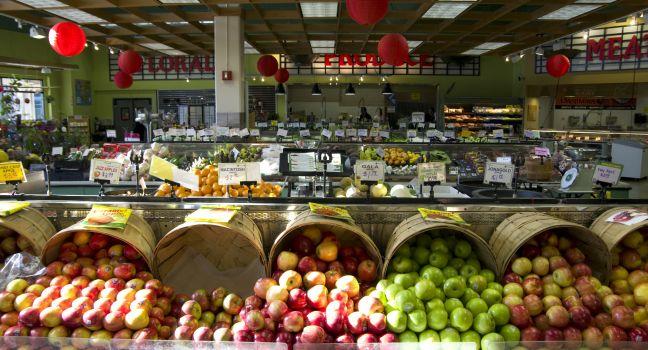
This huge, fascinating Japanese supermarket is a feast for the senses, and a 2020 remodel makes it easier to navigate the colorful mounds of fresh produce and aisles of delicious packaged goods, with unique sweets and savory treats from countries throughout East and Southeast Asia. A busy food court serves sushi, Japanese bento-box meals, Chinese stir-fry combos, Vietnamese spring rolls, and an assortment of teas and tapioca drinks. It's almost a department store, with housewares, cosmetics, toys, and more. There's also a fantastic branch of the famous Kinokuniya bookstore chain. The large parking lot is free for two hours with a minimum $20 purchase—don't forget to have your ticket validated by the cashiers.
Washington Park Arboretum
Fodor's Choice
Share This
mlwphoto / Shutterstock
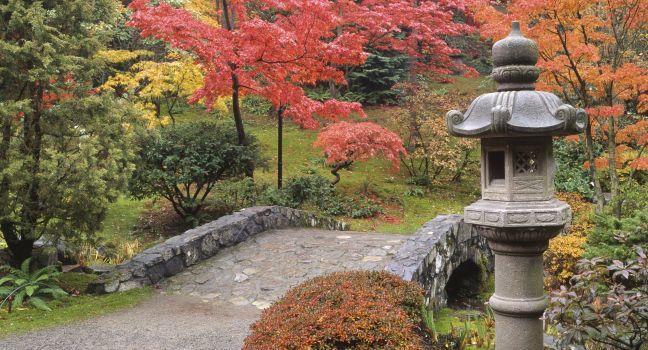
Of Seattle’s large parks, the Arboretum, east of Capitol Hill, is the most carefully curated. Its 230 acres, stretching roughly in a rectangle south from Union Bay, are divided into themed spaces, following designs by the renowned Olmsted Brothers firm and maintained by the University of Washington. You can easily spend half a day or more here exploring and relaxing. There’s something to see in every season.
A good place to start is the Graham Visitors Center, near the park's north end, where you can pick up a map and discuss your plans with volunteers. Highlights include the ¾-mile Azalea Way path, the Rhododendron Glen, the Pacific Connections Garden, the Joseph A. Witt Winter Garden (with brilliant winter blooms), the colorful Woodland Garden, and, on the shores of Union Bay, Foster Island (with wetlands populated by herons, ducks, turtles, and beavers).
Nearly everything is accessible on an easy 2-mile loop trail, and two roads running the park’s length are beautiful drives, each with several parking areas along the way. Free 90-minute walking tours depart from the visitors center on the first Thursday of each month at 11:30 am, and there are regular classes for kids, adults, and families.
Burke Museum
University District
Fodor's Choice
Share This
Founded in 1885, the Burke is Washington’s oldest museum—and also one of its newest, after moving to a new, 113,000-square-foot facility in 2019. It’s an impressive space with an ambitious goal: to exhibit highlights from a collection of more than 18 million objects, encompassing natural history, archaeology, and native Northwest art and culture. You’ll see totem poles, hand-carved canoes, mastodon bones, a whale skeleton, bats, bugs, and lots of fossils. It’s all beautifully displayed, but what’s most striking about the design is the way it “turns the museum inside-out.” Glass walls let visitors look behind the scenes at 12 labs where researchers and conservators go about their work of studying and preserving artifacts. The Burke is also good about activities for kids, with daylong classes on dinosaurs and fossils (handy for parents who want some time to themselves). The museum is affiliated with UW and located on the northwest corner of campus.
Marymoor Park
Fodor's Choice
Share This
It's not just famous for the Marymoor Velodrome, the Pacific Northwest's sole cycling arena. This 640-acre park also has a 35-foot-high climbing rock, game fields, tennis courts, a model airplane launching area, a huge off-leash dog park, and the Pea Patch community garden. You can row on Lake Sammamish or head straight to the picnic grounds or to the Willowmoor Farm, an estate inside the park. Evenings bring concerts by top bands ( www.marymoorlive.com), outdoor movies in the summer ( www.moviesatmarymoor.com), and Cirque du Soleil shows every two years.
Marymoor has some of the best bird-watching in this largely urban area. It's possible to spot some 30 resident species, including great blue herons, belted kingfishers, buffleheads, short-eared and barn owls, and red-tailed hawks. Occasionally, bald eagles soar past the lakefront. The Sammamish River, which flows through the western section of the park, is an important salmon spawning stream.
Ambitious bikers can follow the Burke-Gilman Sammamish River Trail to access the park; Marymoor is just over 20 miles from Seattle, and it's a flat ride most of the way.
Space Needle
Fodor's Choice
Share This
Seattle’s iconic tower, built for the 1962 world’s fair, wears its age beautifully—especially after a major 2018 renovation. Your visit begins with a ground-floor exhibit about the Needle’s history before an elevator zips you up to the two-level observation area. The lower level features a revolving glass floor and floor-to-ceiling windows; above it, an open-air deck offers unobstructed views. The 360-degree panorama is the real payoff—a breathtaking geography lesson where neighborhoods sprawl below, waterways wind toward the Pacific, and mountains crown every horizon. (Scan the QR-coded signs for an easy guide to the landmarks.)
Expect crowds, particularly in summer. Buying timed-entry tickets online helps streamline your visit and guarantees admission. The Needle stays open after dark, and the glittering city views are just as mesmerizing as the daytime ones. Can’t decide between the two? A dual-entry ticket lets you go up twice in a day. You can also save with a combo ticket that includes admission to the neighboring Chihuly Garden and Glass.
Wing Luke Museum of the Asian Pacific American Experience
International District
Fodor's Choice
Share This
One of the only museums in the United States devoted to the Asian Pacific American experience provides a sophisticated and often somber look at how immigrants and their descendants have transformed (and been transformed by) American culture. The evolution of the museum has been driven by community participation—the museum's library has an oral history lab, and many of the rotating exhibits are focused on stories from longtime residents. Museum admission includes a guided tour through the East Kong Yick building, where scores of immigrant workers from China, Japan, and the Philippines first found refuge in Seattle (check the schedule, as this is the only way to see this section). The museum also offers weekly guided tours of the neighborhood along rotating themes.
Museum of Pop Culture (MoPOP)
Share This
blung / Shutterstock
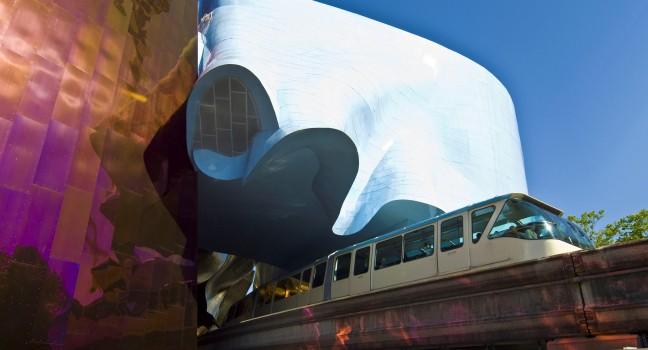
Seattle’s most debated architectural landmark, this 140,000-square-foot complex was designed by Frank Gehry, who drew inspiration from electric guitars for its gleaming, curvaceous form. Inside, the building’s bold design sets the stage for rock memorabilia from legends like Bob Dylan and the heavyweights of Seattle’s grunge era. A permanent exhibit traces the city’s musical evolution, while the Science Fiction and Fantasy Hall of Fame showcases iconic artifacts from across pop culture—including an Imperial Dalek from Doctor Who, Captain Kirk’s command chair from Star Trek, and Neo’s coat from The Matrix Reloaded.
Pacific Science Center
Share This
(c) Afagundes | Dreamstime.com
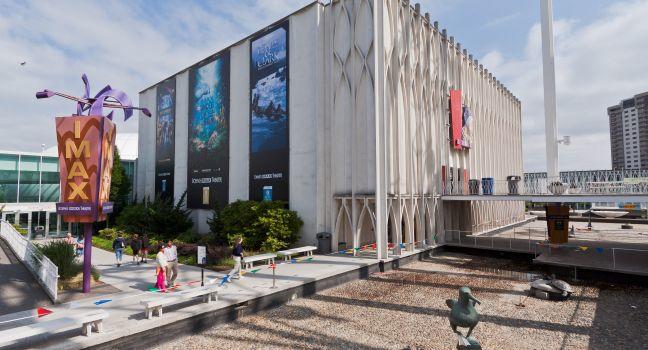
The more than 200 exhibits here share a single goal: to make science fun—especially for kids. Giant animatronic dinosaurs snap their jaws, hundreds of colorful wings flutter through the Tropical Butterfly House, and the universe glitters inside the planetarium. Nearly everything invites interaction, whether that means petting starfish in a tide pool or hoisting a 250-pound weight using pure leverage. Live demos and laser shows keep the energy high throughout the day, and two IMAX theaters—one screening science documentaries, the other feature films—offer even more ways to be wowed (though they require separate admission).
Bellevue Botanical Garden
Share This
This beautiful 53-acre public area just a short drive from downtown Bellevue is encircled by spectacular perennial borders, brilliant rhododendron displays, and patches of alpine and rock gardens. The Ravine Experience encompasses a 5-acre area in the heavily forested southwest corner of the gardens with a ⅓-mile nature trail. A 150-foot suspension bridge crosses a deep ravine in one of the most pristine spaces, allowing visitors to observe unique topography and soaring conifers without disturbing the forest floor. Docents lead tours of the gardens Saturdays and Sundays (April–October), beginning at the visitor center at noon. During the holiday season, the gardens are lit up nightly for Garden d'Lights, one of the area's most popular seasonal attractions.
Burke-Gilman/Sammamish River Trail
Share This
Approximately 27 miles long, the paved, flat, tree-lined Burke-Gilman Trail runs from Seattle's Gas Works Park, on Lake Union, east along the ship canal, and then north along Lake Washington's western shore. At Blyth Park in Bothell, the trail becomes the Sammamish River Trail and continues for 10 miles to Marymoor Park in Redmond. Except for a stretch of the Sammamish River Trail where horses are permitted on a parallel trail, the path is limited to walkers, runners, and bicyclists. Bike share options are abundant in Seattle, including near the trail. Look for their locations using the Lime or Bird apps. For all-day rentals, there are a few bike rental shops close to the trail, including in the Fremont neighborhood, Lake Forest Park, and Bothell to the north. For trail access points, view the map online at www.seattle.gov/parks/allparks/burke-gilman-trail.
Douglass-Truth Neighborhood Library
Central District
Share This
A city landmark that offers a little something for history buffs, architecture fans, and public-art lovers alike, this 1914 library was the first to be funded entirely by the city. It also houses one of the largest collections of African American literature and history on the West Coast, including a dynamic collection of Black and social justice-focused childrens books. Local artists Marita Dingus and Vivian Linder created sculptures and three-dimensional relief panels for the branch, which can be seen in the spacious corridor connecting the two buildings. Paintings of former slaves and abolitionists Frederick Douglass and Sojourner Truth by artist Eddie Ray Walker are also on display. Don't miss the recently restored Soul Pole, a totem pole depicting African American history, located outside on the grassy area on the corner of 23rd Avenue and East Yesler Way.
Gates Foundation Discovery Center
Share This
The Gates Foundation has lofty goals, and across the street from Seattle Center you can witness its plans in action. Thought-provoking exhibits show how the foundation is working globally to combat problems related to health, poverty, and climate change. Interactive features encourage visitors (especially kids) to come up with their own solutions.
Green Lake Park
Green Lake
Share This
This beautiful 342-acre park is a favorite of Seattleites, who jog, bike, and walk their dogs along the 2½-mile paved path that surrounds the lake. Beaches on both the east and west sides (around 72nd Street) have swimming rafts. Canoes, kayaks, and paddleboats can be rented (seasonally) at Green Lake Boat Rental on the eastern side of the lake. There are also basketball and tennis courts and baseball and soccer fields. A first-rate play area includes a giant sandbox, swings, slides, and all the climbing equipment a child could ever dream of—and the wading pool is a perfect spot for tots to cool off (in summer, when the temp is above 70 degrees). The park is generally packed, especially on weekends. And you'd better love dogs: the canine-to-human ratio here is just about even. Surrounding the park are lovely homes, plus a few compact commercial districts where you can grab snacks or dinner after your walk.
Jimi Hendrix Park
Central District
Share This
Adjacent to the Northwest African American Museum, Jimi Hendrix Park pays homage to one of the Central District's most famous sons. The 2½-acre park features walking paths, landscaping, interpretative signs about Hendrix's legacy, and a colorful 100-foot-long outdoor public art piece called the Shadow Wave Wall. The sculpture, which consists of undulating sections of gray and purple metal with cut-out designs, has a huge mural of the musical icon engraved at the center. A short walk from the park, the under-construction Judkins Park Station also features two large-scale public artworks of a teen Jimi Hendrix.
Juanita Bay Park
Share This
A 110-acre urban wildlife habitat, this marshy wetland is the perfect spot to don your binoculars to spot songbirds, shorebirds, turtles, beavers, and other small mammals. Interpretive signs are located throughout the park for self-guided tours along paved trails and boardwalks; or take one of the guided tours conducted by volunteer park rangers from the Eastside Audubon Society on the first Sunday each month. Just to the north of Juanita Bay Park is Juanita Beach Park, a great spot for picnicking, sunbathing, and swimming. On Friday nights, June through September, there's a farmers market.
Lincoln Park
West Seattle
Share This
Along the neighborhood's southwest edge, near the Fauntleroy ferry terminal, Lincoln Park sets acres of old forests, rocky beaches, waterfront trails, picnic tables, and a historic saltwater pool against views of Puget Sound. A renovated playground with a nautical theme at the south part of the park is a must-stop with kids. At the forested north end, there's also a wading pool, another playground, and kid-sized zip line. Since 2023, the park's beach has been home to a giant troll sculpture "Bruun Idun," made of recycled materials and one of six unique trolls in western Washington and Portland, Oregon by artist Thomas Dambo. It's a 15 minute walk from the south parking lot to see the 16-foot troll playing her flute for the orcas. Colman Pool is a Seattle landmark you won't want to miss in summer. The saltwater pool is located on the water toward the north end of the park. Public swims often sell out on nice days, so get there early.
Lumen Field
Share This
Located directly south of Pioneer Square, Lumen Field hosts three professional teams: the Seattle Seahawks (football), the Seattle Sounders FC (men's soccer), and the Seattle Reign (women's soccer). The open-air stadium has 67,000 seats; sightlines are excellent thanks to a cantilevered design and the close placement of lower sections. Tours start at the pro shop (be sure to arrive at least 30 minutes prior to purchase tickets) and last an hour and a half. You'll get a personal look at behind-the-scenes areas as well as the famous 12th Man Flag Pole, and have a chance to sink your feet into the same playing surface as your favorite Seahawks, Sounders, and Reign stars.
Madrona Park
Capitol Hill
Share This
Several beach parks and green spaces front the lake along Lake Washington Boulevard; Madrona Park is one of the largest. Lifeguards are on duty in the summer, and young swimmers have their own roped-in area, while teens and adults can swim out to a floating raft with a diving board. The trail along the shore is a great jogging spot. Grassy areas encourage picnicking; there are grills, picnic tables, phones, restrooms, and showers. From Downtown, go east on Yesler Way about two miles to 32nd Avenue. Turn left onto Lake Dell Avenue and then right; go to Lake Washington Boulevard and take a left.
Museum of History & Industry
South Lake Union
Share This
MOHAI—short for the Museum of History and Industry—anchors the southern edge of Lake Union inside the striking 1942 Naval Reserve Armory, once a training base for WWII recruits. The space itself feels like a love letter to Seattle’s inventive streak: the vast atrium soars with suspended planes, boats, and classic cars, all drawn from the museum’s deep collection of artifacts. The ground floor houses the Bezos Center for Innovation, an engaging, hands-on gallery where kids (and adults who think like them) can explore the city’s legacy of creativity, from Boeing to biotech. The overall effect is both nostalgic and forward-looking—a place that celebrates how Seattle’s restless energy keeps shaping the world.
Newcastle Beach Park
Share This
The biggest and most popular beach park in the Bellevue park system, this large park has a big swimming beach, seasonal lifeguards, a fishing dock, nature trails, restrooms, and a large grassy area with picnic tables. The playground is a favorite, thanks to a train that tots can sit in and older kids can climb on and hop from car to car.
Subscribe to Newsletter
Sign up for Travel Tips & News
I want emails from Fodor's Travel with travel information and promotions. I can unsubscribe
any time using the unsubscribe link at the end of all emails.
Thank you for your interest!
Look out for our newsletters with travel tips and special offers.
Sign up for Travel Tips & News
By signing up for the
newsletter, I agree to the Privacy Policy. You must check the box to subscribe
Thank you for your interest!
Look out for our newsletters with travel tips and special offers.