


118 Best Sights in USA

Background Illustration for Sights

We've compiled the best of the best in USA - browse our top choices for the top things to see or do during your stay.

Bigelow Preserve Public Land

A premier Maine Public Land, this 36,000-acre preserve takes in the 7-peak Bigelow Range (aka Bigelow Mountain and Mount Bigelow), a National Natural Landmark. At 4,150 feet, West Peak is one of 10 Maine summits exceeding 4,000 feet. The Appalachian Trail wends through "the Bigelows," inviting with side trails, too. There are several trailheads for the vast preserve—conveniently located east of Stratton and Eustis villages. Multiuse roads welcome mountain bikers; hunting is allowed. In winter, visitors cross-country ski, snowshoe, and snowmobile. Most of the shoreline of 20,000-acre Flagstaff Lake is within the preserve, which has several boat launches and picnic and swimming areas. Most Maine lakes are natural, but damming created this man-made one in the 1940s.  Maine's Public Lands (aka Public Reserved Lands) offer rugged outdoor recreation and are also managed for wildlife protection and timbering; they aren't staffed like state parks, and facilities are primitive.
Red Rock Canyon National Conservation Area

Summerlin South Fodor's Choice
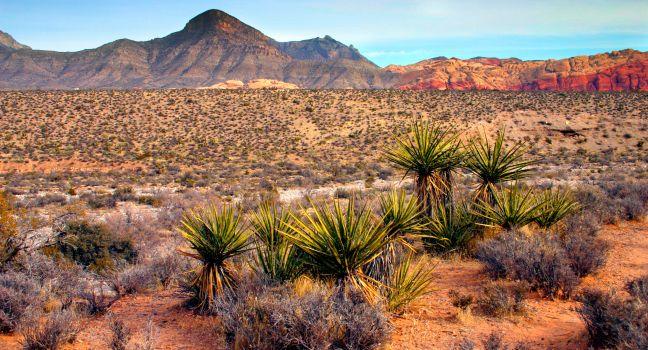
Red Rock Canyon, Nevada.
col / Shutterstock

Red sandstone cliffs and dramatic desert landscapes await day-trippers and outdoors enthusiasts at Red Rock Canyon National Conservation Area. Operated by the BLM, the 195,819-acre national conservation area features narrow canyons, fantastic rock formations, seasonal waterfalls, desert wildlife, and rock-art sites. The elevated Red Rock Overlook provides a fabulous view of the cream-and-red sandstone cliffs. For a closer look at the stunning scenery, take the 13-mile, one-way scenic drive through the canyon, open from dawn to dusk. Other activities include hiking, mountain biking, rock climbing, canyoneering, picnicking, and wildlife-watching. A developed campground, 2 miles from the visitor center, has 66 campsites (including RV and group sites), pit toilets, and drinking water for visitors wanting to extend their stay. A modest visitor center, operated by the Red Rock Canyon Interpretive Association and open on weekdays, contains an informative history of the region, as well as a number of exhibits on local flora and fauna.

Torrey Pines State Natural Reserve

La Jolla Fodor's Choice
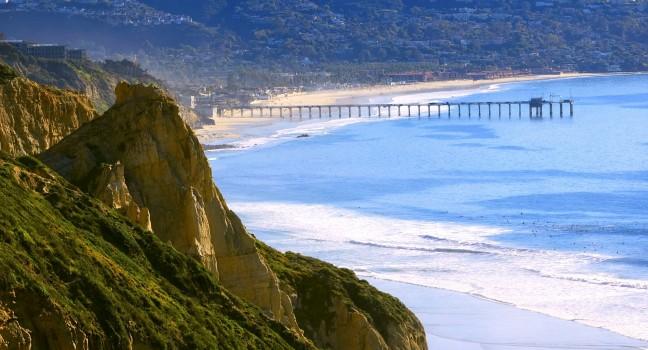
Torrey Pines Beach (Southern California, USA).
Marina Ivanova / shutterstock

Pinus torreyana, the rarest native pine tree in the United States, enjoys a 1,500-acre sanctuary at the northern edge of La Jolla. About 6,000 of these unusual trees, some as tall as 60 feet, grow on the cliffs here. The park is one of only two places in the world (the other is Santa Rosa Island, off Santa Barbara) where the Torrey pine grows naturally. The reserve has several hiking trails leading to the cliffs, 300 feet above the ocean; trail maps are available at the park station. Wildflowers grow profusely in spring, and the ocean panoramas are always spectacular. From December to March, whales can be spotted from the bluffs. When in this upper part of the park, respect the restrictions. Not permitted: picnicking, camping, drones, smoking, leaving the trails, dogs, alcohol, or collecting plant specimens.

You can unwrap your sandwiches, however, at Torrey Pines State Beach, just below the reserve. When the tide is out, it's possible to walk south all the way past the lifeguard towers to Black's Beach over rocky promontories carved by the waves (avoid the bluffs, however; they're unstable). Los Peñasquitos Lagoon at the north end of the reserve is one of the many natural estuaries that flow inland between Del Mar and Oceanside. It's a good place to watch shorebirds. Volunteers lead guided nature walks at 10 am on Friday, Saturday, Sunday, and holidays.

12600 N. Torrey Pines Rd., San Diego, CA, 92037, USA
858-755–2063
Sight Details
$15–$25 per vehicle (demand base pricing)

Something incorrect in this review?

Recommended Fodor's Video

Anan Wildlife Observatory

Fodor's Choice

A prime spot to view brown and black bears, Anan lies within the Tongass National Forest. Each summer as many as 30 or 40 bears gather at Anan Creek to feed on huge runs of pink salmon. On an average visit of about three hours you might spot bears while strolling the half-mile viewing boardwalk. Once on the platform, you will likely see many. For 30-minute intervals, five people at a time can slip into a photo blind, accessible from the platform, that provides opportunities to shoot close-up, stream-level images of bears catching salmon. Anan is accessible only by boat or floatplane. Passes are required from July 5 to August 25 for the limited number of visits the Forest Service permits each day. Unless you have experience navigating the Stikine by boat and walking through bear country, it's best to visit Anan with a local guide. Most guide companies provide passes.

Año Nuevo State Park

Fodor's Choice

It's a seasonal ritual for California's elephant seals to come ashore here each winter—and a spectacular annual event for human visitors to watch these incredible marine mammals playing, flirting, breeding, and sometimes fighting in the chilly salt water and brisk sunshine. Guided tours (around three miles) are mandatory to keep the elephant seals safe and to protect this fragile ecosystem.

1 New Years Creek Rd., Pescadero, CA, 94060, USA
650-879–2025
Sight Details
Parking $10; tours $11
Reservations essential and book up quickly

Something incorrect in this review?

B Bryan Preserve

Fodor's Choice

Guides helming vintage Land Rovers conduct spellbinding tours of this sanctuary for zebras, giraffes, antelopes, and other endangered African hoof stock. The self-guided tour in your own car costs less, but the guided one, slightly more expensive, is recommended for the personal touch and closer-up access and timing to giraffe-feeding time.  Reservations are a must for visits to the preserve, which maintains three cottages for overnight stays.

Barred Island Preserve

Fodor's Choice

Famous landscape architect Frederick Law Olmsted once owned Barred Island Preserve. His grandniece, Carolyn Olmsted, donated it to the Nature Conservancy in 1969. The island is accessible only at low tide. The mile-long trail leading to the island offers great views of Penobscot Bay. Pick up a brochure at the Deer Isle–Stonington Chamber of Commerce for a map of the islands you can see from the area. The parking area fills quickly, so arrive early.

Bear River Migratory Bird Refuge

Fodor's Choice

Established in 1928 to conserve the Bear River habitat for migratory waterfowl and wildlife, this 80,000-acre U.S. Fish and Wildlife Service refuge is just west of Brigham City. You can observe wildlife along a 12-mile driving route and 1½ miles of walking trails, with ducks, geese, pelicans, herons, swans, shore birds, and more than 200 other kinds of birds arriving in various seasons. The Wildlife Education Center contains interactive displays and observation decks.

Cape Perpetua Scenic Area

Fodor's Choice

The highest vehicle-accessible lookout on the Oregon Coast, Cape Perpetua towers 800 feet above the rocky shoreline. Named by Captain Cook on St. Perpetua's Day in 1778, the cape is part of a 2,700-acre scenic area popular with hikers, campers, beachcombers, and naturalists. Information, educational films and exhibits, and trail maps are available at the Cape Perpetua Visitors Center, 3 miles south of Yachats. The easy 1-mile Giant Spruce Trail passes through a fern-filled rain forest to an enormous 600-year-old Sitka spruce. Easier still is the marked Auto Tour, which begins by the visitor center and winds through Siuslaw National Forest to the ¼-mile Whispering Spruce Trail. Views from the rustic rock shelter extend 50 miles south. For a more rigorous trek, hike the St. Perpetua Trail to the shelter. Other trails lead from the visitor center down along the shore, including a scenic pathway to Devil's Churn, next to which a small snack bar sells sandwiches, sweets, and coffee.

Cascade Head Preserve

Fodor's Choice

At this pristine, slightly off-the-beaten-path property managed by the Nature Conservancy, a dense, green trail winds through a rain forest where 100-inch annual rainfalls nourish 250-year-old Sitka spruces, mosses, and ferns. Emerging from the forest, hikers come upon grassy and treeless Cascade Head, an undulating maritime prairie. There are magnificent views down to the Salmon River and east to the Coast Range. Continuing along the headland, black-tailed deer often graze and turkey vultures soar in the sometimes strong winds. It's a somewhat steep and strenuous but tremendously rewarding hike—allow at least three hours to make the full nearly 7-mile round-trip hike, although you can make it out to the beginning of the headland and back in an hour.

Corkscrew Swamp Sanctuary

Fodor's Choice

To experience what this part of Florida was like before civil engineers began draining the swamps, drive 17 miles east of North Naples to these 13,000 acres of pine-flatwood and cypress forest, grass-and-sedge "wet prairie," saw-grass marshland, and lakes and sloughs filled with water lettuce. Managed by the National Audubon Society, the sanctuary protects North America's largest remaining stand of ancient bald cypress, 600-year-old trees as tall as 130 feet, as well as endangered birds, such as wood storks, which often nest here.

This is a favorite destination for serious birders and is the gateway to the Great Florida Birding and Wildlife Trail. If you spend a couple of hours to take the 2¼-mile self-guided tour along the boardwalk (which is completely wheelchair accessible), you'll spot ferns, orchids, and air plants, as well as wading birds and possibly alligators and river otters. A nature center educates you about this precious, unusual habitat with a dramatic re-creation of the preserve and its creatures in the Swamp Theater.

Cutler Coast Public Land

Fodor's Choice

With 4½ miles of undeveloped Bold Coast between Cutler and Lubec, views from this state preserve above Cutler Harbor are likely to take your breath away. Here a wall of steep cliffs—some 150 feet tall—juts from headlands partially forested with spruce and fir. Look for whales, seals, and porpoises while taking in views of cliff-ringed Grand Manan Island and the Bay of Fundy. One of the East Coast's premier hiking destinations, the preserve's interconnected trails offer hikes of 3–10 miles, including loops. There are challenging sections, and a log ladder descends to one of the cobble beaches, but the 1.4-mile portion of the Coastal Trail from the parking area through woods to an ocean promontory is relatively easy. From here the trail follows the glorious Bold Coast for 3.4 miles. Revealing the area’s unusual terrain inland from the coast, the 4½-mile Inland Trail passes by raised peat bogs, salt marshes, swamps, and a beaver pond and wends through meadows and forest. While the coastal portion of the preserve, which has several primitive campsites, is the star attraction, most of its 12,234 acres are on the opposite (northern) side of Route 191. Forest and grassland here is laced with 19.5 miles of multiuse roads and ATV trails.

Duxbury Reef

Fodor's Choice

Excellent tide-pooling can be had along the shoreline of Duxbury Reef; it's one of the largest shale intertidal reefs in North America. Look for sea stars, barnacles, sea anemones, purple urchins, limpets, sea mussels, and the occasional abalone. But check a tide table ( tidesandcurrents.noaa.gov) if you plan to explore the reef—it's accessible only at low tide. The reef is a 30-minute drive from the Bear Valley Visitor Center. Take Highway 1 South from the center, turn right at Olema Bolinas Road (keep an eye peeled; the road is easy to miss), left on Horseshoe Hill Road, right on Mesa Road, left on Overlook Drive, and then right on Elm Road, which dead-ends at the Agate Beach County Park parking lot.   Avoid areas rich with fragile Monterey shale, which are prone to erosion from human disturbance. It is illegal to collect anything from this protected marine area. 

Hobe Sound Nature Center

Fodor's Choice

Though located in the Hobe Sound National Wildlife Refuge, this nature center is an independent organization. The exhibit hall houses live baby alligators, crocodiles, a scary-looking tarantula, and more—and is a child's delight. Just off the center's entrance is a mile-long nature trail loop that snakes through three different kinds of habitats: coastal hammock, estuary beach, and sand pine scrub, which is one of Florida's most unusual and endangered plant communities and what composes much of the refuge's nearly 250 acres.

Among the center's more popular events are the annual nighttime sea turtle walks, held between May and June; reservations are accepted as early as April 1.

Hualapai Mountain Park

Fodor's Choice

You haven't truly hiked in northwest Arizona until you've hiked in Hualapai Mountain Park. A 15-mile drive from town up Hualapai Mountain Road leads to the park's more than 2,300 wooded acres, with 10 miles of developed and undeveloped hiking trails, picnic areas, ATV trails, rustic cabins, teepees, and RV (full hookups) and tent areas. Along the park's trail system, you'll find a striking variety of plant life such as prickly pear cactus and Arizona walnut. Abundant species of birds and mammals such as the piñon jay and the Abert squirrel live here, and pristine stands of unmarred aspen mark the higher elevations. Any of the trails can be hiked in about three hours. Keep in mind the terrain in the park ranges from 5,000 to 8,500 feet above sea level, and snow—sometimes heavy—is common in winter.

Ijams Nature Center

Fodor's Choice

Part of the Urban Wilderness that includes the adjacent Forks of the River Wildlife Management Area, this 315-acre woodland is home to former marble quarries. Mead's Quarry Lake is where River Sports Outfitters rents paddleboards, kayaks, and canoes to explore the clear blue water. More than 12 miles of trails connect to adjacent public lands, allowing for extended hiking and mountain biking circuits, and Ijams Crag is popular with rock climbers. Navitat is also based here, offering six different aerial high-ropes challenge courses through the treetops.

Ogden Nature Center

Fodor's Choice

Although close to Interstate 15 on the north side of the city, this quiet 152-acre center abounds with opportunities to view and interact with nature. It's home to thousands of trees, plus vibrant marshlands and ponds, with nature trails that are popular year-round (cross-country skiers take to them in winter). It's possible to view Canada geese, great blue herons, red foxes, mule deer, and porcupines roaming the grounds (you can get especially good views from a small observatory tower), as well as rescued bald eagles, owls, and other spectacular species. The eco-consciously designed visitor center has interesting exhibits as well as activities for kids, while the education building shows rotating art exhibits and the excellent Nest gift shop sells nature-oriented goods.

Oregon Islands National Wildlife Refuge: Coquille Point Unit

Fodor's Choice

Each of the colossal rocks jutting from the ocean between Bandon and Brookings is protected as part of the 19-acre Coquille Point section of this huge refuge that, in total, comprises 1,853 rocks, reefs, islands, and two headland areas spanning 320 miles up and down the Oregon Coast. Thirteen species of seabirds—totaling 1.2 million birds—nest here, and harbor seals, California sea lions, Steller sea lions, and Northern elephant seals also breed within the refuge. Coquille Point, which is a short drive west of downtown Bandon, is one of the best places to observe seabirds and harbor seals. The dramatic point atop a steep sea cliff overlooks a series of offshore rocks, and a paved trail that winds over the headland ends in stairways to the beach on both sides, allowing for a loop across the sand when tides permit. Visitors are encouraged to steer clear of harbor seals and avoid touching seal pups. A complete list of Oregon Islands Refuge viewpoints and trails is available online.

Padilla Bay National Estuarine Reserve

Fodor's Choice

At this serene 11,000-acre wildlife preserve adjacent to Bayview State Park, the Breazeale Interpretive Center has great exhibits on local ecology and wildlife. Trails lead to an observation deck, into the woods, and to a rocky beach with great bird-watching opportunities—keep an eye out for black brant (or brent) geese, peregrine falcons, and bald eagles. This is also a popular place for kayaking.

Paria Canyon–Vermilion Cliffs Wilderness

Fodor's Choice

In this extremely remote 112,500-acre expanse of otherworldly canyons, cliffs, and mesas that straddles the Utah–Arizona border south of Grand Staircase–Escalante National Monument, you'll find the subjects of some of the most famous and photographed rock formations in the Southwest, including The Wave, an undulating landscape of waves frozen in striated red, orange, and yellow sandstone that can be accessed by permit only—it's reached via a somewhat strenuous 6.4-mile round-trip hike. The area has a number of other spectacular features, several of them a bit easier to access, such as the moderately easy 3.7-mile Wire Pass Trail, which leads to the longest slot canyon in the world, 13-mile Buckskin Gulch.

For any visits to this wilderness, part of which falls within Vermilion Cliffs National Monument, it's essential that you check with the area's BLM ranger offices in Kanab or Big Water (near Lake Powell) for guidance and conditions (deadly flash floods can occur with little warning in some of these slot canyons); staff can also provide permit information about visiting The Wave (aka Coyote Buttes North) and Coyote Buttes South. Or consider visiting the area on tour through one of the reputable outfitters in Kanab or Escalante, such as Dreamland Safari Tours, Forever Adventure Tours, and Paria Outpost & Outfitters. The parking lot for the Wire Pass Trailhead, a good place to start your explorations of the area, is 45 miles east of Kanab via U.S. 89 (turn right onto House Rock Valley Road shortly after milemarker 26 and continue 8.5 miles down the unpaved road).

Only 64 people are granted permits to visit The Wave each day, and all are awarded by online lottery (48 of them by advanced lottery up to four months in advance, and 16 of them by daily lottery issued two days in advance). Visit www.blm.gov/node/7605 for details.

Point Lobos State Natural Reserve

Fodor's Choice

A 350-acre headland harboring a wealth of marine life, the reserve lies a few miles south of Carmel. The best way to explore here is to walk along one of the many trails. The Cypress Grove Trail leads through a forest of Monterey cypress (one of only two natural groves remaining) that clings to the rocks above an emerald-green cove. Sea Lion Point Trail is a good place to view sea lions. From those and other trails, you might also spot otters, harbor seals, and (in winter and spring) migrating whales. An additional 750 acres of the reserve is an undersea marine park open to qualified scuba divers. No pets are allowed.  Arrive early (or in late afternoon) to avoid crowds; the parking lots fill up.

Ramsey Canyon Preserve

Fodor's Choice

Managed by the Nature Conservancy, Ramsey Canyon Preserve marks the convergence of two mountain and desert systems: this spot is the northernmost limit of the Sierra Madre and the southernmost limit of the Rockies, and it's at the edge of the Chihuahuan and Sonoran deserts. Visitors to this world-famous bird-watching hot spot train their binoculars skyward hoping to catch a glimpse of some of the preserve's most notable inhabitants. Painted redstarts nest here, and 14 magnificent species of hummingbird, the jewels of this pristine habitat, congregate from spring through autumn. Even for nonbirders, the beauty of the canyon makes this a destination in its own right. The rare stream-fed, sycamore-maple riparian corridor provides a lush contrast to the desert highlands at the base of the mountains. Guided hikes along the half-mile trail begin at 9 Monday, Thursday, and Saturday from March through November. Stop at the visitor center for maps and books on the area's natural history, flora, and fauna. Admission is good for one week.

Randall Davey Audubon Center

East Side and Canyon Road Fodor's Choice

At the end of Upper Canyon Road, located at the mouth of the canyon as it wends into the foothills, the 135-acre Randall Davey Audubon Center harbors diverse birds (nearly 200 species have been identified) and other wildlife. Free guided nature walks are given most Saturday mornings at 8:30; there are also two major hiking trails that you can tackle on your own. The home and studio of Randall Davey, a prolific early Santa Fe artist, can be toured on Friday afternoon. There's also a nature bookstore, and be sure to check out the treehouse and seed library. No pets are allowed other than leashed service dogs.

Rio Grande Nature Center State Park

North Valley Fodor's Choice

Along the banks of the Rio Grande, this 270-acre refuge in an especially tranquil portion of the bosque (about midway up on the Paseo del Bosque trail) is the nation's largest cottonwood forest. There are numerous walking and biking trails that wind into the 53-acre Aldo Leopold Forest and down to the river. Bird-watchers come to view all manner of migratory waterfowl, but especially the sandhill cranes that swoop in in late fall. Constructed half above ground and half below the edge of a pond, the park's interpretive Rio Grande Nature Center—a distinctive Antoine Predock design—has viewing windows and speakers that broadcast the sounds of the birds you're watching; frogs, ducks, and turtles may be seen (and heard) as well. On the Center's grounds, a native plant garden offers a nice meander under the cottonwoods. Active programs are available for adults and children, and the center's Nature Shop has a small but good selection of plush critters, books, and more.

Rodman's Hollow

Shoreham Fodor's Choice

This easy-to-find nature preserve is many people's first point of contact with the island's Greenway Trails system. The main trail runs south about 1 mile to clay bluffs with great ocean views, from which a winding path descends to the rocky beach below. Side trails cross the 230-acre tract, offering longer hikes and the allure of getting mildly lost. The striking, if muted, natural beauty makes it easy to understand why, 40 years ago, this was the property that first awoke the local land conservation movement, now close to achieving its goal of preserving half the island. Geology buffs will appreciate this fine example of a glacial outwash basin. Nature lovers may enjoy looking for the Block Island meadow vole (field mouse), the northern harrier (a threatened raptor species), and the American burying beetle (the equally imperiled state insect). A small parking lot sits just south of Cooneymus Road near a stone marker.

Squam Lakes Natural Science Center

Fodor's Choice

This 230-acre property includes a ¾-mile nature trail that passes by trailside live-animal exhibits of black bears, bobcats, otters, fishers, mountain lions, red foxes, and raptors. A pontoon boat cruise offers the best way to tour the waterfront—naturalists talk about native fauna, from bald eagles to loons; dinner and sunset options are available. Kids' programs teach about insects and wilderness survival skills. The center also operates nearby 1-acre Kirkwood Gardens and maintains three short hiking trails, all of which you can access for free.

23 Science Center Rd., Holderness, NH, 03245, USA
603-968–7194
Sight Details
Trail $26, lake cruise $32
Live-animal exhibits closed Nov.–Apr.

Something incorrect in this review?

Turtleback Mountain Preserve

Fodor's Choice

A more peaceful, less crowded hiking and wildlife-watching alternative to Moran State Park, this 1,576-acre expanse of rugged ridges, wildflower-strewn meadows, temperate rainforest, and lush wetlands is one of the natural wonders of the archipelago. Because the San Juan County Conservation Land Bank purchased this land in 2006, it will be preserved forever for the public to enjoy. There are 8 miles of well-groomed trails, including a steep trek up to 1,519-foot-elevation Raven Ridge and a windy hike to Turtlehead Point, a soaring bluff with spectacular views west of San Juan Island and Vancouver Island beyond that—it's an amazing place to watch the sunset. You can access the preserve either from the North Trailhead, which is just 3 miles southwest of Eastsound on Crow Valley Road, or the South Trailhead, which is 3 miles northeast of Deer Harbor off Wild Rose Lane.

Valles Caldera National Preserve

Fodor's Choice

A high-forest drive brings you to the awe-inspiring Valles (vah-yes) Grande, which at 14 miles in diameter is one of the world's largest calderas. Created from the eruption and collapse of a 14,000-foot peak more than 1¼ million years ago, the flow out the bottom of this famed caldera created the Pajarito Plateau and the ash from the eruption spread as far east as Kansas. You can't imagine the volcanic crater's immensity until you spot what look like specks of dust on the lush meadow floor and realize they're elk. The National Park Service manages this 89,000-acre multiuse tract of land, which became a national preserve in 2000. It's especially popular for its variety of gorgeous hiking trails as well as for wildlife watching, fly-fishing, mountain biking and e-biking, cross-country skiing, snowshoeing, and horseback riding. From June through September, rangers offer free guided hikes around Cerro la Jara (with a focus on volcanos) and through the Cabin District and History Grove, where you'll learn about the caldera's 11,000-year human history. Stargazing programs and moonlit walks are also offered occasionally, as are fly-fishing clinics. For the foreseeable future, while the park service continues to improve the preserve's infrastructure, there's no fee to enter; check the website for updates. 

Wekiwa Springs State Park

Fodor's Choice

Wekiva is a Creek word meaning "flowing water," and wekiwa means "spring of water," so the different spellings you might see are both correct. Regardless, this 7,000-acre state park is, indeed, well suited to swimming, canoeing, and fishing (license required), as well as hiking, cycling, riding, picnicking, and camping. The area is also full of Florida wildlife: otters, raccoons, alligators, bobcats, deer, turtles, birds, and bears.

Park canoe or kayak rentals cost $35 for two hours, and trips can range from a simple paddle around a lagoon where you can observe a colony of water turtles to a full-day excursion through less-congested stretches of the river. Some of the park's 60 campsites are "canoe sites" accessible only via the river; others are "trail sites" that require hiking a good bit of the park's 13½-mile trail to reach them. Most sites, however, are for the less hardy—you can drive right up to them, and they have electric and water hookups.

White Memorial Conservation Center

Fodor's Choice

This 4,000-acre nature preserve houses top-notch natural-history exhibits. You'll find 30 bird-watching platforms, two self-guided nature trails, several boardwalks, boating facilities, and 40 miles of hiking, cross-country skiing, and horseback-riding trails. The Nature Museum has displays depicting the natural diversity found throughout the preserve, dioramas, live animals, a beehive, a digital microscope, and other unique exhibits of interest to kids of all ages (especially the scavenger hunt).