68 Best Sights in USA

Background Illustration for Sights

We've compiled the best of the best in USA - browse our top choices for the top things to see or do during your stay.

City Hall

Center City East Fodor's Choice
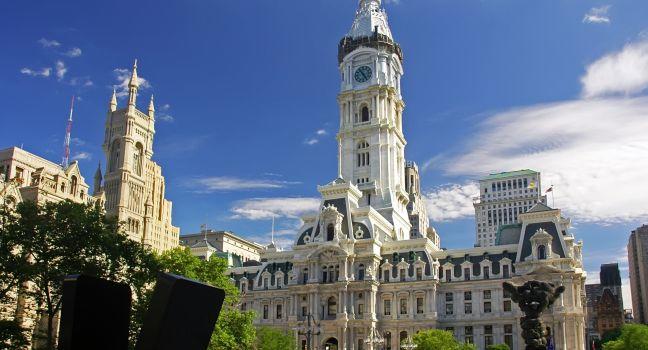
Historic City Hall in Philly, PA
(c) Chastainben | Dreamstime.com

Topped by a 37-foot bronze statue of William Penn, City Hall provides an opportunity to study the trappings of government and get a panoramic view of the city. With close to 700 rooms, it's the largest city hall in the country and the tallest masonry-bearing building in the world: no steel structure supports it. Designed by architect John McArthur Jr., the building took 30 years to build (1871–1901). The result has been called a "Victorian wedding cake of Renaissance styles." Placed about the facade are hundreds of statues by Alexander Milne Calder, who also designed the statue of Penn, a 27-ton cast-iron work that is the largest single piece of sculpture on any building in the world. City Hall is also the center of municipal and state government. Many of the magnificent interiors—splendidly decorated with mahogany paneling, gold-leaf ceilings, and marble pillars—are patterned after the Second Empire salons of part of the Louvre in Paris. On weekday tours you can see the Conversation Hall, the Supreme Court of Pennsylvania, the City Council chambers, and the mayor's reception room. You can attend City Council meetings, held each Thursday morning at 10. To top off your visit, take the elevator from the seventh floor up the tower to the observation deck at the foot of William Penn's statue for a 30-mile view of the city and surroundings. The elevator holds only six people per trip and runs every 15 minutes; the least crowded time is early morning.

Supreme Court of the United States

Capitol Hill Fodor's Choice
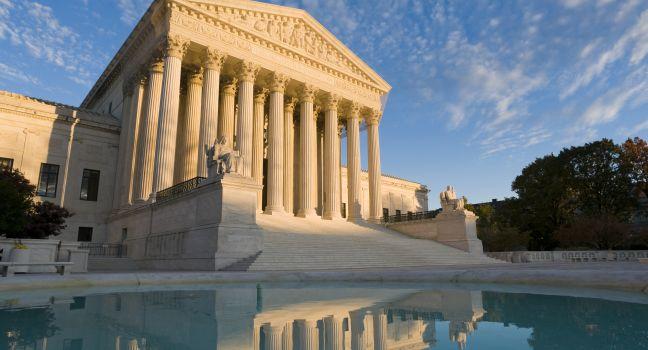
The front of the US Supreme Court in Washington, DC, at dusk.
Gary Blakeley / Shutterstock

It wasn't until 1935 that the Supreme Court got its own building: a white-marble temple with twin rows of Corinthian columns designed by Cass Gilbert. Before then, the justices had been moved around to various rooms in the Capitol; for a while they even met in a tavern. William Howard Taft, the only man to serve as both president and chief justice, was instrumental in getting the court a home of its own, though he died before the building was completed. Today, you can sit in the gallery and see the court in action.

The court convenes on the first Monday in October and hears cases until April (though court typically is in session through June). There are usually two arguments a day, beginning at 10 in the morning, Monday through Wednesday, in two-week intervals. For the most contentious cases, viewers have been known to queue up days before. Oral arguments typically conclude in April, and for the remainder of the term, the court releases orders and opinions.

The court displays its calendar of cases a month in advance on its website. You can't bring your overcoat or electronics such as cameras and cell phones into the courtroom, but you can store them in a locker. Entry to visit the resolving exhibits inside is suspended at the time of publication.

United States Capitol

Capitol Hill Fodor's Choice
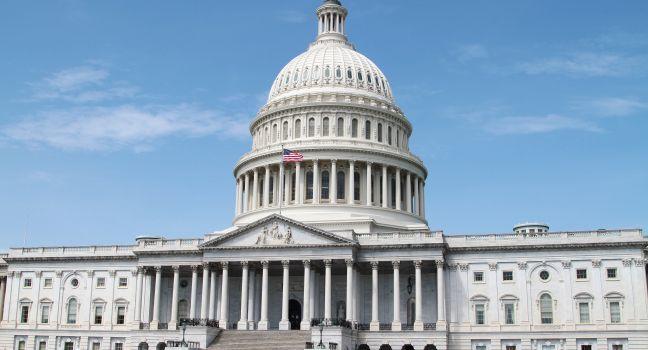
The US United States Capitol building for Democrat Republican Government Senate and House congress parties under a summer blue sky with white clouds.
Splosh | Dreamstime.com

Beneath the Capitol's magnificent dome, the day-to-day business of American democracy takes place: senators and representatives debate, coax, cajole, and ultimately determine the law of the land. For many visitors, the Capitol is the most exhilarating experience Washington has to offer. It wins them over with a three-pronged appeal: it's the city's most impressive work of architecture; it has on display documents, art, and artifacts from 400 years of American history; and its legislative chambers are open to the public, allowing you to actually see your lawmakers at work.

Before heading to the Capitol, pay a little attention to the grounds, landscaped in the late 19th century by Frederick Law Olmsted, famed for New York City's Central Park. On these 274 acres are both the city's tamest squirrels and the highest concentration of TV news correspondents, jockeying for a good position in front of the Capitol for their "stand-ups." A few hundred feet northeast of the Capitol are two cast-iron car shelters, left from the days when horse-drawn trolleys served the Hill. Olmsted's six red-granite lamps directly east of the Capitol are worth a look, too. A small, hexagonal brick structure with shaded benches, a fountain, and a small grotto, called the Summerhouse, is a wonderful place to escape the summer heat.

The design of the building was the result of a competition held in 1792; the winner was William Thornton, a physician and amateur architect from the West Indies. With its central rotunda and dome, Thornton's Capitol is reminiscent of Rome's Pantheon. This similarity must have delighted the nation's founders, who sought inspiration from the principles of the Republic of Rome.

The cornerstone was laid by George Washington in a Masonic ceremony on September 18, 1793, and, in November 1800, both the Senate and the House of Representatives moved down from Philadelphia to occupy the first completed section: the boxlike portion between the central rotunda and today's north wing. (Efforts to find the cornerstone Washington laid have been unsuccessful; a 1991 search was conducted using a metal detector to locate the engraved plate—it was not found. The location may be under the southeast corner of what is today National Statuary Hall.) By 1807, the House wing had been completed, just to the south of what's now the domed center, and a covered wooden walkway joined the two wings.

The "Congress House" grew slowly and suffered a grave setback on August 24, 1814, when British troops led by Sir Alexander Cockburn marched on Washington and set fire to the Capitol, the White House, and numerous other government buildings. (Cockburn reportedly stood on the House speaker's chair and asked his men, "Shall this harbor of Yankee democracy be burned?" The question was rhetorical; the building was torched.) The wooden walkway was destroyed, and the two wings gutted, but the exterior structure was left standing thanks to Architect Benjamin Henry Latrobe's use of fireproof building materials. Congress debated moving the Capitol to another location, but in 1815 it authorized President Madison to borrow from local banks to rebuild, on their existing sites, the Capitol, White House, and cabinet quarters. Latrobe supervised the rebuilding of the original Capitol, adding American touches such as the corncob-and-tobacco-leaf capitals to columns in the east entrance of the Senate wing. He was followed by Boston-born Charles Bulfinch, and, in 1826, the Capitol, its low wooden dome sheathed in copper, was finished.

North and south wings were added in the 1850s and 1860s to accommodate a growing government trying to keep pace with a growing country. The elongated edifice extended farther north and south than Thornton had planned, and, in 1855, to keep the scale correct, work began on a taller, cast-iron dome. President Lincoln was criticized for continuing this expensive project while the country was in the throes of the Civil War, but he called the construction "a sign we intend the Union shall go on." This twin-shell dome, a marvel of 19th-century engineering, rises 288 feet above the ground and weighs 4,500 tons. It expands and contracts up to 4½ inches a day, depending on the outside temperature. The allegorical figure atop the dome, often mistaken for Pocahontas, is called Freedom. Sculptor Thomas Crawford had first planned for the 19½-foot-tall bronze statue to wear the cloth liberty cap of a freed Roman slave, but Southern lawmakers, led by Jefferson Davis (who was Secretary of War and in charge of the Capitol construction), objected. An "American" headdress composed of a star-encircled helmet surmounted with an eagle's head and feathers was substituted. A light just below the statue burns whenever Congress is in session at night.

The Capitol has continued to grow. Between 1959 and 1962, the east front was extended 32 feet, creating 90 new rooms. Preservationists have fought to keep the west front from being extended because it's the last remaining section of the Capitol's original facade. A compromise was reached in 1983, when it was agreed that the facade's crumbling sandstone blocks would simply be replaced with stronger limestone.

Free gallery passes to watch the House or Senate in session can be obtained only from your representative's or senator's office; both chambers are open to the public when either body is in session. In addition, the House Gallery is open 9 am to 4:15 pm weekdays when the House is not in session. International visitors may request gallery passes from the House or Senate appointment desks on the upper level of the visitor center. Your representative's or senator's office may also arrange for a staff member to give you a tour of the Capitol or set you up with a time for a Capitol Guide Service Tour. When they're in session, some members even have time set aside to meet with constituents. You can link to the home page of your representative or senators at  www.house.gov and  www.senate.gov.

Free reservations are required to visit the Capitol. They can be made through either the Capitol Visitor Center website or through the office of your representative or senators. Only those with tour reservations may enter the Capitol Visitor Center; allow time to go through security. Bags can be no larger than 18 inches wide, 14 inches high, and 8½ inches deep, and other possessions you can bring into the building are strictly limited. (The full list of prohibited items is posted at  www.visitthecapitol.gov.) There are no facilities for leaving personal belongings, but you can check your coat. If you're planning a visit, check the status of tours and access; security measures may change. Note that only those with tour reservations may enter the Capitol Visitor Center.

Recommended Fodor's Video

Capitol

Downtown Fodor's Choice

Built between 1860 and 1874 and topped by a 128-foot gilded dome, the Capitol functions as a working museum and, since 1869, the active seat of California's government. When it's open, you can wander freely past reproductions of century-old state offices or join a guided tour. Portraits of former governors on display include Arnold Schwarzenegger, Ronald Reagan, Earl Warren (later Chief Justice of the United States), and Edmund G. "Jerry" Brown, whose father was also governor. Tours of the 40-acre Capitol Park, which contains a rose garden, a fragrant display of camellias (Sacramento's city flower), and more than 1,000 types of trees from around the world, take place on Sunday and Wednesday.

City Hall

Civic Center Fodor's Choice

This imposing 1915 structure with its massive gold-leaf dome—higher than the U.S. Capitol's—is as close to a palace as you'll find in San Francisco: the classic granite-and-marble behemoth was modeled after St. Peter's Basilica in Rome. Architect Arthur Brown Jr., who was also behind Coit Tower and the War Memorial Opera House, designed an interior with grand columns and a sweeping central staircase. The 1899 structure it replaced had taken 27 years to erect, but it collapsed in about 27 seconds during the 1906 earthquake.

City Hall was seismically retrofitted in the late 1990s, but the sense of history remains palpable, and you can learn about it on a free tour. Some noteworthy events that have taken place here include the hosing of civil-rights and freedom-of-speech protesters (1960); the assassinations of Mayor George Moscone and Harvey Milk (1978); the torching of the lobby by angry members of the gay community in response to the light sentence given to their killer (1979); and the first domestic partnership registrations of gay couples (1991). In 2004, Mayor Gavin Newsom took a stand against then-current state and federal law by issuing marriage licenses to same-sex partners.

Across Polk Street from City Hall is Civic Center Plaza, with an outdoor café, flower beds, and a playground. This sprawling space is generally clean but somewhat grim, as many homeless people hang out here.

New York State Capitol

Fodor's Choice

It took more than 30 years to complete this grand building (1867–99), which incorporates elaborate carvings, interesting architectural elements, and eclectic styles. The 45-minute guided tour highlights the ornate Great Western Staircase (aka the Million Dollar Staircase)—which took 13 years and 600 stone carvers to complete—and, right over it, a 3,000-square-foot skylight that had been covered from World War II until 2002. Amid the carved faces adorning the staircase pillars are several famous visages. You can visit the legislative chambers and, when open, the governor's ceremonial offices. Tours begin at the visitor center on the concourse level of Empire State Plaza.

Santa Barbara County Courthouse

Fodor's Choice

Hand-painted tiles and a spiral staircase infuse the courthouse, a national historic landmark, with the grandeur of a Moorish palace. This magnificent building was completed in 1929. An elevator rises to an arched observation area in the tower that provides a panoramic view of the city. Before or after you take in the view, you can (if it's open) visit an engaging gallery devoted to the workings of the tower's original, still operational Seth Thomas clock. The murals in the second-floor ceremonial chambers were painted by an artist who did backdrops for some of Cecil B. DeMille's films. Take a self-guided tour, or join a free one-hour docent-led tour, daily at 2 pm and weekdays at 10:30 am.

State Capitol

Capitol Hill Fodor's Choice

Built in 1886, the capitol was constructed mostly of materials indigenous to Colorado, including marble, granite, and rose onyx. Especially inspiring is the gold-leaf dome, a reminder of the state's mining heritage. The dome is open for tours weekdays by appointment from 10 to 1, and 20 people at a time can go to the top (using a 99-step staircase from the third floor) to take in the 360-degree view of the Rockies. Historical tours and a legislative tour are available. Outside, a marker on the 13th step indicates where the elevation is exactly 1 mile high (above sea level). The legislature is generally in session from January through May, and visitors are welcome to sit in third-floor viewing galleries above the house and senate chambers.

State Capitol

Fodor's Choice

The gold-domed State Capitol building, built in 1878 overlooking Bushnell Park, houses the state's executive offices and legislative chamber, as well as historical memorabilia. Walk past the statue of Nathan Hale, the official state hero, to the Hall of Flags to see historic battle flags carried by Connecticut troops in wars from the Civil War through the Korean Conflict—along with a camp bed used by Marquis de Lafayette when he came to Hartford to meet with George Washington during the Revolutionary War. When the General Assembly is in session (January–early June in odd-numbered years; February–early May in even-numbered years), visitors can observe the proceedings from the public galleries. The League of Women Voters provides free guided tours each morning by reservation.

State House

Fodor's Choice

The gilded-dome state house, built in 1819, is the nation's oldest capitol building in which the legislature still uses the original chambers. From January through June, you can watch the two branches in action. The Senate has 24 members, and the House has 400—a ratio of 1 representative per 3,500 residents (a world record). The visitor center coordinates guided and self-guided tours, bookable online or on-site, and displays history exhibits and paraphernalia from presidential primaries.

Texas State Capitol

Downtown Fodor's Choice

Built in 1888 from Texas pink granite, this impressive structure, capped by a 60-foot-wide cast-iron dome, stands taller than the U.S. Capitol (yes, everything is bigger in Texas), and it is certainly a crown jewel of the Lone Star State. The Renaissance Revival building dominates downtown Austin, visible from various points through protected Capitol view corridors, and it looks grandiose from every angle. The surrounding grounds, occupying 22 acres on a well-appointed hilltop, are just as impressive.

You can catch one of the free 30-minute historical tours, offered from 9:30 am to 4 pm on weekdays and from 12:30 pm to 4:00 pm on weekends, or take a self-guided tour anytime during operating hours. No matter how you choose to experience the Capitol, be sure to stand in the center of the star on the ground floor under the main floor's rotunda and look up, up, up into the dome and lose perspective for a moment—it's a Texas rite of passage.

Utah State Capitol

Fodor's Choice

The State Capitol, built in 1912, hosts Utah's legislature annually from January to March. The exterior steps offer marvelous views of the Salt Lake Valley. In the rotunda beneath the 165-foot-high dome, a series of murals, commissioned as part of a Works Progress Administration project during the Depression, depicts the state's history. Don't miss the gold-leafed State Reception Room, the original state supreme court, and the Senate gallery. Free guided tours are offered on weekdays from 9 to 3 (on the hour), except on holidays.

Bureau of Engraving and Printing

The Mall
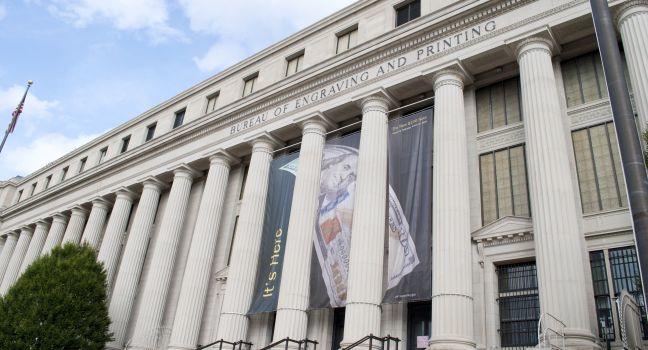
The Bureau of Engraving and Printing in Washington DC where visitors can watch dollars being printed.
Jfeinstein | Dreamstime.com

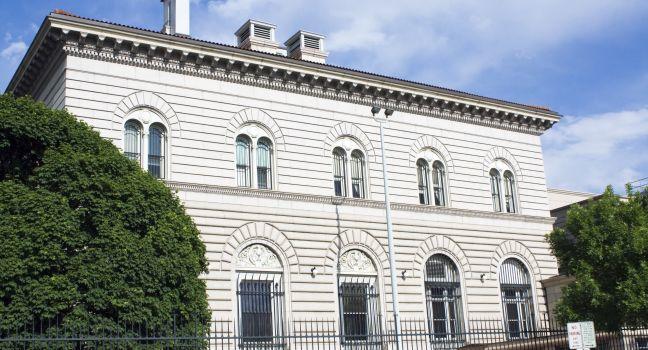
Bureau of Engraving and Printing has printed paper money since 1914 when the bureau relocated from the redbrick-towered Auditors Building at the corner of 14th Street and Independence Avenue. They also print military certificates and presidential invitations. Unfortunately, visits are impossible as the building canceled tours in 2020 and has no definite date to resume them. Check the website for updates on the reopening of tours.

14th and C Sts. SW, Washington, DC, 20228, USA
202-874–2330
Sight Details
Free
Closed until further notice

Something incorrect in this review?

Federal Reserve Building

Foggy Bottom
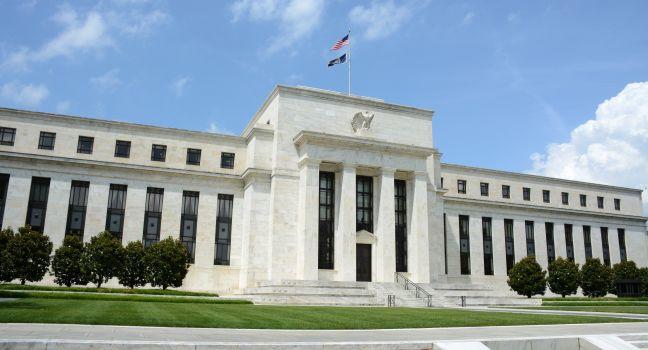
Federal reserve bank building in Washington DC.
(c) Lightpro | Dreamstime.com

This imposing marble edifice, its bronze entryway topped by a massive eagle, was designed by Folger Shakespeare Library architect Paul Cret. Its appearance seems to say, "Your money's safe with us." Even so, there's no money here, as the Fed's mission is to set interest rates and keep the economy on track. The stately facade belies a friendlier interior, with a varied collection of art and several special art exhibitions every year. Tours of the building are available for groups of 10 or more, all aged 18 years or older; they must be booked at least two weeks in advance via email.

20th St. and Constitution Ave. NW, Washington, DC, 20551, USA
202-452–3324
Sight Details
Free
Closed weekends

Something incorrect in this review?

U.S. Mint

Civic Center
US Mint in Denver
Henryk Sadura / Shutterstock

Tour this facility to catch a glimpse of the coin-making process, as presses spit out thousands of coins a minute. There are also exhibits on the history of money and a restored version of Denver's original mint prior to numerous expansions. More than 14 billion coins are minted yearly, and the nation's second-largest hoard of gold is stashed away here. To schedule a 45-minute tour and prepare for your visit (there are strict security guidelines), visit the Mint's website. Reservations are required for all tours, which are guided (Monday to Thursday from 8 to 2), free, and available to visitors age seven and older. The gift shop, which sells authentic coins and currency, is in the Tremont Center, across Colfax Avenue from the Mint.

The White House

Foggy Bottom
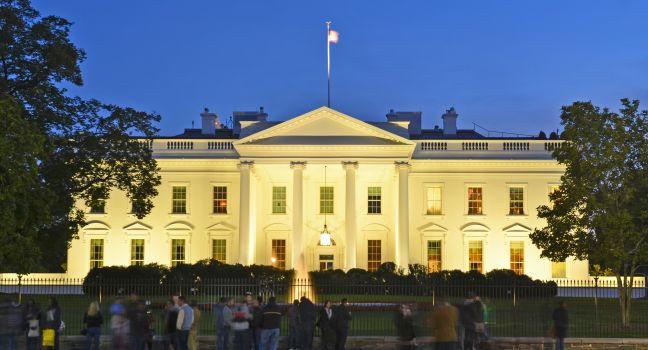
The White House - Washington DC, United States
(c) Orhan Cam | Dreamstime.com

America's most famous house was designed in 1792 by Irish architect James Hoban. It was known officially as the Executive Mansion until 1902, when President Theodore Roosevelt renamed it the White House, long its informal name. The house has undergone many structural changes: Andrew Jackson installed running water; James Garfield put in the first elevator; Harry Truman had the entire structure gutted and restored, adding a second-story porch to the south portico; and Richard Nixon installed a one-lane bowling alley in 1969.

To see the White House you need to contact your U.S. representative or senator (or embassy if you aren't a U.S. citizen). Requests can be made up to three months in advance (especially for spring, summer, or December tour requests) and no less than 21 days in advance. You'll be asked for the names, birth dates, and Social Security numbers of everyone in your group. On the morning of your tour, call the White House Visitors Office information line for any updates; tours are subject to last-minute cancellations. Arrive 15 minutes early. Your group will be asked to line up in alphabetical order. Everyone 18 years and older must present government-issued photo ID, and no purses, backpacks, or bags are allowed on the tour (and no storage lockers are provided so leave them in your hotel room). There are no public restrooms, and you're allowed to take photos only with a smartphone or small compact camera. The security process will probably last as long as the tour itself, 20–25 minutes.

The self-guided tour includes rooms on the ground floor (including the White House Family Theater), but the State Floor has the highlights. The East Room is the largest room in the White House, the site of ceremonies and press conferences; this is also where Theodore Roosevelt's children roller-skated and one of Abraham Lincoln's sons harnessed a pet goat to a chair and went for a ride. The portrait of George Washington that Dolley Madison saved from torch-carrying British soldiers in 1814 hangs in the room, and the White House Christmas tree stands here every winter. The only president to get married in the White House, Grover Cleveland, was wed in the Blue Room. Esther, the second daughter of President Cleveland and First Lady Frances, holds the distinction of being the only child born in the White House. The Red Room, decorated in early-19th-century American Empire style, has been a favorite of first ladies. Mary Todd Lincoln had her coffee and read the morning paper here. In 1961, First Lady Jacqueline Kennedy undertook an extensive restoration of the White House to preserve and showcase the historical and architectural significance of the home and its contents. The East Garden, which now bears her name, honors her contributions. Michelle Obama installed a vegetable-and-herb garden to promote healthy eating, as well as an apiary and pollinator garden for bees and other insects.

Your tour of the White House will be enhanced by visiting the White House Visitor Center at 1450 Pennsylvania Avenue NW, featuring displays, photos, and a 30-minute video about the White House.

1600 Pennsylvania Ave. NW, Washington, DC, 20006, USA
202-208–1631-White House Visitor Center
Sight Details
Free
Closed Sun. and Mon.
Must reserve in advance

Something incorrect in this review?

Alaska State Capitol

Completed in 1931, this unassuming building houses the governor's office and hosts state legislature meetings in winter, placing it at the epicenter of Alaska's animated political discourse. Historical photos line the upstairs walls. You can pick up a self-guided tour brochure as you enter, or take part in a free, one-hour tour offered by the Juneau–Douglas City Museum (weekdays only, June through September).

Seward and 4th Sts., Juneau, AK, 99801, USA
907-465–4648
Sight Details
Free

Something incorrect in this review?

Allegheny County Courthouse and Jail

The designed by the influential architect Henry Hobson Richardson and completed in 1888, is one of the country's outstanding Romanesque buildings. Once you get by courthouse security, don't miss the frescoes on the first floor, the grand staircase near the entrance to the old law library, or the "bridge of sighs" connecting the courthouse and former jail (now a court facility). There is a self-guided tour brochure available at the Mayor's Service Center near the Forbes Avenue side of the building.

950 2nd Ave., Pittsburgh, PA, 15219, USA
412-350--2000
Sight Details
Weekdays 9–4
Closed Sat.--Sun.

Something incorrect in this review?

Appellate Division Courthouse

Flatiron District

Figures representing Wisdom and Force flank the main portal of this imposing Beaux-Arts courthouse, built in 1899. The structure's purpose coincides with artistic symbolism, and there are statues of great lawmakers, including Moses, Justinian, and Confucius, lining the roof balustrade. In total, sculptures by 16 artists adorn the ornate building, a showcase of themes relating to the law. A branch of the New York State Supreme Court, this is one of the most important appellate courts in the country: it hears more than 3,000 appeals and 6,000 motions annually and also admits approximately 3,000 new attorneys to the bar each year. Inside the courtroom is a stunning stained-glass dome set into a gilt ceiling. The main hall and the courtroom are generally open to visitors weekdays from 9 to 5.

Austin City Hall

Since 2004, Austin City Hall has served as the home of the municipal government and the anchor of downtown's Second Street District. The striking building embodies the New Austin, featuring energy-saving elements like solar panels and modern architectural designs. The angular, four-story limestone-and-concrete building is clad in 66,000 square feet of copper, with a cascading 40-foot waterfall that flows inside and back to Lady Bird Lake just across the street.

Inside, "The People's Gallery" offers a public art exhibit showcasing local artists' work year-round, free for public viewing on weekdays. The outdoor pavilion and amphitheater host free concerts by local bands on Fridays in the spring and fall.

Baltimore City Hall

Downtown

Built in 1875, Baltimore City Hall consists of mansard roofs and a gilt dome over a 110-foot rotunda, all supported by ironwork. Inside you can get tours of the chambers and view exhibits on Baltimore's history. Directly across the street is City Hall Plaza, on what was originally the site of the Holliday Street Theatre. The theater was owned and operated by the Ford brothers; they also operated Ford's Theatre in Washington, D.C., where President Lincoln was assassinated. "The Star-Spangled Banner" was first publicly sung here.

100 N. Holliday St., Baltimore, MD, 21202, USA
410-396–3100
Sight Details
Free
Tours generally offered Tue. morning, Wed. afternoon and Thurs. morning—call Curator Jeanne Davis at 410-396-4947 to schedule.

Something incorrect in this review?

Beltsville Agricultural Research Center

Three miles northeast of Greenbelt, the Agricultural Research Service's (ARS) research center in Beltsville has developed everyday innovations such at backyard fly traps, orange juice from concentrate, and seedless grapes. Today BARC's research priorities are climate change, food safety, nutrition and obesity, international food security, and bioenergy. When several offices were attacked by anthrax mailings in 2001, it was scientists at this Beltsville location who helped determine where the anthrax came from. The visitor center is inside a log lodge built in 1937 by the Civilian Conservation Corps, and tours take at least two hours. Because of their length and technical nature, tours are not recommended for children below middle-school age. There are neither free food samples nor cafeterias on-site, but ARS sponsors a farmers' market down the road from the visitor center on Thursdays. Reservations are essential; call at least three weeks in advance. The visitor center, building 302, is located on Powder Mill Road, about a half mile away from the main building on Baltimore Avenue. It may not show up on a GPS, so call ahead for directions.

10300 Baltimore Ave., Beltsville, MD, 20705, USA
301-504–9403
Sight Details
Free
Weekdays 8:30–4

Something incorrect in this review?

City Hall

Financial District

What once marked the northernmost point of Manhattan today houses the office of the mayor and serves as a gathering place for demonstrators and the news crews who cover their stories. This is the one of the oldest City Halls in the country, a striking (but surprisingly small) building dating from 1803. Free tours are available  weekly---just sign up in advance online and arrive early to check out the fantastic exterior details. Inside, highlights include the Rotunda where President Lincoln lay in state in 1865 under a soaring dome supported by 10 Corinthian columns; the Victorian-style City Council Chamber; and the Governor's Room, an elegantly preserved space with portraits of historic figures, as well as a writing table that George Washington used in 1789 when New York was the U.S. capital.

City Hall Park, New York, NY, 10007, USA
212-788–2656-for tours
Sight Details
Free

Something incorrect in this review?

City Hall

The intersection of Meeting and Broad streets is known as the Four Corners of Law, representing the laws of nation, state, city, and church. On the northeast corner is the Adamesque-style City Hall, built in 1801. Highlights of the historic portraits that hang in the second-floor council chamber (the second-oldest continuously used council chamber in the country), include John Trumbull's 1791 portrait of George Washington and Samuel F. B. Morse's likeness of James Monroe.

80 Broad St., Charleston, SC, 29401, USA
843-577–6970
Sight Details
Free

Something incorrect in this review?

City Hall

American architect Henry Hobson Richardson, who also developed the state's capitol, designed this 1881 Romanesque revival–style structure. A 49-bell carillon, one of about 200 in the country, was added in 1927.

24 Eagle St., Albany, NY, 12207, USA
518-434--5075
Sight Details
Closed weekends

Something incorrect in this review?

City Hall

Downtown

Northwest of Tranquility Park, this 1939 modernist structure of Texas limestone was designed by Joseph Finger, Houston's premier architect of the time. There's a visitor center on the ground floor.

City Hall of Los Angeles

Downtown

This gorgeous 1928 landmark building is a TV star—it was in the opening scenes of Dragnet and served as the Daily Planet building in the original Adventures of Superman. During extensive renovations, the original Lindburg Beacon was put back in action atop the hall's 13-story tower. The revolving spotlight, inaugurated by President Calvin Coolidge from the White House via a telegraph key, was used from 1928 to 1941 to guide pilots into the Los Angeles airport. The observation deck, located on the 27th floor, is free to the public and has a stellar view of the greater Los Angeles area.

200 N. Spring St., Los Angeles, CA, 90012, USA
213-473–3231
Sight Details
Closed weekends

Something incorrect in this review?

City Hall Plaza

Government Center

Over the years, various plans—involving gardens, restaurants, music, and hotels—have been floated to make this a more people-friendly site. Possibly the only thing that would ameliorate Bostonians' collective distaste for the chilly Government Center is tearing it down. Locals got their wish, as the entire City Hall Plaza area (one of the largest civil spaces in Boston) has just completed a several-stage, multiyear makeover. The brutalist redbrick plaza was torn up and revamped to create a more aesthetically pleasing array of tree canopies, terraces, and improved public spaces including a playspace with soft sidewalks, funhouse mirrors, musical structures, a water feature, and the Internet-famous "Cop Slide" (a slide that created a viral video of a police officer's very speedy exit). The plaza continues to be the home of many of the city's famed festivals, rallies, and outdoor concerts.

1 City Hall Sq., Boston, MA, 02109, USA

Something incorrect in this review?

Courthouse

The original Courthouse of 1770 was used by municipal and county courts until 1932. Civil and minor criminal matters and cases involving slaves were adjudicated here; other trials were conducted at the Capitol. The stocks once used to punish misdemeanors are outside the building: they can make for a humorous photo opportunity. The courthouse's exterior has been restored to its original appearance. Visitors often participate in scheduled reenactments of court sessions.

Dallas City Hall

Downtown Dallas

Renowned architect I. M. Pei is responsible for the striking inverted-pyramid design of City Hall. The modern structure is set on a seven-acre plaza that features reflecting pools and a stunning bronze Henry Moore sculpture.