


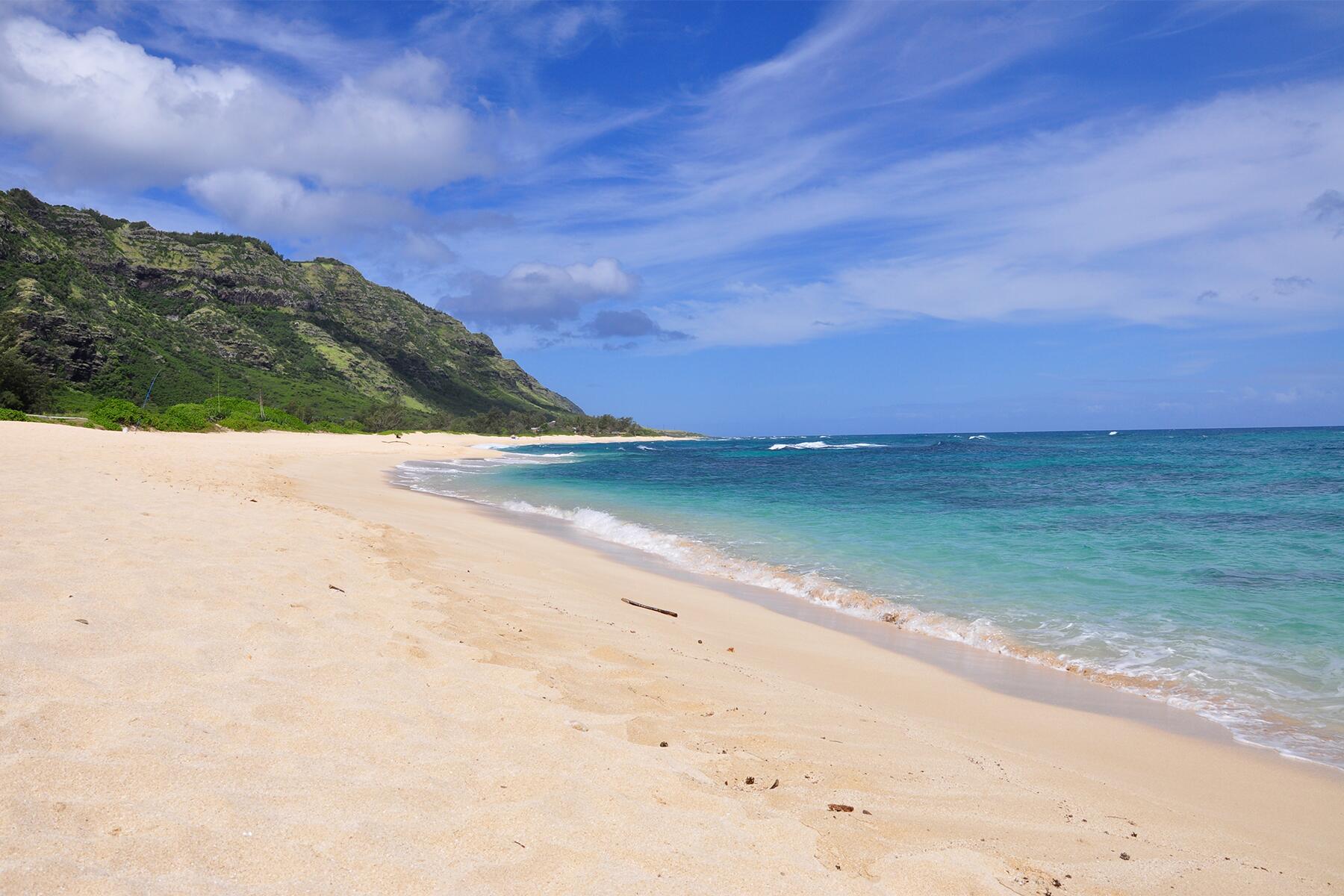

The ‘Green Fee’ will help preserve nature and culture.
Hawaii lawmakers are considering a bill that will require visitors to buy an annual pass to visit the state’s parks, forests, and hiking trails. An online system will be put in place and non-residents would get a license to see sights, while residents of Hawaii will be exempt. Violators will be penalized, but not during the five-year transition and education period.
This comes at a time when the beautiful state is becoming increasingly popular among travelers.
The new governor of the state, Josh Green, proposed a $50 climate impact fee to be paid by every visitor to preserve the natural and cultural resources. But the policy was debated widely as a violation of the constitutional rights of U.S. residents, so the annual license is a new direction by lawmakers. “We get between nine and 10 million visitors a year, [but] we only have 1.4 million people living here. Those 10 million travelers should be helping us sustain our environment,” the governor said.
There is a 50% increase in hiking by travelers, and more people are looking to discover obscure spots in the state. But the state doesn’t have the money to manage these places, Hawaii’s House Tourism Committee Chairman Sean Quinlan said.


Recommended Fodor’s Video
Climate change will bring more problems and while Hawaii invests in sustainability efforts, the state is overrun by tourists who outnumber the residents by a large margin and stretch the resources.
All of those who are 15 years or older and non-residents will contribute to this fund which would be managed by the Department of Land and Natural Resources. Hawaii Green Fee, a coalition pushing for additional funding, is advocating for a green fee to protect and maintain the state’s natural resources that are being impacted by tourism.
“Hawaii residents already invest in our natural resources through the taxes we pay. Despite this, State and local communities do not have the funding needed to protect our natural and cultural resources for the enjoyment of future generations of Hawaii residents and visitors. It is reasonable to ask visitors to also invest in critical green infrastructure that they come to experience,” Hawaii Green Fee states.
Locals are supporting this legislation, but there are a lot of details that still needed to be ironed out such as places that would require a license and how much they would charge. If it passes, Hawaii will become the first U.S. state to have a tourist fee or license.
Related: Do You Enjoy Visiting Hawaii? You Should Pay a Fee
The Problem With Overtourism
The conversation of overtourism in Hawaii has been long ongoing, but it garnered more attention following the pandemic years. In October 2020, the state introduced the ‘Safe Travels’ program that allowed domestic tourists to fly in with a negative test. It was later expanded to include vaccinated travelers. An unforeseen consequence was tourists flocking to the islands in the millions and stressing its limited resources.
Related: I Was That Jacka** Tourist in Hawaii
The traffic has become a problem for residents, and people are being forced out of their homes due to rising property prices. Water restrictions imposed on residents last year were frustrating and locals urged travelers to rethink travel to the islands amid these concerns. Maui made it to the Fodor’s No List for 2023 for this cocktail of reasons.
Sacred sites are often disturbed and damaged by tourists. When Mauna Loa, the planet’s largest active volcano, erupted last year for 12 days, travelers flocked to see the lava flow. However, the sacrosanctity of the wonder was disturbed by tourists throwing trash and marshmallows into the lava. The mayor had to request people to stop.
But this isn’t the first time the state laws or its culture was disrespected by tourists.
Related: Are You a Bad Tourist When You Go to Hawaii? 12 Ways to Avoid Being One
In 2021, a TikToker was criticized for climbing the forbidden Haiku Stairs in Oahu, also known as the Stairway to Heaven. At an elevation of 2,800 feet, the steps were once open to the public but in 1987, they were closed for being dangerous. Still, the hike to the stairs continues to be popular (thank social media for the hashtags) and often tourists have to be rescued on the taxpayers’ dime when they get stuck.
Tourists also touch monk seals, despite clear warnings not to. A woman was fined $500 in 2021 after a social media video of her harassing a monk seal went viral and she received massive backlash. It is illegal to touch, capture, or kill a Hawaiian monk seal. The endangered seal species is endemic to the state and rule-breakers can face a fine of up to $50,000 or a prison sentence up to five years.
Related: The Aloha Spirit Is Not a Free Pass to Act Like an A**
There have been many changes in recent years to manage crowds at popular destinations and reduce traffic in the state. Last year, a reservation system was also introduced for non-residents to visit the iconic Diamond Head State Monument—there’s a $5 fee to visit and $10 to park, and travelers need to book their slot in advance. The Waianapanapa State Park has had an online booking system since 2018.
Some beaches in Maui also have locals-only hours, when residents can park for free on beaches, while tourists have restrictions. Hawaii also charges hefty taxes at hotels.