


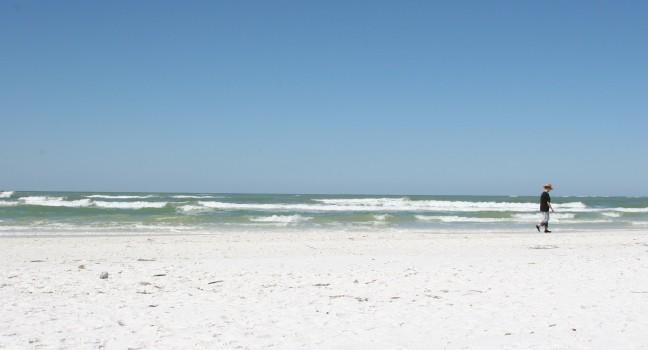
Siesta Key Beach
Get FREE email communications from Fodor's Travel, covering must-see travel destinations, expert trip planning advice, and travel inspiration to fuel your passion.

We've compiled the best of the best in The Tampa Bay Area - browse our top choices for the top things to see or do during your stay.
Roller coasters and other thrill rides are the biggest draw at this theme park, which has some 4 million visitors annually. The twisting Tigris, with a 50-foot skyward surge and dramatic drops, is one of Florida’s tallest coasters. The Iron Gwazi, at more than 200 feet, is the tallest hybrid roller coaster in North America, as well as the fastest and steepest hybrid coaster in the world. The Serengeti Flyer features back-to-back seating in gondolas that swing ever higher and faster as the ride progresses.
The park also has a world-class zoo—with more than 2,000 animals and a live entertainment venue—that provides a full day (or more) of fun for the whole family. The Wild Oasis exhibit puts Bengal tigers center stage and at eye level—allowing you to view them from underground caves and underwater windows. In the 335-acre adventure park's habitats, you can spot some of the world's most endangered and exotic animals. For the best sightings, come early, when it's cooler. Also, to beat the crowds, start in the back of the park and work your way around clockwise. Within this area is also the Wild Oasis realm offering kid-friendly rides and immersive experiences that are designed to entertain and educate.
Catering to the shorter set, the Sesame Street Safari of Fun is a 5-acre kids' playground with themed rides, shows, and water adventures. The Air Grover roller coaster takes kids (and parents) on mini-dives and twisty turns over the Sahara, while Jungle Flyers gets everyone swinging and screeching. Cool off at Congo River Rapids, Stanley Falls (a flume ride), or Bert and Ernie's Watering Hole—complete with bubblers, geysers, water jets, and dumping buckets. Character lunches are available (but you might want to wait until after your rides).
Quiet, secluded, and still wild, this 3½-mile-long barrier island is one of the best shelling beaches on the Gulf Coast. The park also has plenty of sights for birders—from common sandpipers to majestic blue herons to rare black skimmers—and miles of trails through scrub oaks, saw palmettos, and cacti (with tenants such as armadillos, rabbits, and raccoons). The landscape also features mangroves and dunes, and the gradual slope of the sea bottom makes this a good spot for novice swimmers and kids.
You have to get to Caladesi Island by private boat (there's a 108-slip marina) or through its sister park, the Honeymoon Island State Recreation Area, where you take the hourly ferry ride across to Caladesi ($20 per person). You can also paddle yourself over in a kayak.
If you want to get an even closer look at these gentle giants, several dive companies provide opportunities for you to swim among them—if you don't mind shelling out some extra cash, donning a wet suit, and adhering to some strict interaction guidelines. In warmer months, when most manatees scatter, the main spring is fun for a swim or scuba diving.
Here you can see many manatees and several species of fish through a floating glass observatory known as the Fish Bowl—except, in this case, the fish are outside the bowl and you are inside it. The park's wildlife walk trails lead you to excellent manatee, alligator, and other animal programs.
Among the species are bobcats, a western cougar, white-tailed deer, a black bear, pelicans, herons, snowy egrets, river otters, whooping cranes, and even a hippopotamus named Lu—a keepsake from the park's days as an exotic-animal attraction. Boat cruises on Pepper Creek lead you to the Homosassa wildlife park, (which takes its name from a Creek word meaning "place where wild peppers grow").
Roam the fort or wander the beaches of any of the islands within the park. Kayaks and beach cruisers are available to rent, and mementos can be found at a souvenir shop/grill on the park's north side.
Dade City is known mostly for its strawberries, but word is spreading about another, more unusual attraction: the graceful giraffes at this nearly 50-acre ranch. You can view them on a tour—in a safari-style vehicle, on the back of a camel, or aboard a Segway—and hand-feed them cabbage leaves. Other animals that roam the grounds here include zebras and ostriches, a pair of pygmy hippos, and a giant porcupine. In enclosures near the ranch's welcome center and gift shop, you can watch guinea pigs chomp on sweet-potato chunks, hold a baby goat, and feed lemurs or bongos (antelopes). You can also feed and help bathe a pair of rhinos. Most of the activities require an extra fee.
The ranch's proprietors have encyclopedic knowledge of the natural world, and the overall experience is meant to impart a sense of connection with the animal kingdom and the environment. Tours, which start at 11 am and 2 pm, take about 1½ hours, and reservations are required.
The Museum of Art, completed in 1931, was a dream long in the making, with setbacks that included a land bust and Mable's death. Works here range from Indian doorways elaborately carved with Jain deities to paintings by Rubens and other Old Masters—all of it displayed in a seemingly endless number of gorgeously appointed rooms. Contemporary art has dedicated space here, too, as do selections from the museum's photography collection. A newer wing, with its facade of jade-tinged terra-cotta, houses ancient and contemporary Asian art.
Patterned after the Doge's Palace in Venice, Ringling's grand home, Ca' d'Zan, has 32 rooms, 15 bathrooms, and the 61-foot Belvedere Tower. Completed in 1925, the mansion sits along the bay, and its 8,000-square-foot terrace overlooks the dock where Mable moored her gondola. Thirty-minute mansion tours occur on the hour; if you prefer to explore on your own, show up on the half hour for a self-guided tour. Allow time to wander around in Mable's Rose Garden, a lush labyrinth surrounded by towering banyans and filled with rare blooms and haunting statues.
Although the Circus Museum offers a colorful glimpse at the history of the American circus, it's main attraction is arguably the world's largest miniature circus, a 40-year endeavor by master model builder Howard Tibbals. His impressive to-scale replica of the circa 1920s and '30s Ringling Bros. and Barnum & Bailey Circus is astonishingly detailed and accurate—from the number of pancakes the cooks are flipping to the likenesses and costumes of the performers to the names of the animals marked on the mess buckets. If you're looking for clown noses, ringmaster hats, and circus-themed T-shirts, check out the Ringling Museum of Art Store.
A renowned research facility, the Mote is also a popular attraction that draws families and others interested in its international array of ocean creatures. It has a large outdoor habitat featuring a family of frolicking river otters. In the main building, a 135,000-gallon tank lets you view various types of sharks from above and below the surface. Other tanks contain eels, rays, and additional creatures native to area waters. Touch tanks abound here for the little ones, and the not-so faint of heart can scope out a preserved giant squid—a rare find out in the wild. The expanded Seahorse Conservation Lab offers a glimpse into the unusual creatures' lives and how the aquarium helps them survive and thrive. There's also a permanent sea turtle exhibit, as well as manatees, gators, and stingrays.
At the southern tip of St. Pete Beach, one of the area's most popular beaches epitomizes Old Florida. It skirts the west end of historic Pass-a-Grille, a charming neighborhood with stylish yet low-key mom-and-pop motels and restaurants. There's a sunset celebration each night at a pavilion/snack shop on the stretch of beach between the ends of 9th and 10th Avenues. On weekends, check out the Art Mart, an open-air market showcasing the work of local artists. Amenities: food and drink; parking; showers; toilets. Best for: sunset; windsurfing.
Downtown St. Pete's waterfront buzzes thanks to a new, 26-acre entertainment district that's open from 30 minutes before sunrise to 11 pm. With both indoor and outdoor offerings, many of them family-friendly, it's the perfect place to start or finish a day. Highlights include the Spa Beach (finally, no need to drive to the Gulf side!); the shady Coastal Thicket path; the Marketplace, which showcases locally crafted goods; the Waterfront Walk; and the Splash Pad water park for kids. You can also learn about marine life at the hands-on Discovery Center and check out public artworks throughout the pier. Note, too, that the city's renowned Museum of Fine Arts is just a five-minute walk away.
Restaurant options include Doc Ford's, with waterfront views at the start of the pier, and Teak, which has water and skyline vistas as well as a rooftop tiki bar that's the perfect place to enjoy sunsets. The newest eatery, Perry's Porch, offers a relaxed setting with a menu inspired by the city's character and history.
A peninsula that's technically part of Treasure Island, this 2-mile-long outcrop is one of Tampa Bay's best-kept secrets. The northern end has a mixed crowd—from bikers to spring breakers—the middle portion is good for families (there's a pavilion and playground at around 78th and West Gulf Boulevard), and the southern tip attracts the LGBTQ+ crowd. Surfers hit up Sunset Beach on the rare occasion that the Gulf has swells. Once you turn onto West Gulf, you can find multiple paid parking lots. There are several pay lots starting to your right just south of 82nd Avenue. If you opt to take advantage of the neighborhood's abundant side-street parking, make sure you park legally—it's all too easy to unwittingly get a ticket here. Amenities: parking; toilets. Best for: partiers; solitude; sunset.
At Weeki Wachee Springs, the spring flows at the remarkable rate of 170 million gallons a day with a constant temperature of 74°F. The spring has long been famous for its live "mermaids," clearly not the work of Mother Nature, as they wear bright costumes and put on an underwater choreography show that's been virtually unchanged since the park opened in 1947—making it a classic piece of Florida history and culture.
It also features snorkel tours and canoe trips on the river, and a wilderness boat ride gives an up-close look at raccoons, otters, egrets, and other semitropical Florida wetlands wildlife. In summer Buccaneer Bay water park opens for swimming, beaching, and riding its thrilling slides and flumes.
From spring until fall, Busch Gardens' water park promises heat relief with rides like Vanish Point, Aruba Tuba, and Caribbean Corkscrew. Tampa's most popular "wet" park features waterslides and artificial wave pools, along with tranquil "beaches" in a 30-acre package. Try Colossal Curl, a massive thrill ride that's the tallest waterslide in the park. Another of the attraction's headliners, Riptide, challenges you to race three other riders on a sliding mat through twisting tubes and hairpin turns.
Planners of this park also took the younger kids into account, with offerings such as Castaway Falls, a splash and play area along with Shaka-Laka Shores which has a scaled-down pool and interactive water gym. Along with a volleyball complex and a rambling river, there are cafés, snack bars, picnic and sunbathing areas, changing rooms, and private cabanas. Good discounts are offered on the park's website.
This narrow yet secluded beach fronts Tampa Bay at Passage Key Inlet and the Gulf of Mexico. It's also situated between two fishing piers. Don't forget to bring the picnic gear to this unforgettably scenic stretch of shoreline. Amenities: showers; toilets. Best for: solitude; sunset.
This upscale stretch along Downtown's waterfront is the epicenter of St. Pete's cultural revival and serves as the city's restaurant row. Tons of pricey shops and alfresco eateries line the east side of this blocks-long promenade, giving it a European feel. Highlights include the Museum of Fine Arts, St. Petersburg and the restaurant Bella Brava. Dazzling waterfront parks, which are often packed during the area's many weekend festivals, flank the drive's west side.
At this natural and cultural history museum, an aquarium focuses on manatee rehabilitation, and a first-floor gallery features fossils that tell the story of prehistoric Florida. Explore rotating exhibits on various topics; glass cases and roll-out drawers on the second floor showcase items normally out of public view. Topics covered in programs at the Bishop Planetarium (with a domed theater screen) range from black holes to the origin of life itself.
Overlooking the Manatee River, this 1.5-mile path connects downtown Bradenton attractions to the waterfront. The path spans the Green and Desoto bridges and offers various activities, including a splash fountain, a skate park, a canoe and kayak launch, a beach volleyball court, a fishing pier, outdoor seating, and a 20-slip day dock. Various groups use the outdoor amphitheater for special events, and musical and theatrical performances. An eastward expansion of the Bradenton Riverwalk is planned.
You can step back into the past at Centennial Park, which re-creates a period streetscape and hosts a farmers' market every Saturday, as well as festivals, pottery classes, and other events throughout the year.
A hidden gem just north of downtown, this garden is a magical place for children and their families. Connect with nature and explore this whimsical world featuring more than 2 acres of gardens, old trees, and imaginative outdoor play structures. The center also regularly presents kid-friendly events—story times, nature walks, arts-and-crafts workshops, and gardening programs—and has a costume room and cottage where children can play dress-up.
This aquarium gives you the opportunity to participate in the work of saving and caring for endangered marine species. Many of the sea turtles, dolphins, and other animals living at the aquarium were brought here to be rehabilitated from an injury or saved from danger. The dolphin exhibit has an open-air arena giving the dolphins plenty of room to jump during their shows.
This aquarium is also home to Hope, star of the Dolphin Tale film franchise. The aquarium conducts tours of the bays and islands around Clearwater, including a daily cruise on a pontoon boat (you might just see a wild dolphin or two), and kayak tours of Clearwater Harbor and St. Joseph Sound.
Singles and families flock to Coquina Beach, a wide swath of sand at the southern end of Anna Maria Island. Beach walkers love this stretch since it's Anna Maria's longest beach. Amenities: food and drink; showers; toilets. Best for: solitude; swimming; walking.
Towering Australian pines greet you at the entrance to this popular beach park, a favorite among locals and visitors alike. Amenities: showers; toilets. Best for: solitude; swimming; walking.
Hernando de Soto, one of the first Spanish explorers to land in North America, came ashore with his men and 200 horses near what is now Bradenton in 1539. This federal park commemorates De Soto's expedition and the Native Americans he and his crew encountered.
During the height of tourist season, from mid-December to late April, park staff and volunteers dress in period costumes at Camp Uzita, demonstrate the use of 16th-century weapons, and show how European explorers prepared and preserved food for their overland journeys. The season ends with a reenactment of the explorer's landing. The site also offers a film and short nature trail through the mangroves.
In the middle of the mouth of Tampa Bay lies the small (350 acres), largely unspoiled but critically eroding island Egmont Key, now a state park, national wildlife refuge, national historic site, and bird sanctuary. On the island are the ruins of Fort De Soto's sister fortification, Fort Dade, built during the Spanish-American War to protect Tampa Bay. The primary inhabitants of the less-than-2-mile-long island are the threatened gopher tortoise and box turtles.
The only way to get here is by boat, and you can catch a ferry from Fort De Soto, among other places; area operators include Hubbard's Marina, Dolphin Landings, and Island Boat Adventures. It's well worth the trip—the beach here is excellent for shelling, secluded beach bathing, wildlife viewing, and snorkeling.
Although eels, sharks, and stingrays are the headliners, this aquarium is much more than a giant fishbowl. The architectural landmark features an 83-foot-high, tiered glass dome; 250,000 square feet of air-conditioned exhibit space; and more than 20,000 aquatic plants and animals—from blacktip sharks to leafy sea dragons—from Florida and elsewhere in the world. Interactive displays, behind-the-scenes tours, and in-water adventures let you get hands-on—and get your feet wet.
The 500,000-gallon Coral Reef Gallery has a 43-foot-wide panoramic opening, viewing windows, and a walk-through tunnel where you feel as if you've entered the depths. A thicket of elkhorn coral teems with tropical fish, a dark cave reveals sea life normally seen only on night dives, and South African penguins make daily appearances. Another highlight is the Indian Ocean coral reef at the Journey to Madagascar exhibit, which also features ring-tailed lemurs and hissing cockroaches.
Meanwhile, the Wetlands of Florida exhibit, an immersive experience, allows guests to explore the state's freshwater and brackish environments, as well as its native species. Shorelines helps visitors get acquainted with animals found under the state's coastal rock pilings and bridges—spiny lobsters, garden eels, and pufferfish. And get up close and personal with slippery, velvety stingrays in the Stingray Beach habitat.
If you have an extra 90 minutes, try the Wild Dolphin Cruise, which takes up to 130 passengers onto Tampa Bay in a 72-foot catamaran to see bottlenose dolphins and other wildlife.
Florida flora and fauna shine in more than a dozen gardens and natural areas at these botanical gardens, open to visitors for free nearly every day of the year. You can wander through areas devoted to native plants, cacti and succulents, and a butterfly garden. You never know what sort of wildlife you might encounter—alligators, birds, and turtles—in the Aquatic Habitat, consisting of a gorgeous retention pond and McKay’s Creek.
Downtown St. Petersburg's Florida Holocaust Museum is one of the largest of its kind in the United States. In addition to hosting rotating exhibits, it has the permanent History, Heritage, and Hope exhibit; an original boxcar; and an extensive collection of photographs, art, and artifacts. One compelling display includes portraits and biographies of Holocaust survivors. Its newest artifact, the Thor, is a Danish fishing boat that was used to rescue more than 7,000 Jews in 1943. It was also recently entrusted with the Elie Wiesel Collection. The museum was conceived as a learning center for children, so many of the displays avoid overly graphic content. Signs are posted outside galleries where the subject matter might be too intense for kids.
If you need to relax after a long day of playing in the water, this remote beach is it, and getting here is half the fun. Situated at the terminus of Fort Island Trail, the same road where you'll find the Plantation on Crystal River, the beach is a 9-mile drive through wetlands with sweeping views along the way (though the Crystal River nuclear plant looms to the north). The beach itself is raw and subdued, with few frills, though there are picnic shelters, barbecues, and a fishing pier. Amenities: showers; toilets. Best for: solitude; sunset.


