


112 Best Sights in San Diego, California

We've compiled the best of the best in San Diego - browse our top choices for the top things to see or do during your stay.
Botanical Building

Open once again following a years long revitalization project, the Botanical Building has updated features like LED lighting, water features, and interior misters. The graceful redwood-lath structure, built for the 1915 Panama–California International Exposition, houses more than 2,000 types of tropical and subtropical plants plus changing seasonal flower displays. Ceiling-high tree ferns shade fragile orchids and feathery bamboo. The rectangular pond outside, filled with lotuses and water lilies that bloom in spring and fall, is popular with photographers.
Torrey Pines State Natural Reserve
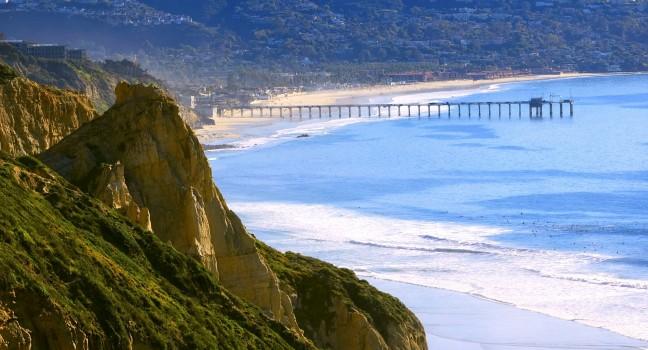
You can unwrap your sandwiches, however, at Torrey Pines State Beach, just below the reserve. When the tide is out, it's possible to walk south all the way past the lifeguard towers to Black's Beach over rocky promontories carved by the waves (avoid the bluffs, however; they're unstable). Los Peñasquitos Lagoon at the north end of the reserve is one of the many natural estuaries that flow inland between Del Mar and Oceanside. It's a good place to watch shorebirds. Volunteers lead guided nature walks at 10 am on Friday, Saturday, Sunday, and holidays.
Recommended Fodor's Video
Balboa Park Carousel
Suspended an arm's length away on this antique merry-go-round is the brass ring that could earn you an extra free ride (it's one of the few carousels in the world that continue this bonus tradition). Hand-carved in 1910, the original menagerie carousel features colorful murals, big-band music, and bobbing animals including zebras, giraffes, and dragons; real horsehair was used for the tails.
Belmont Park
The once-abandoned amusement park between the bay and Mission Beach boardwalk is now a shopping, dining, and recreation complex. Twinkling lights outline the Giant Dipper, an antique wooden roller coaster on which screaming thrill seekers ride more than 2,600 feet of track and 13 hills (riders must be at least 4 feet, 2 inches tall). Celebrating its hundredth birthday in 2025 and listed on the National Register of Historic Places, this is one of the few old-time roller coasters left in the United States.
Other Belmont Park attractions include miniature golf, a laser maze, video arcade, bumper cars, a tilt-a-whirl, and an antique carousel. The zipline thrills as it soars over the crowds below, while the rock wall challenges both junior climbers and their elders.
The Plunge San Diego indoor swimming pool was the largest—60 feet by 125 feet—saltwater pool in the world when it opened in 1925; it's had freshwater since 1951. Johnny Weismuller and Esther Williams are among the stars who were captured on celluloid swimming here. After an extensive renovation, the pool now features expansive windows and a retractable glass ceiling, and is once again a San Diego landmark. Open to the public, its many lap lanes and a large inflatable obstacle course make the Plunge San Diego a popular choice for athletes and recreational swimmers alike.
Cabrillo National Monument
Chicano Park
Coronado Beach
Crystal Pier
Stretching out into the ocean from the end of Garnet Avenue, Crystal Pier is Pacific Beach's landmark. In the 1920s, it was a classic amusement park complete with ballroom. Today, it's mainly comprised of a series of quaint cottages that are all a part of the Crystal Pier Hotel. Guests have access to fishing, as well as the intersecting Mission Beach boardwalk. For those that aren't hotel guests, you may access the pier through a side gate from 8 am to sunset.
Fiesta de Reyes
North of San Diego's Old Town Plaza lies the area's unofficial center, built to represent a colonial Mexican plaza. The collection of more than a dozen shops and restaurants around a central courtyard in blossom with magenta bougainvillea, scarlet hibiscus, and other flowers in season reflects what early California might have looked like from 1821 to 1872. Mariachi bands and folklorico dance groups frequently perform on the plaza stage—check the website for times and upcoming special events. Casa de Reyes is a great stop for a margarita and some chips and guacamole.
Hillcrest Farmers Market
Hotel del Coronado
The Del's distinctive red-tile roofs and Victorian gingerbread architecture have served as a set for many movies, political meetings, and extravagant social happenings. It's speculated that the Duke of Windsor may have first met the Duchess of Windsor, Wallis Simpson, here. Eleven presidents have been guests of the Del, and the film Some Like It Hot—starring Marilyn Monroe, Jack Lemmon, and Tony Curtis—used the hotel as a backdrop.
The Hotel Del, as locals call it, was the brainchild of financiers Elisha Spurr Babcock Jr. and H. L. Story, who saw the potential of Coronado's virgin beaches and its view of San Diego's emerging harbor. It opened in 1888 and has been a National Historic Landmark since 1977. The History Gallery displays photos from the Del's early days, and books elaborating on its history are sold, along with logo apparel and gifts, in the hotel's 17 shops and boutiques.
Although the pool area is reserved for hotel guests, several surrounding dining patios make great places to sit back and imagine the scene during the 1920s, when the hotel rocked with good times. Behind the pool area, an attractive shopping arcade features a classic candy shop as well as several fine clothing and accessories stores. A lavish Sunday brunch is served in the Crown Room. During the holidays, the hotel hosts Skating by the Sea, an outdoor beachfront ice-skating rink open to the public. Whether or not you're staying at the Del, enjoy a drink at the Sun Deck Bar and Grill or Beach & Taco Shack in order to gaze out over the ocean—they make for a great escape.
In 2025, the hotel completed its $550 million renovation of its historic Victorian building and welcomed Japanese restaurant Nobu to its lineup of eateries. History tours of the Del are $40 per person and take place daily at 10 am and Friday through Sunday at 2 pm. Tours are free for children ages five and under.
Inez Grant Parker Memorial Rose Garden and Desert Garden
These neighboring gardens sit just across the Park Boulevard pedestrian bridge and offer gorgeous views over Florida Canyon. The award-winning formal rose garden contains 1,600 roses representing nearly 130 varieties; peak bloom is usually in April and May but the garden remains beautiful and worthy of a visit year-round. The adjacent Desert Garden provides a striking contrast, with 2½ acres of succulents and desert plants seeming to blend into the landscape of the canyon below.
Japanese Friendship Garden
A koi pond with a cascading waterfall, a cherry tree grove, and the serene Inamori tea pavilion are highlights of the park's authentic Japanese garden, designed to inspire contemplation and evoke tranquillity. You can wander the various peaceful paths spread over 12 acres and meditate in the traditional stone and Zen garden. The garden is generally open daily from 10 am to 6 pm, but check for early closures and note the final admission ends at 5 pm.
La Jolla Cove
Maritime Museum
From sailing ships to submarines, the Maritime Museum is a must for anyone with an interest in nautical history. This collection of restored and replica ships affords a fascinating glimpse of San Diego during its heyday as a commercial seaport. The jewel of the collection, the Star of India, was built in 1863 and made 21 trips around the world in the late 1800s. Saved from the scrapyard and painstakingly restored, the windjammer is the oldest active iron sailing ship in the world. The newly constructed San Salvador is a detailed historic replica of the original ship that first sailed into San Diego Bay by explorer Juan Rodriguez Cabrillo back in 1542, and the popular HMS Surprise is a replica of an 18th-century British Royal Navy frigate. The museum's headquarters are on the Berkeley, an 1898 steam-driven ferryboat, which served the Southern Pacific Railroad in San Francisco until 1958.
Numerous cruises of San Diego Bay are offered, including a daily 45-minute narrated tour aboard a 1914 pilot boat and four-hour weekend sails aboard the topsail schooner the Californian, the state's official tall ship, and 75-minute tours aboard a historic swift boat, which highlights the city's military connection. Partnering with the museum, the renowned yacht America also offers sails on the bay as an add-on experience, and whale-watching excursions are available in winter.
Mingei International Museum
The name "Mingei" comes from the Japanese words min, meaning "all people," and gei, meaning "art." Thus the museum's name describes what's found under its roof: "art of all people." The Mingei's colorful and creative exhibits of folk art feature toys, pottery, textiles, costumes, jewelry, and curios from around the globe. Traveling and permanent exhibits in the sleek, high-ceilinged museum include everything from American quilts with geometric designs to the latest in Japanese tea bowls. The gift shop carries items related to major exhibitions as well as artwork from various cultures worldwide, such as Zulu baskets, Turkish ceramics, and Mexican objects. A major renovation unveiled in late 2021 includes a large public commons space and courtyard featuring one of the park's most exciting dining options, Artifact at Mingei.
Mission Basilica San Diego de Alcalá
It's hard to imagine how remote California's earliest mission must have once been; these days, however, it's accessible by major freeways (I–15 and I–8) and via the San Diego Trolley. The first of a chain of 21 missions stretching northward along the coast, Mission San Diego de Alcalá was established by Father Junípero Serra on Presidio Hill in 1769 and moved to this location in 1774. In 1775, it proved vulnerable to enemy attack, and Padre Luís Jayme, a young friar from Spain, was clubbed to death by the Kumeyaay Indians he had been trying to convert. He was the first of more than a dozen Christians martyred in California. The present church, reconstructed in 1931 following the outline of the 1813 church, is the fifth built on the site. It measures 150 feet long but only 35 feet wide because, without easy means of joining beams, the mission buildings were only as wide as the trees that served as their ceiling supports were tall. Father Jayme is buried in the sanctuary; a small museum named for him documents mission history and exhibits tools and artifacts from the early days; there is also a gift shop. From the peaceful, palm-bedecked gardens out back you can gaze at the 46-foot-high campanario (bell tower), the mission's most distinctive feature, with five bells. Mass is celebrated on the weekends.
Mission Bay Park
San Diego's monument to sports and fitness, this 4,235-acre aquatic park has 27 miles of shoreline including 19 miles of sandy beaches. Playgrounds and picnic areas abound on the beaches and low, grassy hills. On weekday evenings, joggers, bikers, and skaters take over. In the daytime, swimmers, water-skiers, paddleboarders, anglers, and boaters—some in single-person kayaks, others in crowded powerboats—vie for space in the water.
Mission Beach Boardwalk
The cement pathway lining the sand from the southern end of Mission Beach north to Pacific Beach is always bustling with activity. Cyclists ping the bells on their beach cruisers to pass walkers out for a stroll alongside the oceanfront homes. Vacationers kick back on their patios while friends play volleyball in the sand. The activity picks up alongside Belmont Park, where people stop to check out the action at the amusement park and beach bars.
Museum of Contemporary Art San Diego
Driving along Coast Boulevard, it is hard to miss the mass of watercraft jutting out from the rear of the Museum of Contemporary Art San Diego (MCASD) La Jolla location. Pleasure Point by Nancy Rubins is just one example of the mingling of art and locale at this spectacular oceanfront setting.
The oldest section of La Jolla's branch of San Diego's contemporary art museum was originally a residence, designed by Irving Gill for philanthropist Ellen Browning Scripps in 1916. In the mid-1990s the compound was updated and expanded by architect Robert Venturi, who respected Gill's original geometric structure and clean mission-style lines while adding his own distinctive touches. An expansion in 2020 quadrupled existing gallery space. The result is a striking contemporary building that looks as though it's always been here.
The light-filled Axline Court serves as the museum's entrance and does triple duty as reception area, exhibition hall, and forum for special events, including The Gala each September, attended by the town's most fashionable folk. Inside, the museum's artwork gets major competition from the setting: you can look out from the top of a grand stairway onto a landscaped garden that contains permanent sculpture exhibits as well as rare 100-year-old California plant specimens and, beyond that, to the Pacific Ocean.
Artists from San Diego and Tijuana figure prominently in the museum's permanent collection of post-1950s art, but the museum also includes examples of every major art movement through the present—works by Andy Warhol, Robert Rauschenberg, Frank Stella, and Joseph Cornell, to name a few. The museum also gets major visiting shows. Head to the museum's shop for unique cards and gifts. The street-facing plaza at the museum café is a great spot to relax and recharge.
Free tours are offered at 2 on Sunday.
Museum of Us
Originally known as San Diego Museum of Man, the name was changed in efforts to reflect values of equity, inclusion, and decolonization. If the facade of this building—the landmark California Building—looks familiar, it's because filmmaker Orson Welles used it and its dramatic tower as the principal features of the Xanadu estate in his 1941 classic, Citizen Kane. Closed for 80 years, the tower is now open for public tours. An additional timed ticket and a climb up 125 steps is required, but the effort will be rewarded with spectacular 360-degree views of the coast, Downtown, and the inland mountains. Back inside, exhibits at this highly respected anthropological museum focus on Native Californians, ancient Egyptians, and Maya Peoples. Carved monuments from the Mayan city of Quirigua in Guatemala, cast from the originals in 1914, are particularly impressive. Exhibits might include examples of intricate beadwork from across the Americas, the history of Egyptian mummies, or the lifestyles of the Kumeyaay, indigenous peoples of the present-day San Diego area. Tower tours are timed-entry and can be booked in advance through the website or on arrival at museum.
The New Children's Museum (NCM)
The NCM blends contemporary art with unstructured play to create an environment that appeals to children as well as adults. The 50,000-square-foot structure was constructed from recycled building materials, operates on solar energy, and is convection-cooled by an elevator shaft. It also features a gift shop, a nutritious and eco-conscious café, and as of 2024, 8,600 additional square feet of new gallery space, an Education Commons area, and an expanded art studio.
Interactive exhibits include designated areas for toddlers and teens, as well as plenty of activities for the entire family. Several art workshops are offered each day, as well as hands-on studios where visitors are encouraged to create their own art. The studio projects change frequently and NCM regularly hosts events such as author visits, workshops, and a variety of other activities. The adjoining 1-acre park and playground is across from the convention center trolley stop and limited underground parking is available for $20.
Old Town San Diego State Historic Park
The six square blocks on the site of San Diego's original pueblo are the heart of Old Town. Most of the 20 historic buildings preserved or re-created by the park cluster are around Old Town Plaza, bounded by Wallace Street on the west, Calhoun Street on the north, Mason Street on the east, and San Diego Avenue on the south. The plaza is a pleasant place to rest, plan your tour of the park, and watch passersby. San Diego Avenue is closed to vehicle traffic here.
Some of Old Town's buildings were destroyed in a fire in 1872, but after the site became a state historic park in 1968, reconstruction and restoration of the remaining structures began. Five of the original adobes are still intact: La Casa de Estudillo, La Casa de Machado y Stewart, La Casa de Machado y Silvas, the Pedrorena-Altamirano House, and La Casa de Bandini (now the Cosmopolitan Hotel).
Facing Old Town Plaza, the Robinson-Rose House was the original commercial center of Old San Diego, housing railroad offices, law offices, and the first newspaper press. The largest and most elaborate of the original adobe homes, the Casa de Estudillo was occupied by members of the Estudillo family until 1887 and later gained popularity for its billing as "Ramona's Marriage Place" based on a popular novel of the time. Albert Seeley, a stagecoach entrepreneur, opened the Cosmopolitan Hotel in 1869 as a way station for travelers on the daylong trip south from Los Angeles. Next door to the Cosmopolitan Hotel, the Seeley Stable served as San Diego's stagecoach stop in 1867 and was the transportation hub of Old Town until 1887, when trains became the favored mode of travel.
Several reconstructed buildings serve as restaurants or as shops purveying wares reminiscent of those that might have been available in the original Old Town. Racine & Laramie, a painstakingly reproduced version of San Diego's first cigar store in 1868, is especially interesting.
Pamphlets available at the Robinson-Rose House give details about all the historic houses on the plaza and in its vicinity. Free 45-minute walking tours of the historic park are offered daily at 11 am and 2 pm; they depart from the Robinson-Rose House.
The covered wagon located near the intersection of Mason and Calhoun Streets provides a great photo op.
Orange Avenue
Comprising Coronado's business district and its village-like heart, this avenue is one of the most charming spots in Southern California. Slow-paced and very "local" (the city fights against chain stores), it's a blast from the past, although entirely up to date in other respects. The military presence—Coronado is home to the U.S. Navy Sea, Air, and Land (SEAL) forces and has two Navy bases—is reflected in shops selling military gear and places like McP's Irish Pub, at No. 1107. A family-friendly stop for a good, all-American meal, it's the unofficial SEALs headquarters. Many clothing boutiques, home-furnishings stores, and upscale restaurants cater to visitors with deep pockets, but you can buy hardware supplies, too, or get a genuine military haircut at Crown Barber Shop, at No. 947. If you need a break, stop for a latte at the sidewalk café of Bay Books, one of San Diego's largest independent bookstores, at No. 1007.
San Diego Air & Space Museum
By day, the streamlined edifice looks like any other structure in the park; at night, outlined in blue neon, the round building appears—appropriately enough—to be a landed UFO. Every available inch of space in the rotunda is filled with exhibits about aviation and aerospace pioneers, including examples of enemy planes from World War I and II. There are dozens of full-size aircraft on the floor and hanging from the rafters. In addition to exhibits from the dawn of flight to the jet age, the museum displays a growing number of space-age exhibits, including the actual Apollo 9 command module. To test your own skills, you can ride in a two-seat Max Flight simulator or try out one of the four aerial combat simulators. Movies in the 3D/4D theater are included with admission.
San Diego Museum of Art
Known for its Spanish baroque and Renaissance paintings, including works by El Greco, Goya, and Rubens, the city's most comprehensive art museum also has strong holdings of South and East Asian art, ancient miniatures from India, and German expressionist paintings. The museum's exhibits tend to have broad appeal, and if traveling shows from other cities come to town, you can expect to see them here. Free 45-minute docent tours are offered throughout the day. An outdoor Sculpture Court and Garden exhibits both traditional and modern pieces. Enjoy the view over a craft beer and some locally sourced food in the adjacent Panama 66 courtyard restaurant.
San Diego Zoo
Exploring the zoo fully requires the stamina of a healthy hiker, but open-air, double-decker buses that run throughout the day let you zip through three-quarters of the exhibits on a guided 35-minute, 3-mile tour. The Skyfari Aerial Tram, which soars 170 feet above the ground, gives a good overview of the zoo's layout and, on clear days, a panorama of the park, Downtown San Diego, the bay, and the ocean, far beyond the San Diego–Coronado Bridge.
Unless you come early, expect to wait for the tour bus, and especially for the top tier—the line can take more than 45 minutes; if you come at midday on a weekend or school holiday, you'll be doing the in-line shuffle for a while. Don't forget the San Diego Zoo Safari Park, the zoo's 1,800-acre extension to the north at Escondido.
Spreckels Organ Pavilion
The 2,400-bench-seat pavilion, dedicated in 1915 by sugar magnates John D. and Adolph B. Spreckels, holds the more than 5,000-pipe Spreckels Organ, the largest outdoor pipe organ in the world. You can hear this impressive instrument at one of the year-round, free, 2 pm Sunday concerts, regularly performed by the city's civic organist Raúl Prieto Ramírez and guest artists—a highlight of a visit to Balboa Park. On Monday evening from late June to mid-August, internationally renowned organists play evening concerts. At Christmastime, the park's Christmas tree and life-size Nativity display turn the pavilion into a seasonal wonderland.


