



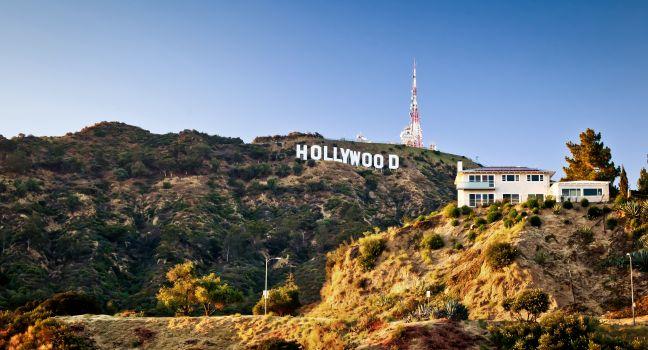
Hollywood Sign
Get FREE email communications from Fodor's Travel, covering must-see travel destinations, expert trip planning advice, and travel inspiration to fuel your passion.

We've compiled the best of the best in Los Angeles - browse our top choices for the top things to see or do during your stay.
The turn-of-the-20th-century funicular, dubbed "the shortest railway in the world," operated between 1901 and 1969, when it was dismantled to make room for an urban renewal project. Almost 30 years later, Angels Flight returned with its original orange-and-black wooden cable cars hauling travelers up a 298-foot incline from Hill Street to the fountain-filled Watercourt at California Plaza. Your reward is a stellar view of the neighborhood. Tickets are $1 each way, but you can buy a souvenir round-trip ticket for $2 if you want something to take home with you.
The oldest section of the city, known as El Pueblo de Los Angeles, represents the rich Mexican heritage of L.A. It had a close shave with disintegration in the early 20th century, but key buildings were preserved, and eventually
At the beginning of Olvera Street is the Plaza, a Mexican-style park with plenty of benches and walkways shaded by a huge Moreton Bay fig tree. On weekends, mariachi bands and folkloric dance groups perform. Nearby places worth investigating include the historic Avila Adobe, the Chinese American Museum, the Plaza Firehouse Museum, and the America Tropical Interpretive Center. Exhibits at the Italian American Museum of Los Angeles chronicle the area's formerly heavy Italian presence.
Built in 1931, the 2,200-seat Los Angeles Theatre opened with the premiere of Charlie Chaplin's classic City Lights. Full of glorious French baroque–inspired details, the six-story lobby is awe-inspiring with its dramatic staircase, enormous fountain, grandiose chandeliers, and ornate gold detailing. You can occasionally witness the old Hollywood glamour by catching a special movie screening.
The Million Dollar Theater opened in 1918 as part of Sid Grauman's famed chain of movie theaters. This Spanish baroque–style venue had the special feature of having its own organ. Film stars such as Gloria Swanson, Rudolph Valentino, and a young Judy Garland frequently made appearances. In the '40s, the venue swung with jazz and big band performers including Billie Holiday. The theater is open for special events and is worth a stop if you're walking past to inspect the lavish exterior with entertainment figures carved into the molding.
Established in 1771 as the fourth of 21 missions founded in California, this massive adobe complex was dedicated by Father Junípero Serra to St. Gabriel. Within the next 50 years, San Gabriel Arcángel became the wealthiest of all California missions. In 1833 the Mexican government confiscated the mission, allowing it to decline. The U.S. government returned the mission to the church in 1855, but by this time the Franciscans had departed. In 1908 the Claretian Missionaries took charge and poured much care into preserving the rich history, albeit without a focus on the indigenous people who built the mission. A devastating arson fire in 2020 has resulted in a grand reopening with newly reimagined museum exhibitions centering the thousands of Native Americans who built and were baptized on the site. The cemetery here, the first in L.A. County, is said to contain approximately 6,000 Gabrieleños. Tranquil grounds are lushly planted and filled with remnants of what life was like two centuries ago. Public mass is held at the mission Sunday morning at 7 and 10, but check ahead as times are subject to change. If you're lucky, you'll hear the six bells that ring out during special services—a truly arresting experience. You can take a self-guided tour of the grounds here by purchasing a map in the gift shop.
Built in 1816 as a gristmill for the San Gabriel Mission, the mill is the state's oldest commercial building and one of the last remaining examples in Southern California of Spanish Mission architecture. The thick adobe walls and textured ceiling rafters give the interior a sense of quiet strength. Outside, a chipped section of the mill's exterior reveals the layers of brick, ground seashell paste, and ox blood used to hold the structure together. The surrounding gardens, an accredited arboretum, are reason enough to visit, with a flower-decked arbor and old sycamores and oaks. In summer, the Capitol Ensemble performs in the garden.


