1182 Best Sights in Canada

Background Illustration for Sights

We've compiled the best of the best in Canada - browse our top choices for the top things to see or do during your stay.

Victoria Park

Fodor's Choice

At 3,000 acres, this park on the edge of downtown has wooded hiking trails, a viewpoint, a winding stream, two waterfalls, public tennis courts, and an outdoor (heated) pool. Even if you're not staying in Truro, this park can be a good pit stop for car-weary travelers: kids especially will enjoy the pool, water spray park, picnic pavilion, and playground. Energetic visitors can climb the 175 steps of the Jacob's Ladder staircase. 

Victoria Row

Fodor's Choice

The section of Richmond Street between Queen and Great George streets is home to a variety of shops (Island crafts, art, hand-knitted sweaters, chocolates, vintage apparel, and ceramics are just some of the options), together with some excellent restaurants and much-loved-by-locals Receiver Coffee. This vibrant, compact stretch of road comes alive in summer, when traffic is blocked off and you'll frequently see musicians perform at lunchtime or in the evening. For more shopping, head around the corner to Queen Street or Water Street.

Victoria Row, Charlottetown, PE, C1A 1J1, Canada

Something incorrect in this review?

Village Historique de Val-Jalbert

Fodor's Choice

Powerful Ouiatchouan Falls, higher than Niagara Falls, overlook and long ago powered this once thriving mill town. Ultramodern in its day, the village had electricity and running water 25 years before the rest of Québec, but administrative and production pitfalls closed the mill and by 1927 all the residents had departed. Today, you can see the beautifully restored mill, post office, general store, and butcher shop, then hike to the top of the falls, where a glass platform puts you directly over the center of the cascade. Modern accommodations are available within the general store and some restored period houses, and campgrounds and rustic cottages to rent are other options.

Recommended Fodor's Video

West Point Lighthouse Museum

Fodor's Choice

Built in 1875, lit in 1876, manned until 1963, and still operating today, the West Point Lighthouse is a certifiable PEI icon. A gracefully tapered shape and eye-popping black-and-white stripes make the 69-foot structure very photogenic. Inside, displays and assorted artifacts relating to lighthouses provincewide make it educational, too. Be sure to climb the 72 steps to the top for panoramic views. Beautiful any time of day, they are especially glorious at sunset because the lighthouse faces west.

Westholme Tea Company

Fodor's Choice

Victor Vesely and Margit Nellemann have proven agriculture officials, who said tea couldn't be grown in Canada, wrong. They planted two terraces of Camellia sinensis on about half an acre overlooking an old dairy barn in 2010. The barn has since been converted to a tea shop and gallery and their first crop of single-origin spring harvest tea, Swallow Tail Oolong, was released July 1, 2016. Also available are imported artisanal teas blended with herbs and flowers grown on the farm and popular Chinese zodiac–sign teas. The adjoining gallery features Margit's exquisite ceramic teapots and more. Book in for a Tea Tasting workshop or Tea Experience, including a guided tasting and tour of the tea garden.

8350 Richards Trail, Duncan, BC, V9L 6B2, Canada
250-748–3811
Sight Details
Closed Mon. and Tues.
Advance booking required for Tea Experiences

Something incorrect in this review?

Wyatt Historic House Museum

Fodor's Choice

Built in 1867 (the year Canada was "born"), the restored, heirloom-filled home of a prominent local family feels like a Summerside time capsule. Guided interpretive tours last about 50 minutes. There are concerts in the garden on Wednesdays, and this is also a venue during the Summerside Lobster Carnival and Summerside Arts Festival. The entry fee also admits you to another of the Wyatt Heritage Properties: the Lefurgey Cultural Centre at 205 Prince Street.

85 Spring St., Summerside, PE, C1N 4K4, Canada
902-432–1332
Sight Details
C$10
Closed Sun., Mon., and Oct.–late June

Something incorrect in this review?

Xplorer Program

Fodor's Choice

Year-round, the park offers the Xplorer Program for kids age 6 to 11. Pick up an Xplorer Booklet at one of the park's visitor centers. Kids who complete at least six of the booklet's 22 activities receive a souvenir.

Zoo Sauvage de Saint-Felicien

Fodor's Choice

Cougars, polar bears, grizzly bears, Canadian lynx, American bison, and Japanese macaques are among the 75 species that roam open environments here. Between June and October, guides lead overnight tours in the Land of the Caribou, including hiking, a campfire meal, and canoeing on Lac Montagnais, where caribou may swim right by your boat.

2230 boul. du Jardin, St-Félicien, G8K 0H1, Canada
800-667--5687
Sight Details
C$44.99

Something incorrect in this review?

Jardin des Gouverneurs

Upper Town
Obelisk at Governors Garden in Quebec City, Canada.
gregobagel / iStockphoto

In this small park just south of the Château Frontenac stands the Wolfe-Montcalm Monument, a 50-foot-tall obelisk that pays tribute to both a winning (English) and a losing (French) general. The monument recalls the 1759 battle on the Plains of Abraham, which essentially ended French rule here. British general James Wolfe lived only long enough to hear of his victory; French general Louis-Joseph Montcalm died shortly after Wolfe, with the knowledge that the city was lost. On the south side of the park is avenue Ste-Geneviève, lined with well-preserved Victorian houses dating from 1850 to 1900. Many have been converted to inns, B&Bs, and hotels.

Québec City, G1R 4P5, Canada

Something incorrect in this review?

Jardin Jeanne-d'Arc

Upper Town
Flowers at the beautiful Joan of Arc garden in Quebec City (Jeanne D'arc).
(c) Fer737ng | Dreamstime.com

This urban park, bright with colorful flowers in summer, is lined with stunning 19th-century mansions on one side and offers sweeping river views over the Plains of Abraham on the other. It's often adorned with seasonal decorations, making it a lovely place to rest between museum visits. At its heart stands an equestrian statue of Joan of Arc, a symbol of military courage and France itself. The statue pays tribute to the heroes of 1759, near the very spot where New France fell to the British. The park also holds a special place in Canadian history: it's where the national anthem, "O Canada," was first played on June 24, 1880.

av. Wilfrid-Laurier, Québec City, G1R 2K5, Canada

Something incorrect in this review?

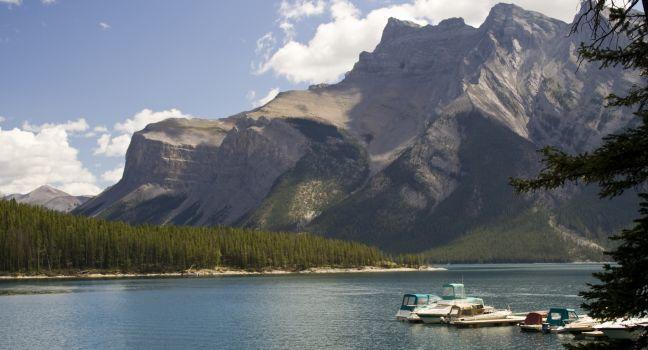
Lake Minnewanka Scenic Drive

Lake Minnewanka in Banff
Ray Yang / Shutterstock

It's easy to spend the day along this 25-km (15-mile) loop. Traveling clockwise, you can explore Lower Bankhead and Upper Bankhead, an abandoned coal mine and mining community. Just 3 km (2 miles) farther you come to Lake Minnewanka, the park's largest lake. Boat and fishing rentals are available. Still farther along are more lakes and picnic areas.

Lake Minnewanka Scenic Dr., Banff National Park, AB, Canada

Something incorrect in this review?

Oratoire St-Joseph

Saint Joseph Oratory in Montreal, Quebec, Canada
(c) Msghita | Dreamstime.com

Each year some 2 million people from all over North America and beyond visit St. Joseph's Oratory. The most devout Catholics climb the 99 steps to its front door on their knees. It is the world's largest and most popular shrine dedicated to the earthly father of Jesus (Canada's patron saint), and it's all the work of a man named Brother André Besette (1845–1937).

By worldly standards Brother André didn't have much going for him, but he had a deep devotion to St. Joseph and an iron will. In 1870 he joined the Holy Cross religious order and was assigned to work as a doorkeeper at the college the order operated just north of Mont-Royal. In 1904 he began building a chapel on the mountainside across the road to honor his favorite saint, and the rest is history. Thanks to reports of miraculous cures attributed to St. Joseph's intercession, donations started to pour in, and Brother André was able to start work replacing his modest shrine with something more substantial. The result, which wasn't completed until after his death, is one of the most triumphal pieces of church architecture in North America.

The oratory and its gardens dominate Mont-Royal's northwestern slope. Its copper dome—one of the largest in the world—can be seen from miles away. The interior of the main church is equally grand, although it's also quite austere. The best time to visit it is on Sunday for the 11 am solemn mass, when the sanctuary is brightly lit and the sweet voices of Les Petits Chanteurs du Mont-Royal—the city's best boys' choir—fill the nave with music.

The crypt is shabbier than its big brother upstairs but more welcoming. In a long, narrow room behind the crypt, 10,000 votive candles glitter before a dozen carved murals extolling the virtues of St. Joseph; the walls are hung with crutches discarded by those said to have been cured. Just beyond is the simple tomb of Brother André, who was canonized a saint in 2010. His preserved heart is displayed in a glass case in one of several galleries between the crypt and the main church.

High on the mountain, east of the main church, is a garden commemorating the Passion of Christ, with life-size representations of the 14 stations of the cross. On the west side of the church is Brother André's original chapel, with pressed-tin ceilings and plaster saints that is, in many ways, more moving than the church that overshadows it.

As of February 2025, visitors enter the oratory from the parking lot via a new, ultra-modern four-story reception pavilion boasting a boutique, meeting rooms, and a glass-walled cafeteria with views of the city. The new building, most of it hidden underground, links the welcome center to the the religious site via escalators and elevators.

3800 chemin Queen-Mary, H3V 1H6, Canada
514-733–8211
Sight Details
Free entry, museum $C3, parking from C$3.75 (free for attending services)
Daily guided tours at 1:30pm in summer C$6

Something incorrect in this review?

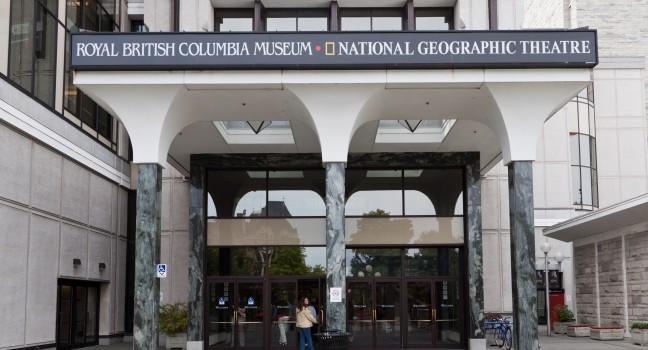
Royal British Columbia Museum

Downtown
The facade of the Royal British Columbia Museum National Geographic theatre in Victoria, Vancouver Island, British Columbia, Canada.
Afagundes | Dreamstime.com

Currently undergoing extensive restoration, this excellent museum—one of Victoria's leading attractions—is a shadow of its former self. Original plans called for a C$789 million investment for both structural upgrades to the building as well as the preservation of the more than 7 million artifacts and 2.1 km of archival records. As might be expected, such hefty plans are controversial in light of housing affordability and other social issues. Still, hopes are high that a totally refurbished 23,000-square-meter facility will reopen in 2030. Until then, access is limited to some of its temporary exhibits; they are part of the traveling exhibits that are touring various community museums around the province.

The museum complex still offers several more interesting sights, beyond the expected gift shop and café. In front of the museum, at Government and Belleville streets, is the Netherlands Centennial Carillon. With 62 bells, it's the largest bell tower in Canada; the Westminster chimes ring out every hour, and free recitals are occasionally held on Sunday afternoon. The Native Plant Garden at the museum's entrance showcases 400 indigenous plant species. Behind the main building, bordering Douglas Street, are the grassy lawns of Thunderbird Park, home to 10 totem poles (carved replicas of originals that are preserved in the museum). One of the oldest houses in BC, Helmcken House (open late May–early Sept., daily noon–4) was built in 1852 for pioneer doctor and statesman John Sebastian Helmcken. Inside are displays of the family's belongings, including the doctor's medical tools. Behind it is St. Ann's School House, built in 1858. One of British Columbia's oldest schools, it is thought to be Victoria's oldest building still standing. Both buildings are part of the Royal British Columbia Museum.

675 Belleville St., Victoria, BC, V8W 1A1, Canada
250-356–7226
Sight Details
C$29.95; IMAX theater C$16

Something incorrect in this review?

100 Street Funicular

Downtown

A fun and funky way to get from Downtown to the North Saskatchewan River Valley, this 48-second ride in a glass-walled elevator will transport you to a promenade where you can have a picnic or read a book. Carry on to the Frederick G. Todd Lookout if you want unobstructed views of the river valley. There’s also a cool set of stairs with built-in benches if you prefer to descend under your own power.

Aberdeen Cultural Centre

The halls of the Aberdeen Cultural Centre ring with music and chatter. The converted schoolhouse is now home to theater and dance companies, a framing shop, artists' ateliers, and several galleries, and concerts and artist talks are also hosted here. Galerie 12 represents leading contemporary Acadian artists. Galerie Sans Nom is an artist-run co-op supporting avant-garde artists from throughout Canada. The artist-run IMAGO Inc. is the only print-production shop in the province. 

Abkhazi Garden

Fairfield

Called "the garden that love built," this once-private garden is as fascinating for its history as for its innovative design. The seeds were planted, figuratively, in Paris in the 1920s, when Englishwoman Peggy Pemberton-Carter met exiled Georgian Prince Nicholas Abkhazi. World War II internment camps (his in Germany, hers near Shanghai) interrupted their romance, but they reunited and married in Victoria in 1946. They spent the next 40 years together cultivating their garden. Rescued from developers and now operated by the Land Conservancy of British Columbia, the 1-acre site is recognized as a leading example of west coast horticultural design, resplendent with native Garry Oak trees, Japanese maples, and mature rhododendrons. The teahouse, in the parlor of the modernist home, serves lunch and afternoon tea daily until 4 pm, with reduced hours in winter.

1964 Fairfield Rd., Victoria, BC, V8S 1H4, Canada
778-265–6466
Sight Details
By donation
Closed Mon. and Tues. Oct.–Mar.

Something incorrect in this review?

Aboriginal Experiences

Family

A former Algonquin trading post on an island in the middle of the Ottawa River, close to the new War Museum, shows the history of the First Nations people. Tours take visitors through tepees and a longhouse where traditional dances are performed twice daily. An open-air café serves buffalo burgers, venison sausages, and grilled salmon. At the craft workshop, you can make a dream catcher, talking feather, or medicine wheel.

100 Middle St., Ottawa, ON, ON K1R, Canada
613-564--9494
Sight Details
C$7--C$34

Something incorrect in this review?

Abraham Lake

Alberta's largest reservoir is beautiful in every season, but it has become Instagram-famous in winter when bubbles freeze in the ice---pockets of methane gas freeze in layers that coat the lake. Methane gas bubbles are formed when bacteria breaks down organic matter at the bottom of the lake. It’s a phenomenon that's found in other Rocky Mountain lakes, but it’s more visible in Abraham Lake because high winds tend to keep the ice clear of snow; January and February are peak months to view the bubbles. The man-made lake was created in 1972 with the construction of the Bighorn Dam. The lake has a surface area of 53.7 square km (20.7 square miles). Although the lake is man-made, it still has the turquoise blue color of other Rocky Mountain Lakes. Watch for bighorn sheep, black bears, and other wildlife nearby.

Abraham Lake, Bighorn Backcountry, AB, Canada

Something incorrect in this review?

Acadia University Art Gallery

Temporary exhibitions here are devoted to established and up-and-coming artists, and there's a permanent collection strong on maritime and Inuit art, works on paper, and works by women artists. It amounts to more than 3,000 works, though not all are on display.

10 Highland Ave. at Main St., Wolfville, NS, B4P 2R6, Canada
902-585–1373
Sight Details
Free
Closed Mon.

Something incorrect in this review?

Acadian Historical Village

More than 40 restored buildings here re-create Acadian communities between 1770 and 1949. There are modest homes, a church, a school, and a village shop, as well as an industrial area with a lobster hatchery, a cooper, and a tinsmith shop. The bilingual staff tells fascinating stories and provides demonstrations; visitors are invited to take part. You can also enjoy dinner and entertainment during the evening and stay overnight in the grand Hôtel Château Albert, an authentic re-creation of a 1907 hotel.

5 rue du Pont, Bertrand, Rivière-du-Nord, NB, E1W 0E1, Canada
506-726–2600
Sight Details
C$23
Closed early Oct.–early June

Something incorrect in this review?

Acadian Museum

On the campus of the University of Moncton, this museum has one of the world's largest collections of Acadian artifacts reflecting 400 years of Acadian life in the Maritimes and covering culture and beliefs, domestic life, politics, and more. Additionally, a fine art gallery showcases contemporary works by local and national artists.

The university is also home to several pieces of public art, so look out for these as you drive through

405 University Ave., Moncton, NB, E1A 3E9, Canada
506-858–4088
Sight Details
C$7

Something incorrect in this review?

Acadian Museum of Prince Edward Island

Many descendants of PEI's first French settlers still live in the Miscouche area, 10 km (6 miles) northwest of Summerside, and the Acadian Museum commemorates their history. This National Historic Site includes a permanent exhibition on Acadian life, including six large paintings by Claude Picard that portray Acadian national symbols, as well as an audiovisual presentation outlining the story of Island Acadians from the early 1700s onward. A genealogical center, heritage walking trail, and themed gift shop are also on-site.

23 Main Dr. E, Rte. 2, Miscouche, PE, C0B 1T0, Canada
902-432–2880
Sight Details
C$6
Closed Sat. and Mon. in Sept.–June

Something incorrect in this review?

Adams Creek Fire Lookout

The steep 36.7-km (22.8-mile) round-trip hike to Adams Creek Fire Lookout from the Big Berland River staging area makes a nice overnight expedition in Willmore Wilderness Park. The trail has 1,369 meters (4,491 feet) of elevation gain. Difficult.

Big Berland River Staging Area, AB, Canada

Something incorrect in this review?

Admiral Digby Museum

The town, county, and this museum are named for Britain's Rear Admiral Robert Digby, who during the American Revolution helped evacuate Loyalists to Nova Scotia following the British surrender of New York City. You can learn a little bit about the admiral and a fair amount about Digby County history viewing the artifacts, paintings, and maps displayed here.

95 Montague Row, Digby, NS, B0V 1A0, Canada
902-245–6322
Sight Details
By donation
Closed weekends

Something incorrect in this review?

Advocate Harbour

This little fishing community is set on a Bay of Fundy natural harbor that loses all its water at low tide. A delightful coastal walk here follows the top of an Acadian dike that was built by settlers in the 1700s to reclaim farmland from the sea. Nearby is rocky Advocate Beach, which stretches for about 5 km (3 miles) east from Cape Chignecto and is noted for its monumental supply of tide-cast driftwood.

NS, Canada

Something incorrect in this review?

Africville Museum

Until the 1960's, a century-old African Nova Scotian community resided in Africville. Forced out by the city to make way for industrial development, the residents scattered and the community broken. After an apology in 2010, some of the land was given over to the building of this museum and a memorial park. Open since 2012, this museum tells the stories of Africville and its people and is housed in a replica of the original church that served the community. The park offers beautiful views out over the Halifax Harbor.

5795 Africville Rd., Halifax, NS, B3K 2R9, Canada
902-422–1116
Sight Details
C$7
Closed Sun. and Mon.

Something incorrect in this review?

Age of Sail Heritage Museum

Exhibits spread out over several buildings trace the history of the Fundy region's shipbuilding and lumbering industries, and the museum has an archive and genealogical-research area. The main displays are in the restored 1854 Methodist church. The Wind and Wave Building is shaped to resemble an inverted half-model of a ship, and you can also view a blacksmith shop, a boathouse, and a lighthouse. Be sure to take a stroll on the boardwalk along the wharf. A cute café serves light meals—chowder, lobster rolls, sandwiches, and the like.

8334 Hwy. 209, Port Greville, NS, B0M 1T0, Canada
902-348–2030
Sight Details
C$6.50
Closed Nov.–Apr. and Tues. and Wed. May, June, Sept., and Oct.

Something incorrect in this review?

Akamina Parkway

Take this winding, 16-km (10-mile) road up to Cameron Lake, but drive slowly and watch for wildlife: it's common to see bears along the way. At the lake you will find a relatively flat, paved, 1.6-km (1-mile) trail that hugs the western shore and makes a nice walk. Bring your binoculars. Grizzly bears are often spotted on the lower slopes of the mountains at the far end of the lake.

Cameron Lake, Waterton Lakes National Park, AB, Canada

Something incorrect in this review?

Alberta Provincial Police Barracks

This unique museum is housed in the original Alberta Provincial Police (APP) barracks building. The APP was created during prohibition (1916–1924) to deal with "rumrunners" who were illegally importing alcohol from the United States and British Columbia. The museum tells the story of this police force, a murder, and the trial of the only woman who was ever executed in Alberta.

7809 18 Ave., Coleman, T0K 0M0, Canada
403-563–5434
Sight Details
C$10
Closed Sept.–mid-May

Something incorrect in this review?

Alexander Keith's Nova Scotia Brewery

Although Alexander Keith served three terms as mayor of Halifax, his political achievements are overshadowed by another accomplishment: he was colonial Nova Scotia's first certified brewmaster. Today, the popular beer is brewed in several modern facilities across Canada, but you can visit the original 1820 brewery building, a local landmark. On hour-long tours you can see how Keith's India Pale Ale was originally made, then sample a pint or two in the Stag's Head Tavern. (Nonalcoholic beverages are also available.) Actors in period outfits provide the explanations as well as old-fashioned maritime entertainment. Tours run every half hour.

1496 Lower Water St., Halifax, NS, B3J 3R5, Canada
902-455–1474
Sight Details
C$28.95
Closed early-Oct.–May

Something incorrect in this review?