


1180 Best Sights in Canada

We've compiled the best of the best in Canada - browse our top choices for the top things to see or do during your stay.
Lake O'Hara
This protected alpine region is comprised of a collection of jewel-blue lakes and hanging valleys linked by a well-marked and maintained trail network, making it a hiker's paradise. The trails for the region are maintained by the Lake O’Hara Trails Club and Parks Canada, and range from easy, minimal elevation-gain options like the Lake O'Hara Shoreline Trail (2.8-km [1.7-mile] loop) to strenuous all-day hikes made up of a combination of trails. Trail closures happen regularly to reduce disturbance to wildlife, especially grizzly bears, so check the park's website before you go. Note that access to Lake O'Hara is limited and advanced reservations (reservations are available by random draw after the application process) are required for both the bus ride-in and overnight camping. However, it is possible to hike the 11-km (6.8-mile, one-way) forestry road in for day-use exploration of the area, if you haven't reserved the bus. In the winter, this is also a popular road for snowshoers and cross-country skiers.
Athabasca Glacier
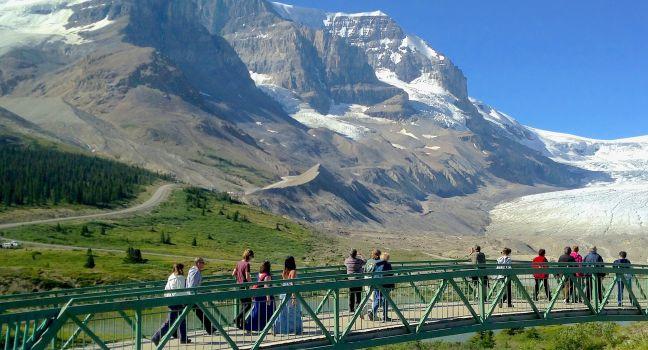
The glacier is a 7-km (4½-mile) tongue of ice flowing from the immense Columbia Icefield almost to the Icefields Parkway. A century ago, the ice flowed over the current location of the highway; signposts depict the gradual retreat of the ice since that time. Several other glaciers are visible from here; they all originate from the Columbia Icefield, a giant alpine lake of ice covering 325 square km (125 square miles). Its edge is visible from the highway. You can hike up to the toe of the glacier, but venturing farther without a trained guide is extremely dangerous because of hidden crevasses.
Athabasca Glacier Ice Walks ( 800/565–7547 www.icewalks.com) conducts three-, five-, and six-hour guided walks costing from C$130. Reserve a space at the Columbia Icefield Glacier Discovery Centre ( 866/506–0515 www.banffjaspercollection.com) or through Jasper Adventure Centre ( 780/852–5595 or 800/565–7547 www.jasperadventurecentre.com) in Jasper. You can also explore the glacier in an all-terrain Ice Explorer
Recommended Fodor's Video
Basilique Notre-Dame-de-Montréal
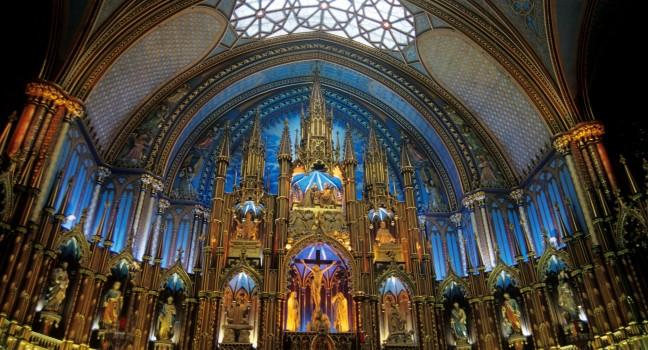
Nothing in a city renowned for churches matches Notre-Dame for sheer grandeur—or noisemaking capacity: its 12-ton brass bell is the largest in North America, and its 7,000-pipe Casavant organ can make the walls tremble. The pulpit is a work of art in itself, with an intricately curving staircase and fierce figures of Ezekiel and Jeremiah crouching at its base. The whole place is so overwhelming it's easy to miss such lesser features as the stained-glass windows from Limoges and the side altars dedicated to St. Marguerite d'Youville, Canada's first native-born saint; St. Marguerite Bourgeoys, Canada's first schoolteacher; and a group of Sulpician priests martyred in Paris during the French Revolution.
For a peek at the magnificent baptistery, decorated with frescoes by Ozias Leduc, you'll have to tiptoe through the glassed-off prayer room in the northwest corner of the church. Every year dozens of brides—including Céline Dion, in 1994—march up the aisle of Chapelle Notre-Dame-du-Sacré-Coeur (Our Lady of the Sacred Heart Chapel), behind the main altar, to exchange vows with their grooms before a huge modern bronze sculpture that you either love or hate.
Notre-Dame is an active house of worship, so dress accordingly. The chapel can't be viewed weekdays during the 12:15 pm mass, and is often closed Saturday for weddings. Don't miss the 45-minute multimedia spectacle, Aura, which celebrates the basilica's exquisite features through light and sound. See website for schedule ( www.aurabasiliquemontreal.com/en). The basilica has been under major restoration since 2020 and is not expected to be complete until 2040. Be prepared to see scaffolding at the very least.
The Butchart Gardens

Cave and Basin National Historic Site
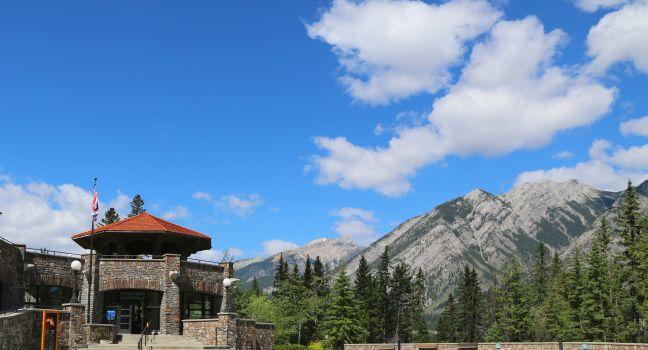
This site commemorates the birthplace of Canada's national parks system, which began with the protection of the Banff hot springs in 1885. You'll find restored historic buildings, a plaza, and splendid interpretive displays about Banff and the country's other national parks. An interpretive trail explains the area's geology, plant life, wildlife, and history. While walking past the cave's pools, keep an eye out for the park's most endangered species: the Banff Springs snail, which makes its home in the warm mineral waters, cannot be found anywhere else in the world. Children under age 17 enter the site for free, and combo tickets that include admission to Banff Upper Hot Springs are available.
Fairmont Le Château Frontenac
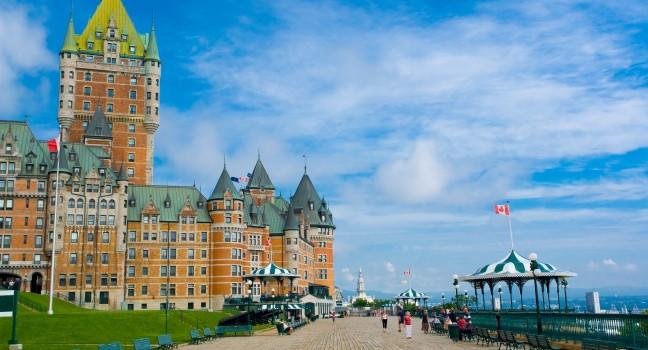
Québec City’s most photographed landmark, the Château Frontenac, commands the skyline above the St. Lawrence River, proudly reigning as the city’s crown jewel. Built in 1893 to attract luxury rail travelers, it belongs to a distinguished series of opulent château-style hotels commissioned across Canada. New York architect Bruce Price designed the hotel to impress, outfitting it with marble fixtures, cozy fireplaces in every room, and carefully selected antiques—luxuries unmatched at the time. The site once housed the residence of colonial governors Samuel de Champlain and the Comte de Frontenac, whose name the hotel proudly bears. The addition of a 20-story tower in 1924 finalized its iconic silhouette. Since then, Le Château, as locals call it, has hosted royalty—including Prince William and Kate Middleton, Queen Elizabeth II, and Princess Grace of Monaco—alongside Hollywood legends and world leaders. During WWII, Roosevelt and Churchill met here twice for wartime conferences, sealing the hotel’s legacy at the crossroads of history and glamour.
While the hotel itself doesn't offer guided tours, you can still dive deep into its storied past! Québec Cicerone Tours provides an exceptional experience, with guides in period costumes bringing legends to life within this historic landmark. Tours cost C$24 per adult and C$12 per child.
Jardin Botanique

Creating one of the world's great botanical gardens in a city with a winter as harsh as Montréal's was no mean feat, and the result is that no matter how brutal it gets in January there's one corner of the city where it's always summer. With 181 acres of plantings in summer and 10 greenhouses open all year, Montréal's Jardin Botanique is the second-largest attraction of its kind in the world (after England's Kew Gardens). It grows more than 26,000 species of plants, and among its 30 thematic gardens are a rose garden, an alpine garden, and—a favorite with the kids—a poisonous-plant garden.
You can attend traditional tea ceremonies in the Japanese Garden, which has one of the best bonsai collections in the West, or wander among the native birches and maples of the Jardin des Premières-Nations (First Nations Garden). The Jardin de Chine (Chinese Garden), with its pagoda and waterfall, will transport you to the Ming dynasty. In the fall, all three cultural gardens host magical mixes of light, color, plant life, and sculpture during the annual Gardens of Light spectacle.
La Citadelle de Québec

Musée d'Archéologie et d'Histoire Pointe-à-Callière (PAC)

A modern glass edifice built on the site of Montréal's first European settlement, the PAC impresses. The museum presents new local and international temporary exhibitions each year, but the real reason to visit the city's most ambitious archaeological museum is to take the elevator ride down to the 17th century.
It's dark down there, and just a little creepy thanks to the 350-year-old tombstones teetering in the gloom, but it's worth the trip. This is a serious archaeological dig that takes you to the very foundations of the city. A more lighthearted exhibit explores life and love in multicultural Montréal. For a spectacular view of the Old Port, the St. Lawrence River, and the Islands, ride the elevator to the top of the tower, or stop for lunch in the museum's glass-fronted bistro. In summer there are re-creations of period fairs and festivals on the grounds near the museum.
The Fort Ville-Marie pavilion showcases the remains of the forts and artifacts from the first Montrealers. The 360-foot underground William collector sewer, North America's first collector sewer built in the 1830s and considered a masterpiece of civil engineering at the time, connects the original museum space with the new pavilion and features a sound-and-light show projected onto the walls of the collector sewer.
Musée des Beaux-Arts de Montréal
Parc Jean-Drapeau
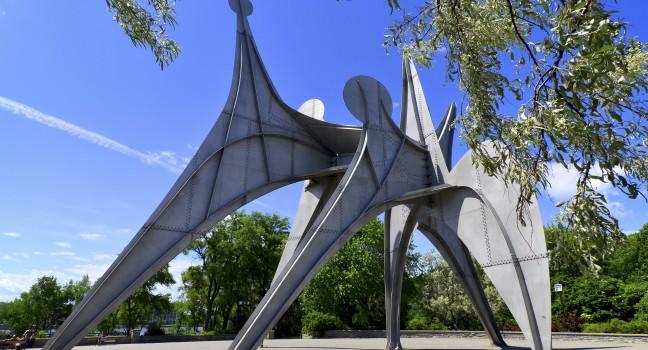
Île Ste-Hélène and Île Notre-Dame now constitute a single park named, fittingly enough, for Jean Drapeau (1916–99), the visionary (and spendthrift) mayor who built the métro and brought the city both the 1967 World's Fair and the 1976 Olympics. The park includes La Ronde (a major amusement park), acres of flower gardens, an aquatic complex, a beach with filtered water, the Formula 1 Grand Prix Circuit Gilles Villeneuve, performance spaces, and the Casino de Montréal. There's history here, too, at the Old Fort, which was built by the British to protect the country from a possible invasion by the United States. In winter, you can skate on the old Olympic rowing basin or slide down iced trails on an inner tube.
Peyto Lake Lookout
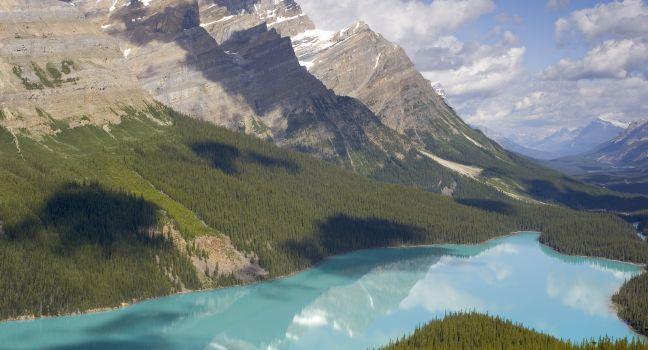
Named after Bill Peyto, a mountain guide, and early park warden of Banff National Park, Peyto Lake is one of the most beautiful lakes in the Canadian Rockies. The viewpoint for this brilliant turquoise glacier-fed lake is a short 20-minute stroll from the parking area just off the Icefields Parkway. At the lookout, you'll get a view of Peyto Lake, Peyto Glacier, and the Mistaya Valley. Interpretive signage along the trail explains its history and provides information about flora and fauna in the area. The lookout is accessed at Bow Pass, the highest point on the Icefields Parkway; it's wheelchair accessible from the upper parking lot that tour buses use.
Place Royale

Place Royale is where Samuel de Champlain founded the City of Québec in 1608; more than 400 years and several iterations later, this cobblestone square is still considered to be the cradle of French-speaking North America. Flanked on one side by the oldest stone church in North America, Église Notre-Dame-des-Victoires, and on the other by houses with steep Normandy-style roofs, dormer windows, and chimneys, once the homes of wealthy merchants, Place Royale is the epicenter of Old Québec. Until 1686 the area was called Place du Marché, but its name changed when a bust of Louis XIV was placed at its center. During the late 1600s and early 1700s, when Place Royale was continually under threat of British attack, the colonists moved progressively higher to safer quarters atop the cliff in Upper Town. After the French colony fell to British rule in 1759, Place Royale flourished again with shipbuilding, logging, fishing, and fur trading. The Fresque des Quebecois, a 4,665-square-foot trompe-l'oeil mural depicting 400 years of Québec's history, is to the east of the square, at the corner of rue Notre-Dame and côte de la Montagne.
Plains of Abraham
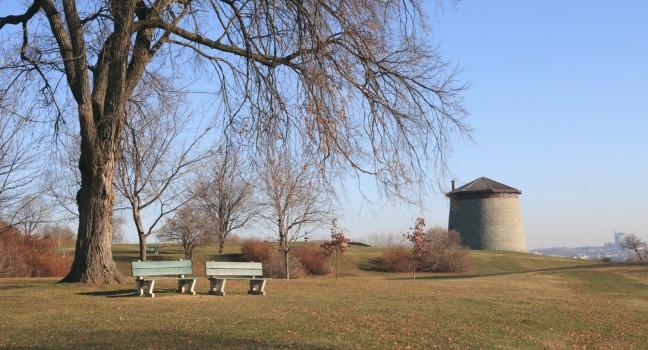
Today, this historic landscape transforms with the seasons. Locals flock here for cross-country skiing and to admire the majestic St. Lawrence River, even as it freezes over in winter. Come July, the park pulsates with energy as the Summer Festival takes over, drawing tens of thousands of concertgoers. Whatever the weather, head to Parc du Bastion-de-la-Reine for the ultimate Québec City postcard view.
Icefields Parkway
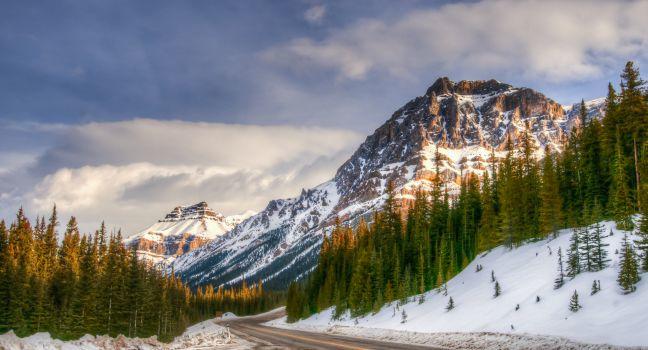
Powerfully rugged mountain scenery, glaciers, waterfalls and icefalls, and wildlife: the Icefields Parkway reveals all of these and more as it snakes its way along the 230 km (143 miles) connecting Banff National Park with Jasper National Park. It is an absolute highlight of the Canadian Rockies.
You could drive this winding road in three to four hours, but your trip will more likely take a full day when you add in stops. The road rises to near the tree line at several points, and the weather can be chilly and unsettled at these high elevations, even in midsummer, so it's a good idea to bring warm clothing along. Only one gas station, open seasonally, operates on the parkway, so check your car's gas gauge before setting out.
Elk, moose, deer, and bighorn sheep are fairly common, and occasionally bears and mountain goats come into view. In summer, alpine wildflowers carpet Bow Pass and Sunwapta Pass. The most dramatic scenery is in the northern end of Banff National Park and the southern end of Jasper National Park, where ice fields and glaciers become common on the high mountains flanking the parkway. (Ice fields are massive reservoirs of ice; glaciers are the slow-moving rivers of ice that flow from the ice fields.) Scenic overlooks and signposted hiking trails abound along the route.
Abbaye St-Benoît-du-Lac
Built by the Benedictines in 1912 on a wooded peninsula on Lac Memphrémagog, the abbey is home to over 50 monks. They sell apples and sparkling apple wine from their orchards, as well as cheeses: Ermite (which means "hermit"), St-Benoît, and ricotta. Gregorian prayers are sung daily, and some masses are open to the public; call for the schedule. Dress modestly if you plan to attend vespers or other rituals, and avoid shorts. If you wish to experience a few days of retreat, there are guesthouses for both men and women. Reserve well in advance. Overnight visits cost C$60 per night, which includes three meals. Guided tours of the abbey cost C$14.
Acadian Festival
This two-week celebration of Acadian culture is held in Caraquet during the first two weeks of August. In the Tintamarre, costumed participants parade noisily through the streets; the Blessing of the Fleet, a colorful and moving ceremony that's usually held on the first Sunday of the festival, eloquently expresses the importance of fishing to the Acadian economy and way of life. Alongside these events is a schedule of concerts, theater, storytelling, poetry, and visual arts.
Aga Khan Museum
More than 1,200 pieces of Islamic art from the collection of the family of renowned philanthropist and religious leader Aga Khan are the focus of this museum. Here you'll find Middle Eastern and Persian artifacts and inscriptions, many so ancient that they are only displayed for a few months at a time to preserve their lifespan. It's worth making the trip for the stunning architecture, which includes a massive main building topped by a silver hexagonal dome and a park distinguished by a glass pyramid more intricate than the one at the Louvre. The museum's mandate is strictly secular, but it's hard not to have a spiritual moment staring into the central courtyard pond. Guided tours are available for C$10. Check their calendar for workshops and performances.
Akadi Lumina
This incredible "enchanted journey" through the forest takes you on an immersive journey through the history of the Acadians using light, sound, poetry, video projection, and music. Designed by Montreal-based Moment Factory, whose impactful installations can be seen across Canada and beyond, this experience truly transports you, offering an amazing introduction to this vibrant culture and its tumultuous and often tragic story.
Alexander Graham Bell National Historic Site
This very engaging site pays homage to the many inventions and humanitarian work of Alexander Graham Bell. Inside the main building, films, photos, artifacts, and models provide a window into his ideas for creating telephones, man-carrying kites, airplanes, and a record-setting hydrofoil boat (a full-scale replica of which dominates one exhibit hall). A kid's corner hosts demos and hands-on activities for aspiring young inventors—children can build and decorate kites. Bell spent large blocks of time, from 1886 until his death in 1922, at his Baddeck estate—Beinn Bhreagh, Gaelic for "beautiful mountain." His home (which is still owned by the family), and some spectacular scenery, can be seen from the roof of the National Historic Site that bears his name.
Algonquin Provincial Park
Stretching across 7,650 square km (2,954 square miles) and containing nearly 2,500 lakes, Algonquin Provincial Park logs 272 bird species, 45 species of mammals, and 50 species of fish. Many visitors are hikers, canoeists, or campers, but don't be put off if you're not the outdoorsy sort; about a third of Algonquin's visitors come for the day to walk one of the 17 well-groomed and well-signed interpretive trails or to enjoy a swim or a picnic. Swimming is especially good at the Lake of Two Rivers, halfway between the west and east gates along Highway 60. Spring, when the moose head north, is the best time to catch a glimpse of North America's largest land mammal. Getting up at the crack of dawn gives you the best chance of seeing the park's wildlife. Park naturalists give talks on area wildflowers, animals, and birds, and you can book a guided hike or canoe trip. Expeditions to hear wolves howling take place in late summer and early autumn. The park's Algonquin Logging Museum (late June–mid-October, daily 9–5) depicts life at an early Canadian logging camp. The east gate is west of the town of Whitney, and the west gate is east of the town of Dwight.
Art Gallery of Ontario
The Canadian Collection includes major works by the members of the Group of Seven (a group of early-20th-century Canadian landscape painters, also known as the Algonquin School), as well as artists like Cornelius Krieghoff, David Milne, and Homer Watson. The AGO also has a growing collection of works by such world-famous artists as Rembrandt, Warhol, Monet, Renoir, Rothko, Picasso, Rodin, Degas, Matisse, and many others. The bustling Weston Family Learning Centre offers art courses, camps, lectures, and interactive exhibitions for adults and children alike. Free tours (daily at 1, 2, and 3 and Wednesday and Friday evenings at 6 and 7) start at Walker Court. Savvy travelers can book a free visit online on the first Wednesday of the month, between 6 and 9.
Avenue Bernard
If your taste runs to the chic and fashionable, then there is simply no better street than avenue Bernard, west of avenue Querbes, for people-watching. Its wide sidewalks and shady trees make it ideal for the kind of outdoor cafés and restaurants that attract the bright and the beautiful. And, in summer, the avenue is pedestrianized between avenues Wiseman and Bloomfield, with people walking freely and outdoor patios spilling out into the street.
Avenue Cartier
The mix of reasonably priced restaurants and bars, groceries and specialty food shops, and boutiques makes avenue Cartier a favorite lunchtime and after-work stop for many local residents. After business hours the street hums with locals running errands or soaking up the sun on patios. When darkness falls, the avenue's patrons get noticeably younger. The attraction? A half-dozen nightclubs and pubs that offer everything from wine and quiet conversation to Latin music and earsplitting dance tunes.
Basilique Ste-Anne-de-Beaupré
Named for Québec's patron saint (the mother of the Virgin Mary), the small town of Ste-Anne-de-Beaupré is on Route 138, east of Québec City. It attracts more than a million pilgrims each year who come to visit the region's most famous religious site.
The French brought their devotion to St. Anne (also the patron saint of shipwrecked sailors) when they sailed across the Atlantic to New France. According to local legend, St. Anne was responsible for saving voyagers from shipwrecks in the harsh waters of the St. Lawrence. In 1650, Breton sailors caught in a storm vowed to erect a chapel in honor of this patron saint at the exact spot where they landed.
The present neo-Roman basilica, constructed in 1923, is the fifth to be built on the site where the sailors first touched ground. The original 17th-century wood chapel was built too close to the St. Lawrence and was swept away by river flooding.
The gigantic structure is in the shape of a Latin cross and has two imposing granite steeples. The interior has 22 chapels and 18 altars, as well as rounded arches and numerous ornaments in the Romanesque style. The 214 stained-glass windows, completed in 1949, are by Frenchmen Auguste Labouret and Pierre Chaudière.
Tributes to St. Anne can be seen in the shrine's mosaics, murals, altars, and ceilings. A bas-relief at the entrance depicts St. Anne welcoming her pilgrims, and ceiling mosaics represent her life. Numerous crutches and braces posted on the back pillars have been left by those who have felt the saint's healing powers.
Beacon Hill Park
This 154-acre park links Downtown Victoria to the waterfront. Its rambling lawns overlook the Pacific Ocean, the Olympic Mountains, and the Strait of Juan de Fuca. Kite-fliers, hang gliders, and dog walkers are numerous. Take your photo at the Mile 0 marker of the Trans-Canada Highway, at the foot of Douglas Street. Beacon Hill includes ponds where you can feed ducks, cycling, jogging and walking paths, flowers and gardens, a cricket pitch, and a petting zoo (closed in winter). There's live music in the bandshell on summer evenings, and on Saturday nights in August the Victoria Film Festival screens free movies.
Beaverbrook Art Gallery
The showpiece of this exceptional gallery is Salvador Dalí's gigantic painting Santiago el Grande. Still, the entire collection of Canadian and international art here is surprisingly excellent considering that it's housed in such a small city. The foundation on which this has been built is the lasting gift of the late Lord Beaverbrook, born and raised in New Brunswick before building his U.K. media empire. It contains a significant collection of Canadian, American, British, and other European masterworks that rival many major Canadian galleries. There's a great café with a terrace on the lower level and a sculpture garden outside links to the riverside path. The gallery completed a $10 million expansion in 2022, adding 10,000 square feet of fully accessible space.
Bill Reid Gallery of Northwest Coast Art
Named after one of British Columbia's preeminent artists, Bill Reid (1920–98), this small aboriginal gallery is as much a legacy of Reid's works as it is a showcase of current First Nations artists. Displays include wood carvings, jewelry, print, and sculpture, and programs often feature artist talks and themed exhibitions such as basket weaving. Reid is best known for his bronze statue The Spirit of Haida Gwaii, The Jade Canoe—measuring 12 feet by 20 feet. It is displayed at the Vancouver International Airport, and its image was on the back of Canadian $20 bills issued between 2004 and 2012. More Bill Reid pieces can be found at the Museum of Anthropology.
Black Loyalist Heritage Site
When Shelburne's population exploded after the Revolutionary War, Black Loyalists were relegated to land 7 km (4½ miles) northwest of town. The community they created—Birchtown, named for the British general who oversaw their evacuation from New York—became the biggest free settlement of African Americans in the world. Birchtown's virtually forgotten story was told in Lawrence Hill's award-winning novel The Book of Negroes, adapted for a CBC TV miniseries in 2015 and filmed locally. Its founders are now honored at this site, which includes a national historic monument, a 1½-km (1-mile) interpretive trail, and the modern Heritage Centre that features a multimedia presentation, archaeological relics, and a genealogical research facility (some of the docents there are descendants of the Black Loyalists).


