



Everything you need to know before your first visit to Guadalajara.
Mexico has warmly welcomed me for several years, and I usually find myself along the coasts. The likes of Bacalar’s shapeshifting, colorful lagoon, cenotes in the Yucatán Peninsula, and the biscuit-soft white sands of Isla Holbox are my typical haunts. But I had zero regrets after deciding to travel inland to Guadalajara, Mexico’s second-largest city and the capital of Jalisco state.
This region is where much of what the world imagines when it imagines Mexico was born, be it tequila, mariachi, the wide-brimmed sombrero, or the Jarabe Tapatío song, so I had to come to enrich my Mexico education.
When I first visited, the streets were strewn with purple jacaranda petals, and I fell hook, line, and sinker. Guadalajara makes me feel alive and like my days have endless potential from a cultural, culinary, and creative standpoint. Here is my little black book of what to see, definitely do, and what to avoid.
Top Picks for You



Have a Drowned Sandwich
WHERE: Multiple Locations
Guadalajara’s love letter to the hungover and the hungry comes in the form of a gloriously messy sandwich called the torta ahogada, or “drowned sandwich.” A regional rite of passage, this carbohydrate beast is built on birote, which is a crusty, sourdough roll that’s unique to the state of Jalisco due to its unique altitude and climate. The birote is split open and stuffed with tender pork (or sometimes variants like shrimp and tongue) before being absolutely drenched in a fiery tomato-chili sauce. And dainty food this is not.
During my first visit to Guadalajara, I had my debut torta ahogada at Las Ro on Avenida Inglaterra, and thankfully, I didn’t wear a white shirt. They hand you the stuffed roll and let you do the “drowning” yourself, and if you follow in the footsteps of locals, you forgo cutlery and eat it with your hands hunched over the plate. Have your napkins at the ready. With branches all around the city, Tortas Toño is another great place to try one.
The Sistine Chapel of the Americas
WHERE: Zona Centro
Originally built in the early 1800s as a sanctuary for Guadalajara’s most vulnerable (orphans, the elderly, and the unwell), Museo Cabañas is a massive neoclassical complex in Centro Histórico that once housed over 3,000 people. After nearly two centuries of service, it closed in 1980 and reopened as one of the most important cultural sites in Latin America. It is now a UNESCO World Heritage Site.
Between 1936 and 1939, Jalisco-born muralist José Clemente Orozco painted 57 frescoes across the chapel’s walls, arches, and soaring dome, creating what many call “the Sistine Chapel of the Americas.” The centerpiece is El Hombre en Llamas (The Man of Fire), a flaming optical illusion painting on the dome that seems to follow you as you move. The only other building that has given me such a feeling of being both grounded and dizzy is the M.C. Escher Museum in The Hague. Seemingly, the longer you stare, the more Orozco’s flames dance.
Recommended Fodor’s Video
Palacio de Gobierno
WHERE: Zona Centro
A 15-minute stroll from Museo Cabañas is the impressive Palacio de Gobierno, an imposing 18th-century baroque building that still houses the offices of Jalisco’s state government. It’s open to the public Monday to Friday, and there is always someone around to give a free tour; and the guides do not accept tips. The reason to go is to be thunderstruck by more of José Clemente Orozco’s monumental murals, particularly the one on the main staircase. Painted in 1937, it shows Miguel Hidalgo, a figure of Mexico’s independence, holding a torch as fire swirls and the masses below battle against tyranny, fascism, and fear. One small but stirring detail about your Palacio de Gobierno visit is that you can see a copy of Hidalgo’s 1810 decree abolishing slavery in Mexico in the governor’s room.
MUSA
WHERE: Colonia Americana
A third place to track down Orozco’s compelling works in Guadalajara is at MUSA (Museo de las Artes de la Universidad de Guadalajara), which is housed in a stately historic building just steps from Parque Revolución (ideal for a post-art picnic). MUSA is home to two lesser-known but similarly compelling frescoes by Orozco, created between 1935 and 1937. Said to be a moody character due to losing one hand in a fireworks accident, Orozco channeled his inner fire into visual thunder in his murals, which typically feature dark color palettes.
Beyond the Orozco murals, MUSA hosts a rotating selection of contemporary exhibitions, spotlighting artists from Jalisco and beyond alongside regular talks, workshops, and cultural programming. While the museum is closed on Mondays, it’s otherwise an open invitation to sit with bold ideas in beautiful rooms.
Devil’s Alley (Rincon del Diablo)
WHERE: Zona Centro
Located next to the cheeky Niños Miones (Naughty Children) fountain, lies one of Guadalajara’s most chilling curiosities: El Rincón del Diablo, or Devil’s Alley. Officially located at 102 Calle José Maria Morelos, this shadowy corner has a sketchy past, which I first discovered during a walking tour of the historic center that I joined on my maiden voyage to Guadalajara.
Devil’s Alley was once part of the sprawling convent of Santa María de Gracia and also served as the House of the Holy Inquisition. It earned its infernal nickname after locals began whispering about strange rituals held there around the 16th century. One nun allegedly saw Satan himself slinking through the darkness. Today, the building has been carefully restored by INAH (Mexico’s National Institute of Anthropology and History), and while it now boasts a tidy façade and handsome “tapatía column” on its corner balcony, the tales live on. People still report flickering shadows, mysterious sounds, and an altogether unsettling energy.
Take a Tequila Train
WHERE: Tequila
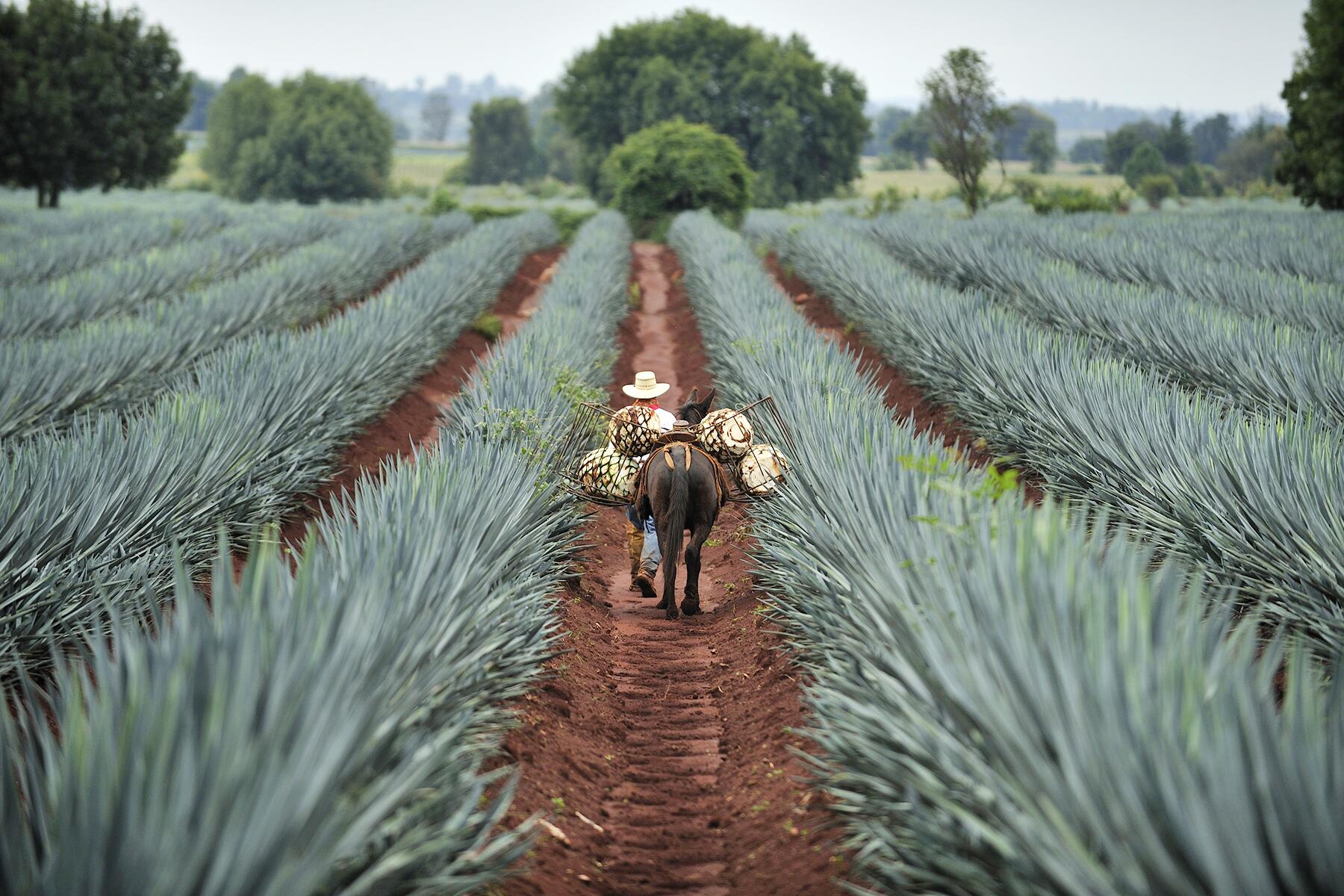
You can do more than drink tequila in Guadalajara. You can pilgrimage to its birthplace aboard the Jose Cuervo Express, a black-and-gold luxury train that departs Guadalajara every Saturday bound for the town of Tequila. Since its first ride in 2012, this eight-wagon wonder has become one of Jalisco’s most spirited experiences (quite literally), carrying up to 437 passengers through the region’s agave fields with cocktails in hand and a party atmosphere.
The all-day sensory affair includes a traditional jima (harvesting) demonstration and guided distillery tour. Should you decide to extend the fun and stay overnight in Tequila, you can check into Solar de las Ánimas, Jose Cuervo’s boutique hotel that has a rooftop pool, Casa Salles Hotel Boutique, or Matices Hotel de Barricas, where you can sleep inside a giant tequila barrel.
Meet the Charros
WHERE: La Aurora
It isn’t only tequila that originated in Jalisco. Mariachi music, wide-brimmed sombreros, and Charreria are also from the state. Mexico’s national sport, charreria, is a series of highly choreographed horseback maneuvers performed by charros (male horsemen) and escaramuzas (female riders), all dressed in flamboyant, handmade outfits that can weigh up to 30 pounds. This rodeo-meets-ritual was recognized by UNESCO in 2016 as part of the Intangible Cultural Heritage of Humanity.
To experience it firsthand, head to Lienzo Charros de Jalisco, a purpose-built arena where locals train (daily) and compete. You can book an English-speaking tour that includes lessons in lassoing, tequila sipping, horse riding, and some serious belting of mariachi melodies. Charreria shows happen there most weekends, and if you’re visiting in August, don’t miss the International Mariachi and Charrería Festival.
Sample Other Mexican Distillates
WHERE: Multiple Locations
Tequila is the global star of the show, but Mexico’s agave story also includes lesser-known distillates like raicilla, which shares some DNA with tequila. It’s made with wild agave varieties and cooked in underground pits or stone ovens, resulting in a citrusy, herbal, and slightly smoky flavor. Bacanora is a rugged northern relative of Sonora, which has its own Denomination of Origin (DO) and is made from agave angustifolia. There are also distillates fashioned from pulque, the fermented sap of agave.
To taste the lot of them under one roof, I recommend two places. Mezonte is a tiny, low-key tasting room in Colonia Americana with an unmatched selection of small-batch, responsibly sourced agave spirits. I also love La Tequila Cocina de México, a restaurant with two city branches. This is a distillate playground where you can sample as many as your heart desires alongside traditional dishes.
Wander Mercado San Juan de Dios
WHERE: Zona Centro
Also known as Mercado Libertad, Mercado San Juan de Dios is an enormous covered bazaar that is often described as the largest indoor market in the Americas. After a few minutes navigating its dizzying corridors, you might just believe it.
The market is a sprawling, three-level maze, and I love whiling away time there. You’ll brush past stalls selling locally tooled leather belts, traditional stone mortars and pestles (molcajetes), guitars, sandals, and embroidered blouses, then turn a corner and find yourself face to face with entire sides of beef and cheese-laden quesabirrias. It’s all there. Go to pick up souvenirs, for a snack, or simply to people-watch.
Colonia Americana
WHERE: Colonia Americana
If you only investigate one area in Guadalajara besides the historic center, make it Colonia Americana, my personal favorite neighborhood. It’s been voted the coolest in the world, and its heartbeat comes from its creative crowd of students and designers like Alfredo Martinez.
It’s part art gallery, part catwalk, part culinary playground, all stitched together by tree-lined streets. By night, Avenida Chapultepec is where dive bars and cocktail spots overflow with music and Tapatíos (Guadalajara locals). Daytime strolls reveal cute cafes (La Cafetería is always a good idea, as is El terrible Juan Café), surprising pretzel fixes at a German beer garden (Berlins Bretzel Wagen), the neo-gothic Templo Expiatorio de Guadalajara, and streets adorned with bold murals: a praying Frida Kahlo here, a psychedelic flame-haired face there.
See Circular Pyramids
WHERE: Teuchitlán
While the likes of Chichén Itzá and Teotihuacán tend to hog the pyramid spotlight in Mexico, Guadalajara has a quieter, quirkier contender just an hour outside the city. Tucked into the hills near the town of Teuchitlán, the Guachimontones pre-Hispanic archaeological site is the ancient heart of the Teuchitlán culture, and it is home to some of the only circular pyramids in the world. At the center of the complex is a stepped conical pyramid rising from a grassy platform like an oversized wedding cake.
Located about 40 kilometers west of Guadalajara, this was once a spiritual hub dedicated to Ehecatl, the god of wind, and today it makes for a fascinating day trip on a tour or by taxi. While there, you can walk around the concentric temples, learn about indigenous customs at the on-site museum, and soak up sweeping vistas of the surrounding agave fields. Your entry ticket includes a tour. During the summer solstice, people visit this circular pyramid for sacred rituals.
Day Trip to Tlaquepaque
WHERE: Tlaquepaque
Though technically its own town, Tlaquepaque is now part of the greater Guadalajara sprawl, yet it still clings beautifully to its village-like identity. It has long been considered one of Mexico’s top arts and crafts hubs. I decorated my apartment with an alebrije (a Mexican mythical figurine) I painted during a workshop there with the talented César Lucano, who’s known for his whimsical clay figurines. Rodo Padilla is another studio you can visit.
The streets of Tlaquepaque are pure eye candy with galleries, craft shops, and elegant restaurants. El Toreo lays claim to being the largest cantina in the world, and it’s a great place to sip a cazuela (Guadalajara Punch) while sitting in a leather equipal chair. Casa Luna is a place I often daydream about. This is undoubtedly Tlaquepaque’s most famous restaurant, with quirky bands performing and an enchanting dining room with tables encircling bauble-adorned indoor trees.
Escape to a Nearby Magic Town
WHERE: Multiple Locations
Just beyond Guadalajara’s city limits lies a constellation of Pueblos Mágicos, or Magic Towns, a title granted by the Mexican government to destinations with exceptional cultural, historical, and/or natural charm. Jalisco boasts a dozen of these, and some are well-known, while others are quietly tucked away. The full roll call of Jalisco’s Magic Towns includes Tequila, Tlaquepaque, Tapalpa, Ajijic, Cocula, Sayula, Temacapulín, Mazamitla, Mascota, Lagos de Moreno, Talpa de Allende, and San Sebastián del Oeste.
If you’re chasing mountain air and pine forests, head for Tapalpa, a quaint highland village with hiking trails that lead to natural marvels like El Salto de Nogal, a thundering 105-meter waterfall. For a lakeside retreat, make a beeline for Ajijic, which is perched on the shores of Lake Chapala and painted in bright tones.
Hit the Speakeasies
WHERE: Multiple Locations
Speakeasies are heaven for cocktail lovers, and Guadalajara has a few to uncover, concealed behind unassuming entrances. Jamaica GoGo has a disco ball, atmospheric crimson lighting, and intimate DJ sets as you dance surrounded by plants as if you’re in a jungle, while Fat Charlie at 1940 Calle Manuel López Cotilla isn’t your typical speakeasy. There are taxidermied animals on the walls, and you can join a mixology class where you can make your own gin using your preferred ingredients and attempt to identify concoctions blindfolded. Up the road at PIMP, the adroit bartenders can whip up personalized concoctions for you. Galgo, however, is my leading option, where you have access to the super creative menu—think drinks that bubble like chemistry experiments—and glassware after stepping through an inconspicuous door that says “Lic. Luis Galgo Criminologia.”
Get Your Street Food On
WHERE: Multiple Locations
Many plazas become nightly food courts under the stars where you’ll find staples like elote (corn), marquesitas, tamales, tacos, and birria de chivo, a rich stew of goat slow-cooked until fall-apart tender, or its beefier cousin, birria de res.
There are some Jalisco-specific treats that are worth sampling, like tejuino, a polarizing yet beloved local drink made from lightly fermented corn masa (it isn’t alcoholic). Scooter-pushcart hybrids selling tejuino can be spotted all around the city, and they sell like hot cakes on warm weather days. For dessert, jericallas are Guadalajara’s answer to the crème brûlée.
Street vendors rarely accept cards, don’t love breaking big bills, and won’t take your foreign currency, so having a pocket full of pesos is ideal.
Things to Avoid: Pounding Tequila
Well-made tequila should be sipped, not shotted, for the same reason you wouldn’t slam back a glass of fine wine or a top-shelf single malt: respect for the craftsmanship. During my time in Mexico, I have had the pleasure of meeting several makers, shakers, and manufacturers of tequila, including Clase Azul’s female master distiller, Viridiana Tinoco, and I have a renewed appreciation for what goes into creating the blancos, reposados, and añejos that line bar shelves. In Mexico, locals typically sip tequila neat at room temperature, allowing its full flavor profile to unfold slowly on the palate.
Things to Avoid: Haggling Too Hard
I love a bargain as much as anyone, but I often see travelers haggling excessively in Mexico simply for the fun of it. Guadalajara isn’t known for having a bargaining culture like some other places. It might be tempting to haggle when you’re somewhere like Mercado San Juan de Dios, Mercado Santa Tere, or Mercado Alcalde, where prices aren’t fixed or noted. However, many artisans, traders, and small business owners already price their goods fairly, taking into account their time, effort, and materials, so don’t push too hard for a rock-bottom deal. If you love something and the price feels fair, pay it.
Things to Avoid: Just Any Old Street Food Cart
A little discernment goes a long way when you’re picking a street food stall. If there’s a queue, that’s your cue. Follow the crowd quite literally because a busy stand means the food is fresh, the turnover is high, and the locals trust it enough to come back for seconds.
Look a little closer, too. Is the person handling the cash also assembling your taco with their bare hands? Ideally not. The best street food stalls separate the money-handling from the food-making, or at least use a glove, tongs, or the tried-and-true plastic bag over-hand trick.
Must-Try Restaurants: Alcalde
WHERE: Vallarta Norte
Alcalde snagged a spot on Latin America’s 50 Best Restaurants list, and it definitely deserves its flowers, even just for the way the amuse-bouche is plated with petals. This small but brilliant restaurant opened in 2013 by celebrated local chef Paco Ruano, and it’s a shrine to the flavors of Jalisco, utilizing hyper-local ingredients. I’ve shamelessly dined there multiple times in a single week, drawn in again and again by the creativity and deliciousness coming out of its open kitchen. I haven’t always known exactly what I was eating, but I always knew it was divine.
Must-Try Restaurants: Veneno
WHERE: Colonia Country Club
Veneno is another of my repeat offender restaurants in Guadalajara. After taking the escalator up to the first floor of Panarrama, a social complex with concept restaurants and bars, you’ll find Veneno towards the back. If you’ve been to Casas Grandes in Chihuahua and seen the earthenware houses there, you’ll recognize the inspiration for Veneno’s décor. Everything is pottery beige, and even the menus are printed on earthy, raw-texture paper.
The atmosphere at Veneno feels celebratory and everyone is catered for: carnivores (the cazuela de lengua, or tongue casserole is a winner), seafood lovers (visually appealing ceviche plates), vegetarians (there’s a “green section” on the menu), and the drinks menu is pages long, going beyond just the nationals on the beer front and a chance to try sotol, another Mexican distillate. Note that Veneno closes early on Sundays (7 p.m.).
Must-Try Restaurants: Karne Garibaldi
WHERE: Santa Tere
Carne en su jugo is an emblematic Jalisco dish that literally means “meat in its own juices,” and it is a savory bowl of finely chopped beef simmered with bacon in its broth. Karne Garibaldi in the Santa Tere neighborhood has been perfecting its formula since the early ’70s, and it’s famous not only for flavor, but for speed. In 1996, it earned a Guinness World Record for the fastest food service (just 13.5 seconds from order to table). You’ll sometimes see diners putting this to the test with their timers out. Blink and your meal arrives. The carne en su jugo comes with other accompaniments like diced onions, limes, tortillas, and, of course, spicy sauce. You can even order their carne en su jugo to go, though I can’t verify the speed of that delivery.
Best Budget Hotel: Casa Sabina
WHERE: Colonia Americana
Casa Sabina is an incredible value considering you get available yoga classes, cozy private rooms, a coffee shop, and late-check-in (until 11.30 p.m.) in a Colonia Americana location for under $50 USD a night. Even standard single rooms have desks, making it a practical choice for both leisure seekers and remote workers. Location is part of the deal here, too. Casa Sabina sits just around the corner from Casa Iteso Clavigero, one of Guadalajara’s few preserved works by legendary architect Luis Barragán. While many of Barragán’s masterpieces are in Mexico City, this early project is now a cultural center and an architectural pearl worth visiting.
Best Boutique Hotel: Bellwort Hotel
WHERE: Colonia Americana
I booked a room at Bellwort Hotel as I wanted to be smack dab in Colonia Americana, the aforementioned highly walkable and photogenic neighborhood. The adult-only hotel is minutes from the area’s happening shopping and nightlife scene, but if you wish to simply stay put, there’s more than enough to keep you comfortable. My room had a balcony and desk for working, and there is also an outdoor pool and sun terrace, as well as a gym. The hotel’s color palette is white, gray, and black, but manages to be more inviting than moody, so much so that I extended my stay to take in more of its charms.
Best Luxury Hotel: Origen 438 Luxury Boutique Hotel
WHERE: Zona Centro
Origen 438 Luxury Boutique Hotel is a polished 26-room hideaway in the historic center within easy walking distance from Guadalajara’s most iconic sights, like the imposing Teatro Degollado. Back at the hotel, you can unwind at the Morocco Spa with a massage, visit the hair salon if you feel like a refresh, use the purple machinery at the gym, and cap off your day with an excellent meal at the on-site restaurant—complete with a grand piano—which serves Mexican and Argentinian dishes. Through the hallways, you’ll bypass hyper-realistic statues and extra-large canvases en route to your suite, some of which are named after movies (Casablanca, Night of the Iguana, and The Great Gatsby).
Things to Know
August through October is one of the most electric times to visit Guadalajara, with the city’s cultural heritage taking center stage. August kicks things off with the International Mariachi and Charrería Festival—a celebration of two of Jalisco’s most iconic traditions—that runs well into September, which is thoroughly buzzing with patriotic energy thanks to Mexico’s Independence Day on the 16th. October turns up the volume with the month-long Fiestas de Octubre, a city-wide celebration of music, dance, amusement rides, and non-stop performances. These months draw crowds from across the country and beyond, and hotel prices and availability reflect that, so book ahead.
While it’s known for its strong Catholic roots and traditional values, Guadalajara is also one of the most LGBTQ+ inclusive cities in Mexico. Every June, it throws one of the largest Pride events in Latin America, and in 2018, Jalisco became the first Mexican state with a government-appointed Sexual Diversity Director, a role created to shape inclusive public policy.