



- ⁄
- Destinations
- ⁄
- Europe
- ⁄
- Spain
- ⁄
- Madrid
- ⁄
- Travel Tips
- •
- Trip Ideas
Our picks for the top things to do in Madrid, plus the must-try restaurants, best hotels at any budget, and a few things you should definitely avoid.
I studied abroad in Spain over a decade ago, and (like a lot of people who’ve spent time in Madrid) I fell hard for it. Coming from the U.K., the city’s perpetual sunshine definitely has its appeal. But Madrid won me over even more so with its endless tapas crawls and the way the city makes space for an impressive amount of both chaos and calm. Long, slow lunches followed by nights that don’t really get going until 11p.m.? Sign me up.
Since then, I’ve made it a point to come back over and over, every single year. I’ve still got friends who live here, so I get the local side of the city, too: the parks where people actually hang out, the neighborhoods that aren’t on the tourist maps, the best places for vermouth on a Sunday.
This guide includes some of the big hitters (you should definitely still see the Prado), but it’s mostly the stuff I’ve come to love from years of visiting–all the things I’d tell a friend before their first trip.
Top Picks for You




Wander Through El Retiro Park
WHERE: El Retiro
You’ll find green space all over Madrid, but El Retiro is the city’s front garden. It’s where locals go to walk their dogs, row boats across the lake, or just escape the heat under the shade of a hundred-year-old tree. On weekends, the park’s buzzing with street performers, families, and people rollerblading like it’s still 2002.
Start at the Puerta de Alcalá entrance and make your way to the Palacio de Cristal, a glass pavilion that sometimes hosts art installations (but is worth seeing even when empty). If you’re visiting in the summer, go early or late to avoid the worst of the heat, and grab an ice cream or horchata from one of the kiosks along the way.
Get Your Culture Fix at the Prado
WHERE: Jerónimos
Madrid’s most famous museum is a classic for a reason. The Prado holds one of the world’s best collections of European art, with names like Velázquez, Goya, El Greco, and Bosch taking center stage. But here’s the trick: don’t try to do it all. The place is massive, and unless you really love 17th-century Flemish paintings, your feet (and brain) will give up after an hour.
Instead, pick a few highlights: “Las Meninas,” “The Garden of Earthly Delights,” and Goya’s “Black Paintings” are always worth a look, and leave time for a wander through the surrounding streets or a coffee in nearby Plaza de las Cortes.
INSIDER TIPEntry is free in the last two hours of the day (Mon-Sat, 6-8 p.m.; Sundays, 5-7 p.m.), but lines get long fast. Get there early or book a timed ticket online if you’d rather skip the wait.
Recommended Fodor’s Video
Tapas-Hop Down Calle Ponzano
WHERE: Chamberí
If you want a night out surrounded by local Madrileños, head to Calle Ponzano. This stretch of bars and tapas spots in Chamberí is one of the best places to eat and drink like a local. It’s loud, packed, and full of the kind of casual-but-excellent places that make Madrid’s food scene so fun.
Start with a vermouth at Sala de Despiece (an industrial-style spot with a menu scribbled on butcher paper), then hop between bars for small plates: croquetas, grilled mushrooms, anchovies, tortilla. No need to plan ahead, as half the fun is seeing what catches your eye. Things don’t really get going until 9 p.m., so time your arrival accordingly.
Catch Sunset From the Rooftop at Círculo de Bellas Artes
WHERE: Centro
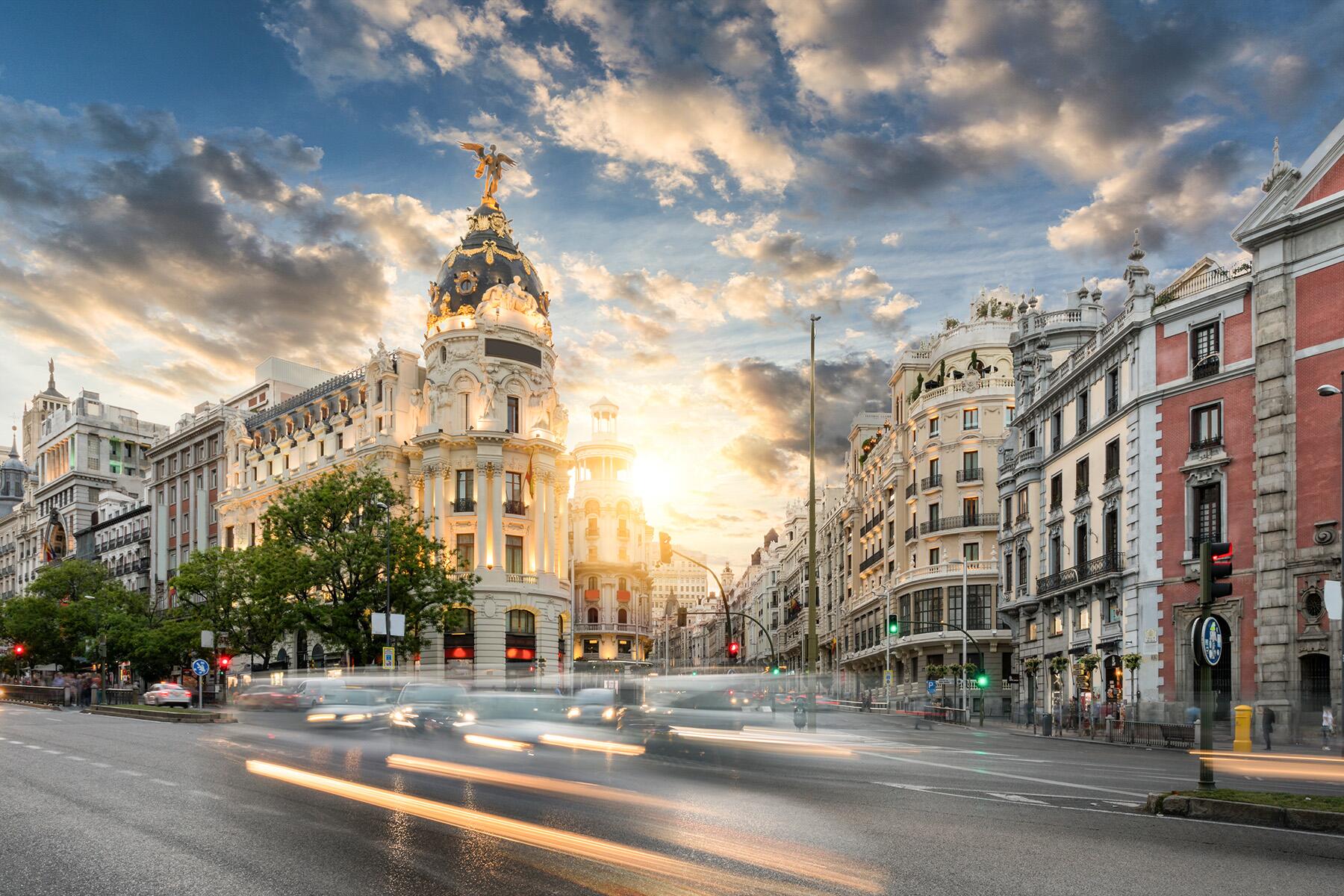
This is hands-down one of the best sunset spots in the city. The rooftop at Círculo de Bellas Artes gives you a full panoramic view of Madrid, with Gran Vía stretching out in one direction, the distant peaks of the Sierra in the other, and golden hour lighting up the skyline in between.
It’s €5 to go up (paid via the lobby downstairs), and the bar sells wine, cocktails, and snacks, though prices are on the higher side. Still, for the view alone, it’s worth it. Arrive about an hour before sunset if you want a good seat, and bring sunglasses: it gets bright up there!
INSIDER TIPThe building itself often hosts exhibitions, talks, and film screenings, so check the schedule before you go.
Explore the Literary Charm of Barrio de las Letras
WHERE: Barrio de las Letras
If you’re after cobblestone streets, leafy balconies, and a slower pace of life, Barrio de las Letras delivers. Once home to writers like Cervantes and Lope de Vega, this neighbourhood blends history with boutique-y cool. You’ll find poems etched into the pavement, indie bookstores, and some excellent little cafés and wine bars tucked away down narrow alleys.
Wander along Calle de las Huertas and pop into Librería Desnivel if you’re into travel books and mountain maps. For a break, grab a table at Bodega de los Secretos or cool off with a tinto de verano on a shaded terrace.
INSIDER TIPThis neighborhood is also a good place to stay if you want to be close to the city center without being right in the thick of it.
Browse and Brunch at El Rastro Market
WHERE: La Latina
Held every Sunday morning in La Latina, El Rastro is Madrid’s biggest and most iconic flea market, and it’s just as much about the people-watching as the shopping. You’ll find everything from vintage denim and handmade jewelry to antique typewriters and oddball souvenirs.
The streets get packed quickly, so go early if you’re serious about browsing. Afterwards, follow the crowds toward Plaza de Cascorro or Calle de la Ribera de Curtidores and grab a vermouth and tortilla at Bar Santurce (a tiny, chaotic, and delicious spot) or head to Federal Café for something a little more modern.
INSIDER TIPKeep your bag zipped and stay alert; like most markets, this is a hotspot for pickpockets.
Spend an Afternoon in the Reina Sofía
WHERE: Atocha
Madrid’s Reina Sofía museum is home to Spain’s most famous modern art, most notably “Guernica,” Picasso’s massive anti-war mural that pulls you in with its sheer scale and emotion. Even if modern art isn’t usually your thing, it’s worth visiting for that painting alone.
Beyond Picasso, you’ll find works by Dalí, Miró, and plenty of lesser-known Spanish artists. The building itself is a mix of old and new, with airy glass elevators and a quiet courtyard for a mid-visit break. Head to the top floor of the Nouvel building afterwards for sweeping views across Atocha and the south of the city.
INSIDER TIPIt’s free from 7-9 p.m. most nights, but if you want to linger without the crowds, a paid ticket during the day is your best bet.
Take in the View From the Temple of Debod
WHERE: Parque del Oeste
This ancient Egyptian temple in the middle of a city park might be one of Madrid’s most surprising landmarks. Gifted by Egypt in the 1960s, it’s now perched on a hill near Plaza de España, and while the temple itself is small, the surrounding park is the real draw.
Come at sunset for views over Casa de Campo and the royal palace, or bring a picnic and enjoy the laid-back vibe. You’ll often find musicians, dog walkers, and couples camped out on the grass with wine and snacks.
The temple occasionally opens for short tours (free, but with limited spots), but even just seeing it from the outside is worth the walk.
Visit the Royal Palace (Then Skip the Queue at the Sabatini Gardens)
WHERE: Palacio
The Royal Palace is one of the most visited sights in Madrid, and while it’s definitely worth seeing at least once (those chandeliers! those ceilings!), it’s also crowded and a bit overwhelming. If you’re not up for a full tour, do a walk-by and instead head around the back to the Sabatini Gardens (note: the gardens are temporarily closed).
They’re free, beautifully landscaped, and usually much quieter. It’s one of my favorite spots to take a breather in the city center, especially late afternoon when the crowds have thinned out and the light’s just right for photos.
INSIDER TIPIf you do go inside the palace, book a ticket online ahead of time: the line for walk-ups can get brutal in the summer.
Escape the Crowds at Quinta de los Molinos
WHERE: San Blas-Canillejas
This park in northeast Madrid doesn’t show up on most tourist maps, but it’s a favorite with locals, especially in spring, when the almond trees bloom in a haze of pink and white. Even in summer, it’s a peaceful spot for a morning walk, with shaded trails, fountains, and plenty of quiet corners.
There’s a modern café near the entrance if you need caffeine or snacks, and the whole space has a more relaxed, residential vibe compared to central parks like Retiro. It’s also a great area to see what everyday life looks like outside the center.
INSIDER TIPTo get there, hop on Metro line 5 to Suanzes. The park entrance is just a couple of minutes’ walk from the station.
Bar-Hop in Malasaña
WHERE: Malasaña
Malasaña is Madrid’s indie heart: the neighbourhood where dive bars, vintage shops, and tattoo studios collide with cool cafés and buzzy nightlife. It’s also where Madrid’s 1980s countercultural movement, La Movida, was born, and you can still feel that rebellious spirit on the streets.
Start with a drink at Tupperware (yes, that’s the name), a psychedelic bar full of lava lamps and retro furniture, or try La Via Láctea for a more classic rock vibe. If you’re hungry, grab a slice from Pizza al Cuadrado or pop into Casa Macareno for elevated tapas in an old-school setting. It’s especially lively on weekends, but even a weekday wander through its colorful streets is fun.
Stroll (and Snack) in Mercado de San Miguel
WHERE: Centro
Yes, it’s touristy, but it’s also gorgeous, lively, and delicious if you know what to look for. Housed in a restored 20th-century iron-and-glass building near Plaza Mayor, Mercado de San Miguel is full of high-end food stalls selling everything from oysters and croquetas to burrata, jamón, and pintxos.
Skip the paella (you’ll find better elsewhere) and instead go for a tapa from Arzábal, a glass of wine from The Wine Bar, or a sweet treat from Rocambolesc, the gelato outpost of Spanish pastry legend Jordi Roca. It gets packed fast, so aim to visit mid-morning or just before lunch if you want space to browse without elbowing your way through the crowd.
Discover the Hidden Gardens of El Capricho
WHERE: Barajas
Tucked away on the outskirts of Madrid, El Capricho is one of the city’s most beautiful and least-visited parks. Built in the late 18th century as a private estate for the Duchess of Osuna, it’s full of manicured gardens, romantic follies, and winding tree-lined paths that feel miles from the bustle of the city. Highlights include the labyrinth, the Iron Bridge, and a tiny riverside dock that looks straight out of a painting.
It’s only open on weekends and public holidays, and entry is free, but because it’s so under the radar, it rarely feels crowded. Pack a picnic, wander at your own pace, and enjoy one of Madrid’s best-kept secrets. To get there, take Metro line 5 to El Capricho and walk a few minutes to the entrance.
Hunt for Treasures at the Sorolla Museum
WHERE: Chamberí
Far quieter than the Prado or Reina Sofía, the Sorolla Museum is set in the former home and studio of Joaquín Sorolla, Spain’s master of light. The house has been preserved almost exactly as he left it, with airy rooms hung with his sun-soaked Mediterranean paintings and personal sketches.
The surrounding garden is worth the visit alone: a lush, Andalusian-style courtyard with tiled fountains and orange trees that makes you forget you’re in the middle of the city. Because it’s small, you can easily see everything in under an hour, making it a perfect pre-lunch stop before exploring Chamberí’s tapas bars. Tickets are only €3, and it’s rarely busy, even in summer.
INSIDER TIPThe Sorolla Museum is currently closed for renovations until the end of the year, but it’s worth the wait when it reopens.
Step Underground into Madrid’s Ghost Station
WHERE: Chamberí
For something completely different, head underground to the Estación de Chamberí: a metro station frozen in time since it closed in 1966. Now part of the Andén 0 museum project, it has been restored to look exactly as it did in the mid-20th century, with original ticket booths, vintage advertisements, and those distinctive white-and-blue tiles.
It’s a fascinating glimpse into Madrid’s transport history, and because it’s a little niche, it doesn’t draw huge crowds. Entry is free (although you’ll want to reserve in advance), and tours run regularly in Spanish (with English leaflets available). Even if you’re not a train enthusiast, it’s a quirky, atmospheric stop that makes you see the city in a whole new way.
Things to Avoid: Eating on Plaza Mayor
Plaza Mayor is one of Madrid’s most beautiful squares–and one of the worst places to sit down for a meal. Most of the restaurants here are overpriced, underwhelming, and geared entirely toward tourists. You’ll face soggy paella and inflated beer prices: a complete waste of your Madrid foodie experience.
By all means, walk through the plaza, take your photos, and soak up the atmosphere. Just don’t settle in for lunch. If you want good food nearby, head five minutes north to Calle de la Cruz or Calle de las Huertas, where you’ll find better restaurants at half the price.
Uncertain about a place? If someone tries to lure you in with “free sangria,” that’s your sign to keep walking.
Things to Avoid: Expensive Flamenco Shows with Dinner Menus
Flamenco is a beautiful, intense art form–but in Madrid, there are lots of places cashing in with overpriced “dinner and a show” setups that feel more like dinner theatre than real flamenco. If the show comes with a three-course meal and unlimited sangria for €60, chances are the food will be mediocre and the dancing even worse.
Instead, go for a dedicated tablao like Cardamomo, where the focus is on the performance. You can always grab dinner before or after somewhere nearby–trust me, it’ll be better that way.
Things to Avoid: Taxis From the Airport
Madrid-Barajas Airport is well connected to the city by metro, train, and express bus, all of which are cheaper and, during busy times, faster than getting a taxi. A standard flat fare for a taxi to the center is around €30, but traffic can easily push your journey past 45 minutes.
If you’re arriving during rush hour or on a tight budget, hop on the Exprés Aeropuerto bus (runs 24/7 for €5), or take Metro line 8. You’ll save cash and often get to your hotel quicker, especially if you’re staying somewhere central.
Save taxis for when you’ve got lots of luggage or a late-night arrival–not your default option!
Must-Try Restaurant: Casa González
WHERE: Barrio de las Letras
This old-school deli and wine bar is one of those places that feels untouched by time, in the best way. Casa González has been serving cheese, cured meats, and conservas (gourmet tinned seafood) since 1931, and it’s still one of my favorite spots for a relaxed, unfussy lunch or early evening bite.
I usually head here mid-afternoon, when the sun hits the front windows just right and you can linger over a tabla mixta piled with manchego and jamón ibérico. The anchovy toasts are simple but perfect, and the shelves lined with wine bottles make it impossible not to order a glass (or two). The staff are incredibly passionate about what they serve: ask for a recommendation and you’ll probably end up trying something you’ve never heard of before.
It’s unpretentious, charming, and exactly the kind of place that makes Madrid’s food scene so addictive.
Must-Try Restaurant: Taberna El Sur
WHERE: Lavapiés
Taberna El Sur is a beloved little spot in Lavapiés that serves up classic Spanish dishes without the fuss or the fancy prices. It’s cosy, casual, and always buzzing–and yes, it’s popular with travelers, but for good reason.
I’ve lost count of how many times I’ve ended up here after a day wandering the neighborhood. The huevos rotos (fried eggs over potatoes) arrive at the table still sizzling, the garlic prawns are plump and perfectly seasoned, and the sangria–fruity and deceptively strong–goes down far too easily. I usually order a few plates to share, but I always regret not saving more room.
The walls are plastered with photos and scribbled notes from past visitors, giving it a friendly, lived-in feel. Service is warm and fast, even when it’s packed, which it often is. Expect a short wait during peak times, but it’s always worth it.
Must-Try Restaurant: Bistronómika
WHERE: Salamanca
For something more upscale, book a table at Bistronómika. This Michelin Guide-approved seafood-focused bistro is all about Galician and Mediterranean influences, with a daily menu that changes based on whatever the chef finds fresh at the market.
The first time I went, the waiter wheeled over a tray of the day’s catch for me to choose from: gleaming, just-off-the-boat fish that were then grilled simply over open flame. The octopus here is charred and smoky on the outside, meltingly tender inside, and the tuna tartare with kimchi is one of those dishes you end up thinking about for days afterwards.
It’s the sort of place where you want to linger, sipping a crisp Albariño and watching the small team work in a calm, confident rhythm. Small, stylish, and intimate, it’s exactly the kind of neighborhood gem you wish you had back home.
Best Budget Hotel: The Hat Madrid
WHERE: La Latina
If you’re after something affordable but cool, The Hat Madrid is the best of both worlds. Technically a hostel, it offers stylish private rooms alongside shared dorms, so whether you’re on a tight budget or just want your own space, you’ve got options. The interiors are clean, minimalist, and full of clever design details (exposed brick, bold tile, and crisp white sheets are just the start).
It’s also incredibly well-located: tucked just behind Plaza Mayor and a short walk from El Rastro, the Royal Palace, and endless tapas bars. The rooftop bar has gorgeous views over La Latina, and the lobby lounge is a great place to meet other travelers if you’re flying solo.
Breakfast is cheap and filling, staff are friendly without being overbearing, and it’s surprisingly quiet at night given the central location.
Best Boutique Hotel: Only YOU Boutique Hotel
WHERE: Chueca
Only YOU Boutique Hotel hits that sweet spot between style and substance. Housed in a restored 19th-century palace, it’s bold and eclectic without tipping into try-hard territory. Think velvet armchairs, high ceilings, punchy colors, and bookshelves you’ll want to browse. Rooms are sleek, spacious, and surprisingly quiet, especially considering you’re in the heart of Chueca, one of Madrid’s buzziest neighborhoods.
It’s also got a brilliant on-site restaurant, a well-loved cocktail bar, and a brunch that’s popular with both guests and locals (so definitely book ahead if you’re planning to eat in). You’re within walking distance of Gran Vía, Malasaña, and Retiro Park, and the nearby streets are packed with cafés, vintage shops, and late-night wine bars.
Whether you’re in town for a weekend break or something longer, this is the kind of place that makes you feel like a (very stylish) local.
Best Luxury Hotel: Mandarin Oriental Ritz Madrid
WHERE: Retiro
Madrid’s most iconic hotel recently underwent a massive makeover, and the result is just as impressive as you’d expect. The Mandarin Oriental Ritz combines Belle Époque glamour with all of the best modern comforts, offering a five-star experience that still feels personal.
Rooms are elegant without being overdone, with huge beds, marble bathrooms, and soft gold touches. Even the smallest details (from the room scent to the turn-down chocolates) are thoughtfully done.
Location-wise, you’re across the street from the Prado and steps from El Retiro, so it’s ideal for a city break where you want culture and calm in equal measure. Inside, there are five restaurants and bars, including one from Michelin-starred chef Quique Dacosta, and a spa that makes it very hard to leave the hotel at all.
In short, the whole place runs like clockwork. If you’re splurging, this is the place to do it.
Know Before You Go
Madrid is a city best explored on foot, so pack comfortable shoes and be ready to walk. The metro system is clean, affordable, and easy to navigate (get a multi-day tourist pass if you’re staying longer than a weekend), and taxis are everywhere if you need one. Rideshare apps like Uber and Cabify work here, but local taxis are usually just as quick.
In terms of timing, spring (April-June) and autumn (September-October) are the sweet spots: warm weather, smaller crowds, and lighter hotel prices. July and August can get scorching (often over 95°F / 35°C), and many locals leave the city, especially in August, meaning some smaller shops and restaurants close temporarily.
And finally, remember: Madrid runs late. Dinner starts around 9 p.m., nights out don’t peak until well after midnight, and mornings tend to move slowly. Lean into it–that’s half the charm!