17 Best Sights in Rome, Italy

Background Illustration for Sights

We've compiled the best of the best in Rome - browse our top choices for the top things to see or do during your stay.

Cappella Sistina

Vatican Fodor's Choice
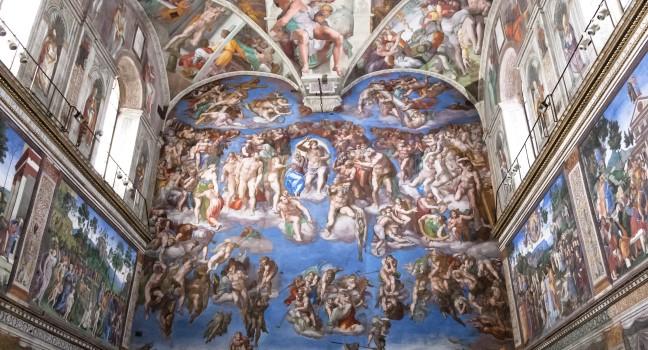
The Last Judgement, Sistine Chapel, Vatican, Rome
(c) Anitasstudio | Dreamstime.com

In 1508, the redoubtable Pope Julius II commissioned Michelangelo to fresco the more than 10,000 square feet of the Sistine Chapel's ceiling. (Sistine, by the way, is simply the adjective form of Sixtus, in reference to Pope Sixtus IV, who commissioned the chapel itself.) The task took four years, and it's said that, for many years afterward, Michelangelo couldn't read anything without holding it over his head. The result, however, was the greatest artwork of the Renaissance. A pair of binoculars helps greatly, as does a small mirror—hold it facing the ceiling and look down to study the reflection.

More than 20 years after his work on the ceiling, Michelangelo was called on again, this time by Pope Paul III, to add to the chapel's decoration by painting the Last Judgment on the wall over the altar. By way of signature on this, his last great fresco, Michelangelo painted his own face on the flayed-off human skin in St. Bartholomew's hand. 

The chapel is entered through the Musei Vaticani, and lines are slightly shorter after 2:30 (reservations are always advisable)—except free Sundays, which are extremely busy and when admissions close at 12:30.

Galleria Borghese

Villa Borghese Fodor's Choice
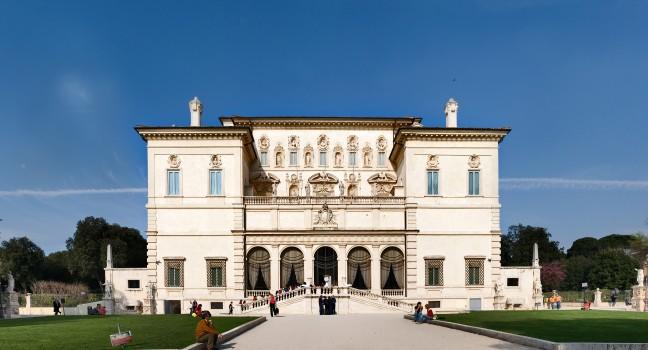
Villa Borghese, Galleria Borghese, Roma, Italy.
Khirman Vladimir / Shutterstock

It's toss-up as to which is more magnificent: the museum or the art that lies within it. The luxury-loving Cardinal Scipione Borghese had the museum custom built in 1612 as a showcase for his collection of both antiquities and more "modern" works, including those he commissioned from the masters Caravaggio and Bernini. Today, it's a monument to Roman interior decoration at its most extravagant.

One of the collection's most famous works is Canova's neoclassical sculpture Pauline Borghese as Venus Victorious. The next three rooms hold three key early Baroque sculptures: Bernini's David; Apollo and Daphne; and The Rape of Persephone. All were done when the artist was in his twenties and all illustrate his extraordinary skill. Apollo and Daphne shows the moment when, to aid her escape from the pursuing Apollo, Daphne is turned into a laurel tree. Leaves and twigs sprout from her fingertips as she stretches agonizingly away from Apollo. In The Rape of Persephone, Pluto has either just plucked Persephone (or Proserpina) from her flower-picking or is in the process of returning to Hades with his prize. Note the realistic way his grip causes dimples in Persephone's flesh. This is the stuff that makes the Baroque exciting—and moving. Other Berninis on view include a large, unfinished figure called Verità, or Truth.

Room 8 contains six paintings by Caravaggio, the hotheaded genius who died at age 37. All of his paintings, even the charming Boy with a Basket of Fruit, have an undercurrent of darkness. The disquieting Sick Bacchus is a self-portrait of the artist who, like the god, had a fondness for wine. David and Goliath, painted in the last year of Caravaggio's life—while he was on the run, murder charges hanging over his head—includes his self-portrait in the head of Goliath. Upstairs, the Pinacoteca (Picture Gallery) boasts paintings by Raphael (including his moving Deposition), Pinturicchio, Perugino, Bellini, and Rubens. Probably the gallery's most famous painting is Titian's allegorical Sacred and Profane Love, a mysterious image with two female figures, one nude, one clothed.  Admission to the Galleria Borghese is by reservation only. Visitors are admitted in two-hour shifts 9–5. Prime-time slots sell out days in advance, so reserve directly (and early) through the museum's website.

Piazzale Scipione Borghese, 5, Rome, 00197, Italy
06-32810-reservations
Sight Details
€15, including €2 reservation fee; increased fee during temporary exhibitions
Closed Mon.
Reservations essential

Something incorrect in this review?

MAXXI—Museo Nazionale delle Arti del XXI Secolo

Flaminio Fodor's Choice
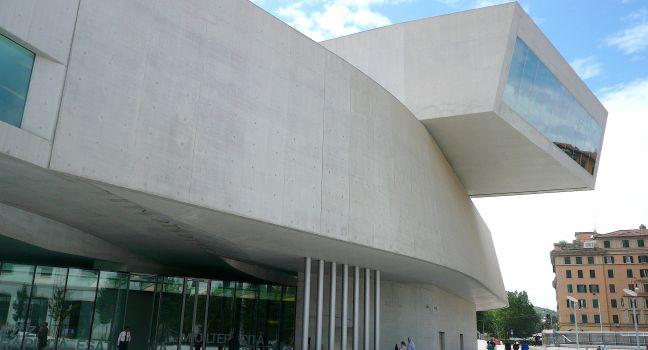
MAXXI, national museum of arts of XXI century by Zaha Hadid architect in Rome, Italy.
(c) Enrysacc | Dreamstime.com

Designed by the late Iraqi-British architect Zaha Hadid, this modern building plays with lots of natural light and has curving and angular lines, big open spaces, glass ceilings, and steel staircases that twist through the air—all meant to question the division between "within" and "without." The MAXXI hosts temporary exhibitions of art, architecture, film, and more. The permanent collection, displayed on a rotating basis, has more than 350 works from modern and contemporary artists, including Andy Warhol, Francesco Clemente, and Gerhard Richter.

Via Guido Reni, 4/A, Rome, 00196, Italy
06-3201954
Sight Details
€15
Closed Mon.

Something incorrect in this review?

Recommended Fodor's Video

Musei Capitolini

Campitelli Fodor's Choice
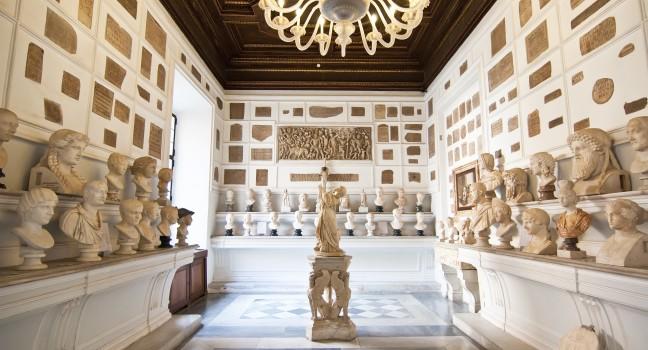
Inside one of the rooms of the Capitoline Museums in Rome, Italy  The museum was opened to the public at the wish of Pope Clement XII in 1734.
Chanclos/Shutterstock

Surpassed in size and richness only by the Musei Vaticani, the world's first public museum—with the greatest hits of Roman art through the ages, from the ancients to the Baroque—is housed in the Palazzo dei Conservatori and the Palazzo Nuovo, which mirror one another across Michelangelo's famous piazza. The collection was begun by Pope Sixtus IV (the man who built the Sistine Chapel) in 1473, when he donated a room of ancient statuary to the people of the city. This core of the collection includes the She Wolf, which is the symbol of Rome, and the piercing gaze of the Capitoline Brutus.

Buy your ticket and enter the Palazzo dei Conservatori, where in the first courtyard, you'll see the giant head, foot, elbow, and imperially raised finger of the fabled seated statue of Constantine, which once dominated the Basilica of Maxentius in the Forum. Upstairs is the resplendent Sala degli Orazi e Curiazi (Hall of the Horatii and Curatii), decorated with a magnificent gilt ceiling, carved wooden doors, and 16th-century frescoes depicting the history of Rome's legendary origins. At each end of the hall are statues of two of the most important popes of the Baroque era, Urban VIII and Innocent X.

The heart of the museum is the modern Exedra of Marcus Aurelius (Esedra di Marco Aurelio), which displays the spectacular original bronze statue of the Roman emperor whose copy dominates the piazza outside. To the right, the room segues into the area of the Temple of Jupiter, with the ruins of part of its vast base rising organically into the museum space. A reconstruction of the temple and the Capitoline Hill from the Bronze Age to the present day makes for a fascinating glimpse through the ages. On the top floor, the museum's pinacoteca, or painting gallery, has some noted Baroque masterpieces, including Caravaggio's The Fortune Teller and St. John the Baptist.

To get to the Palazzo Nuovo section of the museum, take the stairs or elevator to the basement of the Palazzo dei Conservatori, where the corridor uniting the two contains the Epigraphic Collection, a poignant assembly of ancient gravestones. Just over halfway along the corridor, and before going up into the Palazzo Nuovo, be sure to take the staircase to the right to the Tabularium gallery and its unparalleled view over the Forum.

On the stairs inside the Palazzo Nuovo, you'll be immediately dwarfed by Mars in full military rig and lion-topped sandals. Upstairs is the noted Sala degli Imperatori, lined with busts of Roman emperors, and the Sala dei Filosofi, where busts of philosophers sit in judgment—a fascinating who's who of the ancient world. Within these serried ranks are 48 Roman emperors, ranging from Augustus to Theodosius. Nearby are rooms filled with sculptural masterpieces, including the famed Dying Gaul, the Red Faun from Hadrian's Villa, and a Cupid and Psyche.

Piazza del Campidoglio, 1, Rome, 00186, Italy
06-0608
Sight Details
€13 (€15.50 with exhibitions); €13.50 with access to Centrale Montemartini; €4 audio guide

Something incorrect in this review?

Musei Vaticani

Vatican Fodor's Choice
A double spiral staircase in Vatican, Italy.
Fedor Selivanov / Shutterstock

Other than the pope and his papal court, the occupants of the Vatican are some of the most famous artworks in the world. The Vatican Palace, residence of the popes since 1377, consists of an estimated 1,400 rooms, chapels, and galleries. The pope and his household occupy only a small part; most of the rest is given over to the Vatican Library and Museums.

Beyond the glories of the Sistine Chapel, the collection is extraordinarily rich: highlights include the great antique sculptures (including the celebrated Apollo Belvedere in the Octagonal Courtyard and the Belvedere Torso in the Hall of the Muses); the Stanze di Raffaello (Raphael Rooms), with their famous gorgeous frescoes; and the Old Master paintings, such as Leonardo da Vinci's beautiful (though unfinished) St. Jerome in the Wilderness, some of Raphael’s greatest creations, and Caravaggio’s gigantic Deposition in the Pinacoteca ("Picture Gallery").

For those interested in guided visits to the Vatican Museums, tours start at €40, including entrance tickets, and can also be booked online. Other offerings include a regular three-hour guided tour of the Vatican gardens; call or check online to confirm. For more information, call  06/69884676 or go to  www.museivaticani.va. For information on tours, call  06/69883145 or  06/69884676; visually impaired visitors can arrange tactile tours by calling  06/69884947.

Viale Vaticano, Rome, 00165, Italy
06-69883145
Sight Details
€20
Closed Sun. (except the last Sun. of each month) and Roman Catholic holidays

Something incorrect in this review?

Museo Nazionale Etrusco di Villa Giulia

Villa Borghese Fodor's Choice
Museo Etrusco di villa giulia
(c) Mariocarbone | Dreamstime.com

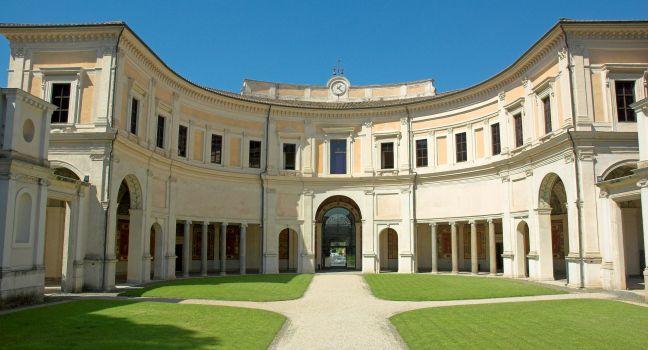
The world's most outstanding collection of Etruscan art and artifacts is housed in Villa Giulia, built around 1551 for Pope Julius III. Among the team called in to plan and construct the villa were Michelangelo and fellow Florentine Vasari. Most of the actual work, however, was done by Vignola and Ammannati. The villa's nymphaeum—or sunken sculpture garden—is a superb example of a refined late-Renaissance setting for princely pleasures.

No one knows precisely where the Etruscans originated, but many scholars maintain they came from Asia Minor, appearing in Italy about 2000 BC and creating a civilization that was a dazzling prelude to that of the ancient Romans. Among the most striking pieces are the terra-cotta statues, such as the Apollo of Veii and the serenely beautiful Sarcophagus of the Spouses. Dating from 530–500 BC, this couple (or Sposi) look at the viewer with almond eyes and archaic smiles, suggesting an openness and joie de vivre rare in Roman art. Other highlights include the cinematic frieze from a later temple (480 BC) in Pyrgi, resembling a sort of Etruscan Elgin marbles in terra-cotta; the displays of Etruscan jewelry; and the beautiful gardens.

Piazzale di Villa Giulia, 9, Rome, 00196, Italy
06-3226571
Sight Details
€12
Closed Mon.

Something incorrect in this review?

Palazzo Massimo alle Terme

Repubblica Fodor's Choice
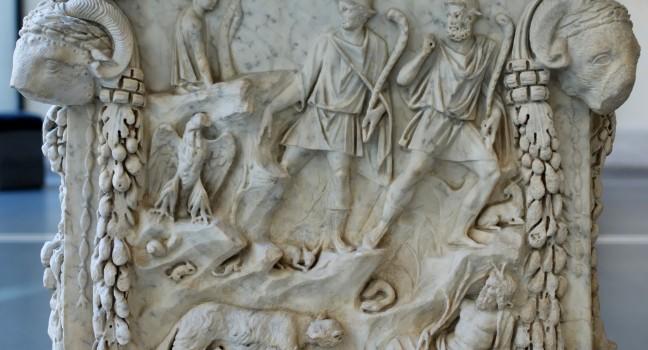
Representation of the lupercal: Romulus and Remus fed by a she-wolf, surrounded by representations of the Tiber and the Palatine. Panel from an alter dedicated to the divine couple of Mars and Venus. Marble, Roman artwork of the end of the reign of Trajan
By Marie-Lan Nguyen (2006) [Public domain], via Wikimedia Commons

The Museo Nazionale Romano, with items ranging from striking classical Roman paintings to marble bric-a-brac, has four locations: Palazzo Altemps, Crypta Balbi, the Museo delle Terme di Diocleziano, and this, the Palazzo Massimo alle Terme—a vast structure containing the great ancient treasures of the archaeological collection and also the coin collection. Highlights include the Dying Niobid, the famous bronze Boxer at Rest, and the Discobolus Lancellotti.

Among the museum's most intriguing attractions, however, are the ancient frescoes on view on the top floor. They're stunningly set up to "recreate" the look of the homes they once decorated, and their colors are remarkably preserved. You'll see stuccoes and wall paintings found in the area of the Villa Farnesina (in Trastevere), as well as those depicting a garden in bloom and an orchard alive with birds that once covered the walls of cool sunken rooms at Empress Livia's villa in Prima Porta, just outside the city.

Largo di Villa Peretti, 2, Rome, 00185, Italy
06-39967700
Sight Details
€8, or €12 for a combined ticket including access to Crypta Balbi, Museo delle Terme di Diocleziano, and Palazzo Altemps (valid for 1 wk)
Closed Mon.

Something incorrect in this review?

Centrale Montemartini

Testaccio Fodor's Choice

A decommissioned early-20th-century power plant is now this intriguing exhibition space for the overflow of ancient art from the Musei Capitolini collection. Getting here is half the fun. A 15-minute walk from the heart of Testaccio will lead you past walls covered in street art to the urban district of Ostiense. Head southwest and saunter under the train tracks passing buildings adorned with four-story-high murals until you reach the often-uncrowded Centrale Montemartini, where Roman sculptures and intricate mosaics are set amid industrial machinery and pipes.

Unusually, the collection is organized by the area in which the ancient pieces were found. Highlights include the former boiler room filled with ancient marble statues that once decorated Rome's private villas, such as the beautiful Esquiline Venus, as well as a large mosaic of a hunting scene. A purchase of the Capitolini Card will allow entry into Musei Capitolini and Centrale Montemartini.

Via Ostiense, 106, Rome, 00154, Italy
06-0608
Sight Details
€11.50; admission included with the purchase of the Capitolini Card (€14.50)
Closed Mon.

Something incorrect in this review?

Galleria Nazionale d'Arte Moderna e Contemporanea

Villa Borghese Fodor's Choice

This massive white Beaux-Arts building, built for the 1911 World Exposition in Rome, contains one of Italy's leading collections of 19th- and 20th-century works. It's primarily dedicated to the history of Italian modernism, examining the movement's development over the last two centuries, but crowd-pleasers Monet, Rodin, Van Gogh, and Warhol put in appearances, and there's also an outstanding Dadaist collection. You can mix coffee and culture at the mid-century-inspired Caffè delle Arti in a columned alcove.

MACRO

Repubblica Fodor's Choice

Formerly known as Rome's Modern and Contemporary Art Gallery, and before that as the Peroni beer factory, this redesigned industrial space has brought new life to the gallery and museum scene of a city hitherto hailed for its "then," not its "now." The collection here covers Italian contemporary artists from the 1960s through today. The goal is to bring current art to the public in innovative spaces and, not incidentally, to support and recognize Rome's contemporary art scene, which labors in the shadow of the city's artistic heritage. After a few days—or millennia—of dusty marble, it's a breath of fresh air.  Check the website for occasional late-night openings and events.

Palazzo Barberini/Galleria Nazionale d'Arte Antica

Quirinale Fodor's Choice

One of Rome's most splendid 17th-century buildings is a Baroque landmark. The grand facade was designed by Carlo Maderno (aided by his nephew, Francesco Borromini), but when Maderno died, Borromini was passed over in favor of his great rival, Gian Lorenzo Bernini. The palazzo is now home to the Galleria Nazionale d'Arte Antica, with a collection that includes Raphael's La Fornarina, a luminous portrait of the artist's lover (a resident of Trastevere, she was reputedly a baker's daughter). Also noteworthy are Guido Reni's portrait of the doomed Beatrice Cenci (beheaded in Rome for patricide in 1599)—Nathaniel Hawthorne called it "the saddest picture ever painted" in his Rome-based novel, The Marble Faun—and Caravaggio's dramatic Judith Beheading Holofernes.

The showstopper here is the palace's Gran Salone, a vast ballroom with a ceiling painted in 1630 by the third (and too-often-neglected) master of the Roman Baroque Pietro da Cortona. It depicts the Glorification of Urban VIII's Reign and has the spectacular conceit of glorifying Urban VIII as the agent of Divine Providence, escorted by a "bomber squadron" (to quote art historian Sir Michael Levey) of huge Barberini bees, the heraldic symbol of the family.

Galleria d'Arte Moderna

Piazza di Spagna

Located in a former monastery, this small museum displays a capsule collection of modern art, with an emphasis on Italian artists. The permanent collection is too large to be displayed at once, so exhibitions rotate, displaying paintings, drawings, prints, and sculptures by artists of the 19th and 20th centuries, including Giorgio de Chirico, Mario Mafai, Scipione, Gino Severini, and Giorgio Morandi.

Via Francesco Crispi, 24, Rome, 00187, Italy
06-0608
Sight Details
€9; €11.50 if there's a special exhibit
Closed Mon.

Something incorrect in this review?

Galleria Spada

Campo de' Fiori

In this neighborhood of huge, austere palaces, Palazzo Spada strikes an almost frivolous note, with its pretty ornament-encrusted courtyard and its upper stories covered with stuccoes and statues. Although the palazzo houses an impressive collection of Old Master paintings, it's most famous for its trompe-l'oeil garden gallery, a delightful example of the sort of architectural games that rich Romans of the 17th century found irresistible.

Even if you don't go into the gallery, step into the courtyard and look through the glass window of the library to the colonnaded corridor in the adjacent courtyard. You'll see—or seem to see—a statue at the end of a 26-foot-long gallery, seemingly quadrupled in depth in a sort of optical telescope that takes Renaissance's art of perspective to another level. In fact the distance is an illusion: the corridor grows progressively narrower and the columns progressively smaller as they near a statue, which is just 2 feet tall. The Baroque period is known for its special effects, and this is rightly one of the most famous. Borromini was responsible for the ruse, but it was only made possible thanks to the careful mathematical calculations completed by a science-minded Augustinian priest Giovanni Maria da Bitonto.

Upstairs is a seignorial picture gallery with the paintings shown as they would have been: hung one over the next clear to the ceiling. Outstanding works include Brueghel's Landscape with Windmills, Titian's Musician, and Andrea del Sarto's Visitation. Look for the fact sheets that have descriptive notes about the objects in each room.

Piazza Capo di Ferro, 13, Rome, 00186, Italy
06-6874896
Sight Details
€6; free the first Sun. of the month
Closed Tues.

Something incorrect in this review?

Museo Palatino

Campitelli

The Palatine Museum charts the history of the hill from Archaic times, with quaint models of early villages (on the ground floor), to Roman times (on the ground and upper floors). There is a good video reconstruction of the hill in Room V on the ground floor, as well as a collection of colored stones used in the decorations of the palace, with a map showing the distant imperial regions whence they came. Upstairs, the room dedicated to Augustus houses painted terra-cotta moldings and sculptural decorations from various temples—notably the Temple of Apollo Actiacus, whose name derives from the god to whom Octavian attributed his victory at Actium (the severed heads of the Medusa in the terra-cotta panels symbolize the defeated Queen of Egypt). There is also a selection of imperial portraits on the upper floor, including a rare surviving image of Nero. The museum closes early, at 3:30 pm.

Northwest crest of Palatine Hill, Rome, 00184, Italy
Sight Details
€24 2-day Full Experience ticket required

Something incorrect in this review?

Palazzo Bonaparte

Trevi

First designed by Giovanni Antonio De' Rossi for the Marquis of Aste in the 17th century, this Renaissance palace is better known as the home of Letizia Bonaparte, who purchased the elegant building in 1818. Napoleon's mother, who lived here until her death in 1836, was fond of sitting on the curious covered green balcony that wraps around a corner of the first floor. The stately home overlooks the Vittoriano and Palazzo Venezia, as well as the nonstop motion of Rome's busiest piazza. Palazzo Bonaparte is open for temporary exhibits and has hosted the works of blockbuster artists like Vincent Van Gogh and M. C. Escher, among others.

Piazza Venezia, 5, Rome, 00186, Italy
06-8715111
Sight Details
From €16 for exhibits

Something incorrect in this review?

Palazzo Corsini

Trastevere

A brooding example of Baroque style, the palace (once home to Queen Christina of Sweden) is across the road from the Villa Farnesina and houses part of the 16th- and 17th-century sections of the collection of the Galleria Nazionale d'Arte Antica. Among the star paintings in this manageably sized collection are Rubens's St. Sebastian Healed by Angels and Caravaggio's St. John the Baptist. Stop in if only to climb the 17th-century stone staircase, itself a drama of architectural shadows and sculptural voids. Behind, but separate from, the palazzo is the University of Rome's Orto Botanico, home to 3,500 species of plants, with various greenhouses around a stairway/fountain with 11 jets.

Via della Lungara, 10, Rome, 00165, Italy
06-68802323-Galleria Corsini
Sight Details
€15 Galleria Corsini, including entrance to Palazzo Barberini within 20 days; €5 Orto Botanico
Closed Mon.

Something incorrect in this review?

Palazzo delle Esposizioni

Monti

The late-19th-century Palazzo delle Esposizioni holds temporary exhibitions showcasing everything from Etruscan art to Pixar movies. The complex also has a great bookshop (including some books in English), a coffee bar, and a restaurant.

Via Nazionale, 194, Rome, 00184, Italy
06-696271
Sight Details
€12.50; costs vary by exhibition
Closed Mon.

Something incorrect in this review?