26 Best Sights in Hungary

Background Illustration for Sights

We've compiled the best of the best in Hungary - browse our top choices for the top things to see or do during your stay.

Egri Vár

Fodor's Choice
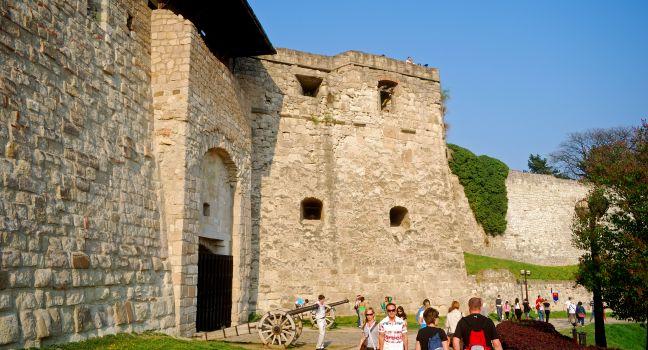
The first castle was built on the high hill named Várhegy at Felsőtárkány near Eger. During the Mongol invasion in 1241, this castle was ruined, and the bishop of Eger moved it to a rocky hill in the city of Eger. On the hill, a new ca
(c) Nyiragongo70 | Dreamstime.com

Built after the devastating Tatar invasion of 1241–42, Eger's castle is inspired by the mighty fortresses seen by Béla IV in Italy and Western Europe. An imposing Romanesque cathedral was built within the castle walls, then later rebuilt in Gothic style, though today only its foundations remain. The casematesa labyrinth of underground tunnels hewn in the 16th century by Italian engineers and used in the war against the Ottomans, when hundreds of defenders raced back and forth so the attackers would think there were thousands of themnow display many of the cathedral's surviving artifacts. Elsewhere, the Gothic-style Püspök Ház (Bishop's House) contains the castle museum, with exhibitions on local history and culture. Look out also for the statue of St. Stephen watching over the cathedral ruins; the Ágyúdomb (Cannon Hill) with its sweeping views of Eger; andfor an extra feethe Panoptikum (Wax Museum) with characters from the historical novel Eclipse of the Crescent Moon. The Palotaudvar (Palace Courtyard) regularly hosts live music concerts.

Not interested in the exhibitions? Come once they have closedafter 5:30 pm in high season, or after 3:30 pm (or all day Monday) in low seasonand you'll pay less than half the entrance fee.

Aquincum

Fodor's Choice

This fascinating complex comprises the reconstructed, extremely evocative remains of a Roman settlement dating from the first century AD. Careful excavations have unearthed a varied selection of artifacts and mosaics, providing a tantalizing glimpse of what life was like in the provinces of the Roman Empire. A gymnasium and a central heating system have been unearthed, along with the ruins of two baths and a shrine once operated by the mysterious cult of Mithras. The Aquincum múzeum (Aquincum Museum) displays the dig's most notable finds: ceramics; a red-marble sarcophagus showing a triton and flying Eros on one side and on the other, Telesphorus, the angel of death, depicted as a hooded dwarf; and jewelry from a Roman lady's tomb. There are reconstructed Roman board games, interactive video games, and a reconstruction of an ancient Roman musical organ in the basement level. The museum also manages the Thermae Maiores or 'Great Bath' complex as part of the Roman Baths Museum, an ancient spa now incongruously located in a pedestrian underpass by Flórián tér station. It's free to visit.

Szentendrei út 135, 1031, Hungary
1-250–1650
Sight Details
1,600 HUF Nov.–Mar.; 2,200 HUF Apr.–Oct.
Closed Mon. Excavations may be closed due to weather Nov.–Mar.

Something incorrect in this review?

Magyar Zene Háza

City Park Fodor's Choice

Opened in 2022, Budapest's stunning new museum in the City Park was designed by the well-known Japanese architect Sou Fujimoto. The expertly curated permanent exhibition is dedicated to the history of music, charting its evolution from archaic folk beginnings to the current day. There are detours through Hungary's greats, including Ferenc Liszt, Béla Bartók, and Zoltán Kodály. With the help of wireless headphones, visitors can listen to high-quality musical samples and set their own pace. For those interested in music, this museum is not to be missed.

Recommended Fodor's Video

Palace of Wonders

Fodor's Choice

It requires confidence to give an attraction a name like this, but for families, it delivers. This science-themed, highly interactive amusement park, museum, and playhouse features everything from a 9D virtual reality cinema (that shoots water at "viewers") to live science shows, as well as escape rooms, puzzles, and a mind-bending hall of illusions that will leave the entire party questioning what they know about how the world works.

Baba Múzeum

Supposedly the largest of its kind in Central Europe, Keszthely’s Doll Museum exhibits some 450 porcelain figurines dressed in 240 types of colorful folk dress. The building has a pastoral look, created not only by the figurines—which convey the multifarious beauty of village garb—but also by the ceiling’s huge, handcrafted wooden beams. On the two upper floors are wooden models of typical homes, churches, and ornate wooden gates representative of all regions in and near present-day Hungary that Magyars have inhabited since conquering the Carpathian basin in 896. The museum’s pièce de résistance is the life work of an elderly peasant woman from northern Hungary: a nine-yard-long model of Budapest’s Parliament building, patched together over 14 years from almost four million snail shells.

Budapesti Állat-és Növénykert

City Park

Established in 1866, the Budapesti Állat-és Növénykert was one of the first urban zoos in the world. In the early days, most of the zoo's residents came from the Pannonian Basin, with only a handful of more exotic tenants. One of them was a giraffe gifted by Empress Elisabeth of Austria, who was Queen Consort of Hungary at that time. Her husband, Franz Josef, King of Hungary, sent 34 animals to the zoo from Schönbrunn. The lovingly preserved architecture, which seems to be endlessly under renovation, makes for a uniquely elegant urban zoo experience. Don't miss the Art Nouveau elephant pavilion, decorated with Zsolnay majolica and glazed ceramic animals. In the early 1900s, the elephant house had to be rebuilt at the request of the Turkish ambassador, who thought it resembled a mosque and found it offensive. The neighboring lot, once the amusement park immortalized in the classic Hungarian film about the Kádár era, A Tanú (The Witness), has been annexed by the zoo. The buildup of an enormous biodome, which would have recreated the nature and wildlife of the Pannonian Basin, was canceled halfway through construction in 2022 due to excessive costs (the building’s torso can be seen from the outside). Some of the antique relics, like the wooden roller coaster, remain on display. Note that the last tickets are sold one hour before closing, and animal houses don't open until an hour after the zoo gates.

Állatkerti körút 6–12, Budapest, 1371, Hungary
1-273--4900
Sight Details
4,500 HUF

Something incorrect in this review?

Flipper Múzeum

Part museum space, part gaming center, the carefully curated and maintained Flipper Múzeum was started by avid pinball enthusiasts to inspire pinball enthusiasm in kids of all ages. Admission allows you to play almost all of the 130 machines featured here for free and for as long as you like (some machines are ornamental as they are not working anymore). Look for Terminator, Star Wars, and Mario Brothers pinball games or simple amusement park shooter games dating back to the late 19th century. Officially registered as a museum, it adopts an arcade vibe in the evening as players flip away until midnight most nights.

Gyermekvasút

Buda Hills

The 12-km (7-mile) Children's Railway—so called because it's operated primarily by children—runs from Széchenyi-hegy to Hűvösvölgy. The sweeping views make the trip well worthwhile for children and adults alike. Departures are from Széchenyi-hegy. To get to Széchenyi-hegy, take Tram 56 or 61 from Széll Kálmán tér, and change to the cog railway (public transport tickets valid) at the Városmajor stop. Take the cog railway uphill to the last stop and then walk a few hundred yards down a short, partly forested road to the left, in the direction most others will be going. The railway terminates at Hűvösvölgy, where you can walk downhill for a few minutes and catch Tram 56 or 61 back to Széll Kálmán tér.

Various stops along the railway also act as embarkation points for hikers into the Buda Hills.
Szilágyi Erzsébet fasor and Pasaréti út, Budapest, Hungary
1-397–5392
Sight Details
700 Ft one-way
Closed Mon. in winter season.

Something incorrect in this review?

House of Houdini

Castle District

Named for the renowned Budapest-born illusionist and escapologist, this entertaining, family-friendly museum is home to an enormous collection of Harry Houdini artifacts, from personal letters to stage magic props. Fun, English-language guided tours are topped by a live magic show performed by talented local conjurers.

Hungarian Museum of Trade and Tourism

The rather dull-sounding name belies a real gem of a museum, stuffed with interesting exhibits including old advertisements, shop signs, and restaurant items from the communist era. There are also fascinating details on the lives of different tradespeople, and recreated entire shops, cafés, and restaurants from the 19th and 20th centuries.

III Korona tér 1, 1036, Hungary
1-375--6249
Sight Details
1,800 HUF
Closed Mon.

Something incorrect in this review?

Kiscelli Múzeum

A short climb up the steep sidewalk of Remetehegy (Hermit Hill) deposits you at this elegant, mustard-yellow baroque mansion. It was built between 1744 and 1760 as a Trinitarian monastery. Today, it holds an eclectic mix of modern design, paintings, sculptures, engravings, old clocks, antique furniture, and other items related to the history of Budapest. Included here is the printing press on which poet and revolutionary Sándor Petőfi printed his famous "Nemzeti Dal" ("National Song"), in 1848, inciting the Hungarian people to rise up against the Habsburgs. There are concerts here every Sunday in July.

Kiscelli utca 108, 1037, Hungary
1-388–8560
Sight Details
2,500 HUF
Closed Mon.

Something incorrect in this review?

Labirintus

Castle District

Used as a wine cellar during the 16th and 17th centuries and then as an air-raid shelter during World War II, this 16-meter (52-foot) deep, 1,200-meter (3,900-foot) long labyrinth—entered at Úri utca 9 below an early-18th-century house—has a fascinating history. Today, the cave system has been turned into something of a novelty attraction, which gets mixed reviews. Exhibits include elaborately costumed wax figures attending a "haunted" masked ball, the mist-filled tomb of Count Dracula (who is said to have been imprisoned here), and the "Labyrinth of Darkness," a pitch-black section of the maze. It's a good escape on a hot day—it's a consistent 20°C in the caves—or join the 6 pm evening tour, when the winding corridors are illuminated only by oil lamp.

Úri utca 9, Budapest, 1014, Hungary
1-212–0207
Sight Details
4,000 HUF

Something incorrect in this review?

Magyar Természettudományi Múzeum

South Pest

Ideal if you're looking to while away an afternoon with young kids, the Hungarian Natural History Museum was first established in 1802 and boasts an impressive collection of over 10 million items. Currently housed in the buildings of an old military academy, upon entering visitors are immediately spellbound by the skeleton of a two-ton whale. Continue your journey through the region's dinosaur fossils, archaeological treasures from the Carpathian Basin, and an array of flora and fauna from various countries and oceans worldwide. Exhibition areas often close with little notice, so check the museum's website in advance. It's also worth exploring the surrounding Orczy-kert (Orczy Park) and its botanical gardens if you have time.

Ludovika tér 2-6, Budapest, 1083, Hungary
1-210--1085
Sight Details
2,600 HUF

Something incorrect in this review?

Mezőgazdasági Múzeum

City Park

Located in the park’s enchanting Vajdahunyad Castle, the quirky and slightly faded Museum and Library of Hungarian Agriculture dating to 1907 presents Hungary's agricultural history, an economic mainstay for the country to this day. With 40 collections covering Hungarian agriculture, forestry, animal husbandry, and viniculture through the ages, it’s not the flashiest of museums in terms of the displays, but it does have a range of fascinating natural science and cultural anthropological relics on display. Be sure to check out the skeleton of Hungary’s most famous, unbeatable racehorse, Kincsem, and the only remaining specimen of the Bakony Pig. The museum also offers tours of the castle’s gatehouse and the Apostles’ Tower, a fine opportunity to climb the gilded stairs of this gorgeous building and get closer to its glass mosaics by famed artist Miksa Róth.

Miniversum

Andrássy út
Built and maintained by a group of modeling enthusiasts, Miniversum offers beautifully detailed miniature dioramas of Budapest and Hungary's top sights and landmarks, complete with moving trains and tiny pedestrians. Interactive screens provide historical information on highlights and allow you to compare the miniature re-creations to the original locations. Several Austrian and German locations are also re-created, and separate tables offer typical views of communism-era life and industry. Children will appreciate the benches surrounding the displays offering them a higher vantage point. A behind-the-scenes guided tour is also available; English-language tours should be arranged several days in advance.

Néprajzi Múzeum

City Park

In 2022, the Museum of Ethnography moved from its awkward downtown home on Kossuth tér—originally built for the Supreme Court of Hungary—to a monumental building in the City Park. The new location is worth a glimpse for its architecture alone, featuring two eye-catching wings emerging from the ground and topped with roof gardens. The museum's permanent collection is expected to be finalized in spring 2024; until then, the highlight is the Ceramic Worlds exhibition, showing exquisite pottery from various regions of Hungary alongside those from Egypt, Iran, Vietnam, and other countries. It's also enjoyable to find your way around the enormous paper model of Budapest located in the main vestibule.

Dózsa György út 35, 1146, Budapest, Hungary
1-474--2100
Sight Details
1,700 HUF
Closed Mon.

Something incorrect in this review?

Palatinus fürdő

Dating to 1919, Palatinus Thermal and Open-air Bath was the first public outdoor bathhouse in the city and at that time was home to the largest pool in all of Europe. They added the wave pool and the Bauhaus main building designed by Janáky István in 1937. The entire complex received a refresh and upgrade in 2017. The complex includes full-length lap pools, waterslides, saunas, a geothermal steam room, and ten thermal pools (most of which are open year-round). The grounds are huge, and while there is a café on-site, you might want to pack your own food and drinks to picnic on the lawn. The indoor pools are spacious and open and not as busy as other thermal baths in the city.
Margaret Island, Budapest, 1138, Hungary
1-340--4500
Sight Details
4,900 HUF

Something incorrect in this review?

Paskál Fürdő

City Park

A little off the beaten path and about a ten-minute cab ride from the park, this spa is popular with locals who don't want to contend with visitors at Széchenyi and features indoor and outdoor thermal baths, full-length lap pools, a Finnish sauna, and hot and cold plunge pools, as well as some massage and medical treatments. For families, there is even a pool for small children and another for babies. For the older crowd, the connecting indoor-outdoor leisure pool welcomes patrons with a swim-up water bar. Just remember to bring a bank card or top up your entry card, as they don’t accept cash inside the facilities.

Egressy út 178/f, Budapest, 1149, Hungary
1-252--6944
Sight Details
4,300 HUF

Something incorrect in this review?

Szent István Park

Founded in 1928, Szent István Park (originally called Lipótvárosi Park) is as old as the district itself. Full of trees and flower beds, a small playground and a separate dog run, this little park is a popular recreational spot where locals of all ages get together for community events, concerts, and holiday celebrations. Among its statues is one honoring Raoul Wallenberg, the Swedish diplomat who saved tens of thousands of Jewish Hungarians from the Nazis, many from this neighborhood.
Szent István Park, Budapest, 1137, Hungary

Something incorrect in this review?

Szórakoténusz Játékmúzeum és Muhely

The unusual, one-of-a-kind Szórakoténusz Toy Museum and Workshop chronicles the history of Hungarian toys with almost 18,000 archaeological pieces such as stone figures and clay toys from medieval guilds. The museum also hosts changing international exhibits. In the workshop, artisans create traditional toys and invite you to try to make toys yourself. Next door to the toy museum (in the same building) is the small Magyar Naív Muvészek Múzeum (Hungarian Naive Art Museum), where you can see a collection of this simple style of painting and sculpting created by Hungarian artists. The museum is in a less-than-inspiring neighborhood of concrete apartment blocks, but only a five-minute walk from downtown.

Vácrátóti Nemzeti Botanikus Kert

Around 14 km (9 miles) southeast of Vác, on the road to Gödöllő, lies Hungary’s biggest and best botanical garden. Home to more than 12,000 plant species, the arboretum’s top priority is botanical research, and the collection falls under the auspices of the Hungarian Academy of Sciences. You’re welcome to stroll along the paths and sit on benches in the leafy shade. The greenhouse opens a bit later and closes earlier than the surrounding garden.

Alkotmány utca 2–4, 2163, Hungary
28-360--122
Sight Details
2,200 HUF

Something incorrect in this review?

Vasarely Múzeum

The pioneer of Op Art (who left Hungary as a child and spent the rest of his life in Paris), Victor Vasarely was born Gyozo Vásárhelyi in 1908 in this house, which has been turned into something wild, as much a fun house as a museum. The first hall is a corridor of 3D visual tricks devised by his disciples, at the end of which hangs a hypnotic canvas of shifting cubes by Jean-Pierre Yvaral. Upstairs, the illusions grow profound: a zebra gallops by while chess pieces and blood cells seem to come at you.

Káptalan utca 3, 7621, Hungary
30-934–6127
Sight Details
3,500 HUF
Closed Mon.

Something incorrect in this review?

Zsolnay Múzeum

If you haven't had your fill of Zsolnay, make a beeline for this museum. Occupying the upper floor of the oldest surviving building in Pécs, which dates from 1324 and has been built and rebuilt over the years in Romanesque, Renaissance, and Baroque styles, this museum is a merry show-and-tell waltz through a revolution in pottery that started in 1851. That's when local merchant Miklós Zsolnay bought the site of an old kiln and set up a stoneware factory for his son Ignác to run. Ignác’s brother, Vilmos, a shopkeeper with an artistic bent, bought the factory from him in 1863, imported experts from Germany, and (with the help of a Pécs pharmacist for chemical glaze experiments and his daughters for hand-painting) created the distinctive namesake porcelain. Today, the museum's collection includes Vilmos’s early efforts at Delft-blue handmade vases, cups, and saucers; his two-layer ceramics; examples of the gold-brocade rims that became a Zsolnay trademark; and table settings for royal families. Look up on your tour to see the unusual Zsolnay chandeliers lighting the way.

Káptalan utca 2, 7261, Hungary
72-514–045
Sight Details
2,500 HUF
Closed Mon.

Something incorrect in this review?

Zugliget Libegő

If interesting transportation options like the Gyermekvasút (Children's Railway) are your thing, the Zugliget Libegő (chairlift) in the Buda Hills is also good fun. The chairlift takes passengers from Zugliget up above the treetops to the side of János Hill in about 15 minutes, all the while providing panoramic views of the Buda surroundings. It can be reached by taking Bus 291 from Nyugati station to its final stop. The lift operates from 10 am to 7 pm in summer and until 3:30 or 4 pm during the winter. Check the website for special "Night Lift" events (usually in August and September) where you can ride the lift after dark.

Zugligeti út 97, 1121, Hungary
Sight Details
HUF 3,000 round trip
Sometimes closed Mon. for maintenance

Something incorrect in this review?

Kisvonat

The Kisvonat, a miniature tram on wheels that looks like a train, leaves from Dobó tér every hour on the hour for an approximately 40-minute tour of Eger's historical sights.

Városliget

Városliget

Heroes' Square is the gateway to a square kilometer (almost ½ square mile) of recreation, entertainment, beauty, and culture. A bridge behind the Millennial Monument leads across a boating basin that becomes an artificial ice-skating rink in winter; to the south of this lake stands a statue of George Washington, erected in 1906 with donations by Hungarian emigrants to the United States. You can soak or swim at the lovely, turn-of-the-20th-century Széchenyi Fürdő, jog along the park paths, or marvel at the art nouveau buildings and beasts of the Budapest Zoo.

In the eastern quarter of the park, former leisure-time youth center and major concert hall Petőfi Csarnok is slated for demolition but as of mid-2016 still hosts a weekend fleamarket in its back lot. The Gundel restaurant charms diners with its turn-of-the-20th-century ambience. Fair-weather weekends, when the children's attractions are teeming with youngsters and parents and the Széchenyi Fürdő is brimming with bathers, are the best times for people-watchers to visit the park; if you go on a weekday, the main sights are rarely crowded.

Beside the City Park's lake stands Vajdahunyad Vár (Vajdahunyad Castle), a fantastic medley of Hungary's historic and architectural past, starting with the Romanesque gateway of the cloister of Jak, in western Hungary. A Gothic castle whose Transylvanian turrets, Renaissance loggia, baroque portico, and Byzantine decorations are all guarded by a spooky modern (1903) bronze statue of the anonymous medieval "chronicler," who was the first recorder of Hungarian history. Designed for the millennial celebration in 1896, it was not completed until 1908. In 2003, a bust of legendary B-movie actor Béla Lugosi was placed in an alcove along the southeast corner, its origins a mystery even today.

Budapest, Hungary

Something incorrect in this review?