54 Best Sights in The Fairy-Tale Road, Germany

Background Illustration for Sights

We've compiled the best of the best in The Fairy-Tale Road - browse our top choices for the top things to see or do during your stay.

Herrenhausen Palace and Gardens

Fodor's choice
Great Gardens, Herrenhausen, Hannover, Lower Saxony, Germany.
(c) Yovcheva | Dreamstime.com

The gardens of the former Hannoverian royal summer residence are the city's showpiece, unmatched in Germany for its formal precision, with patterned walks, gardens, hedges, and chestnut trees framed by a placid moat. In the glasshouses there are over 800 flowering orchids and exotic plants and a grotto decorated with colorful glass mosaic and pebbles by artist Niki de Saint Phalle. The mausoleum in the Berggarten houses the remains of local royalty, including those of King George I of Britain. From May until September there are fireworks displays and fountain shows for a few hours daily (weekdays 10–noon and 3–5, weekends 10–noon and 2–5). The 17th-century palace on the grounds was completely destroyed in 1943, leaving only the fountains and stairs remaining. In 2013, a relatively faithful reconstruction replaced the castle, which now houses a museum dedicated to its history and is used frequently as an event location. Herrenhausen is outside the city, a short ride on Tram Line 4 or 5.
Herrenhauserstr. 5, Hannover, 30419, Germany
0511-1683–4000
Sight Details
Museum and gardens €10 Apr.–Oct., €8 Nov.–Mar.
Museum closed Mon.–Wed. Nov.–Mar.

Something incorrect in this review?

Reichsabtei Corvey

Fodor's choice
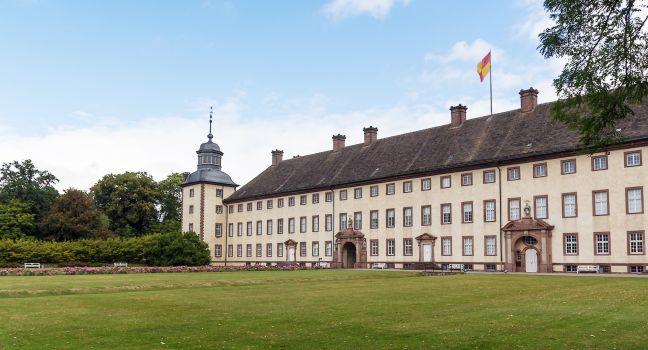
Imperial Abbey of Corvey was one of the most privileged Carolingian monastic sanctuaries in the ninth century Duchy of Saxony; Shutterstock ID 161763419; Project/Title: 10 Best New UNESCO Sites; Downloader: Fodor's Travel
Borisb17 / Shutterstock

The impressive Reichsabtei Corvey, or Schloss Corvey, is idyllically set between the wooded heights of the Solling region and the Weser River. During its 1,200-year history it has provided lodging for several Holy Roman emperors. Heinrich Hoffmann von Fallersleben (1798–1874), author of the poem \"Deutschland, Deutschland über Alles,\" worked as librarian here in the 1820s. The poem, set to music by Joseph Haydn, became the German national anthem in 1922. A garden festival takes place every year in August, and concerts are held in the church and great hall, the Kaisersaal, during the summer. Corvey is reached on an unnumbered road heading east from Höxter (3 km [2 miles]) toward the Weser. There are signposts to \"Schloss Corvey.\"

Höxter, 37671, Germany
05271-168–168
Sight Details
€14; abbey church €5
Closed Nov.–mid-Apr.

Something incorrect in this review?

Schloss und Bergpark Wilhelmshöhe

Fodor's choice
Flowerbeds in front of Castle Wilhelmshoehe on Mountain Park in Kassel, Germany.
(c) Hel080808 | Dreamstime.com

The magnificent grounds of the 18th-century Schloss and the Bergpark Wilhelmshöhe, at the western edge of Kassel, are said to be Europe's largest hill park. If you have time, plan to spend an entire day at this UNESCO World Heritage site, exploring its wonderful gardens, water features, museums, and castle. Wear good walking shoes and bring some water if you want to hike all the way up to the giant statue of Hercules that crowns the hilltop.

\n

The Wilhelmshöher Park was laid out as a baroque park in the early 18th century, its elegant lawns separating the city from the thick woods of the Habichtswald (Hawk Forest). Schloss Wilhelmshöhe was added between 1786 and 1798. The great palace stands at the end of the 5-km-long (3-mile-long) Wilhelmshöher Allée, an avenue that runs straight as an arrow from one side of the city to the other.

\n

Kassel's leading art gallery and the state art collection lie within Schloss Wilhelmshöhe as part of the Museumslandschaft Hessen Kassel. Its collection includes 11 Rembrandts, as well as outstanding works by Rubens, Hals, Jordaens, Van Dyck, Dürer, Altdorfer, Cranach, and Baldung Grien.

\n

The giant 18th-century statue of Hercules that crowns the Wilhelmshöhe heights is an astonishing sight. You can climb the stairs of the statue's castlelike base—and the statue itself (you can only mount the statue from April to October)—for a rewarding look over the entire city. At 2:30 pm on Sunday and Wednesday from May through September, water gushes from a fountain beneath the statue, rushes down a series of cascades to the foot of the hill, and ends its precipitous journey in a 175-foot-high jet of water. A café lies a short walk from the statue.

Schlosspark 1, Kassel, 34131, Germany
0561-3168–0160
Sight Details
Park free; a day ticket €6 includes entry to Hercules and Octagon, Schloss Wilhelmshöhe and Löwenburg castle
Schloss Wilhelmshöhe, Hercules and Octagon: closed Mon.

Something incorrect in this review?

Recommended Fodor's Video

Stadtschloss

Fodor's choice
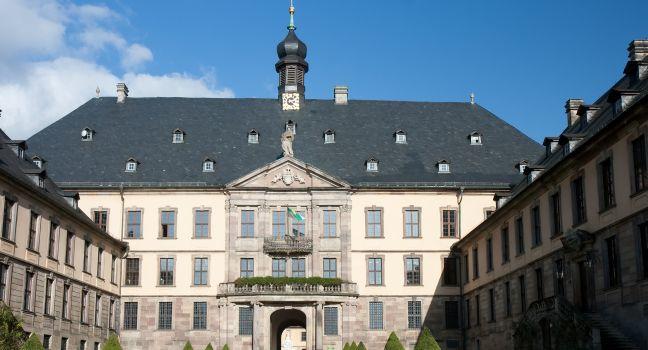
Fuldaer Stadtschloss - Main Entrance, Fulda, Hessen Germany. Photo taken on: October 25th, 2009
(c) Maui01 | Dreamstime.com

The city's grandest example of baroque design is the immense Stadtschloss, formerly the residence of the prince-bishops. The Fürstensaal (Princes' Hall), on the second floor, provides a breathtaking display of baroque decorative artistry, with ceiling paintings by the 18th-century Bavarian artist Melchior Steidl, and fabric-clad walls. The palace also has permanent displays of fine Fulda porcelain.

\n

Also worth seeing is the Spiegelsaal, with its many tastefully arranged mirrors. Pause at the windows of the Grünes Zimmer (Green Chamber) to take in the view across the palace park to the Orangery, a large garden with summer-flowering shrubs and plants.

Deutsches Auswandererhaus

Fodor's choice

Located at the point where 7 million Europeans set sail for the New World, the Deutsches Auswandererhaus is made to order for history buffs and those wanting to trace their German ancestry. \"Passengers\" get boarding passes, wait on dimly lit docks with costumed mannequins and piles of luggage, and once onboard navigate their way through cramped and creaky sleeping and dining cabins. After being processed at Ellis Island, visitors enter the Grand Central Terminal, from where they set off to settle in different parts of the USA. Further on, there is a section of the museum dedicated to immigrants to Germany, complete with a 1930s-era German-American pub, a German deli and, a sewing workshop that represents the working environment in the early 1900s. In the annex, there is an exhibition covering the 330 years of German immigration history. At the end of the tour visitors can research their genealogy using two international databases.

Fürstenberg Porcelain factory

Fodor's choice

Germany's second-oldest porcelain factory is at Fürstenberg, 24 km (14 miles) north of Bad Karlshafen and 8 km (5 miles) south of Höxter, in a Weser Renaissance castle high above the Weser River. The crowned Gothic letter F, which serves as its trademark, is known worldwide. You'll find Fürstenberg porcelain in Bad Karlshafen and Höxter, but it's more fun to journey to the 18th-century castle itself, where production first began in 1747, and buy directly from the manufacturer. Porcelain workshop visits can be booked ahead of time, and there's also a museum which has free guided theme tours from March to October every Sunday at 2 pm. There is a popular bistro in one of the outbuildings, and the factory outlet in another.The view from the castle is a pastoral idyll, with the Weser snaking through the immaculately tended fields and woods. You can also spot cyclists on the riverside paths.

Meinbrexener Str. 2, Fürstenberg, 37699, Germany
05271-401–178
Sight Details
€8.50
Closed Mon. (also Tues.–Fri. in Jan.)

Something incorrect in this review?

Schnoorviertel

Fodor's choice

Stroll through the narrow streets of this idyllic district, a jumble of houses, taverns, and shops. This is Bremen's oldest district, dating back to the 15th and 16th centuries. The neighborhood is fashionable among artists and craftspeople, who have restored the tiny cottages to serve as galleries and workshops. Other buildings have been converted into popular antiques shops, cafés, and pubs. The area's definitely a great source for souvenirs, with incredibly specialized stores selling porcelain dolls, teddy bears, African jewelry, and smoking pipes, among many other things. There's even a year-round Christmas store.

Wilhelm Busch Museum

Fodor's choice

This section of the Georgenpalais, near Herrenhausen, is devoted to the works of cartoonists and caricaturists with an emphasis on Wilhelm Busch, the \"godfather of the comic strip,\" whose original drawings and effects are on display. More than a century ago, Busch (1832–1908) wrote and illustrated a popular children's book, Max und Moritz, which tells the story of two boys who mixed gunpowder into the village tailor's pipe tobacco and, with fishing lines down the chimney, filched roasting chickens off the fire. The first American comic strip, The Katzenjammer Kids (1897), drew not only on Busch's naughty boys (they even spoke with a German accent) but also on his loose cartoon style.

Altes Rathaus

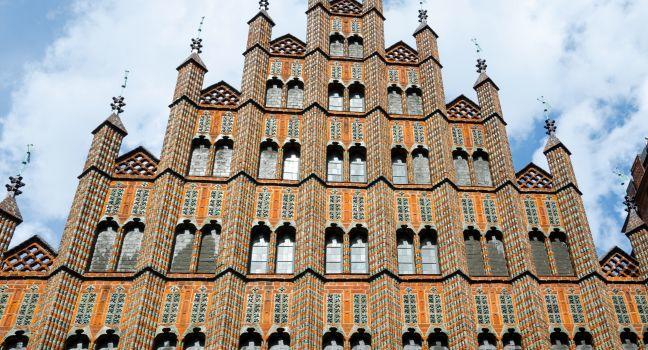
Pinnacle gables at the Old Town Hall, Hannover, Lower Saxony, Germany, Europe.
(c) Yovcheva | Dreamstime.com

It took nearly 100 years, starting in 1410, to build this gabled brick edifice that once contained a merchants' hall and an apothecary. In 1844 it was restored to the style of about 1500, with exceptional Gothic gables and an ornamental frieze. The facade's fired-clay frieze depicts coats of arms and representations of princes, and a medieval game similar to arm wrestling using only the fingers. This marvelous picture above the outer right arched window in the Schmiedestrasse can only be seen by following the \"red line\" around the Old Town Hall. Inside is a modern interior with boutiques and a restaurant.

Karmarschstr. 42, Hannover, 30159, Germany
Sight Details
Free

Something incorrect in this review?

Dom zu Fulda

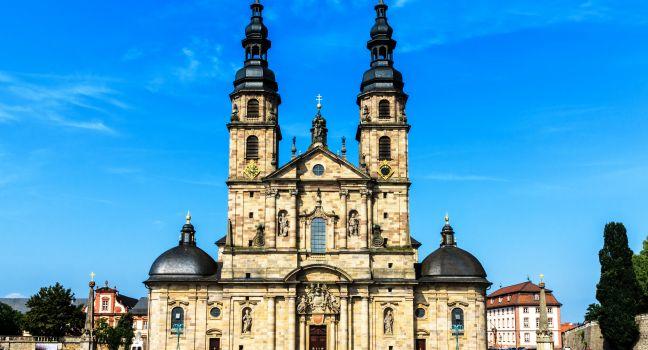
Famous baroque Cathedral in historic Fulda, Germany. Photo taken on: July 27th, 2014
(c) Moskwa | Dreamstime.com

Fulda's 18th-century cathedral, an impressive baroque building with an ornate interior, has two tall spires and stands on the other side of the broad boulevard that borders the palace park. The basilica accommodated the ever-growing number of pilgrims who converged on Fulda to pray at the grave of the martyred St. Boniface, the \"Apostle of the Germans.\" A black alabaster bas-relief depicting his death marks the martyr's grave in the crypt.

\n

\n

Dompl. 1, Fulda, 36037, Germany

Something incorrect in this review?

Elisabethkirche

St. Elisabeth's Church in Marburg, Germany.
(c) Olha Rohulya | Dreamstime.com

Marburg's most important building is the Elisabethkirche, which marks the burial site of St. Elizabeth (1207–31), the town's favorite daughter. She was a Hungarian princess, betrothed at age 4 and married at 14 to a member of the nobility, Ludwig IV of Thuringia. In 1228, when her husband died in the Sixth Crusade, she gave up all worldly pursuits. She moved to Marburg, founded a hospital, gave her wealth to the poor, and spent the rest of her very short life (she died at the age of 24) in poverty, caring for the sick and the aged. She is largely responsible for what Marburg became. Because of her selflessness she was made a saint four years after her death. The Teutonic Knights built the Elisabethkirche, which quickly became a pilgrimage site, enabling the city to prosper. You can visit the shrine in the sacristy that once contained her bones, a masterpiece of the goldsmith's art. The church is a veritable museum of religious art, full of statues and frescoes. Walking tours (€14) of Marburg begin at the church on Saturday at 3, year-round. Tours inside the church are held Monday to Friday at 3 from April to October, and Sunday shortly after Mass (around 11:15). Due to major renovations of the interior, the choir and the nave are closed to the public until 2027.

Elisabethstr. 1, Marburg, 35037, Germany
06421-65573
Sight Details
€2.70; tours €5

Something incorrect in this review?

Gedenkstätte Bergen-Belsen

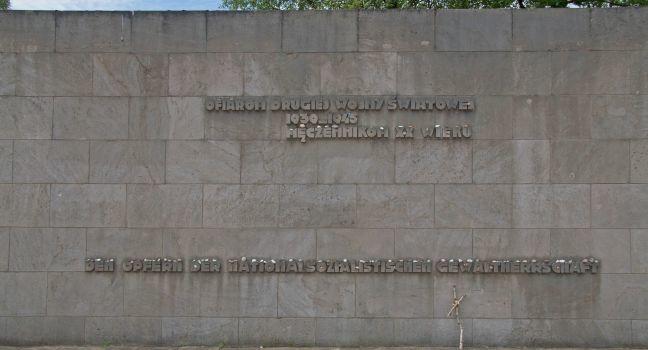
Bergen-Belsen, Germany - June 22, 2008: Lohheide, memorial monument at the Bergen-Belsen memorial.
(c) Ronaldwilfredjansen | Dreamstime.com

The site of the infamous POW and concentration camp is now a memorial to the victims of World War II and the Holocaust. Anne Frank was among the more than 70,000 Jews, prisoners of war, homosexuals, Roma, and others who died here. A place of immense suffering, the camp was burned to the ground by British soldiers, who liberated it in April 1945, arriving to find thousands of unburied corpses and typhus, typhoid, tuberculosis, and other diseases spreading rapidly among the survivors. Today, all that physically remains of the camp, which is inside a nature preserve, are the foundations of some of its prisoner barracks and a number of burial mounds overgrown with heather and grass and bearing stark inscriptions such as \"Here lie 1,000 dead.\"

\n

The history of the camp and its victims is explained further through a series of moving video, audio, photo, and text exhibits within the slender, minimalist structure of the 200-meter-long (656-foot-long), 18-meter-wide (59-foot-long) Documentation Center. Built almost entirely of plain concrete panels, the center is softly lit and peaceful inside, its floor sloping gently upward from the entrance and beyond the exhibits to windows that let in light and views of the trees outside.

\n

Visitors to the Memorial should plan to stay at least two or three hours. Ninety-minute tours of the site in German and English leave the Documentation Center information desk from March to October at 11:30 and 2:30 on Friday, Saturday, and Sunday  Don't try to see everything when visiting the memorial, but do take some time to walk around outside, visiting the site of the barracks to gain a better understanding of the atrocious living conditions inmates of the camp were forced to suffer.

\n

Bear in mind that the memorial is not recommended for children under the age of 14. Older children should be in the company of an adult.

Anne-Frank-Pl., Lohheide, 29303, Germany
05051-47590
Sight Details
Free; donations appreciated for tours

Something incorrect in this review?

Landgrafenschloss

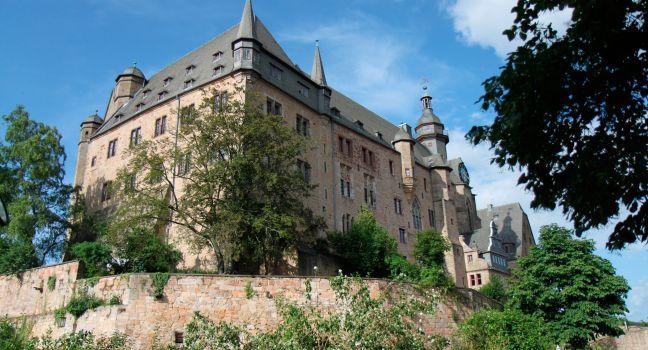
Marburg Castle in Germany on a clear day with clouds and a view of the towers, walls, clock and surrounding trees.
(c) Zackzuchowski | Dreamstime.com

Sitting at the highest point in the town, this castle was finished in 1500 and survived the war unscathed. It offers panoramic views of Marburg below. Only the main wing can still be visited for temporary exhibitions.

Landgrafenschloss, Marburg, Germany
06421-282–2355
Sight Details
€5
Closed Mon.

Something incorrect in this review?

Michaeliskirche

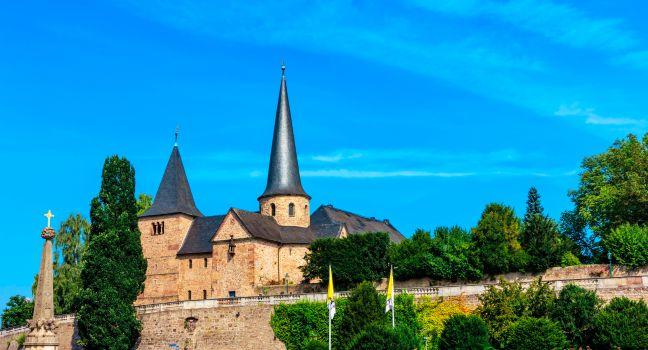
Cathedral Square with Michael Church in Fulda, Hesse, Germany.
(c) Moskwa | Dreamstime.com
Dating back to AD 819, this is one of Germany's oldest churches. Formerly a part of the Benedictine order, the church's interior is bare bones and yet impressive with its domed ceiling and arched cupola.
Michaelsberg 1, Fulda, 36037, Germany
Sight Details
Free

Something incorrect in this review?

Münchhausen Museum

Schloss Philippsruhe

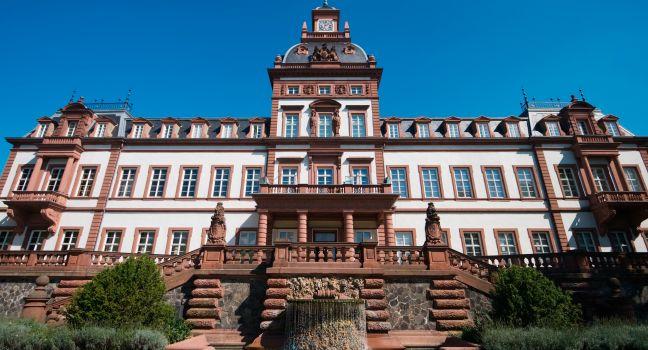
The Schloss Philippsruhe (Palace) in Hanau was started in 1701. Located in Frankfurt's Rhein Main area.
(c) Jchambers | Dreamstime.com

Completed in 1880, this palace mixes a bit of rococo, neo-Renaissance, and neoclassism in its design; a museum inside has a small Grimm exhibit that includes clothing, artifacts, and writings. It's on the bank of the Main in the suburb of Kesselstadt. Historical Hanau treasures, including a priceless collection of faience, are also on display here.

Philippsruher Allée 45, Hanau, 63454, Germany
06181-295–1799
Sight Details
€5
Closed Mon.

Something incorrect in this review?

Altes Rathaus

The Old Town Hall was begun in the 13th century and houses a completely preserved Gothic heating system in the part-medieval, part-Renaissance building. 

Markt 9, Göttingen, 37073, Germany
0551-499–800
Sight Details
Free
Closed Sat. and Sun.

Something incorrect in this review?

Brüder Grimm Haus and Museum Steinau

Occupying both the house where the Brothers Grimm lived for much of their childhoods as well as the house's old barn, the Brüder Grimm Haus and Museum Steinau are fun and engaging museums. Featuring a reconstruction of the family's old kitchen, the brothers' former house also displays old personal possessions such as letters and reading glasses, and has an upper floor divided into nine rooms with interactive displays that celebrate the Grimms' stories and other fairy tales from around Europe. Across a small courtyard, the town's museum documents what life was like on the old trade route that ran through Steinau, incorporating into its exhibits a coach, inn signs, milestones, and the type of pistol travelers used to defend themselves from bandits.

Brüder Grimm Nationaldenkmal

Hanau's main attraction sits on the town's marketplace opposite the Town Hall. The bronze memorial, erected in 1898, is a larger-than-life-size statue of the brothers, one seated, the other leaning on his chair, the two of them pondering an open book.

\n

Marktpl., Hanau, Germany
Sight Details
Free

Something incorrect in this review?

Cathedral Museum

The Cathedral treasury contains a document bearing St. Boniface's writing, along with several other treasures, including Lucas Cranach the Elder's fine 16th-century painting Christ and the Adulteress.

Deutsches Schifffahrtsmuseum

The country's largest and most fascinating maritime museum, the Deutsches Schifffahrtsmuseum, includes a harbor, open from mid-March through October, that shelters seven old trading ships as well as a separate submarine-turned-technology-museum.

Hans-Scharoun-Pl. 1, Bremerhaven, 27568, Germany
0471-482–070
Sight Details
€6
Museum closed Mon. Nov.–mid-Mar. Ships closed Nov.–mid-Mar

Something incorrect in this review?

Devil's Cave (Tropfsteinhöhle)

On this half-hour tour through a 2½-million-year-old cave on the outskirts of Steinau, you may stumble upon sleeping bats as you explore the unique geological formations, including stalactites and stalagmites that reach up to 82 feet high and 36 feet in circumference as well as a so-called chapel room with ceilings up to 26 feet tall.

Mooshecke 1, Steinau an der Strasse, 36396, Germany
06663-97388
Sight Details
€6
Closed Mon.–Thurs. and Oct.–mid-Apr.

Something incorrect in this review?

Gänseliesel

The statue of Gänseliesel, the little Goose Girl of German folklore, stands in Göttingen's central market square. The girl, according to the story, was a princess who was forced to trade places with a peasant, and the statue shows her carrying her geese and smiling shyly into the waters of a fountain. The students of Göttingen gave her a ceremonial role: traditionally, graduates who earn a doctorate bestow a kiss of thanks upon Gänseliesel. Göttingen's citizens say she's the most kissed girl in the world.

GRIMMWELT

Opened in 2015, this museum and exhibition space brings the world of the Grimm brothers to life with a combination of artifacts from their time in Kassel and interactive exhibitions devoted to furthering awareness of their important role in the development of the German language. Exhibits include video art installations focusing on language or take a playful view of the brothers' fairy tales.

Weinbergstr. 21, Kassel, Germany
0561-598–6190
Sight Details
From €10
Closed Mon.

Something incorrect in this review?

Hessisches Landesmuseum (Hessian State Museum)

The museum occupies a grandiose Art Nouveau and neo-renaissance-style building complete with tower, telling the story of the North Hesse region over three floors. The permanent collection ranges from exhibits left by the region's first human inhabitants, to the Middle Ages, to the times of the landgraves, to the present. There's a great view from the top of the tower.

Brüder-Grimm-Platz 5, Kassel, 34117, Germany
0561-3168–0300
Sight Details
€6
Closed Mon.

Something incorrect in this review?

Hexenturm

The Hexenturm was originally constructed in the 15th century as a watchtower to protect the town from invaders. What remains today is an imposing 9 meters (30 feet) in diameter and 24-meter-high (79 feet) tower, which was used as a grim prison during the time when Gelnhausen was the center of a witch hunt in the late 16th century. Dozens of women were either burned at the stake or bound hand-and-foot and then thrown into the Kinzig River after being held prisoner here. The watchtower can only be visited as part of a guided tour booked with the tourist office.

Am Fratzenstein, Gelnhausen, 63571, Germany
06051-830–300
Sight Details
Free (exterior only); interior only on guided tour from Tourist Office

Something incorrect in this review?

Hochzeitshaus

On central Osterstrasse you'll see several examples of Weser Renaissance architecture, including the Rattenfängerhaus (Rat-Catcher's House) and the Hochzeitshaus, a beautiful 17th-century sandstone building now used for city offices. From mid-May to mid-September the Hochzeitshaus terrace is the scene of two free open-air events commemorating the Pied Piper legend. From mid-May to mid-September, local actors and children present a half-hour reenactment each Sunday at noon, and there is also a 40-minute musical, Rats, each Wednesday at 4:30 during the same months. The carillon of the Hochzeitshaus plays tunes every day at 9:35 and 11:35, and mechanical figures enact the piper story on the west gable of the building at 1:05, 3:35, and 5:35.

Osterstr. 2, Hamelin, Germany

Something incorrect in this review?

Johann Andreas Eisenbart Glockenspiel

Dr. Johann Andreas Eisenbart (1663–1727) would be forgotten today if a ribald 19th-century drinking song (\"Ich bin der Doktor Eisenbart, widda, widda, wit, boom! boom!\") hadn't had him shooting out aching teeth with a pistol, anesthetizing with a sledgehammer, and removing boulders from kidneys. He was, as the song has it, a man who could make \"the blind walk and the lame see.\" This is terribly exaggerated, of course, but the town, where he died, takes advantage of it. The good Dr. Eisenbart has \"office hours\" in the town hall at 1:30 on Saturday from May through September. Throughout the year, a glockenspiel on the town hall depicts Eisenbart's feats, to the tune of the Eisenbart song three times daily: at noon, 3, and 5. There's a statue of the doctor in front of his home at Langestrasse 79, and his grave is outside the St. Ägidien Church.

Kaiserpfalz

On an island in the gentle little Kinzig River you'll find the remains of the Kaiserpfalz. Emperor Friedrich I—known as Barbarossa, or \"Red Beard\"—built the castle in this idyllic spot in the 12th century; in 1180 it was the scene of the first all-German Imperial Diet, a gathering of princes and ecclesiastical leaders. Today only parts of the russet walls and colonnaded entrance remain. Still, you can stroll beneath the castle's ruined ramparts and you'll get a tangible impression of the medieval importance of the court of Barbarossa.

Burgstr. 14, Gelnhausen, 63571, Germany
06051-3805
Sight Details
€3.50
Closed Mon. and mid-Dec.–Feb.

Something incorrect in this review?

Kinder-Akademie-Fulda

Germany's first children's museum has interactive exhibits to help explain science and technology, including a walk-through heart.

Mehlerstr. 4, Fulda, 36043, Germany
0661-902–730
Sight Details
Museum from €4; walk-through heart from €8
Closed Sat. May–Sept.

Something incorrect in this review?