30 Best Sights in The Bavarian Alps, Germany

Background Illustration for Sights

We've compiled the best of the best in The Bavarian Alps - browse our top choices for the top things to see or do during your stay.

Dokumentation Obersalzberg and Kehlsteinhaus
Fodor's choice
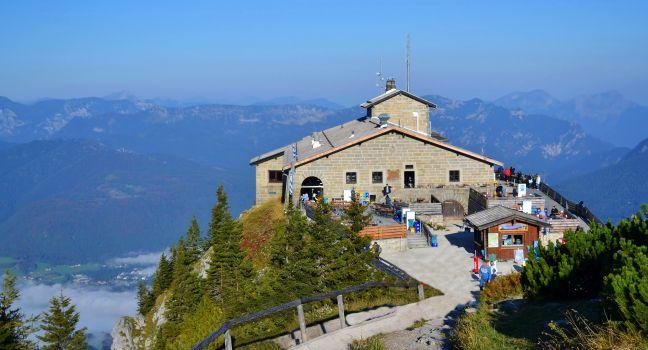
BERCHTESGADEN,GERMANY-SEPTEMBER 28: Tourists visit Kehlstein haus in Obersalzberg on September 28, 2011. The "Eagle's Nest" was built for Adolph Hitler for his 50th birthday.
Lukas Holub / Shutterstock

Located in the hills above Berchtesgaden, this center documents the notorious history of the Third Reich, with a special focus on Obersalzberg and its role in the Holocaust and World War II. The permanent exhibition looks at how the area was transformed from a remote mountain community into a Nazi power center, where Hitler spent more than a quarter of his time in office. It includes some surprisingly rare archive material, as well as access to the bunker complex. English-language multimedia guides are included in the low entrance fee; choose between the short (40-minute) or standard (80-minute) tour.

\n

Dokumentation Obersalzberg is also the starting point for a visit to Kehlsteinhaus (known in English as the Eagle's Nest), the last remaining Nazi-era building of Hitler's once-luxurious mountain retreat. A 15-minute shuttle bus and 45-second elevator whisk you all the way up—alternatively, skip the elevator and walk the last leg in around half an hour. Once at the Kehlsteinhaus (now a restaurant), explore the free history exhibition on the sun terrace, and consider the 1¼-hour scenic round-trip hike to the Kehlstein summit cross. It's also possible to follow the long mountain path back to Berchtesgaden.

Salzbergstr. 41, Berchtesgaden, 83471, Germany
08652-947--960
Sight Details
Dokumentation Obersalzberg: €3. Kehlsteinhaus bus/elevator round-trip: €32
Closed mid-Oct.–mid-May

Something incorrect in this review?

Kloster Ettal

Fodor's choice
Ettal Abbey in Upper Bavaria, Germany
Scirocco340 / Shutterstock

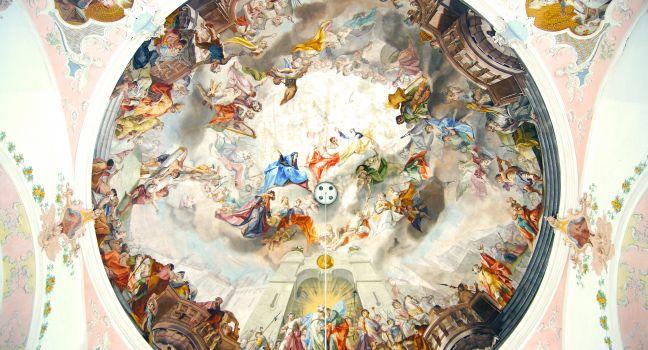
This remarkable monastery was founded in 1330 by Holy Roman Emperor Ludwig the Bavarian for a group of knights and a community of Benedictine monks. It still houses 50 monks today, making it the largest Benedictine monastery in Germany. The monastery's highlight is its original 10-sided basilica, which was redecorated in the mid-18th century to become one of the foremost examples of Bavarian rococo. The church's chief treasure is its enormous dome fresco (83 feet wide), painted by Jacob Zeiller. German-language basilica tours are offered every Monday and Thursday at 3 pm, lasting up to 45 minutes.

\n

Outside of the church, visitors can explore the lovely courtyard gardens and the historic brewery and distillery. Both the signature Benediktiner Weissbier and the seven different traditional \"Ettaler liqueurs\" (some made from centuries-old recipes incorporating dozens of mountain herbs) are local favorites. One-hour German-language brewery tours take place every Tuesday and Friday at 3 pm, with 45-minute liqueur distilling tours every Monday and Thursday at 4 pm. Both include tastings, and you can pick up bottles to take away in the monastery shop.

Kaiser-Ludwig-Pl. 1, Ettal, 82488, Germany
08822-740-monastery
Sight Details
Free. Basilica tour €5; brewery tour €12, distillery tour €9

Something incorrect in this review?

Schloss Herrenchiemsee

Fodor's choice
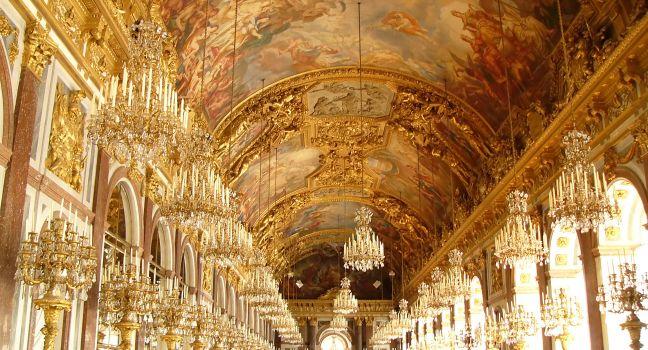
Herrenchiemsee palace hall
Dainis Derics / Shutterstock

Beautiful Chiemsee has drawn generations of Bavarian royalty to its shores for its dreamlike, melancholy air—and it was on one of the lake's three islands, Herreninsel, that King Ludwig decided to build this castle. Painstakingly modeled after Louis XIV's Versailles, the building (as with most of Ludwig's grand projects) was never completed, and Ludwig ultimately only spent nine days here. Nonetheless, what remains is seriously impressive—and seriously ostentatious.

\n

The palace's decadent state rooms can only be visited as part of a 35-minute guided tour, with English-language tours taking place several times a day (and timed to coincide with ferry arrivals). The most spectacular room in the palace is the Hall of Mirrors, but also of interest are the ornate bedrooms, the \"self-rising\" table, the elaborately painted bathroom, and the formal gardens. The south wing houses a museum about King Ludwig's life.

\n

Ferries to Herreninsel leave from Stock, the harbour of Prien, and between mid-April and late October a horse-drawn carriage can whisk you from the boat dock to the palace itself. Elsewhere on the island is the Augustinian Monastery where Germany's postwar constitution was drawn up; it is now a museum.

Herreninsel, Chiemsee, 83209, Germany
08051-688–7900
Sight Details
€11 (incl. Monastery Museum and King Ludwig II-Museum); €5 horse carriage ride

Something incorrect in this review?

Recommended Fodor's Video

Schloss Linderhof

Fodor's choice
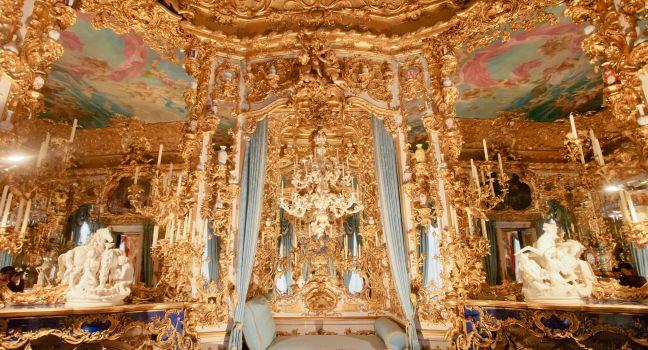
Linderhof palace hall of mirrors.
(c) Shoenberg3 | Dreamstime.com

Built between 1870 and 1879 on the spectacular grounds of his father's hunting lodge a few miles west of Ettal, Schloss Linderhof was the only one of Ludwig II's royal residences to have been completed during his short life. It was the smallest of his country retreats but also his favorite; a charming, French-style rococo confection, it was inspired by the Petit Trianon at Versailles.

\n

From an architectural standpoint, it's a whimsical combination of conflicting styles: lavish on the outside, somewhat overly decorated on the inside. The formal gardens contain interesting elements such as a Moorish pavilion—bought wholesale from the 1867 Paris Universal Exposition. According to hearsay, while staying at Linderhof, the eccentric king would dress up as the legendary knight Lohengrin to be rowed in a swan boat on the grotto pond; in winter he took off on midnight sleigh rides behind six plumed horses and a platoon of outriders holding flaming torches.

\n

The park around the palace is free to visit (parking is €3) but you'll pay for the exhibition, Hunding's Hut, and, of course, the palace itself, which is only accessible with a 25-minute guided tour. The Venus Grotto is closed for restoration until well into 2025. 

Linderhof 12, Linderhof, 82488, Germany
08822-92030
Sight Details
€10 Palace and Hunding's Hut; €2 Exhibition King's Cottage; Park free

Something incorrect in this review?

Zugspitze

Fodor's choice
Zugspitze top of Germany
Noppasin / Shutterstock

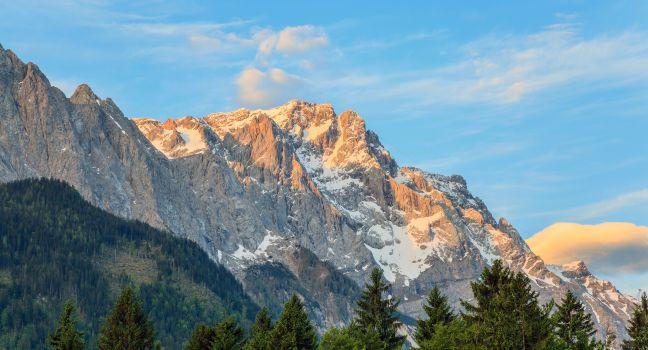
Soaring to 9,718 feet, this is Germany's highest mountain and the number-one attraction in the area. Hard to see from Garmisch-Partenkirchen—and often mistaken for the nearby Alpsspitze—it's worth going up to see the view, and the best way to do that is with a \"Zugspitze Round Trip\" ticket. From Garmisch you'll take the historic Bayerische Zugspitzbahn cog railway, which trundles all the way up to Zugspitzplatt, about 8,530 feet above sea level. From here, the Gletscherbahn cable car whisks you right to the summit. Once you've taken in the scenic views (on a clear day you can see four countries), you'll descend on the record-breaking Zugspitze cable car—dropping 2 km (1¼ miles) in just 10 minutes—to catch the cog railway back into town.

Olympia Str. 31, Garmisch-Partenkirchen, 82467, Germany
08821-7970
Sight Details
Zugspitze round-trip €72

Something incorrect in this review?

Kloster Tegernsee

Fodor's choice

As well as being the most visible landmark on the lake, this vast Benedictine monastery turned royal residence is perhaps its biggest attractionespecially when factoring in its superb brewery. Founded in the 8th century, the monastery was one of the most productive cultural centers in southern Germany; one of the Minnesänger (wandering lyrical poets), Walther von der Vogelweide (1170–1230), was a welcome guest. Not so welcome were Magyar invaders, who laid waste to the place in the 10th century.

\n

During the Middle Ages, the monastery made a lively business producing stained-glass windows, thanks to a nearby quartz quarry, and in the 16th century it became a major center of printing. The late-Gothic church was refurbished in Italian baroque style in the 18th century, and became the place where heirs to the Wittelsbach dynasty got married; step inside to see the spectacular frescoes by Hans Georg Asam.

\n

Sadly, as 19th-century secularization sealed the monastery's fateand almost half the buildings were torn downthe church and brewery are the only parts left that are open to visitors. The remainder was converted into a summer retreat by Maximilian I and is still used by members of the Wittelsbach family.

Schlosspl. 2, Tegernsee, 83684, Germany
08022-3419

Something incorrect in this review?

Nationalpark Berchtesgaden

Fodor's choice

Head 4½ km (3 miles) south of Berchtesgaden town, into the heart of Nationalpark Berchtesgaden, and you'll arrive at the tip what may be Germany's most scenic lake, the Königssee. It's almost certainly the cleanest, with its exceptional clarity maintained by a longstanding ban (since 1909) on motorboats; only electric-powered passenger ships—along with pedal and row boats—are permitted. Hop on one of these charming wooden ships to explore the lake, passing by tiny Christlieger island on the way to St. Bartholomä, a twin-tower, 17th century chapel on the western shore. En route, don't be alarmed if the boat engines are turned off and the skipper whips out a trumpet, as the ensuing fanfare demonstrates a remarkable natural echo, with notes reverberating around the almost-vertical cliffs. Hikers may wish to continue from St. Bartholomä to Salet, at the southern end of Königssee, where you can walk via the pretty green Obersee to the 1,540-foot-high Röthbach waterfall; it takes about 3 hours there and back.

\n

Boat service on the Königssee runs year-round, except when the lake freezes over. A round-trip to St. Bartholomä lasts a little over an hour, excluding time ashore. To Salet and back, it's almost two hours.

\n

Beyond Königssee, the spectacular Nationalpark Berchtesgaden covers a total area of 210 square km (81 square miles), sharing around two-thirds of its border with Austria. This is wild mountain country, where flora and fauna have been left to develop as nature intended. No roads penetrate the area, and even the mountain paths can be difficult to follow—though you'll find plenty to choose from, for all levels of ability. The park administration organizes guided hikes during the summer; ask at the tourist office. Altogether, the park attracts more than 1½ million visitors each year: a true testament to its popularity.

Obermarkt

Fodor's choice

Mittenwald's medieval prosperity is most clearly reflected on its main street, which is lined with splendid houses boasting ornately carved gables and brilliantly painted facades. Many are characteristic of Lüftlmalereiwhere images, usually religious motifs, were painted on the wet stucco exteriors—and were completed by renowned regional artists such as the great Franz Seraph Zwinck. Goethe once called this heart of Mittenwald \"a picture book come alive,\" and it still is today.

\n

Take a stroll from south to north, starting at the pretty Müller drugstore on Dekan-Karl-Platz and keeping the small stream to your right. You'll find yourself stopping regularly to appreciate some of Germany's prettiest houses, including (but not limited to) the Blue House at Obermarkt 45, Parfümerie Wiedemann, Cafe Obermarkt, Bio Gasthof Post, Alpenrose, the Pilgerhaus mit Hofkapelle, and the Goethehaus. The latter, right at the end of Obermarkt, looks across to the similarly decorative St. Peter und Paul church.

Müller, Mittenwald, 82481, Germany

Something incorrect in this review?

Wallberg

Fodor's choice

For the best vista in the area, climb the Wallberg, the 5,700-foot mountain at the southern end of the lake. It's a hard four-hour hike up, or a short 15-minute ride on the Wallbergbahn. At the summit are a restaurant and sun terrace with panoramic views, as well as several trailheads: choose between a 30-minute walk to the Wallberggipfel viewpoint and back, a 6½-hour hike up to Zum Risserkogel and then down to the bottom of the cable-car, and everything in between. In winter, the nearby skiing is excellent.

Wallbergbahn Bergstation, Rottach-Egern, 83700, Germany
08022-6800-Wallbergbahn
Sight Details
Wallberbahn: €15 one-way; €27 return

Something incorrect in this review?

Wallfahrtskirche St. Anton

Fodor's choice

Perched on a hill overlooking Partenkirchen, this charming old pilgrimage church turned war memorial site is worth the walk (15 minutes up from Ludwigstrasse; 10 minutes back down) for its beautiful 18th-century frescoes by the renowned painter Johann Evangelist Holzer. The numerous memorial plaques combined with the peaceful mountainside location makes this a contemplative stop.

St. Peter und Paul

OBERAMMERGAU, GERMANY-JUNE 10:St Peter St Paul Church. Joseph Schmuzer led the construction of the churh.The ceiling and wall frescoes were made by Matthew Guenthe; June 10,2012 Oberammergau,Germany
Igor Plotnikov / Shutterstock

Built in 1736, this pretty church with its eggshell-colored exterior and pastel-pink interior, is regarded as the finest work of rococo architect Josef Schmutzer (although it was his son, Franz Xaver Schmutzer, who did a lot of the stuccowork). Striking frescoes by Matthäus Günther and Franz Seraph Zwinck depict Mary as the answerer of prayers as well as a scene from the crucifixion. The latter is said to date back to the 1633 promise by the elders of Oberammergau to hold the passion play every decade if the town were to be saved from the plague.

Alte Pfarrkirche St. Martin

The original foundation for this church was laid all the way back in the 9th century, though the current building dates to 1280. It showcases Gothic wall paintings from throughout the centuries, including a 7-meter-high (21-foot-high), larger-than-life figure of St. Christopher from 1330 and a Passion of the Christ fresco dating to the 1400s. Starting at this old church, walk 10 minutes along pretty Frühlingstrasse and across Schneggensteg bridge to find the \"new\" 18th-century Parish Church of St. Martin ( Marienpl. 6); its spectacular interior is adorned with vibrant stuccowork by Joseph Schmutzer and rococo work by Matthäus Günther.

Pfarrerhausweg 4, Garmisch-Partenkirchen, 82467, Germany

Something incorrect in this review?

Alte Saline und Quellenhaus

In the early 19th century King Ludwig I built this elaborate saltworks and spa house, in vaulted, pseudomedieval style. The pump installations, which still run, are astonishing examples of 19th-century engineering. A "saline" chapel is part of the spa's facilities, and was built in exotic Byzantine style. A museum in the same complex looks at the history of the salt trade. As the salt deposits beneath the building are no longer top quality, parts of the building have been converted to office spaces and a trendy restaurant, but you can tour the underground infrastructure.

Alte Saline 9, Bad Reichenhall, 83435, Germany
08651-700–2146
Sight Details
€9
Nov.–Mar., closed Mon. and all but 1st Sun. of month

Something incorrect in this review?

Fraueninsel

Boats shuttling between Stock and Herreninsel (Gentlemen's Island) also stop at this small retreat, which translates as Ladies' Island. The Benedictine convent here, founded an astonishing 1,200 years ago, houses a small community of nuns. One of its earliest superiors, Irmengard, daughter of King Ludwig der Deutsche, died here in the 9th century; her grave in the convent chapel was discovered in 1961, the same year that early frescoes there were brought to light. The chapel is open daily from dawn to dusk. Otherwise, the island has about 50 private houses, a couple of shops, and a guesthouse where visitors wishing to take part in the nuns' quiet lives can overnight. You can walk around the island in about 20 minutes—just don't miss partaking in the Benedictine Sisters' delicious fruit liqueurs, gingerbread, and marzipan.

Geigenbaumuseum

Founded in 1930 and set within one of the town's oldest (and prettiest) buildings, this museum highlights the history and craft of violin-making in Mittenwald, with the main emphasis is on instruments made during the Baroque period. Ask the museum curator to direct you to the nearest of several violin makers—they'll be happy to demonstrate the skills handed down to them.

Grosses Paraplui

At one of the loveliest lookout points in Bavaria, Maximilian showed off this corner of his kingdom to Czar Alexander I of Russia and Emperor Franz I of Austria during their journey to the Congress of Verona in October 1821. You can follow in their footsteps on a 45-minute round-trip hike to the lookout; a plaque marks the spot from which they admired the open expanse of the Tegernsee and the mountains beyond. The 1¼-km (¾-mile) walking path starts just between 37 and 39 Seestrassewalk to the eastern end of the Schlosspromenade, cross the road, and join the narrow path to the right of the large white building.

Ellingerstr. 17, Tegernsee, 83684, Germany

Something incorrect in this review?

Haus der Berge

This popular information center and educational museum in the heart of Berchtesgaden, which recently celebrated its 10th anniversary, brings the surrounding national park to life for children and adults alike. The interactive exhibition focuses on the wildlife and diverse nature to be found in Germany's only Alpine national park, divided into four main habitats: water, forest, alpine pasture, and rock. There's also a library, a cinema, and a restaurant with mountain views, making it a great rainy-day option for families.

Oberammergau Museum

This museum dedicated to local traditions displays historic examples of the wood craftsman's art and an outstanding collection of carved Christmas crèches dating from the mid-18th century. There are also exhibits focusing on local Roman influence, Oberammergau's role in organ-building (and the influence that local organs had on the design of U.S. churches), and a collection of \"reverse glass paintings\". A media room displays videos on, among other things, the art of traditional wood-carved puppets and the town's famous Passion Play.

Dorfstr. 8, Oberammergau, 82487, Germany
08822-32440
Sight Details
€5; €9 inc. Passionstheater
Closed Mon.

Something incorrect in this review?

Oberammergau Passionsspielhaus

This immense theater is where the world-famous Passion Play showing the crucifixion is performed every 10 years. In the off-season (for this ten-year period any year that's not 2022), the theater does host other concerts and plays. Tours providing a glimpse of the costumes, the sceneries, the stage, and even the auditorium are held in German at 2 pm Wednesday and Sunday.

Theaterstr. 16, Oberammergau, 82487, Germany
08822-945–8888
Sight Details
€3.50; €5 including Oberammergau Museum
Closed Mon.

Something incorrect in this review?

Pilatushaus

Completed in 1775, this building is considered among the most beautiful in town due to the frescoes by Franz Seraph Zwinck, one of the greatest Lüftlmalerei painters. Fronted by a lovely manicured garden, the house is named for the fresco over the front door depicting Christ before Pilate. Rather confusingly, the Pilatushaus Lebende Werkstatt (Living Workshop) is a two-minute walk away, set in another lovely building at Dorfstrasse 20; step inside to see local woodcarving craftsmen in their workshop, alongside working potters and painters. 

Ludwig-Thoma-Str. 10, Oberammergau, 82487, Germany
08822-949511-Living Workshop
Sight Details
Closed Mon. and mid-Oct.–mid-May

Something incorrect in this review?

Predigtstuhl

The pride and joy of the Reichenhallers is the steep, craggy mountain appropriately named the Preacher's Pulpit, which stands at 5,164 feet, southeast of town, and has been noted as one of the top 10 cable-car rides in the world for its stunning views. You can hike or just enjoy a bite to eat and drink at the Almütte Schlegemuldel, 15 minutes from the cable-car station.

Südtiroler Pl. 1, Bad Reichenhall, 83435, Germany
08651-96850
Sight Details
€24 round-trip

Something incorrect in this review?

Richard Strauss Institut

On the eastern edge of Garmisch, en route to Partenkirchen, stands the home of composer Richard Strauss, the town's most famous son. Although born in Munich, he settled in Garmisch in 1908 and lived in this house until his death in 1949. The property itself, which is still owned by the composer's family, is not open to visitors, but the attached institute and research center offers a popular exhibition dedicated to Strauss's life. Regularly symphony and chamber concerts are held here, and it becomes the center of activity during the Richard Strauss Tage, an annual music festival held in mid-June.

Schnitzschulstr. 19, Garmisch-Partenkirchen, 82467, Germany
08821-180–7900
Sight Details
Exhibit €3.50
Closed weekends

Something incorrect in this review?

Rupertus Therme

Part of Bad Reichenhall's revival included building this new spa facility in 2009. Indoor and outdoor pools in the Therme section are fed by the saline deposits beneath the city; families with children will appreciate the salt-free kids' pool and slide. Saunas and steam rooms are rounded off with a host of special applications using salt, essential oils, mud packs, and massages. The Therme can be popular, especially in winter, so online reservations for any spa services are a good idea

Friedrich-Ebert-Allee 21, Bad Reichenhall, 83435, Germany
08651-76220-reservation hotline
Sight Details
From €20

Something incorrect in this review?

Salzbergwerk Berchtesgaden

For centuries, salt was the basis of Berchtesgaden's wealth. In the 12th century, Emperor Barbarossa gave mining rights to a Benedictine abbey that had been founded here a century earlier. The abbey was secularized early in the 19th century, when it was taken over by Berchtesgaden's princely rulers. Where once only select guests were allowed to see how the source of the city's wealth was extracted from the earth, today an hour-long tour will transport you—via a miniature train—nearly 1 km (½ mile) into the mountain to an enormous chamber where the salt is mined. This is one the region's most popular family attractions, as tours also include rides down the wooden chutes used by miners to get from one level to another, as well as a boat ride on an underground saline lake the size of a football field. Adult visitors may wish to join one of the special four-hour dinners inside the mine; they're very popular so book early.

Bergwerkstr. 83, Berchtesgaden, 83471, Germany
08652-60020
Sight Details
€24.50

Something incorrect in this review?

Schellenberger Eishöhle

Germany's largest ice caves lie 10 km (6 miles) north of Berchtesgaden. Drive to Parkplatz Eishöhle, just north of Marktschellenberg village on the B305 (10 minutes), or take bus 840 from Berchtesgaden train station to the Eishöhle stop at the same location (15 minutes). From there, you can reach the caves on foot by walking 3½ hours along the clearly-marked route. Once there, a guided tour of the caves takes about 45 minutes; bring warm clothes, even at the height of summer. A small restaurant and bunkhouse, Toni Lenz Hütte, is close to the caves and open daily during the season.

Parkplatz Eishöhle/Eishöhle Bus Stop, Berchtesgaden, 83487, Germany
08650-984–560
Sight Details
€12.50
Closed Nov.–May

Something incorrect in this review?

Schloss Berchtesgaden

The last royal resident of the Berchtesgaden abbey, Crown Prince Rupprecht (who died here in 1955), furnished this place with rare family treasures that now form the basis of this permanent collection. Fine Renaissance rooms exhibit the prince's sacred art, which is particularly rich in wood sculptures by such great late-Gothic artists as Tilman Riemenschneider and Veit Stoss. There are two weaponry rooms exhibiting hunting tools, including rifles from the 19th century, and a beautiful rose garden out back. You can also visit the abbey's original, cavernous, 13th-century dormitory and cool cloisters. Castle visits are only possible on an hour-long guided tour, which takes in 30 of the total 214 rooms; these are held four times a day (except Saturday) between mid-May and mid-October, but only once or twice a day (and only midweek) during low season. Check online in advance for unscheduled closures, as the Wittelsbach heir still occasionally stops by for a visit.

Schlosspl. 2, Berchtesgaden, 83471, Germany
08652-947–980
Sight Details
€15
Closed Sat. Closed Sat. and Sun. mid-Oct–mid-May

Something incorrect in this review?

St. Peter und Paul

The 18th-century church, with its eye-catching Lüftlmalerei exterior, along with the elaborate and joyful stuccowork coiling and curling its way around the interior, is one of the most important rococo structures in Bavaria. On the back of the altar insidewhich, like Oberammergau's namesake church, was built by Josef Schmutzer and decorated by Matthäus Güntheryou'll find the name Matthias Klotz, carved there by the renowned violin maker himself. Note that on some of the ceiling frescoes, the angels are playing violins, violas da gamba, and lutes.

\n

In front of the church, Klotz is memorialized as an artist at work in vivid bronze sculpted by Ferdinand von Miller (1813–79), creator of the mighty Bavaria Monument in Munich. And at the rear of the church, a small garden contains a moving war memorial chapel and the decorative, candle-filled Lourdes Grotto.

Tölzer Stadtmuseum

Housed in the Altes Rathaus (Old Town Hall), beside a second branch of the town's tourist information, this longstanding museum has a permanent exhibition containing more than 2,000 objects exploring the history of Bad Tölz and its environs. Look out for the many fine examples of Bauernmöbel (farmhouse furniture), along with exhibits on the local patron saint, Leonhard.

Marktstr. 48, Bad Tölz, 83646, Germany
08041-793–5156
Sight Details
€2
Closed Mon.

Something incorrect in this review?

Wandelhalle

Hotels here base spa treatments on the health-giving properties of the saline springs and the black mud from the area's waterlogged moors. The elegant, pillared pavilion of the attractive spa gardens is really a sight to behold, with its unusual misting green facade, said to extract salt from the water. All you need to do is walk along the 540-foot Gradierhaus, a massive wood-and-concrete construction that produces a fine salty mist by trickling brine down a 40-foot wall of dense blackthorn bundles (breathing salt-laden air is a remedy for various lung conditions).

Bad Reichenhall, 83435, Germany
08651-6060-tourist office
Sight Details
Free
Closed Nov.–May

Something incorrect in this review?

Werdenfels Museum

The region's culture and history are intriguingly presented in this Partenkirchen museum, mostly set inside a beautiful 17th-century merchant's house (but with parts of the exhibition space dating back to the 1200s, and others to 2018). Spread over 19 rooms and five floors, the exhibits explore traditional aspects of life in the Werdenfelser region (an independent state for more than 700 years, until 1802), from traditional folk costumes, jewelry, arts, and crafts to recreations of rural and bourgeois bedrooms. There are regularly-rotating temporary exhibitions showcasing modern local paintings and sculptures. The museum is located on Partenkirchen's historic Ludwigstrasse, home to dozens of colorful, ornate building facades, so continue exploring local history and culture with a leisurely stroll along the street.

Ludwigstr. 47, Garmisch-Partenkirchen, 82467, Germany
08821-751–710
Sight Details
€5.50
Closed Mon.

Something incorrect in this review?