72 Best Sights in Munich, Germany

Background Illustration for Sights

Munich is a wealthy city—and it shows. At times this affluence may come across as conservatism. But what makes Munich so unique is that it's a new city superimposed on the old. The hip neighborhoods that make up the City Center (Innenstadt) are replete with traditional locales, and flashy materialism thrives together with a love of the outdoors.

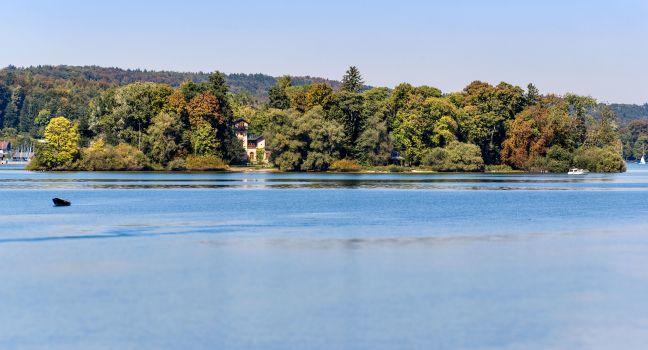
Roseninsel

Rose Island on Lake Starnberg, Bavaria, Germany.
(c) Zwawol | Dreamstime.com

Just offshore is the tiny island where King Maximilian II built a summer villa (called a casino). You can swim to the island's tree-fringed shores or sail across in a dinghy (rentals are available at Possenhofen's boatyard and at many other rental points along the lake). Visits to the casino are available by German-language guided tour only. There is also a ferry service to take you over; the cost is €5 round-trip.

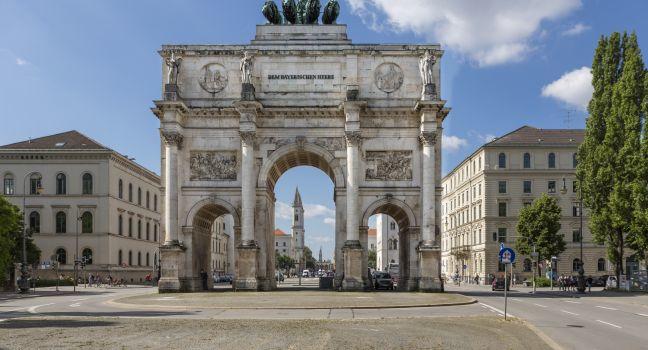
Siegestor

Schwabing
historic Siegestor in Munich, Germany
(c) Haraldmuc | Dreamstime.com

Built to bookend the Feldherrnhalle and mark the end of Ludwigstrasse, Siegestor nowadays also marks the beginning of Leopoldstrasse. Unsurprisingly, it has Italian origins and was modeled on the Arch of Constantine in Rome. It was built (1843–52) to honor the achievements of the Bavarian army during the Wars of Liberation (1813–15) against Napoléon. It received heavy bomb damage in 1944, and at the end of the war Munich authorities decided it should be torn down for safety reasons. Major Eugene Keller, the head of the U.S. military government in the postwar city, intervened and saved it. Its postwar inscription on the side facing the inner city is best translated as: "Dedicated to victory, destroyed by war, a monument to peace."

Leopoldstr. 1, Munich, 80802, Germany

Something incorrect in this review?

Alter Hof

Altstadt

Alter Hof was the original home of the Wittelsbach dynasty of Bavaria (not to be confused with the adjacent Residenz). Established in 1180, the Münchner Kaiserburg (Imperial Palace) at Alter Hof now serves various functions. Its Infopoint is a tourist-information center for Bavaria's castles and museums. In the vaulted hall beneath is a multimedia presentation about the palace's history. 

Recommended Fodor's Video

Altes Rathaus

Altstadt

Much of the work on Munich's first town hall was done in the 15th century, though various alterations were made through the centuries. Its great hall—destroyed in 1943–45 but now fully restored—was the work of the renowned architect Jörg von Halspach. Postwar, the tower was rebuilt as it looked in the 15th century and now it's used for official receptions and is not usually open to the public. The tower provides a fairy-tale-like setting for the Spielzeugmuseum (Toy Museum), accessible via a winding staircase. Its toys, dolls, and teddy bears are on display, together with a collection of Barbies from the United States.

Archäologische Staatssammlung

Altstadt

This is Bavaria's fascinating record of its history, from prehistoric times through the Middle Ages through a rich collection of archaeological finds. Head down to the basement to see the fine Roman mosaic floor, and head up to the SOLÂ restaurant and its seasonal open-air terrace.

Lerchenfeldstrasse 2, Munich, 80538, Germany
089-1259--96910
Sight Details
€7 (€1 on Sun.)
Closed Mon.

Something incorrect in this review?

Bavaria Filmstadt

Geiselgasteig

For movie buffs, Munich has its own Hollywood-like neighborhood, the Geiselgasteig, in the affluent Grünwald district, on the southern outskirts of the city. A number of notable films, such as Die Unendliche Geschichte (The Neverending Story), were made here. Visitors can peek into the submarine used in the filming of Das Boot (The Boat) and see the space station set from the recent sci-fi thriller Stowaway. Admission price includes a 90-minute guided tour and entry to the cinema, which screens a 10-minute family-friendly film complete with motion simulator and 4D effects. A daily tour in English is offered on most days at noon; if not, free audio guides are available.

Bavariafilmpl. 7, Munich, 82031, Germany
089-6499–2000
Sight Details
€23

Something incorrect in this review?

Bezirksmuseum

To get a sense of the town's history, visit the Bezirksmuseum (district museum), which displays historical artifacts, furniture, and traditional costumes from Dachau and its surroundings.

Botanischer Garten

Nymphenburg

On the northern edge of Schloss Nymphenburg, this collection of some 19,000 plants, including orchids, cacti, cycads, alpine flowers, and rhododendrons, covers over 52 acres and makes up one of the most extensive botanical gardens in Europe. It is also used to provide a refuge for bee species, and for scientific research by local university students.

Menzingerstr. 65, Munich, 80638, Germany
089-1786–1321
Sight Details
€5.50

Something incorrect in this review?

Buchheim Museum

The Buchheim Museum, on the western shore of the lake, has one of the finest private collections of German expressionist art in the form of paintings, drawings, watercolors, and prints. Among the artists represented are Otto Dix, Max Beckmann, Ernst Ludwig Kirchner, Karl Schmitt-Rotluff, and other painters of the so-called Brücke movement (1905–13). The museum is housed in an impressive modern building on the lakeside. Some areas of the museum are reserved for African cultic items and Bavarian folk art. The nicest way to get to the museum from Starnberg is by boat.

Am Hirschgarten 1, Starnberg, 82347, Germany
08158-99700
Sight Details
€13
Closed Mon.

Something incorrect in this review?

COMU Carl Orff Museum

Among the most famous artists who made their home here was the composer Carl Orff, author of numerous works inspired by medieval material, including the famous Carmina Burana. His life and work—notably the pedagogical Schulwerk instruments—are exhibited in this museum which reopened in summer 2025 after a major renovation. The museum can be reached via public transportation: take the regional train from Munich's central train station to Diessen, then change to the bus 13 and get off at the station Klosterhof. From there, it's another 25-minute walk. It's much faster and easier to take the car and combine your trip with a stop in Herrsching. 

Ziegelstadel 1, Diessen, 86911, Germany
08807-947--4321
Sight Details
€9.50
Closed Mon. and Tues.

Something incorrect in this review?

DenkStätte Weisse Rose

Maxvorstadt

Siblings Hans and Sophie Scholl, fellow students Alexander Schmorell and Christian Probst, and Kurt Huber, professor of philosophy, were the key members of the Munich-based resistance movement against the Nazis in 1942–43 known as the Weisse Rose (White Rose). All were executed by guillotine. A small exhibition about their work is in the inner quad of the university, where the Scholls were caught distributing leaflets and denounced by the janitor. A memorial to White Rose is just outside the university.

Deutsches Jagd- und Fischereimuseum

Altstadt

This quirky museum is in the enormous former St. Augustus Church, and it contains a large collection of fishhooks, taxidermy animals (including a 6½-foot-tall brown bear and a grizzly from Alaska), and a 12,000-year-old megaloceros (giant deer) skeleton. You'll even find the Wolpertinger, a mythical creature with body parts of various animals. There are also rotating special exhibitions exploring native wildlife, as well as the history of hunting and fishing.

Diessen am Ammersee

The little town of Diessen am Ammersee at the southwest corner of the lake has one of the most magnificent religious buildings of the whole region: the Augustine abbey church of St. Mary (aka Marienmünster). The great Munich architect Johann Michael Fischer designed this airy, early rococo structure. François Cuvilliés the Elder, whose work can be seen all over Munich, did the sumptuous gilt-and-marble high altar. Don't leave without at least peeping into neighboring St. Stephen's courtyard: its cloisters are smothered in wild roses. Diessen has also attracted artists and craftspeople since the early 20th century. Among the most famous who made their home here was the composer Carl Orff. From Herrsching, you can take the ferry to Diessen (30 minutes, 9.20). The ferries operate between mid-April and mid-October, however, the schedule varies depending on the season. 

Diessen, 86911, Germany

Something incorrect in this review?

Dreifaltigkeitskirche

Altstadt

Built to commemorate Bavaria's part in the War of Spanish Succession, further motivation for the construction of this church was a prophecy from the devout Maria Anna Lindmayr that if the city survived the war intact and a church was not erected in thanks, the city was doomed. The city was saved and a church was built between 1711 and 1718. It has a striking baroque exterior, and its interior is brought to life by frescoes by Cosmas Damian Asam depicting various heroic scenes. Remarkably, it is the only church in the city's Altstadt spared destruction in the war.

Elisabethmarkt

Schwabing

Founded in 1903, Schwabing's permanent outdoor market which reopened in September 2024 is smaller than the more famous Viktualienmarkt, but its 25 stalls just as colorful. It has a pocket-size beer garden, where jazz bands perform on summer Saturdays. 

Arcisstr. and Elisabethstr., Munich, 80796, Germany
Sight Details
Closed Sun.

Something incorrect in this review?

Feldherrnhalle

Altstadt

Erected in 1841–44, this open pavilion, fronted with three huge arches, was modeled on the 14th-century Loggia dei Lanzi in Florence. From Odeonsplatz, it faces Ludwigstrasse, with Siegestor in the distance, and was built to honor Bavarian military leaders and the Bavarian army. Two huge Bavarian lions are flanked by the larger-than-life statues of Count Johann Tserclaes Tilly, who led Catholic forces in the Thirty Years' War, and Prince Karl Philipp Wrede, hero of the 19th-century Napoleonic Wars. It was turned into a militaristic shrine in the 1930s and '40s by the Nazis, to whom it was significant because it marked the site of Hitler's failed coup, or Putsch, in 1923. Hitler installed a memorial in 1933 to commemorate the Nazis killed that day, and during the Third Reich, all who passed the guarded memorial had to give the Nazi salute. Viscardigasse, a passageway behind Feldherrnhalle linking Residenzstrasse and Theatinerstrasse, which became known as Drückebergergasse (Shirkers' Lane), was used as a bypass by those who didn't want to salute the memorial. The memorial was removed in 1945.

Franzosenviertel

The so called Franzosenviertel (French Quarter) is located northwest of the eastern central station. The area comprises the Weissenburger Platz with its glass palace fountain, which was built in 1853 by August Voit and the Bordeauxplatz, a long, green area where cafés and restaurants line up numerously.

Wiener Platz, Munich, 81667, Germany

Something incorrect in this review?

Gemäldegalerie

An artists' colony formed here during the 19th century, and the tradition lives on. Picturesque houses line Hermann-Stockmann-Strasse and part of Münchner Strasse, and many of them are still the homes of successful artists. The Gemäldegalerie displays the works of many of the town's 19th-century artists.

Konrad-Adenauer-Str. 3, Dachau, 85221, Germany
08131-56750
Sight Details
€7
Closed Mon.

Something incorrect in this review?

Glyptothek

Maxvorstadt

This amazing collection of Greek, Roman, and Etruscan sculptures is among the finest exhibits in Munich. The small café that expands into the quiet courtyard is a favorite for visitors, which include budding artists practicing their drawing skills.

Königspl. 3, Munich, 80333, Germany
089-286100
Sight Details
€6 (includes Antiksammlung): €1 per museum Sun.

Something incorrect in this review?

Hauptbahnhof

Ludwigsvorstadt

The train station isn't a cultural site, but it's a particularly handy starting point for exploring. The city tourist office here has maps and helpful information on events around town. On the underground level are all sorts of shops and fast food restaurants that remain open even on Sunday and holidays. The station has been under construction for a while which may cause some trouble with finding places.

Hofbräuhaus

Altstadt

Duke Wilhelm V founded Munich's Hofbräuhaus (court brewery) in 1589; it's been at its present location since 1607, where the golden beer is consumed from a one-liter mug called a mass. If the cavernous ground-floor hall or beer garden is too noisy, there’s a quieter restaurant upstairs. Visitors to the city far outnumber locals; most of them regard HBH as a tourist trap. The brass band that performs here most days adds modern pop and American folk music to the traditional German numbers.

Platzl 9, Munich, 80331, Germany
089-2901–36100

Something incorrect in this review?

Hofgarten

Altstadt

The formal court garden dates back to 1613 when it lay outside the Residenz moat. It's now bordered on two sides by arcades designed in the 19th century. On the east side of the garden is the state chancellery (office of the Bavarian prime minister), built in 1990–93 around the ruins of the 19th-century Army Museum and incorporating the remains of a Renaissance arcade. Bombed during World War II air raids, the museum stood untouched for almost 40 years as a reminder of the war. In front of the chancellery stands one of Europe's most unusual—some say, most effective—war memorials. Instead of looking up at a monument, you are led down to a sunken crypt covered by a massive granite block. In the crypt lies a German soldier from World War I. The crypt is a stark contrast to the memorial that stands unobtrusively in front of the northern wing of the chancellery: a simple cube of black marble bearing facsimiles of handwritten anti-Nazi manifestos. During the summer time, its Diana Temple is home to musicians and dancers. 

Jewish Center Munich

Altstadt

The striking Jewish Center at St.-Jakobs-Platz has transformed a formerly sleepy area into an elegant, busy modern square. The buildings signify the return of the Jewish community to Munich's City Center, six decades after the end of the Third Reich. The center includes a museum focusing on Jewish history in Munich and the impressive Ohel Jakob Synagogue, with its rough slabs topped by a lattice-like cover, manifesting a thought-provoking sense of permanence. The third building is a community center, which includes the kosher Einstein restaurant ( 089/2024–00332). 

Kaiserin Elisabeth Museum Possenhofen

The castle of Possenhofen, home of Ludwig's favorite cousin, Sissi, stands on the western shore, practically opposite Berg. Local lore says they used to send affectionate messages across the lake to each other. Sissi married the Austrian emperor Franz Joseph I, but spent more than 20 summers in the lakeside castle. The inside of the castle cannot be visited, but there is a nice park around it, and you can learn more about Sissi at the Kaiserin Elisabeth Museum (Sissi-Museum), set in the historical Possenhofen railway station (yards from S-bahn Possenhofen).

Karlsplatz

Altstadt

In 1728, Eustachius Föderl opened an inn and beer garden here, which might be how the square came to be called Stachus—it's still called that by the locals although both are long gone. One of Munich's most popular fountains is here. It’s a magnet on hot summer days and makes way for an ice-skating rink in winter. Karlsplatz is a bustling meeting point, even more so because of the underground shopping center.

König Ludwig II Votivkapelle Berg

On the lake's eastern shore, at the village of Berg, you'll find the König Ludwig II Votivkapelle Berg. A well-marked path leads through thick woods to the chapel, built near the point in the lake where the drowned king's body was found on June 13, 1886. He had been confined in nearby Berg Castle after the Bavarian government took action against his withdrawal from reality and his bankrupting castle-building fantasies. A cross in the lake marks the point where his body was recovered.

Berg, 82335, Germany
Sight Details
Closed Nov.--Mar.

Something incorrect in this review?

Maximilianstrasse

Altstadt

Munich's most expensive and exclusive shopping street was named after King Maximilian II, who wanted to break away from the Greek-influenced classical architecture favored by his father, Ludwig I. He thus created this broad boulevard lined with majestic buildings culminating on a rise above the River Isar at the stately Maximilianeum. Finished in 1874, this building was conceived as an elite education foundation for the most talented young people across Bavaria, regardless of status or wealth. It is still home to an education foundation, but its principal role is as the grand, if slightly confined, home to the Bavarian state parliament. Rather than take the tram to see the Maximilianeum, the whole walk along Maximilianstrasse (from Max-Joesph-Platz) is rewarding. You'll pass various high-end boutiques, plus the five-star Hotel Vier Jahreszeiten Kempinski, the Upper Bavarian Parliament, the Museum Fünf Kontinente (Museum Five Continents), and cross the picturesque River Isar. Five minutes past the Maximilianeum, on the charming Wiener Platz, is the Hofbräukeller and its excellent beer garden.

Maximilianstr., Munich, 80539, Germany

Something incorrect in this review?

Michaelskirche

Altstadt

A curious story explains why this hugely impressive Renaissance church, adjoining a former extensive Jesuit college, has no tower. Seven years after the start of construction, in 1583, the main tower collapsed. Its patron, pious Duke Wilhelm V, regarded the disaster as a heavenly sign that the church wasn't big enough, so he ordered a change in the plans—this time without a tower. Completed in 1597, the barrel vaulting of St. Michael's is second in size only to that of St. Peter's in Rome. The duke is buried in the crypt, along with 40 other Wittelsbach family members, including the eccentric King Ludwig II. A severe neoclassical monument in the north transept contains the tomb of Napoléon's stepson, Eugène de Beauharnais, who married a daughter of King Maximilian I and died in Munich in 1824. Once again a Jesuit church, Michaelskirche serves as a venue for church music performances. 

Neuhauser Str. 6, Munich, 80331, Germany
089-231–7060
Sight Details
Crypt €2

Something incorrect in this review?

MUCA München—Museum for Urban and Contemporary Art

Altstadt

Did you know that Munich was a pioneer of the European graffiti scene? Since 2016, MUCA has contributed to the historical acknowledgment of the urban street art scene and is the first museum of urban art in Germany in the very heart of Munich’s city center. While the facade of the former World War II bunker is an artwork in itself, the three floors showcase changing exhibitions as well as permanent works of national and international street artists. The museum also offers Street Art Bike Tours to known and hidden graffiti art, which end at the MUCA Museum. If you want to add a fancy meal to your visit, the mural restaurants serves lunch and dinner on select days. 

Hotterstr. 12, Munich, 80331, Germany
Sight Details
From €12
Closed Mon.

Something incorrect in this review?

Münzhof

Altstadt

Originally built between 1563 and 1567, the ground floor was home to Duke Albrecht V's stables, the second floor to living quarters for the servants, and the third to the ducal collection of high art and curiosities (6,000 pieces by 1600). Between 1809 and 1983 it housed the Bavarian mint, and a neoclassical facade, with allegories of copper, silver, and gold, was added in 1808–09. Today, with its slightly garish green exterior on three sides, it can appear to be little more than the somewhat undistinguished home to the Bavarian Land Bureau for the Conservation of Historic Monuments, but step inside the inner arcade to see a jewel of German Renaissance architecture.

Hofgraben 4, Munich, 80539, Germany
Sight Details
Free
Closed weekends

Something incorrect in this review?