14 Best Sights in Potsdam, Berlin

Background Illustration for Sights

We've compiled the best of the best in Potsdam - browse our top choices for the top things to see or do during your stay.

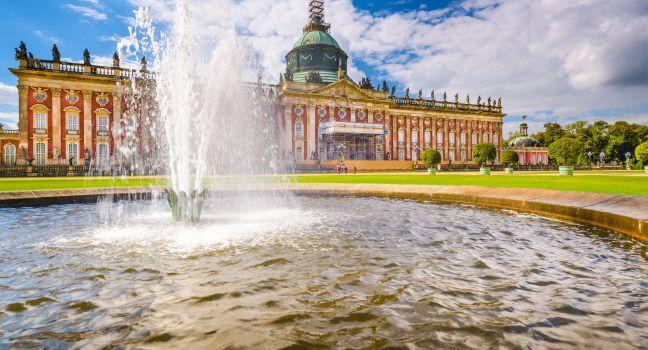
Neues Palais

Fodor's choice
The New Palace Neues Palais in Potsdam, Germany.
(c) Sepavo | Dreamstime.com

A larger and grander palace than Sanssouci, the New Palace stands at the end of the long avenue that runs through Sanssouci Park. It was built after the Seven Years' War (1756–63). Impressive interiors include the Grotto Hall with walls and columns set with shells, coral, and other aquatic decorations, and the luxurious Lower Royal Suite. You can only visit Neues Palais with a guided tour at scheduled times; stop at the Visitor's Center at Neues Palais or the Historic Windmill to pick up a timed ticket (free with the sanssoci+ combined ticket). During the summer months, you can also visit the grandly furnished King's Apartment (closed at the time of this writing for restorations) and rococo-style Palace Theatre (only open on non-performance days and tours in German only).

Potsdam, 14469, Germany
0331-969–4200
Sight Details
Palace grand tour €12; King's Apartment tour €8; grand tour and King's Apartment tour €14; Palace Theatre €8
Closed Tues. King's Apartment and Palace Theatre closed Nov.–Mar.

Something incorrect in this review?

Schloss Sanssouci

Fodor's choice
Unidentified people in front of Sanssouci Palace in Potsdam. Sanssouci Palace is former summer palace of Frederick the Great, King of Prussia, opened at 1747.
(c) Eterovic | Dreamstime.com

Prussia's most famous king, Friedrich II—Frederick the Great—spent more time at his summer residence, Schloss Sanssouci, than in the capital of Berlin. Executed according to Frederick's impeccable French-influenced taste, the palace, which lies on the northeastern edge of Sanssouci Park, was built between 1745 and 1747. It is extravagantly rococo, with scarcely a patch of wall left unadorned. Visits to the palace are only allowed at fixed times scheduled when tickets are purchased. During peak tourist months, timed tickets can sell out before noon, so book online in advance. From Schloss Sanssouci, you can wander down the extravagant terraced gardens, filled with climbing grapevines, trellises, and fountains to reach the Italianate Friedenskirche, or \"Peace Church,\" which was completed in 1854, and houses a 13th-century Byzantine mosaic taken from an island near Venice.

Potsdam, 14469, Germany
0331-969–4200
Sight Details
Schloss Sanssouci €14; Friedenskirche free
Schloss Sanssouci closed Mon. Friedenskirche closed weekdays Nov.–mid-Mar.

Something incorrect in this review?

Museum Barberini

Fodor's choice

On the site of the Barberini Palace, destroyed by a bombing in 1945, this elegant art museum features an extensive permanent collection of Impressionist and Post-Impressionist paintings, including the largest collection of Monet's paintings in Europe outside of France. The Barberini also hosts up to three large-scale temporary exhibitions a year, focusing on such artists as Gerhard Richter, Pablo Picasso, and Wassily Kandinsky.

Recommended Fodor's Video

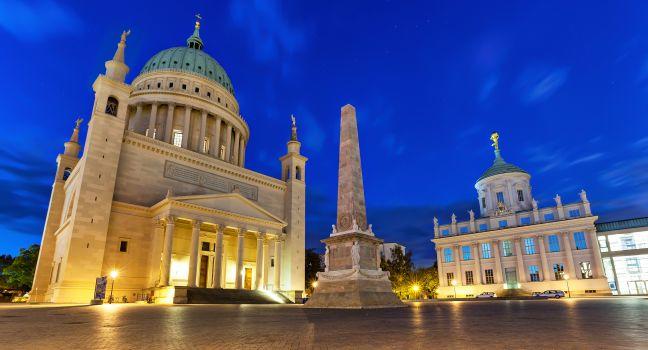
Alter Markt

St. Nicholas Church and old city hall on Alter Markt square in Potsdam, Germany.
(c) Bbsferrari | Dreamstime.com

The hub of Potsdam's historical center was home to the city's baroque palace for three centuries. The area was heavily damaged by Allied bombing in World War II and then further destroyed by the East German regime in 1960. After reunification, Potsdam decided to rebuild its palace, and the re-created structure, with a combination of modern and historic elements, has housed the state parliament since 2013. Thanks to private donors, a magnificent replica of the Fortunaportal, or Fortune's Gate, now stands proudly at the center of the square. A gilded figure of Atlas tops the tower of the Altes Rathaus (Old Town Hall), built in 1755 in the model of an Italian palazzo, its dome meant to mimic the Pantheon's in Rome. The Potsdam Museum contains a large collection of paintings, photographs, and historical objects. Karl Friedrich Schinkel designed the Alter Markt's domed Nikolaikirche (St. Nicholas Church), which was also heavily damaged in the war and only reopened in 1981 after extensive renovations.

Alter Markt, Potsdam, 14467, Germany

Something incorrect in this review?

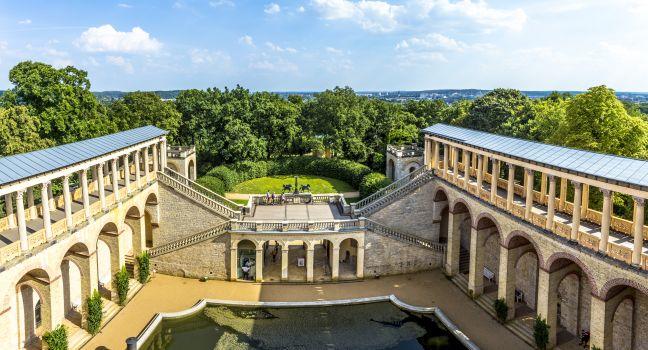
Belvedere auf dem Pfingstberg

POTSDAM, GERMANY - AUG 8, 2015: view of the Belvedere, a palace in the New Garden on the Pfingstberg hill in Potsdam, Germany. Frederick William IV constructed the castle in 1847.
(c) Meinzahn | Dreamstime.com

Commissioned by King Friedrich Wilhelm IV, the Belvedere on Pfingstberg was built in the Italian Renaissance style with grand staircases, colonnades, and perfect symmetry. It served as a pleasure palace and lofty observation platform for the royals, and the towers still offer one of the best views of Potsdam.

Potsdam, 14469, Germany
0331-2005–7930
Sight Details
€8
Closed Dec.–Feb. and weekdays Mar.–Nov.

Something incorrect in this review?

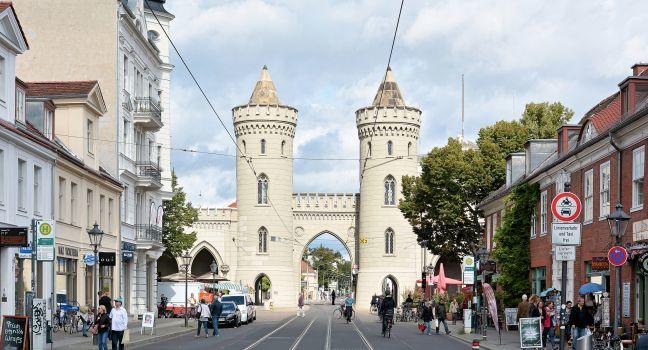
Brandenburger Tor, Jägertor, and Nauener Tor

Nauen Gate in the Old Town of Potsdam.
(c) Heiko119 | Dreamstime.com

These gates (translated as the Brandenburg Gate, the Hunter's Gate, and the Nauen Gate) are three of the original seven gates that were incorporated into the old city walls. They were mostly ornamental, erected by noblemen to show off their prowess and accomplishments, and were meant to direct the eye along various axes from the center of the city to grand boulevards radiating outwards. If you follow the promenade that traces the now-demolished city walls, you can see all three of these gates in a 10-minute walk. The Brandenburger Tor sits at one edge of Luisenplatz, between the pedestrian streets of the old town and an entrance to Sanssouci Park. Commissioned by Frederick the Great to celebrate his victory in the Seven Years' War, it was built by Karl von Gontard as a Roman triumphal arch. The small Jägertor is really nothing more than a simple archway, crowned by a statue of a deer set upon by hunting dogs. Its diminutive size, however, belies its historical importance: it's the only gate in Potsdam still in its original form instead of a restored version. The sandstone Nauener Tor, which sits at the northern edge of the bustling, shop-filled main corridor Friedrich-Ebert-Strasse, is the oldest example of a neo-Gothic structure in continental Europe. It looks something like a mini-castle with its twin turrets.

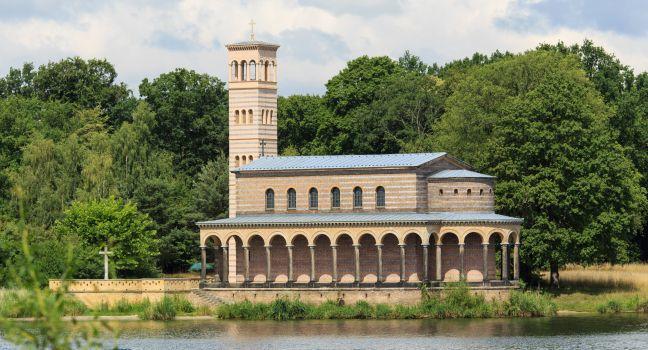
Heilandskirche Sacrow

View to the Church of the Redeemer in Sacrow, Potsdam, near Berlin. The church is part of the UNESCO World Heritage Site.
(c) Disula | Dreamstime.com

You'd be forgiven for wondering if you'd been transported to Italy when you first glimpse this dreamy lakeside church, complete with a campanile (bell tower) and mosaic-adorned colonnade, from across the Havel Lake or through the Sacrower Schlosspark near Potsdam. Actually, the church suffered a grim fate for many years, trapped in the no-man’s-land of the outer Berlin Wall. From 1961 to 1989, the East German government closed the church, fearing that it would serve as a hiding place for those trying to flee. Now it is restored and again in use, and makes the perfect endpoint to a scenic walk from the lakeside village of Kladow. To reach it, take the S75 train from Central Berlin to S-bahnhof Heerstrasse, then the X34 Bus to Alt-Kladow, then follow Sakrower Landstrasse until it turns into Kladower Strasse and ends at Schloss Sacrow. The path out to the water will take you to the church.

Fährstr., Potsdam, 14469, Germany
0331-505–2144
Sight Details
Mar., Apr., Sept., and Oct., Tues.–Sun. 10–3:30; Jan., Feb., Nov., and Dec., weekends 10–3; May–Aug., Tues.–Sun. 10–4

Something incorrect in this review?

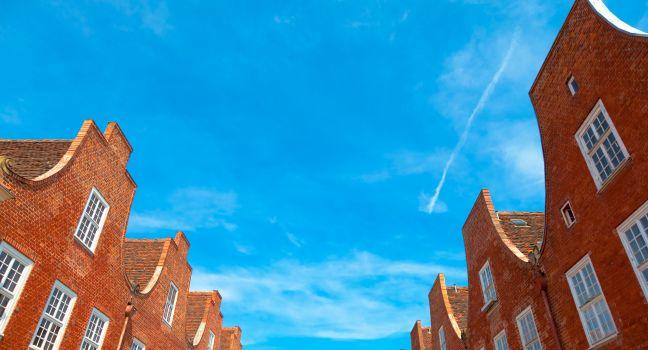
Holländisches Viertel

Typical houses in the Dutch Quarter (Holländisches Viertel) of Potsdam, Germany.
(c) Europhotos | Dreamstime.com

The center of the small Holländisches Viertel—the Dutch Quarter—is an easy walk north along Friedrich-Ebert-Strasse to Mittelstrasse. Friedrich Wilhelm I built the settlement in the 1730s to entice Dutch artisans who would be able to support the city's rapid growth. The 134 gabled, mansard-roof brick houses make up the largest Dutch housing development outside of the Netherlands today. Antiques shops, boutiques, and restaurants fill the buildings now, and the area is one of Potsdam's most visited.

Potsdam, Germany

Something incorrect in this review?

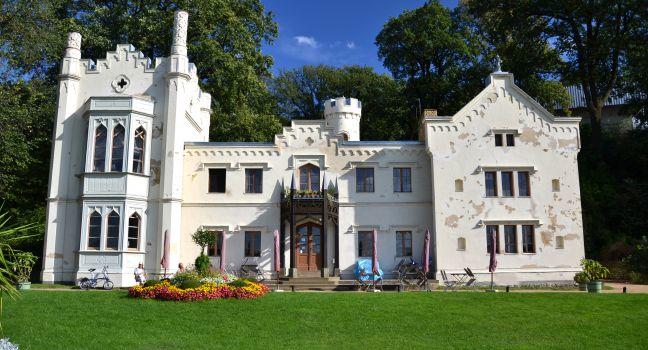
Park Babelsberg

Kleine schloss - small castle in babelsberg park in Potsdam, Germany.
(c) Toniguetta | Dreamstime.com

Less well known than the gleaming Sanssouci but still impressive, the Schloss Babelsberg was once the summer residence of Wilhelm I. The expansive park surrounding it has acres and acres of charm, with expansive views, a waterfront promenade, and plenty of historical buildings. Although the castle itself is currently under extensive renovation, there's still plenty to explore, such as the Dampfmaschinenhaus, a 19th-century steam-engine building right on the water, or the Kleines Schloss, which literally translates as “small castle” and today houses an elegant, wood-paneled café. Climb the Flatowturm (Flatow Tower) for a 360-degree view of the surrounding parkland and waterways, and the city of Potsdam in the distance. The tower frequently showcases small historical exhibitions, like a recent one about park landscaping in Germany through the ages, detailing how Park Babelsberg has been restored to its former glory after the fall of the Berlin Wall.

Schlosspark Babelsberg 10, Potsdam, 14482, Germany
0331-969–4200

Something incorrect in this review?

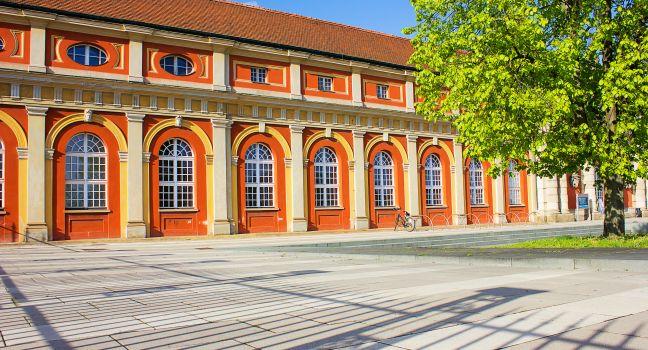
Potsdam Filmmuseum

Film Museum in Potsdam, Germany.
(c) Stockfotoart | Dreamstime.com

Inside this beautiful baroque building, originally the Marstall or Prussian royal stables, film buffs can look into the history of film production in the area---many early silent films, including Fritz Lang’s Metropolis, were made in the town of Babelsberg, right next to Potsdam, and modern-day filmmakers continue to use the studios. A permanent exhibition called "Traumfabrik" ("The Dream Factory") details 100 years of filmmaking in Babelsberg. The cinema screens contemporary and historic films, and includes an old film organ, which is still used today to provide music and sound effects alongside silent film screenings.

Breitestr. 1A, Potsdam, 14467, Germany
0331-271–810
Sight Details
Permanent exhibition €5, temporary exhibitions €3

Something incorrect in this review?

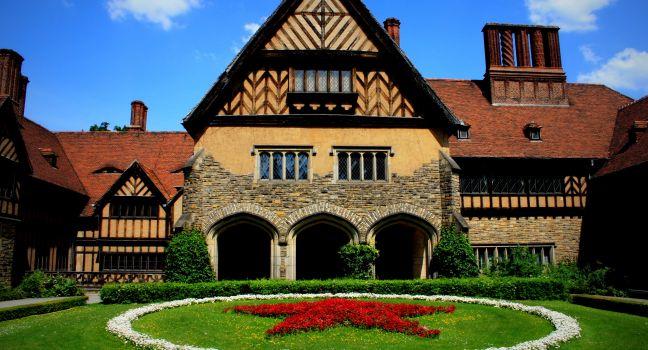
Schloss Cecilienhof

The Cecilienhof Palace is a palace located in the northern part of the Neuer Garten park in Potsdam, close to lake Jungfernsee. Since 1990 is part of the Palaces and Parks of Potsdam and Berlin as World Heritage Site declared by the Unesco.
(c) Maximoangel | Dreamstime.com

Resembling a rambling Tudor manor house, Schloss Cecilienhof was built for Crown Prince Wilhelm in 1913, on what was then the newly laid-out stretch of park called the Neuer Garten. It was here, in the last palace built by the Hohenzollerns, that the leaders of the allied forces—Stalin, Truman, and Churchill (later Attlee)—hammered out the fate of postwar Germany at the 1945 Potsdam Conference. Schloss Cecilienhof is closed for restorations at the time of this writing.

Im Neuen Garten 11, Potsdam, 14469, Germany
0331-969–4200
Sight Details
€12; private apartments of the Crown Prince €8 (with guided tour); Schloss Cecilienhof and private apartments (with guided tour) €14
Closed Mon.

Something incorrect in this review?

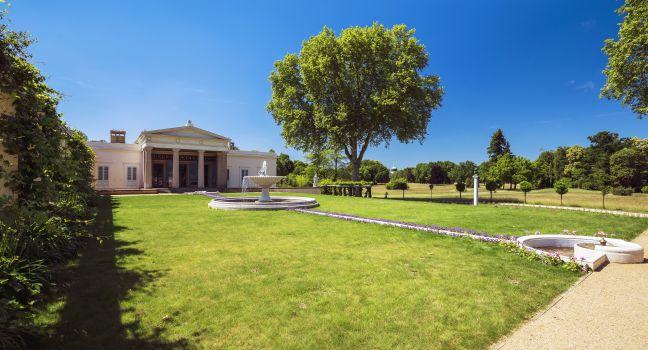
Schloss Charlottenhof

Potsdam, Germany - July 1, 2015: Charlottenhof Palace in the Sanssouci park in Potsdam in Germany.
(c) Nellmac | Dreamstime.com

After Frederick the Great died in 1786, the ambitious Sanssouci building program ground to a halt, and the park fell into neglect. It was 50 years before another Prussian king, Friedrich Wilhelm IV, restored Sanssouci's earlier glory, engaging the great Berlin architect Karl Friedrich Schinkel to build the small Schloss Charlottenhof for the crown prince. Schinkel's demure interiors are preserved, and the most fanciful room is the bedroom, decorated like a Roman tent, with walls and ceiling draped in striped canvas. Friedrich Wilhelm IV also commissioned the Römische Bäder (Roman Baths), about a five-minute walk north of Schloss Charlottenhof (baths closed for restorations at the time of this writing). It was also designed by Schinkel, and built between 1829 and 1840. Like many other structures in Potsdam, this one is more romantic than authentic. Half Italian villa, half Greek temple, it is nevertheless a charming addition to the park.

Geschwister-Scholl-Str. 34a, Potsdam, 14471, Germany
0331-969–4200
Sight Details
Charlottenhof Villa €6 with guided tour; Roman Baths €5
Closed Nov.–Apr., and Mon. May–Oct.

Something incorrect in this review?

Dampfmaschinenhaus

Friedrich Wilhelm IV modeled this building after a Turkish mosque, complete with a minaret, to serve as the palace waterworks building. About a ten-minute walk from Neuer Markt, the Dampfmaschinenhaus used a steam engine to transport water to a large fountain at the center of Sanssouci Park, about half a mile away. Although that fountain is now served by a modern pump system, this beautiful piece of architecture is still worth a visit for its intricate, Islamic-inspired designs decorating both interior and exterior.

Breitestr. 28, Potsdam, Germany
0331-969–4248
Sight Details
€3
No credit cards
May–Oct., weekends 10–6

Something incorrect in this review?

Neuer Markt

Neuer Markt (New Market) square has baroque-style architecture similar to that of the Alter Markt square and a handful of the city’s best-preserved buildings, some of which date back to the 18th century.

Potsdam, Germany

Something incorrect in this review?

Not finding what you're looking for?

We've got a few suggestions for nearby spots.
Wannsee

Schloss Glienicke1.9 miles away

Königstr. 36, Berlin, Berlin, 14109, Germany
We recommend 6 Sights in Wannsee
Wannsee

Mutter Fourage3.9 miles away

Chausseestr. 15a, Berlin, Berlin, 14109, Germany
We recommend 6 Sights in Wannsee
Wannsee

Pfaueninsel4.2 miles away

Berlin, Berlin, 14109, Germany
We recommend 6 Sights in Wannsee
Wannsee

Haus der Wannsee-Konferenz5.1 miles away

Am Grossen Wannsee 56–58, Berlin, Berlin, 14109, Germany
We recommend 6 Sights in Wannsee
Wannsee

Strandbad Wannsee5.6 miles away

Wannseebadweg 25, Berlin, Berlin, 14129, Germany
We recommend 6 Sights in Wannsee