34 Best Sights in Mitte, Berlin

Background Illustration for Sights

We've compiled the best of the best in Mitte - browse our top choices for the top things to see or do during your stay.

DDR Museum

Mitte Fodor's Choice
The DDR Museum, is an interactive museum in the centre of Berlin. Its exhibition shows the daily life in East Germany.
Konstantinos Papaioannou | Dreamstime.com

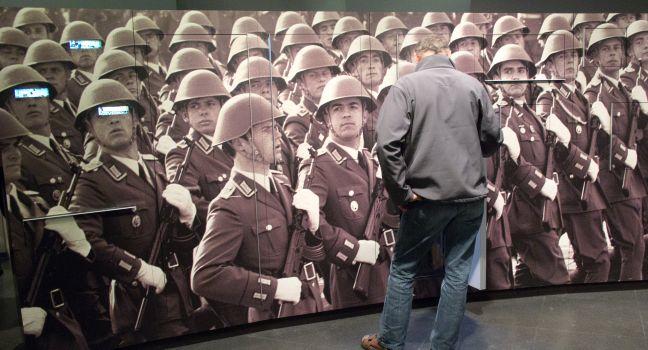
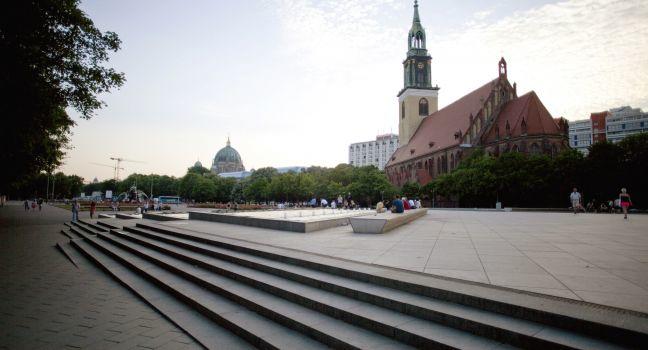
Half museum, half theme park, the DDR Museum is an interactive and highly entertaining exhibit about life during communism. It’s difficult to say just how much the museum benefits from its prime location beside the Spree, right across from the Berliner Dom, but it's always packed, filled with tourists, families, and student groups trying to get a hands-on feel for what the East German experience was really like. Exhibitions include a re-creation of an East German kitchen, all mustard yellows and bilious greens; a simulated drive in a Trabi, the only car the average East German was allowed to own; and a walk inside a very narrow, very claustrophobic interrogation cell.
Alte Nationalgalerie

Mitte Fodor's Choice

The permanent exhibit here is home to an outstanding collection of 18th-, 19th-, and early-20th-century paintings and sculpture, by the likes of Cézanne, Rodin, Degas, and one of Germany's most famous portrait artists, Max Liebermann. Its collection has masterpieces from such 19th-century German painters as Karl Friedrich Schinkel and Caspar David Friedrich, the leading members of the German Romantic school.

Bodestr. 1–3, Berlin, 10178, Germany
30-2664–24242
Sight Details
€12 (combined ticket for all Museum Island museums €24)
Closed Mon.

Something incorrect in this review?

Fotografiska Berlin

Mitte Fodor's Choice

Inside the former Tacheles art collective, contemporary photography museum Fotografiska has retained all the former inhabitants’ graffiti on the walls in the hallways and stairwells. Regularly rotating exhibitions range across several floors, showing a mix of photography and videos from both well-known artists, such as Andy Warhol, but also younger emerging artists. You won’t go hungry (or thirsty) here, as there’s a restaurant, two bars (including Bar Clara, on the rooftop), a café, and a bakery; visitors are even encouraged to peruse the artworks with drink in hand. The museum is open till 11 pm every day (last entry at 10 pm), making it perfect for an evening wander.

Recommended Fodor's Video

Hamburger Bahnhof—Museum für Gegenwart

Mitte Fodor's Choice

This light-filled, remodeled train station is home to a rich survey of post-1960 Western art. The permanent collection includes installations by German artists Joseph Beuys and Anselm Kiefer, as well as paintings by Andy Warhol, Cy Twombly, Robert Rauschenberg, and Robert Morris. An annex presents the Friedrich Christian Flick Collection, featuring a selection of the latest in the world's contemporary art. The more than 1,500 works rotate, but you're bound to see some by Bruce Naumann, Rodney Graham, and Pipilotti Rist.

Invalidenstr. 50–51, Berlin, 10557, Germany
030-2664–24242
Sight Details
€14
Closed Mon.

Something incorrect in this review?

Humboldt Forum

Mitte Fodor's Choice

This reconstruction of the former 15th-century palace that once stood on this site now houses a range of globally focused collections, including the Ethnological Museum and Asian Art Museum, which display more than 500,000 cultural objects from around the world; Humboldt University Lab, which explores science and society; and Berlin Global, which looks at Berlin's connection to the rest of the world through such topics as entertainment, fashion, war, and boundaries. The Forum also includes regularly changing temporary displays, such as the history of ivory and a children’s exhibit. Controversial from the start, due to the razing of the ‘70s-era East German Palast der Republik that formerly stood on the site and the display of colonial-era objects (some of which will be repatriated to their countries of origin), this sprawling museum makes a fascinating day out to see both the building itself and the exhibits inside. Note that you will need to buy individual timed tickets for each exhibit either online or on-site at the ticket office; it isn’t currently possible to buy one ticket to see everything. Though there are several cafés, make a reservation for Baret, the restaurant on the rooftop, if only to see one of the finest panoramic views of Berlin; otherwise, seeing the roof requires buying a ticket.

Schlosspl., Berlin, 10178, Germany
030-9921–18989
Sight Details
Berlin Global €7; temporary exhibits €12 (children’s exhibits free); Ethnological Museum, Asian Art Museum, and Humboldt Lab free, with timed ticket; roof visit €5
Closed Tues.

Something incorrect in this review?

Neues Museum

Mitte Fodor's Choice

Originally designed by Friedrich August Stüler in 1843–55, the building housing the Neues Museum was badly damaged in World War II and has only in the 21st century been elaborately redeveloped by British star architect David Chipperfield. Instead of completely restoring the Neues Museum, the architect decided to integrate modern elements into the historic landmark, while leaving many of its heavily bombed and dilapidated areas untouched. The result is a stunning experience, considered by many to be one of the world's greatest museums. Home to the Egyptian Museum, including the famous bust of Nefertiti (who, after some 70 years, has returned to her first museum location in Berlin), it also features the Papyrus Collection and the Museum of Prehistory and Early History.

Bodestr. 1–3, Berlin, 10178, Germany
030-2664–24242
Sight Details
€14 (combined ticket for all Museum Island museums €24)
Closed Mon.

Something incorrect in this review?

Palais Populaire

Mitte Fodor's Choice

The reconstructed 18th-century Prinzessinnenpalais (Princesses’ Palace) now houses selections of Deutsche Bank’s contemporary art holdings, which rotate several times a year. Past exhibitions include Ways of Seeing Abstraction, works from German figurative painter K.H. Hödicke, and international photography from the 1970s to the present, along with shows featuring Deutsche Bank's “artists of the year.” Though the art selections may be compact, they’re most often provocative and worthwhile. Take an art break at the attached LePopulaire café, which serves up salads, sandwiches, and heartier mains for lunch or snacks.

Pergamonmuseum

Mitte Fodor's Choice

The Pergamonmuseum is one of the world's greatest museums and its name is derived from its principal display, the Pergamon Altar, a monumental Greek temple discovered in what is now Turkey and dating from 180 BC. The altar was shipped to Berlin in the late 19th century. Equally impressive are the gateway to the Roman town of Miletus, the Ishtar Gate, and the Babylonian processional way. The entire museum is closed for refurbishment until 2027, when parts of it will reopen, including the famed altar; the rest of the museum isn't scheduled to reopen until 2037. Until then, visitors can see Das Panorama, 360-degree visuals of the ancient city of Pergamon designed by artist Yadegar Asisi and combined with a selection of original sculptures, in a temporary pavilion on Am Kupfergraben, across from Museuminsel.

Bodestr. 1–3, Berlin, 10178, Germany
030-2664–24242
Sight Details
Das Panorama €12 (combined ticket with all Museum Island museums €24)
Closed Mon.

Something incorrect in this review?

Sammlung Boros

Mitte Fodor's Choice

Both an historic and a modern Berlin attraction all at once, the unique Sammlung Boros houses a private contemporary art collection inside a renovated World War II bunker. Visits are only possible by 90-minute guided tour, which are extremely popular and must be booked online weeks in advance. Tours include both detailed descriptions of the artists and artwork on display, and also the fascinating history and architecture of the bunker itself, which at varying times was used as a war prison, fruit storage facility, and notorious nightclub.

Staatsoper Unter den Linden

Mitte Fodor's Choice

Frederick the Great was a music lover and he made the Staatsoper Unter den Linden, on the east side of Bebelplatz, his first priority. The lavish opera house was completed in 1743 by the same architect who built Sanssouci in Potsdam, Georg Wenzeslaus von Knobelsdorff. The house reopened in late 2017 after a major seven-year renovation. There are guided 90-minute tours of the opera house's interior on weekends (book online), but they are offered in German only.

Sammlung Boros

Mitte Fodor's Choice

This private collection has become one of Berlin’s star attractions, thanks to its unusual location inside a hulking WWII bunker in Mitte. Contemporary art collector Christian Boros bought the bunker in 2003 to house his art, and built a glass penthouse on top to house his family. The best works are those created specifically for the space by well-known artists such as Ai Weiwei, Olafur Eliasson, and Tomás Saraceno. Since this is a private home, admission is only allowed on guided tours, which take place Thursday to Sunday and can booked online. The tours are popular, so book as early as you can (months in advance).

Alexanderplatz

Mitte
© Halie Cousineau/ Fodor’s Travel

This bleak square, bordered by the train station, the Galeria Kaufhof department store, and the 37-story Park Inn by Radisson Berlin Alexanderplatz hotel, once formed the hub of East Berlin and was originally named in 1805 for Czar Alexander I. German writer Alfred Döblin dubbed it the \"heart of a world metropolis\" (a quote from his 1929 novel Berlin Alexanderplatz is written on a building at the northeastern end of the square). Today it's a basic center of commerce and the occasional festival. The unattractive modern buildings are a reminder not just of the results of Allied bombing but also of the ruthlessness practiced by East Germans when they demolished what remained. A famous meeting point in the south corner is the World Time Clock (1969), which even keeps tabs on Tijuana.

Berlin, Germany

Something incorrect in this review?

Berliner Dom

Mitte
The Berliner Dom, Berlin Cathedral, Berlin, Germany
© Halie Cousineau/ Fodors Travel

A church has stood here since 1536, but this enormous version dates from 1905, making it the largest 20th-century Protestant church in Germany. The royal Hohenzollerns worshipped here until 1918, when Kaiser Wilhelm II abdicated and left Berlin for Holland. The massive dome wasn't restored from World War II damage until 1982; the interior was completed in 1993. The climb to the dome's outer balcony is made easier by a wide stairwell, plenty of landings with historic photos and models, and even a couple of chairs. The 94 sarcophagi of Prussian royals in the crypt has been under restoration and will reopen in fall 2025 with new multimedia exhibitions. Sunday services include communion. Guided tours, bookable online, are usually offered only in German.

Am Lustgarten 1, Berlin, 10178, Germany
030-2026–9136
Sight Details
€10

Something incorrect in this review?

Friedrichstrasse

Mitte
Friedrichstrasse, Berlin, Germany
© Halie Cousineau/ Fodor’s Travel

The once-bustling street of cafés and theaters of prewar Berlin has risen from the rubble of war and Communist neglect to reclaim the crowds with shopping emporiums. North of the train station you will see the rejuvenated heart of the entertainment center of Berlin's Roaring Twenties, including the Admiralspalast and the somewhat kitschy Friedrichstadt Palast.

Berlin, Germany

Something incorrect in this review?

Gendarmenmarkt

Mitte
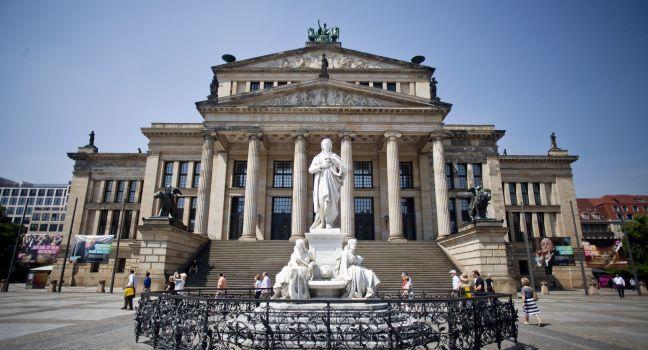
Konzerthaus Berlin, Gendarmenmarkt, Berlin, Germany; The Konzerthaus Berlin is a concert hall
© Halie Cousineau/ Fodors Travel

This is without a doubt the most elegant square in former East Berlin. Anchored by the beautifully reconstructed 1818 Konzerthaus and the Deutscher Dom and Französischer Dom (German and French cathedrals), it also hosts one of Berlin's classiest annual Christmas markets.

Berlin, 10117, Germany

Something incorrect in this review?

Neue Synagoge

Mitte
Neue Synagoge, Berlin, Germany
© Halie Cousineau/ Fodors Travel

This meticulously restored landmark, built between 1859 and 1866, is an exotic amalgam of styles, the whole faintly Middle Eastern. Its bulbous, gilded cupola stands out in the skyline. When its doors opened, it was the largest synagogue in Europe, with 3,200 seats. The synagogue was damaged on November 9, 1938 (Kristallnacht—Night of the Broken Glass), when Nazi looters rampaged across Germany, burning synagogues and smashing the few Jewish shops and homes left in the country. It was destroyed by Allied bombing in 1943, and it wasn't until the mid-1980s that the East German government restored it. The effective exhibit on the history of the building and its congregants includes fragments of the original architecture and furnishings. Sabbath services are held in a modern addition.

Oranienburger Str. 28–30, Berlin, 10117, Germany
030-8802–8316
Sight Details
€7; audio guides €3
Closed Sat.

Something incorrect in this review?

Neue Wache

Mitte
Neue Wache, Berlin, Germany
© Halie Cousineau/ Fodors Travel

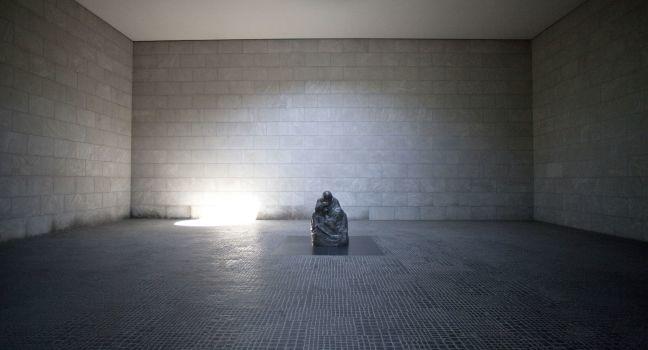
One of many Berlin projects by the early-19th-century architect Karl Friedrich Schinkel, this building served as both the Royal Prussian War Memorial (honoring the dead of the Napoleonic Wars) and the royal guardhouse until the kaiser abdicated in 1918. In 1931 it became a memorial to those who fell in World War I. Badly damaged in World War II, it was restored in 1960 by the East German state and rededicated as a memorial for the victims of militarism and fascism. After unification it regained its Weimar Republic appearance and was inaugurated as Germany's central war memorial. Inside is a copy of Berlin sculptor Käthe Kollwitz's Pietà, showing a mother mourning over her dead son. The inscription in front of it reads, "to the victims of war and tyranny."

Berlin, 10117, Germany
Sight Details
Daily 10–6

Something incorrect in this review?

Nikolaiviertel

Mitte
Nikolaiviertel, St. Nicholas' Church, Berlin, Germany
© Halie Cousineau/ Fodors Travel

Renovated in the 1980s and a tad concrete-heavy as a result, this tiny quarter grew up around Berlin's oldest parish church, the medieval, twin-spire St. Nikolaikirche (St. Nicholas's Church), dating from 1230 (though rebuilt in 1987) and now a museum. The adjacent Fischerinsel (Fisherman's Island) area was the heart of Berlin almost 800 years ago, and retains a bit of its medieval character. At Breite Strasse you'll find two of Berlin's oldest buildings: No. 35 is the Ribbeckhaus, the city's only surviving Renaissance structure, dating from 1624, and No. 36 is the early-baroque Marstall, built by Michael Matthais between 1666 and 1669. The area feels rather artificial, but draws tourists to its gift stores, cafés, and restaurants.

Siegessäule

Tiergarten
Berlin Victory Column, Siegessaule, Berlin, Germany
© Halie Cousineau/ Fodors Travel

The 227-foot granite, sandstone, and bronze column is topped by a winged, golden goddess and has a splendid view of Berlin. It was erected in front of the Reichstag in 1873 to commemorate Prussia's military successes and then moved to the Tiergarten in 1938–39. You have to climb 270 steps up through the column to reach the observation platform, but the view is rewarding. The gold-tipped cannons surrounding the column are those the Prussians captured from the French in the Franco-Prussian War.

Grosser Stern 1, Berlin, 10557, Germany
030-391–2961
Sight Details
€3.50

Something incorrect in this review?

Altes Museum

Mitte
This red-marble neoclassical building abutting the green Lustgarten was Prussia's first structure purpose-built to serve as a museum. Designed by Karl Friedrich Schinkel, it was completed in 1830. The permanent collection consists of everyday utensils from ancient Greece as well as vases and sculptures from the 6th to 4th century BC. Etruscan art is the highlight here, and there are also a few examples of Roman art. Antique sculptures, clay figurines, and bronze art of the Antikensammlung (Antiquities Collection) are also here (the other part of the collection is in the Pergamonmuseum).
Am Lustgarten, Berlin, 10178, Germany
30-2664–24242
Sight Details
€12 (combined ticket for all Museum Island museums €24)
Closed Mon. and Tues.

Something incorrect in this review?

Bebelplatz

Mitte

After he became ruler in 1740, Frederick the Great personally planned the buildings surrounding this square (which has a huge parking garage cleverly hidden beneath the pavement). The area received the nickname \"Forum Fridericianum,\" or Frederick's Forum. On May 10, 1933, Joseph Goebbels, the Nazi minister for propaganda and \"public enlightenment,\" organized one of the nationwide book burnings here. The books, thrown on a pyre by Nazi officials and students, included works by Jews, pacifists, and Communists. In the center of Bebelplatz, a modern and subtle memorial (built underground but viewable through a window in the cobblestone pavement) marks where 20,000 books went up in flames. The Staatsoper Unter den Linden (State Opera) is on the east side of the square. St. Hedwigskathedrale is on the south side of the square. The Humboldt-Universität is to the west.

Berlin, Germany

Something incorrect in this review?

Bode-Museum

Mitte

At the northern tip of Museum Island is this somber-looking gray edifice graced with elegant columns. The museum is home to the state museum's stunning collection of German and Italian sculptures from the Middle Ages, as well as the Museum of Byzantine Art, and a huge coin collection.

Am Kupfergraben, Berlin, 10178, Germany
030-2664–24242
Sight Details
€12 (combined ticket for all Museum Island museums €24)
Closed Mon. and Tues.

Something incorrect in this review?

Brecht-Weigel-Gedenkstätte

Mitte

You can visit the former working and living quarters of playwright Bertolt Brecht and his wife, actress Helene Weigel, and scholars can browse through the Brecht library (by appointment only). The downstairs restaurant serves Viennese cuisine using Weigel's recipes. Brecht, Weigel, and more than 100 other celebrated Germans are interred in the Dorotheenstädtischer Friedhof (Dorotheenstadt Cemetery) next door. The house can only be visited on tours, which take place every half hour, in German. Call ahead to schedule an English tour.

Chausseestr. 125, Berlin, 10115, Germany
030-2005--71844
Sight Details
Apartment €3, library free

Something incorrect in this review?

Contemporary Fine Arts

Mitte

From its perch on Am Kupfergraben, Contemporary Fine Arts (CFA) Berlin has a perfect view of Museum Island and its hordes of daily visitors. Those looking for a different kind of Berlin art scene will find it in this elegant gallery. Housed in a David Chipperfield–constructed, ultramodern building, it stands out from its Prussian surroundings. CFA has been a fixture in Berlin since the early 1990s, showing Berlin-based artists like Jonathan Meese and Anselm Reyle, and big-timers like Juergen Teller and Julian Schnabel.

Am Kupfergraben 10, Berlin, 10117, Germany
030-288–7870
Sight Details
Tues.–Fri. 10–6, Sat. 11–6

Something incorrect in this review?

Direktorenhaus

Mitte

Just as much a draw for its architecture and history as for the quirky, off-kilter art shows and events that take place here, Direktorenhaus is a relative newcomer to the Berlin art scene and also the producer of the annual Illustrative Festival each September. This Spree-side building was once part of the State Mint. The large, Berlin-heavy roster of artists includes Olaf Hajek, Daniel Becker, and Lauren Coleman. The gallery has no public hours, and viewings are by appointment.

Am Krögel 2, Berlin, 10179, Germany
030-4849–1929
Sight Details
Free

Something incorrect in this review?

Hackesche Höfe

Mitte

Built in 1905–07, this series of eight connected courtyards is the finest example of art nouveau industrial architecture in Berlin. Most buildings are covered with glazed white tiles, and additional Moorish mosaic designs decorate the main courtyard off Rosenthaler Strasse. Shops, restaurants, the variety theater Chamäleon Varieté, and a movie theater populate the spaces once occupied by ballrooms, a poets' society, and a Jewish girls' club.

Hugenottenmuseum

Mitte

Inside the Französischer Dom (French Cathedral), built by Kaiser Friedrich II for the Protestant Huguenots who fled France and settled in Berlin, is the Hugenottenmuseum, with exhibits charting their history and art. The Huguenots were expelled from France at the end of the 17th century by King Louis XIV. Their energy and commercial expertise contributed much to Berlin. The cathedral was renovated and the permanent exhibition modernized (and made multilingual) before its reopening in fall 2021.

Humboldt-Universität

Mitte

Running the length of the west side of Bebelplatz, the former royal library is now part of Humboldt-Universität, whose main campus is across the street on Unter den Linden. The university building was built between 1748 and 1766 as a palace for Prince Heinrich, the brother of Frederick the Great. With its founding in 1810, the university moved in. The fairy-tale-collecting Grimm brothers taught here, and political philosophers Karl Marx and Friedrich Engels studied within its hallowed halls. Albert Einstein taught physics from 1914 to 1929, when he left Berlin for the United States.

Unter den Linden 6, Berlin, 10117, Germany

Something incorrect in this review?

KW Institute for Contemporary Art

Mitte

This gallery cum museum got its start in the 1990s, when a group of art fans and aficionados led by Klaus Biesenbach came upon a practically collapsing former margarine factory and decided it would be a great place for their project. Since then, KW (which stands for “Kunst Werke” or “art works”) has been presenting exhibitions, site-specific works, and various events in the three-floor space (there's also an enclosed courtyard with a café).

Auguststr. 69, Berlin, 10117, Germany
030-243–4590
Sight Details
€8
Wed. and Fri.–Mon. noon–7, Thurs. noon–9
Closed Tues.

Something incorrect in this review?

Märkisches Museum

Mitte

This redbrick museum includes exhibits on Berlin's history from the Ice Age to today. A permanent exhibit, BerlinZEIT, tells the story of Berlin and historical moments that have shaped the city through tales from the people who live there; features include a multimedia map of Berlin where you can hear about various neighborhoods and streets. The entire museum is closed for refurbishment until 2028.

Am Köllnischen Park 5, Berlin, 10179, Germany
030-2400–2162
Sight Details
€7
Closed Mon.

Something incorrect in this review?